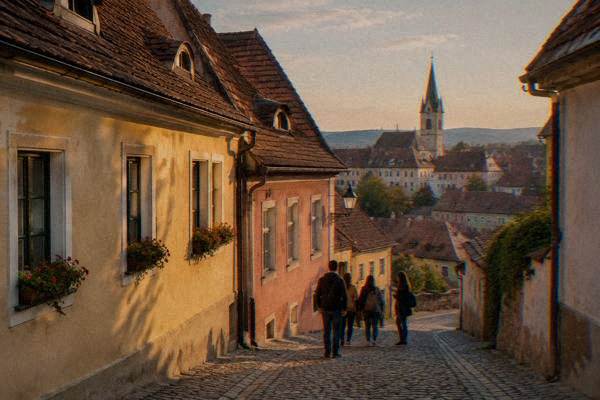
Saxon Heritage In Sibiu: Who Built The City
Sibiu was a German city for most of its recorded life. Here is who the Transylvanian Saxons were, what they built inside the walls, and which fortified churches, squares and towers still carry their hand eight centuries later.
Short answer
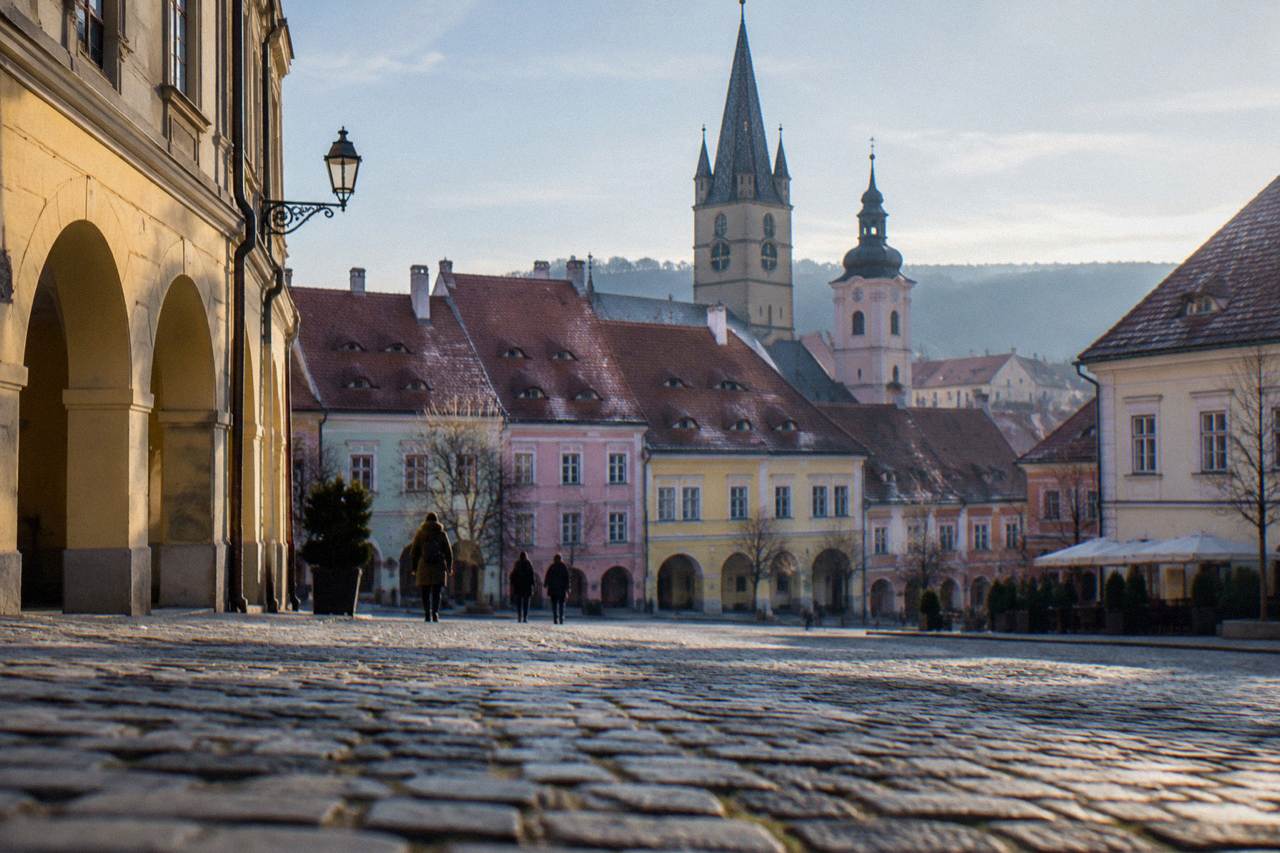
Sibiu was founded by Transylvanian Saxon settlers reported to have arrived from the Moselle valley area in the 12th century, and it is first documented in 1191 as Cibinium. Their city, Hermannstadt, survives in Piața Mare, the Evangelical Cathedral, the city walls and the fortified churches of the surrounding villages.
Sibiu, an inland city on the Cibin river in central Transylvania, was built by settlers the region calls the Transylvanian Saxons, and their mark is still the frame of the city: the two-tier old town around Piața Mare, the Gothic Evangelical Cathedral, the arc of walls and towers, and a countryside dotted with fortified churches. The city is first documented in 1191 as Cibinium, the seat of the free prepositure of the Germans in Transylvania, per the city's own history page. Around it grew a German-speaking town, Hermannstadt, that ran its own schools, guilds and defences for centuries. This guide lays out what is known from the sources, what you can see today, and how to reach the Saxon villages on the city's doorstep.
Who Were The Transylvanian Saxons Who Built Sibiu?
The Transylvanian Saxons were German-speaking settlers invited into Transylvania from the 12th century, reported by the county heritage site to have come from the Moselle valley area, and Sibiu, documented first in 1191 as Cibinium, became their leading city, known to them as Hermannstadt. The 1191 date comes from the city's own history page, which records the document that confirmed the free prepositure of the Germans in Transylvania. Their settlement is a reported history rather than a witnessed event, so the heritage site's wording is the honest form: settlers from the Moselle region, arriving in the 12th century.
The Saxons were not Saxons in the narrow geographic sense. The name, used in Transylvania for centuries, covered settlers from various western German-speaking lands, and it stuck as the community's own label. What held them together was language, Lutheran faith after the Reformation, and a legal status granted by the Hungarian kings: they answered for their land with soldiers and taxes, and in return they ran their own towns and churches.
Sibiu became the administrative centre of that community, the seat of the Saxon university, the body that governed the seven Saxon seats of southern Transylvania. The city's own chronology, as the history page presents it, lists a hospital in 1292, a school in 1380 and a pharmacy in 1494, each described as the first of its kind on current Romanian territory. The chronology is the city's own claim and is best quoted as such.
The community's numbers fell sharply through the decades after the world wars, and the 2011 census the city publishes on its own presentation page counted Germans at 1 percent of a population that is 88.9 percent Romanian and 1.4 percent Hungarian. The heritage, though, stayed in the stones. For the broader story of the city across the centuries, see Sibiu history and old town sights.
What Did The Saxons Build In Sibiu?
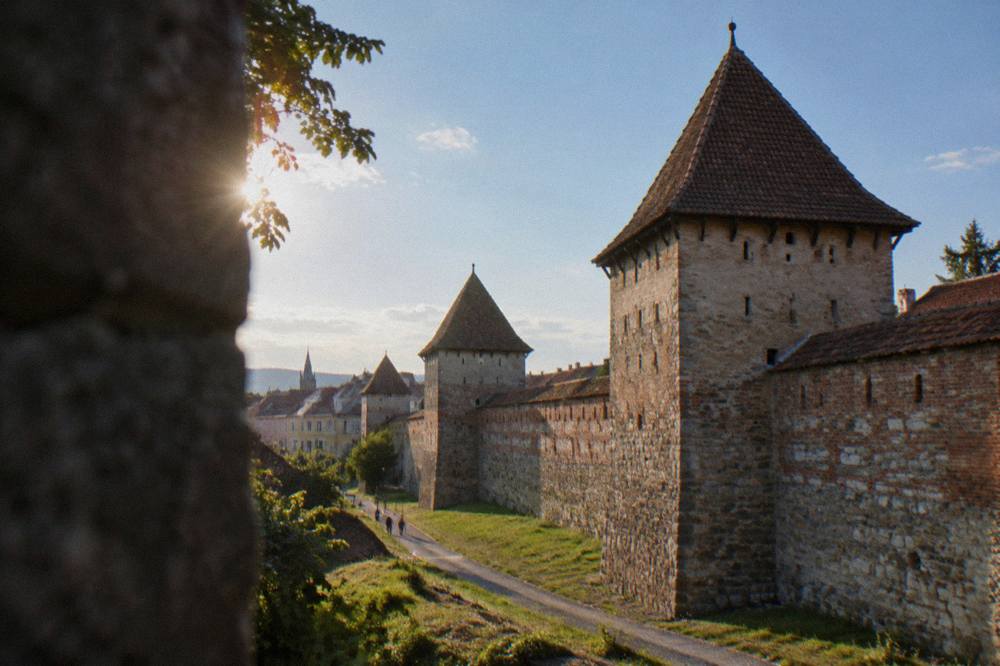
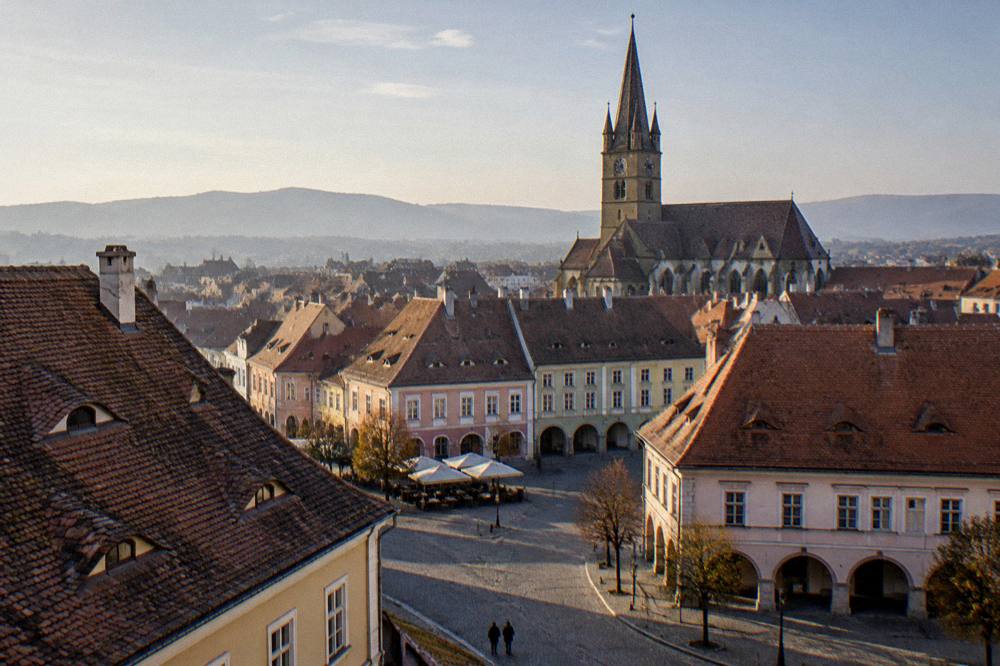
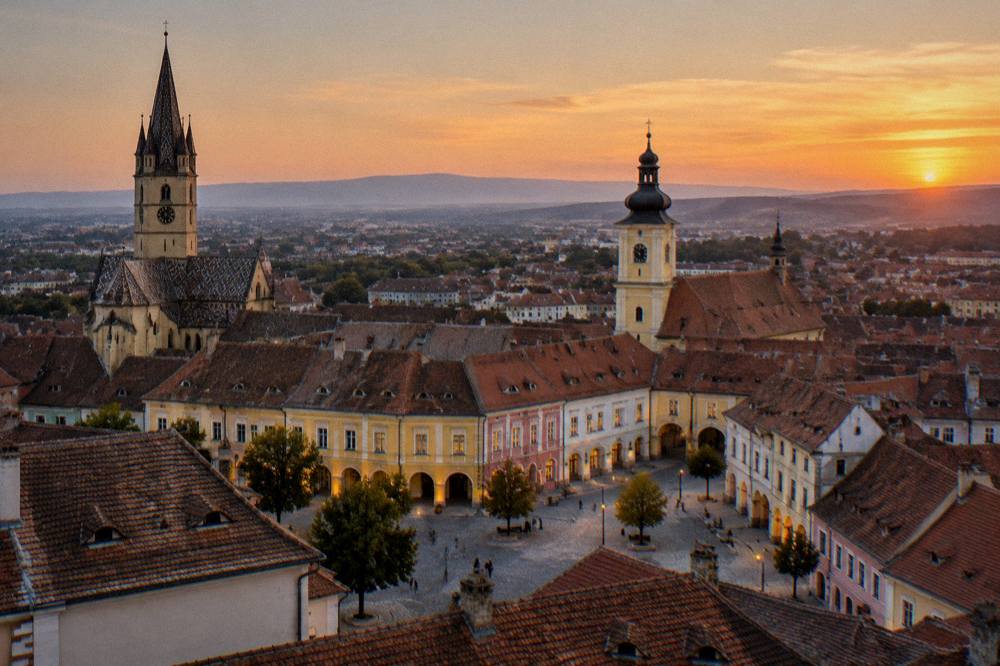
The Saxon legacy in Sibiu is the old town itself: the Upper Town and Lower Town around Piața Mare and Piața Mică, the Gothic Evangelical Cathedral on Piața Huet, the city walls with their guild towers, and the Bridge of Lies, reported to have been built in 1859 to 1860 as the first iron bridge in Romania. The squares, the Stairs Passage (Pasajul Scărilor) linking the two towns, and the walls with towers named for the Potters, Carpenters and Arquebusiers guilds are all free, open-air access with no ticket, per the city tourism site's listings.
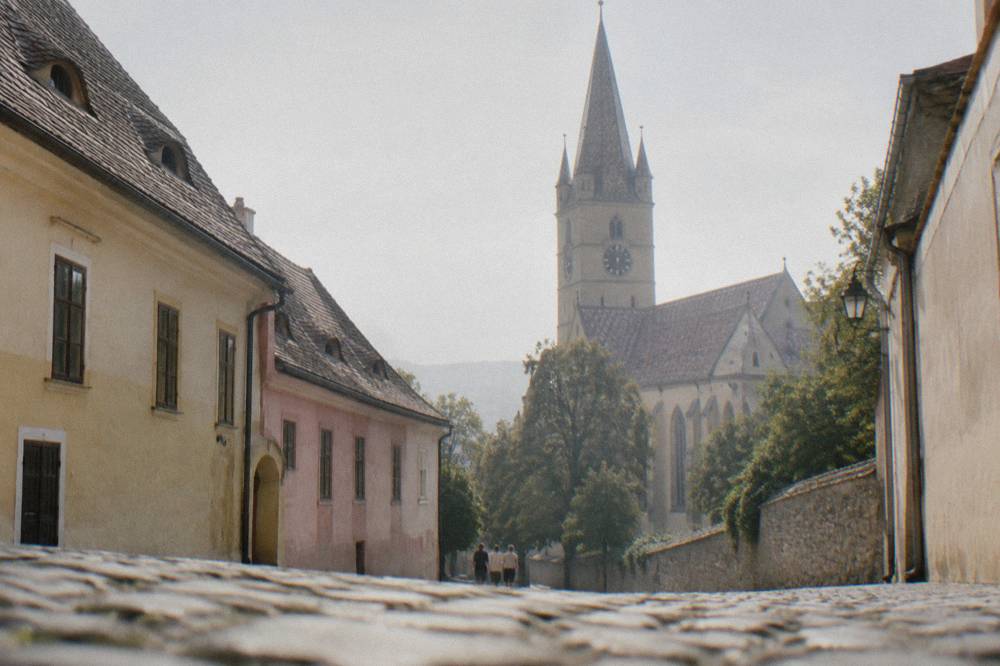
The Evangelical Cathedral is the community's parish church, a Gothic hall church at the heart of Piața Huet. Its tower is the open viewpoint in the city this year, because the Council Tower in Piața Mare has been closed to visitors since 19 January 2026 for a restoration planned at about 24 months, with completion reported at about January 2028. The cathedral tower ticket is 10 RON for an adult, 5 RON reduced, per the tourism site's own listing; hours run Monday 12:00 to 17:00, Tuesday to Thursday 10:00 to 17:00, Friday and Saturday 10:00 to 20:00, and Sunday 11:00 to 17:00, with guided visits on request, so confirm before you go.
The museum world is Saxon too. The Brukenthal National Museum grew from the collection of Samuel von Brukenthal, governor of Transylvania, and its art gallery is reported to have opened to the public in 1817, making it one of the oldest public museums in this part of Europe in the usual telling. The ASTRA open-air museum in Dumbrava Forest, which recreates the traditional villages of the region, is reported to have functioned since 1963.
| Saxon-era sight in Sibiu | What it is | Access |
|---|---|---|
| Piața Mare and Piața Mică | The main squares of the Saxon Upper Town | Free, open access |
| Evangelical Cathedral, Piața Huet | Gothic parish church of the Saxon community; tower viewpoint | Tower 10 RON adult, 5 RON reduced |
| City walls and guild towers | Defensive ring with towers of the Potters, Carpenters, Arquebusiers | Free, open access |
| Bridge of Lies | Iron bridge over the lane between the squares, reported built 1859 to 1860 | Free, open access |
| Pasajul Scărilor | Stairs linking the Upper Town to the Lower Town | Free, open access |
| Brukenthal National Museum, Piața Mare | Art collections of the Saxon governor's palace | Palace 50 RON, closed Monday and Tuesday |
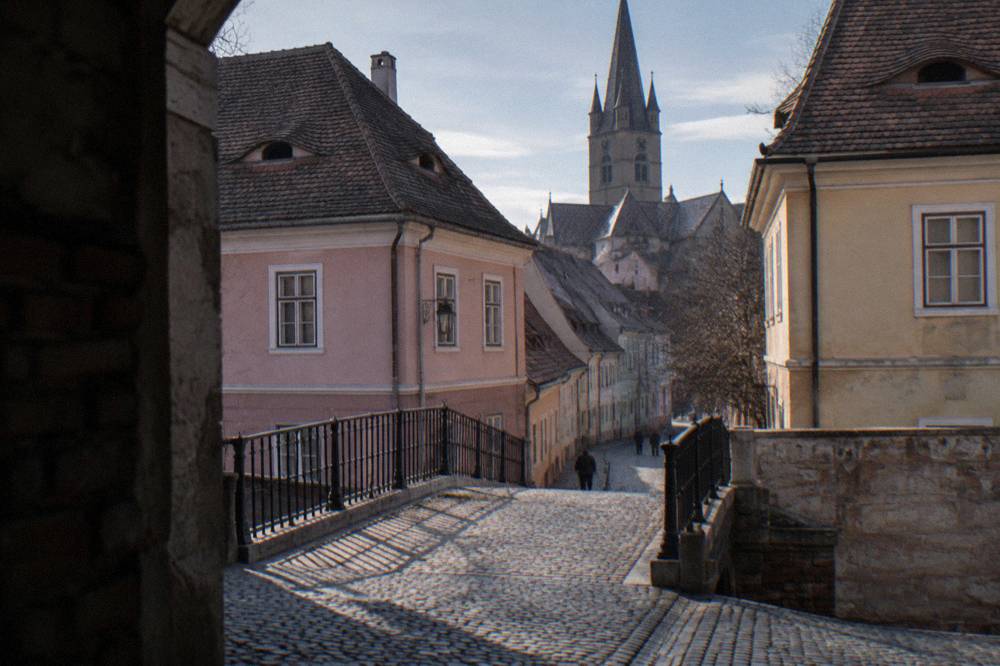
A walking tour is the efficient way to absorb all of this, and two formats fit. A guided walk such as the Upper Town landmarks walk covers the Saxon core in a short loop, and a deeper option is a scholar-led baroque masterclass that pairs the church with the Brukenthal collections. Free tours by a pay-what-you-want model also run in the historical centre.
Where To See Saxon Heritage Around Sibiu?
The Saxon heritage around Sibiu sits in a ring of villages within an hour's drive: Cisnădie and Cisnădioara with their fortified churches about 10 and 13 km out, Rășinari and Sibiel in the Mărginimea Sibiului at 13 and 25 km, and the bigger Saxon towns of Mediaș at about 56 km and Biertan at about 76 km. These are computed road distances from Piața Mare over standard routing, free-flow, so treat them as planning figures rather than timetables.
Cisnădie, about a 14-minute drive, and Cisnădioara, about 18 minutes, hold two of the closest fortified churches, part of the same network the Saxons built across southern Transylvania. Rășinari, about 18 minutes out, and Sibiel, about 36 minutes, lie in the Mărginimea Sibiului, the shepherd villages at the foot of the Cindrel mountains; Sibiel is known for its museum of icons painted on glass. Opening hours and tickets for these village churches were not published in a form this site could rely on, so check locally before setting out.
The easiest guided route through this countryside is the featured half-day Saxon heritage villages trip, which covers the fortified churches and villages around the city in one loop. For a fuller route with planning stops and timings, the Sibiu and Saxon villages itinerary lays out a multi-day version, and the fortified churches near Sibiu guide goes church by church.
What Are The Fortified Churches Of The Saxon Villages?
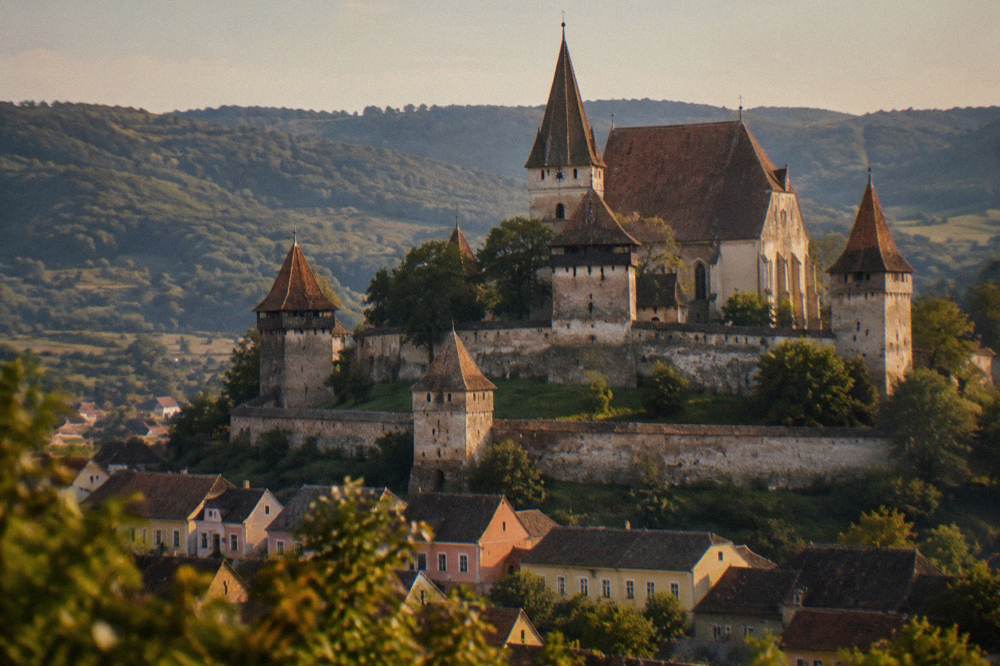
The fortified churches are the Saxons' signature building: village churches enclosed by walls, towers and storage rooms so the whole community could shelter inside during raids, and seven of the villages, including Biertan, are inscribed by UNESCO as the Villages with Fortified Churches in Transylvania, Biertan reported in 1993 and the list extended in 1999. The UNESCO entry itself is verifiable on the World Heritage list; the inscription years are reported and worth confirming on the UNESCO page before you cite them at dinner.
Biertan is the classic day trip. Its fortified church, a UNESCO component, charges a reported 20 RON for an adult ticket, and its hours are reported by the county tourism site as 10:00 to 17:00 from April to May and September to October with a lunch break from 13:00 to 14:00, until 19:00 from June to August, and 11:00 to 15:00 Tuesday to Sunday from November to March, closed Monday. The drive from Sibiu runs about 76 km and takes about 1 hour 15 to 1 hour 30, a reported range that matches the routing. The wider set of guides lives on Sibiu Travel Guide.
Beyond Biertan, the UNESCO serial site covers Prejmer, Viscri, Valea Viilor and the other villages, and day-trip distances from Sibiu are what vary most. Viscri sits about 100 km out, Valea Viilor about 50 km, Prejmer about 120 km. Tickets of roughly 12 to 25 RON per church are a reported range only: confirm the current price at each church before you go. The full church-by-church picture, including which villages pair well, is in fortified churches near Sibiu, and the single-village deep dives are Viscri and Mediaș, the latter one of the Saxon towns on the road to Sighișoara.
| Saxon destination from Piața Mare | Distance | Drive time | Known entry |
|---|---|---|---|
| Cisnădie fortified church | about 10 km | about 14 min | confirm locally |
| Cisnădioara fortified church | about 13 km | about 18 min | confirm locally |
| Rășinari | about 13 km | about 18 min | open village |
| Sibiel | about 25 km | about 36 min | icon museum, confirm hours |
| Mediaș old town | about 56 km | about 68 min | open town |
| Biertan fortified church | about 76 km | about 1 h 15 to 1 h 30 | reported 20 RON |
| Viscri | about 100 km | reported 1 h 30 to 2 h | confirm locally |
| Valea Viilor | about 50 km | reported 45 to 60 min | confirm locally |
Guided options reach the farther villages without the driving. A private trip such as Sighișoara, Biertan and Viscri threads three Saxon landmarks into one day, and a Saxon villages and fortified churches day tour keeps the focus on the churches themselves.
How Did Saxon Hermannstadt Become Today's Sibiu?
Hermannstadt kept its German character into the modern era, gave Romania a president in Klaus Iohannis, its mayor from 2000 to 2014, and is reported to have held the European Capital of Culture title in 2007, while its population, 134,308 in the 2021 census for the municipality, is now overwhelmingly Romanian. The German community today numbers under a thousand residents in the city by reported census counts, a figure this site leaves aside in detail, but the built inheritance is protected and central to the city's identity.
The transition was gradual and layered rather than a single rupture. The medieval Saxon institutions, the guilds and the Saxon university, faded as the modern Romanian state took shape, and the years after the world wars brought emigration that emptied most of the Saxon villages. What remained was architecture on a scale unusual for a city of this size: the two squares, the cathedral, the walls and the rows of houses with the eye-like attic windows the city is famous for, the so-called eyes of Sibiu, visible free from any street in the old town.
Restoration is a live theme in 2026. The Council Tower, the symbol of the Saxon town government, has been closed since 19 January 2026 for a rehabilitation of about 24 months, with completion reported at about January 2028; the project's own progress reports describe cleaned and re-plastered walls and a removed copper roof. The Evangelical Cathedral tower remains the open viewpoint meanwhile. There is no city tourist card, so entry is paid sight by sight.
| Sibiu heritage figure | What the sources say |
|---|---|
| First document | 1191, as Cibinium, per the city's history page |
| Saxon origins | Settlers from the Moselle area, 12th century, reported by the county heritage site |
| German name | Hermannstadt |
| City chronology firsts | Hospital 1292, school 1380, pharmacy 1494, per the city's own chronology |
| Brukenthal opens | 1817, reported |
| Bridge of Lies | Built 1859 to 1860, reported |
| ASTRA open-air museum | Functioning since 1963, reported |
| Population | 134,308 in the 2021 census; about 155,000 permanent plus about 25,000 temporary residents per the city |
What Saxon Food And Traditions Survive In Sibiu?
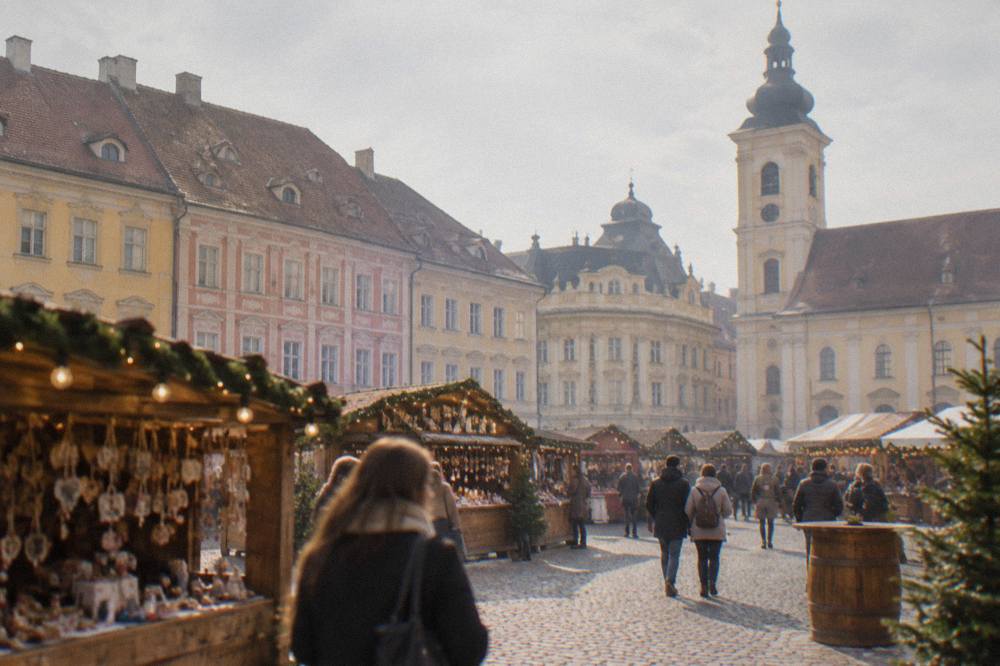
The Saxon table survives in the city's cooking in dishes such as Sibiu salad, balmoș and the region's cabbage rolls, alongside Romanian staples like ciorbă, mici, papanași and zacuscă, and the Christmas market in Piața Mare, running 13 November 2026 to 3 January 2027, continues the German-market tradition in the main Saxon square. The dish list is general heritage rather than a confirmed restaurant recommendation, and this site names no venues; for the food picture in full, see what to eat in Sibiu.
The Saxon kitchen was a farmer's kitchen, rooted in the village economy of the surrounding plains: pork, cabbage, maize, milk and plums. Sibiu salad, the city's namesake cold dish of vegetables and ham, and balmoș, a rich maize-and-cheese dish with shepherd-village roots, are the two names most often tied to the local tradition. Transylvanian Saxon cooking overlaps heavily with Romanian and Swabian food, which is the honest description: borders moved, recipes did not.
The Christmas market is the tradition most visible to a winter visitor. It runs from 13 November 2026 to 3 January 2027 in Piața Mare, with free entry, a 600 sqm ice rink and more than 120 exhibitors, per the market's own site; the Golden Ticket for the rides is a reported 100 lei. The full winter picture, including the market and the season at Păltiniș, is in the Sibiu Christmas market guide.
Festivals carry the heritage too. The city reported held the European Capital of Culture title in 2007, and the theatre festival each June is its direct descendant; the dates and programme are in Sibiu festivals.
How Do You Plan A Saxon Heritage Trip From Sibiu?
Plan two layers: a day and a half in the city for the squares, cathedral, walls and Brukenthal museums, remembering the main museums close Monday and Tuesday, then one or two day trips outward, with the close villages at 10 to 25 km, Biertan at about 76 km and the UNESCO villages of Viscri and Prejmer beyond, by rental car, train or guided tour. The city layer needs no car at all; the old town is compact and pedestrian, and the airport bus line 11 costs 3.5 lei for a 60-minute ticket.
Timing matters for both layers. The ERA5 reanalysis, 1991-2020, puts July and August mean daily highs at 24.2 and 24.5 C with about 12 hours of sunshine a day, while January runs 2.2 C high and -5.7 C low with 23.3 cm of snow across the month; the shoulder months of May, June and September suit a mixed city-and-villages plan. The village churches keep longer hours from June to August and shorten from November to March, per the reported Biertan schedule, so the season shapes the trip twice over.
| Plan | Days | What it covers |
|---|---|---|
| City only | 1 to 2 | Squares, cathedral tower, walls, Brukenthal, ASTRA at 50 RON |
| City plus close villages | 3 | Cisnădie, Cisnădioara, Rășinari, Sibiel loop |
| City plus Biertan and Mediaș | 3 to 4 | The UNESCO church and a Saxon town on one road |
| Full Saxon circuit | 5 | Viscri, Valea Viilor or Prejmer added, best with a car or guide |
Getting around without a car is workable: the train station sits about 0.8 km from Piața Mare, with reported journeys of about 1 to 1.5 hours to Mediaș and 2 to 2.5 hours to Sighișoara, always worth checking on cfrcalatori.ro for the live timetable. For driving, the car rental guide covers the options from the airport. Where to sleep is covered in where to stay in Sibiu, and note that since 1 January 2026 hotels collect a 2 percent tax on the accommodation value.
Guided day trips cover the villages without any of the planning. The featured half-day Saxon heritage villages trip is the close ring; farther afield, a two UNESCO sites tour pairs Sighișoara's citadel with Biertan in one day.
Common Questions About Saxon Heritage In Sibiu
Who founded Sibiu?
Sibiu was founded by Transylvanian Saxon settlers, reported by the county heritage site to have come from the Moselle valley area in the 12th century. The city is first documented in 1191 as Cibinium, per its own history page, and was known to its German community as Hermannstadt.
What does Hermannstadt mean?
Hermannstadt is simply the German name of Sibiu, used by the Saxon community that built and governed the city for centuries. Both names refer to the same place on the Cibin river in central Romania.
Are there still Saxons in Sibiu?
A small German community remains, under a thousand residents by reported census counts, and the city's own presentation page lists Germans at 1 percent of the population in the 2011 census. The built heritage, from the cathedral to the fortified churches, is far more visible than the community itself.
Which Saxon fortified churches can you visit from Sibiu?
The closest are Cisnădie and Cisnădioara at about 10 and 13 km. Biertan, a UNESCO component about 76 km away, charges a reported 20 RON adult ticket. Viscri and Valea Viilor sit about 100 and 50 km out; confirm hours and tickets locally for each, since village schedules vary by season.
Is the Council Tower open in Sibiu?
No. The Council Tower has been closed to visitors since 19 January 2026 for a restoration planned at about 24 months, with completion reported at about January 2028. The Evangelical Cathedral tower, at 10 RON adult, is the open viewpoint in the city meanwhile.
What is the best time of year for the Saxon villages?
June to August, when the reported church hours run longest, to about 19:00 at Biertan. The ERA5 reanalysis, 1991-2020, gives those months mean daily highs of 22.4 C in June, 24.2 C in July and 24.5 C in August, with about 12 hours of sunshine a day. Winter trips are better spent on the city and the Christmas market, which runs 13 November 2026 to 3 January 2027.