What To Eat In Sibiu: Transylvanian Dishes Worth Ordering
Sibiu food sits where Transylvanian Saxon cooking meets Romanian peasant cooking: sour soups, cabbage rolls, grilled minced-meat rolls and fried cheese doughnuts, eaten in a Saxon old town an hour from the mountain pastures that supply the cheese.
Short answer
Order ciorbă (sour soup), sarmale (cabbage rolls), mici (grilled minced rolls), Sibiu salad, papanași for dessert and balmoș if you find it; buy bread, cheese and zacusca at Piața Cibin; and cook or taste the cuisine yourself on a workshop, a gastronomy walk or a wine tasting in the old town.
Sibiu, in Transylvania, central Romania, eats at a crossroads. The city was founded by Transylvanian Saxon settlers reported to have come from the Moselle valley area in the 12th century, and their hearty, pork-and-cabbage, preserving-cupboard cooking layered itself over Romanian peasant dishes from the surrounding Mărginimea Sibiului, a pastoral region of shepherds on the southern edge of the Carpathians. The result, described in general food sources as Transylvanian Saxon cooking alongside the Romanian canon, is the subject of this Sibiu Travel Guide page: which dishes to order, where the food is bought and eaten, how to cook or taste it yourself, and which food day trips the region rewards. No restaurant on this page is named by recommendation, because the research pass turned up no venue that could be named with confidence; the restaurant guide covers where to sit down once you know what to order.
What Makes Sibiu Food Different From The Rest Of Romania?
Sibiu food is defined by the overlap of two kitchens: the Transylvanian Saxon cooking brought by settlers reported to have arrived from the Moselle valley in the 12th century, and the shepherd cooking of Mărginimea Sibiului, the pastoral villages immediately south of the city. Both traditions favour pork, cabbage, smoked meat, sour soups and preserved vegetables, because both were built for cold winters at about 415 to 431 m altitude, with snow falling from November to March in the ERA5 reanalysis, 1991-2020 normals.
That altitude and latitude shape the plate. The city's own official description gives it a temperate continental climate with a mean annual temperature of 8.9 C and 662 mm of rainfall, wettest in June at 113 mm, so the growing season is compact and the preserving season is long. Sauerkraut, smoked bacon, brined cheese and vegetable spreads such as zacusca exist here for the same reason the fortified churches of the surrounding villages exist: winters that demanded storage and defence.
The Saxon layer is the differentiator within Romania. Sibiu's German name is Hermannstadt, reported by the regional heritage body patrimoniu.sibiu.ro, and the Saxon community's cuisine, pork roasts, dumplings, stews and dense baking, is part of what food writers describe as Transylvanian Saxon cooking. The city's own chronology even claims the first pharmacy on current Romanian territory in 1494, which says something about how old the town's institutions of household well-being are; print that only as the city's own chronology says it. What matters for a visitor is simpler: order in Sibiu and you meet both the Saxon table and the Romanian one, often on the same menu.
Which Transylvanian Dishes Should You Order In Sibiu?
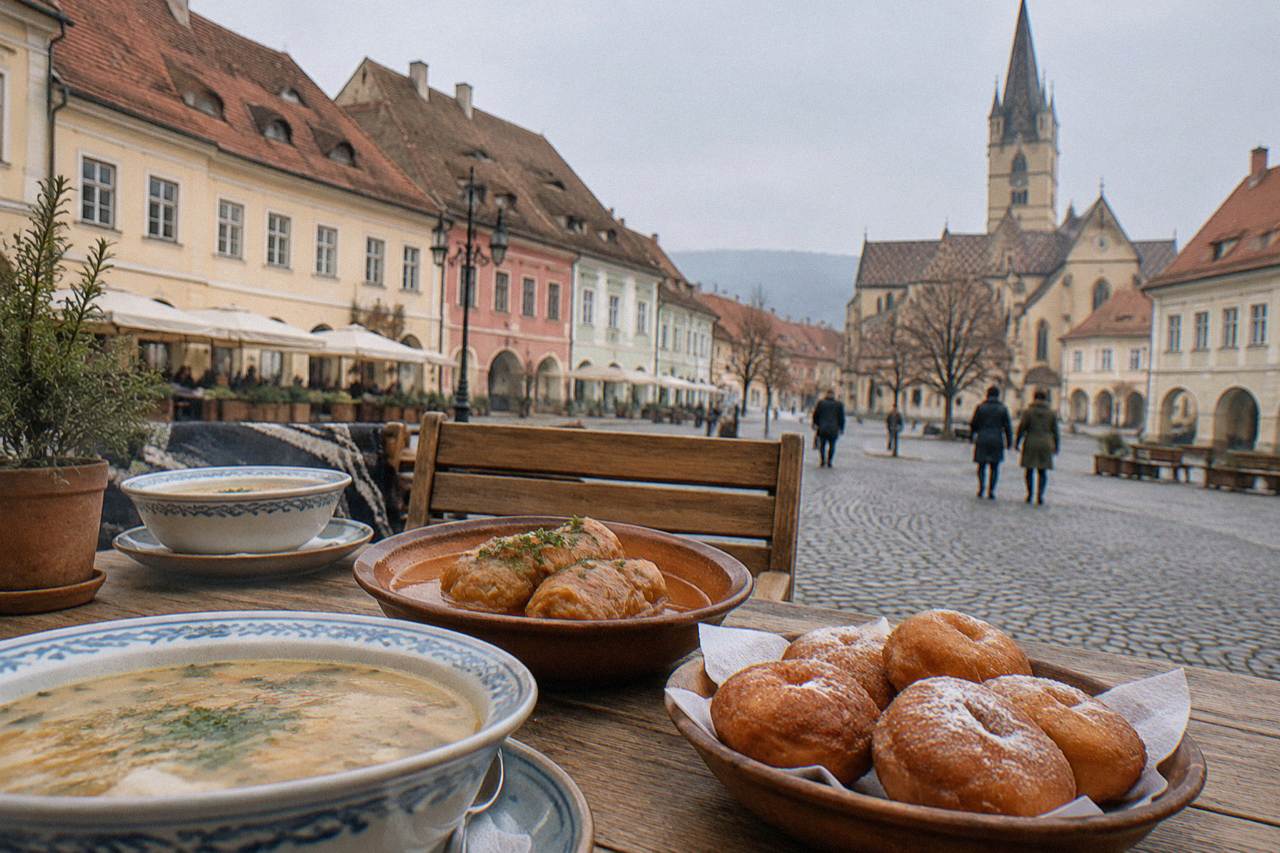
Order ciorbă, a sour soup soured with fermented wheat bran or vinegar; sarmale, cabbage rolls stuffed with pork and rice; mici, grilled skinless minced-meat rolls eaten with mustard; Sibiu salad, a mayonnaise-bound meat and vegetable salad named for the city; zacusca, a roasted aubergine and pepper spread; balmoș, a dense polenta-and-cheese shepherd dish; and papanași, fried cheese doughnuts with sour cream and jam, as the dessert to end every list.
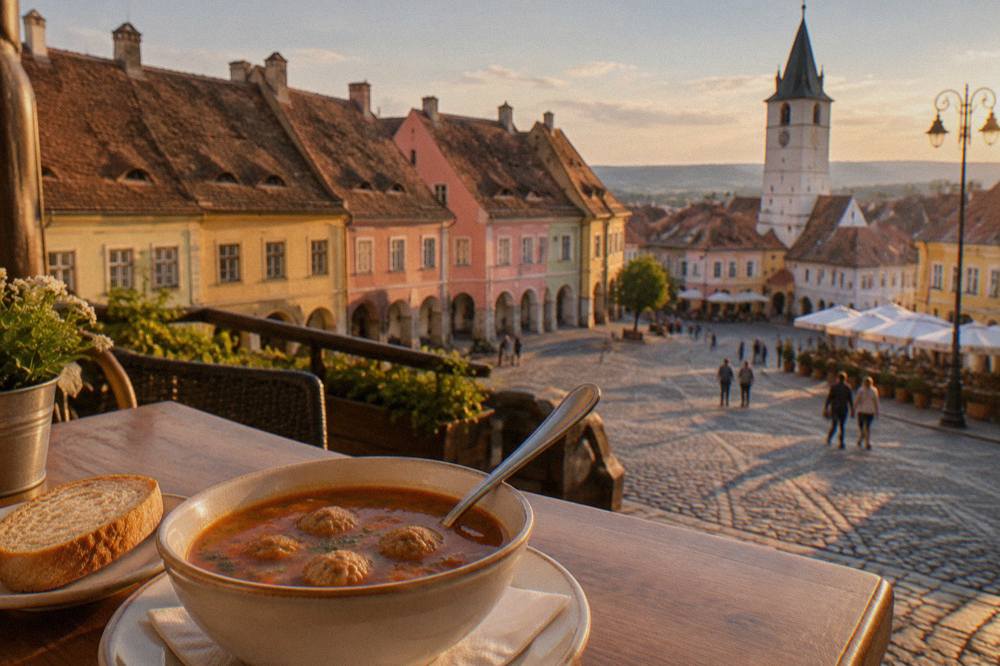
These are the dishes the general sources attach to the region, and none of them needs a specific venue to be understood. Ciorbă comes in many broths: tripe, meatball, vegetable, chicken with rice. The word covers any sour soup, and sourness is the taste that separates the Romanian soup course from Central European ones. Sarmale are the festive centrepiece, and mici are the casual one, street food and beer food across the country. Balmoș is the rarity worth hunting: a shepherd's dish of polenta cooked with cheese and butter, tied to the pastoral Mărginimea, and far less common on city menus than sarmale.
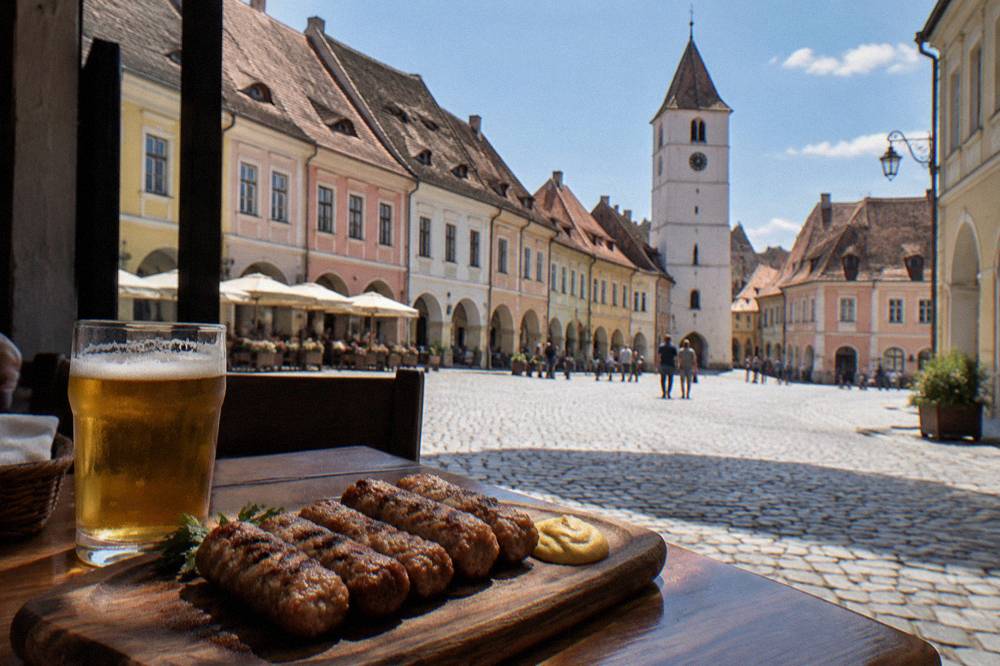
A short ordering guide, based on the general food list the research supports:
| Dish | What It Is | When To Order It |
|---|---|---|
| Ciorbă | Sour soup, meatball, tripe, chicken or vegetable, soured with bran liquid or vinegar | As a first course at lunch or dinner |
| Sarmale | Cabbage rolls stuffed with pork and rice, often with smoked meat and polenta | The festive main; winter and holidays especially |
| Mici | Grilled skinless minced-meat rolls, cylindrical, eaten with mustard and bread | Casual lunches, beer gardens, market grills |
| Sibiu salad | Mayonnaise-bound salad with meat, potatoes and vegetables, named for the city | As a starter or a light main |
| Zacuscca | Roasted aubergine, pepper and bean spread in jars | Breakfast and appetiser boards; buy jars to take home |
| Balmoș | Dense dish of polenta cooked with sheep cheese and butter | A mountain and village speciality; order where found |
| Papanași | Fried sweet-cheese doughnuts topped with sour cream and jam | Dessert, without exception |
Two practical notes. First, Transylvanian Saxon cooking appears on menus as its own category in places that lean heritage, think pork roasts, dumplings and stews rather than the Romanian canon above. Second, prices for none of these dishes can be quoted here, because no menu figures appear in the trusted sources; check the menu at the door, or read the room on the cost guide for how the wider budget stacks up.
Where Do Locals Buy Food In Sibiu?
Piața Cibin is the city's named market, the one food-shopping institution the sources support by name, and no stall list, hours or prices exist for it, so confirm opening times locally before making it an errand. Beyond the market, the food geography of Sibiu runs through the terraces of Piața Mare and Piața Mică and out to the shepherd villages of Mărginimea Sibiului, whose sheep cheese ends up in balmoș and on appetiser boards.
The market is worth the caveat anyway. A named central market in a mid-sized Transylvanian city is where zacusca jars, brined cheese, smoked bacon and seasonal produce concentrate, and the Mărginimea villages, Rășinari at about 18 minutes and 13 km by road from Piața Mare, Sibiel at about 36 minutes and 25 km, and Săliște about 23 km out, computed over openstreetmap routing, are the upstream source of the same goods. A village food circuit and a market visit tell the same story at two scales.
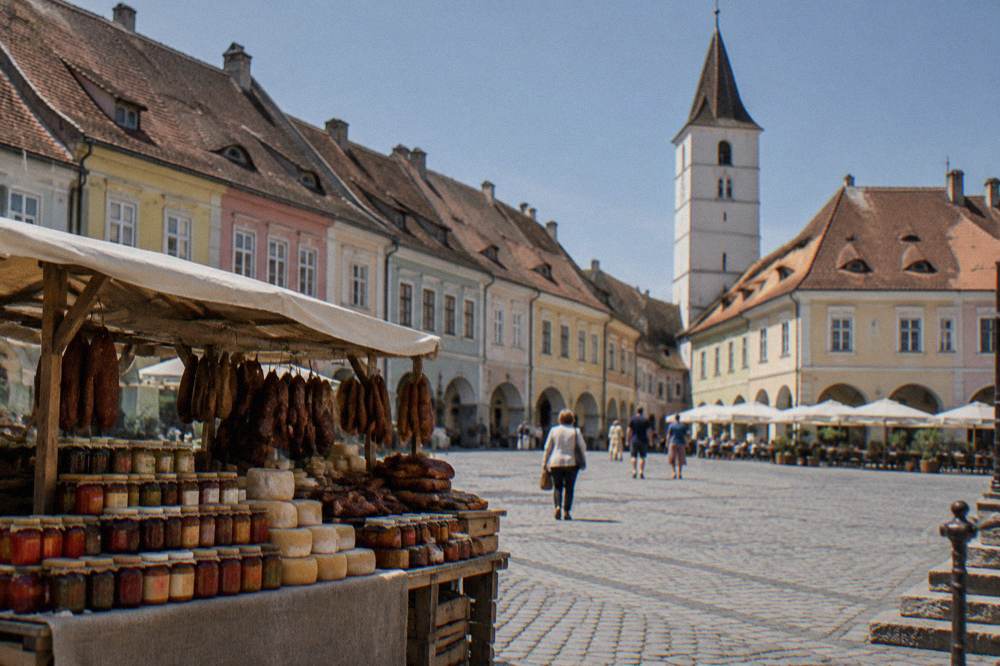
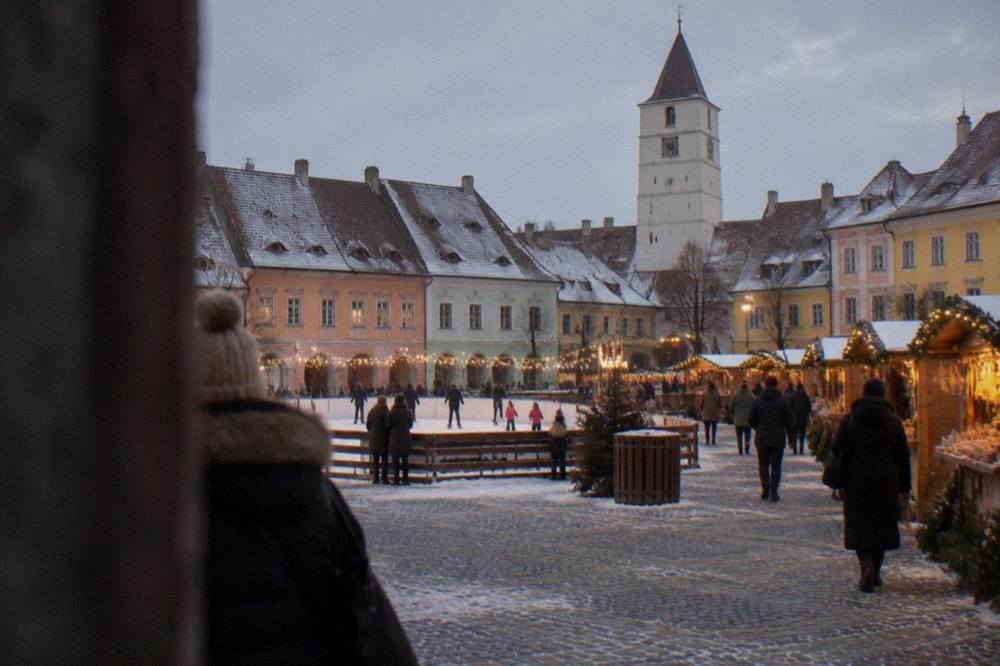
The old town itself is the dining room. Piața Mare, the Grand Square, hosts the terraces and, from 13 November 2026 to 3 January 2027, the Sibiu Christmas Market with free entry, a 600 sqm ice rink and the reported Golden Ticket at 100 lei covering the wheel, carousel and mini-train, a fact worth knowing because winter eating in Sibiu happens partly outdoors around that market, on hot food and mulled drinks whose individual prices are not in the sources. The Christmas market guide covers the full programme.
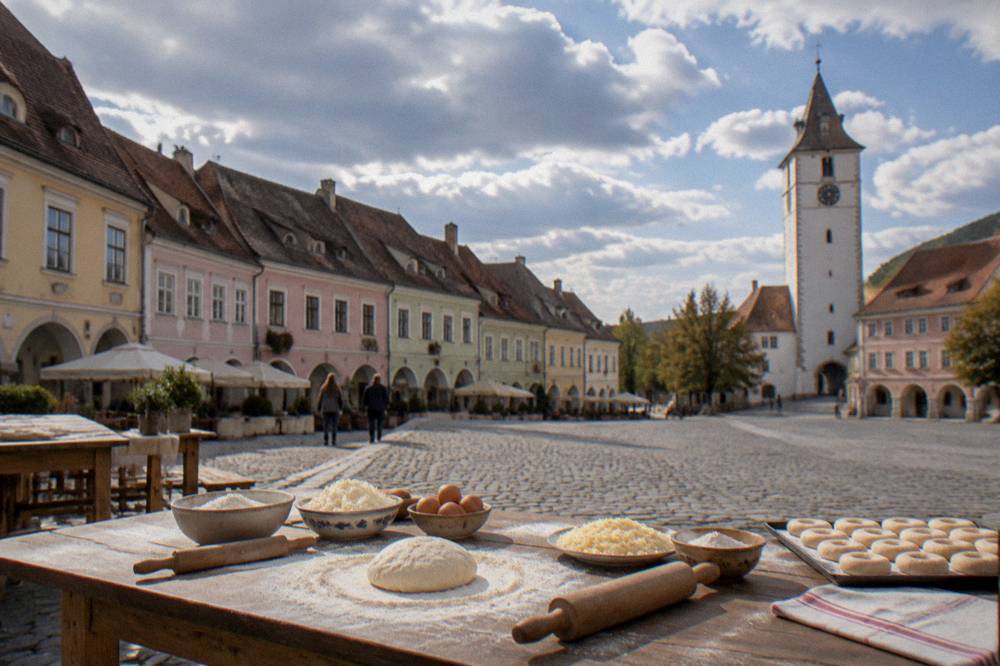
If cooking the food interests you more than shopping for it, the Check availability link above leads to a Romanian traditions cooking workshop and dance class in Sibiu, a bookable way to learn the recipes on this page from the inside.
What Does A Food-Focused Day In Sibiu Look Like?
A realistic food day starts at Piața Cibin in the morning for whatever the stalls hold, moves to a long lunch of ciorbă and a main in the old town between Piața Mare and Piața Mică, spends the afternoon on the Stairs Passage and Lower Town walk that burns the lunch, and ends with papanași and a coffee in a square cafe, with a tasting, a gastronomy walk or a cooking workshop slotted into the afternoon if you want the cuisine explained rather than just eaten.
The walk between meals is genuinely part of the plan. The old town is compact, the train and bus stations sit about 0.8 km from Piața Mare, and the city's Tursib buses run on tickets of 3.5 lei for 60 minutes, 5 lei for 75 minutes and 7 lei for 90 minutes, per the operator's own fare page, so nothing food-related in the city centre is more than a short ride away. A self-guided walking option with audio commentary exists as a bookable product below; it covers the essential landmarks between the squares.
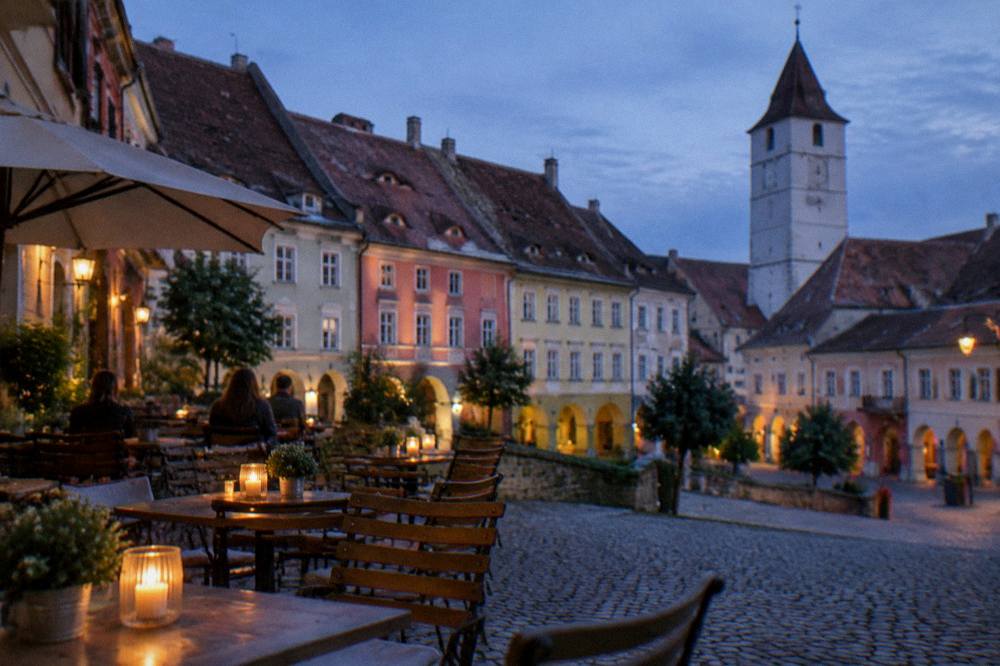
The rhythm of Romanian meals helps with planning. Lunch is the main restaurant meal of the day in Romania generally, and dinner runs later than in Northern Europe. Terraces in Piața Mare fill through the afternoon, and in July the ERA5 reanalysis, 1991-2020, shows a mean daily high of 24.2 C with 12.8 hours of sunshine a day, which is terrace weather by any standard; in January the same normals give 2.2 C and 6.2 hours, which is fire-and-sarmale weather.
| Season | ERA5 Mean High / Low (C) | What The Season Puts On The Plate |
|---|---|---|
| Spring (Mar to May) | 8.7 to 19.1 / -0.8 to 9.0 | Green soups, lamb at Easter, first garden vegetables |
| Summer (Jun to Aug) | 22.4 to 24.5 / 12.9 to 14.8 | Grilled mici, terraces, salads, papanași season |
| Autumn (Sep to Nov) | 19.6 falling to 8.7 / 10.5 to 0.9 | Zacusca preserving, new wine, stews returning |
| Winter (Dec to Feb) | 2.2 to 4.3 / -5.7 to -4.4 | Sarmale, smoked pork, hot wine at the Christmas market |
The climate rows are ERA5 reanalysis, 1991-2020 modelled normals, not station records; the dish pairings are general Transylvanian food culture, not a fixed calendar.
Can You Cook Or Taste Romanian Food Yourself In Sibiu?
Yes, and three formats do it: a Romanian traditions cooking workshop and dance class that teaches the recipes hands-on; a gastronomical walk billed as a taste of history, which pairs the old town with local bites; and a sommelier-led Romanian wine tasting, which covers the drinking side of the cuisine. All three are bookable products whose prices and ratings render below from live listings, since no fixed venue figures belong on the page.
The cooking workshop is the deepest of the three: the listing describes a hands-on session on Romanian traditions, so the sarmale and papanași on the table above become something you can reproduce at home. The gastronomy walk suits a first day, when you want the city and its food explained together, and the wine tasting suits the evening. Romania's winemaking is not documented in this site's research pass at vineyard level, so the tasting below is the honest way to encounter it: guided, in the city, with the current listing carrying the details.
A combined evening plan writes itself: one of the walks earlier in the day, the tasting at dusk, dinner after. For travellers organising the whole stay, the where to stay and how to get to Sibiu guides handle the rest of the logistics, and note that hotels have added a 2 percent tax on the accommodation value since 1 January 2026, a city levy worth expecting on the bill.
Which Food Day Trips From Sibiu Reward The Drive?
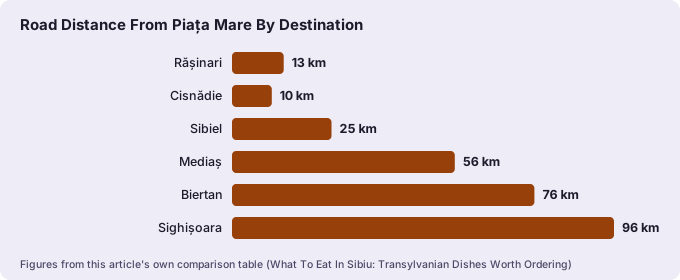
The food-relevant day trips from Sibiu run south into the shepherd villages of Mărginimea Sibiului for sheep cheese and balmoș country, and east and north into the Saxon villages and towns, Sighișoara at about 96 km and 102 minutes, Mediaș at about 56 km and 68 minutes, and Biertan with its UNESCO fortified church at about 76 km and roughly 1 hour 15 to 1 hour 30, where the Saxon food heritage and the fortified-church heritage are the same landscape.
All drive times are computed over openstreetmap routing from Piața Mare in free-flow conditions, so treat them as planning figures, not timetables. The private tour below strings Sighișoara, Biertan and Viscri together, which is the food-and-heritage circuit in one bookable move; Viscri sits among the seven villages of the UNESCO serial listing of Villages with Fortified Churches in Transylvania, inscribed with Biertan in 1993 and extended in 1999.
| Destination | Road Distance From Piața Mare | Drive Time (About) | The Food Angle |
|---|---|---|---|
| Rășinari | 13 km | 18 min | Mărginimea shepherd village; sheep cheese country |
| Cisnădie | 10 km | 14 min | Fortified church town; village kitchens |
| Sibiel | 25 km | 36 min | Icon-on-glass museum village in cheese and pastoral country |
| Mediaș | 56 km | 68 min | Saxon town on the wine-growing corridor |
| Biertan | 76 km | 1 h 15 to 1 h 30 (reported) | UNESCO fortified church; Saxon village table |
| Sighișoara | 96 km | 102 min | UNESCO old town; full day of citadel dining |
Biertan's fortified church charges an adult ticket reported at 20 RON, with hours that shorten from November to March, Tuesday to Sunday 11:00 to 15:00 and closed Monday, per the tourism listing; confirm before you go. Sighișoara's Clock Tower history museum is listed at 50 RON adult on the citadel's own ticket page, also worth confirming. The fortified churches guide and the Sighișoara day trip guide carry the full sightseeing detail; the point here is that the region's food and its church fortifications were built by the same communities, and a day trip explains both.
How Do Festivals And Holidays Change The Table In Sibiu?
The two dates that reshape eating in Sibiu are the Christmas market, which runs 13 November 2026 to 3 January 2027 in Piața Mare with free entry, and the FITS theatre festival, dated 18 to 27 June 2027 for its 34th edition, when the squares fill and every terrace in the old town becomes festival infrastructure; beyond these, the 2026 calendar included Sibiu Jazz from 2 to 6 September and Artmania on 24 and 25 July, both of which pull the evening trade toward Piața Mare.
Winter is the food season with a shape you can plan around. The market's 19th edition brings more than 120 exhibitors and a 600 sqm ice rink to the Grand Square, with about a third of the exhibitors new this year, and the reported Golden Ticket at 100 lei covering the wheel, carousel, mini-train and Enchanted Elevator. Individual food, hot-drink and ride prices at the market are best checked at the stall, so budget from the stall, not from a guide. Păltiniș, the ski resort 32 km and about 40 minutes south, opens its 2026-27 season on 28 November 2026, which lands ski appetite and Christmas-market appetite in the same fortnight; the winter itinerary guide covers the pairing.
| Date | Event | Where It Touches Food |
|---|---|---|
| 13 Nov 2026 to 3 Jan 2027 | Sibiu Christmas Market, Piața Mare | Stalls, hot food, ice rink, free entry |
| 28 Nov 2026 | Păltiniș ski season opens | Mountain lunches, 32 km south |
| 18 to 27 Jun 2027 | FITS theatre festival (34th edition) | Terraces and squares full for ten days |
| 2 to 6 Sep 2026 | Sibiu Jazz Festival, 54th edition | Late-evening dining around venues |
| 24 to 25 Jul 2026 | Artmania Festival, Piața Mare, free access | Open-air food and drink in the square |
Festival dates beyond these were not announced or found, including any 2027 medieval festival, wine fest or gastronomy event, so build no itinerary around them. The festivals guide tracks what is actually dated.
What Should You Know Before Eating Out In Sibiu?
Four practical facts frame every meal in Sibiu: the currency is the Romanian leu (RON, lei), with the exchange rate at roughly 5.3 lei to the euro; a 2 percent tax on the accommodation value has applied to hotel bills since 1 January 2026, though restaurant bills are unaffected; Romania is a full Schengen member, so no border formality interrupts a food circuit that crosses into the Saxon villages; and the single European emergency number, 112, applies to everything, though it should never be needed for dinner.
Tipping practice, card acceptance and typical menu prices were not found in trusted sources, so none are stated here; ask at your accommodation, or watch what the room does. Tap-water safety likewise has no official statement in the research, so buy bottled water if in doubt. Opening hours of restaurants and cafes are not stated here, and individual venue names are deliberately absent from this page, per the site's sourcing standard; the restaurant guide linked above is the companion piece for seating decisions once you arrive.
The closing thought is a portioning one. Sibiu's food is generous, meat-forward and built for the climate described at the top of this page, and the dishes that matter, ciorbă, sarmale, mici, Sibiu salad, zacusca, balmoș, papanași, all reward ordering slowly. One soup, one main, one papanași, then walk it off down the Stairs Passage to the Lower Town, and let a market morning or a cooking workshop fill in the story of how a Saxon town and a shepherd region ended up sharing one table.
Common Questions About Food In Sibiu
What food is Sibiu known for?
Sibiu is known for the Transylvanian dishes its name attaches to, above all Sibiu salad, and for the wider regional canon: ciorbă sour soup, sarmale cabbage rolls, mici grilled minced rolls, zacusca spread, balmoș and papanași, alongside the Transylvanian Saxon cooking of the historic German community.
What is Sibiu salad?
Sibiu salad is a mayonnaise-bound salad of meat, potatoes and vegetables named after the city, served as a starter or a light main. It is one of the few dishes that carries the city's name directly.
What dessert should I order in Sibiu?
Papanași: fried sweet-cheese doughnuts topped with sour cream and jam. They appear on menus across Romania and are the standard sweet finish in Transylvanian restaurants.
Are restaurant names recommended on this page?
No. No restaurant, cafe, bakery or bar in Sibiu carries a confirmed listing in this site's research pass, so no venue is named or recommended anywhere on this page. Confirm venues and menus on arrival.
What should food lovers do beyond eating out in Sibiu?
Cook the cuisine on a workshop, walk it on a gastronomy tour, taste Romanian wine with a sommelier, visit Piața Cibin market, and take a food-minded day trip into the Mărginimea shepherd villages or the Saxon towns such as Sighișoara and Biertan.
When is the food season at its best in Sibiu?
Two windows stand out: the Christmas market from 13 November 2026 to 3 January 2027, and the summer festival stretch, with FITS dated 18 to 27 June 2027. Winter suits sarmale and hot wine; July, with a modelled 12.8 hours of sunshine a day in the ERA5 reanalysis, 1991-2020, suits terraces and mici.