Best Restaurants In Sibiu
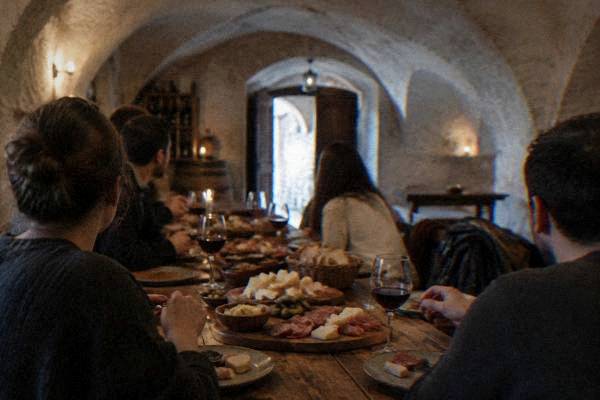
Sibiu's dining scene runs on Transylvanian home cooking, Saxon pastry traditions and tables set around Piața Mare and Piața Mică. Here is what to order, where the eating streets are, and how to pick a table that serves food made for Sibiu rather than for passing tour groups.
Short answer
The best food in Sibiu is traditional Transylvanian cooking, ordered by dish rather than by headline restaurant name: ciorbă, sarmale, mici, papanași and the local Sibiu salad. The eating streets cluster around Piața Mare, Piața Mică and the lanes linking them to the Lower Town, and a guided gastronomy walk is the fastest way to learn the dishes before choosing where to sit down.
Sibiu, in Transylvania, Romania, eats the way a Saxon market town should: slowly, by dish, with sour soups, cabbage rolls and fried cheese doughnuts carrying more weight than any single restaurant brand. The old town sits on a hill above the Cibin river, with the Upper Town squares of Piața Mare and Piața Mică at the top, the Lower Town below, and the Carpathian foothills and their shepherding villages a short drive away. That geography shapes the plate. Sheep cheese from the Mărginimea Sibiului villages, garden vegetables and forest mushrooms all arrive in the city's kitchens, and the city's own chronology records a pharmacy operating from 1494, a sign of how old its settled commercial life is.
This page takes an honest approach: no venue here has been inspected, and no restaurant name appears in any source this site trusts. Instead it covers what is actually verifiable, which is the food itself, the streets and squares where the tables stand, the seasonality of eating out, and the guided food experiences that are properly listed and bookable. For the wider dish-by-dish picture, start with the companion page on what to eat in Sibiu, and for the framing of a whole visit, see things to do in Sibiu.
What Should You Eat In Sibiu Before Anything Else?
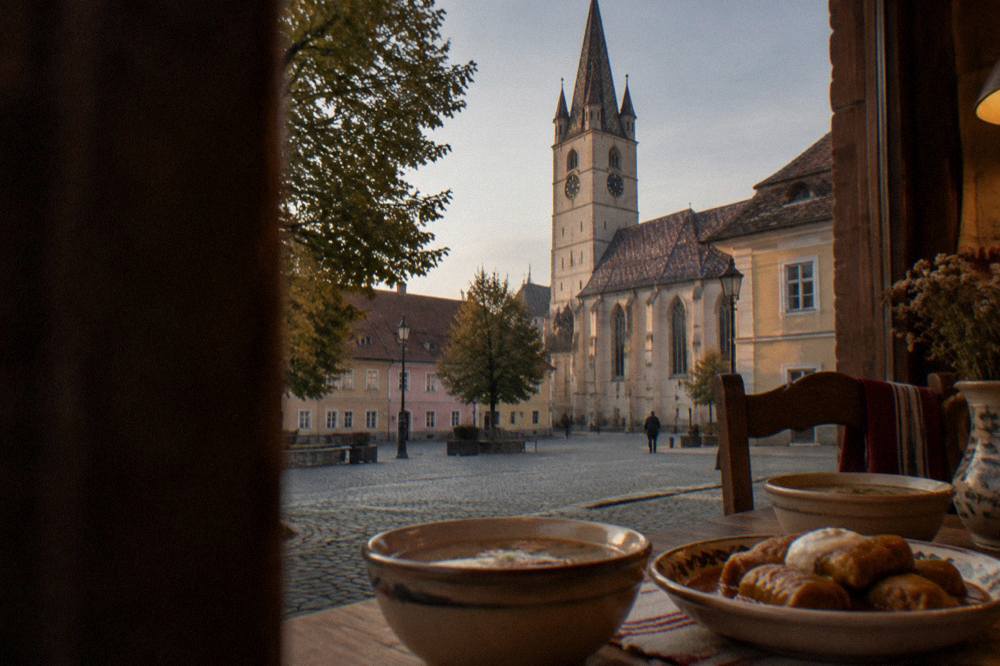
The core of eating in Sibiu is a short list of traditional dishes: ciorbă, a sour soup; sarmale, cabbage rolls; mici, grilled minced-meat rolls; papanași, fried cheese doughnuts with jam and cream; and Sibiu salad, the city's own named dish. Around them sit zacusca, a cooked vegetable spread, and balmos, a rich shepherds' dish of cheese and polenta. Order these by name and you are eating what the region actually cooks.
Every item on that list is a Transylvanian staple rather than a tourist invention, and the region's food identity leans on shepherding. The Mărginimea Sibiului, the string of villages southwest of the city including Rășinari, Sibiel and Săliște, is historic sheep-farming country, and its dairy traditions reach the city's tables as telemea and brânză cheeses. Transylvanian Saxon cooking adds a second layer: the German community that founded the city brought pastry, sausage and preservation habits that survive in local curing and baking, even though the German-speaking population of the city is now very small.
The practical advice is simple. Read menus for the dishes, not the restaurant's name. A kitchen that lists ciorbă de perișoare (meatball sour soup) and makes its own papanași is cooking from the regional playbook. A menu that is entirely international and lists no Romanian dish at all is telling you something. Sibiu salad, incidentally, is the one dish that carries the city's name, and it is worth asking any waiter whether the kitchen makes it in house.
| Dish | What It Is | When To Order It |
|---|---|---|
| Ciorbă | Sour soup, often soured with borș or cabbage juice; meatball and tripe versions are common | As a starter, any season |
| Sarmale | Cabbage rolls stuffed with minced pork and rice, served with polenta | A cold-weather main |
| Mici | Skinless grilled minced-meat rolls, eaten with mustard and bread | With beer, in warm weather |
| Papanași | Fried cheese doughnuts topped with sour-cream and jam | Dessert, always worth asking for |
| Sibiu salad | The city's own named salad, the one dish carrying Sibiu's name | As a starter |
| Zacuscca | Cooked vegetable spread, typically on bread | Breakfast or a starter |
| Balmos | A rich dish of cheese, butter and polenta from shepherding cooking | A hearty main |
Where Are Sibiu's Best Eating Streets And Squares?
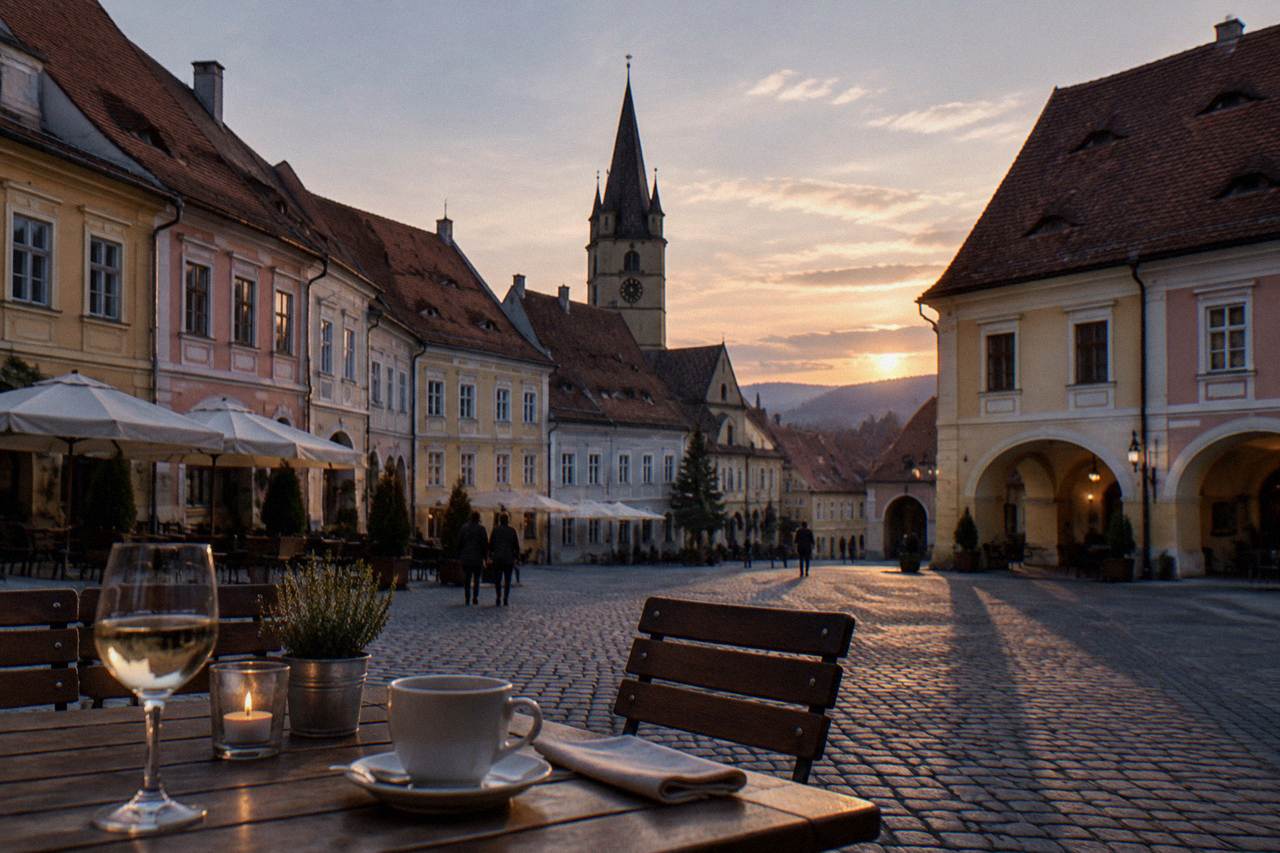
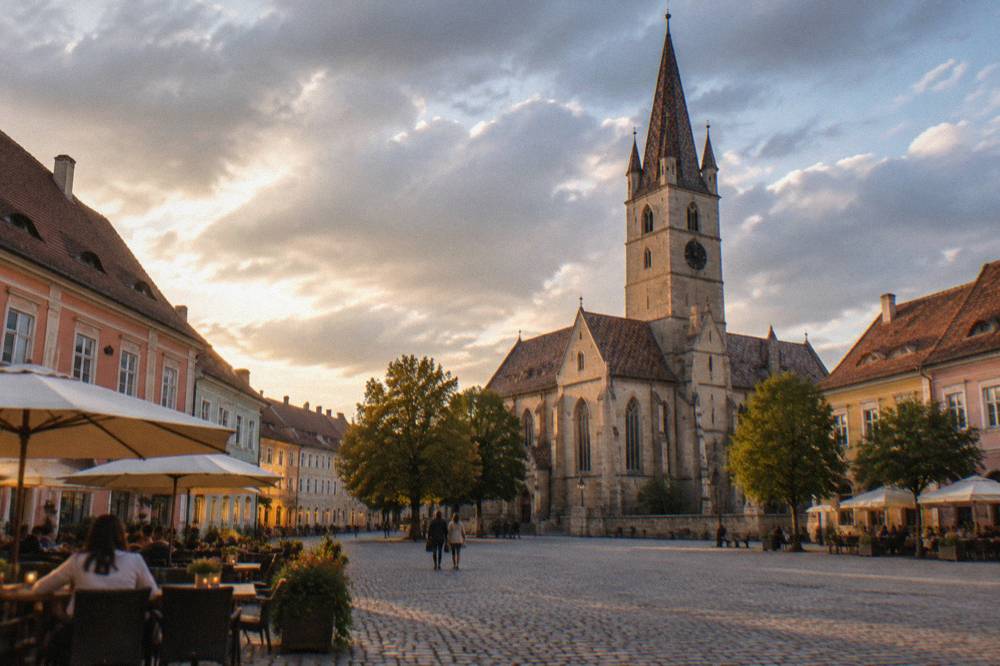
Sibiu's restaurant tables cluster around three places: Piața Mare, the grand main square; Piața Mică, the smaller square one block east with the Bridge of Lies at its end; and the lanes dropping through Pasajul Scărilor, the Stairs Passage, toward the Lower Town. Piața Mare carries the terraces and the evening crowds, Piața Mică the smaller rooms and cellars, and the Lower Town quieter, more local-feeling tables.
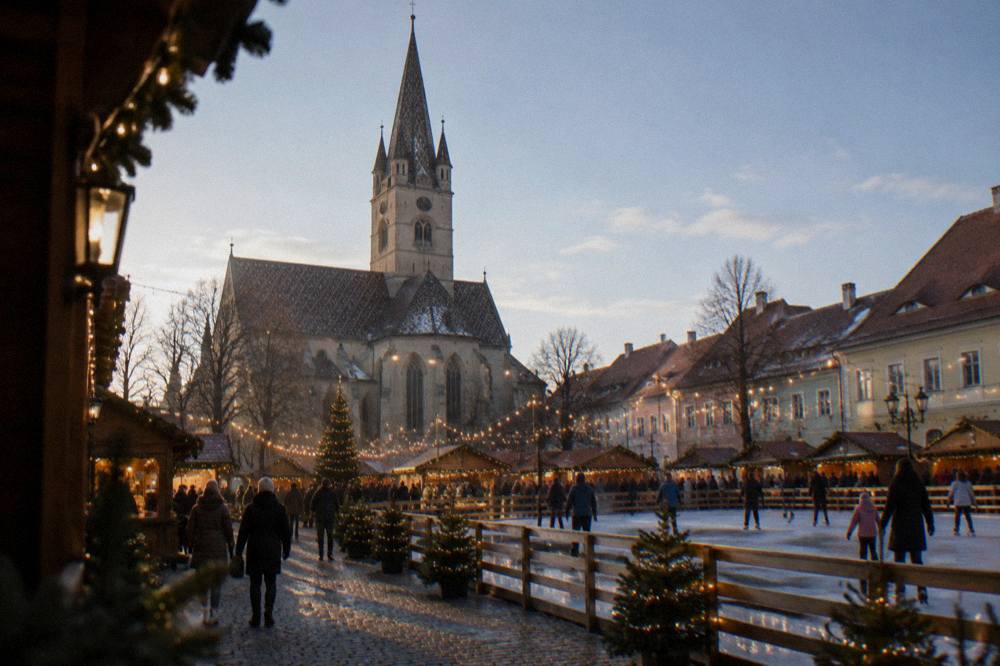
Piața Mare is the city's stage. It hosts the Christmas market from 13 November 2026 to 3 January 2027, and the Sibiu Jazz Festival and the Artmania Festival have used it as an open-air venue, so the square's terraces are oriented around events as much as around food. Tables here put you in the middle of the city's life, and in December that means eating beside a 600 square metre ice rink. The trade-off is straightforward: square-front rooms compete on location.
Piața Mică is one block away and a step down in scale, with the Pharmacy Museum on its corner and the Bridge of Lies, an iron bridge completed in 1859 to 1860, spanning to Piața Huet. Cellar restaurants suit it: the old town is full of vaulted ground floors. From Piața Mică, Pasajul Scărilor descends toward the Lower Town, where streets are quieter, rents are lower and the cooking is likelier to be aimed at residents. The Council Tower stands between the two main squares, but note it has been closed to visitors since 19 January 2026 for a restoration planned at about 24 months; the Evangelical Cathedral tower, at 10 RON for an adult ticket, is the open viewpoint while it waits.
The Stairs Passage route also connects eating with sightseeing efficiently. The city walls, the Potters' Tower and the Lower Town lanes form a loop you can walk between lunch and dinner. For orientation, the companion Sibiu map guide lays out the old town street by street.
| Area | Character | Best For |
|---|---|---|
| Piața Mare | The grand square; terraces, event venue, Christmas market site | People-watching, seasonal atmosphere |
| Piața Mică | Smaller square by the Bridge of Lies; cellar rooms | Intimate dinners, dessert and coffee |
| Piața Huet | The square by the Evangelical Cathedral; quieter | A quiet lunch between sights |
| Pasajul Scărilor and the Lower Town | The Stairs Passage and lanes below; local life | Value-minded, resident-facing kitchens |
| Dumbrava, by the ASTRA Museum | Forest park on the city's southern edge | A day out combined with the open-air museum |
How Do You Choose A Restaurant In Sibiu Without Guidebook Names?
You choose a restaurant in Sibiu the same way residents do: by menu and kitchen signs rather than by brand. Look for a menu that lists the traditional dishes by name, prices displayed outside by law-abiding custom, a room that fills in the evening, and a kitchen making papanași and ciorbă from scratch. Since no venue has been inspected for this page, the honest tools are the dish list above, your own eyes at the door, and a guided gastronomy walk to calibrate on your first day.
The calibration point matters. A guided food walk led by a local does what a guidebook cannot: it shows you the dishes, tells you which market stalls supply them and gives you a baseline for what a good ciorbă tastes like. After that, every menu in the city becomes legible. The gastronomy walk this site features, the Taste of History gastronomical experience, runs through the old town and pairs tastings with the city's story, and you can Check availability for your dates. It is the practical substitute for a named-restaurant list, and this page will not pretend to have one.
A few structural signals help beyond the menu. Kitchens in the old town are often in vaulted cellars, so a staircase at the door is normal rather than a warning sign. Reservations matter on festival evenings: FITS, the Sibiu International Theatre Festival, filled the city from 19 to 28 June 2026 and returns 18 to 27 June 2027, and during those weeks a table anywhere near Piața Mare is worth booking ahead. The same applies across the Christmas market period, when the square itself is given over to stalls.
When Is The Best Season For Eating Out In Sibiu?
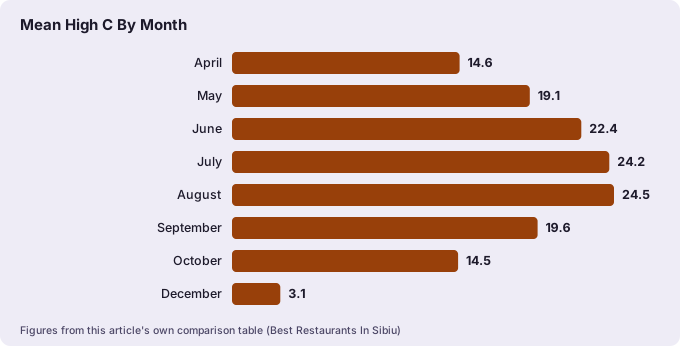
The best seasons for eating out in Sibiu are May, June, September and early October, when the ERA5 reanalysis, 1991-2020, puts daily highs between about 19 and 25 C and terrace season is in full swing. December is the atmospheric alternative, with the Christmas market running from 13 November 2026 to 3 January 2027. Midwinter is cold, with a January mean low of -5.7 C, and July and August are the busiest and warmest months.
The climate numbers deserve a table, because they decide whether you want a terrace on Piața Mică or a cellar under it. These are modelled normals for the grid cell near Sibiu at about 430 m elevation, from the ERA5 reanalysis, 1991-2020, not a weather-station record. The rest of the planning pages sit on Sibiu Travel Guide.
| Month | Mean High C | Mean Low C | Sunshine H/Day | Terrace Season |
|---|---|---|---|---|
| April | 14.6 | 4.0 | 10.4 | Beginning |
| May | 19.1 | 9.0 | 11.3 | Yes |
| June | 22.4 | 12.9 | 12.4 | Yes |
| July | 24.2 | 14.6 | 12.8 | Yes, hot |
| August | 24.5 | 14.8 | 11.8 | Yes, hot |
| September | 19.6 | 10.5 | 9.7 | Yes |
| October | 14.5 | 5.7 | 8.0 | Ending |
| December | 3.1 | -3.9 | 5.6 | Cellar season, market on |
The city's official page records a mean annual temperature of 8.9 C and 662 mm of rainfall, with June the wettest month at 113 mm, so a light rain layer belongs in your bag even in terrace season. What the rainfall figure means for dinner is that the cellar restaurants earn their keep: vaulted ground-floor rooms are dry, cool in summer and warm in winter, and Sibiu has plenty of them.
Season also changes the plate. Game and rich stews belong to the cold months, when the ski season at Păltiniș opens on 28 November 2026 and the mountain appetite arrives with it. Summer tilts toward mici on grills, cold zacusca and salads. The full seasonal argument, including the December food atmosphere, is laid out in the best time to visit Sibiu guide and the dedicated Sibiu Christmas market page.
What Does A Cooking Class Or Wine Tasting Add In Sibiu?
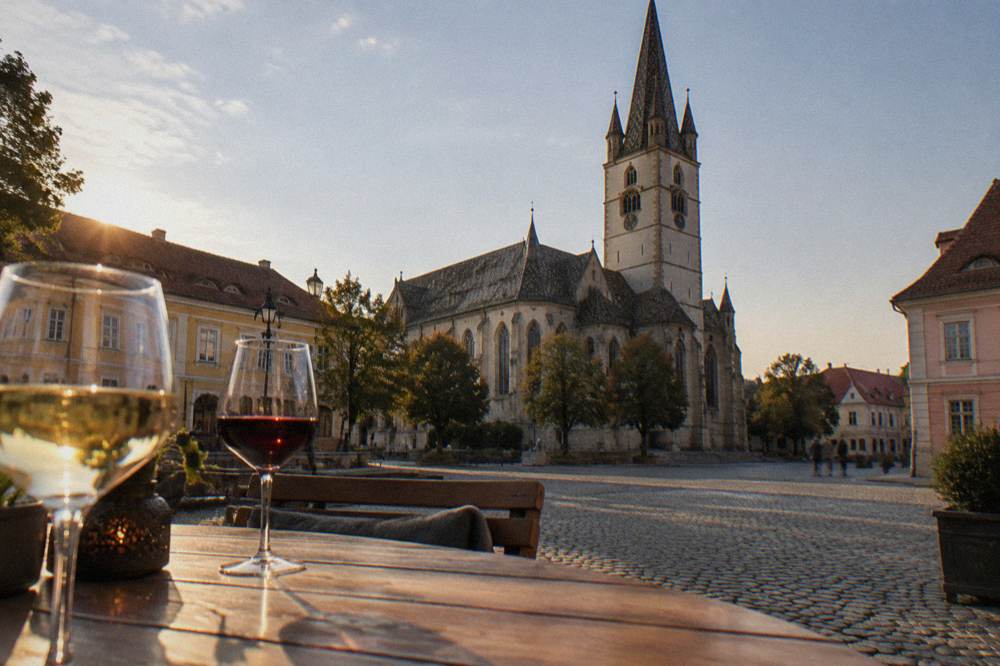
A cooking class in Sibiu teaches you to make the dishes you have been ordering, sarmale, papanași and the sour soups, so the recipes travel home with you, and a wine tasting introduces Romanian varieties that rarely appear on export shelves. Both sit somewhere between a restaurant meal and a lesson, and both are bookable experiences with fixed itineraries, unlike restaurant visits which this page cannot honestly rank.
The logic is that a short city break rarely gives you enough dinners to sample the regional repertoire. A workshop compresses it: you cook the dishes, you eat what you cooked, and you learn which ingredients matter. The Romanian Traditions Cooking Workshop and Dance Class pairs the kitchen half with a folk-dance session, which sounds like a detour until you remember how much of Romanian village food culture is celebration food. Book the cooking workshop and dance class if cooking the dishes yourself is the appeal.
Wine works differently. Romania's vineyards are not on Sibiu's doorstep, and the region's appellations are a story for another page, so the practical introduction in the city is a guided tasting with a sommelier. The Romanian wine tasting in Sibiu pours Romanian wines in a sit-down format and does the job a wine list cannot, which is to explain what you are drinking while you compare glasses.
Where Does The Food Around Sibiu Come From?
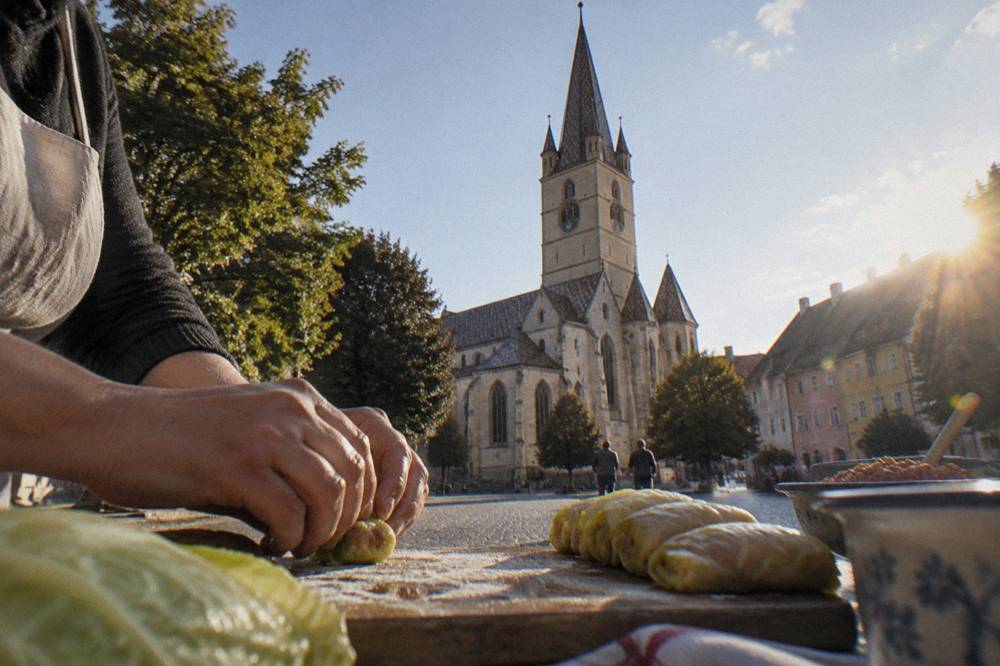
The food around Sibiu comes from three belts: the Mărginimea Sibiului shepherding villages southwest of the city, which supply sheep cheese and the balmos tradition; the Saxon fortified-church villages to the north and east, whose farm architecture still defines the landscape; and the Cibin river valley and foothills that put mushrooms, game and orchard fruit on city tables. Rășinari sits 13 km from Piața Mare, Sibiel 25 km, and Cisnădie 10 km.
Those distances, computed over OpenStreetMap routing in free-flow conditions, are short enough that a food-motivated visitor can leave the old town after breakfast and stand in a shepherding village before mid-morning. Sibiel, besides its pasture setting, is known for its museum of icons painted on glass, a village art form tied to the same rural world that produces the cheese. Rășinari is reachable by a historic tram line in summer, and Cisnădie and Cisnădioara hold two of the fortified churches that made this stretch of Transylvania famous.
| Food Country | Village Or Place | Distance From Piața Mare | Drive Time |
|---|---|---|---|
| Mărginimea Sibiului | Rășinari | about 13 km | about 18 minutes |
| Mărginimea Sibiului | Sibiel | about 25 km | about 36 minutes |
| Mărginimea Sibiului | Săliște | about 23 km | about 30 minutes |
| Saxon villages | Cisnădie | about 10 km | about 14 minutes |
| Saxon villages | Cisnădioara | about 13 km | about 18 minutes |
| Mountain produce | Păltiniș | about 32 km | about 40 minutes |
A guided villages tour turns this into a day of eating and seeing at once. The half-day Saxon heritage tour and the full-day fortified-churches itinerary both work from Sibiu, and several include stops at village producers. The wider background, including why the churches were fortified at all, is covered in fortified churches near Sibiu.
How Do Festivals Change Dining In Sibiu?
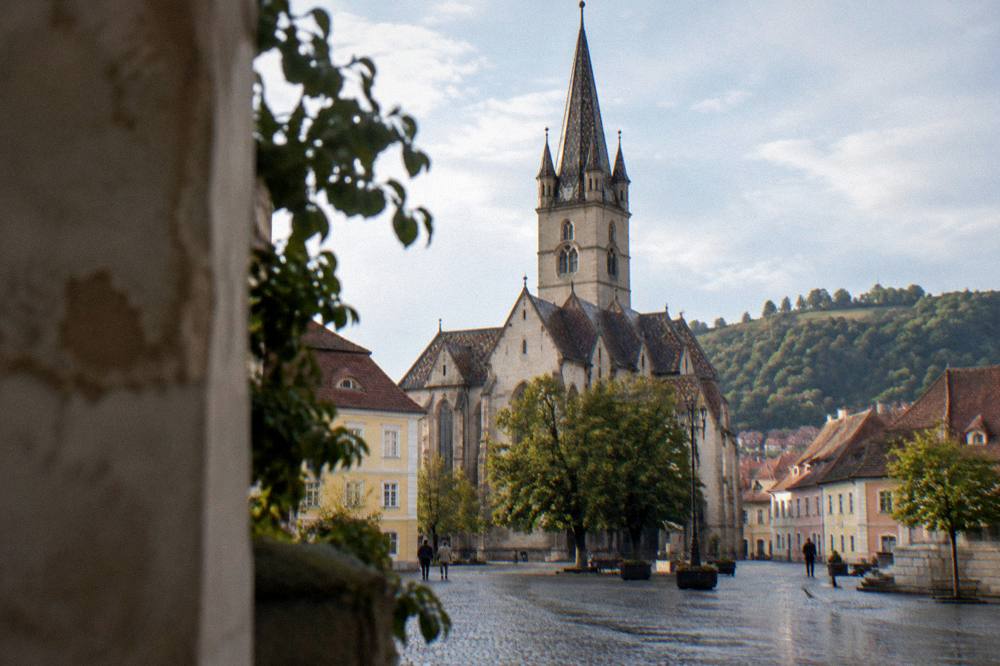
Festivals change dining in Sibiu by filling the city and its tables: FITS, from 18 to 27 June 2027, brings tens of thousands of spectators into the old town and makes reservations necessary; the Christmas market, 13 November 2026 to 3 January 2027, moves the centre of eating outdoors to Piața Mare; and Artmania and the Sibiu Jazz Festival, both free-access events on Piața Mare in 2026, put music beside the terraces. Plan tables around the calendar, not against it.
The festival year runs like this. June belongs to FITS, the theatre festival that made the city a European Capital of Culture in 2007, a title the city itself reports. July brings Artmania, which ran 24 to 25 July 2026 with free access in Piața Mare. September carries the Sibiu Jazz Festival, 2 to 6 September 2026 for its 54th edition, across venues including the Great Synagogue. October closes with the ASTRA Film Festival, 17 to 21 October 2026, and November opens the Christmas market, which in its 2026 edition lists more than 120 exhibitors with about a third of them new.
During these weeks, three habits save dinners. Book the table when you book the room. Eat earlier or later than the festival crowds, since performances empty and fill the squares on a schedule. And treat the market itself as a meal: the Christmas market's Golden Ticket, reported at 100 lei, covers the wheel, carousel, mini-train and the Enchanted Elevator, and the stalls handle the rest. The Sibiu festivals guide carries the full calendar.
Should You Combine Sibiu's Restaurants With A Day Trip?
Yes, if the day trip is a food-relevant one: Păltiniș, 32 km away, pairs mountain air with hearty eating from its 28 November 2026 season opening; the Mărginimea villages put shepherds' cheese at its source; and longer runs to Sighișoara at about 96 km or Brașov at about 142 km extend the same cuisine across southern Transylvania. A long lunch in a village and dinner back in Sibiu is a realistic, enjoyable day.
The pattern that works is a loop. Drive out through the Mărginimea in the morning, eat in a village around noon, and return through Dumbrava, the forest park that also holds the ASTRA Museum of Traditional Folk Civilization, an open-air museum of village houses and mills functioning since 1963. The museum's adult ticket is 50 RON, with reduced prices for pensioners and students, and its grounds are effectively a catalogue of the food architecture of rural Transylvania: barns, mills, presses and wine cellars.
For the ambitious version, a private car day with a driver-guide removes the routing worry. The Dacia 1300 classic car tour below is a city experience with a different flavour entirely, and the Bran Castle and Râșnov day trip reaches the Brașov side of the mountains. Note the road reality for late 2026: the A1 Sibiu to Boița section is closed from 5 October to 19 December 2026 with traffic diverted onto DN7, and the motorway to Bucharest remains unfinished, so allow extra time on any southern route. Driving logistics, including the rental picture, are covered in car rental in Sibiu.
Common Questions About Restaurants In Sibiu
Can this page recommend specific restaurants in Sibiu by name?
No. No restaurant, cafe or bar name for Sibiu appears in any source this site trusts, so no venue is named or ranked here. Use the dish list, the eating-street guide and a guided gastronomy walk to calibrate, then choose tables by their menus.
What food is Sibiu known for?
Sibiu is known for traditional Transylvanian cooking: ciorbă sour soups, sarmale cabbage rolls, mici grilled meat rolls, zacusca spread, balmos and papanași doughnuts, plus Sibiu salad, the dish carrying the city's name, and the historic Saxon baking and curing traditions.
Is food in Sibiu expensive?
No price list for restaurants appears in the sources checked, so no figure is quoted. Romania's currency is the leu (RON), and the general cost picture for a whole trip is set out on the companion page, Sibiu trip costs explained. Check menus displayed at the door, which city custom requires.
Where should I stay to be near the restaurants?
The Upper Town, around Piața Mare and Piața Mică, puts the main eating streets within a short walk. The full neighbourhood breakdown is in where to stay in Sibiu.
Do I need to book restaurants ahead in Sibiu?
During FITS (18 to 27 June 2027) and the Christmas market (13 November 2026 to 3 January 2027), yes, book ahead. Outside festival weeks, walk-in tables are usually realistic, though weekend evenings in the old town fill first.
Is there street food or market eating in Sibiu?
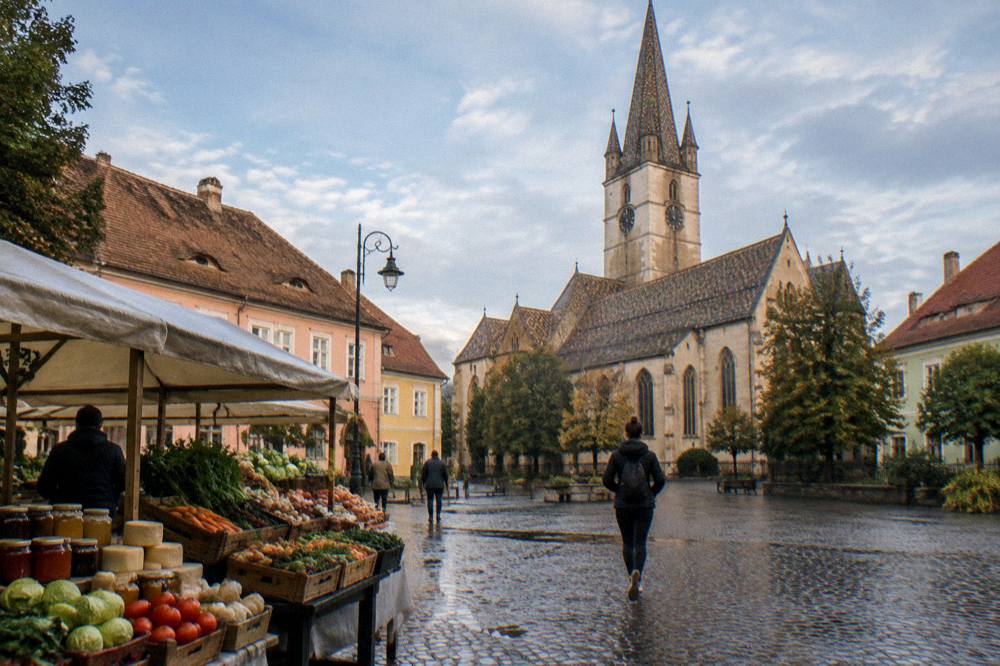
Yes. The Christmas market runs 52 days of stalls in Piața Mare, and the Cibin market, Piața Cibin, is the city's named produce market, though its hours are not published in a source this site trusts, so confirm locally. Sibiu Travel Guide keeps the market and festival details current on its dedicated pages.
Eating in Sibiu rewards curiosity more than loyalty to any name. Order the sour soup and the papanași, walk the squares before you choose a table, calibrate on a guided tasting walk if it is your first visit, and let the season, terrace or cellar, do the rest. The dishes are the city's real restaurant list, and they have been cooking them here since long before anyone wrote a review.