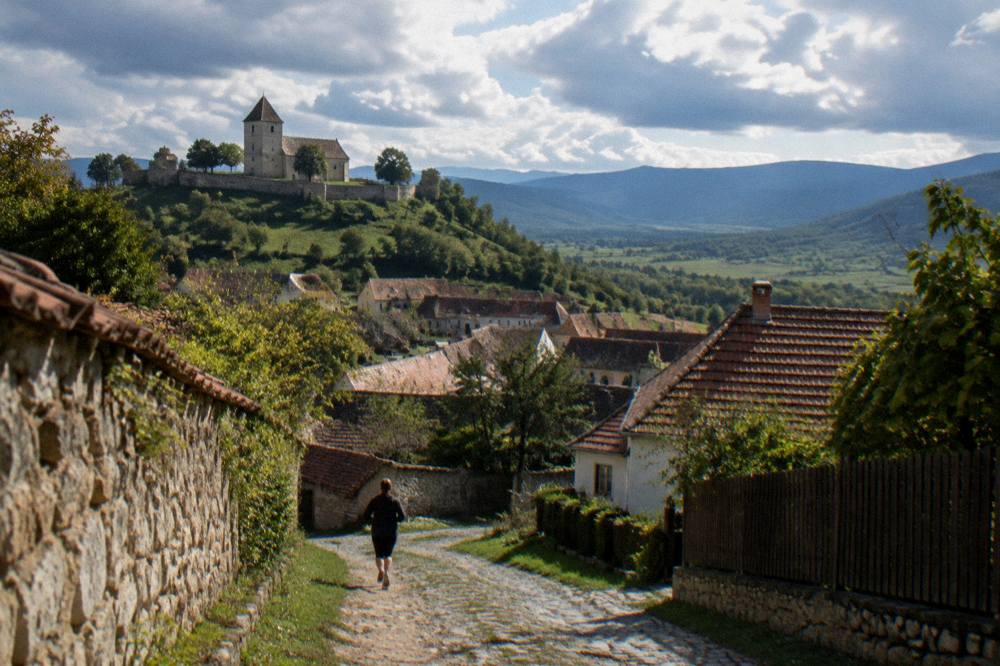
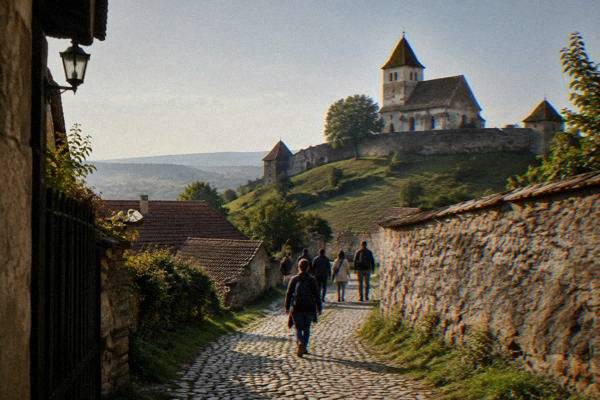
Cisnadie And Cisnadioara: Two Fortified Churches Close To Sibiu
Cisnădie and Cisnădioara sit barely 10 to 13 km from Piața Mare in Sibiu, closer than any other fortified churches in Transylvania, and both can be seen comfortably in half a day.
Short answer
Cisnădie is about 10 km and 14 minutes by road from Sibiu's Piața Mare, and Cisnădioara about 13 km and 18 minutes, making them the nearest fortified Saxon churches to the city and the easiest half-day trip in the region.
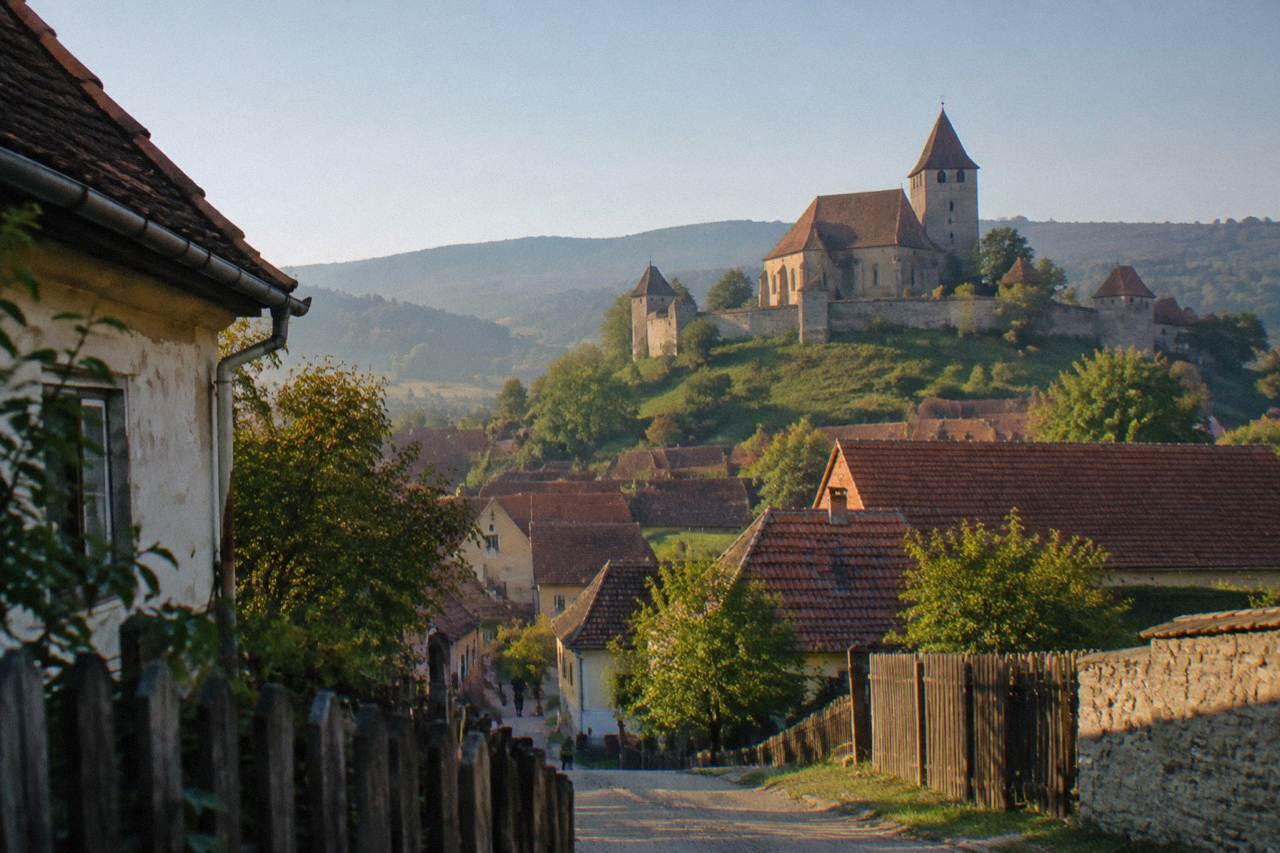
The fortified churches of Cisnădie and Cisnădioara are the closest Saxon villages to Sibiu, the inland Transylvanian city on the Cibin river, and they sit close enough that both fit into a single half-day without any long drive. Cisnădie lies about 10 km and 14 minutes by road from Piața Mare; Cisnădioara about 13 km and 18 minutes. They belong to the same world of walled churchyards that earned the Villages with Fortified Churches in Transylvania their place on the UNESCO World Heritage list, though these two particular churches are not themselves among the seven inscribed villages. What they offer instead is convenience: Saxon architecture, defensive towers and hillside settings, twenty minutes from a city with an international airport. This page lays out what the sources actually say about both villages, how to reach them, what to combine them with, and what simply is not documented anywhere reliable, so a visit can be planned around confirmed facts rather than guesswork.
Where Are Cisnădie And Cisnădioara And How Far From Sibiu?
Cisnădie sits about 10 km south of Sibiu's Piața Mare, roughly 14 minutes by road, and Cisnădioara about 13 km away, roughly 18 minutes, making them the two nearest fortified churches to the city. Both lie in the foothill country south of Sibiu, where the Cibin valley begins to climb toward the Cindrel mountains, and Cisnădioara occupies a separate hill above Cisnădie. The figures come from routing computed over OpenStreetMap data at free-flow speeds, so real driving with village traffic and parking may run a little longer. Both villages lie in the foothill country south of the city, on the road that continues toward the Cindrel mountains and, further on, the Păltiniș resort. For comparison, the nearest UNESCO-inscribed fortified church at Biertan is about 76 km away, and Viscri about 118 km, so Cisnădie and Cisnădioara are the practical choice when time is short.
The short distances change the shape of the day. A trip to Biertan, described in the site's Biertan fortified church guide, needs a reported one hour 15 to one hour 30 of driving each way, while Cisnădie can be reached in less time than it takes to cross Sibiu at a busy hour. Cisnădioara sits above Cisnădie on a separate hill, and the two villages are close enough to each other that a visitor by car will usually see both in one loop rather than choosing between them.
Geographically the villages sit where the Cibin valley begins to climb toward the mountains. The land rises from the city's 415 to 431 m elevation into the first wooded ridges, and the church at Cisnădioara in particular occupies a raised position above its houses, the classic defensive logic of the Saxon landscape. For the wider picture of how these walled churches came to be, the site's overview of fortified churches near Sibiu covers the pattern, and the historical background is explained in why Romania has fortified churches. In the vaguest terms, the walls and towers served as a refuge for the village in times of raids; no siege account or construction date is recorded for either church, and none is given here.
What Can You See In Cisnădie In Half A Day?
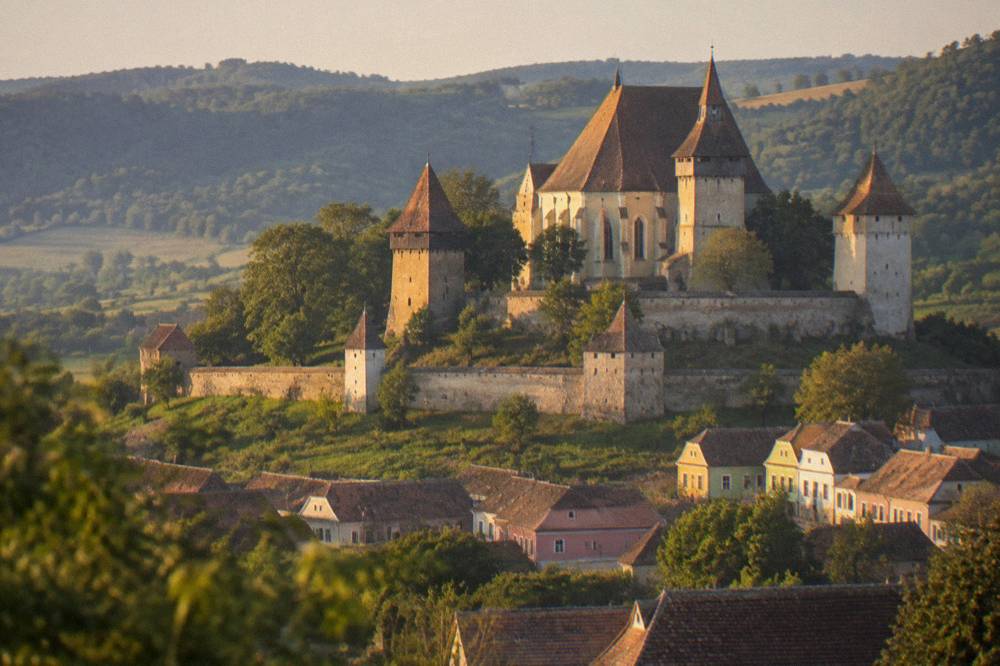
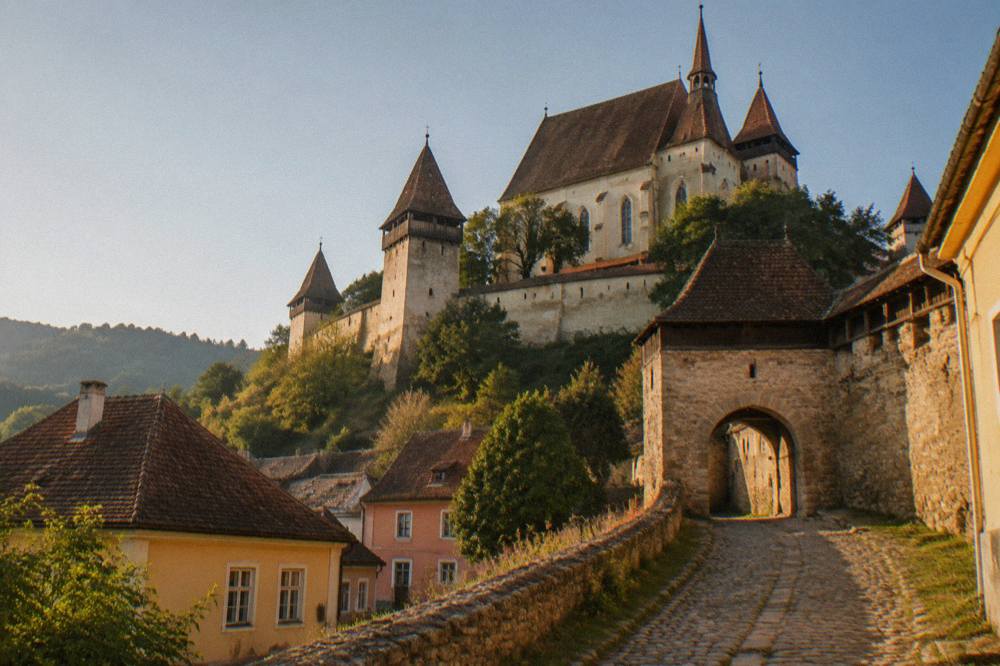
Cisnădie's main sight is its fortified church, a Saxon evangelical church ringed by defensive walls and towers set on a rise above the village houses, and it is the reason the village appears on every list of day trips from Sibiu. The village itself is a compact place of Saxon-era houses and quiet streets, small enough that the church complex, the surrounding lanes and a viewpoint or two fill a half-day comfortably. Opening hours and admission prices for the Cisnădie church do not appear in any official source, so confirm locally or with the Sibiu tourist information office before counting on going inside; the exterior and the walled churchyard can be appreciated at any time.
What the sources do support is context. Cisnădie was one of the Transylvanian Saxon settlements, part of the German-community network founded across southern Transylvania from the 12th century onward, with settlers reported to have come from the Moselle area. The church fortifications follow the same regional logic as the UNESCO-listed sites: walls, towers and a church strong enough to shelter villagers when raiders came. The Villages with Fortified Churches in Transylvania were inscribed as a serial World Heritage site, with Biertan inscribed in 1993 and the listing extended in 1999 to seven villages including Biertan, Prejmer, Viscri and Valea Viilor, per the UNESCO entry. Cisnădie and Cisnădioara stand outside that list, which matters for expectations: they are historic and atmospheric, not museum-ticketed UNESCO components.
A guided option exists for visitors who would rather not arrange the drive and the church access themselves. The Half-Day Saxon Heritage Villages tour from Sibiu covers Cisnădie and the surrounding Saxon heritage in one outing, with Check availability on the operator's live listing. For independent travellers, the table below puts Cisnădie in context against the other church villages within reach of the city.
| Village | Road distance from Piața Mare | Drive time (free-flow) | Entry price |
|---|---|---|---|
| Cisnădie | about 10 km | about 14 minutes | not published; confirm locally |
| Cisnădioara | about 13 km | about 18 minutes | not published; confirm locally |
| Rășinari | about 13 km | about 18 minutes | village; no church entry figure |
| Sibiel | about 25 km | about 36 minutes | icon museum hours not published |
| Biertan | about 76 km | about 1 hour 15 to 1 hour 30 (reported) | 20 RON adult (reported) |
| Valea Viilor | about 50 km | about 60 minutes | not published; confirm locally |
The Biertan figures deserve their caveat: the 20 RON adult price and the seasonal hours come from tourism-site reporting rather than a page that could be read directly, so treat them as reported and confirm before you go. Nothing equivalent could be found for Cisnădie or Cisnădioara, which is why those cells say exactly that rather than inventing a number.
Is Cisnădioara Worth The Extra Few Kilometres From Sibiu?
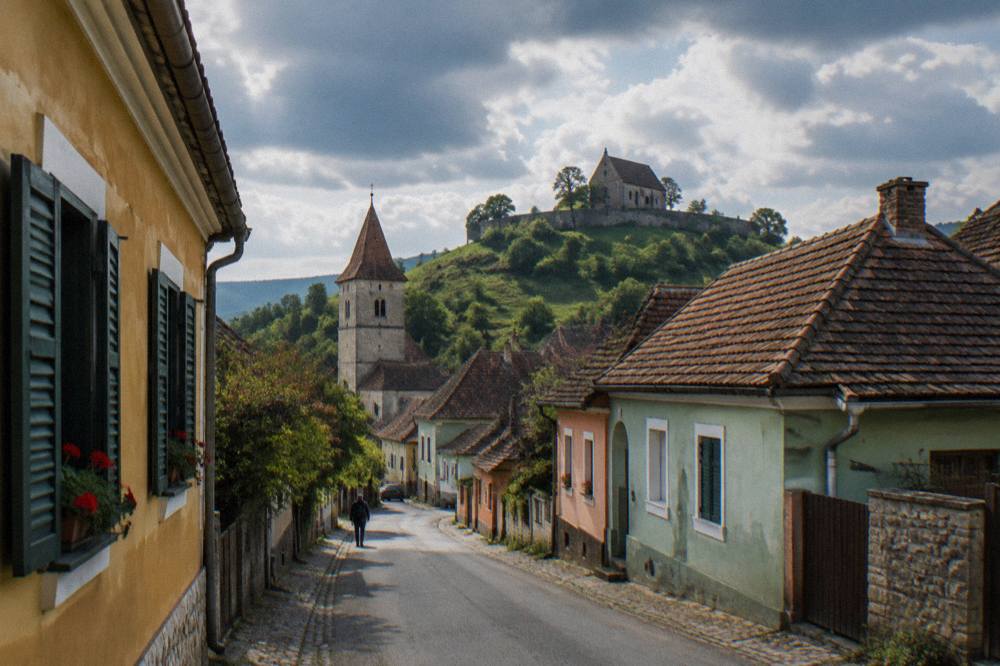
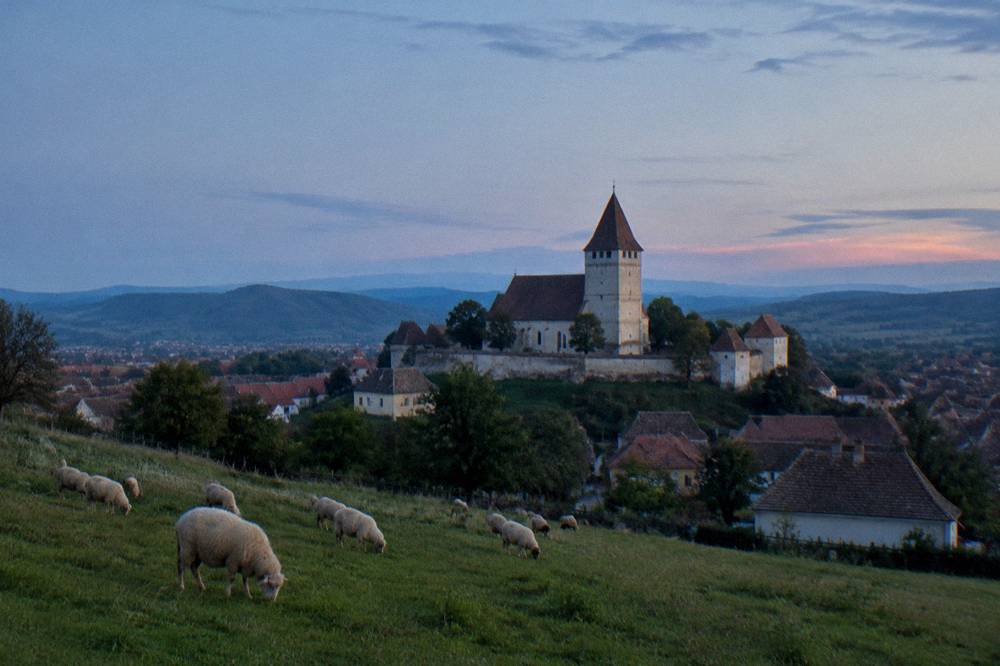
Cisnădioara is widely described as the more scenically striking of the two, because its fortified church stands on a detached hill above the village, reached on foot, a setting that photographs like few other places within twenty minutes of Sibiu. The church occupies a raised, fortress-like position with views over the houses below and the hills beyond, and the walk up is part of the experience. As with Cisnădie, no opening hours or ticket price appear in any official source, so entry to the interior cannot be promised; the setting itself, the climb and the exterior are freely visible.
The two villages work as a pair. A visitor driving south from Sibiu reaches Cisnădie first, spends an hour or two around its church and streets, then continues the short distance to Cisnădioara for the hilltop. The combined loop, door to door from Piața Mare, is a genuine half day: under forty minutes of total driving and the rest on foot. Independent travellers with more time sometimes extend the same road toward Păltiniș, about 32 km and 40 minutes from the city, though the ski resort's lifts are a different kind of sight from the Saxon churches.
For anyone weighing a guided day against self-driving, the three options above cover the spread: the half-day Saxon heritage villages tour centred on this area, a private villages trip with more flexibility, and a mountain-and-dam itinerary for a day when the Transfăgărășan draws harder than the churches.
How Do You Get To Cisnădie And Cisnădioara Without A Car?
Without a car, the realistic routes to Cisnădie and Cisnădioara are a guided villages tour from Sibiu, a Bolt or Uber ride, or checking the local Tursib network, since no inter-village bus timetable or fare for these specific villages appears in any official source. Tursib runs the city's buses, and its tickets are documented: a 60-minute internal ticket costs 3.5 lei, a 75-minute ticket with one transition 5 lei and a 90-minute ticket with two transitions 7 lei. Whether a given line reaches Cisnădie on a schedule that suits a sightseeing day is a live-timetable question; check tursib.ro before planning around it. Bolt and Uber both operate in Sibiu, but no reliable fare figure for the run to either village exists, so no number is quoted here.
The train is not the answer for these villages: the nearest stations serve the city and the main line towns, not the hillside church villages. Guided transport is therefore the low-friction choice, and the private option linked below removes the timetable question entirely.
The private half-day trip to Transylvanian villages picks up in Sibiu and covers several villages in one circuit, with Check availability on the operator's listing. Self-drive visitors should simply note that village streets are narrow and parking near the church squares is limited; arriving outside the middle of the day eases both.
What Else Combines Well With Cisnădie On A Day Trip From Sibiu?
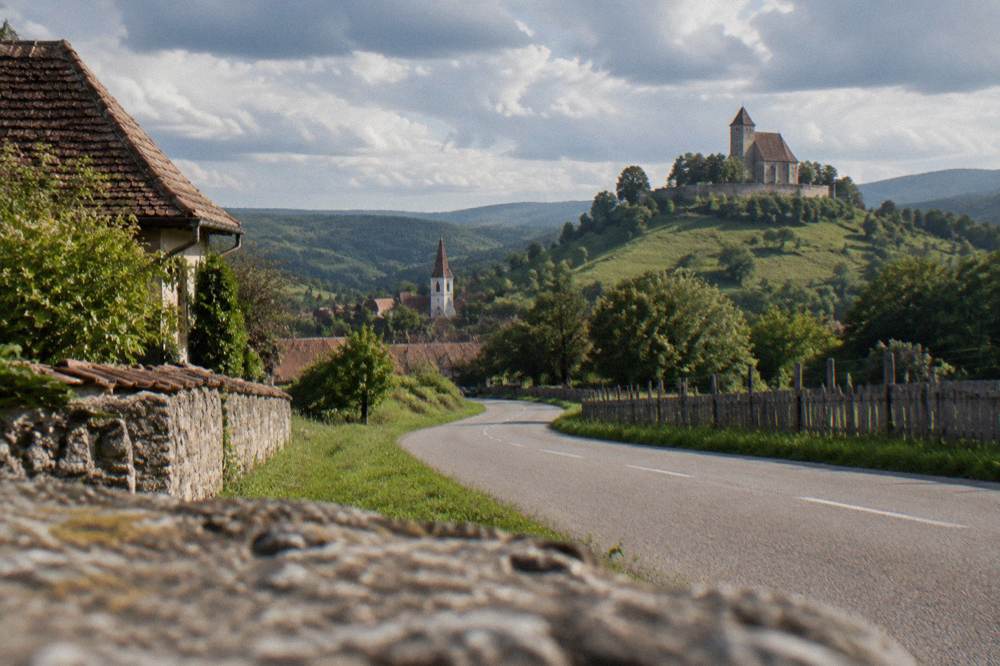
The natural pairings with Cisnădie and Cisnădioara are the closer Saxon and foothill sights south of Sibiu: Rășinari at about 18 minutes, Sibiel at about 36 minutes, Păltiniș at about 40 minutes, or, for a bigger loop, Valea Viilor at about 60 minutes. Rășinari and Sibiel belong to the Mărginimea Sibiului, the pastoral shepherding region at the foot of the Cindrel mountains, culturally distinct from the Saxon villages but threaded along the same roads. The table below collects the drive times from Piața Mare so a loop can be built on real figures.
| Pairing | Distance from Piața Mare | Drive time | Best combined as |
|---|---|---|---|
| Cisnădioara | about 13 km | about 18 minutes | the standard twin-church loop |
| Rășinari | about 13 km | about 18 minutes | villages plus Mărginimea scenery |
| Sibiel | about 25 km | about 36 minutes | hillside loop with icon museum (hours not published) |
| Păltiniș | about 32 km | about 40 minutes | churches in the morning, mountain air after |
| Valea Viilor | about 50 km | about 60 minutes | serious fortified-church day |
| Mediaș | about 56 km | about 68 minutes | churches plus a historic town |
Two cautions from the wider region apply to any loop built from Sibiu. First, if the plan stretches toward the mountains, the Transfăgărășan high section reopened for the 2026 season on 12 June and runs 07:00 to 21:00 when open, but by rule it can be closed on any day from 20 October, and fines of 10,000 to 30,000 lei apply for driving the closed section; the site's Transfăgărășan guide and Bâlea Lake page cover the details. Second, anyone planning onward toward Bucharest should know the A1 motorway is unfinished and the Sibiu to Boița section is closed 5 October to 19 December 2026, with traffic diverted onto DN7, so southern routes carry extra time.
For visitors building a longer stay around the city, the site's two-day plan in Sibiu in 2 days leaves room for exactly this kind of half-day villages outing, and the Sibiu and Saxon villages itinerary extends the same idea across several days.
When Is The Best Time Of Year To Visit The Fortified Churches Near Sibiu?
The months of May, June, September and October are the ones tourism sources name as the best window for visiting Sibiu and its surroundings, with mild temperatures, long daylight and green or golden countryside, while winter brings snow and a different, quieter kind of visit. The ERA5 reanalysis, 1991-2020, for the Sibiu grid cell shows July and August highs around 24 C, May and September highs of 19 to 20 C, and January highs barely above freezing with lows near -6 C. Snow falls mainly from November to March, with January the snowiest month in the modelled normals. Officially the city records a mean annual temperature of 8.9 C and 662 mm of rainfall, with June the wettest month at 113 mm and February the driest at 26.7 mm, per the city's own figures.
| Month | Mean high C | Mean low C | Snowfall cm | Daylight hours |
|---|---|---|---|---|
| April | 14.6 | 4.0 | 7.8 | 13.6 |
| May | 19.1 | 9.0 | 0.3 | 14.9 |
| June | 22.4 | 12.9 | 0.0 | 15.7 |
| July | 24.2 | 14.6 | 0.0 | 15.3 |
| September | 19.6 | 10.5 | 0.1 | 12.5 |
| October | 14.5 | 5.7 | 2.7 | 10.9 |
| December | 3.1 | -3.9 | 20.8 | 8.7 |
The table draws on ERA5 reanalysis values, 1991-2020, a modelled grid cell rather than a weather-station record. For church villages specifically, the practical argument is daylight: Cisnădioara's hill is best climbed and photographed with light to spare, and June offers the longest days of the year. One timing detail matters for winter visitors: clocks in Romania go back on Sunday 25 October 2026, and from late October the light shortens quickly, so a villages loop is best started in the morning.
A December visit stacks the churches against the Sibiu Christmas Market, which runs 13 November 2026 to 3 January 2027 in Piața Mare with free entry, and against the Păltiniș ski season announced to open on 28 November 2026. Snow on the hilltop churchyard at Cisnădioara is a real possibility in that window; so is an icy lane on the way up, so footwear should match the season.
What Should You Know Before You Go To Cisnădie And Cisnădioara?
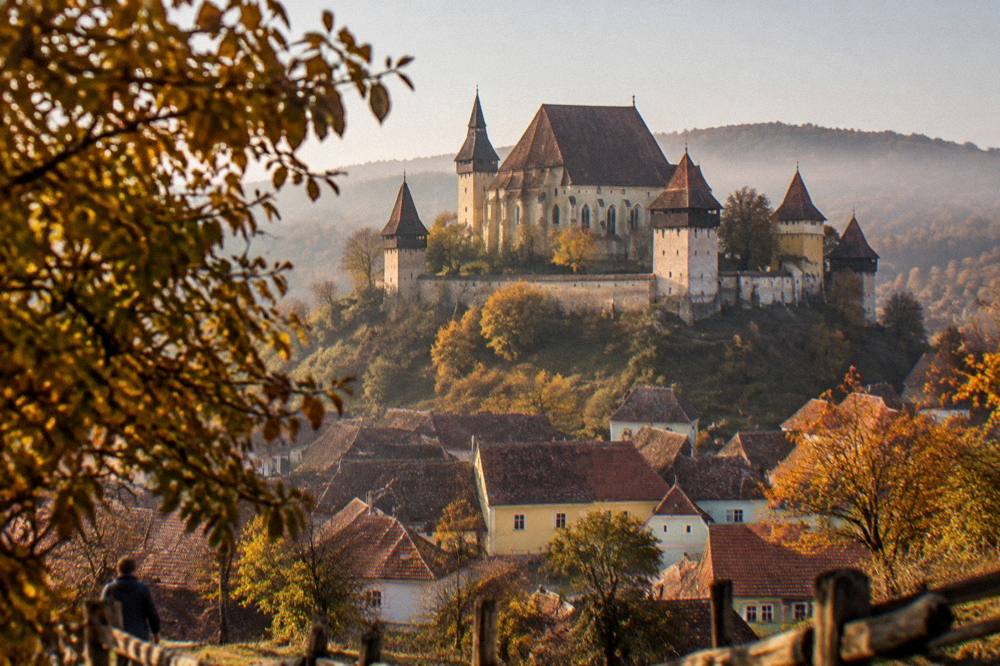
The single most useful thing to know is that almost nothing about the two churches' opening hours or entry fees is published in a reliable source, so plan around the exteriors, the walks and the village settings, and confirm interior access locally or through a guided tour. That is not a reason to skip them: the hilltop position at Cisnădioara and the church complex at Cisnădie are visible and visitable in themselves, and the drive is short. But a visitor who arrives certain of a ticketed interior visit may find the door shut, and no source exists that says otherwise.
A few practical points round out the planning picture. Romania uses the leu (RON), with an exchange rate of roughly 5.3 lei to the euro, and cash in small notes is sensible for village shops and any donation box at a church door; the city's Tursib tickets, at 3.5 lei for 60 minutes, cover local buses. Emergency services anywhere in Romania are reached on 112. Romania is a full Schengen member, so travellers moving within Schengen face no border checks on the way. For the wider city context, including what to do before and after the villages, the root page of Sibiu Travel Guide collects the main options.
Food is worth a word, with the standing rule that no restaurant in these villages can be named here. Traditional dishes of the region include Sibiu salad, papanași, ciorbă, mici, sarmale, zacuscă and balmoș, and Transylvanian Saxon cooking is part of the heritage these villages represent. Eateries in Cisnădie itself exist, but naming or rating them here would be invention; ask locally or check current listings on the day.
Finally, a sample half-day structure, built only from the drive times:
| Time | Stop | Notes |
|---|---|---|
| 09:00 | Leave Piața Mare | about 14 minutes by road |
| 09:20 | Cisnădie church and lanes | interior access unconfirmed; exterior and walls always visible |
| 11:00 | Drive on to Cisnădioara | about 5 minutes between villages |
| 11:10 | Cisnădioara hilltop church | short walk up; best light and views late morning |
| 13:00 | Return toward Sibiu | about 18 minutes by road |
That loop leaves the afternoon free for the city itself, or for one of the longer pairings in the table above.
Common Questions About Cisnadie And Cisnadioara
How far is Cisnadie from Sibiu?
Cisnădie is about 10 km from Sibiu's Piața Mare by road, roughly a 14-minute drive at free-flow speeds, computed over OpenStreetMap routing. Cisnădioara is about 13 km and 18 minutes, making the two the nearest fortified churches to the city.
Can you go inside the fortified churches at Cisnadie and Cisnadioara?
No reliable source publishes opening hours or entry prices for either church. The exteriors, the defensive walls and the hilltop setting at Cisnădioara are visible at any time; for interior access, confirm locally in Sibiu or book a guided villages tour, whose operators arrange access as part of the visit.
Are Cisnadie and Cisnadioara UNESCO sites?
No. The UNESCO World Heritage serial site Villages with Fortified Churches in Transylvania covers seven villages, including Biertan, Prejmer, Viscri and Valea Viilor. Cisnădie and Cisnădioara belong to the same Saxon fortified-church tradition but stand outside the inscribed list.
Can you visit both villages in half a day from Sibiu?
Yes, comfortably. The two villages are a few minutes apart by road, and the total driving from Piața Mare is under 40 minutes for the whole loop. Half a day allows time at both churches plus the walk up the hill at Cisnădioara.
Is there public transport from Sibiu to Cisnadie?
Guided tours, Bolt and Uber are the documented practical options, and the Tursib network sells 60-minute tickets at 3.5 lei, but no official timetable for a tourist visit to these specific villages could be found. Check tursib.ro for current lines and schedules before relying on a bus.
What is the best time of year to visit?
Tourism sources name May, June, September and October as the best months, and the ERA5 reanalysis, 1991-2020, shows highs of 19 to 24 C in that stretch with long daylight. Winter visits are possible and quiet, with snow likely from November to March.