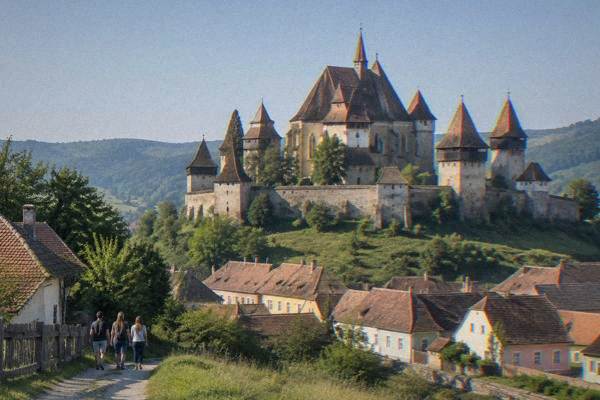
Why Does Romania Have Fortified Churches?
Why Transylvania, and Sibiu's surrounding villages, are ringed with fortified churches: the Saxon settlement story, the UNESCO listing and which churches you can reach from Sibiu.
Sibiu, in Transylvania, central Romania, was founded by settlers from the German-speaking world, and the villages they built around it still carry their signature: churches wrapped in defensive walls, towers and bastions. The question of why Romania has fortified churches is really a question about these people, the Transylvanian Saxons, and about the insecure centuries in which they farmed a borderland. This page explains where the churches came from, which ones survive, and how to reach the nearest of them from Sibiu, which sits about as close to the heart of the old Saxon landscape as any city in Romania.
Why Does Romania Have Fortified Churches?
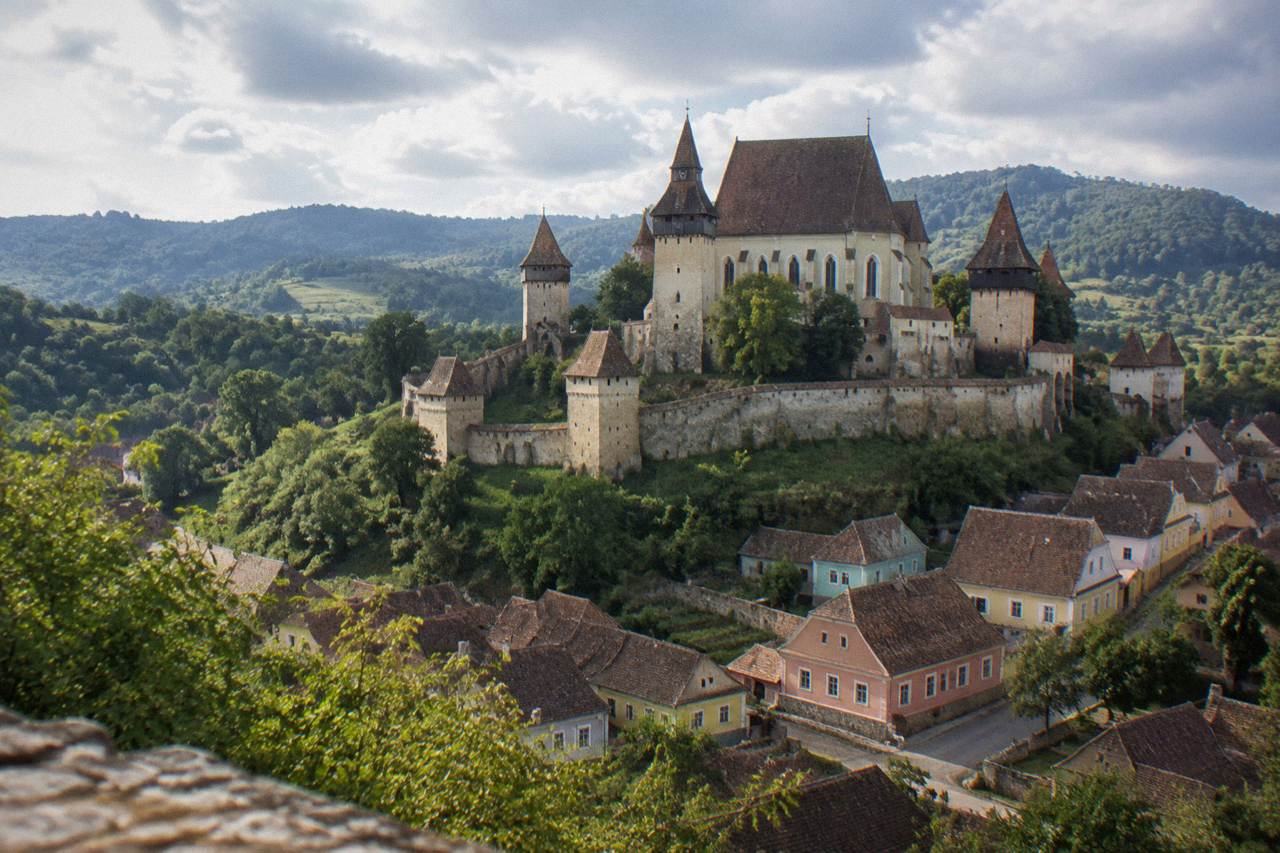
Romania, and above all Transylvania, has fortified churches because Saxon settlers built them as refuges in times of raids: a village church, already the strongest stone building in the settlement, was given walls, towers and storage rooms so that the whole community could shelter inside during an attack. The pattern is Saxon rather than Romanian in origin, and the densest cluster of these buildings sits in the countryside around Sibiu and to its east.
The settlers themselves arrived from the Moselle valley area in the 12th century, according to the Sibiu county heritage authority, patrimoniu.sibiu.ro, which documents the colonisation that created communities later known as the Transylvanian Saxons. Their principal city was Sibiu, documented in 1191 as Cibinium, the seat of the free prepositure of the Germans in Transylvania, per the city's own history page. From that base, farming villages spread across southern Transylvania.
A village church was normally the only stone structure for miles. When raids threatened, the church became the refuge: walls were raised, towers added, and chambers built inside the enclosure so families could hold out with their grain and livestock. The research for this page did not retrieve a dated siege chronicle, so no specific raid, date or battle belongs here; what the buildings themselves show is a long period in which a village needed to become its own fortress at short notice.
Not every church in the region is fortified, and not every fortified church is Saxon. But the overwhelming majority of the famous ones, including the UNESCO-listed group, stand in or beside villages that were Saxon for centuries, and the architecture follows their building traditions: hall churches, bell towers and curtain walls enclosing an inner yard with storage cells.
Who Were The Transylvanian Saxons Around Sibiu?
The Transylvanian Saxons were German-speaking settlers invited into Transylvania from the 12th century onward, who founded and governed towns and villages, including Sibiu itself, under their own laws and privileges, and who built the fortified churches as the protective core of each settlement. Their descendants still form a small historic community in the city, and Sibiu's German name, Hermannstadt, records the link.
The settlement from the Moselle area is reported by the county heritage site, and the city's own chronology lists a hospital in 1292, a school in 1380 and a pharmacy in 1494, all described as the first of their kind on current Romanian territory, claims that belong to the city's own account rather than to an independent source. Sibiu grew into the Saxon capital, with the Upper Town and Lower Town around Piața Mare that visitors walk today. The overview continues in What Sibiu Is Known For.
The fortified church was the village's answer to a landscape without castles for ordinary farmers. Nobles had their fortresses; a Saxon village community collectively owned and maintained its church-fortress. The walls often enclosed storage rooms assigned to individual families, which tells you the refuge was meant to be held for days, not hours. The general picture is well established; the specific raids and dates behind each wall were not sourced for this page and are left out on purpose.
The Saxon world has its own vocabulary worth knowing before a trip. The Mărginimea Sibiului, the pastoral hill country south-west of the city, is a related but distinct zone of Romanian shepherd villages rather than Saxon ones, and a day trip there, such as the Saxon heritage villages half-day tour from the roster on this site, moves between both landscapes. The broad essentials for a first visit are collected at Things To Do In Sibiu.
Which Fortified Churches Can You Reach From Sibiu?
The nearest fortified churches to Sibiu are at Cisnădie, about 14 minutes and 10 km by road, and Cisnădioara, about 18 minutes and 13 km, with Valea Viilor about 60 minutes and 50 km, Biertan about 76 km, and Viscri and Prejmer the longest day trips at roughly two hours or more each way; all drive times are computed free-flow routings from Piața Mare, not timetables.
Distances from Piața Mare, computed over OpenStreetMap routing:
| Fortified church | Road distance from Piața Mare | Free-flow drive time |
|---|---|---|
| Cisnădie | 10 km | about 14 minutes |
| Cisnădioara | 13 km | about 18 minutes |
| Rășinari | 13 km | about 18 minutes |
| Sibiel | 25 km | about 36 minutes |
| Valea Viilor | 50 km | about 60 minutes |
| Biertan | about 76 km | about 1 h 15 to 1 h 30 |
| Viscri | 118 km | about 122 minutes |
| Prejmer | 154 km | about 163 minutes |
The practical difference between these rows is the shape of your day. Cisnădie and Cisnădioara can be combined into a short morning from Sibiu, and the pair is covered in Cisnădie and Cisnădioara day trip. Biertan, at about 76 km with a reported drive of about 1 hour 15 to 1 hour 30, sits far enough east that it pairs naturally with Sighișoara or Mediaș on a full-day loop, which is exactly the structure of the two UNESCO sites tour listed above. Viscri and Prejmer are the outliers: both are reachable, but each consumes the better part of a day from Sibiu.
Opening hours and entry prices for Cisnădie, Cisnădioara, Valea Viilor, Viscri and Prejmer are best checked locally or with the operator before setting out. Biertan is the exception, and it has its own entry below. Whichever church you choose, note that these are working or semi-working religious buildings in small villages, not staffed attractions: opening can depend on the caretaker, the season and the day of the week.
What Is The UNESCO Listing And Why Does Biertan Lead It?
The Villages with Fortified Churches in Transylvania is a UNESCO World Heritage serial site, inscribed with Biertan as the original entry in 1993 and extended in 1999 to a group of seven villages including Prejmer, Viscri and Valea Viilor, per the UNESCO listing, which recognises the churches as an intact expression of the Saxon village-fortress culture of southern Transylvania.
Biertan is the flagship, and it is the one with published visitor information. Per sibiu-turism.ro, reported rather than confirmed on the page itself, adult entry is 20 RON, with hours of 10:00 to 17:00 from April to May and September to October including a lunch break from 13:00 to 14:00, opening to 19:00 from June to August, and 11:00 to 15:00 Tuesday to Sunday from November to March. Confirm before you go, since seasonal staffing in a village of this size shifts from year to year. The fuller picture of the whole network is in Fortified Churches Near Sibiu.
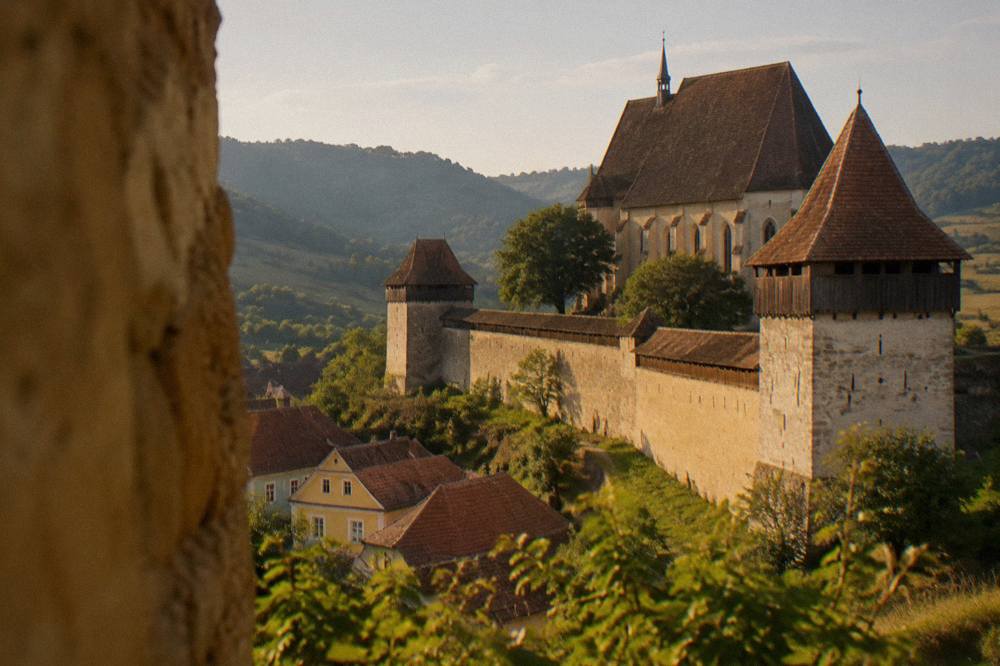
The UNESCO listing matters for a practical reason beyond prestige: it is why the walls, storage cells and towers of a handful of villages have been maintained while many other fortified churches across the region slowly decayed. The seven listed villages are the protected core, but they are a fraction of the total number of Saxon church-fortresses scattered across southern Transylvania. Drive almost any back road between Sibiu and Sighișoara and you will pass unlisted examples, some restored, some locked, some barely holding their roofs.
If the question you arrived with is whether the effort of reaching them is rewarded, the honest answer is that the buildings speak for themselves: a wall designed to shelter an entire village, with family grain cells still in place, is a different order of sight from a palace salon. For the wider judgement on the region, see Is Transylvania Worth Visiting For Tourists?.
How Do You Plan A Fortified Church Trip From Sibiu?
Plan a fortified church trip from Sibiu in one of three shapes: a short half-day to Cisnădie and Cisnădioara, the closest pair; a full-day eastern loop to Biertan, often combined with Sighișoara; or a long single-destination day to Viscri or Prejmer, each over two hours each way by road, so pick one rather than attempting both.
| Trip shape | Churches covered | Rough time needed | Best combined with |
|---|---|---|---|
| Half-day close pair | Cisnădie, Cisnădioara | about 3 to 4 hours | A morning or afternoon in Sibiu's old town |
| Eastern loop | Biertan, optionally Sighișoara | full day | Mediaș on the return |
| Southern villages | Rășinari, Sibiel | about half a day | The Mărginimea Sibiului hill country |
| Long single day | Viscri, or Prejmer | full day | Brașov if heading east |
Guided options do the logistics for you. The Saxon heritage villages half-day tour from this site's roster covers the close villages, and the Sighișoara and Biertan options build the eastern loop with the driving included; both are listed in the tour picks on this page. Independent travellers should note that rural buses are sparse and that a car, booked through the guidance in Car Rental In Sibiu, is the flexible option. If your time is short to begin with, read How Many Days Do You Need In Sibiu? before committing a full day to the countryside.
Season matters more here than in the city. Village churches in November to March run reduced hours, Biertan included, and snow sits on the landscape from November into March in an average year, per the ERA5 reanalysis, 1991-2020, for the Sibiu area. Summer gives you long evenings and full opening hours but also the busiest village lanes. Autumn is the compromise, and it is when the surrounding hills photograph best; the desk at Sibiu Travel Guide keeps a seasonal rundown in Best Time To Visit Sibiu.
Common Questions About Fortified Churches In Transylvania
The questions below cover the basics visitors ask: whether the churches are castles, whether you can go inside, how many there are, and which one to see if time allows, answered with the facts this page's research supports and nothing beyond them. The details expand on each point with what to check before travelling.
Why Does Romania Have Fortified Churches?
Because Saxon settlers from the 12th century onward built their village churches as communal refuges in times of raids, enclosing them with walls, towers and storage rooms so the whole village could shelter inside. The type is concentrated in southern Transylvania, the Saxon settlement zone around and east of Sibiu.
Are Fortified Churches Castles?
No. A castle belonged to a noble family and housed a military household; a fortified church belonged to a village community and sheltered it. The walls, towers and bastions look military because their job was defensive, but the core building was always the parish church, and many still hold regular or occasional services.
Can You Go Inside A Fortified Church?
Often, yes, but access varies by village, season and caretaker. Biertan publishes reported hours and a 20 RON adult ticket through sibiu-turism.ro; for Cisnădie, Cisnădioara, Valea Viilor, Viscri and Prejmer, check the current prices and opening arrangements locally or with a tour operator before travelling.
How Many Fortified Churches Are There?
No single reliable total exists, so none is printed on this site. What is documented is the UNESCO serial listing, Villages with Fortified Churches in Transylvania, with Biertan inscribed in 1993 and the listing extended in 1999 to seven villages, including Prejmer, Viscri and Valea Viilor. Beyond the listed seven, unfortified counts circulate widely and are not reproduced here.
Which Fortified Church Should You See If You Have One Day From Sibiu?
Biertan, if the day is a single long outing: it is the UNESCO flagship, about 76 km and a reported 1 hour 15 to 1 hour 30 by road, with published hours and entry. If you have only half a day, take the close pair of Cisnădie and Cisnădioara, under 40 minutes of combined driving from Piața Mare.
Do People Still Live In These Villages?
Yes, though far fewer than in the Saxon era, and the German-speaking community that built the churches has largely dispersed. The villages remain inhabited, working settlements, which is why access depends on caretakers and seasons rather than on a fixed attraction schedule. Treat them as living places and you will get more from the visit.