What Is Sibiu Known For?
Sibiu, in Transylvania, Romania, is known for its Saxon old town, the 'eyes' of its rooftops, the Brukenthal National Museum, the Bridge of Lies and its role as a gateway to the Transfăgărășan. Here is what the sources say.
Sibiu, a city in Transylvania in central Romania, is known first for its medieval Saxon old town: the Upper Town and Lower Town that fan out from Piața Mare, the grand square at the heart of the city. First documented in 1191 as Cibinium, the seat of the free prepositure of the Germans in Transylvania, per the city's own history page, Sibiu grew into one of the chief cities of the Transylvanian Saxons, the German-speaking community whose settlers arrived from the Moselle valley area in the 12th century, as the heritage body patrimoniu.sibiu.ro reports. Its German name, Hermannstadt, is still the second name of the city.
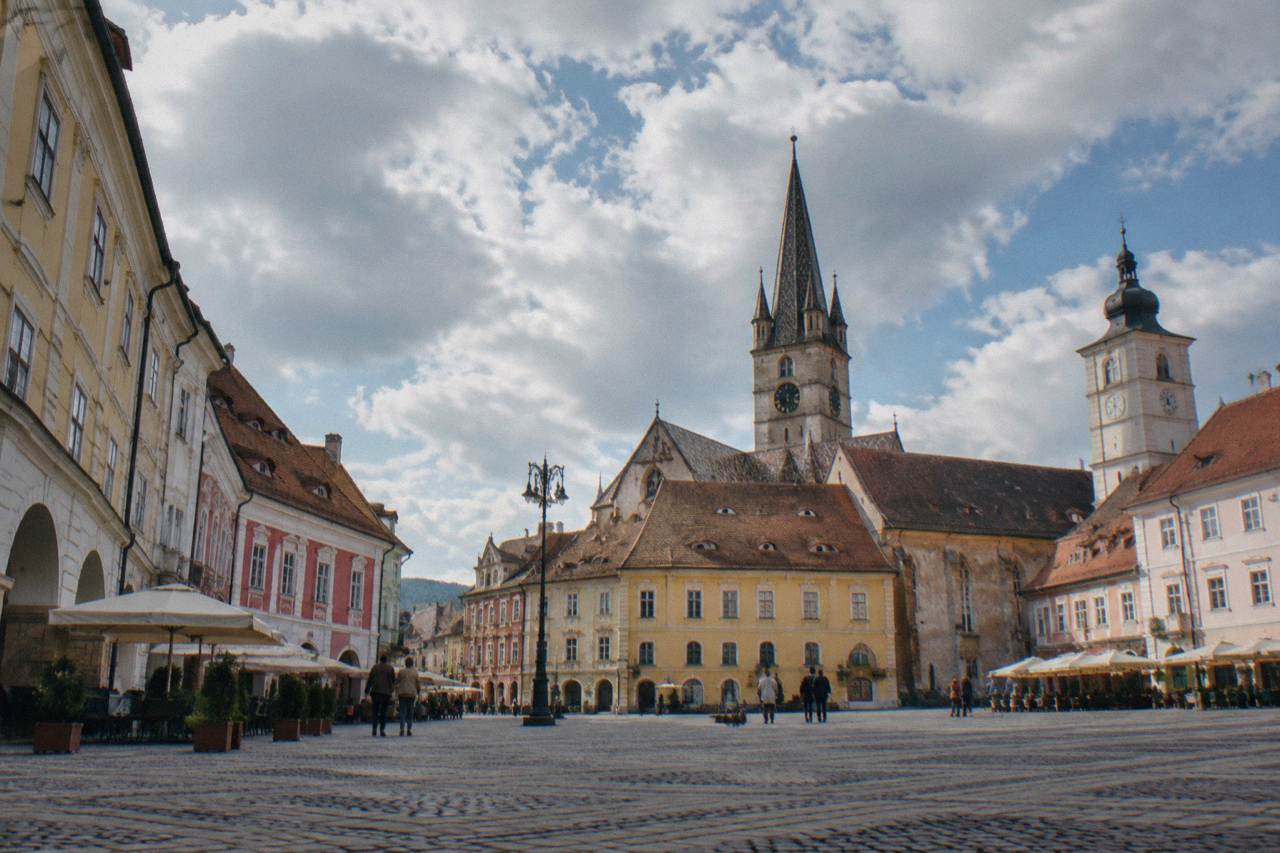
The city sits inland on the Cibin river at 415 to 431 m, with the Carpathians, the Făgăraș range, the Transfăgărășan road and the Păltiniș resort, all reachable as day trips to the south. It held the European Capital of Culture title in 2007, a fact that is reported widely but that this site states only as reported. For a fuller rundown of activities, the site's root page on things to do in Sibiu goes sight by sight.
What Is Sibiu Known For?
Sibiu is known for five things above all: its Saxon old town around Piața Mare and Piața Mică, the famous "eyes" of Sibiu, the rooftop windows that seem to watch the streets; the Brukenthal National Museum, opened to the public in 1817; the Bridge of Lies, an iron bridge built in 1859 to 1860; and its role as the natural gateway to the Transfăgărășan mountain road and the Făgăraș mountains.
Each of those five deserves a section, and each carries a trap or two that a first page of search results often gets wrong. The Council Tower, for instance, the orange-roofed tower between Piața Mare and Piața Mică, has been closed to visitors since 19 January 2026 for a restoration planned at about 24 months, with completion reported at about January 2028; the Evangelical Cathedral tower, at 10 RON for an adult ticket, is the open viewpoint in the meantime. The sections below take the five in turn, with the official figures attached to each.
The "Eyes Of Sibiu" And The Old Town
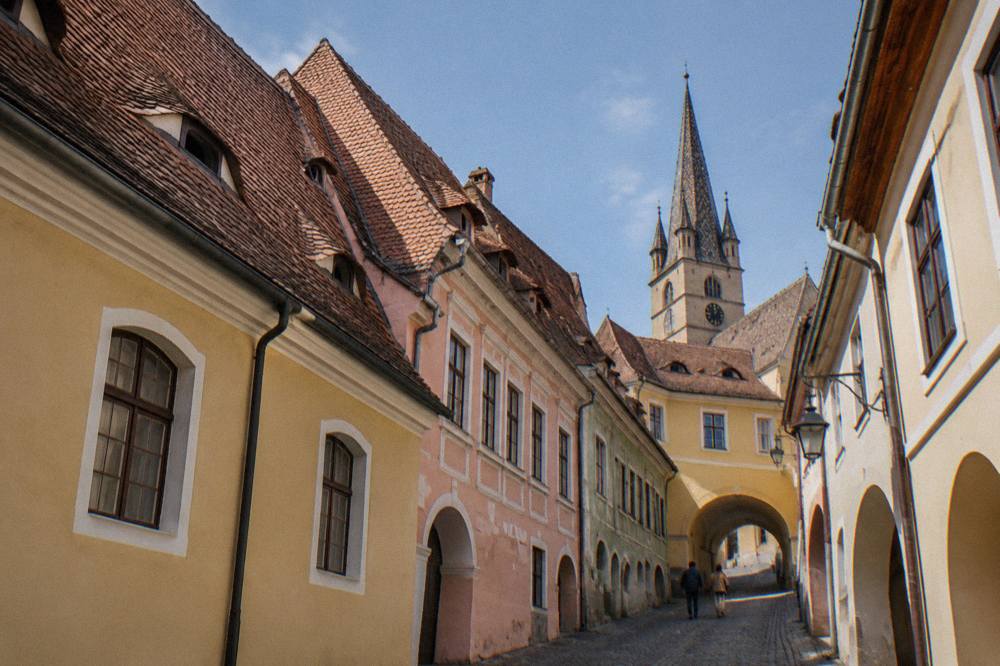
The "eyes of Sibiu" are the small skylights and ventilation openings set into the steep tiled roofs of the old town's houses, which from street level look like eyelids and pupils watching the passer-by, and they are free to see from any street or square in the Upper Town and Lower Town. No ticket, no hours, no viewpoint fee applies.
The old town itself splits into two levels. The Upper Town holds the three great squares, Piața Mare, Piața Mică and Piața Huet, and the guild-era houses of the merchants who ran the city. The Lower Town, reached down the Stairs Passage (Pasajul Scărilor), is the older, quieter layer, with pastel houses and lanes running inside the surviving city walls and towers, the Potters', Carpenters' and Arquebusiers' towers among them. All of it is open public space. The Bridge of Lies, reported as the first cast-iron bridge in Romania, built 1859 to 1860, links Piața Mare to Piața Mică and takes its name from the legend that it would collapse under anyone who told a lie on it.
For the full architecture walk, see the site's Sibiu walking tour guide; for a first visit, how many days you need in Sibiu is the practical companion.
Brukenthal And The Museum City
Sibiu is known as a museum city through the Brukenthal National Museum, a network of separate sites with separate tickets rather than one museum: the Palace on Piața Mare costs 50 RON for an adult, the History Museum at Casa Altemberger 36 RON, Natural History 20 RON, the Pharmacy Museum 16 RON and Contemporary Art 15 RON, with a 48-hour combined ticket at 120 RON, per the Brukenthal National Museum's own price page.
Samuel von Brukenthal, governor of Transylvania from 1777 to 1787, left the collection that opened to the public in 1817, per the museum's own history pages, which makes it one of the oldest public collections in this part of Europe, though this site avoids unverifiable superlatives. The practical traps matter more than the history. The main Brukenthal museums are closed on Monday and Tuesday, and the Palace itself runs Wednesday to Sunday, 10:00 to 18:00, with the cashier closing at 17:15. The Contemporary Art Museum is open Monday to Friday only, closed at weekends. The Hunting Museum (Muzeul Cinegetic August von Spiess) is closed for an indefinite period and opens only to pre-booked groups. A temporary exhibition, "Umbre colorate. Picturalizări după Dürer", runs at the Palace to 31 December 2026. Confirm hours on the museum's own site before you go.
Beyond Brukenthal, the city is known for the ASTRA Museum of Traditional Folk Civilization in the Dumbrava forest, an open-air museum of village houses and mills functioning since 1963, with an adult ticket at 50 RON per the museum's own ticket page.
| Brukenthal site | Adult ticket | Days open |
|---|---|---|
| Palace (European and Romanian art) | 50 RON | Wed to Sun |
| History Museum, Casa Altemberger | 36 RON | Wed to Sun |
| Natural History Museum | 20 RON | Wed to Sun |
| Pharmacy History Museum | 16 RON | Wed to Sun |
| Contemporary Art Museum | 15 RON | Mon to Fri |
| Combined 48-hour ticket | 120 RON | Varies by site |
Should You Book A Guided Introduction To The Old Town?
A guided walk is the fastest way to have the squares, the eyes and the Saxon history explained in one pass, and this site's evening panorama option pairs the old town with the view over it from Gușterița Hill. Free cancellation is standard on the operator's live listing, so nothing is locked in at planning stage.
The related evening tour, Sibiu panorama by evening, tour of Gușterița Hill, covers exactly this angle, the city seen from above at dusk. Check availability on the operator's live listing.
The Transfăgărășan Gateway And The Mountains
Sibiu is known as the base for the Transfăgărășan, the high mountain road across the Făgăraș range to Bâlea Lake at 2,034 m, which reopened for the 2026 season on 12 June and runs daily 07:00 to 21:00 on the high stretch, with the rule that the alpine section can be closed on any day from 20 October onward. Fines of 10,000 to 30,000 lei apply for driving the closed section.
The road is about 63 km and 69 minutes of driving from Piața Mare to the Bâlea Cascadă end, computed over open routing data in free-flow conditions, and Bâlea Lake about 88 minutes and 76 km. The status question is live: after 23 September 2026 the state of the road was not confirmed, so check the live road status before setting out, and read is the Transfăgărășan road currently open for the rule in plain words. The Bâlea cable car runs on its own schedule as the winter alternative; print no price for it here, confirm at the operator. Păltiniș, the small ski resort at about 40 minutes and 32 km, opens its 2026 to 2027 season on 28 November 2026, per Păltiniș Arena's announcement. One road warning for drivers: the A1 motorway between Sibiu and Boița is closed from 5 October to 19 December 2026, with traffic diverted onto DN7.
| Day trip from Piața Mare | Road distance | Driving time, free flow |
|---|---|---|
| Transfăgărășan (Bâlea Cascadă) | about 63 km | about 69 min |
| Bâlea Lake | about 76 km | about 88 min |
| Păltiniș | about 32 km | about 40 min |
| Rășinari (Mărginimea Sibiului) | about 13 km | about 18 min |
| Cisnădie fortified church | about 10 km | about 14 min |
| Sibiel | about 25 km | about 36 min |
The second thing Sibiu is known for in this mountain context is the Saxon villages: the Mărginimea Sibiului sheepherding villages to the south and the fortified churches of the Transylvanian Saxons, with Biertan, a UNESCO-listed fortified church at about 76 km and roughly 1 hour 15 to 1 hour 30 by road, whose adult ticket is 20 RON per the regional tourism site, hours varying by season. Sighișoara, the UNESCO-listed birth town an hour and a half away, is the popular full-day extension, covered in is Sighișoara worth visiting.
A Festival City And A Christmas Market
Sibiu is known as a festival city, above all for the Sibiu International Theatre Festival (FITS), which held its 33rd edition from 19 to 28 June 2026 with the theme "Soul", and whose 34th edition is announced for 18 to 27 June 2027 with the theme "Lumină", per the festival's own FAQ and local reports. The Sibiu Christmas Market runs from 13 November 2026 to 3 January 2027 in Piața Mare, entry free.
The Christmas market is the other anchor of the city's year: 52 days, its 19th edition, an ice rink of about 600 square metres in the square, and a reported Golden Ticket at 100 lei covering the wheel, carousel and mini-train, per local coverage of the organiser's announcement. Winter itself is real here: the ERA5 reanalysis, 1991-2020, modelled for a grid cell near Sibiu, puts January snowfall at about 23 cm and December at about 21 cm, with January mean daily highs of 2.2 C, and the city's own official figures give a mean annual temperature of 8.9 C and mean annual rainfall of 662 mm. Snow falls from November to March. The ski season at Păltiniș, announced for 28 November 2026, lines up with it. For the market itself, is there a Christmas market in Sibiu, Romania is the dedicated answer.
What To Eat And How To Say The Name
Sibiu is known in the kitchen for Transylvanian Saxon and Romanian country cooking: Sibiu salad, ciorbă soups, mici grilled rolls, sarmale cabbage rolls, zacuscă spread, balmoș polenta and papanași fried doughnuts with cream, dishes the region's gastronomic reputation rests on, per general culinary sources; no venue is named here because no restaurant figure appears in any source available to the desk.
The name itself is pronounced roughly "see-BEE-oo", an approximate English respelling only, since no official pronunciation guide exists in the sources. Romania is a full Schengen member, the currency is the leu (RON, lei), and hotels in Sibiu have added a 2 percent tourism tax on the accommodation value since 1 January 2026. The fuller budget picture, in the city's own prices where they exist, sits in the site's guide to Sibiu costs, and the question is Sibiu, Romania worth visiting rounds off the judgement. Everything above is what the primary sources say the city is known for, and the Sibiu Travel Guide covers each piece in its own page.
Common Questions About What Sibiu Is Known For
What Is Sibiu Known For?
Sibiu is known for its Saxon old town around Piața Mare, the "eyes" in its rooftops, the Brukenthal National Museum, the Bridge of Lies, the Transfăgărășan gateway and the FITS theatre festival, with a well-known Christmas market each winter.
Is Sibiu A Medieval City?
Its core is. First documented in 1191 as Cibinium, the city keeps an Upper Town and Lower Town inside surviving medieval walls and towers, though the Council Tower itself is closed for restoration until about January 2028.
What Are The Eyes Of Sibiu?
Small skylights and roof openings on the old town's steep tiled roofs, which from the street look like watching eyes. They are a free architectural feature visible from any square or lane.
Why Is Sibiu Associated With The Transfăgărășan?
The high road across the Făgăraș range starts its climb about an hour's drive south of the city, making Sibiu the usual base. The road can be closed any day from 20 October onward, so check the live status before driving.
What Food Is Sibiu Known For?
Transylvanian and Saxon country dishes: Sibiu salad, ciorbă, mici, sarmale, zacuscă, balmoș and papanași, named here as regional dishes without venue recommendations.
