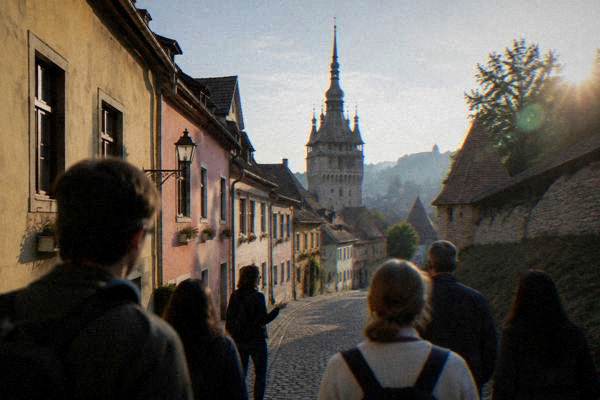
Is Sighisoara Worth Visiting?
Is Sighișoara worth the drive from Sibiu? A sourced answer covering the UNESCO old town, reported ticket prices, the train and road times, and how to plan the day trip.
Sighișoara is a small walled city in Transylvania, Romania, about 96 km by road east of Sibiu, and the question of whether it deserves a day of your trip is one this site can answer with sources rather than impressions. Its historic centre has been on the UNESCO World Heritage List since 1999, and it remains one of the few inhabited medieval citadels in this part of Europe, a fact the Sibiu Travel Guide desk can state from the listing itself. What follows lays out what is documented: the heritage status, the reported entry prices, the travel times from Sibiu by road and rail, and the practical traps that shape a visit in 2026 and 2027.
Is Sighisoara Worth Visiting?
Yes, if a walled medieval citadel on the UNESCO World Heritage List is what you want from Transylvania, Sighișoara is worth the roughly 102-minute drive from Sibiu's Piața Mare. The UNESCO listing, inscribed in 1999 under criterion (iii), recognises its historic centre as an outstanding testimony to a Saxon urban settlement, and the citadel's towers, walls and coloured burgher houses are compact enough to explore on foot in a day.
The UNESCO inscription is the strongest documented claim in Sighișoara's favour. The World Heritage listing for the Historic Centre of Sighișoara, inscribed in 1999, cites the site as testimony to a lost culture, the Transylvanian Saxons, whose fortified towns shaped this region from the 12th century onward. Sibiu shares that Saxon inheritance, first documented in 1191 as Cibinium, which is why the two cities are so often compared: same founders, similar street logic of squares and defensive towers, different scale. Sibiu is the larger regional centre with roughly 134,308 residents at the 2021 census; Sighișoara is the citadel you can walk across.
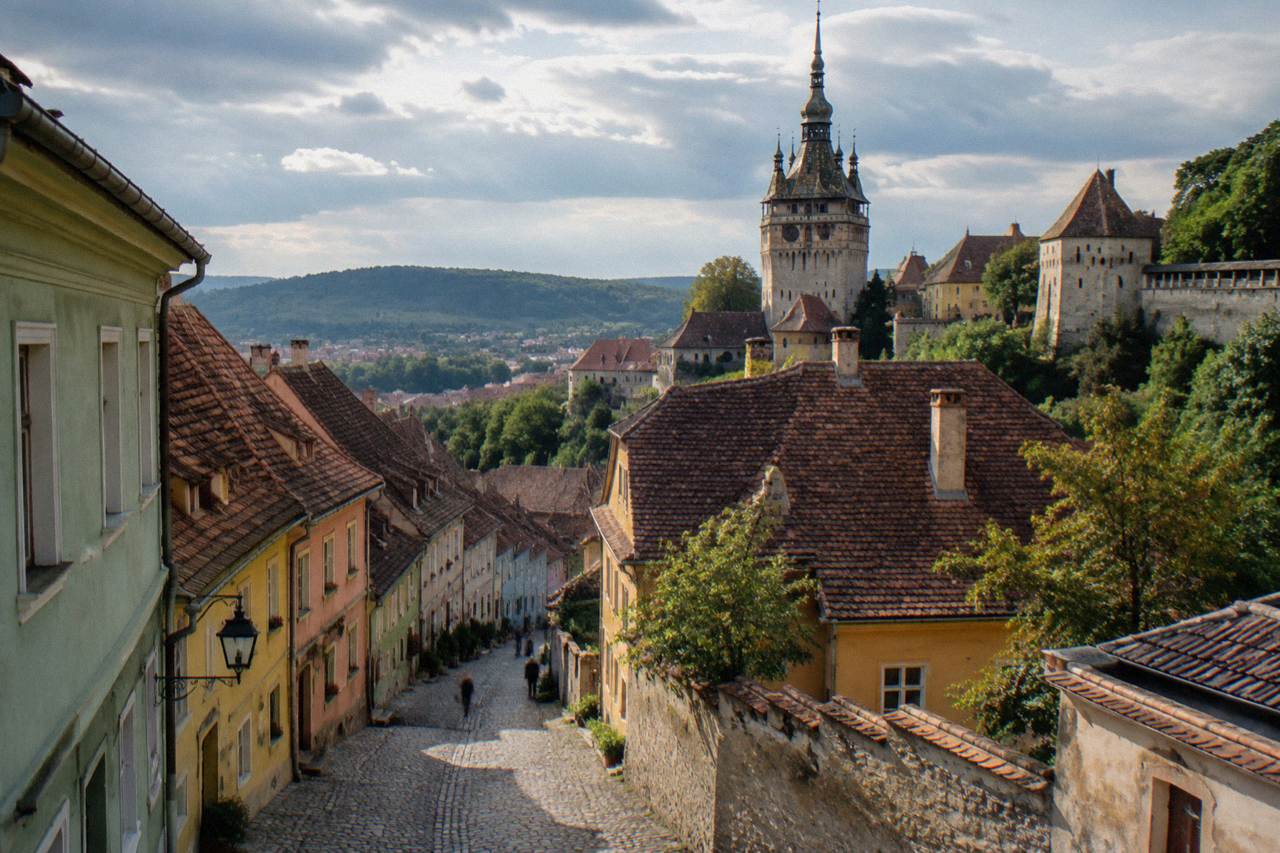
What the citadel offers is density. The Clock Tower, the covered wooden staircase to the Church on the Hill, the rows of steep-gabled houses painted in ochre, green and rose: all of it sits inside walls a few hundred metres across. There is no beach, no sea and no coastline anywhere in this part of Romania, and no mountain pass either; Sighișoara is a lowland town on the Târnava Mare, reached through rolling farmland. If your image of Transylvania is alpine, the Transfăgărășan day tour alternatives and the Făgăraș range are a different trip.
One caution this site has to give plainly: the Dracula association is popular culture, not sourced fact. No historical record supports a birthplace claim for Vlad the Impaler in Sighișoara, and this page prints no house, no date and no birthplace assertion. The legend is tied to the region in the popular imagination, and that is as far as the record here goes.
If you would rather not drive, a private day trip is the structured option. Check availability for the Sighișoara, Biertan and Viscri private tour, which pairs the citadel with two fortified-church villages.
What Does Sighișoara Cost To Visit?
Sighișoara's citadel streets, walls and squares are free to wander, and the paid sights inside are cheap by western standards: the Clock Tower history museum is reported at 50 RON, the Weapons Museum at 20 RON, the Torture Room at 10 RON and the Church on the Hill at 20 RON, per a private tourism site for the citadel. Confirm current prices before you go, as none of these come from an official city source.
Those four figures are the only ticket prices for Sighișoara in the research behind this site, and each is attributed to cetateasighisoara.com, a private tourism site rather than a municipal one. The Clock Tower is the headline item and the viewpoint, and its reported opening hours follow a two-season pattern: from 15 May to 15 September, Tuesday to Friday 9:00 to 17:30 and weekends 10:00 to 17:30; from 16 September to 14 May, Tuesday to Friday 9:00 to 15:30 and weekends 10:00 to 15:30, closed Monday. Treat all of it as reported and check before travelling, especially the Monday closure, which catches weekend planners.
For context, the money you would spend inside Sibiu's own museums runs on a similar scale: the Brukenthal National Museum's own price page lists the Palace art gallery at 50 RON and the History Museum at Casa Altemberger at 36 RON, with a 48-hour combined ticket at 120 RON. A Sighișoara day trip is therefore not a second city break with a second city's budget; it is a citadel with a handful of small museums, most of the pleasure taken outdoors and free.
| Sight in Sighișoara | Reported adult price | Reported hours | Notes |
|---|---|---|---|
| Citadel streets, walls, squares | Free | Always open | The core experience costs nothing |
| Clock Tower history museum | 50 RON | Tue-Fri 9:00-17:30, Sat-Sun 10:00-17:30 (15 May-15 Sep); shorter Oct-Apr; closed Mon | The citadel's landmark viewpoint |
| Church on the Hill | 20 RON | Seasonal, confirm locally | Reached by the covered staircase |
| Weapons Museum | 20 RON | Confirm locally | Inside the citadel |
| Torture Room | 10 RON | Confirm locally | Small exhibit |
Prices are reported by a private tourism site for the citadel, not an official municipal source, and the Romanian leu (RON) trades at roughly 5.3 lei to the euro. If a fuller cost picture for the region would help, the is Transylvania worth visiting for tourists answer covers the wider case.
How Do You Get From Sibiu To Sighișoara?
The drive from Piața Mare in Sibiu to Sighișoara is about 96 km and about 102 minutes in free-flow traffic, computed over OpenStreetMap routing and not a timetable, and the reported rail journey takes about 2 to 2.5 hours from Gara Sibiu, per Romanian rail schedules: check cfrcalatori.ro before travelling. Both stations in Sibiu sit about 0.8 km from Piața Mare, so the trip starts on foot either way.
The road route runs east through the Transylvanian plateau, passing Mediaș, which is itself about 68 minutes and 56 km from Sibiu by the same computed method. Some travellers split the journey and stop in Mediaș, whose Margarethenhalle guild hall anchors a smaller Saxon square, before continuing to the citadel; the Mediaș guide covers that option. Driving times are computed for free-flow conditions and are not a promise: add margin in winter, when snow falls across the region from November to March, with the ERA5 reanalysis, 1991-2020, showing January snowfall of about 23 cm in Sibiu's grid cell.
The train is the alternative. Reported CFR journey times put Sighișoara at about 2 to 2.5 hours from Sibiu, against about 1 to 1.5 hours to Mediaș, and this site prints no fare and no daily frequency because none was found in a trusted source. Buy and check at cfrcalatori.ro. Gara Sibiu is a short walk north-east of the old town, and the bus station, Autogara at Piața 1 Decembrie 1918, is similarly close, which makes either mode painless from central accommodation.
| Route from Sibiu | Distance | Time | Source type |
|---|---|---|---|
| Sibiu to Sighișoara by road | about 96 km | about 102 minutes | Computed, free-flow |
| Sibiu to Mediaș by road | about 56 km | about 68 minutes | Computed, free-flow |
| Sibiu to Sighișoara by train | not stated | about 2 to 2.5 hours | Reported; check cfrcalatori.ro |
| Sibiu to Brașov by road | about 142 km | about 154 minutes | Computed, free-flow |
For the full question of how the two cities stack up as destinations, the Sibiu versus Sighișoara comparison sticks to the same sourced distances and listings.
Is Sighișoara Worth Visiting As A Day Trip Or An Overnight?
As a day trip, yes for the citadel itself, which is walkable in a long half-day; as an overnight, the case rests on evening light on the walls and early mornings before the day crowds arrive, plus the chance to add Biertan's fortified church, a UNESCO component about 76 km and roughly 1 hour 15 to 1 hour 30 further on. Neither choice is wrong, but a day trip covers the documented sights.
The arithmetic favours the day trip. Roughly 102 minutes each way by road means you can leave Sibiu after breakfast, spend five or six hours inside the walls, and be back for dinner, with the Clock Tower, the staircase and the Church on the Hill all inside that window. The overnight case is about atmosphere and about the add-ons: Biertan, whose fortified church is part of the UNESCO serial site "Villages with Fortified Churches in Transylvania", inscribed with Biertan in 1993 and extended in 1999, is reported at 20 RON adult entry with seasonal hours, and the villages of Viscri and Valea Viilor belong to the same listing.
Timing matters more than duration. The Clock Tower is reported closed on Mondays year-round, and its hours shrink from mid-September to mid-May, so a winter Monday is the worst possible combination. Summer brings the festival calendar instead: Sibiu's own programme includes the FITS theatre festival in June and the Christmas market from 13 November 2026 to 3 January 2027 in Piața Mare, and a December trip can pair the market with a snow-dusted citadel, remembering that the Transfăgărășan to the south can close any day from 20 October and is never a winter route to anywhere.
The structured way to bundle the citadel with the villages is the private Sighișoara, Biertan and Viscri tour, which covers all three in one guided day from Sibiu: Check availability.
What Are The Alternatives If You Skip Sighișoara?
If you skip Sighișoara, the sourced alternatives from Sibiu are Brașov at about 142 km and 154 minutes by road, Alba Iulia at about 71 km and 81 minutes, and the Saxon villages of the Mărginimea Sibiului at 13 to 25 km out, each with a different draw: mountains and a bigger city, a star fortress, or shepherd villages close enough for a half-day.
Only Sibiu has full sourcing here, so this page compares on distances and listings alone and declares no winner. Brașov is the largest of the three alternatives, a longer round trip that some travellers pair with Bran Castle, whose ticket page currently lists a Guided Royal Tour Plus Fast Pass from 150 RON. Alba Iulia's Alba Carolina citadel has free, always-open grounds at about 81 minutes by road, and the Alba Iulia guide family of pages covers it in detail. Closest to home, the Mărginimea Sibiului villages, Rășinari at 13 km and Sibiel at 25 km, give you Transylvanian rural life in under 40 minutes of driving.
The honest framing is that Sighișoara and these alternatives are not substitutes. The citadel is the region's UNESCO-listed urban time capsule; the Mărginimea is pastoral; Brașov is a mountain-gated city. A visitor with three or more days can take Sighișoara and one other; the how many days do you need in Sibiu answer helps you budget the days.
Common Questions About Sighișoara
Is Sighisoara Worth Visiting?
Yes, as a day trip from Sibiu: the historic centre has been a UNESCO World Heritage Site since 1999, the citadel is walkable in a day, and the drive is about 96 km and 102 minutes from Piața Mare. Reported museum prices run from 10 to 50 RON.
Can you visit Sighișoara from Sibiu in one day?
Yes. Roughly 102 minutes each way by road leaves five or more hours inside the citadel; the reported train journey is 2 to 2.5 hours each way, so check cfrcalatori.ro and start early.
How much do Sighișoara's museums cost?
Per a private tourism site for the citadel, the Clock Tower history museum is reported at 50 RON, the Weapons Museum at 20 RON, the Church on the Hill at 20 RON and the Torture Room at 10 RON. Confirm before you go; these are not from an official municipal source.
Is the Dracula story in Sighișoara real?
The Dracula legend is tied to the region in popular culture, but no record behind this page supports a birthplace claim for Vlad the Impaler in Sighișoara. Visit for the citadel and the UNESCO listing, not for a documented Dracula site.
When is the best time to visit Sighișoara?
The Clock Tower's reported hours are longest from 15 May to 15 September and it is closed on Mondays year-round, so a Tuesday to Sunday visit between late spring and early September gives full access. December pairs the citadel with Sibiu's Christmas market, which runs 13 November 2026 to 3 January 2027.
Sighișoara earns its place on a Sibiu-based itinerary the same way the facts earn their place on this page: a UNESCO inscription, modest reported prices, and a drive short enough that the citadel's walls are a morning's decision rather than a second holiday.