Sibiu Or Sighisoara: Which To Pick For A Short Trip
Sibiu and Sighișoara sit about 96 km apart in central Romania, and a short trip often forces a choice between them. Here is what the sources actually say about each city, side by side.
Short answer
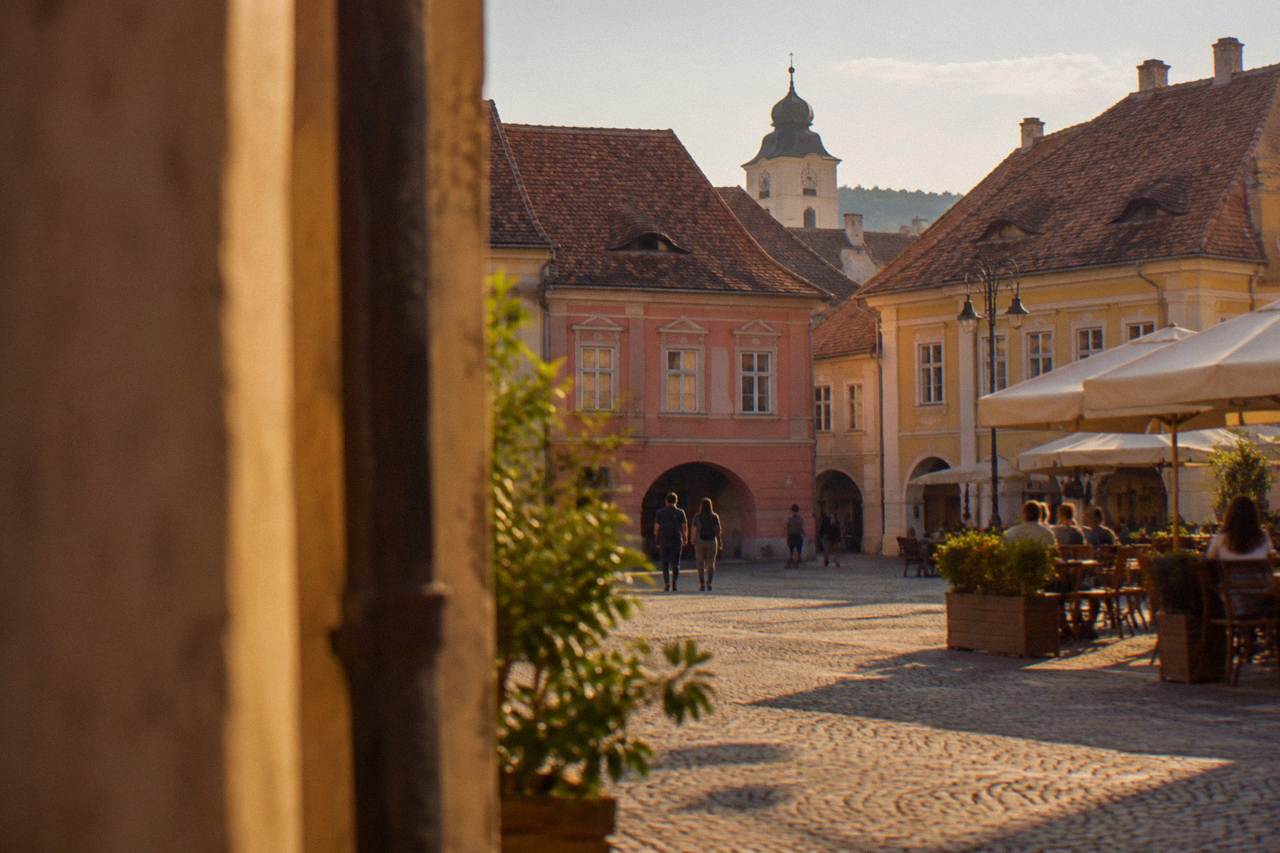
Sibiu is the larger city, with the Brukenthal museums, the ASTRA open-air museum and the Făgăraș mountains as day trips. Sighișoara has the UNESCO-listed historic centre and smaller reported ticket prices. The two are about 102 minutes apart by road, so many travellers see Sighișoara as a day trip from Sibiu.
Sibiu and Sighișoara are two of Transylvania's Saxon-founded towns, about 96 km apart by road in central Romania, and travellers with only a few days often ask which one deserves the hotel booking. The honest answer is that the sources describe two quite different places: Sibiu is a city of about 155,000 permanent residents per its own presentation page, with a museum network, a famous Christmas market and a mountain hinterland, while Sighișoara's historic centre has been a UNESCO World Heritage Site since 1999 (reported) and is compact enough that its main museum circuit is walked in a morning. This comparison lays out only what the primary sources say, with no ranking and no verdict on which town is prettier, because that is a matter of taste rather than data.
How Far Apart Are Sibiu And Sighișoara?
Sighișoara lies about 96 km from Sibiu by road, roughly 102 minutes of free-flow driving from Piața Mare, according to routing computed over OpenStreetMap data. By train the journey is reported at about 2 to 2.5 hours; check cfrcalatori.ro for live times, because no timetable figure is fixed here. The two historic centres are close enough that Sighișoara works comfortably as a day trip from a Sibiu base.
The road figure is a computed free-flow time, not a promise: it assumes normal traffic on the DN1 and DN14 route and says nothing about roadworks on a given day. The train figure comes from reported journey times and carries the usual caveat, confirm on the operator's own site before you plan a connection. Mediaș, another Saxon town with a fortified church in its centre, sits on the same road and rail corridor about 56 km from Sibiu, and many itineraries fold it into the same day.
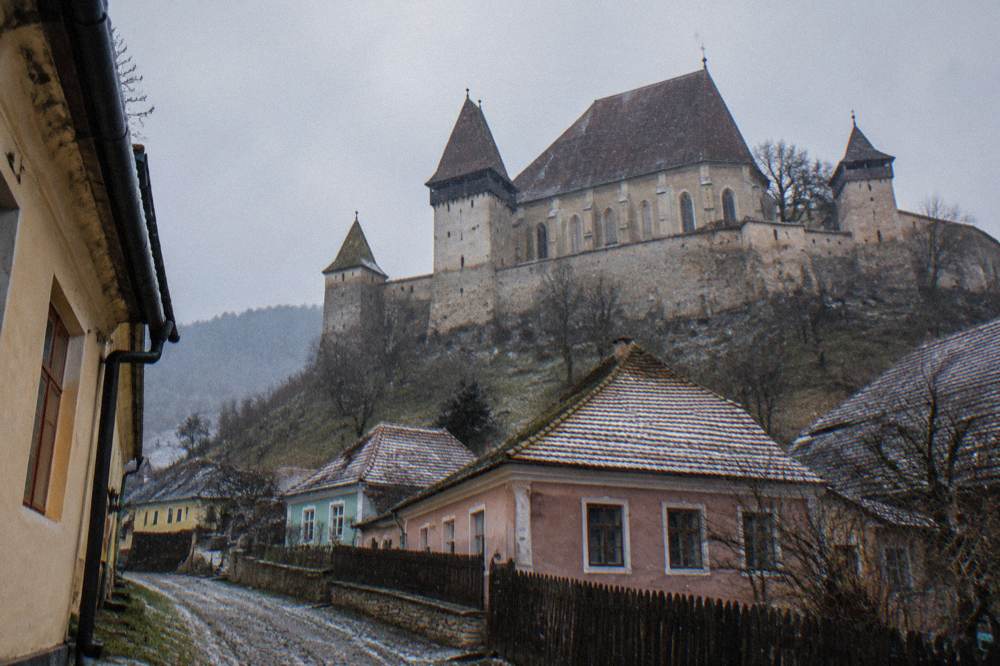
Both cities sit inland in Transylvania, so neither has a sea, a beach or a ferry of any kind. What each has instead is a medieval core built by the Transylvanian Saxons, the historic German community that settled the region from the Moselle area in the 12th century (reported), and a hinterland of villages with fortified churches, several of which belong to a separate UNESCO serial listing.
| Journey | Distance | Time | Source |
|---|---|---|---|
| Sibiu to Sighișoara by road | about 96 km | about 102 minutes | computed, free-flow |
| Sibiu to Sighișoara by train | route via Mediaș | about 2 to 2.5 hours | reported, check cfrcalatori.ro |
| Sibiu to Mediaș by road | about 56 km | about 68 minutes | computed |
| Sibiu to Biertan fortified church | about 76 km | about 1h15 to 1h30 | reported |
For travellers combining the two towns with more of the region, a Transylvania road trip from Sibiu is the natural frame, and the Sibiu to Sighișoara guide covers the transport options in detail.
Which City Has The Bigger Historic Centre?
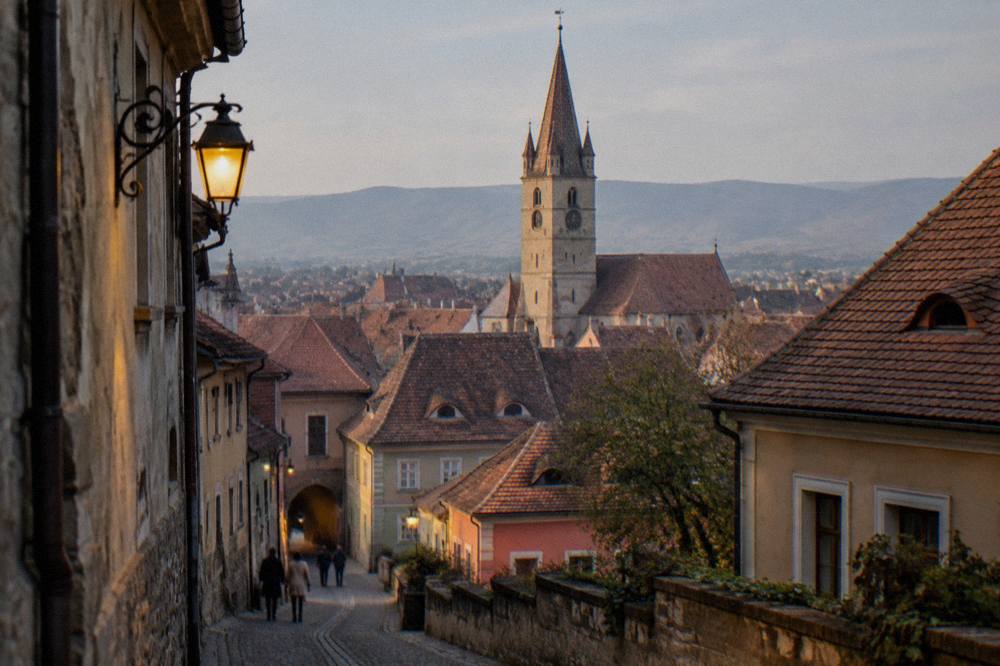
Sibiu's historic core spreads across an Upper Town and a Lower Town around Piața Mare, with the Brukenthal National Museum, the Evangelical Cathedral, the Bridge of Lies and the remains of the medieval city wall all within walking distance of each other. Sighișoara's historic centre is smaller and denser, and it is the one on the UNESCO World Heritage List, inscribed in 1999 under criterion (iii), which the UNESCO listing itself confirms.
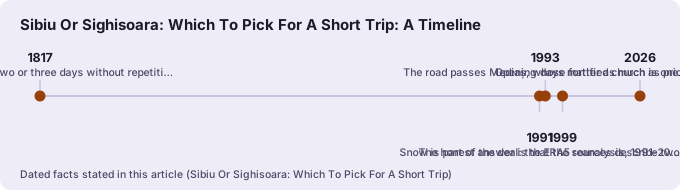
The practical difference is time. Sibiu's sights fill two or three days without repetition: the Brukenthal Palace art gallery alone, founded for the public in 1817 (reported), sits on Piața Mare, and the ASTRA open-air museum in the Dumbrava forest adds a half-day on the city's edge. The city's squares, the Bridge of Lies, the Stairs Passage linking the two towns, and the free city walls and towers need no ticket at all, as the Sibiu Travel Guide lays out in its sight-by-sight pages.
Sighișoara's centre is a single fortified hill: the Clock Tower, the covered wooden staircase to the Church on the Hill, and the lanes of coloured houses inside the walls. The UNESCO inscription covers the historic centre as a whole. One caveat matters for Dracula-minded readers: the legend is tied to the region in popular culture, but this site's sources support no birthplace claim, no house and no date in Sighișoara.
Neither city should be described as "nicer" or "better": the sources describe two different scales of place, and which suits you depends on how many days you have and whether you want a city or a single hill. Sighișoara's own merits are argued at length in the is Sighișoara worth visiting page.
What Do Museum Tickets Cost In Each City?
In Sibiu, the Brukenthal National Museum's own price page lists the Palace at 50 RON, the History Museum at Casa Altemberger at 36 RON, Natural History at 20 RON, Pharmacy History at 16 RON and Contemporary Art at 15 RON, with a 48-hour combined ticket at 120 RON. In Sighișoara, a private tourism site reports the Clock Tower museum at 50 RON, the Weapons Museum at 20 RON, the Torture Room at 10 RON and the Church on the Hill at 20 RON; confirm before you go.
The Sibiu figures are official and current: pensioners pay half (Palace 25 RON, combined 60), pupils, students and Euro26 holders a quarter. Opening days matter as much as prices, and this is where the 2026 traps bite. The main Brukenthal museums are closed Monday and Tuesday; the Contemporary Art Museum is open Monday to Friday only, closed at weekends; and the Hunting Museum is closed for an indefinite period, receiving only pre-booked groups of ten or more. Plan museum days for Wednesday to Sunday.
The ASTRA Museum of Traditional Folk Civilization, the open-air museum of village houses and watermills in the Dumbrava forest, charges 50 RON for an adult ticket per its own ticket page, with pensioners at 20 RON and pupils and students at 10 RON. Its autumn schedule runs to 26 October 2026 with last entry about 16:00; the winter schedule had not been announced for 2027 when this page was prepared, so check the museum's site for the off-season hours.
The Evangelical Cathedral tower, at 10 RON adult, is currently Sibiu's open viewpoint, because the Council Tower has been closed to visitors since 19 January 2026 for a restoration planned at about 24 months, with completion reported around January 2028. Print no Council Tower price or hours: none apply while it is sealed.
| Sibiu sight | Adult ticket | Days open |
|---|---|---|
| Brukenthal Palace (art galleries) | 50 RON | Wednesday to Sunday |
| History Museum, Casa Altemberger | 36 RON | Wednesday to Sunday |
| ASTRA open-air museum | 50 RON | daily in season, check winter hours |
| Evangelical Cathedral tower | 10 RON | daily, hours vary by day |
| Council Tower | closed for restoration | closed since 19 January 2026 |
| Sighișoara sight (reported) | Adult ticket | Note |
|---|---|---|
| Clock Tower history museum | 50 RON | closed Monday, hours seasonal |
| Church on the Hill | 20 RON | reached by covered staircase |
| Weapons Museum | 20 RON | inside the citadel |
| Torture Room | 10 RON | inside the Clock Tower |
The Sighișoara prices come from cetateasighisoara.com, a private tourism site rather than an official museum page, and the Clock Tower's reported hours shift seasonally: Tuesday to Friday 9:00 to 17:30 and weekends 10:00 to 17:30 from 15 May to 15 September, shorter from mid-September to mid-May. Confirm before you go.
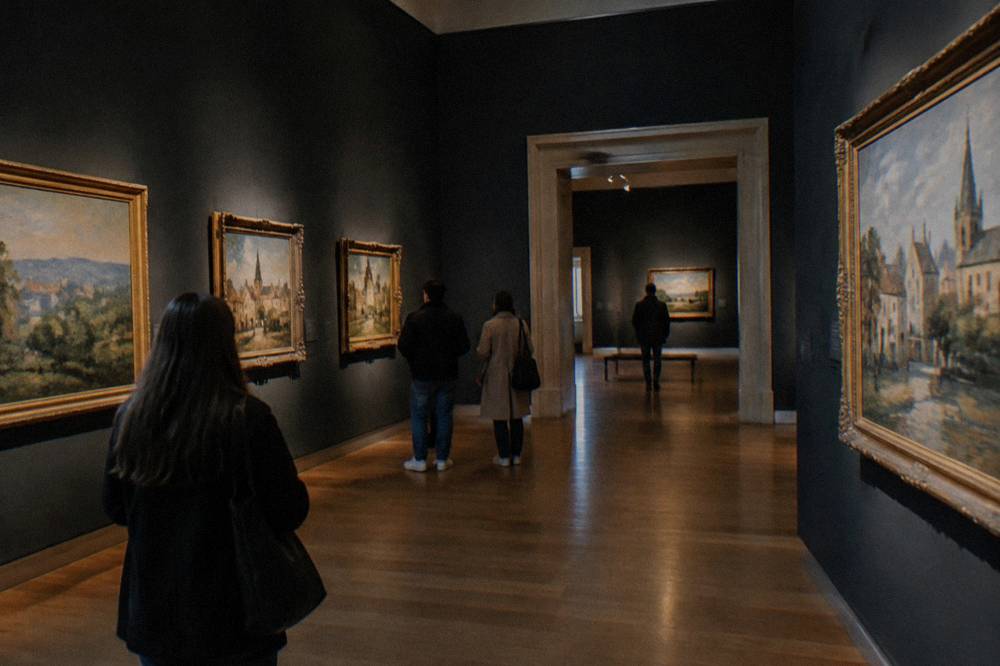
For the full Sibiu picture, the Brukenthal National Museum guide and the Sibiu cost guide break the budget down line by line, including the 2 percent accommodation tax hotels have collected since 1 January 2026.
Can You See Sighișoara As A Day Trip From Sibiu?
Yes, and the arithmetic supports it: about 102 minutes each way by road leaves six or more hours inside Sighișoara's walls, which is enough for the Clock Tower, the Church on the Hill and a long lunch, per the reported museum hours. Guided full-day trips from Sibiu run the same route, and one covers the craft villages around Sighișoara as well as the citadel itself.
Doing it independently means either a hire car, with the car rental in Sibiu guide covering the options, or the train, reported at 2 to 2.5 hours with no fare printable here; check cfrcalatori.ro. The road passes Mediaș, whose fortified church is one of the region's largest by reputation, and Biertan, whose fortified church is a component of the UNESCO "Villages with Fortified Churches in Transylvania" serial listing, inscribed in 1993 and extended in 1999 (reported). Biertan's adult ticket is reported at 20 RON with seasonal hours; confirm before you go.
The guided alternative removes the driving. The Village Crafts Around Sighișoara full-day trip runs from Sibiu into the citadel and the villages beyond it, and its operator's listing carries the live details:
There is also a dedicated Sighișoara day trip page with the drive times and reported opening hours in one place, and a Sighișoara day tour category listing the guided options.
Which City Has More Day Trips Within Reach?
Sibiu does, by any measurable count: the Transfăgărășan road and Bâlea Lake, the Păltiniș ski resort, Alba Iulia at about 81 minutes by road, Brașov at about 154 minutes, Bran Castle at about 154 minutes and the Saxon villages of the Mărginimea Sibiului all radiate from it. Sighișoara's own reach includes Biertan at roughly 30 to 40 minutes further east and Viscri, both part of the same UNESCO fortified-church listing.
The Sibiu figures are computed over OpenStreetMap routing at free-flow speeds, so treat them as planning numbers, not timetables. One 2026 trap sits on the list: the Transfăgărășan's high section reopened for the season on 12 June and can be closed on any day from 20 October by rule, so never assume it is open; the fines for driving the closed stretch run from 10,000 to 30,000 lei. The A1 motorway towards Bucharest is unfinished, and the Sibiu to Boița section is closed from 5 October to 19 December 2026, with traffic diverted onto the DN7.
| Day trip from Piața Mare, Sibiu | Distance | Drive time |
|---|---|---|
| Păltiniș ski resort | about 32 km | about 40 minutes |
| Alba Iulia citadel | about 71 km | about 81 minutes |
| Transfăgărășan (Bâlea Cascadă) | about 63 km | about 69 minutes |
| Bâlea Lake | about 76 km | about 88 minutes |
| Brașov | about 142 km | about 154 minutes |
| Bran Castle | about 138 km | about 154 minutes |
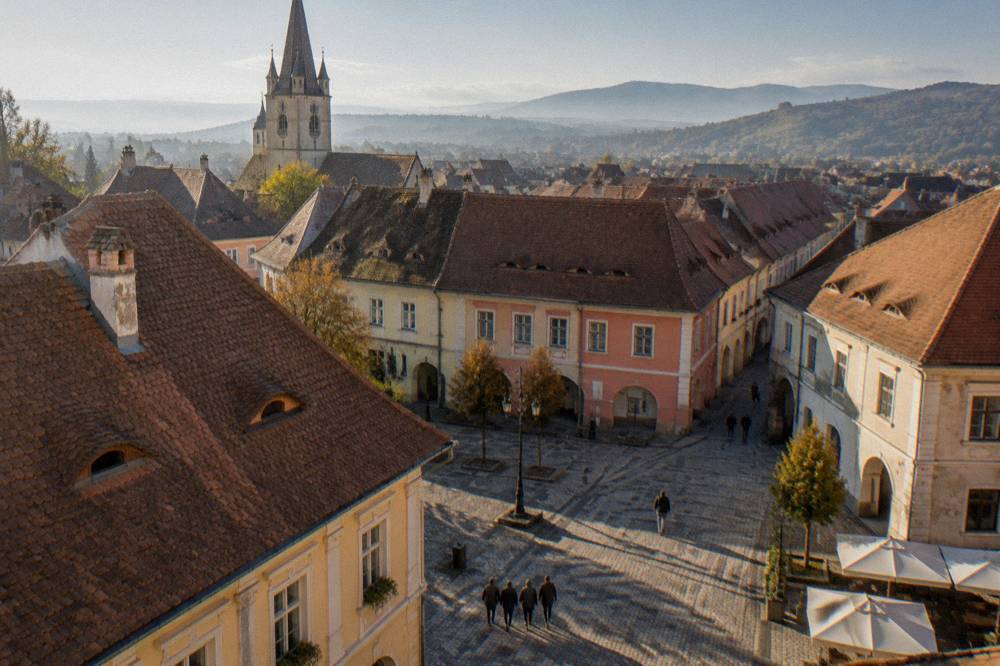
From Sighișoara, the logic reverses: the town itself is the destination, and the fortified-church villages are the excursion. A trip based in Sibiu can still reach Sighișoara comfortably, which is the structural argument for basing in the bigger city when the holiday is short. Sibiu's evening options extend the same way, including a guided panorama walk to Gușterița Hill:
The dedicated pages on Brașov, Bran Castle and Alba Iulia carry each trip's full detail.
What About Festivals, Food And Winter?
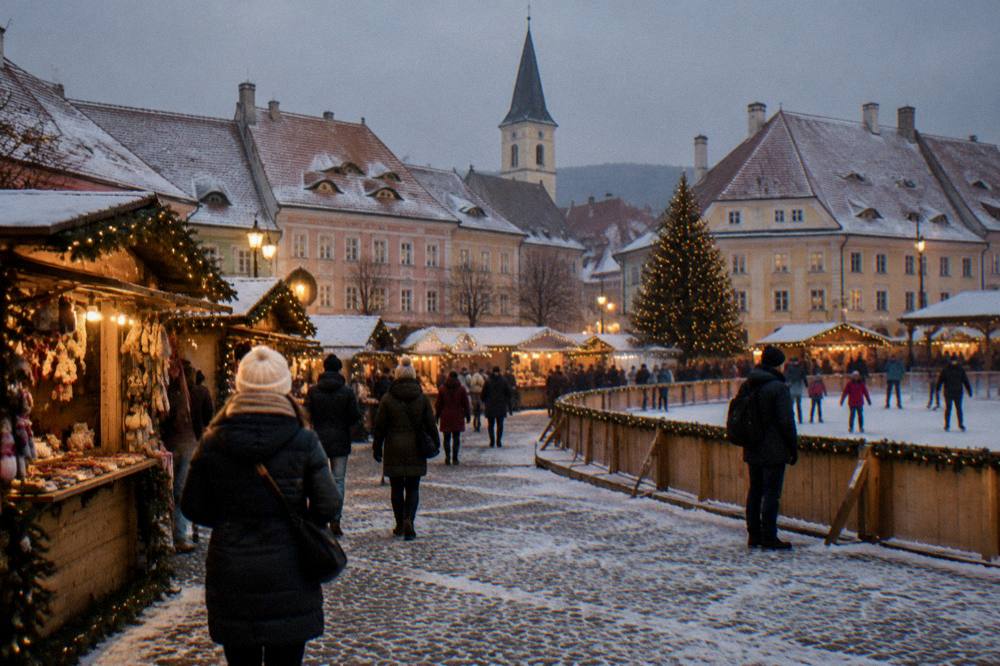
Sibiu hosts the calendar events with confirmed dates: the Christmas Market runs 13 November 2026 to 3 January 2027 in Piața Mare with free entry and a 600 sqm ice rink, and the FITS theatre festival's 2027 edition is announced for 18 to 27 June. Sighișoara has no comparable dated festival in this site's sources, so nothing is printed. Food-wise, both towns serve the same Transylvanian repertoire: Sibiu salad, ciorbă, sarmale, mici, papanași and the Saxon cooking tradition, with no restaurant named on either.
Winter changes the comparison. Păltiniș, 32 km from Sibiu, opens its ski season on 28 November 2026, and the Christmas market's 19th edition brings a reported Golden Ticket at 100 lei covering the wheel, carousel and mini-train, with about a third of the exhibitors new. Snow is part of the deal: the ERA5 reanalysis, 1991-2020, shows snowfall from November to March in the Sibiu grid cell, peaking in January at 23.3 cm, and January mean daily lows of -5.7 C. The Sibiu in December guide plans that month in full.
FITS, the Sibiu International Theatre Festival, ran 19 to 28 June in 2026 under the theme "Soul", and the 2027 dates, 18 to 27 June with the theme "Lumină", are announced. The 2026 Sibiu Jazz Festival ran 2 to 6 September and Artmania was staged free in Piața Mare on 24 and 25 July; no 2027 dates for either had been announced, and no medieval festival, beer fest or marathon date for either town is sourced here.
| Event | Place | Dates in the sources |
|---|---|---|
| Christmas Market | Sibiu, Piața Mare | 13 Nov 2026 to 3 Jan 2027 |
| FITS theatre festival | Sibiu | 18 to 27 June 2027 |
| Artmania Festival | Sibiu, Piața Mare | 2026 edition 24 to 25 July, free |
| Sibiu Jazz Festival | Sibiu | 2026 edition 2 to 6 September |
| Păltiniș ski season opening | 32 km from Sibiu | 28 November 2026 |
Sibiu Or Sighișoara: Which Fits Your Trip Length?
For one full day, the sources describe Sighișoara as the tighter fit: a UNESCO-listed hill whose reported museum circuit costs 50, 20 and 10 RON and closes Mondays. For two days or more, Sibiu supports the longer stay: seven Brukenthal sites with separate tickets, the ASTRA museum, free squares and walls, and day trips from Păltiniș to Bran Castle. The drive between them is about 102 minutes, so a three-day trip can hold both.
This is a fact-based framing, not a ranking. Both towns are Saxon in origin, both are inland, and both sit in a region where the Dracula legend lives in popular culture rather than in any documented birthplace this site can source. The choice reduces to pace: a single hill town walked in a morning, or a small city whose museums alone obey a two-day rhythm because of the Monday and Tuesday closures.
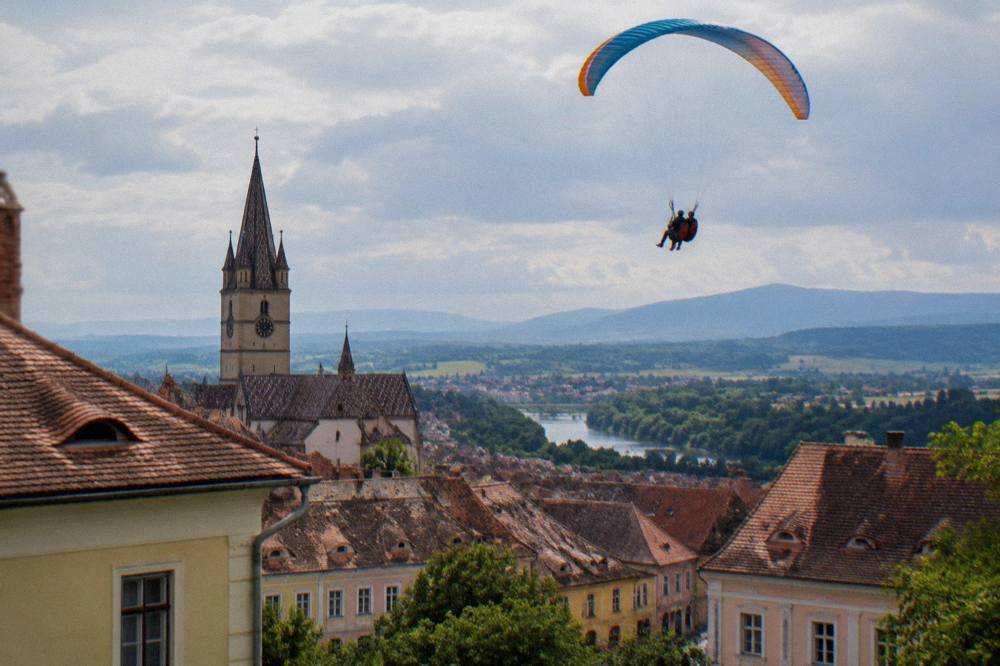
If the plan is Sibiu with a Sighișoara excursion, the tours below cover both the citadel and the country around it, alongside two very different ways to see Sibiu itself, from a hilltop at dusk to the air above the Cibin valley:
Common Questions About Sibiu Or Sighișoara
Sibiu or Sighisoara: which is better for a weekend?
No "better" is sourced here. The facts: Sibiu fills two or three days with its museums, squares and day trips, while Sighișoara's UNESCO-listed centre is compact and walkable in a day. Pick by pace, and read the is Sighișoara worth visiting page for the small town's case.
Can you visit both Sibiu and Sighisoara on one trip?
Yes. They are about 96 km and 102 minutes apart by road, and the train is reported at 2 to 2.5 hours; check cfrcalatori.ro for live times. A three-day trip can hold both, or Sighișoara works as a day trip from Sibiu.
Is Sighisoara a UNESCO site?
Yes. The Historic Centre of Sighișoara is on the UNESCO World Heritage List under criterion (iii), inscribed in 1999, per the UNESCO listing. Biertan and other nearby fortified churches belong to a separate serial listing, the Villages with Fortified Churches in Transylvania.
Which city is cheaper?
Only ticket prices are sourced. Sibiu's Brukenthal museums run 15 to 50 RON each with a 120 RON combined ticket; Sighișoara's reported museum tickets run 10 to 50 RON. Hotels in Sibiu add a 2 percent accommodation tax since 1 January 2026. The Sibiu cost guide has the full budget picture.
How many days do you need in Sibiu versus Sighisoara?
Two or three days cover Sibiu's museums, squares and one day trip; Sighișoara's centre is a one-day sight at the reported museum hours. The full Sibiu attractions page lists what fills the extra days.
Is there a train between Sibiu and Sighisoara?
Yes, reported at about 2 to 2.5 hours via the Mediaș line. No fare or daily frequency is sourced here, so check cfrcalatori.ro before you travel. The Sibiu train station guide covers the station itself.
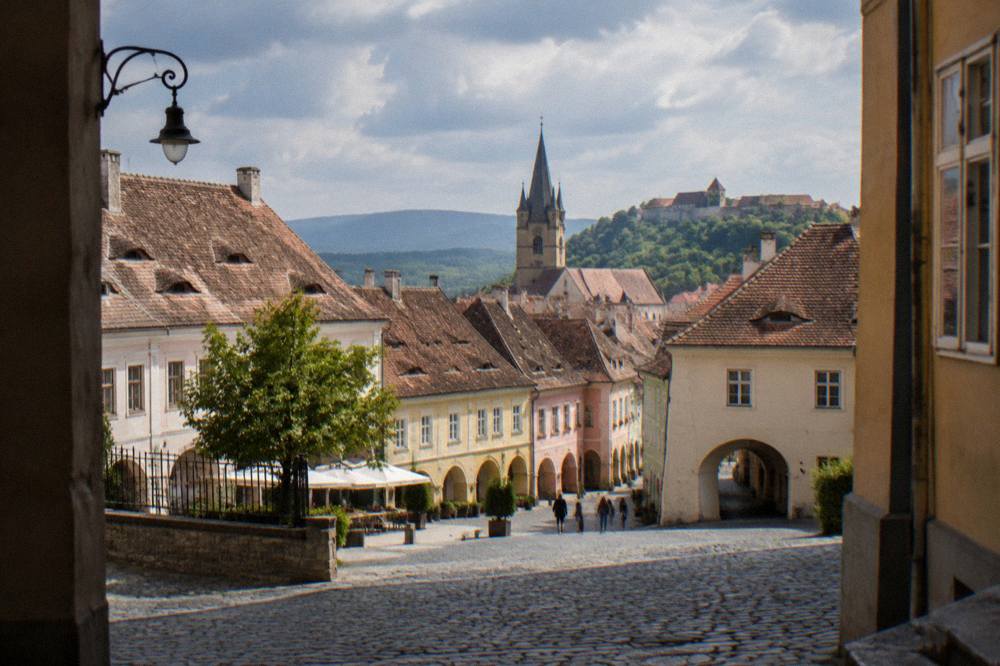
Whichever town holds the booking, the other is a morning's drive away, and the pairing of a Saxon city with a citadel on a hill is a familiar shape for travel through this part of Transylvania. Plan museum days around the Monday and Tuesday closures in Sibiu, confirm the Sighișoara hours before you go, and the two towns will fit together without a wasted day.
