Bridge Of Lies: Sibiu's Oldest Iron Bridge
The Bridge of Lies links Piața Mică to the Lower Town across one of Sibiu's narrowest lanes, and it carries the best-known legend in the city. Here is what the sources say about the bridge, the stories attached to it and everything within a few minutes' walk.
Short answer
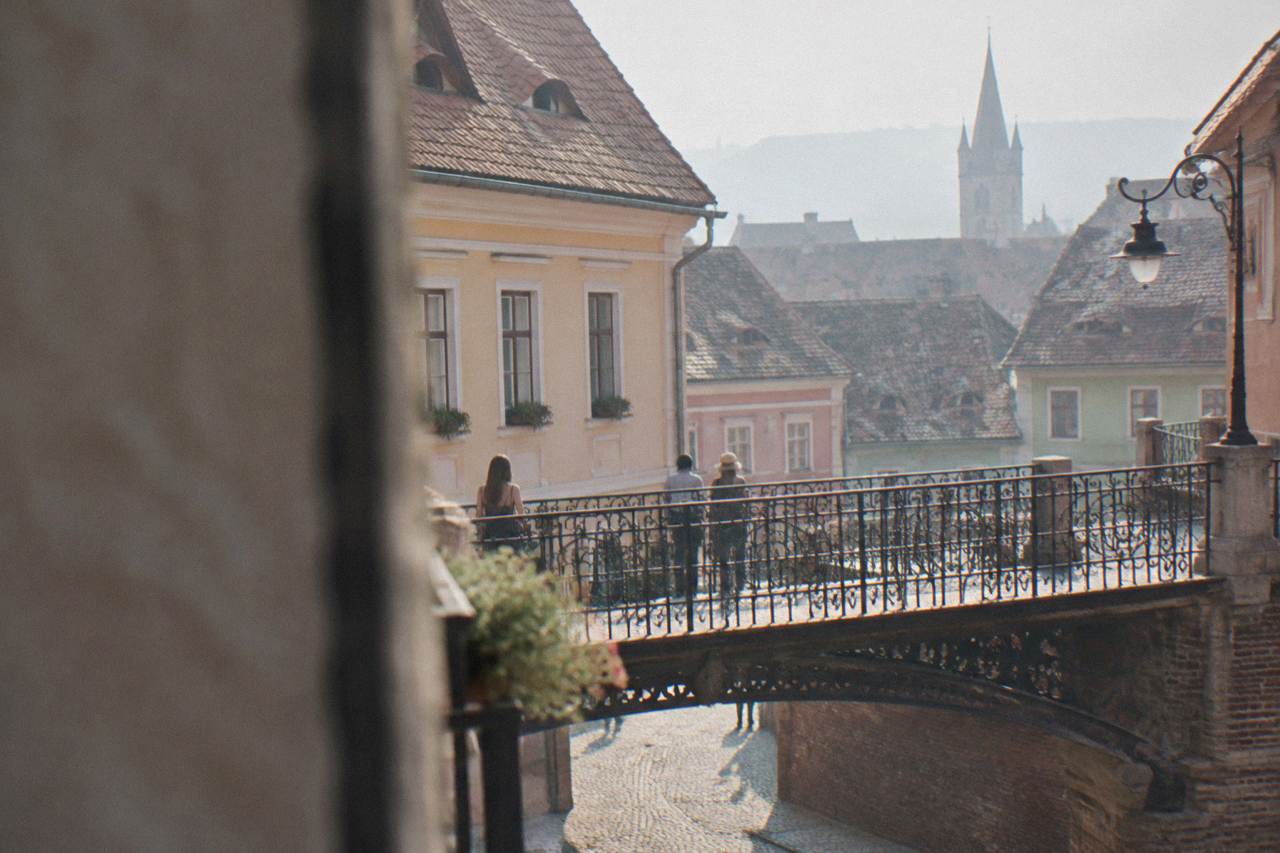
The Bridge of Lies (Podul Minciunilor) is a small iron pedestrian bridge in central Sibiu, Romania, connecting Piața Mică with the Lower Town. It is free to visit at any hour, it is described as the first cast-iron bridge in Romania, reportedly built 1859 to 1860, and its name comes from lie-detecting legends rather than from any documented event.
The Bridge of Lies, Podul Minciunilor in Romanian, is a small iron footbridge on the western edge of Piața Mică in Sibiu, a Saxon-founded city in Transylvania, central Romania, first documented in 1191 as Cibinium. It crosses Strada Ocnei, one of the steepest and narrowest streets of the old town, linking the Little Square to the Lower Town below. It costs nothing and has no opening hours: it is a public piece of street, walked across day and night. What makes it worth a stop is the combination of its iron structure, described as the first cast-iron bridge in Romania, reportedly built in 1859 to 1860, and the two competing legends that gave it a name no document ever explains. This page lays out what the sources say: the reported history, the legends, the setting among Sibiu's squares, and how the bridge fits into a visit that can take an hour or a full day. For the wider picture of the city, start with the Sibiu Travel Guide homepage.
What Is The Bridge Of Lies In Sibiu?
The Bridge of Lies, called Podul Minciunilor in Romanian, is a short iron pedestrian bridge in central Sibiu, Romania, reportedly built between 1859 and 1860 and described as the first cast-iron bridge in Romania. It spans Strada Ocnei between Piața Mică in the Upper Town and the Lower Town beneath it, roughly two minutes on foot from Piața Mare. It is a free, open-air public space with no ticket and no hours, and it is described as the first cast-iron bridge in Romania, reportedly built between 1859 and 1860. Its Romanian name, Podul Minciunilor, translates literally as the Bridge of Lies, and that name comes from folk legends rather than from any recorded event.
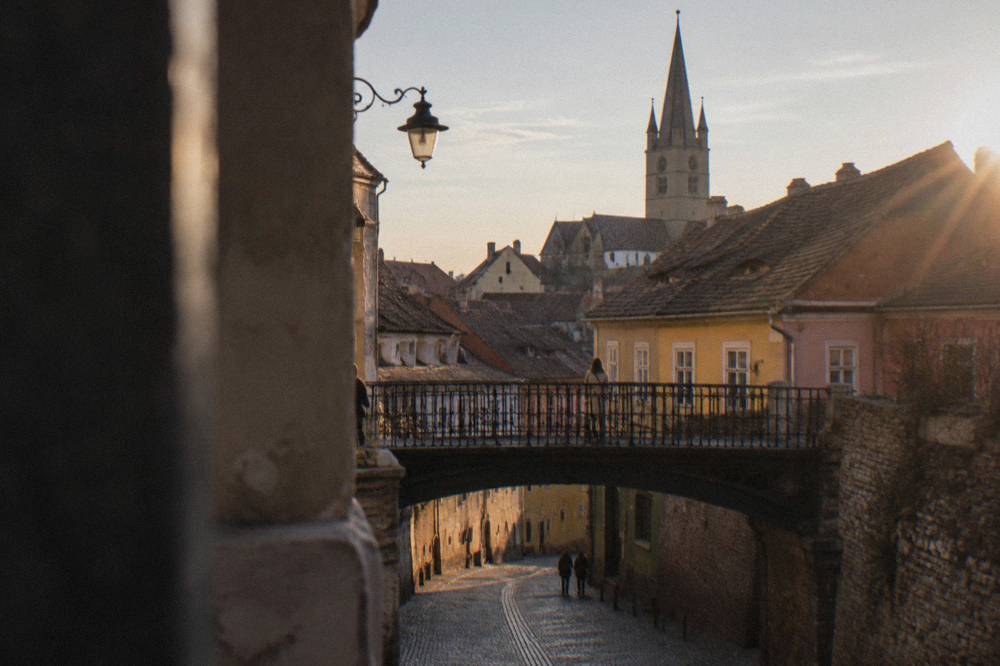
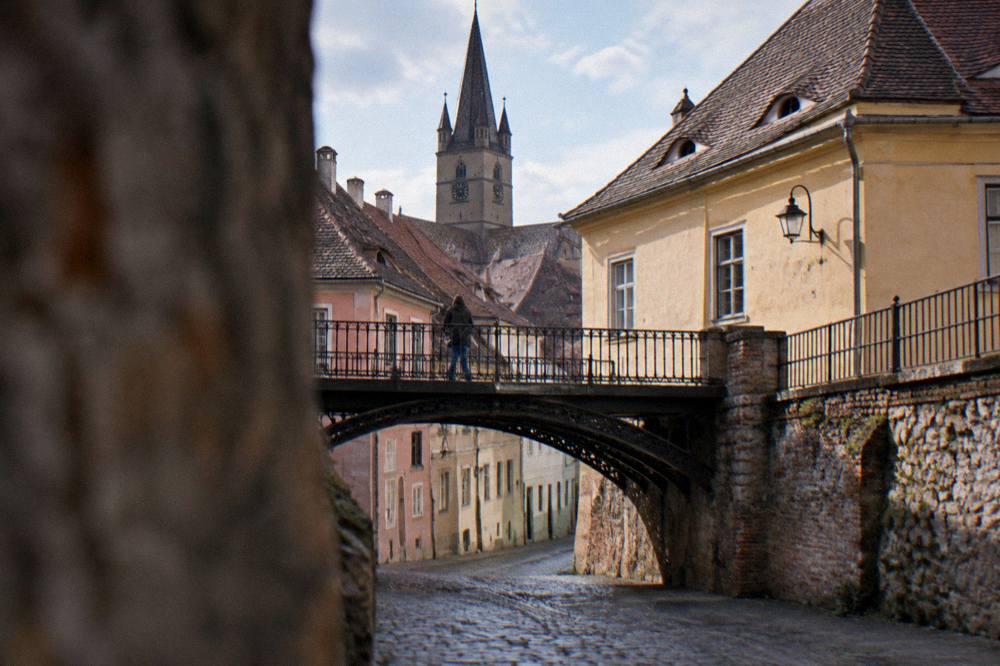
The bridge is small. Four iron arches carry a walkway of perhaps a few dozen strides end to end, with decorative rosettes cast into the side panels. It stands where the merchant city of the Upper Town met the craftsmen's town below, and it still serves exactly the pedestrian purpose it was built for. You cross it going down toward the Lower Town, or you reach it from below by climbing Strada Ocnei, and either way you pass through one of the tightest, most photographed slices of the old town.
What the sources support is modest and worth separating from what they do not. Secondary sources describe the structure as the first cast-iron bridge in Romania and date it 1859 to 1860, with the ironwork reportedly supplied by Friedrichshütte. Those are reported figures, not museum-certified ones, so treat the date as reported and the "first" as a description rather than a certified ranking. No document explains the name. The legends, covered further down, are the only account anyone has, and the city's tourism material presents them as legends, which is exactly how a visitor should hold them.
Why Is It Called The Bridge Of Lies?
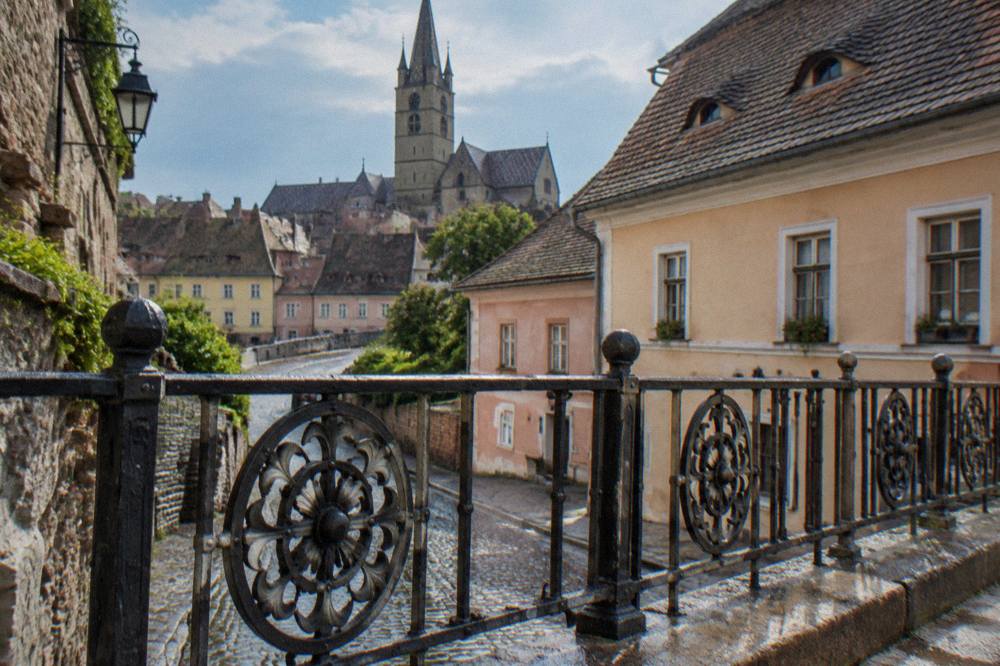
The name comes from two folk legends, not from a documented event: one says the bridge would collapse if someone told a lie while standing on it, and the other says dishonest merchants who swore false oaths there were punished by falling through it. Both stories are told about the structure, both are presented as legends by the sources that repeat them, and neither is supported by any record. The bridge has, evidently, never collapsed.
The first legend is the simpler one. Anyone standing on the bridge who spoke a lie would bring the structure down, or so the story goes, which made it a popular spot for lovers' promises: vows made on the Bridge of Lies had to be true, or the bridge would give way beneath the speaker. It is a neat story, and it is almost certainly the reason the name survives, because it gives the bridge a function in the city's imagination rather than just a structure over a street.
The second legend is darker and trades on Sibiu's merchant past. Traders crossing between the markets of the Upper Town and the workshops below would swear oaths about their goods on the bridge. A merchant who lied about his wares, swearing to quality he did not have, would fall through the ironwork as punishment. The story reflects a real social geography, the square above for trade, the lanes below for craft, but the falling-merchant ending is folklore, and no source documents a single incident.
A third, drier explanation circulates as well: that the bridge's name is a corruption of a German original, with "Liegenbrücke", a lying or reclining bridge, said to have drifted toward "Lügenbrücke", the bridge of lies. That account is reported in secondary sources as a possible etymology and cannot be confirmed. Whichever version you prefer, the honest summary is that the bridge carries a name nobody can document, attached to stories everybody enjoys.
Where Exactly Is The Bridge And How Do You Reach It In Sibiu?
The bridge stands at the western end of Piața Mică, Sibiu's Little Square, crossing Strada Ocnei where the street drops toward the Lower Town, roughly a one-minute walk from Piața Mare, and the whole area around it is pedestrian. From Piața Mare, walk through the passage beneath the Council Tower into Piața Mică, and the bridge is immediately visible ahead, at the point where the square's open floor narrows into lanes. It is pedestrian territory throughout: no ticket, no gate, no hours.
Getting to the old town itself is simple. The train station, Gara Sibiu, sits about 0.8 km north-east of Piața Mare, and the bus station about the same distance, both walkable in around ten to fifteen minutes. Sibiu International Airport is about 5 to 6 km from Piața Mare, and city bus line 11 stops directly in front of the arrivals terminal, with a 60-minute ticket at 3.5 lei bought contactless on board. Once you are in the squares, everything about the bridge is on foot.
The bridge also sits on the natural route between the two halves of the old town. Below it, Strada Ocnei winds down into the Lower Town, toward the promenade along the old city walls. Above and beside it, Piața Mică spreads out with its burgher houses and the Council Tower anchoring its eastern end. A walk that crosses the bridge, descends into the Lower Town and climbs back up by the Stairs Passage makes a short loop that takes in both levels of the city, and every part of it is free.
How Old Is The Bridge Of Lies And Who Built It?
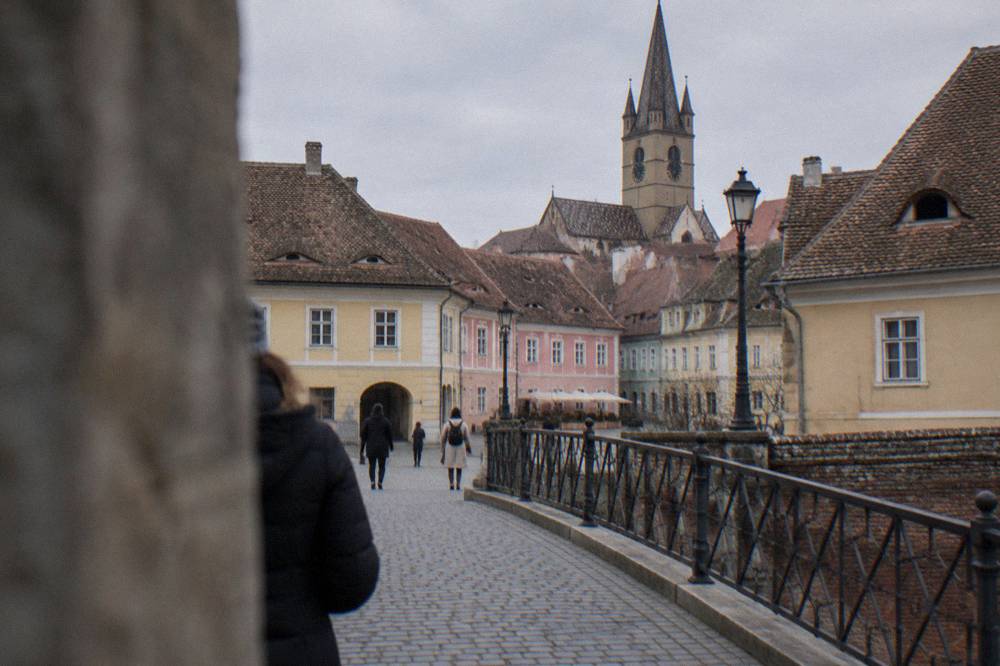
The bridge is reported to date from 1859 to 1860, built as an iron structure whose elements were reportedly supplied by the Friedrichshütte ironworks, and it is described as the first cast-iron bridge in Romania. No architect's name survives in the available sources, and no construction record has been published that would settle the details of who built it. Those figures come from secondary sources rather than from a surviving contract or plaque, so the honest form is "reportedly built 1859 to 1860". No architect's name survives in the available sources, and no construction record has been published that would settle the details.
The date matters less than the technique. Iron bridge building by the time of its construction was a modern industrial trade, prefabricated cast sections shipped to site and bolted together, and the Bridge of Lies belongs to that generation. Its arches, spandrels and rosette panels are catalogued parts, not a mason's carving, which is why the structure looks the same today as it does in old photographs of the city. Secondary sources note the Friedrichshütte works as the supplier of the iron, another reported detail rather than an archival certainty.
Sibiu in 1859 was a rich commercial city at the edge of the Habsburg sphere, and a prestige iron bridge over a busy commercial lane fits that moment exactly. The bridge replaced an earlier wooden crossing at the same point, which is the pattern reported for the site, and it has since outlived every generation of traffic beneath it. It has been restored and maintained over the decades, and it carries pedestrians only today, which is almost certainly why it has survived so completely intact.
Is The Bridge Of Lies Free To Visit In Sibiu?
Yes, the Bridge of Lies is completely free, with no ticket, no opening hours and no access restrictions of any kind: it is a public street crossing, open at every hour of the day and night like the squares around it. Piața Mică, Piața Mare, Piața Huet, the Stairs Passage and the old city walls with their towers are the same: open-air public spaces that cost nothing. The paid sights of the old town are the museums and the cathedral tower, all a short walk away.
The table below separates the free open-air spaces around the bridge from the paid indoor sights nearby, so a day's budget can be planned at a glance. Prices are official adult figures, per the Brukenthal National Museum's own price page and the listings on the city's tourism site, and hours can change, so confirm on each museum's own site before you go.
| Sight | Distance from the bridge | Entry |
|---|---|---|
| Bridge of Lies | On site | Free, no hours |
| Piața Mică | Immediately east | Free, no hours |
| Piața Mare | About 2 minutes on foot | Free, no hours |
| Piața Huet and the Evangelical Cathedral | About 4 minutes on foot | Square free; tower 10 RON adult |
| Stairs Passage | About 5 minutes on foot | Free, no hours |
| City walls and towers (Potters, Arquebusiers, Stairs) | About 5 to 10 minutes on foot | Free, no hours |
| Paid sight near the bridge | Adult price | Notes |
|---|---|---|
| Brukenthal Palace (art galleries), Piața Mare | 50 RON | Closed Monday and Tuesday, per the museum's site |
| History Museum, Casa Altemberger | 36 RON | Closed Monday and Tuesday |
| Pharmacy History Museum, Piața Mică 26 | 16 RON | A minute's walk from the bridge |
| Natural History Museum | 20 RON | Closed Monday and Tuesday |
| Contemporary Art Museum | 15 RON | Open Monday to Friday only |
| Brukenthal 48-hour combined ticket | 120 RON | Covers the open Brukenthal sites |
One 2026 detail to plan around: the Council Tower, which rises between Piața Mare and Piața Mică, has been closed to visitors since 19 January 2026 for a restoration planned at about 24 months. You will walk beneath it to reach the bridge; you cannot climb it. The open viewpoint in the old town is the Evangelical Cathedral tower at 10 RON, and the details are on the Council Tower and Evangelical Cathedral pages of this site.
What Are The Best Times Of Day To Photograph The Bridge In Sibiu?
Morning light hits the bridge from the east across Piața Mică, while late afternoon and evening deliver the warmest colour on its ironwork and the facades behind it, and the city's tourism material makes no official claim about any single hour. No source publishes an official photography window, so this section stays on what the sun and the street actually do. The bridge faces an open square to the east, so early light reaches it before it reaches the lanes below, and the reverse applies at dusk.
The practical variables matter more than the hour. Piața Mică fills with café tables in the warmer months, which adds life to a frame but removes clean sightlines from the square side. Strada Ocnei below the bridge is narrow, so a shot taken from the Lower Town side compresses the bridge against the houses behind it. In winter, and the Christmas market period from 13 November 2026 to 3 January 2027 changes the square entirely, with stalls, lights and a 600 sqm ice rink in Piața Mare nearby, all of it free to wander.
The seasonal light budget comes from the ERA5 reanalysis, 1991-2020, a modelled grid cell near Sibiu at about 430 m elevation, not a weather-station record. Sunshine runs from about 12.8 hours a day in July down to about 5.6 hours a day in December, with the shoulder months of May and September in between at roughly 11.3 and 9.7 hours. Snow falls from November to March, with January the snowiest month in the modelled normals at 23.3 cm, which is the season that turns an iron bridge into a monochrome photograph.
| Month | Mean high C | Mean low C | Sunshine h/day |
|---|---|---|---|
| Jan | 2.2 | -5.7 | 6.2 |
| Mar | 8.7 | -0.8 | 8.7 |
| May | 19.1 | 9.0 | 11.3 |
| Jul | 24.2 | 14.6 | 12.8 |
| Sep | 19.6 | 10.5 | 9.7 |
| Nov | 8.7 | 0.9 | 6.4 |
| Dec | 3.1 | -3.9 | 5.6 |
What Sights Sit Within Walking Distance Of The Bridge In Sibiu?
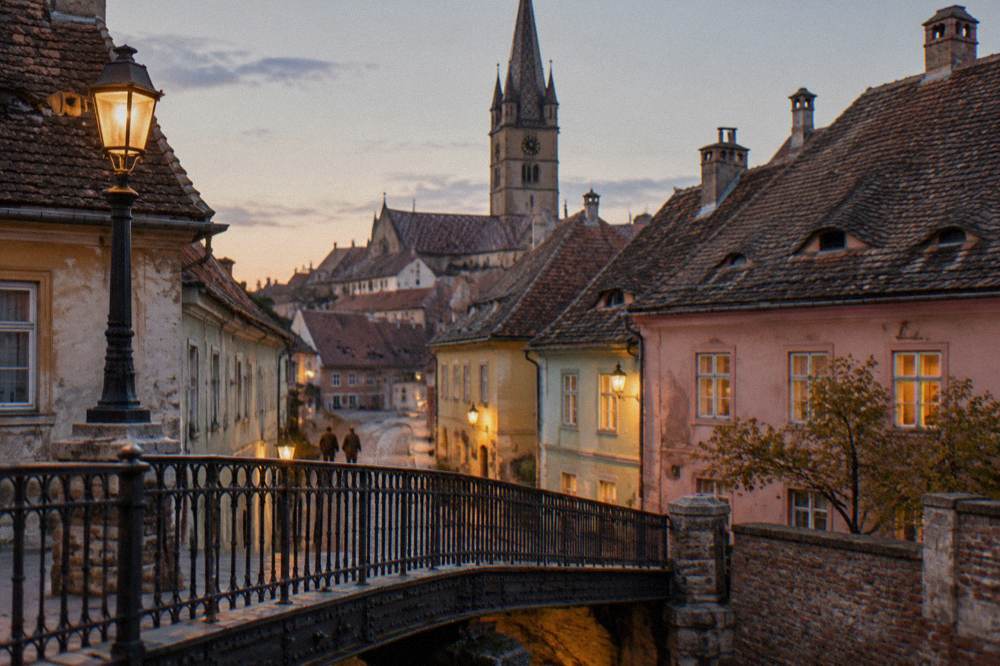
Almost everything in Sibiu's old town sits within ten minutes on foot of the bridge: Piața Mare and Piața Mică are immediate, Piața Huet and the Evangelical Cathedral about four minutes, the Stairs Passage about five, and the ASTRA open-air museum is the one major sight that is not walkable, at about 5.5 km from Piața Mare. The old town is compact and built on two levels, and the bridge is the hinge between them. The Piața Mare and Piața Mică pages cover the squares in detail.
In the Upper Town, the cluster is dense. The Brukenthal National Museum fronts Piața Mare a few minutes east, the Roman Catholic church and the Orthodox Cathedral stand just off the square, and Piața Huet with the Evangelical Cathedral closes the row to the north. In the Lower Town, reached by Strada Ocnei beneath the bridge or by the Stairs Passage further along, the lanes open toward the city walls and their surviving towers, all free to walk.
The bridge works well as the fixed point of a self-guided loop. Cross it downward into the Lower Town, follow the walls, climb back via the Stairs Passage, and finish in Piața Huet: that circuit covers both levels of the city, costs nothing, and takes in every free open-air sight in the table above. A guided version of the same territory exists: the Sibiu walking tour and the things to do in Sibiu overview both build on this same geography.
Can You Visit The Bridge Of Lies With A Tour In Sibiu?
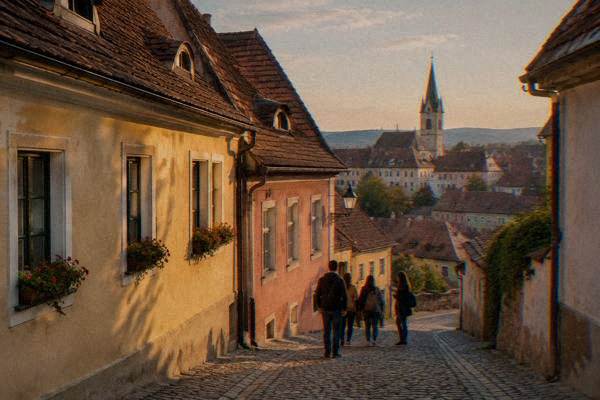
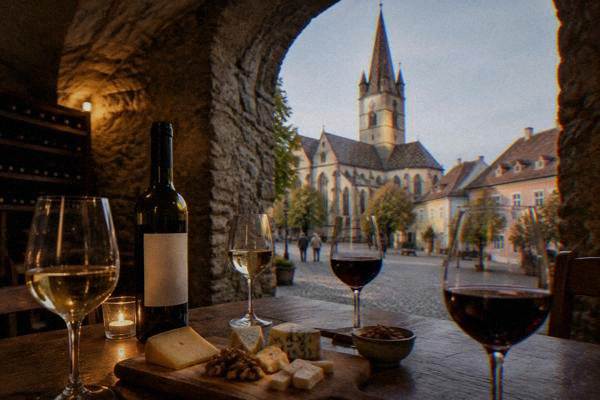
Yes, guided walks of Sibiu's Upper Town include the bridge among their stops, and the choice is between a city walking tour built around the squares, a half-day trip that pairs the city with Transylvanian villages, and a wine tasting that anchors an evening, all of them bookable with free cancellation before you travel. The bridge itself needs no guide and no booking, but a guide supplies what the ironwork cannot: the legends, the Saxon context and the geography of the two towns, told in order.
The most direct option is the city tour of Upper Town landmarks, this site's featured walk for the bridge, which covers the squares and the stories around them.
How Does The Bridge Fit Into A Day Trip From Sibiu?
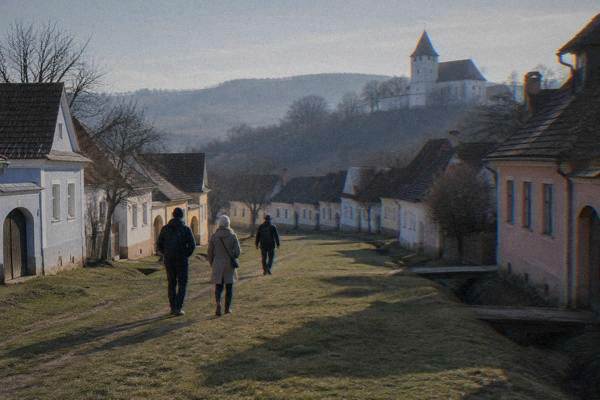
The bridge is a city sight, but it sits on the standard route out of Sibiu: the villages, the Transfăgărășan and Sighișoara are all day trips, with drives of roughly 40 minutes to Păltiniș, about 102 minutes to Sighișoara and about 69 minutes to the Transfăgărășan, computed over free-flow road routing from Piața Mare. A trip that leaves Sibiu in the morning usually crosses the bridge, or passes a block from it, on the way out of the old town.
The drive times below are computed over open-routing data in free-flow conditions, not timetables, and they are approximate. They give a fair picture of what is reachable in a day from the squares around the bridge.
| Day trip destination | Approx. drive from Piața Mare | Approx. distance |
|---|---|---|
| Rășinari (Mărginimea Sibiului) | 18 minutes | 13 km |
| Cisnădie fortified church | 14 minutes | 10 km |
| Păltiniș mountain resort | 40 minutes | 32 km |
| Transfăgărășan (Bâlea Cascadă) | 69 minutes | 63 km |
| Bâlea Lake | 88 minutes | 76 km |
| Biertan fortified church (UNESCO) | 1 hour 15 to 1 hour 30, reported | About 76 km |
| Sighișoara historic centre (UNESCO) | 102 minutes | 96 km |
Two seasonal guards apply to that table. The Transfăgărășan's high section reopened for the 2026 season on 12 June, running daily 07:00 to 21:00, and by rule it can be closed on any day from 20 October; fines for driving the closed stretch run from 10,000 to 30,000 lei, so check the live road status before setting out. And the A1 motorway toward Bucharest is unfinished, with the Sibiu to Boița section closed 5 October to 19 December 2026 and traffic diverted onto DN7, so allow extra time on any southern route.
What Legends And Myths Are Told About The Bridge In Sibiu?
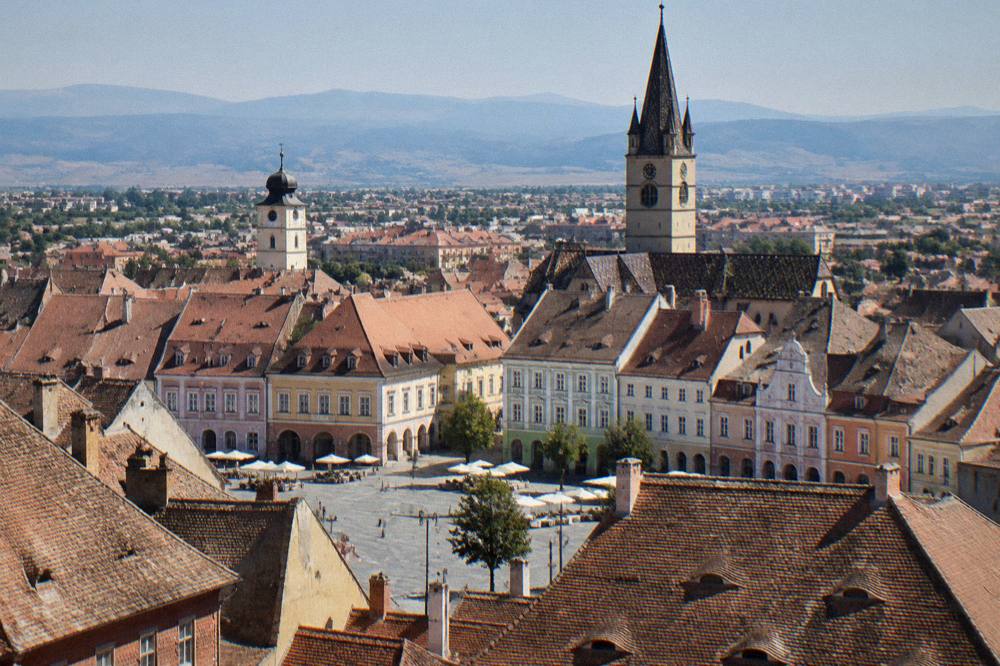
Two legends dominate: the bridge collapses under anyone who tells a lie on it, and merchants who swore false oaths about their goods fell through as punishment, while a third, drier account holds that the name is simply a corruption of a German word for a reclining bridge. None of the three is documented. All three circulate in the city's tourism material and in secondary sources, presented as legend, which is the correct register for them.
It is worth stating plainly why the legends stick. A bridge whose name accuses everyone who crosses it of something is a better story than any plaque could be, and the bridge's position between the trading square above and the craft lanes below gives both merchant versions a plausible stage. The lovers' version gives it a softer use, and the oath version a moral one, and a city that has kept both for well over a century is unlikely to choose between them soon.
The German-etymology account deserves its own caution. It is reported as a possible explanation, not a proven one, and it has the unromantic quality that often marks the true answer. If a guide tells it flatly as fact, that is the guide's confidence rather than the record's. Say the name is undocumented, the legends are folklore, and the bridge is delightful either way: that is everything the sources will support.
| Legend | Story | Status in sources |
|---|---|---|
| The collapsing bridge | The bridge gives way under anyone who lies while standing on it | Folklore, undocumented |
| The lovers' vow | Promises sworn on the bridge must be true or it collapses | Folklore, undocumented |
| The punished merchants | Traders swearing false oaths about goods fell through the ironwork | Folklore, undocumented |
| The German corruption | "Liegenbrücke" (reclining bridge) drifted into "Lügenbrücke" (bridge of lies) | Reported as a possible etymology, unconfirmed |
What Should You Know Before Visiting The Bridge Of Lies In Sibiu?
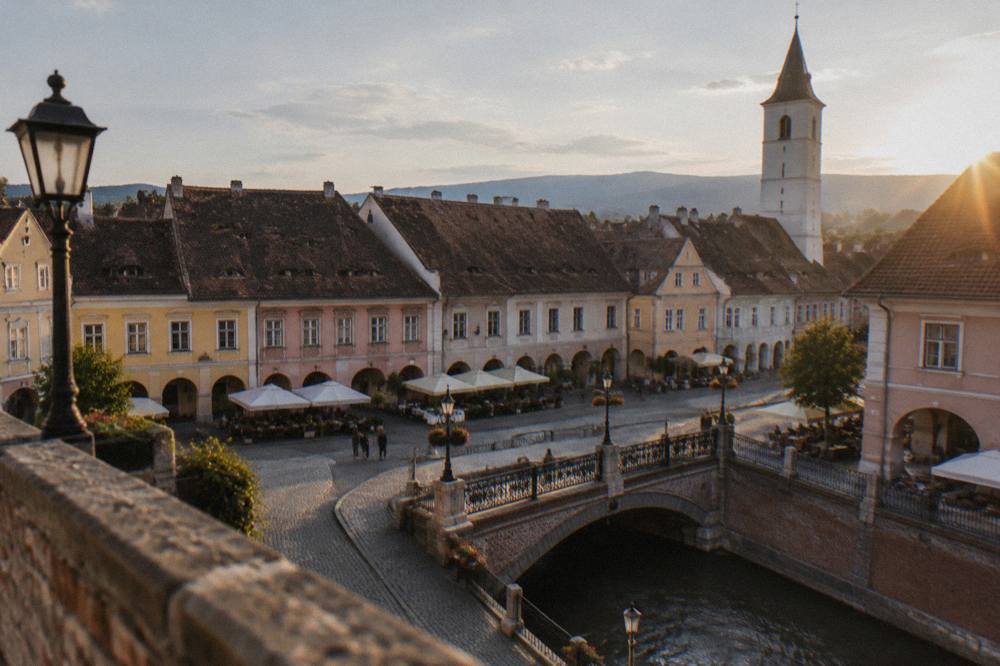
Bring nothing but comfortable shoes and a camera: the bridge is free, always open, steps from every square in the old town, and the only planning items that matter are the two 2026 closures nearby (the Council Tower and the Brukenthal Hunting Museum), the Monday and Tuesday museum closures, and the fact that the old town slopes between two levels. The bridge itself asks nothing of a visitor. Its surroundings set the agenda.
The slope is the practical point. The Upper Town and Lower Town differ by a few dozen metres of elevation, 415 m in the lower city against 431 m in the upper, per the city's own presentation, and the lanes between them are cobbled and steep. Strada Ocnei below the bridge is one of the steepest. Anyone with limited mobility should treat the Stairs Passage, the obvious alternative link, with the same caution, and no step-free route between the two levels could be stated here, so confirm locally if that matters to your visit.
Money is simple. Romania uses the leu (RON), at about 5.3 lei to the euro, and the old town's paid sights take modest amounts: the cathedral tower at 10 RON, the Pharmacy History Museum at 16 RON, the Brukenthal Palace at 50 RON. Romania is a full Schengen member, the emergency number is 112, and the time zone is Europe/Bucharest. For everything practical beyond that, the city's tourism site and each museum's own pages carry the current hours, and confirming them before you go is the reliable habit in a city whose sight schedules shifted more than once in 2026.
Common Questions About The Bridge Of Lies In Sibiu
Is the Bridge of Lies free to visit?
Yes. It is a public pedestrian crossing with no ticket, no gate and no opening hours, like Piața Mare, Piața Mică and the other open-air squares of the old town.
How old is the Bridge of Lies in Sibiu?
It is reportedly built between 1859 and 1860 and is described as the first cast-iron bridge in Romania. Those figures come from secondary sources, so treat the date as reported rather than certified.
Why is it called the Bridge of Lies?
Folk legends: one says it collapses under anyone telling a lie on it, another that dishonest merchants fell through after false oaths. A third account traces the name to a German word corruption. None is documented.
Can you climb the Council Tower next to the bridge?
No. The Council Tower has been closed to visitors since 19 January 2026 for a restoration planned at about 24 months. The open tower viewpoint in the old town is the Evangelical Cathedral tower, at 10 RON adult.
Where is the Bridge of Lies located?
At the western end of Piața Mică in central Sibiu, crossing Strada Ocnei where the Upper Town drops toward the Lower Town, about two minutes on foot from Piața Mare.
Is the Bridge of Lies accessible for wheelchairs?
The bridge deck itself is level with the square, but the lanes around it, including Strada Ocnei below, are steep and cobbled, and no step-free route between the Upper and Lower Town is described here. Confirm locally for your specific route.