Sibiu Walking Tour: Which Old Town Walk To Book
Sibiu's old town is compact enough to cross on foot in under half an hour, which makes a walking tour less about transport and more about decoding a Saxon city built on two levels around Piața Mare.
Short answer
A Sibiu walking tour covers the Upper Town squares, the Bridge of Lies, the Evangelical Cathedral and the Stairs Passage down to the Lower Town, typically in about two hours with a licensed guide; the standard daily sightseeing walk is the easiest first-visit option, and self-guided alternatives cost a few dollars.
Sibiu, in Transylvania, central Romania, is a city built to be walked: a Saxon-founded old town on two levels, Upper Town and Lower Town, wrapped around Piața Mare and stitched together by the Stairs Passage, with the Carpathian foothills a day trip away rather than part of the city itself. The historic core is small, roughly a rectangle you can cross on foot in twenty minutes, so the question for a first-time visitor is not whether to walk it but whether a guided walk adds enough to justify booking one. This page compares the walking tours available in Sibiu, what each covers, what the sights along the route cost to enter, and how to fit a walk into a wider stay. For the full list of sightseeing options, see things to do in Sibiu.
What Does A Sibiu Walking Tour Actually Cover?
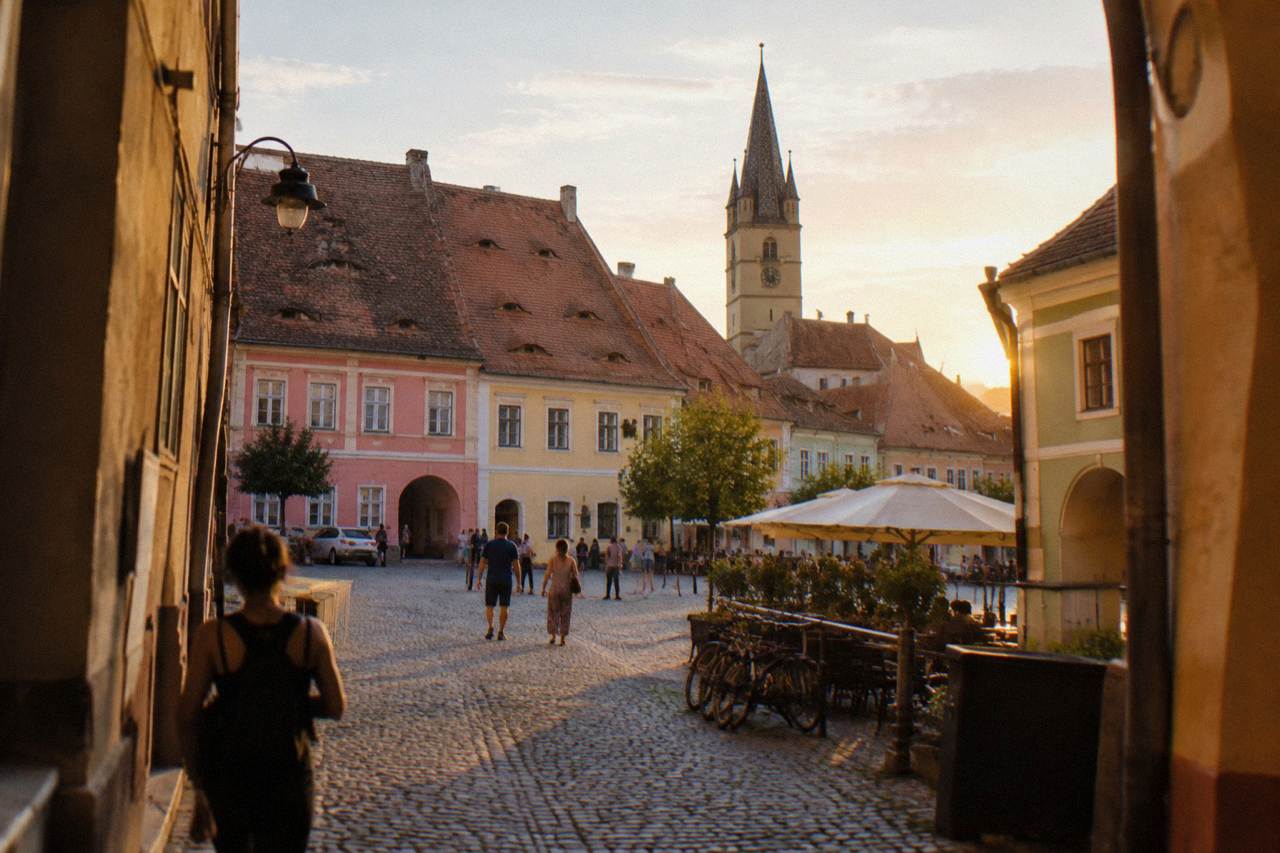
A Sibiu walking tour covers the Upper Town's three linked squares, Piața Mare, Piața Mică and Piața Huet, the Bridge of Lies, the exterior of the Brukenthal Palace and the Evangelical Cathedral, then the Stairs Passage down into the Lower Town and along the surviving city walls and towers. Most walks run about two hours, stay on foot the whole way, and enter little or nothing, because the route itself is free public space. The walk is a reading of the city rather than a museum crawl. Guides typically explain the Saxon founding, the way the Upper Town held the fortifications and the Lower Town held the trades, and the famous attic windows locals call the eyes of Sibiu, the small hooded openings that seem to watch the street from the roofs above Piața Mare.
The geography is the reason a walk works so well here. The old town sits on a natural terrace, with the Upper Town about 431 m above sea level and the Lower Town about 415 m, and the two are joined by lanes and by the Stairs Passage, a covered stone stairway that is itself a listed landmark. A guided route moves through all of this without a single vehicle, and every stop is either a free square or a church or museum you can choose to enter afterwards.
What a walk does not cover is equally worth knowing. The Council Tower, which dominated the standard route for years, has been closed to visitors since 19 January 2026 for a restoration planned at about 24 months, so walks now point at it from Piața Mare and move on; the open viewpoint in the centre is the Evangelical Cathedral tower. And no city walking tour reaches the mountains: the Transfăgărășan, Păltiniș and the Saxon villages are separate day trips, covered on the Transfăgărășan day tour page.
Which Sibiu Old Town Walk Should You Book For A First Visit?
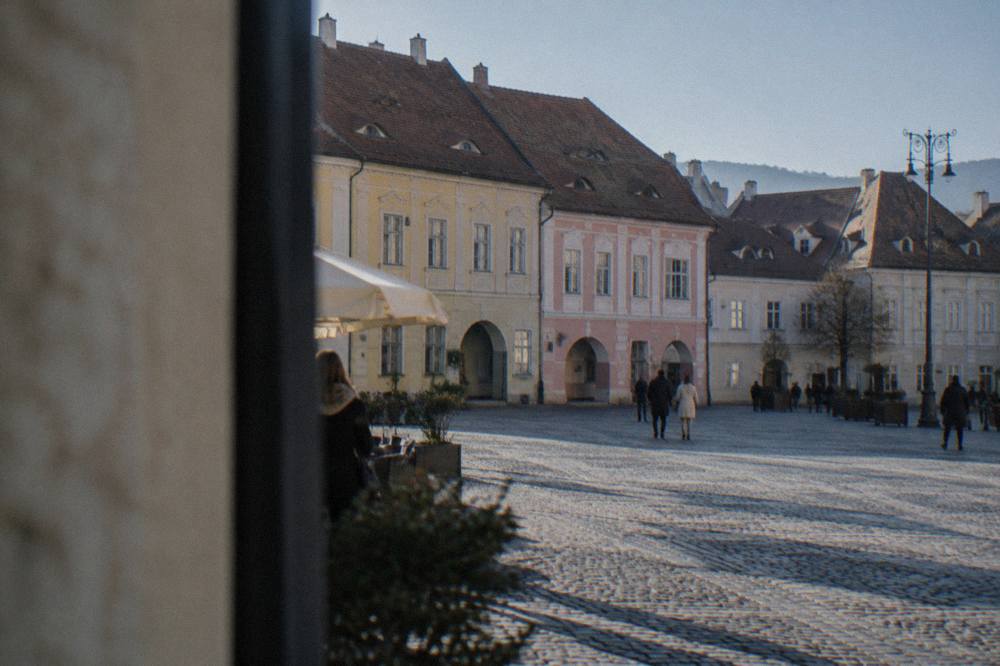
For a first visit, the standard daily sightseeing walk is the safest booking: it is the most-reviewed guided walk in the city, it runs on a fixed daily schedule, and it covers Piața Mare, Piața Mică, the Bridge of Lies and the Lower Town in a short loop. Visitors who want depth over breadth should look at the Upper Town landmarks walk, and independent travellers who dislike set departure times should choose the self-guided exploration game instead. The differences between walks are real: some stay entirely in the Upper Town, some descend to the walls, and a few add themed content such as gastronomy or baroque art with a scholar-led format.
The daily sightseeing walk, Sibiu: Daily Sightseeing Guided Tour, is the volume leader for a reason. It is short, it departs on a predictable schedule, and its review base is by far the largest of any walking product in the city, which makes it a low-risk first booking. You can Check availability on the operator's live listing before committing.
Here is how the main bookable options compare on what they cover. Prices, ratings and durations render on each card rather than being typed here.
The two day trips in that list are not walking tours; they appear because a share of people searching for a Sibiu walk are really assembling a whole Transylvania week, and those two coach-and-castle trips pair naturally with a city walk. Treat them as the second half of a stay, not a substitute for it.
For a second or third visit, the specialty walks earn their keep. The gastronomy walk pairs the old town with local dishes such as Sibiu salad and papanași, the baroque masterclass goes deep on the church and the Brukenthal collections with a scholar leading, and the evening panorama walk climbs Gusterița hill for the city from outside, a view no in-town route can offer. The free walking tour in Sibiu page explains the tip-based format in detail.
What Will You See On A Guided Walk In Sibiu?
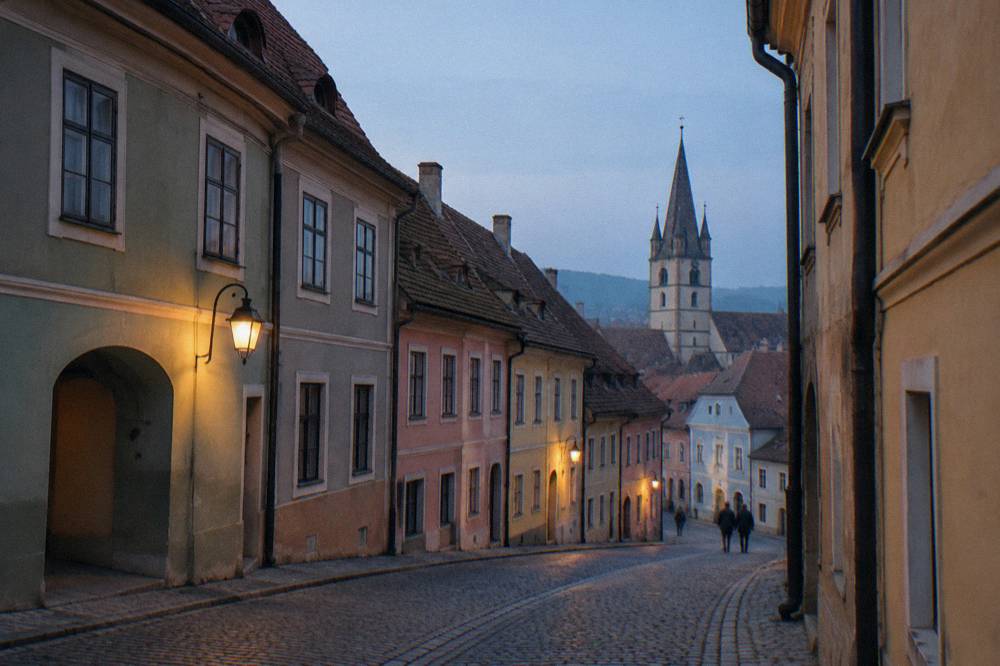
A guided walk in Sibiu takes in Piața Mare with the Brukenthal Palace and the Catholic church, Piața Mică with the Bridge of Lies, Piața Huet with the Evangelical Cathedral and the shuttered Council Tower, the Stairs Passage, and the Lower Town's council towers and defensive walls. All of the outdoor stops are free public space; only the museums and the cathedral tower charge entry. The three squares form the spine of every route. Piața Mare is the grand rectangle where the Brukenthal National Museum faces the old city hall; Piața Mică, one level down and connected by a sloping lane, is the smaller, livelier square where the Bridge of Lies crosses to Piața Huet; and Huet itself is the quietest of the three, framed by the Evangelical Cathedral and the Saxons' former parish space.
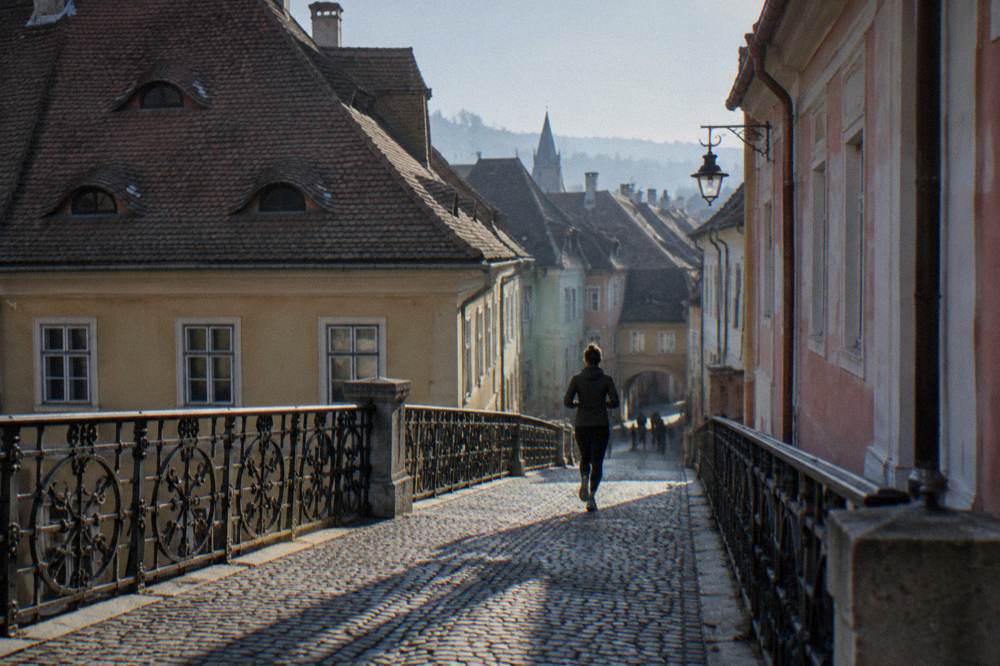
The Bridge of Lies deserves its fame with a caveat. It is described in secondary sources as the first cast-iron bridge in Romania, reportedly built in 1859 to 1860, and the legend that it would collapse if someone told a lie on it is exactly that, a legend, and guides tell it as one. The structure itself is small, pedestrian-only and best appreciated from Piața Mică with the ochre facades behind it.
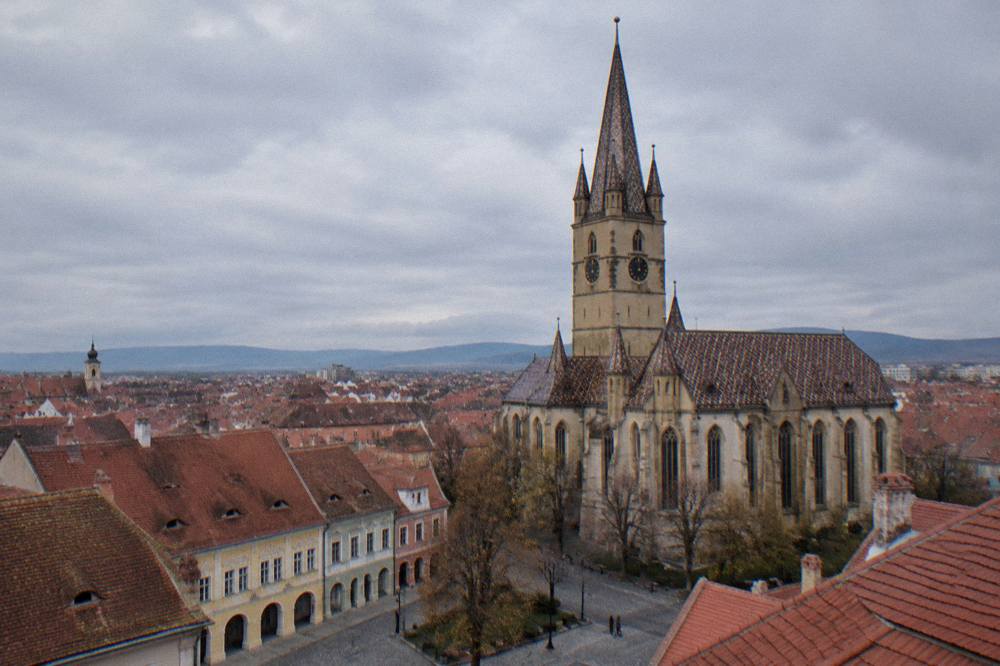
The cathedral tower is the centre's open viewpoint since the Council Tower closed. Entry costs 10 RON for an adult, 5 RON reduced, per the Sibiu tourism listing, and the tower keeps its own hours, longer on Friday and Saturday evenings. The main Brukenthal museum in the palace costs 50 RON adult, closed Monday and Tuesday, open Wednesday to Sunday 10:00 to 18:00 per the museum's own site.
This table shows what a walk passes and what entering each stop costs if you return on your own. Confirm prices before you go, as museums adjust them periodically.
| Stop on the route | What it is | Entry cost (adult) | Notes for 2026 |
|---|---|---|---|
| Piața Mare | Great Square, open public space | Free | No ticket, no hours |
| Brukenthal Palace | European and Romanian art galleries | 50 RON | Closed Mon and Tue, Wed to Sun 10:00-18:00 |
| Piața Mică | Little Square, open public space | Free | Pharmacy History Museum at no. 26, 16 RON |
| Bridge of Lies | Cast-iron footbridge, reportedly 1859-1860 | Free | Legend only, treat the collapse story as a story |
| Piața Huet and Evangelical Cathedral | Gothic church and square | Tower 10 RON | Open viewpoint while the Council Tower is shut |
| Council Tower | Medieval landmark on Piața Mare | Closed | Restoration since 19 Jan 2026, about 24 months |
| Stairs Passage | Covered stone stairway between town levels | Free | Connects Upper Town to the Lower Town |
| City walls and towers | Potters, Arquebusiers and Stairs towers | Free outdoor access | Best light on the walls in the late afternoon |
If a guided format appeals after reading that list, the mid-article box below points at the daily walk's live listing.
Can You Walk Sibiu On Your Own Without A Guide?
Yes, Siu can be walked without a guide, and the old town is compact, pedestrian-friendly and safe to navigate with a paper map: the full loop from Piața Mare through Piața Mică, Piața Huet, the Stairs Passage, the Lower Town walls and back takes about ninety minutes at museum-free pace. The argument for a guide is interpretation, not navigation, because the Saxon history, the two-level geography and the legends are what turn the squares from pretty into legible. The practical middle path is a self-guided format. The exploration game turns the same loop into a phone-based trail with clues, and the audio-and-quiz walk does the same with narration, both at a low fixed price and both starting whenever you want rather than at a set hour.
A sensible self-guided order, using the free outdoor sights only, looks like this.
| Stage | Route | Time on foot |
|---|---|---|
| 1 | Piața Mare, circuit of the square and the Council Tower exterior | 15 minutes |
| 2 | Down the lane to Piața Mică and the Bridge of Lies | 10 minutes |
| 3 | Piața Huet and the Evangelical Cathedral exterior or tower | 20 minutes |
| 4 | Stairs Passage down to the Lower Town | 10 minutes |
| 5 | City walls and towers loop back toward the Cibin side | 25 minutes |
| 6 | Climb back to Piața Mare to finish | 10 minutes |
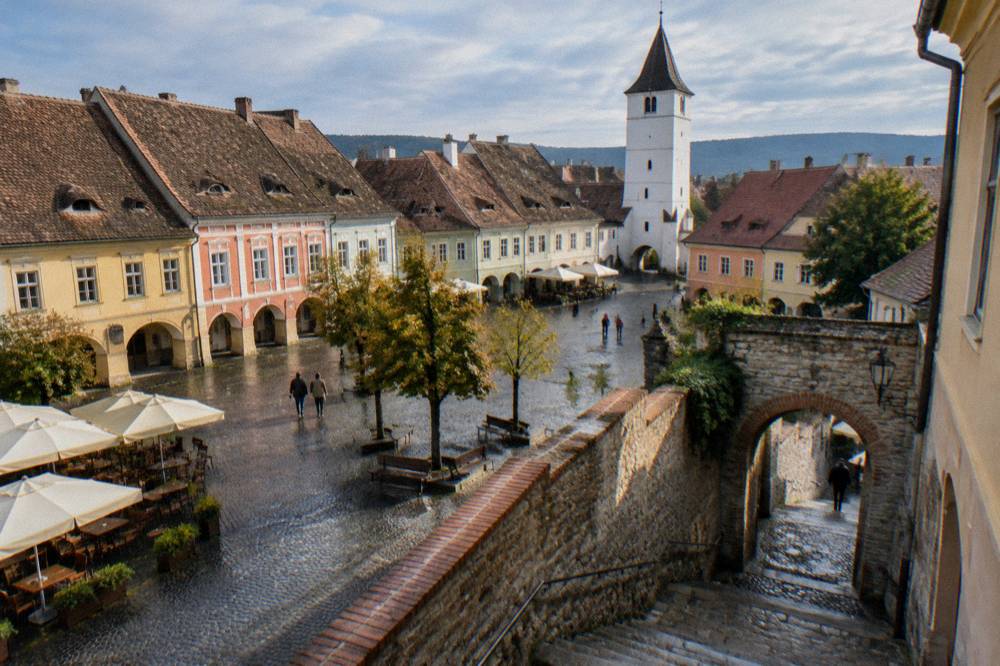
One warning for the independent walker: the Lower Town is a residential neighbourhood with narrower pavements and less signage than the Upper Town, and the wall-side lanes are cobbled, so wear solid shoes. The getting around Sibiu guide covers the bus network if you want to skip the climb back up.
What Kinds Of Guided Walks Run In Sibiu?
Guided walks in Sibiu fall into four families: the general old town sightseeing walk, the themed walk (gastronomy, baroque art, communism-era Sibiu), the panorama walk on the surrounding hills, and the private guide format for small groups. All stay within walking distance of Piața Mare except the panorama walks, which climb to viewpoints outside the centre. The general walk is what most people book and what most of this page describes. The themed walks assume you already know the headline sights and want a second layer: what Sibiu ate, how it prayed, or how it looked behind the Iron Curtain.
The Upper Town landmarks walk above is the classic second choice: the same squares as the daily walk but in a smaller group with a fixed shape. Beyond it, the gastronomy walk adds tastings of local dishes, the wine tasting session sits indoors with a sommelier rather than on the street, and the evening panorama tour drives or climbs to Gusterița hill for the skyline at dusk. Everything else covered here is indexed on Sibiu Travel Guide.
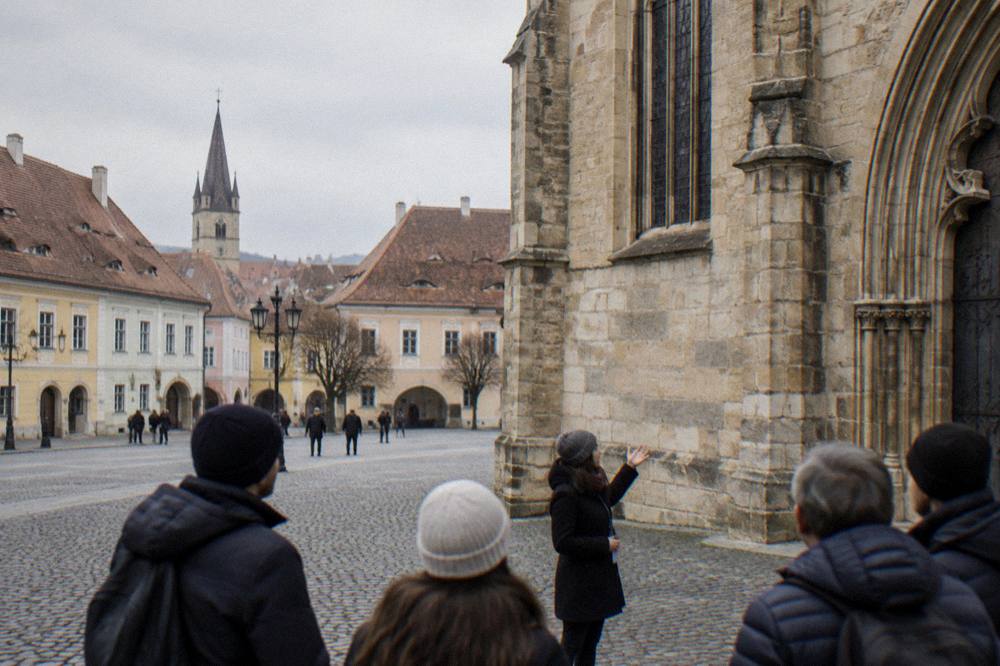
A comparison of the walk families:
| Walk family | Where it goes | Best for |
|---|---|---|
| Daily sightseeing walk | All three squares, Bridge of Lies, Lower Town | First visit, fixed schedule, largest review base |
| Upper Town landmarks walk | Piața Mare, Piața Mică, Piața Huet in depth | Visitors who want a smaller group |
| Gastronomy walk | Old town plus food stops | Second-time visitors, food-first travellers |
| Baroque masterclass | Church and Brukenthal collections | Art and history readers |
| Evening panorama walk | Gusterița hill viewpoint outside the centre | Photographers, dusk timings |
| Self-guided game or audio tour | The standard loop, at your own pace | Independent travellers, families with children |
When Is The Best Time Of Day To Walk Sibiu's Old Town?
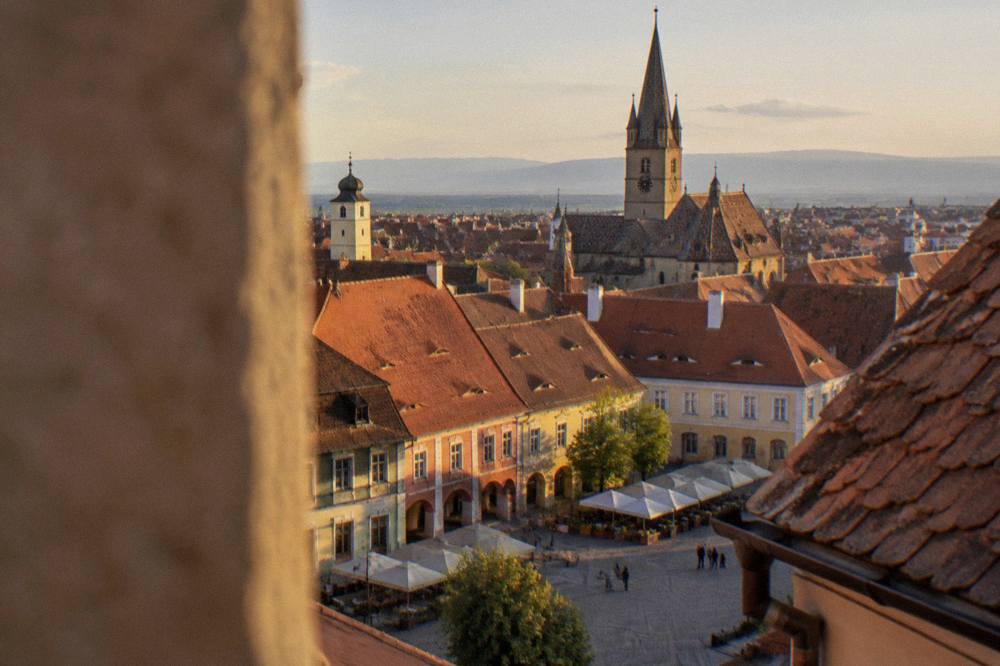
The best time of day to walk Sibiu's old town is late afternoon into early evening: the ERA5 reanalysis, 1991-2020, shows Sibiu averaging 11 to 13 hours of daily sunshine from May to August, and the low western sun lights the ochre facades of Piața Mare and the roofscape from the Stairs Passage at its warmest. Morning walks suit winter, when the January mean high is just 2.2 C and midday is the only comfortable window. Sibiu has a temperate continental climate: cold, snowy winters with snow falling November to March, and warm summers. The city's own official figures put mean annual rainfall at 662 mm, with June the wettest month at 113 mm, so a summer walk has a real rain risk and an umbrella earns its place.
| Month | Mean high C | Mean low C | Sunshine h/day | Snow cm |
|---|---|---|---|---|
| Jan | 2.2 | -5.7 | 6.2 | 23.3 |
| Mar | 8.7 | -0.8 | 8.7 | 18.2 |
| May | 19.1 | 9.0 | 11.3 | 0.3 |
| Jul | 24.2 | 14.6 | 12.8 | 0.0 |
| Sep | 19.6 | 10.5 | 9.7 | 0.1 |
| Nov | 8.7 | 0.9 | 6.4 | 13.0 |
Figures above are ERA5 reanalysis, 1991-2020, a modelled grid cell rather than a station record. In December and January the Christmas market fills Piața Mare from 13 November 2026 to 3 January 2027, and an evening walk through the lit square becomes a different experience from the summer version; the Sibiu Christmas weekend itineraries cover that window.
What Is Closed In Sibiu In 2026 That A Walk Normally Includes?
Three closures shape every Sibiu walking route in 2026: the Council Tower has been closed to visitors since 19 January 2026 for a restoration planned at about 24 months, the Brukenthal Hunting Museum is closed for an indefinite period, and the main Brukenthal museums are closed Monday and Tuesday while the Contemporary Art Museum now closes at weekends. Every other headline stop on the standard walk, all the squares, the Bridge of Lies, the Stairs Passage and the walls, remains free and open. The tower closure is the one that catches out guidebooks and older articles. Restoration work has already cleaned and re-plastered the walls and removed the copper roof, and completion is reported at about January 2028. Walks now use the Evangelical Cathedral tower, at 10 RON, as the centre's viewpoint instead.
| Sight | Status in late 2026 | What a walk does instead |
|---|---|---|
| Council Tower | Closed since 19 Jan 2026, about 24 months of works | Views from the Evangelical Cathedral tower, 10 RON |
| Brukenthal Palace | Open Wed to Sun, closed Mon and Tue | Book museum entry on a mid-week or weekend day |
| Brukenthal Hunting Museum | Closed indefinitely | Skipped on all current routes |
| Brukenthal Contemporary Art | Open Mon to Fri only | Mention, not visited, on most walks |
| Evangelical Cathedral tower | Open, 10 RON adult | The standard viewpoint stop |
| Squares, Bridge of Lies, Stairs Passage, walls | Open public space, no hours | Unchanged |
Confirm opening details on each museum's own site before you go, since schedules shift with the season and the ASTRA open-air museum's winter schedule had not been announced when this page was written. For the building-by-building detail, see the Brukenthal National Museum and Council Tower pages.
How Does A Sibiu Walking Tour Fit Into A Longer Stay?
A walking tour fills one morning or one evening of a Sibiu stay, so a two-day visit pairs it with one museum and one day trip, and a three-day visit adds a second day trip from the mountains or the Saxon villages. Sibiu rewards slow pacing: the city itself needs two days for the old town plus ASTRA, while the Transfăgărășan, Sighișoara and the castles each take a full day. Drive times from Piața Mare are about 102 minutes to Sighișoara, about 69 minutes to the Transfăgărășan, about 40 minutes to Păltiniș and about 154 minutes to Bran Castle, computed over standard road routing and subject to the A1 motorway works, which close the Sibiu to Boița section from 5 October to 19 December 2026 with traffic diverted onto DN7.
The logic of that trio: walk the city first, because a guided walk orients you for everything else, then spend day two on the road. The Sighișoara day trip and Dracula castle tour pages break those options down; the Sibiu in 3 days itinerary assembles the whole week.
One seasonal note for the autumn and winter visitor: the Transfăgărășan's high section can be closed on any day from 20 October under standing rule, with fines of 10,000 to 30,000 lei for driving the closed stretch, so check the live road status before promising anyone Bâlea Lake. Păltiniș opens its ski season on 28 November 2026, reported by the resort, and the Christmas market runs 13 November 2026 to 3 January 2027 in Piața Mare, free to enter with a 100 lei Golden Ticket, reported, covering the wheel, carousel and mini-train.
Common Questions About Sibiu Walking Tours
How long is a walking tour in Sibiu?
Most guided old town walks in Sibiu run about two hours and cover Piața Mare, Piața Mică, Piața Huet, the Bridge of Lies and the Lower Town walls on foot. The exact duration of any bookable product is shown on its live listing.
Do Sibiu walking tours include museum tickets?
Generally no. The route itself is free public space, and museum entries such as the Brukenthal Palace at 50 RON adult or the Evangelical Cathedral tower at 10 RON are bought separately at each sight. Check what your chosen walk includes at booking.
Can you climb the Council Tower on a Sibiu walking tour?
No. The Council Tower has been closed to visitors since 19 January 2026 for a restoration planned at about 24 months, with completion reported at about January 2028. The Evangelical Cathedral tower is the open viewpoint in the centre.
Is Sibiu easy to walk for someone with limited mobility?
The Upper Town squares are fairly level, but the Stairs Passage between the Upper and Lower Town is a stone stairway and the streets are cobbled throughout. No step-free route information exists for individual buildings, so confirm access needs directly with the walk operator before booking.
What is the difference between a free walking tour and a paid one in Sibiu?
Tip-based walks in Sibiu run on a pay-what-you-want model, while paid walks have a fixed price and often a smaller group. The comparison on the free walking tour page explains the formats side by side.
When do walking tours in Sibiu run in winter?
Walks continue year-round, and the winter version doubles as a tour of the Christmas market, which fills Piața Mare from 13 November 2026 to 3 January 2027 with free entry. January highs average 2.2 C per the ERA5 reanalysis, 1991-2020, so dress for cold.
A walking tour is the single best first activity in Sibiu because the city's story, two towns on one terrace, a Saxon fortress turned European festival city, is written into its streets and stairways, and a good guide reads it aloud in the space of a morning. Book the daily sightseeing walk for a first day, add a museum on the same afternoon while your legs rest, and save the castles and the mountain road for the days after.