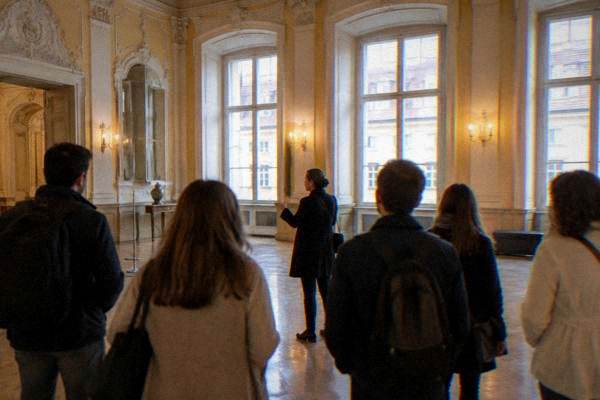
Brukenthal National Museum: The Baroque Palace And Its Galleries
The Brukenthal National Museum in Sibiu is not one building but a family of galleries and branch museums, each with its own ticket, spread across the old town and beyond. Here is what the museum's own price and visiting pages say, and how to plan around them.
Short answer
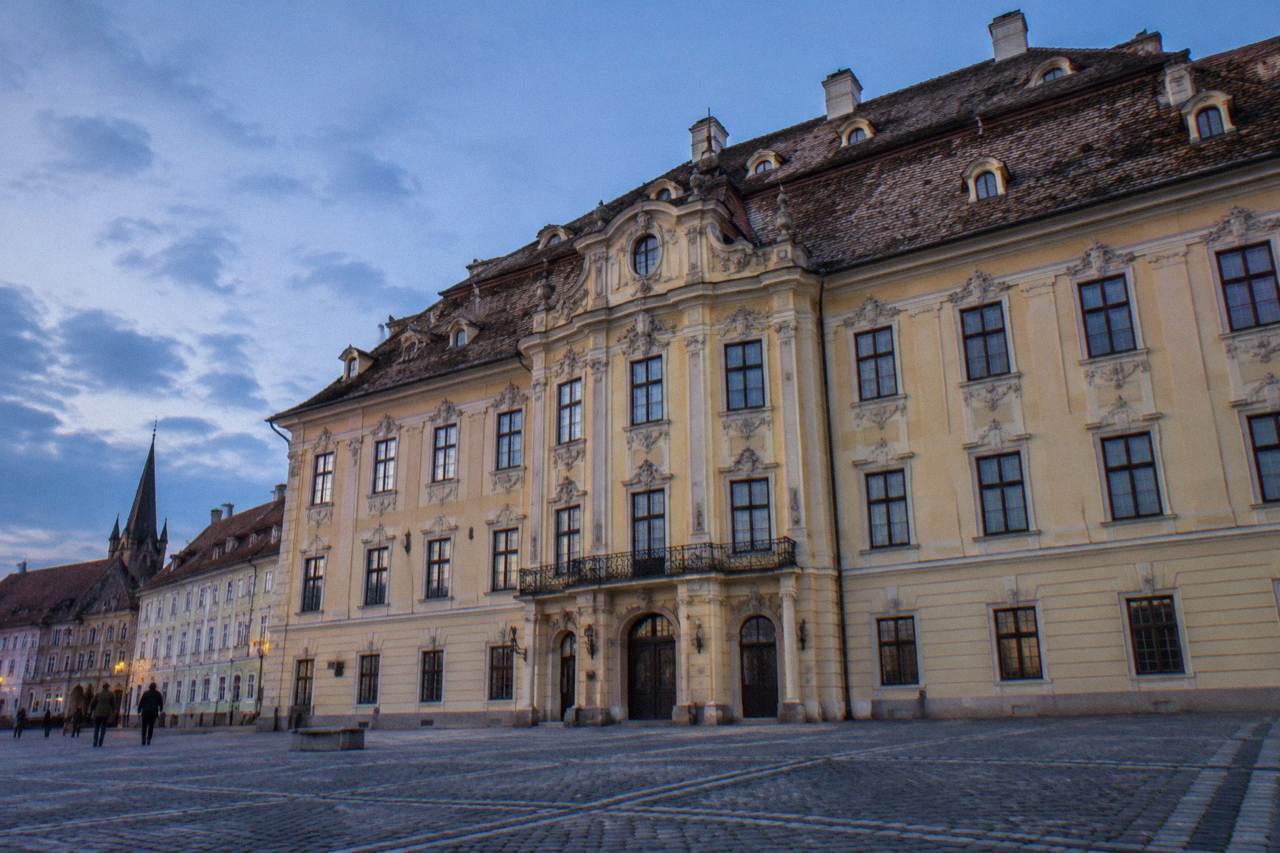
The Brukenthal Palace in Piața Mare costs 50 RON for an adult ticket, per the Brukenthal National Museum's own price page, and is open Wednesday to Sunday 10:00 to 18:00, closed Monday and Tuesday. Branch museums in Sibiu have separate tickets, from 15 to 36 RON, and a 48-hour combined ticket costs 120 RON.
The Brukenthal National Museum sits at the southern edge of Piața Mare in Sibiu, the Saxon-founded city in Transylvania, Romania, and it is the single most important art institution in this part of the country. It is also one of the most misunderstood, because the name covers a palace gallery plus a string of separate branch museums scattered through the city, each with its own ticket, its own hours and, in one case, its own closure. The museum's own visiting page is explicit: this is a network of sites, not one entrance hall with one ticket desk. Everything below reports what the Brukenthal National Museum's own price page and visiting page state, so a plan built on it survives contact with the actual doors.
What Is The Brukenthal National Museum In Sibiu?
The Brukenthal National Museum is a network of art, history and science collections headquartered in the baroque Brukenthal Palace on the south side of Piața Mare in Sibiu, Transylvania, and it opened to the public in 1817, according to the museum's own history pages. The Palace holds the European Art Gallery and the Romanian National Art Gallery, while the History Museum, the Natural History Museum, the Pharmacy History Museum, the Contemporary Art Museum and the Hunting Museum operate as separate sites, each with its own address and its own ticket. The collection goes back to Samuel von Brukenthal, governor of Transylvania, whose acquisitions formed the original gallery.
The palace itself is the reason many travellers find the museum at all. It stands directly on Piața Mare, Sibiu's grand square, a few steps from the Council Tower and the Jesuit church, and the gallery floor is one of the largest concentrations of European painting in Romania. Reported art-historical accounts trace the public opening to 1817, which would make it one of the earliest public museums in this part of Europe, though this page reports that year as the museum's own account of itself rather than as an independently confirmed date.
What catches planners out is the structure. A visitor who arrives expecting "the Brukenthal ticket" discovers there is no single ticket, only per-site prices and one 48-hour combined option. The branches are also not interchangeable: the Natural History Museum sits well south of the centre, the Contemporary Art Museum sits on Strada Tribunei, and the Hunting Museum, as covered below, is closed. Planning around the network rather than around one door is the difference between a full day of galleries and a shut door.
How Much Do Brukenthal Museum Tickets Cost In 2026?
An adult ticket to the Brukenthal Palace galleries costs 50 RON, the History Museum in Casa Altemberger costs 36 RON, the Natural History Museum 20 RON, the Pharmacy History Museum 16 RON and the Contemporary Art Museum 15 RON, per the Brukenthal National Museum's own price page, with a 48-hour combined ticket at 120 RON. Pensioners pay half price and pupils and students pay a quarter, and a guided tour in Romanian or English costs 200 RON per 60 minutes as a group fee. Press reports in 2026 suggested a possible price rise, but the official page still lists the figures here, so confirm before you go.
The reductions matter more than the headline prices, because the gaps are wide. A pensioner pays 25 RON for the Palace and 60 RON for the 48-hour ticket; a pupil or student pays 12.50 RON and 30 RON respectively, per the museum's price page. Children under six enter free at several sites. If you are travelling as a family, the quarter-price concession is the figure to check against each family member before deciding between individual tickets and the combined option.
| Site | Adult ticket | Pensioner | Pupil or student |
|---|---|---|---|
| Brukenthal Palace (European and National Art) | 50 RON | 25 RON | 12.50 RON |
| History Museum, Casa Altemberger | 36 RON | 18 RON | 9 RON |
| Natural History Museum | 20 RON | 10 RON | 5 RON |
| Pharmacy History Museum | 16 RON | 8 RON | 4 RON |
| Contemporary Art Museum | 15 RON | 7.50 RON | about 4 RON |
| Combined 48-hour ticket | 120 RON | 60 RON | 30 RON |
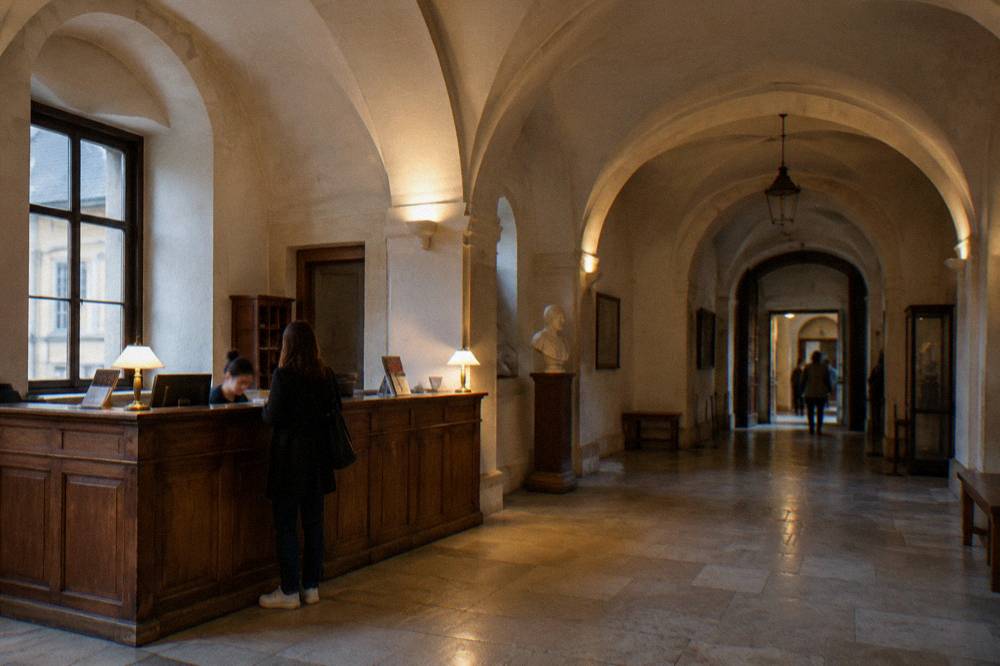
Tickets are bought at the museum. No online price or e-ticket detail was found for the Brukenthal sites, so the practical assumption is a ticket desk at each location, with cash closing well before the galleries themselves. The guided tour fee of 200 RON per 60 minutes is booked as a group arrangement in Romanian or English, so a solo traveller weighing it should treat it as a private-group cost rather than a per-person add-on.
When Is The Brukenthal Museum Open, And Which Days Are Closed?
The Brukenthal Palace is open Wednesday to Sunday from 10:00 to 18:00, with the cashier closing at 17:15, and it is closed on Monday and Tuesday. The History, Natural History and Pharmacy museums keep the same closed days, the Contemporary Art Museum is open Monday to Friday, and the Hunting Museum is closed indefinitely, per the museum's own visiting page. The History, Natural History and Pharmacy museums keep the same closed days but shorter hours, opening Wednesday to Sunday from 9:00 to 17:00, with cashiers closing around 16:15 to 16:30. The Contemporary Art Museum on Strada Tribunei runs the opposite pattern, Monday to Friday 9:00 to 17:00 and closed on Saturday and Sunday, while the Hunting Museum is closed for an indefinite period.
That Monday and Tuesday closure is the single biggest planning trap in Sibiu museum itineraries. Arrive on either day and the Palace, the History Museum, the Natural History Museum and the Pharmacy Museum are all shut, and the only Brukenthal door open on a Monday is the Contemporary Art Museum, which then closes for the weekend. A two-day city break that lands on a Monday needs its museum day moved, or it needs a plan that leans on the open-air sights instead: the squares, the Bridge of Lies, the Stairs Passage and the city walls all cost nothing and never close.
| Brukenthal site in Sibiu | Open days | Hours | Cashier closes |
|---|---|---|---|
| Brukenthal Palace, Piața Mare 4-5 | Wednesday to Sunday | 10:00 to 18:00 | 17:15 |
| History Museum, Casa Altemberger | Wednesday to Sunday | 9:00 to 17:00 | about 16:15 |
| Natural History Museum | Wednesday to Sunday | 9:00 to 17:00 | about 16:30 |
| Pharmacy History Museum, Piața Mică 26 | Wednesday to Sunday | 9:00 to 17:00 | about 16:15 |
| Contemporary Art Museum, Strada Tribunei 6 | Monday to Friday | 9:00 to 17:00 | before closing |
| Hunting Museum, Muzeul Cinegetic August von Spiess | Closed indefinitely | Pre-booked groups of ten or more only | Not applicable |
Hours can shift with the season and with temporary exhibitions, and the museum adjusts individual sites from time to time, so the visiting page on the museum's own site is the final word on the day you go. A reported temporary exhibition, "Umbre colorate. Picturalizări după Dürer", a show of painting after Dürer, runs at the Palace to 31 December 2026 within the normal Wednesday to Sunday hours, per a museum press release.
What Will You See Inside The Brukenthal Palace Galleries?
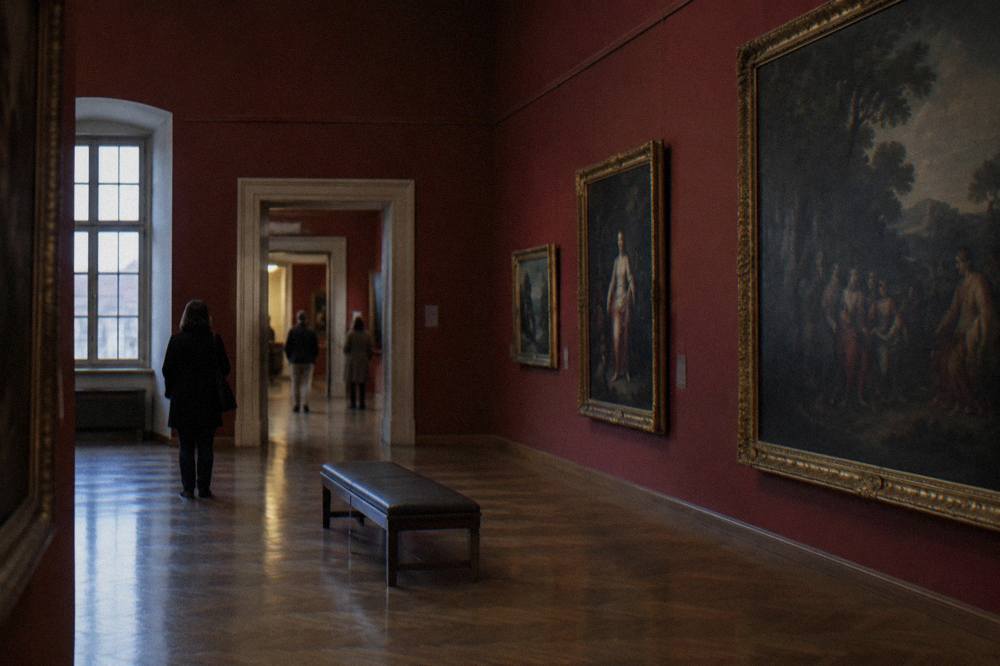
The Brukenthal Palace holds the European Art Gallery and the Romanian National Art Gallery across its piano nobile floors, a collection of European painting assembled from the acquisitions of Samuel von Brukenthal, governor of Transylvania from 1777 to 1787, according to the museum's own history pages. The galleries hang Flemish, Dutch, German and Italian painting alongside Romanian art, and the baroque palace interiors are part of the visit in themselves. The reported 1817 public opening makes the collection one of the earliest public galleries in the region.
The building rewards slow looking. The main floor is arranged as enfilade rooms, and the museum's presentation groups the European schools so a route through the Palace moves geographically rather than chronologically. The Romanian National Art Gallery covers several centuries of local painting in separate rooms.
The Palace's position changes how a visit feels. Entry is from Piața Mare, Sibiu's grand square, which means the walk to the door passes the Council Tower, currently closed for restoration, and the cafe terraces of the square, and the exit drops you back into the heart of the old town with the rest of the day's walking in front of you. The Bridge of Lies and Piața Mică are minutes away on foot, which is why the Palace sits so naturally at the centre of a first-day plan.
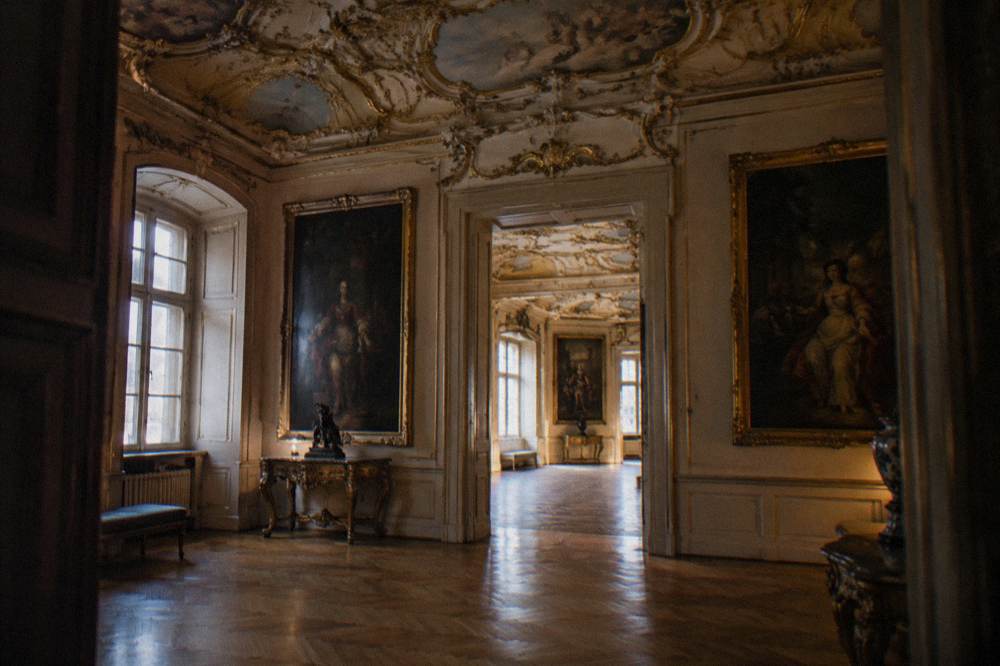
For visitors who want interpretation rather than a self-guided wander, a guided option exists on two levels: the museum's own 200 RON per 60 minutes group tour in Romanian or English, and the scholar-led walking format described in the tour picks above, which pairs the palace galleries with a church visit. A third route is the plain city walk: the daily sightseeing walk covers the old town landmarks that frame the museum.
Which Brukenthal Branch Museums In Sibiu Are Worth Adding?
The History Museum in Casa Altemberger, at 36 RON, and the Pharmacy History Museum on Piața Mică, at 16 RON, are the two branch museums closest to the Palace and the easiest to combine on foot, while the Natural History Museum at 20 RON sits well south of the centre and the Contemporary Art Museum at 15 RON keeps weekday-only hours. Each is a separate ticket, per the museum's price page, and none opens on Monday or Tuesday except the Contemporary Art Museum, which opens only on weekdays. The Hunting Museum is closed for an indefinite period and should not be planned at all.
The History Museum deserves its own paragraph because its building is the exhibit. Casa Altemberger is one of the oldest surviving secular houses in Sibiu, a complex of Gothic and Renaissance phases around a courtyard, and the history collections inside cover the city's Saxon past. It sits a short walk from the Palace toward the Lower Town, which makes it the natural second stop on a museum day. The museum's visiting page gives it the same Wednesday to Sunday, 9:00 to 17:00 pattern as the other branches. The rest of the planning pages sit on Sibiu Travel Guide.
| Branch museum in Sibiu | Adult ticket | Walk from the Palace | Best paired with |
|---|---|---|---|
| History Museum, Casa Altemberger | 36 RON | A few minutes | Council Tower square, Lower Town lanes |
| Pharmacy History Museum | 16 RON | About 5 minutes | Piața Mică, Bridge of Lies |
| Natural History Museum | 20 RON | South of the centre, longer walk | ASTRA Museum direction, Dumbrava |
| Contemporary Art Museum | 15 RON | About 10 minutes | Weekday itineraries only |
| Hunting Museum | Closed indefinitely | Not applicable | Pre-booked groups of ten or more only |
The Pharmacy History Museum is the small gem of the set. It occupies the house at Piața Mică 26, known as "Sub Ursul Negru", the sign of the black bear, and its interiors of apothecary jars and reconstructed workshop rooms tell the story of a city whose own chronology claims a pharmacy here in 1494, a first on current Romanian territory according to that chronology. At 16 RON it is a short visit that slots neatly between the Palace and a coffee on the small square.
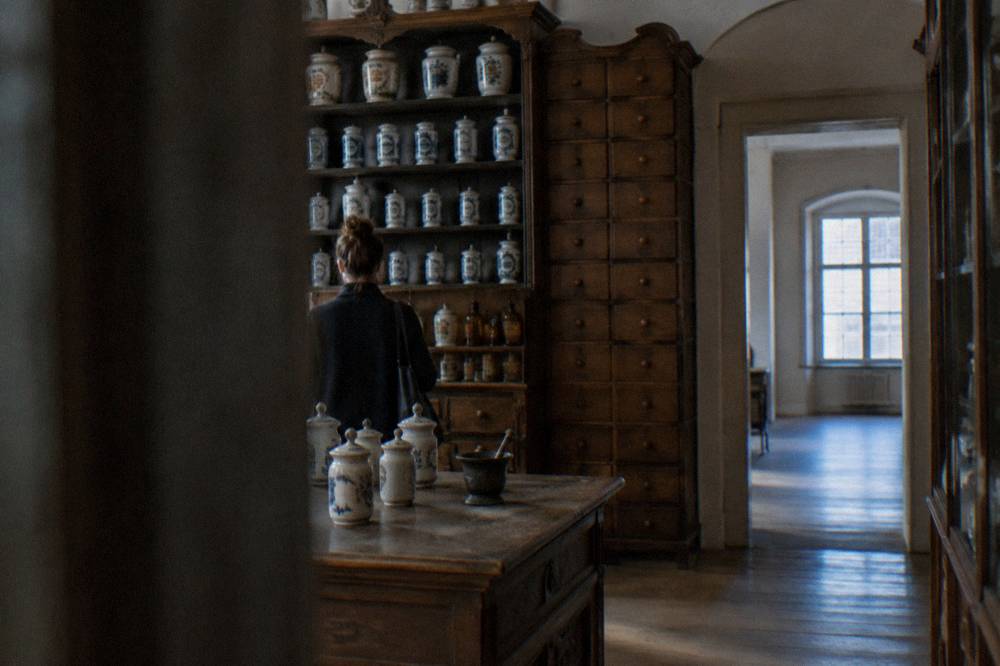
The Natural History Museum and the Contemporary Art Museum reward more deliberate planning. The natural history collections sit well south of the old town, in the direction of Dumbrava and the ASTRA open-air museum, so pairing them with a half-day in the forest makes more sense than a dash between them and the Palace. The Contemporary Art Museum's weekday-only, closed-weekend schedule is inverted relative to every other branch, so it fills exactly the Monday and Tuesday gap the main museums leave.
Is The 48-Hour Brukenthal Combined Ticket Worth It?
The 48-hour combined ticket costs 120 RON for an adult, 60 RON for pensioners and 30 RON for pupils and students, per the Brukenthal National Museum's own price page, and it covers the open Brukenthal sites within a 48-hour window rather than a calendar day, so it pays off only if you plan to visit several sites in two days. Because every open branch charges a separate ticket at its own price, the decision is simple arithmetic: add the per-site prices you actually intend to pay and compare against 120 RON. Three or more branches generally tip the balance toward the combined ticket.
The break-even points are worth writing down. A visitor who sees only the Palace and one branch may well pay less than 120 RON buying separately, depending on which branch it is: the Pharmacy History Museum at 16 RON and the Contemporary Art Museum at 15 RON add little, while the History Museum at 36 RON and the Natural History Museum at 20 RON add more. Once a third or fourth site enters the plan, the combined ticket generally wins. The practical conclusion: two branches, buy separately; three or more, buy the 48-hour ticket, assuming the branches you want are open on your days.
| Site covered by the 48-hour ticket | Adult ticket if bought separately | Included in the 120 RON combined ticket |
|---|---|---|
| Brukenthal Palace (European and National Art) | 50 RON | Yes |
| History Museum, Casa Altemberger | 36 RON | Yes |
| Natural History Museum | 20 RON | Yes |
| Pharmacy History Museum | 16 RON | Yes |
| Contemporary Art Museum | 15 RON | Yes |
| Hunting Museum | Closed indefinitely | Pre-booked groups only |
The 48-hour window interacts with the closed days in a way that can quietly destroy the ticket's value. Because the Palace, History, Natural History and Pharmacy museums are all shut Monday and Tuesday, a combined ticket activated on a Monday buys access to the Contemporary Art Museum alone. The right window is Wednesday to Sunday, and the ideal activation is a Wednesday morning, which gives two full open days before the closures begin. A Sunday afternoon start, by contrast, loses most of Monday and Tuesday to closures.
How To Plan A Brukenthal Day Around The Closed Mondays And Tuesdays?
A workable Brukenthal day starts at the Palace for opening at 10:00, moves to the History Museum or the Pharmacy History Museum in the early afternoon while both are still open until 17:00, and reserves the late afternoon for Piața Mare, Piața Mică and the free old town sights, and it only works Wednesday to Sunday. On Monday and Tuesday the main Brukenthal museums are closed and the Contemporary Art Museum is the single branch open, so those days belong to the squares, the churches and the outdoor city. Confirm the current schedule on the museum's own site before you go.
The shape of the day matters because the cashier closings, 17:15 at the Palace and around 16:15 to 16:30 at the branches, bite an hour before the galleries empty. A late lunch that runs long can cost you the Pharmacy History Museum entirely. The natural rhythm is galleries in the morning, a second site straight after lunch, and the open-air old town after 16:00, when ticket desks begin closing but the squares do not.
| Time | Wednesday to Sunday plan | Monday or Tuesday alternative |
|---|---|---|
| Morning | Brukenthal Palace from 10:00 | Piața Mare, Council Tower exterior, Piața Huet |
| Midday | Lunch on Piața Mică | Contemporary Art Museum, 9:00 to 17:00 |
| Early afternoon | History Museum or Pharmacy History Museum | Evangelical Cathedral and its tower |
| Late afternoon | Free old town circuit: Bridge of Lies, Stairs Passage | City walls, Lower Town lanes |
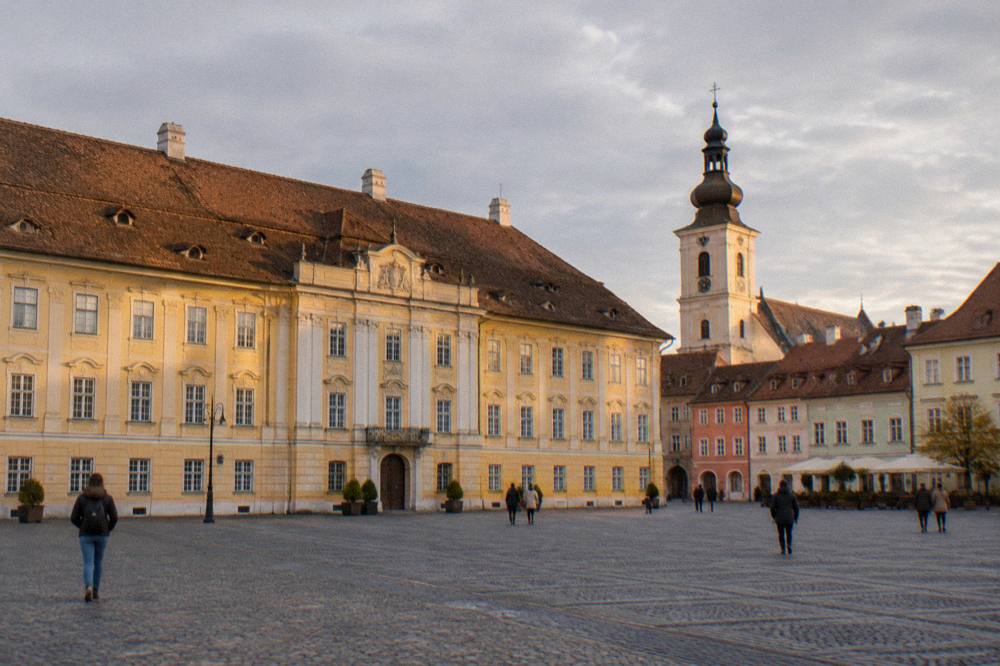
For a full old town circuit that frames the museum in the wider city, the Upper Town landmarks walk covers the squares, the churches and the walls in one loop, and the itinerary pages such as Sibiu in one day slot the Palace into a fixed sequence. Visitors with a special interest in the baroque layer of the city can also book the scholar-led format, which treats the palace galleries and the church as one connected story rather than two separate tickets.
What Else Is Within Walking Distance Of The Brukenthal Palace?
Everything in Sibiu's Upper Town is within a ten minute walk of the Brukenthal Palace: the Council Tower and Piața Mare are outside its door, the Bridge of Lies and Piața Mică are steps north, the Evangelical Cathedral and Piața Huet rise a few minutes beyond, and the Stairs Passage drops from here into the Lower Town. The Council Tower itself has been closed to visitors since 19 January 2026 for a restoration planned at about 24 months, per Sibiu city hall statements, so the open viewpoint is the Evangelical Cathedral tower at 10 RON.
This density is what makes the Palace the anchor of a museum visit. The baroque Holy Trinity Catholic Church faces the square's east side, the Orthodox Cathedral sits a short walk southeast toward the Lower Town, and the city walls and towers wrap the whole circuit. None of these outdoor sights has a ticket or hours, which makes them the reliable filler for any gap the museum schedule opens.
A two-day pattern uses the Palace as the hub. Day one stays in the Upper Town: galleries in the morning, squares and towers in the afternoon. Day two drops through the Stairs Passage into the Lower Town and, if the legs allow, out toward the Natural History Museum or the ASTRA Museum in Dumbrava. The Brukenthal branch pages and the wider things to do in Sibiu overview carry the detail for each of those stops.
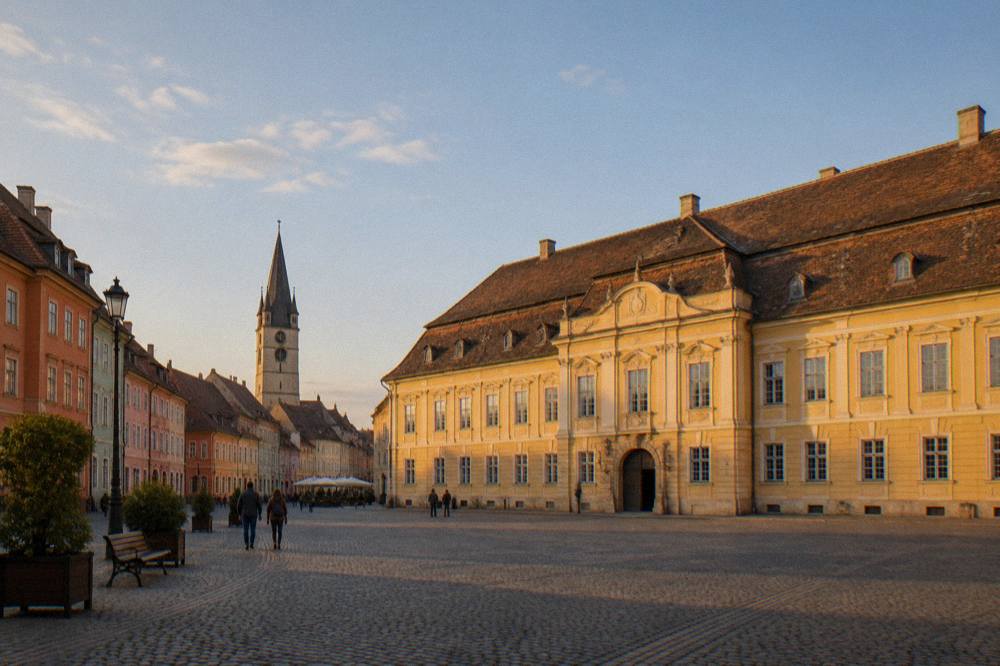
One practical note on the wider network: the Natural History Museum and the Pharmacy History Museum each have their own pages on this site with their own detail, and the Museum of Hunting Weapons page records the indefinite closure rather than a visit plan. The Franz Binder Museum of world ethnography, also part of the city's museum landscape, has no 2026 hours or prices to state, so confirm locally before walking to it.
Common Questions About The Brukenthal National Museum
How much does the Brukenthal Museum cost?
Adult tickets are 50 RON for the Brukenthal Palace, 36 RON for the History Museum, 20 RON for the Natural History Museum, 16 RON for the Pharmacy History Museum and 15 RON for the Contemporary Art Museum, per the Brukenthal National Museum's own price page, with a 48-hour combined ticket at 120 RON. Pensioners pay half and pupils and students a quarter. Confirm the current price on the museum's own site before booking.
Is the Brukenthal Museum open on Monday?
No. The Brukenthal Palace, the History Museum, the Natural History Museum and the Pharmacy History Museum are all closed on Monday and Tuesday, per the museum's visiting page. The only Brukenthal site open on a Monday is the Contemporary Art Museum on Strada Tribunei, which is open Monday to Friday 9:00 to 17:00 and closed at weekends.
Is one ticket valid for all Brukenthal museums?
No single day ticket exists. Each site has its own ticket, and the only multi-site option is the 48-hour combined ticket at 120 RON adult, which covers the open Brukenthal sites within a 48-hour window from first use. The Hunting Museum is closed indefinitely and receives only pre-booked groups of ten or more.
How long does a visit to the Brukenthal Palace take?
The Palace gallery floor is the largest of the Brukenthal sites, and a full visit of the European Art Gallery and the Romanian National Art Gallery takes a substantial part of a morning or afternoon. No official duration is published, so plan by ambition: a highlights pass is shorter, and the baroque interiors reward the slower route. Last tickets end when the cashier closes at 17:15.
Is the Brukenthal Museum accessible to visitors with limited mobility?
The museum's own pages do not state a lift, ramp or step-free route for the Palace galleries or the branch museums, and this site prints no accessibility claim that a source does not make. Contact the museum directly before visiting to confirm access at the specific site you plan to see.
Can you buy Brukenthal tickets online?
No online price or e-ticket detail was found for the Brukenthal sites, and tickets are understood to be bought at the museum. Hours and prices can change, so check the Brukenthal National Museum's own site before you travel.