Franz Binder Museum Of World Ethnography
The Franz Binder Museum of World Ethnography is one of Sibiu's collection museums, and it is the one that needs the most planning, so this guide sets out what is confirmed about Sibiu's museum landscape and how to build a museum day around what is.
Short answer
The Franz Binder Museum of World Ethnography in Sibiu is a small ethnographic collection museum. No hours or ticket prices for it appear in the official sources, so confirm locally before visiting; the large, fully priced alternatives in the city are the Brukenthal National Museum sites (15 to 120 RON) and the ASTRA open-air museum (50 RON adult).
Sibiu, in Transylvania, Romania, is a city that collects museums the way other cities collect churches. At the centre sits the Brukenthal National Museum with its palace gallery on Piața Mare; on the southern edge, inside the Dumbrava forest, spreads the ASTRA open-air museum of traditional folk civilization; and between these anchors sits a network of smaller, specialised collections, among them the Franz Binder Museum of World Ethnography. This guide explains what the Franz Binder Museum is, what is and is not confirmed about visiting it, and how to build a realistic museum day in Sibiu around the sites whose prices, hours and 2026 status are fully documented, so that a trip planned around one small museum does not stumble on a closed door.
What Is The Franz Binder Museum In Sibiu?
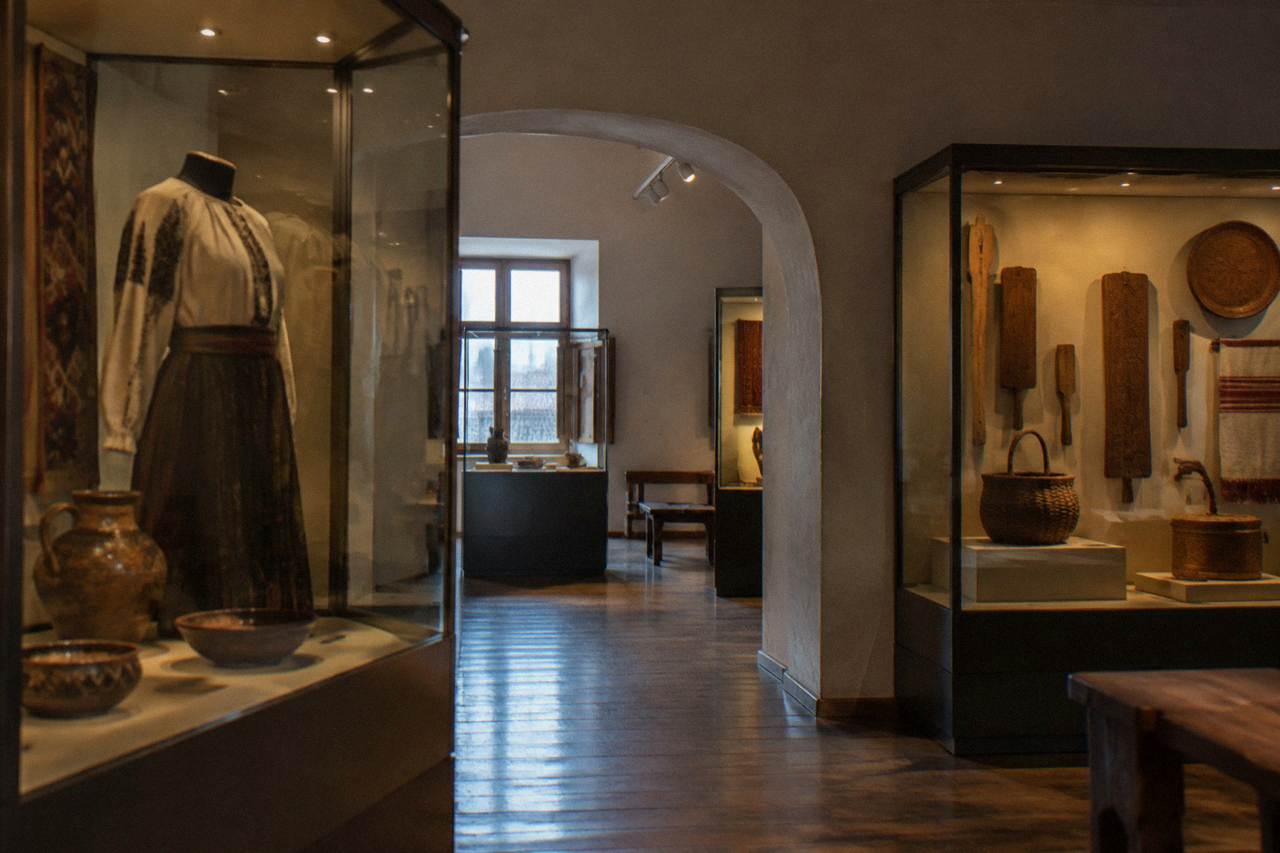
The Franz Binder Museum of World Ethnography is a small ethnographic collection museum in Sibiu, Transylvania, the city's museum dedicated to world ethnography rather than Romanian or Saxon folk art. No ticket price or opening schedule for it appears in the official sources, so the practical answer is to confirm its current status and hours with the museum or the city's tourism information before setting out, and to hold the large Brukenthal and ASTRA collections as the anchors of a museum day.
Ethnography is the study of peoples, their crafts, tools, clothing and everyday objects, and Sibiu takes the discipline seriously. The city holds two great ethnographic institutions: the ASTRA Museum in the Dumbrava forest, which documents traditional Romanian folk civilization through original houses, mills and workshops transported from all over the country, and the Brukenthal network, whose palaces and townhouses carry the fine-arts and history collections of a Habsburg-era governor's bequest. The Franz Binder Museum of World Ethnography belongs to this second, smaller tier of the city's museum life: a named, specialised collection rather than a destination in itself.
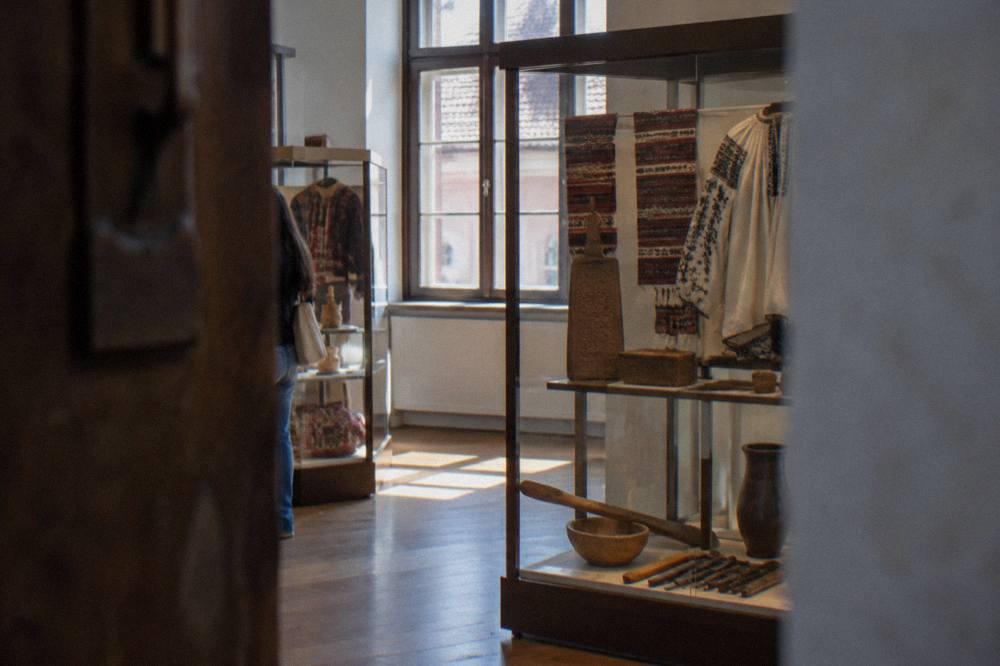
The name points to the collecting culture of the city's historic Saxon merchant class, whose trade and travel brought objects home from Africa, Asia and the Americas, catalogued by Sibiu's learned societies alongside local folk artefacts. Where the ASTRA Museum looks inward at Romanian village life, a world ethnography collection by definition looks outward, which is what makes it an unusual sight in a mid-sized Transylvanian city. What a visit today actually contains, room by room, is something the museum's own channels should describe, and the honest position is that the collection's scope is best confirmed on arrival.
That honesty matters for planning. Several of Sibiu's smaller museums run reduced schedules, group-only access or indefinite closures, and 2026 has made this more true, not less. The Hunting Museum (Muzeul Cinegetic August von Spiess) is closed for an indefinite period and receives only pre-booked groups of ten or more; the Council Tower has been closed to visitors since 19 January 2026 for a restoration planned at about 24 months, with completion reported at about January 2028. A visitor who assumes every listed museum is open six days a week will lose half a day. Assume nothing for the small collections, and build the day on the sites whose schedules are on the record.
Where Does The Franz Binder Museum Sit Among Sibiu's Museums?
Sibiu's museum landscape is a two-tier system: the Brukenthal National Museum's palace and branch museums plus the ASTRA open-air museum at the top, and smaller specialised collections, including the Franz Binder Museum of World Ethnography, beneath them. The practical hierarchy for a visitor is set by price and schedule: Brukenthal's sites cost between 15 and 50 RON each and are closed Monday and Tuesday, ASTRA costs 50 RON for an adult, and the small collections require confirmation before any visit.
The Brukenthal National Museum is not one building with one ticket. It is several sites scattered through the old town, each with its own price, which is the single fact that reshapes a Sibiu museum day. The palace gallery faces Piața Mare; the History Museum sits in Casa Altemberger; the Pharmacy History Museum is in Piața Mică at number 26, under the Black Bear sign; the Natural History Museum and the Contemporary Art Museum complete the set. The Franz Binder Museum of World Ethnography operates in this same ecosystem of small, named collections, and that is exactly why its access details need checking rather than assuming.
| Brukenthal site | Adult ticket | Reduced notes |
|---|---|---|
| Brukenthal Palace (European and National Art) | 50 RON | Pensioners half, pupils and students a quarter |
| History Museum, Casa Altemberger | 36 RON | Same reduction pattern |
| Natural History Museum | 20 RON | Same reduction pattern |
| Pharmacy History Museum | 16 RON | Same reduction pattern |
| Contemporary Art Museum | 15 RON | Same reduction pattern |
| Combined 48-hour ticket | 120 RON | Pensioners 60 RON, pupils and students 30 RON |
Prices come from the Brukenthal National Museum's own price page; press reports have floated a possible rise from summer 2026, but the official figures remain those above, so print nothing else and confirm before you go. A guided tour in Romanian or English costs 200 RON per 60 minutes as a group fee, booked with the museum.
The 48-hour ticket is the item worth a calculation. At 120 RON it is cheaper than the palace plus any two branches bought separately, and it exists precisely because the branches are scattered: a visitor staying two full days who intends the palace, the History Museum and one smaller site saves meaningfully, while a one-day visitor who only wants the palace should simply buy the palace ticket. The Franz Binder Museum, should it be open on your dates, sits in the small-collection tier alongside the Pharmacy Museum in Piața Mică, and the same rule of thumb applies everywhere in that tier: check the current price and hours on the museum's own site before booking or walking over.
The hours are as decisive as the prices. Every main Brukenthal site is closed on Monday and Tuesday. The palace keeps Wednesday to Sunday 10:00 to 18:00, with the cashier closing at 17:15; the History, Natural History and Pharmacy museums run Wednesday to Sunday 9:00 to 17:00, with cashiers closing between 16:15 and 16:30; and the Contemporary Art Museum, at Strada Tribunei 6, now keeps an unusual weekday schedule, Monday to Friday 9:00 to 17:00, and is closed on Saturday and Sunday. Plan a museum itinerary on a Wednesday through Sunday and the city cooperates; plan one on a Monday and the doors stay shut.
| Museum | Days open | Hours | Cashier closes |
|---|---|---|---|
| Brukenthal Palace | Wed to Sun | 10:00 to 18:00 | 17:15 |
| History Museum, Casa Altemberger | Wed to Sun | 9:00 to 17:00 | about 16:15 |
| Natural History Museum | Wed to Sun | 9:00 to 17:00 | about 16:15 |
| Pharmacy History Museum | Wed to Sun | 9:00 to 17:00 | about 16:30 |
| Contemporary Art Museum | Mon to Fri | 9:00 to 17:00 | before closing |
| ASTRA Museum (autumn schedule) | daily, to 26 Oct 2026 | last entry about 16:00 | varies by season |
| Franz Binder Museum of World Ethnography | confirm before visiting | confirm before visiting | confirm before visiting |
The ASTRA row carries its own 2026 story: the open-air museum's autumn schedule runs 21 September to 26 October 2026 with last entry at about 16:00, and a winter schedule had not been announced at the time the city's news outlets reported the change, so a late-autumn or winter visit to Dumbrava needs a fresh check of the museum's own programme.
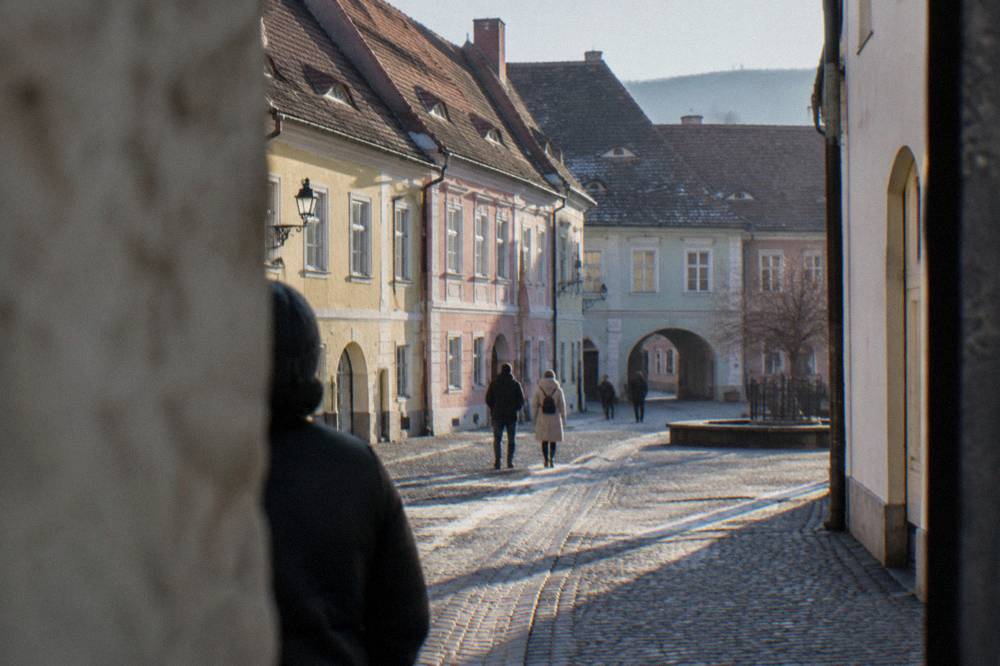
This museum geography rewards a guided start. The Upper Town landmarks city tour territory around Piața Mare, Piața Mică and Huet Square is where several of these doors stand within a few minutes of each other, and a walk that names the buildings puts the scattered collections into one map.
How Much Does A Museum Day In Sibiu Cost?
A museum day in Sibiu costs 50 RON for the Brukenthal Palace, 36 RON for the History Museum, 20 RON for Natural History, 16 RON for the Pharmacy Museum or 50 RON for the ASTRA open-air museum, per adult, while the Franz Binder Museum of World Ethnography has no published price and must be confirmed directly. A two-day museum visitor should compare the combined 120 RON 48-hour Brukenthal ticket against single tickets before buying.
The arithmetic is simple enough to do on a napkin. An intensive day built around the palace and one branch museum, say the Pharmacy History Museum in Piața Mică, costs less in single tickets than the combined 48-hour ticket on its own; add a third Brukenthal site and the gap narrows further, until the 120 RON combined ticket pays for itself once a second day and a fourth site come into play. Reductions shift the sums in the same direction: pensioners pay half at every Brukenthal site and pupils and students a quarter, so a retired visitor touring several sites approaches the reduced 48-hour ticket price (60 RON) in single tickets quickly, and the fifth site tips the balance decisively toward the pass.
| Sibiu sight | Adult price | Notes |
|---|---|---|
| Brukenthal Palace | 50 RON | Closed Mon and Tue |
| ASTRA open-air museum | 50 RON | Pensioners 20 RON, pupils and students 10 RON |
| History Museum, Casa Altemberger | 36 RON | Closed Mon and Tue |
| Evangelical Cathedral tower | 10 RON | Open viewpoint; the Council Tower is closed |
| Franz Binder Museum of World Ethnography | confirm on site | No published price |
The cathedral-tower row deserves its line of context. The Council Tower, the historic viewpoint between Piața Mare and Piața Mică, has been closed to visitors since 19 January 2026 for a restoration planned at about 24 months, with completion reported at about January 2028; the Evangelical Cathedral tower, at 10 RON for an adult and 5 RON reduced, is the open viewpoint in the meantime, open Monday 12:00 to 17:00, Tuesday to Thursday 10:00 to 17:00, Friday and Saturday 10:00 to 20:00, and Sunday 11:00 to 17:00, with guided visits on request.
For the Franz Binder Museum itself, the honest budget is a contingency: allow roughly the cost of one small-collection ticket, expect a possible group-only or appointment arrangement, and check with the museum or the city's tourism information before you count on it. Sibiu also adds one fixed cost on top of every itinerary: since 1 January 2026 hotels in the city collect a 2 percent tax on the accommodation value, so the room rate on the bill carries that addition. Meals and coffee prices vary from place to place, so budget those from the menus you see rather than from any figure quoted here.
Is A Guided Tour Of Sibiu Worth Adding To A Museum Day?
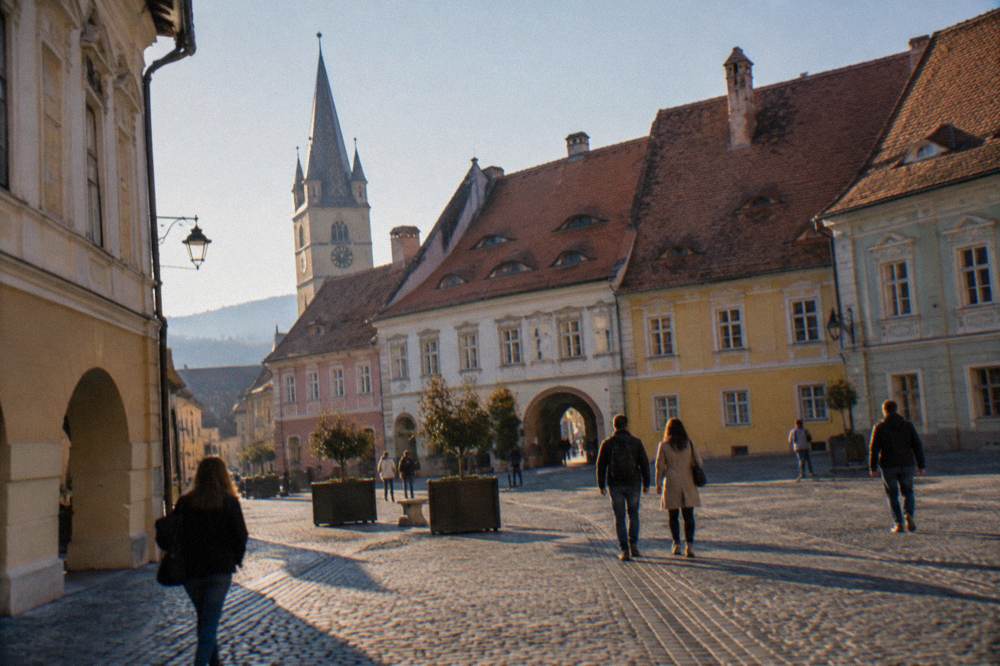
A guided tour is worth adding when the itinerary depends on scattered sites and fixed opening days, because a guide structures the walking between Piața Mare, Piața Mică and the smaller collections and names the buildings a self-guided visitor walks past. The city's sightseeing walks cover the Upper Town landmarks rather than museum interiors, so they complement the Franz Binder Museum and the Brukenthal sites instead of replacing them.
The economics favour a walk on day one and museums on day two. A guided circuit of the Upper Town fixes the geography: which façade on Piața Mare belongs to the Brukenthal Palace, where Pasajul Scărilor drops from the Upper Town toward the Lower Town, and how the Bridge of Lies, reported as the first iron bridge in the region and built in 1859 to 1860, connects the two squares. With that map in mind, the museum doors fall into an order, and the Wednesday-to-Sunday opening pattern decides which day each door gets.
The pairing works in the other direction too. An afternoon ethnography visit, once confirmed, slots after a morning walk because the small collections sit inside the walkable old town, while the ASTRA Museum in Dumbrava is a trip of its own, about 5.5 km from Piața Mare by the geocoded pin, best given a half day and reached by city bus, taxi or a tour vehicle rather than folded into an old-town walking morning.
What Can You See At Sibiu's Ethnography And Folk Museums?
Sibiu's ethnography offering divides into the ASTRA Museum's open-air collection of original village houses, mills and workshops in the Dumbrava forest, documented at 50 RON adult entry, and the small indoor collections such as the Franz Binder Museum of World Ethnography, whose current displays should be confirmed on site. Between them they cover Romanian folk civilization and world ethnography, two different subjects that a visitor should not expect to overlap.
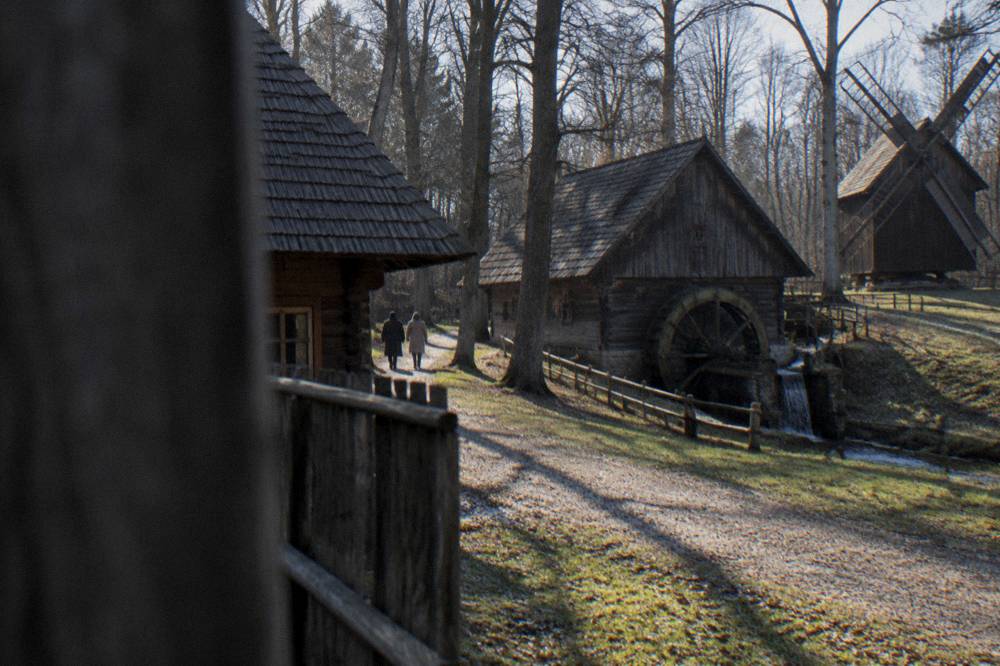
The ASTRA Museum is the city's answer to the question of what Transylvanian village life looked like, and it answers it at full scale. The museum has functioned since 1963 in the Dumbrava forest, continuing traditions of the ASTRA cultural association that date to 1905, and its lanes of relocated houses, wooden churches, presses and watermills make it one of the region's defining sights. Its documented prices are 50 RON adult, 40 RON for groups of twenty or more, 20 RON for pensioners and 10 RON for pupils and students, with annual subscriptions available; its autumn 2026 schedule runs to 26 October with last entry about 16:00, and its winter arrangements were not yet announced, so confirm before a cold-season visit.
The indoor collections are a different experience, and their smallness is part of their character. The Pharmacy History Museum in Piața Mică occupies a historic apothecary space, and its 16 RON ticket is the cheapest documented door in the Brukenthal set; the History Museum in Casa Altemberger carries the city's medieval and early-modern story in one of the old town's significant townhouses. A world ethnography collection like Franz Binder's stands apart from both, because its objects come from beyond Europe: the kind of collecting that Saxon merchants practised when trade and travel brought artefacts back to Transylvania. The museum's current rooms, themes and any temporary shows should be confirmed directly, as no details appear in official channels this desk can cite.
The comparison table below keeps the whole ecosystem honest:
| Museum or sight | Subject | Area | Access |
|---|---|---|---|
| ASTRA Museum | Romanian folk civilization, open air | Dumbrava forest | 50 RON, autumn hours to 26 Oct |
| Brukenthal Palace | European and Romanian art | Piața Mare | 50 RON, Wed to Sun |
| History Museum | Sibiu and Transylvania history | Casa Altemberger | 36 RON, Wed to Sun |
| Pharmacy History Museum | History of pharmacy | Piața Mică 26 | 16 RON, Wed to Sun |
| Franz Binder Museum | World ethnography | Sibiu | Confirm hours and price |
| Museum of Hunting Weapons | Hunting collection | Sibiu | Closed indefinitely, groups of 10+ only |
One 2026 note belongs to the palace gallery even on an ethnography page: a temporary exhibition of painting after Dürer, reported by the museum's press channels, runs to 31 December 2026, Wed to Sun 10:00 to 18:00, which gives art-inclined visitors a dated reason to prefer the palace on a museum afternoon.
A wine tasting makes a natural end to an ethnography-themed day, since Romanian wine regions are part of the same folk-and-land story, and tastings in Sibiu run in the early evening in the old town.
Is The Franz Binder Museum Open Today, And How Do You Plan Around It?
The only defensible answer is that its status must be checked before travel: no opening schedule, ticket price or access arrangement for the Franz Binder Museum of World Ethnography is published in the official sources, and Sibiu's smaller museums have shown in 2026 that schedules can shift to group-only or close outright. Confirm with the museum or the city's tourism information, then plan the day around the Brukenthal sites and ASTRA, whose hours are documented.
This is not a bureaucratic hedge; it is the pattern of the year. The Hunting Museum, a listed Brukenthal branch with a printed 12 RON ticket price, is in fact closed for an indefinite period and receives only pre-booked groups of ten or more. The Council Tower, the city's emblem, shut on 19 January 2026 for roughly two years, with walls cleaned, re-plastered and the copper roof removed by September 2026 according to the city hall's own statements. The Contemporary Art Museum flipped its schedule to weekdays only. Against that backdrop, treating any small collection's opening hours as guaranteed is the fastest way to a locked door and a wasted morning.
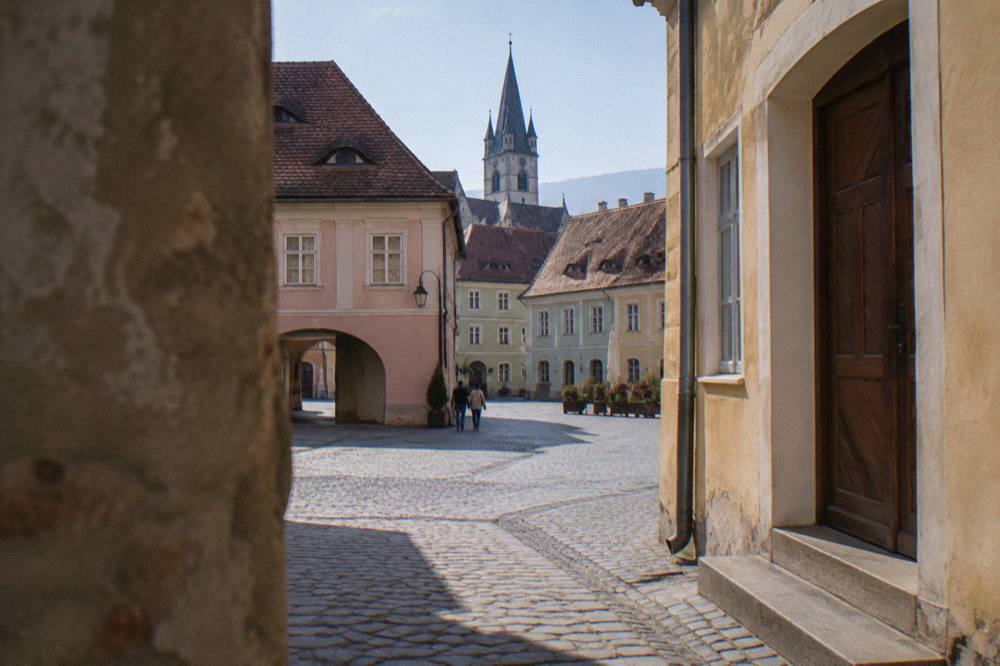
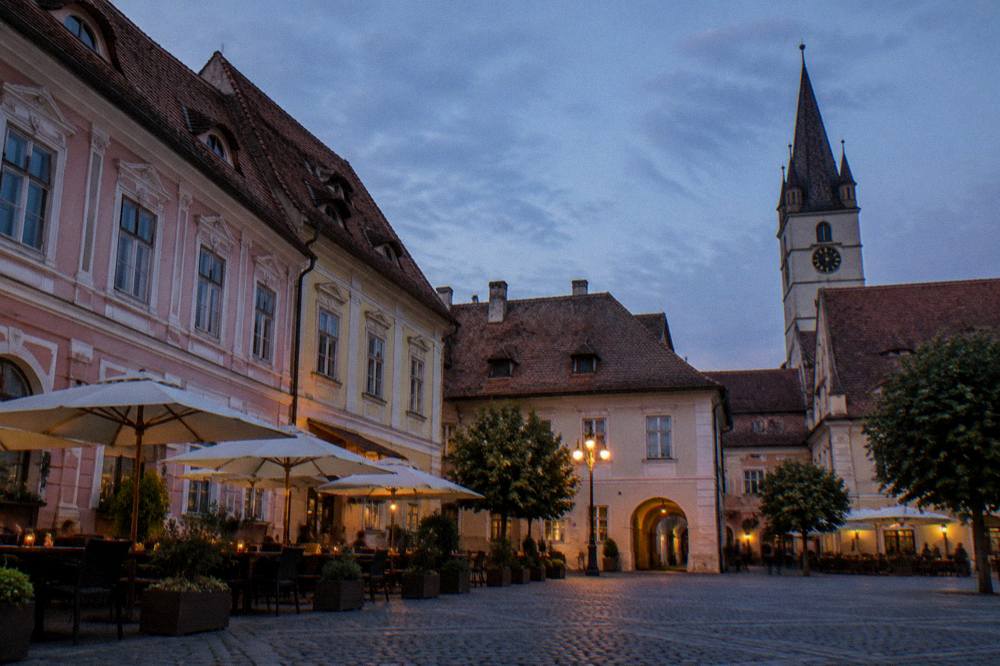
The planning template that survives every closure is a two-block day. Block one, morning: the Brukenthal Palace or the ASTRA Museum, both documented, both big enough to absorb two or three hours. Block two, afternoon: a small confirmed collection, the Evangelical Cathedral tower for the view, or the free open-air sights, Piața Mare, Piața Mică, Piața Huet, the Bridge of Lies, the Stairs Passage and the city walls with their towers, all of which need no ticket and no schedule. If the Franz Binder Museum is confirmed open on your dates, it slots into block two; if it is not, the free squares and the cathedral tower fill the afternoon without loss.
The seasonal layer matters as much as the daily one. Sibiu's museum schedules thin after late October: ASTRA's autumn programme ends 26 October 2026, the Christmas market fills Piața Mare from 13 November 2026 to 3 January 2027, and the Transfăgărășan and the high mountain sights drop out of reach as winter rules bite, with the alpine road section closable on any day from 20 October by rule. A winter museum trip to Sibiu is therefore a city-and-Dumbrava proposition, which makes the small indoor collections more valuable, and their confirmation more necessary, exactly when the days shorten.
How Do You Combine The Franz Binder Museum With The Rest Of Sibiu?
Combine it as a one-hour indoor stop inside a broader old-town day: the Franz Binder Museum, once confirmed open, belongs to the same walkable core as Piața Mare, Piața Mică, the Brukenthal Palace and the Pharmacy Museum, while ASTRA in Dumbrava needs its own half day and the day trips beyond the city need full days. Two nights in Sibiu is the realistic minimum for one museum-heavy day plus one excursion.
The walkable core is genuinely compact. The train station pin sits about 0.8 km from Piața Mare, the bus station about the same, and the airport about 5 to 6 km out with Tursib bus line 11 serving a stop in front of the arrivals terminal, a 60-minute ticket costing 3.5 lei bought contactless on the bus. Inside the old town everything on this page's city list is a walk of minutes, which is why a museum day in Sibiu does not need a car and why the confirmed-versus-unconfirmed distinction for a small museum is a scheduling question, not a travel one.
| Sight or day trip | Distance from Piața Mare | Time by road | Ticket status |
|---|---|---|---|
| Brukenthal Palace | in the square itself | on foot | 50 RON, documented |
| Pharmacy History Museum | Piața Mică 26 | on foot | 16 RON, documented |
| ASTRA Museum, Dumbrava | about 5.5 km | short bus or car ride | 50 RON, documented |
| Păltiniș resort | 32 km | about 40 min | ski season opens 28 Nov 2026 |
| Rășinari village | 13 km | about 18 min | open village, no ticket |
| Sighișoara | about 96 km | about 102 min | UNESCO site, tier R details |
| Brașov | 142 km | about 154 min | city sights, full day |
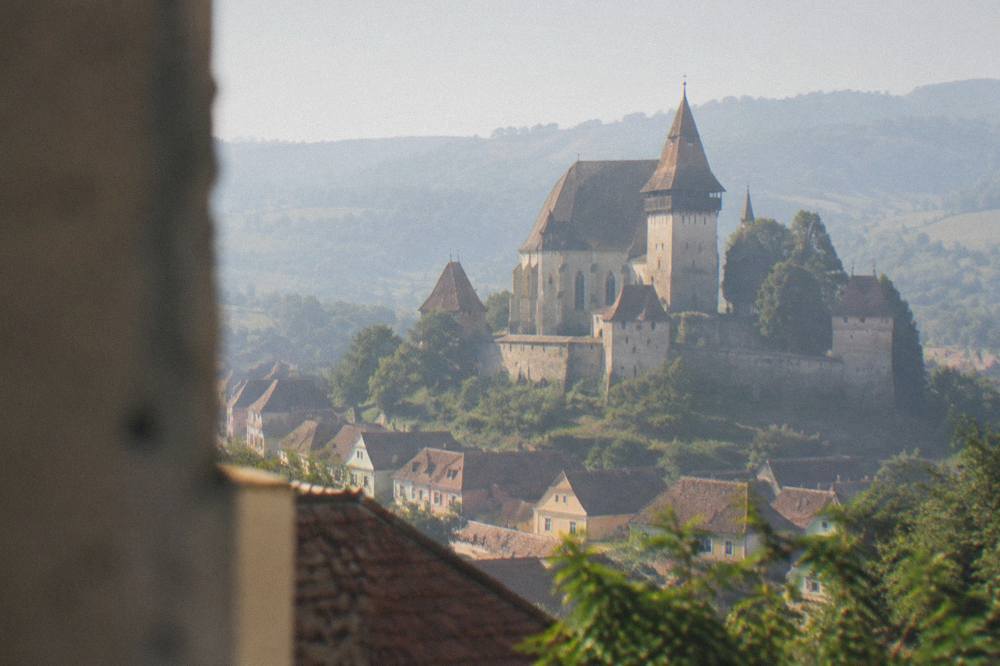
Distances are computed over OSM routing, free-flow, and are not timetables; the Saxon fortified-church villages of the Mărginimea Sibiului, Rășinari, Sibiel, Săliște, sit close to the square and pair naturally with an ethnography theme, since they are the living version of what the museum cases preserve. A half-day villages trip is the single best thematic companion to an ethnography museum visit in Sibiu.
When Is The Best Time To Visit Sibiu's Museums?
The best time for a museum-focused trip to Sibiu is May and June or September and October, when daytime highs run from about 19 to 24 C on the ERA5 reanalysis 1991-2020, daylight is long and the Christmas-market crowds have not yet arrived, though a winter visit pairs the museums naturally with the market in Piața Mare from 13 November 2026. The calendar matters more than the weather: Monday and Tuesday close the main Brukenthal sites in every season.
The climate table behind that answer comes from the ERA5 reanalysis for 1991-2020, a modelled grid cell near the city at about 430 m elevation, not a weather-station record. Sibiu's own official figures give a mean annual temperature of 8.9 C and mean annual rainfall of 662 mm, with June the wettest month at 113 mm and February the driest at 26.7 mm.
| Month | Mean high C | Mean low C | Sunshine h/day | Snowfall cm |
|---|---|---|---|---|
| January | 2.2 | -5.7 | 6.2 | 23.3 |
| April | 14.6 | 4.0 | 10.4 | 7.8 |
| July | 24.2 | 14.6 | 12.8 | 0.0 |
| October | 14.5 | 5.7 | 8.0 | 2.7 |
| December | 3.1 | -3.9 | 5.6 | 20.8 |
For a museum itinerary the shoulder months do double duty: ASTRA's open-air lanes are pleasant at 14 to 24 C, and the indoor collections fill the cooler afternoons. Winter turns the equation around, and this is where Sibiu genuinely shines. From 13 November 2026 to 3 January 2027 the Christmas market fills Piața Mare with a 600 sqm ice rink and 120-plus exhibitors, entry free, with a Golden Ticket reported at 100 lei covering the wheel, carousel and mini-train; the Păltiniș ski area opens its season on 28 November 2026, about 40 minutes away; and a rotation of palace gallery, pharmacy museum, cathedral tower and market stalls makes a cold short day feel full. The Franz Binder Museum, if confirmed open, is exactly the kind of hour-long indoor stop a winter afternoon wants.
What Else Should You Know Before A Sibiu Museum Trip?
A Sibiu museum trip needs four practical anchors: the leu (RON) as currency at about 5.3 lei to the euro, the 2 percent accommodation tax hotels have collected since 1 January 2026, Wednesday-to-Sunday planning around the Brukenthal closures, and confirmation of every small museum's status before travel. Romania is a full Schengen member, the emergency number is 112, and clocks go back on Sunday 25 October 2026.
The currency point is practical: museum tickets are priced in RON and bought at the museum, with no online price or e-ticket detail found for the Brukenthal sites, so carry lei or a contactless card for the cashier windows. The 2 percent tax is not optional knowledge, it appears on the hotel bill. And the Schengen point simplifies arrival: Romania's internal land border checks with Hungary and Bulgaria were lifted on 1 January 2025, with air and sea borders earlier, so travel within Schengen is treated like domestic travel.
Two movement notes complete the picture for anyone extending beyond the city. The A1 motorway towards Bucharest is not a finished road: the Sibiu to Boița section is closed from 5 October to 19 December 2026 for overpass works, with traffic diverted onto DN7, so allow extra time on any southern route. And the Transfăgărășan, the mountain road to Bâlea Lake at 2,034 m, ran its 2026 season from 12 June with daily hours of 07:00 to 21:00, can by rule be closed on any day from 20 October, and carries fines of 10,000 to 30,000 lei for driving the closed section, so check the live road status rather than any standing claim. For the fuller city picture, the Sibiu Travel Guide homepage collects the sight, food and itinerary pages, and the classic starting points are things to do in Sibiu, the Brukenthal National Museum page and the ASTRA Museum page.
Common Questions About The Franz Binder Museum In Sibiu
What is the Franz Binder Museum?
It is the Museum of World Ethnography in Sibiu, Transylvania, a small specialised collection museum named after Franz Binder, set within a city better known for the Brukenthal art collections and the ASTRA open-air folk museum. Its current displays and arrangements are best confirmed with the museum directly.
How much does the Franz Binder Museum cost?
No ticket price for it is published in the official sources, so check the current price with the museum or the city's tourism information before visiting. For scale, Sibiu's documented small-museum tickets run from 15 to 20 RON, and the Brukenthal Palace costs 50 RON.
Is the Franz Binder Museum open on Monday?
Its own schedule should be confirmed directly. Note that the main Brukenthal museums in Sibiu are closed on Monday and Tuesday, and the Contemporary Art Museum is closed at weekends, so weekday planning matters across the whole city.
How long does a visit take?
Sibiu's small collection museums are typically short visits in the range of an hour, while the Brukenthal Palace merits two to three hours and the ASTRA open-air museum half a day. Confirm the Franz Binder Museum's current opening arrangement before counting on a specific slot.
What else can you see near the Franz Binder Museum?
Sibiu's walkable core holds Piața Mare, Piața Mică, Piața Huet, the Bridge of Lies and the Stairs Passage, all free and open-air, plus the Brukenthal Palace, the Pharmacy History Museum and the Evangelical Cathedral tower at 10 RON. The ASTRA Museum in the Dumbrava forest is a short ride away and worth a half day.
Is the Franz Binder Museum worth visiting?
For a visitor with a specific interest in world ethnography it is the city's dedicated collection on the subject and worth confirming a slot for; for a general first visit, the documented anchors, the Brukenthal Palace and the ASTRA Museum, carry the itinerary, and the free squares fill the rest.
