Natural History Museum: The Brukenthal Collection Of Specimens
The Sibiu Natural History Museum is the Brukenthal National Museum's natural science branch, one of several separately ticketed sites in the city. This guide covers the ticket prices, the opening hours, the collections and how to fit the museum into a Sibiu day.
Short answer
The Sibiu Natural History Museum costs 20 RON for an adult ticket and is open Wednesday to Sunday, 9:00 to 17:00, closed Monday and Tuesday. It is one of six separately ticketed Brukenthal sites, and a combined 48-hour ticket covering them costs 120 RON.
Sibiu, in Transylvania, central Romania, holds one of the country's great museum networks, and the Natural History Museum is the branch of the Brukenthal National Museum devoted to the natural sciences. It is not a single-site attraction bundled under one ticket: the Brukenthal network spreads across several buildings in the city, each with its own entry price, and the natural history collections sit alongside the art galleries of the Brukenthal Palace, the history collections in Casa Altemberger and the small Pharmacy History Museum on Piața Mică. This page sets out what the museum's own price structure says, what the visiting hours allow, and how a visit fits into a wider Sibiu itinerary. The Sibiu Travel Guide desk reports what the primary sources publish, so every figure below comes from the Brukenthal National Museum's own price page or from the city's official sources.
What Is The Sibiu Natural History Museum?
The Sibiu Natural History Museum is the natural science branch of the Brukenthal National Museum, a network of six separately ticketed sites in Sibiu, Transylvania. Its zoological and mineralogical collections are displayed apart from the European paintings of the Brukenthal Palace, its adult ticket costs 20 RON, separate from every other Brukenthal site, and its hours run Wednesday to Sunday, closed Monday and Tuesday. Its collections cover the zoological and mineralogical holdings built up under the Brukenthal umbrella, displayed apart from the European paintings of the Brukenthal Palace and the historical collections of Casa Altemberger. The museum's own price page lists its adult ticket at 20 RON, separate from every other Brukenthal site, and its hours run Wednesday to Sunday, closed Monday and Tuesday like the other main branches.
The Brukenthal National Museum as an institution is old, and that age explains why it owns natural history specimens at all. Samuel von Brukenthal, governor of Transylvania from 1777 to 1787, assembled the core collections, and the museum is reported to have opened to the public in 1817, one of the earliest public museums in this part of Europe. Over time the institution grew into a family of sites, and the natural history collections received their own home. The Brukenthal network today is best understood as a distributed museum: you buy a ticket per site, or one combined 48-hour ticket, and you walk between buildings in the old town.
That structure matters for planning. A visitor who expects a single vast building, in the manner of a national natural history museum in a capital city, will instead find a compact specialised site that pairs naturally with the Brukenthal National Museum art galleries or the History Museum in Casa Altemberger on the same day. The three main Brukenthal sites share the same weekly rhythm, closed Monday and Tuesday, which makes midweek the natural window for a museum-focused visit to Sibiu.
How Much Does The Sibiu Natural History Museum Cost?
An adult ticket to the Sibiu Natural History Museum costs 20 RON, per the Brukenthal National Museum's own price page, with pensioners paying half, 10 RON, and pupils, students and Euro26 cardholders paying a quarter, 5 RON. A combined 48-hour ticket covering the network costs 120 RON for an adult, the economical choice once you plan to see three or more sites. The same page lists the other sites separately: the Brukenthal Palace at 50 RON, the History Museum in Casa Altemberger at 36 RON, the Pharmacy History Museum at 16 RON and the Contemporary Art Museum at 15 RON. A combined 48-hour ticket covering the network costs 120 RON for an adult, which becomes the economical choice once you plan to see three or more sites.
The combined ticket deserves a close look before you buy anything. Adding the Palace, History and Natural History museums at their individual prices already brings the total close to the combined ticket's price, so the 120 RON option clearly pays for itself once you add any fourth site, such as the Pharmacy History Museum on Piața Mică. The reductions scale in the same way: pensioners pay half on every ticket, and pupils, students and Euro26 cardholders pay a quarter, per the same price page. A guided tour in Romanian or English is available as a group service at 200 RON per 60 minutes.
One caution belongs here. Romanian press reported in May 2026 that Brukenthal ticket prices might rise, but the museum's official price page still shows the figures in the table below, so treat those as the current prices and confirm before you go. Brukenthal tickets are bought at the museums themselves; the research for this site found no online booking detail for the natural history branch.
| Brukenthal site | Adult ticket | Pensioner | Pupil or student |
|---|---|---|---|
| Brukenthal Palace (art galleries) | 50 RON | 25 RON | 12.50 RON |
| History Museum, Casa Altemberger | 36 RON | 18 RON | 9 RON |
| Natural History Museum | 20 RON | 10 RON | 5 RON |
| Pharmacy History Museum | 16 RON | 8 RON | 4 RON |
| Contemporary Art Museum | 15 RON | 7.50 RON | 3.75 RON |
| Combined 48-hour ticket | 120 RON | 60 RON | 30 RON |
When Is The Sibiu Natural History Museum Open?
The Sibiu Natural History Museum is open Wednesday to Sunday from 9:00 to 17:00, and it is closed on Monday and Tuesday, per the Brukenthal National Museum's visiting page. The cashier stops selling tickets at about 16:15 to 16:30, and these hours are the standing schedule rather than a holiday guarantee, so check the current hours before you go. The cashier stops selling tickets at about 16:15 to 16:30, so a late-afternoon arrival needs to be genuinely late morning or early afternoon rather than a dash at the end of the day. The same Monday and Tuesday closure applies to the Brukenthal Palace, the History Museum and the Pharmacy History Museum, which makes those two days the wrong window for a Sibiu museum circuit.
The weekend picture is more varied than the weekday one, and this is where plans go wrong. The Contemporary Art Museum on Strada Tribunei now runs the opposite schedule: it is open Monday to Friday, 9:00 to 17:00, and closed on Saturday and Sunday. The Hunting Museum, Muzeul Cinegetic August von Spiess, is closed for an indefinite period and receives only pre-booked groups of ten or more, so it cannot be counted in any itinerary. A visitor with only a weekend in Sibiu therefore has the main Brukenthal sites available, including the natural history branch, but not the contemporary art galleries.
Seasonal adjustments exist across Romanian museums, and the Brukenthal hours above are the standing schedule rather than a holiday guarantee. Public holidays shift things: Romania marks 30 November, 1 December, 25 and 26 December as holidays at the end of 2026, and museum staffing on those days is not published site by site. The practical rule from the visiting page is simple: check the current hours on the museum's own site before you go, especially around the Christmas market period, which runs in Piața Mare from 13 November 2026 to 3 January 2027.
| Brukenthal site | Days open | Hours | Closed |
|---|---|---|---|
| Brukenthal Palace | Wednesday to Sunday | 10:00 to 18:00, cashier to 17:15 | Monday, Tuesday |
| Natural History Museum | Wednesday to Sunday | 9:00 to 17:00, cashier about 16:15 | Monday, Tuesday |
| History Museum, Casa Altemberger | Wednesday to Sunday | 9:00 to 17:00, cashier about 16:15 | Monday, Tuesday |
| Pharmacy History Museum | Wednesday to Sunday | 9:00 to 17:00, cashier about 16:15 | Monday, Tuesday |
| Contemporary Art Museum | Monday to Friday | 9:00 to 17:00 | Saturday, Sunday |
| Hunting Museum | Closed indefinitely | Group visits of 10+ only, pre-booked | All regular visits |
What Will You See Inside The Sibiu Natural History Museum?
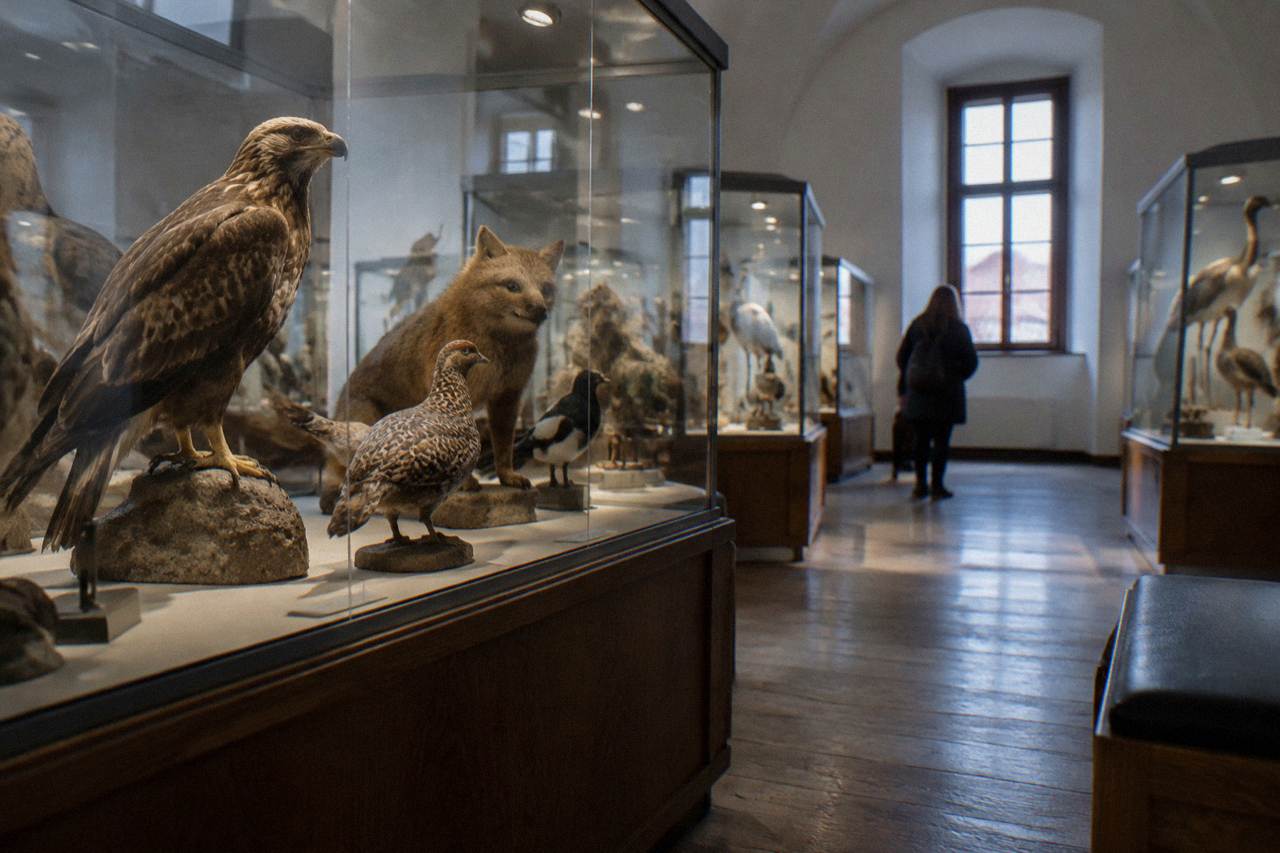
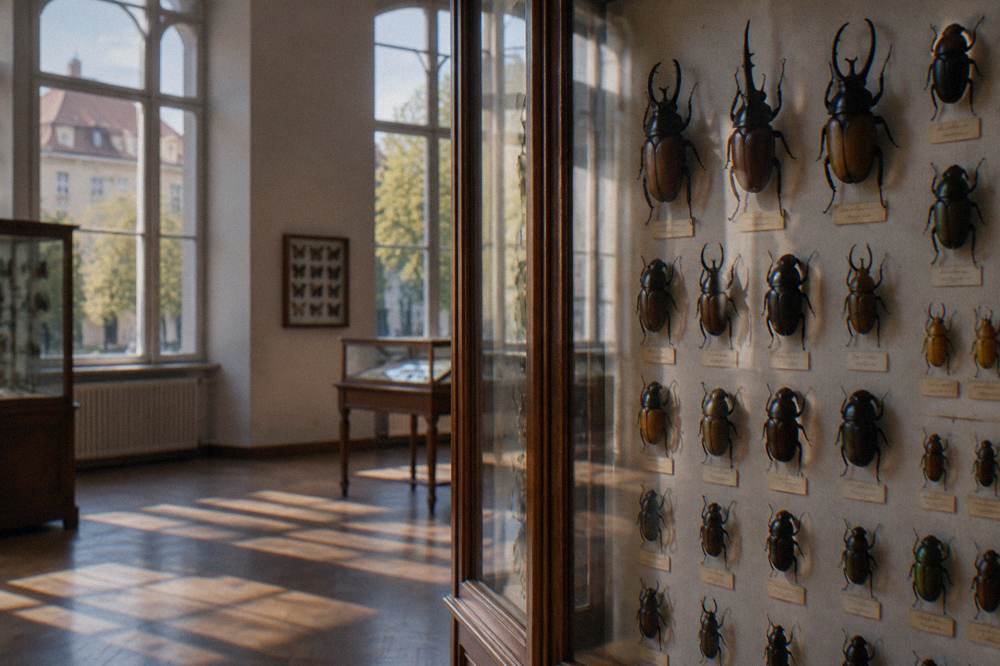
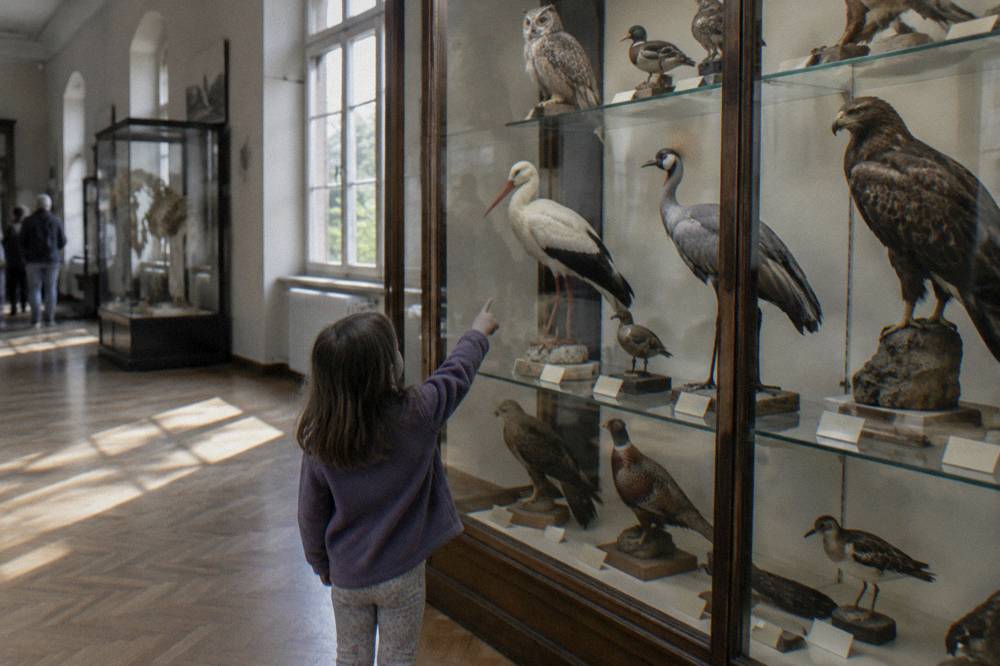
The Sibiu Natural History Museum displays the Brukenthal network's zoological, botanical and mineralogical holdings: mounted mammals and birds, entomology cases, geological and paleontological specimens. Expect a specimen museum in the Central European tradition, with rows of labeled cases in taxonomic order, dried and mounted material, and long accumulations of local fauna from Transylvania and beyond, rather than interactive installations. The Brukenthal collections grew from a governor's Enlightenment-era acquisitions, reported as opening to the public in 1817, and the natural science branch carries that collecting tradition in its display style. The museum does not publish an item-by-item catalogue online, so the outline below follows the network's own description of its natural science section rather than a floor plan.
The display philosophy matters for setting expectations. This is a specimen museum in the Central European tradition: rows of labelled cases, taxonomic order, dried and mounted material, and long accumulations of local fauna from Transylvania and beyond. The Carpathian region around Sibiu gives the collections their regional weight, since the Făgăraș range and the Cibin valley sit on the museum's doorstep and the collecting history of the region runs deep. Visitors expecting the touch-screen, hands-on model of a science centre should adjust: this is a museum for looking closely, reading labels and appreciating the depth of a collection assembled over two centuries.
Families still get a lot from it, because mounted animals and mineral cabinets hold children's attention on their own terms. The Sibiu Zoo and the open-air ASTRA Museum in the Dumbrava forest make natural pairings for a wildlife-themed day, and the zoo sits on Calea Dumbrăvii on the way out to Dumbrava. The ASTRA Museum, functioning in Dumbrava since 1963, covers traditional folk civilisation rather than natural science, so the three sites complement rather than duplicate each other.
How Long Does A Visit Take?
A visit to the Sibiu Natural History Museum is a focused stop of roughly one to two hours, with the ticket window closing at about 16:15 and the site sharing its 9:00 opening with the other main Brukenthal branches. It is a specialised branch museum, not the network's flagship, so the sensible plan treats it as one leg of a museum morning or afternoon rather than a destination that fills a whole day. The Brukenthal Palace, at 50 RON and open to 18:00, is the site that rewards the longest stay.
A realistic museum day stacks the branches by closing time. The Natural History, History and Pharmacy museums stop selling tickets first, at about 16:15, and the Palace runs an hour later, so the ordering rule is simple: do the small branches before mid-afternoon and leave the Palace for the end of the day. The walking distances between the Brukenthal sites are short, everything sits within the old town around Piața Mare and Piața Mică, and the whole circuit is on foot.
| Time block | Suggested stop | Why this order |
|---|---|---|
| 9:00 to 10:30 | Natural History Museum | Opens at 9:00, quietest at opening |
| 10:30 to 12:00 | History Museum, Casa Altemberger | Same hours, short walk away |
| 12:00 to 13:30 | Lunch around Piața Mică | Midday break between museum clusters |
| 13:30 to 15:00 | Pharmacy History Museum | Small site, 16 RON, quick visit |
| 15:00 to 18:00 | Brukenthal Palace | Open to 18:00, tickets to 17:15 |
For visitors who prefer a guide to a self-directed museum day, the site's featured tour pairs the Evangelical Cathedral and the Brukenthal Palace with a scholar's commentary. The Scholar-Led Baroque Masterclass covers the church and Brukenthal's art collections, which slots neatly before or after an independent natural history visit on the same ticket window. Check availability if that format appeals.
Is The Sibiu Natural History Museum Good For Families With Kids?
The Sibiu Natural History Museum suits families with school-age children, who get reduced tickets at a quarter of the adult price, 5 RON per pupil on the museum's own price page, and displays of mounted animals and minerals that hold attention without screens. Children under six enter Brukenthal sites free, per the same pricing structure, and the museum's central location means a short visit can be abandoned without cost or logistics pain when attention runs out.
The wider city strengthens the family case. The Dumbrava Forest and the zoo extend a nature-themed day beyond the display cases, and the zoo sits about 3 km south of the centre on Calea Dumbrăvii along the same corridor as the ASTRA Museum. The city bus network covers the city with a 60-minute ticket at 3.5 lei, bought contactless on board, which keeps family transport cheap. The emergency number throughout Romania is 112, and Sibiu's compact old town makes it easy to regroup.
A few practical cautions apply to any family museum plan. The main Brukenthal museums are shut on Monday and Tuesday, so a weekend-adjacent weekday is the safe slot. Accessibility details for the natural history branch, such as lifts or step-free routes, are not available for this site, so families with pushchairs or mobility needs should confirm directly with the museum before planning the visit around it. No claim of a specific facility appears here for that reason.
How Does It Compare With The Other Brukenthal Museums?
Against its sibling sites, the Sibiu Natural History Museum is the mid-priced science option at 20 RON, cheaper than the Brukenthal Palace at 50 RON and the History Museum at 36 RON, and dearer than the Pharmacy at 16 RON and Contemporary Art at 15 RON. It shares the Wednesday-to-Sunday schedule of the Palace, History and Pharmacy museums, which means all four can be visited in any order on the same day. The choice between them is about interest, not access.
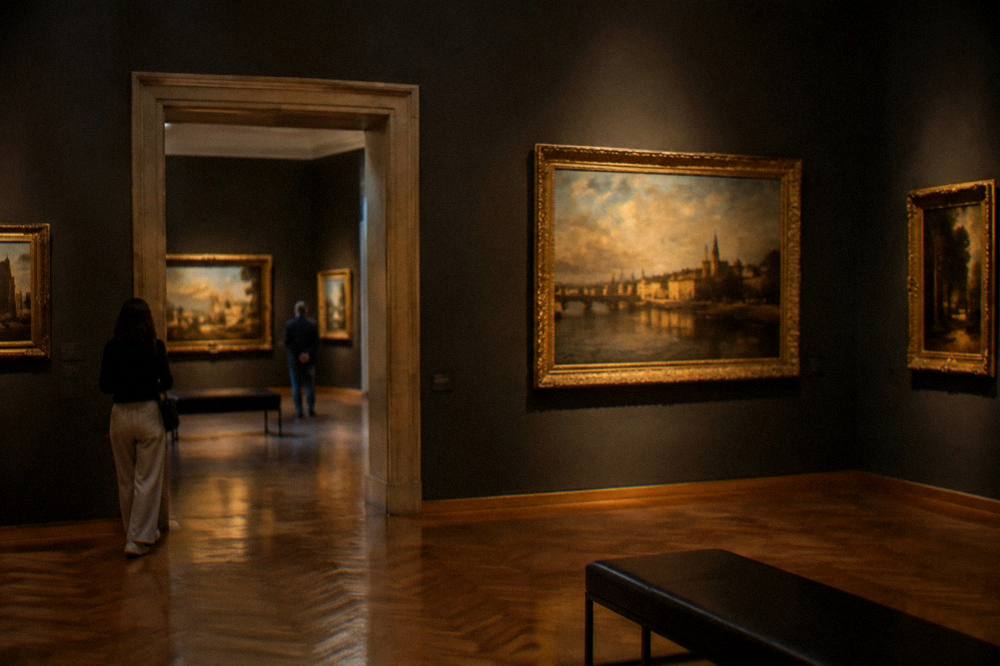
The Palace is the flagship and the time sink. Its galleries hold the European and Romanian art collections, the temporary exhibitions and the building itself, a baroque palace on the south side of Piața Mare, and its 18:00 closing makes it the natural end-of-day stop. The History Museum in Casa Altemberger covers the region's past in one of the old town's notable secular buildings. The Pharmacy History Museum is the smallest and most atmospheric, a single historic interior on Piața Mică. The natural history branch stands apart in subject matter, which is exactly why it earns its place in a circuit: it adds science to a day otherwise spent on art and history.
Two branches require planning around closures. The Hunting Museum is shut for an indefinite period and takes only pre-booked groups of ten or more, so it should not appear in anyone's itinerary without a group booking. The Contemporary Art Museum keeps weekday hours only, Monday to Friday, which makes it the one Brukenthal site a weekend visitor cannot see. A visitor arriving on a Monday or Tuesday finds every main branch closed, and should spend those days on the open-air city instead: the Bridge of Lies, Piața Mare, Piața Mică and the city walls and towers are free and open every day.
What Else Is Near The Sibiu Natural History Museum?
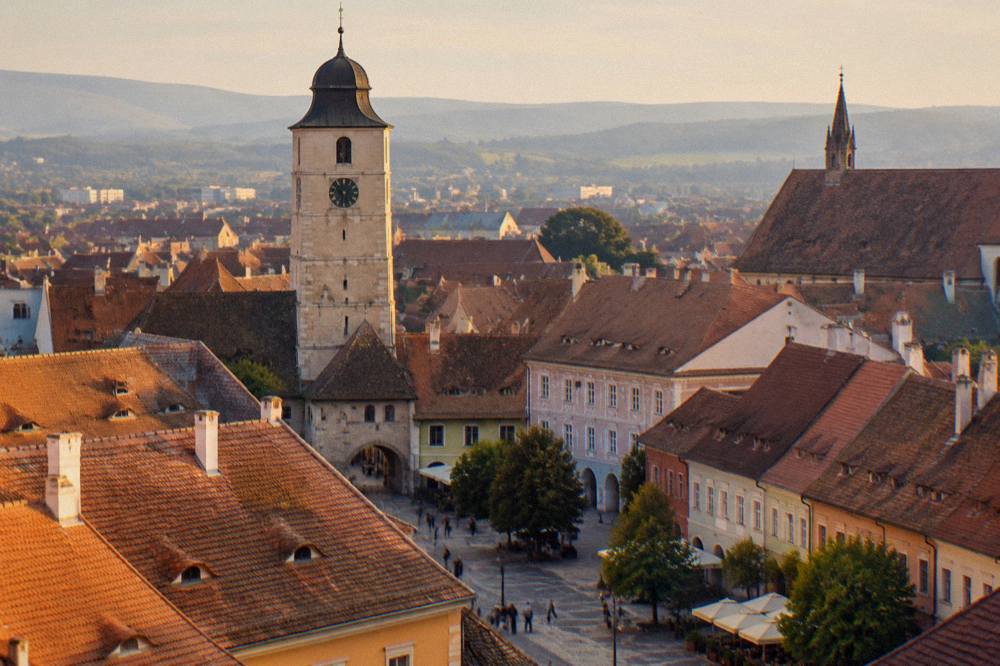
The Sibiu Natural History Museum sits inside the walkable old town, within a few minutes on foot of Piața Mare, Piața Mică, the Brukenthal Palace and the Evangelical Cathedral on Piața Huet. The Pharmacy History Museum, the Orthodox Cathedral and the Holy Trinity Catholic Church are also reached on foot, so a visit needs no transport planning at all. The city's layout does the work: the Upper Town squares, the Lower Town lanes, the Stairs Passage connecting the two, and the whole Brukenthal network sit in a compact area that crosses on foot in under twenty minutes in any direction.
A museum-centred half-day writes itself. The Brukenthal Palace faces Piața Mare directly. The Pharmacy History Museum sits at Piața Mică 26. The Evangelical Cathedral on Piața Huet offers the open tower viewpoint in the city, 10 RON for an adult, since the Council Tower has been closed to visitors since 19 January 2026 for a restoration planned at about 24 months. The Orthodox Cathedral and the Holy Trinity Catholic Church round out the religious architecture, both reached on foot from the squares.
Visitors with a second day, or a free afternoon, can extend outward. The ASTRA open-air museum lies about 5.5 km from Piața Mare in the Dumbrava forest, reachable by city bus. The Saxon fortified churches of Cisnădie and Cisnădioara lie about 10 and 13 km out, roughly 14 and 18 minutes by road, and the villages of Mărginimea Sibiului, Rășinari and Sibiel, sit 13 to 25 km away. A half-day tour of the Saxon heritage villages covers that countryside without a rental car; Check availability for dates.
| Nearby sight | Distance or walk time | Entry |
|---|---|---|
| Brukenthal Palace, Piața Mare | A few minutes on foot | 50 RON adult |
| Pharmacy History Museum, Piața Mică 26 | A few minutes on foot | 16 RON adult |
| Evangelical Cathedral tower, Piața Huet | Under ten minutes on foot | 10 RON adult |
| ASTRA Museum, Dumbrava forest | About 5.5 km from Piața Mare | 50 RON adult |
| Cisnădie fortified church | About 10 km, 14 minutes by road | Confirm locally |
| Rășinari, Mărginimea Sibiului | About 13 km, 18 minutes by road | Open village |
When Is The Best Time Of Year To Visit The Sibiu Natural History Museum?
Any Wednesday to Sunday outside the Christmas-market crunch works well for the Sibiu Natural History Museum, since it is an indoor branch with fixed hours, and the practical variable is not weather but the Monday and Tuesday closure and the cashier cutoff at about 16:15. The museum's own visiting page gives the same schedule year round, with no published high-season or low-season variation, so the choice of month comes down to what surrounds the visit.
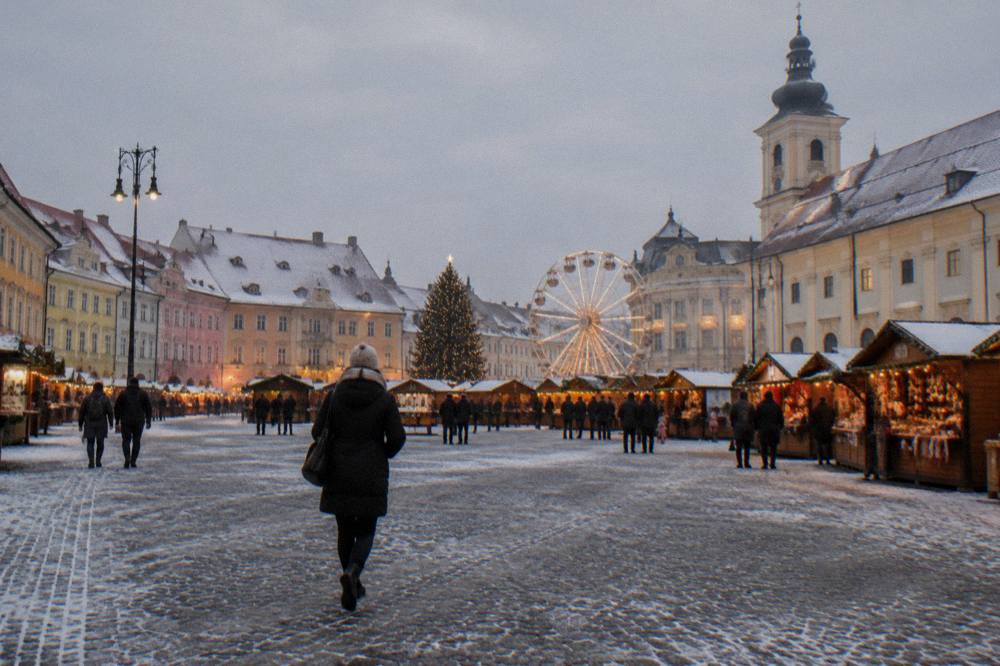
Winter has a specific draw. The Christmas market runs in Piața Mare from 13 November 2026 to 3 January 2027, free to enter, with a 600 sqm ice rink and a Golden Ticket at 100 lei reported for the wheel, carousel and mini-train. A museum morning followed by an evening in the market is a strong cold-day combination, though public holiday staffing around 25 and 26 December is not published, so confirm the museum's own site for those dates. January, under the ERA5 reanalysis 1991-2020 normals, averages a high of 2.2 C and a low of -5.7 C with snow on the ground, which argues for exactly this indoor-outdoor pairing.
Summer reverses the logic. July and August average highs of 24.2 and 24.5 C under the same ERA5 reanalysis, 1991-2020, with long daylight, and the temptation is to spend every hour outdoors in the squares or up in the Făgăraș foothills. The museum earns its slot then as the midday retreat: the hours open at 9:00, the cashier closes mid-afternoon, and the old town's outdoor sights, the Stairs Passage, the walls, the squares, fill the evenings. Shoulder months, May, June and September, are the ones tourism sources name as Sibiu's most comfortable, and they also carry the FITS theatre festival in late June, reported for 18 to 27 June in 2027.
What Should You Know Before You Go To The Sibiu Natural History Museum?
Before visiting the Sibiu Natural History Museum, know four things: the 20 RON adult ticket and its quarter-price student reduction, the Wednesday-to-Sunday 9:00 to 17:00 hours with the cashier closing about 16:15, the Monday and Tuesday closure shared with the main Brukenthal sites, and the 120 RON combined 48-hour ticket if you plan more than two branches. Everything else is standard Sibiu practicality, and the city makes that part easy.
Money first. Romania's currency is the leu, RON, at about 5.3 lei to the euro, and museum tickets are priced in lei. Hotels in Sibiu have added a 2 percent tourism promotion tax on the accommodation value since 1 January 2026, a city levy separate from anything at the museum. Tipping, card acceptance and ATM fees at museum counters vary, so plan to carry some lei and confirm payment options on arrival.
Getting there is simple. The museum lies in the central old town, walkable from anywhere between the train station, 0.8 km north-east of Piața Mare, and the squares themselves. From the airport, about 5 to 6 km away, Tursib bus line 11 serves a stop in front of the arrivals terminal with a 60-minute ticket at 3.5 lei. Romania is a full Schengen member, the emergency number is 112, and clocks go back to winter time on Sunday 25 October 2026.
| Practical item | Figure | Note |
|---|---|---|
| Adult ticket | 20 RON | Per the Brukenthal price page |
| Pupil or student ticket | 5 RON | Quarter of adult |
| Combined 48-hour ticket | 120 RON | All Brukenthal sites |
| Opening days | Wednesday to Sunday | Closed Monday and Tuesday |
| Airport bus, line 11 | 3.5 lei, 60 minutes | Contactless on the bus |
| Exchange rate | About 5.3 lei to the euro | Confirm the live rate |
| Emergency number | 112 | Single European number |
For a guided counterpart to the museum day, the city's sightseeing walks are a low-cost way to add context, and the daily guided sightseeing tour covers the old town landmarks with a licensed guide. The old town exploration game suits families who want a self-guided puzzle format between museum stops.
Common Questions About The Sibiu Natural History Museum
How much is the Sibiu Natural History Museum?
The adult ticket is 20 RON, per the Brukenthal National Museum's own price page. Pensioners pay 10 RON and pupils or students pay 5 RON. A combined 48-hour ticket covering all the Brukenthal sites costs 120 RON for an adult.
Is the Sibiu Natural History Museum open on Monday?
No. The museum is closed on Monday and Tuesday, like the other main Brukenthal branches, and open Wednesday to Sunday from 9:00 to 17:00, with ticket sales ending at about 16:15.
Is the Sibiu Natural History Museum the same as the Brukenthal Palace?
No. They are separate sites with separate tickets inside the Brukenthal National Museum network. The Palace, on Piața Mare, holds the art galleries at 50 RON; the Natural History Museum displays the zoological and mineralogical collections at 20 RON.
Can you buy one ticket for all the Brukenthal museums in Sibiu?
Yes, a combined 48-hour ticket costs 120 RON for an adult and covers the Brukenthal sites. Once you add up the individual tickets for the Palace, the History Museum and the Natural History Museum, the combined ticket already looks like the better deal, and any fourth site makes it certain.
How long does a visit to the Sibiu Natural History Museum take?
Roughly one to two hours. It is a specialised branch museum, best treated as one stop in a circuit that also takes in the Brukenthal Palace, the History Museum and the Pharmacy History Museum on the same opening days.
Is the Sibiu Natural History Museum good for children?
School-age children get a lot from the mounted animals, insects and minerals, and pay a quarter of the adult price, 5 RON. The displays are traditional labelled cases rather than interactive installations, and accessibility details are not published, so confirm any specific needs with the museum.
The natural history branch rounds out a Sibiu museum day with something the art galleries cannot offer: two centuries of collecting applied to the Carpathian world outside the old town walls. Buy per site or take the 48-hour ticket, keep Monday and Tuesday for the squares, and let the cashier's mid-afternoon cutoff set the pace.
