Holy Trinity Orthodox Cathedral: Sibiu's Little Hagia Sophia
The Holy Trinity Orthodox Cathedral is the principal Orthodox church of Sibiu, a domed landmark a short walk from Piața Mare. Here is what the sources say about visiting it, from entry and hours to dress code and what to combine it with.
Short answer
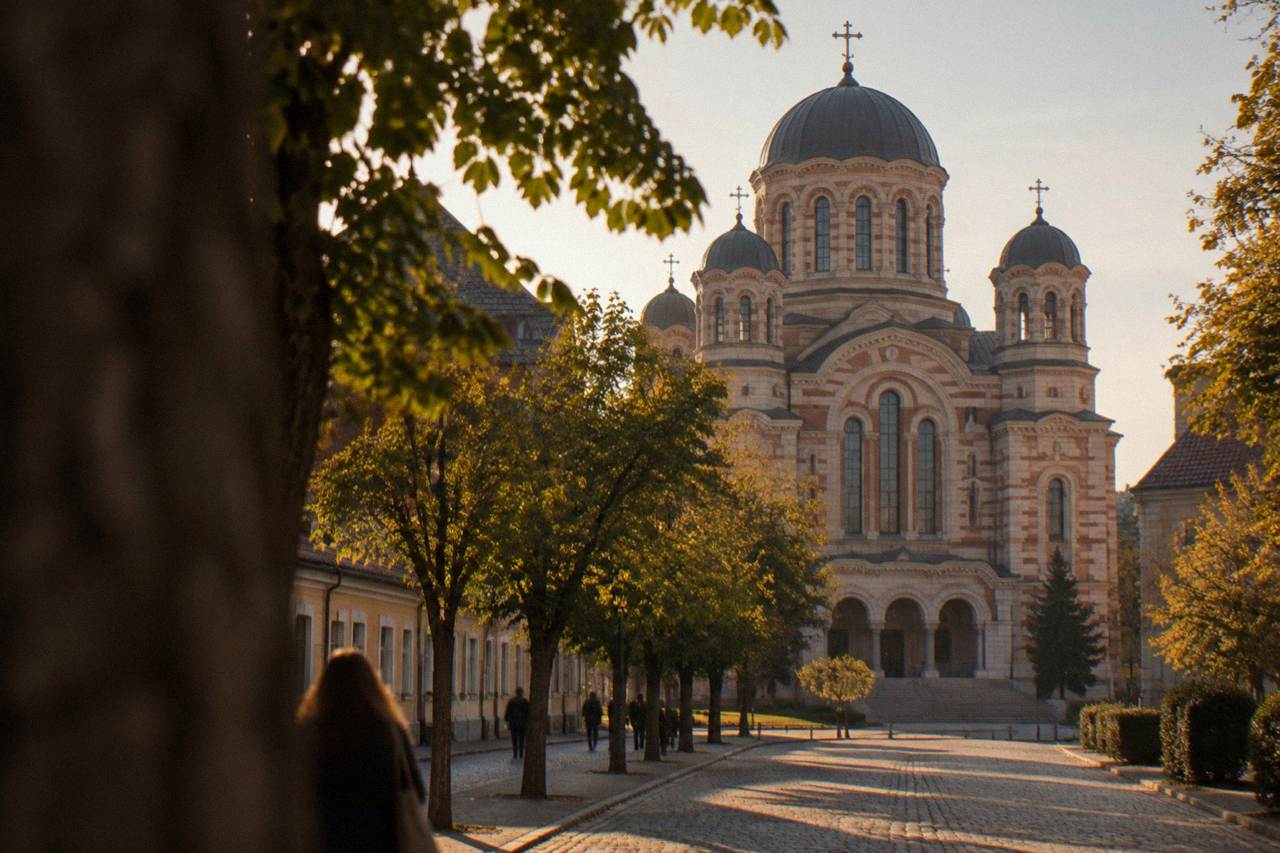
The Holy Trinity Orthodox Cathedral stands near the top of Sibiu's old town, close to Piața Huet and a few minutes on foot from Piața Mare. Entry is free or nominal; hours and any ticket are not published in a verifiable source, so confirm on arrival. Modest dress applies, as in any Orthodox church.
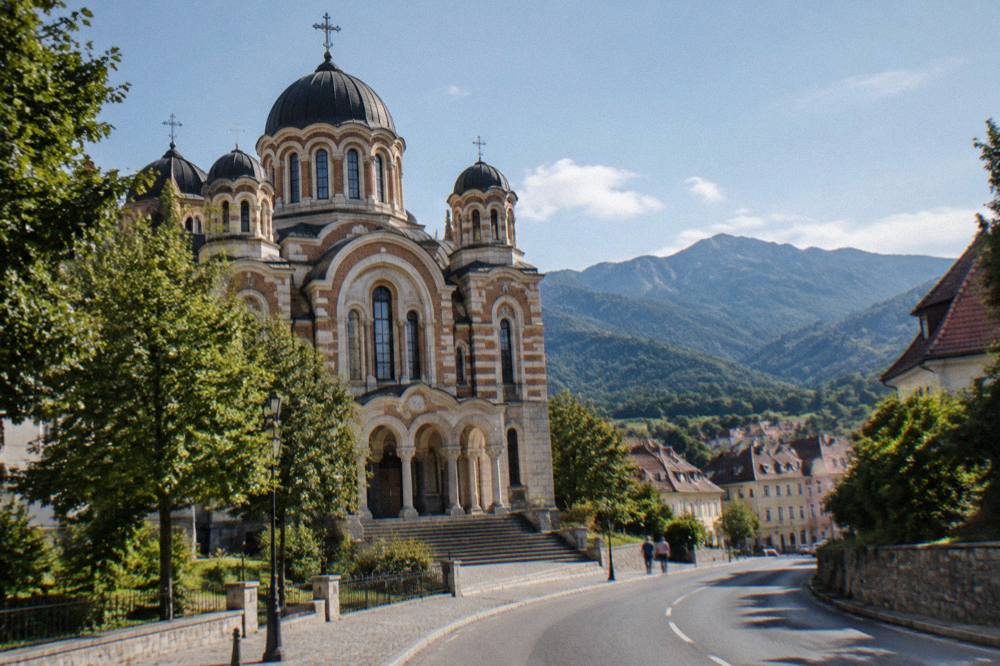
Sibiu, in Transylvania, Romania, is a city of two cathedrals. The Gothic Evangelical Cathedral holds the western edge of Piața Huet, a reminder of the Saxon founders who documented the city in 1191, while a few streets away the Holy Trinity Orthodox Cathedral rises over the old town with a domed, Byzantine-inspired silhouette that has earned it the informal comparison, carried in this page's title, with the Hagia Sophia. Both stand within a few minutes' walk of Piața Mare, and together they tell the story of a city where a German-speaking merchant elite and a Orthodox majority shared, and sometimes contested, the same hilltop. This guide reports what the verifiable sources say about visiting the Orthodox Cathedral, what remains to be confirmed on arrival, and how to fit it into a wider Sibiu itinerary.
What Is The Holy Trinity Orthodox Cathedral In Sibiu?
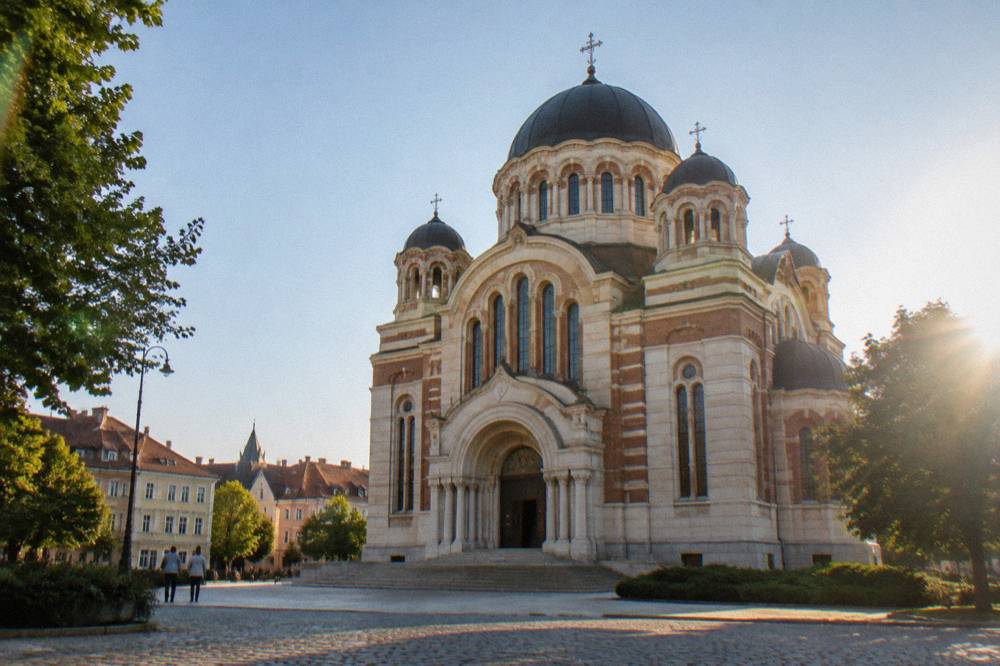
The Holy Trinity Orthodox Cathedral is the principal Orthodox church of Sibiu, the seat of the Orthodox archdiocese that serves the city and the wider region of Transylvania, and one of the two great church buildings that define the Sibiu skyline. Its domed central mass and flanking towers contrast sharply with the single Gothic spire of the nearby Evangelical Cathedral, and that contrast is the point: the cathedral is the architectural signature of the Orthodox community in a city whose historic core was built by Transylvanian Saxons, settlers who arrived from the Moselle area in the 12th century, as the city's heritage pages record.
No construction date, architect or consecration year for the cathedral appears in the sources used for this site. What the sources do support is the cathedral's role and its setting. It serves an active Orthodox congregation, which means it functions first as a place of worship and only second as a sight, and its liturgical calendar shapes everything about a visit: services, feast days and weddings take precedence over sightseeing, and a visit can be shortened or paused when one is under way.
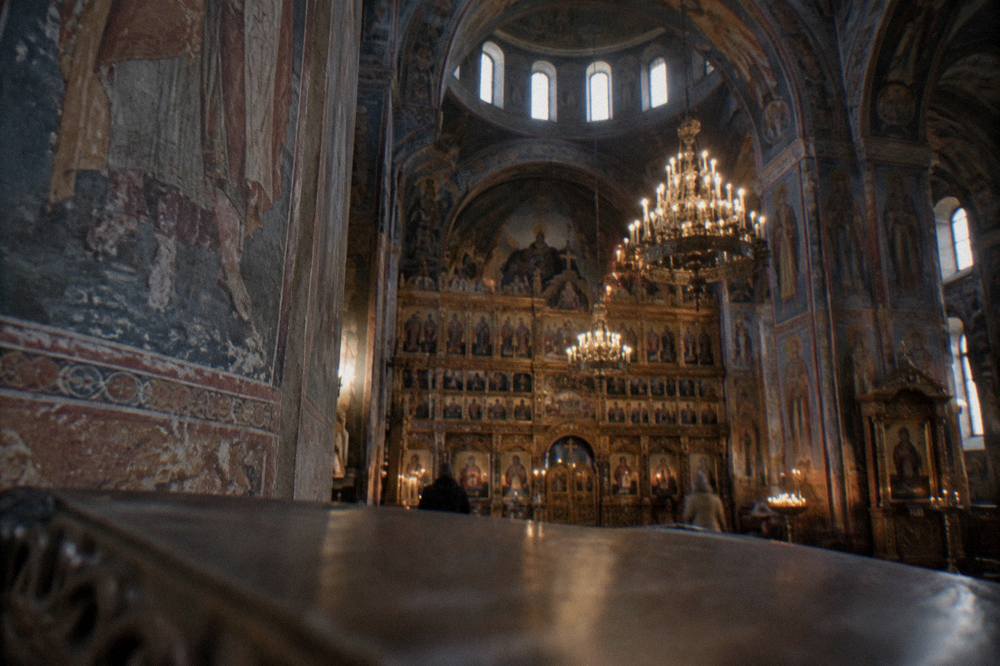
The building's nickname deserves a note of caution. "Little Hagia Sophia" is a tourist-friendly comparison, not an official title, and it refers to the massed dome and the arcaded silhouette rather than to any claim of scale or age. Treat it as a description of the impression, not as a fact about the building, and the cathedral rewards the lower expectations that follow: it is a working church with painted interiors, an iconostasis and a calm, candlelit atmosphere, best understood as part of Sibiu's religious landscape rather than as a standalone attraction.
Where Is The Orthodox Cathedral In Sibiu And How Do You Get There?
The Orthodox Cathedral stands in the upper part of central Sibiu, a short walk downhill from Piața Huet and roughly five to ten minutes on foot from Piața Mare, in the streets that connect the old Saxon core with the later, expanded city. No published walking time for this exact route appears in the available sources, but the whole historic centre of Sibiu is compact: the Upper Town, the Bridge of Lies and Piața Mare all sit within the same few hundred metres, and the cathedral sits among them.
Arriving from further out, the practical options are the ones that serve the whole city. Tursib, the city bus operator, sells a 60-minute internal ticket for 3.5 lei, a 75-minute ticket with one transition for 5 lei and a 90-minute ticket with two transitions for 7 lei, prices taken from the operator's own fares page. Line 11 runs from Sibiu International Airport to central stops, and the airport's own transport page lists the terminal stop directly in front of arrivals; the airport lies about 5 to 6 km from Piața Mare, so allow a short bus or taxi ride rather than a walk with luggage.
| Journey to central Sibiu | How | Fare or figure | Source note |
|---|---|---|---|
| Airport to centre | Tursib line 11 | 3.5 lei, 60-minute ticket | Operator and airport pages |
| Airport to Piața Mare | Road distance | about 5 to 6 km | Computed from routing data |
| Within the city | Tursib 75-minute ticket | 5 lei | Tursib fares page |
| Within the city | Tursib 90-minute ticket | 7 lei | Tursib fares page |
On foot, the cathedral works best as one stop inside a loop. A natural route starts at Piața Mare, crosses to Piața Mică and the Bridge of Lies, climbs to Piața Huet and the Evangelical Cathedral, then continues to the Orthodox Cathedral before descending again. The gradients are gentle but real, since the Upper Town sits a few metres above the Lower Town, and the whole loop covers ground that a fit walker covers comfortably at sightseeing pace.
For travellers who prefer a guide to a self-directed loop, the city's sightseeing walks cover exactly this terrain. The evening panorama tour of Gușterița Hill, run as a guided outing, adds a viewpoint over the whole skyline, domes and spires included, after the old town itself.
What Does A Visit To The Orthodox Cathedral In Sibiu Cost?
Entry to the Orthodox Cathedral is free or carries only a nominal charge, and no confirmed ticket price or pricing structure appears in any source this site could check, so the honest answer is to expect free admission and confirm at the door. This puts the cathedral in a different category from Sibiu's museums, whose prices are published and verifiable, and it means budgeting for a visit is essentially a question of what you combine with it.
The contrast with the neighbourhood is worth setting out plainly, because the cathedral sits inside the densest cluster of paid sights in the city. The Brukenthal National Museum's own price page lists the Palace galleries at 50 RON for an adult, the History Museum at Casa Altemberger at 36 RON, Natural History at 20 RON and the Pharmacy History Museum at 16 RON, with a 48-hour combined ticket at 120 RON. The Evangelical Cathedral's tower, the open viewpoint in a city whose Council Tower is closed, charges 10 RON for an adult and 5 RON reduced, per the listing on the city's tourism site.
| Sight near the Orthodox Cathedral | Adult entry | Status to know before you go |
|---|---|---|
| Orthodox Cathedral | free or nominal, confirm on arrival | active church, services take priority |
| Evangelical Cathedral tower | 10 RON, 5 RON reduced | open viewpoint; Council Tower is closed |
| Brukenthal Palace galleries | 50 RON | closed Monday and Tuesday |
| Brukenthal History Museum | 36 RON | closed Monday and Tuesday |
| Pharmacy History Museum | 16 RON | closed Monday and Tuesday |
| Bridge of Lies, Piața Mare, Piața Mică | free | open public space at all hours |
One practical Sibiu-wide note belongs here rather than anywhere else: since 1 January 2026 the city levies a 2 percent tax on the total accommodation value, collected through hotels and guesthouses. It is not a cathedral or attraction charge, but it appears on accommodation bills, and travellers comparing Sibiu's costs should know it exists. No per-night lei or euro amount is published, because the tax is a percentage, not a flat fee.
For a paid half-day that pairs the city's churches with its Saxon surroundings, the half-day tour of the villages around Sibiu covers heritage sites beyond the old town, and its live listing carries the current price and dates.
What Are The Opening Hours Of The Orthodox Cathedral In Sibiu?
The Orthodox Cathedral keeps church hours rather than museum hours, which in practice means it is generally open during the day for visits around the fixed rhythm of services, and no verifiable published timetable exists in the sources available, so confirm locally or with the city's tourism information before planning a precise arrival. This is not evasion; it is the difference between a museum, whose published schedule is a contract, and a cathedral, whose doors follow the liturgical day.
That difference has planning consequences worth spelling out. A Sunday morning visit coincides with the Divine Liturgy, the main Sunday service of the Orthodox calendar, when the cathedral is fullest and sightseeing is least appropriate. Weekday mornings and early afternoons are typically quieter windows, though no source licenses a claim about which specific hours are calmest on which days, and weddings and feast-day services can fill the building at any time. The practical rule the sources support: treat any planned visit as provisional, allow flexibility, and if the interior is closed or in use, use the time on the squares and museums within two or three minutes' walk.
The pattern contrasts with the paid sights nearby, whose schedules are published and checkable. The Brukenthal Palace galleries are closed Monday and Tuesday and open Wednesday to Sunday from 10:00 to 18:00, with the cashier closing at 17:15, per the museum's own visiting page; the History, Natural History and Pharmacy museums run Wednesday to Sunday on slightly earlier hours; and the Contemporary Art Museum is open Monday to Friday only. The Evangelical Cathedral tower publishes varied daily hours on the tourism site's listing, longer on Friday and Saturday. Anyone building a single day around the cathedral should therefore anchor the fixed museum hours and leave the cathedral visit flexible inside them.
How Does The Orthodox Cathedral Compare With Sibiu's Other Churches?
Sibiu's religious architecture splits along its history: the Evangelical Cathedral represents the Gothic, Saxon, Lutheran tradition that built the medieval city, while the Orthodox Cathedral represents the Orthodox majority that made Sibiu an archdiocesan centre, and the two buildings differ in style, in atmosphere and in how you visit them. The contrast is the single most rewarding framing for a visit, because each building explains the other.
The Evangelical Cathedral, on Piața Huet, is a Gothic hall church with a single tall tower that can be climbed for a fee of 10 RON, reduced 5 RON, according to the city tourism site's listing, which also notes guided visits on request. The Orthodox Cathedral, by contrast, is domed and centrally planned in the Byzantine tradition, with an interior built around frescoes, icons and the iconostasis, the painted screen that separates the nave from the sanctuary in Orthodox churches. Where the Evangelical Cathedral rewards the climb and the stark whitewashed interior, the Orthodox Cathedral rewards standing still: candlelight, painted surfaces and the sound of a service in progress, if one is.
A third layer exists in the wider city and region. The Holy Trinity Catholic Church belongs to the Roman Catholic community, smaller but historic, and the countryside around Sibiu is dotted with fortified churches built by the Saxon villages, several of them part of the UNESCO serial site described on the UNESCO World Heritage list, with Biertan inscribed in 1993 and the site extended in 1999. The Council Tower, closed for restoration since 19 January 2026, belongs to the civic rather than religious strand of the same skyline.
| Church or sight in Sibiu | Tradition or origin | Entry |
|---|---|---|
| Orthodox Cathedral | Orthodox, Byzantine tradition | free or nominal, confirm on arrival |
| Evangelical Cathedral | Saxon Lutheran, Gothic | tower 10 RON adult, 5 RON reduced |
| Holy Trinity Catholic Church | Roman Catholic | confirm locally |
| Bridge of Lies and Piața Huet | civic, Saxon old town | free |
| Fortified churches of the villages | Saxon, UNESCO-listed sites | per site, e.g. Biertan 20 RON reported |
What Should You Wear And Know Before Entering The Orthodox Cathedral In Sibiu?
Dress modestly, as in any Orthodox church: covered shoulders and knees, no hats for men inside, and a quiet, unhurried bearing, with photography kept discreet and phones silenced, because the cathedral is a working place of worship first and a sight second. These norms are general to Orthodox churches in Romania rather than a published rule specific to this cathedral, and applying them removes nearly every friction a visit can have.
The specifics are simple. Shorts and vest tops, normal summer wear on the squares outside, are out of place inside; a light scarf or a shirt with sleeves solves it, and women who prefer to cover the head, as many local worshippers do, are free to do so but are not required to. During a service, stay at the back, keep movement and conversation to a minimum and let worshippers pass. Standing rather than sitting is the Orthodox custom, since Orthodox churches have few or no pews, so plan a short visit rather than a long rest. If a wedding or baptism is under way, which happens often on Saturdays and Sundays, the kindest choice is to come back later; the squares outside give you plenty to do in the meantime.
Photography deserves one honest paragraph. Interior shots of Orthodox churches can be beautiful, and candlelit interiors are the reason, but flash is disruptive, tripods are out of place during services, and some churches restrict photography entirely. No published photography policy for this cathedral appears in a verifiable source, so the working rule is to look for a sign, ask if someone official is present, and default to no flash and no intrusion. Exterior photography, by contrast, is unrestricted, and the surrounding streets give clean sightlines to the dome and towers at several angles, a point covered in more detail in the site's wider guide to things to do in Sibiu.
What Can You See Inside The Orthodox Cathedral In Sibiu?
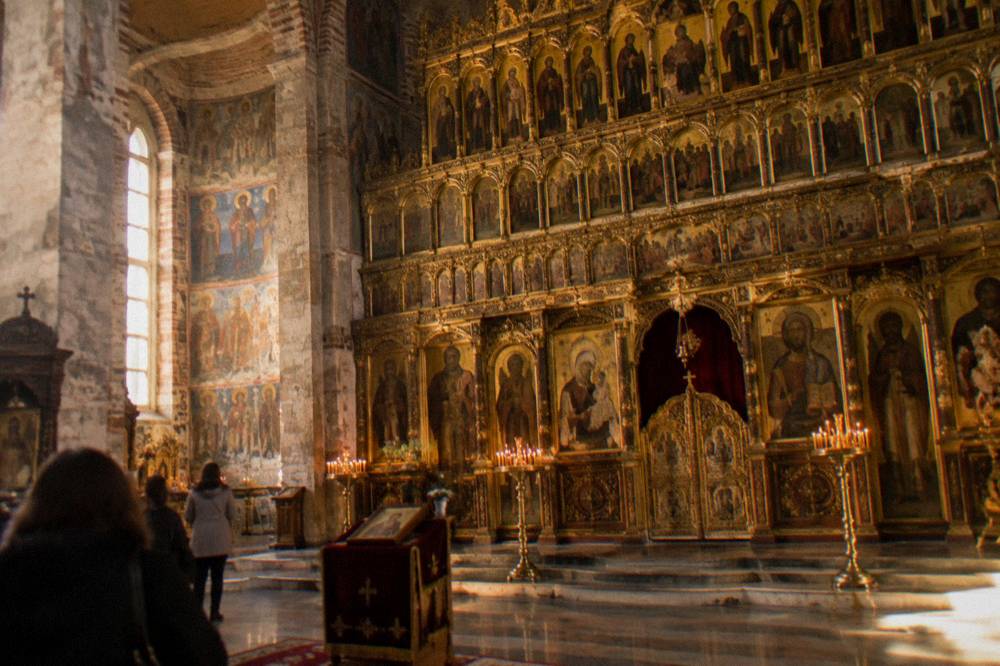
The interior of the Orthodox Cathedral is organised around the elements common to Orthodox church architecture: a painted iconostasis separating the nave from the sanctuary, wall and dome decoration in fresco and mosaic, rows of candles before the icons, and the reserved, gilded atmosphere of an active cathedral. No confirmed inventory of the cathedral's interior, no artist attributions and no dimensions appear in the sources this site uses, so this section describes the tradition the building belongs to rather than inventing specifics.
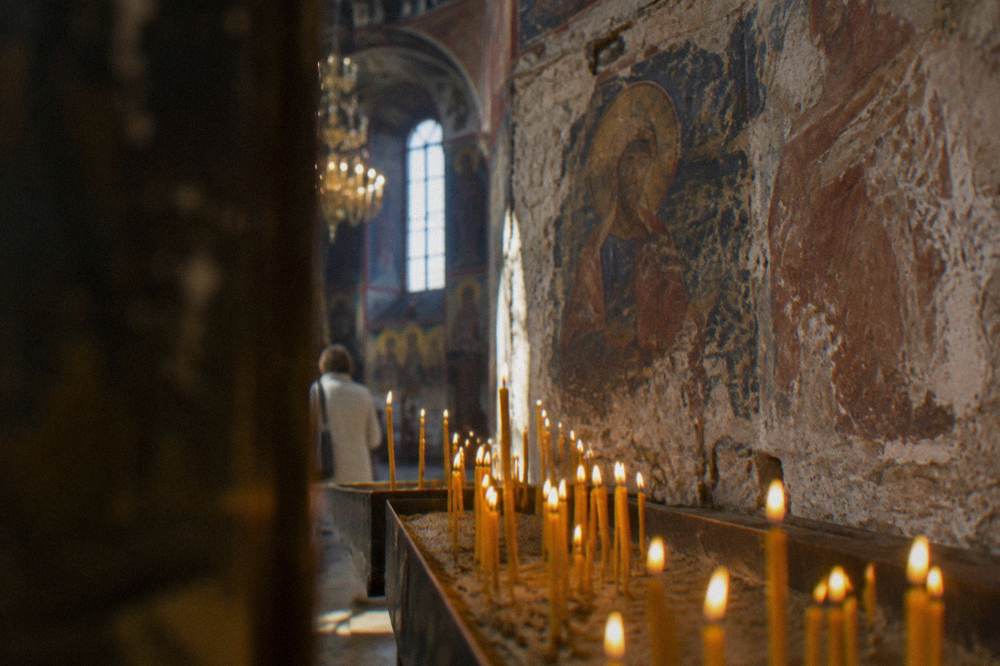
The iconostasis is the natural focal point. In Orthodox churches it is a screen of icons, usually in several tiers, marking the boundary of the sanctuary, and in a cathedral of this standing it is typically the most elaborate piece of furniture in the building, carrying the main icons venerated by worshippers and the royal and deacons' doors used during the liturgy. In front of it, or nearby, stand candle stands: in Romanian practice, worshippers buy and light thin candles for the living and the departed, and the sight of a full stand of small flames is one of the defining images of an Orthodox interior. Visitors do not take part, but watching the rhythm of it explains more about the space than any plaque.
Above and around, the decoration tells its stories in paint and, in some cathedrals, mosaic: Christ Pantocrator in the dome where one is present, scenes from the lives of Christ and the Mother of God on the walls, and prophets and saints in the higher registers. Move slowly, look up, and the building reveals itself as a designed sequence of images rather than a decorated room. Allow a modest visit measured in minutes rather than hours; the cathedral is generous with its atmosphere but compact with its space, and the old town outside holds several museums whose collections reward the rest of the morning.
What Else Is Within Walking Distance Of The Orthodox Cathedral In Sibiu?
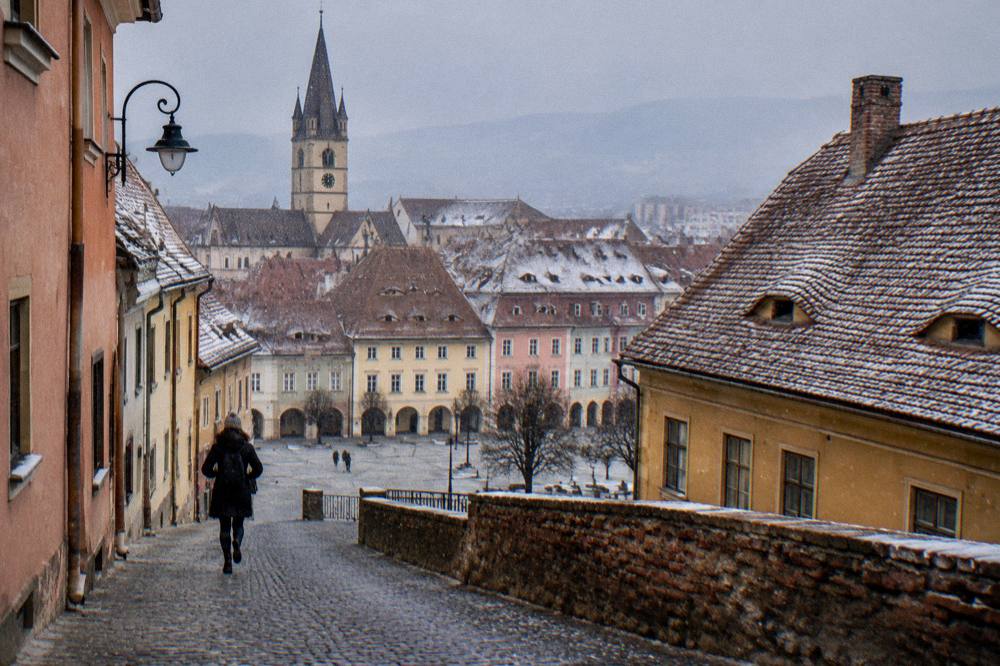
Practically the whole of central Sibiu is within walking distance of the Orthodox Cathedral: Piața Huet and the Evangelical Cathedral are the nearest landmarks, Piața Mare and Piața Mică are a few minutes beyond them, and the museums of the Brukenthal network, the Bridge of Lies, the Stairs Passage and the old city walls all sit inside one compact loop. This density is the single best argument for basing a visit to Sibiu entirely on foot.
Working outward from the cathedral, the nearest cluster is Piața Huet, the old German square around the Evangelical Cathedral, from which the Bridge of Lies, reported as Romania's first iron bridge, built in 1859 to 1860, crosses toward Piața Mică. From there the Stairs Passage descends toward the Lower Town, where the city walls and towers survive in a walkable arc. Piața Mare, the grand square, holds the Brukenthal Palace, and the Brukenthal National Museum spreads its several sites through the surrounding streets, from the History Museum at Casa Altemberger to the Pharmacy Museum on Piața Mică.
| Sight | Position relative to the cathedral | Entry |
|---|---|---|
| Piața Huet and Evangelical Cathedral | nearest landmark, uphill | square free, tower 10 RON |
| Bridge of Lies and Piața Mică | a few minutes on foot | free |
| Piața Mare and Brukenthal Palace | a few minutes on foot | square free, galleries 50 RON |
| Stairs Passage to Lower Town | short walk, descent | free |
| City walls and towers | Lower Town arc | free public access |
Time the loop against the museum calendars rather than the church one. With the Brukenthal sites closed Monday and Tuesday, a Wednesday to Sunday visit can pair a morning in the museums with an afternoon cathedral and squares loop; on a Monday or Tuesday, the outdoor sequence, squares, bridge, walls and the cathedral itself, still works in full, with the Evangelical tower climb as the one fixed open paid stop to check hours for on the tourism site's listing.
When Is The Best Time To Visit The Orthodox Cathedral In Sibiu?
The best time to visit the Orthodox Cathedral in Sibiu is outside the deepest winter cold and the midsummer heat, with May, June, September and October the months tourism sources themselves name for the city, and the hours of any day chosen around services rather than against them. The climate record supports the seasonal half of that answer, and the liturgical calendar supports the daily half.
The city's own official page describes Sibiu's climate as temperate continental, with a mean annual temperature of 8.9 C and mean annual rainfall of 662 mm. The monthly shape, from the ERA5 reanalysis for 1991 to 2020, shows July and August with mean daily highs around 24 C, January with a mean daily low of -5.7 C, snow falling in the modelled normals from November to March, and sunshine running from about 5.6 hours a day in December to about 12.8 in July. The same tourism and climate sources that describe the city name May, June, September and October as the comfortable shoulder months, and nothing in the data contradicts them.
| Month | Mean high C (ERA5) | Mean low C (ERA5) | Sunshine h/day |
|---|---|---|---|
| January | 2.2 | -5.7 | 6.2 |
| April | 14.6 | 4.0 | 10.4 |
| July | 24.2 | 14.6 | 12.8 |
| October | 14.5 | 5.7 | 8.0 |
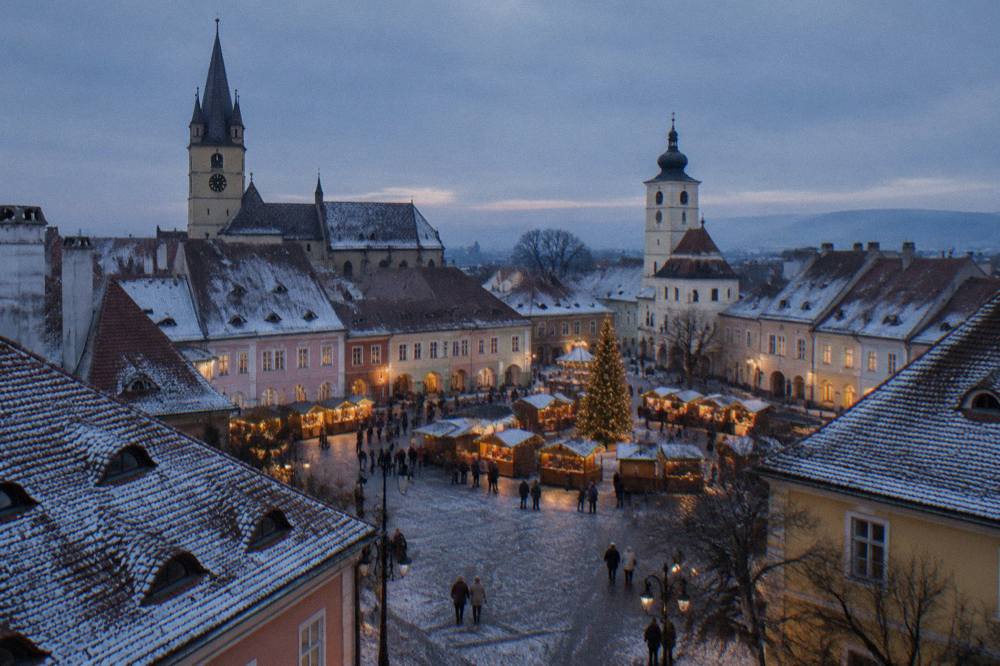
Two seasonal notes sharpen the choice. From 13 November 2026 to 3 January 2027 the Sibiu Christmas Market fills Piața Mare, a few minutes from the cathedral, with free entry and a 600 square metre ice rink, so a late-November or December visit trades mild weather for the market, the festive lighting and, from 28 November 2026, the announced opening of the ski season at Păltiniș in the hills above the city. And the Orthodox calendar itself gives the year its high points: Easter brings the midnight Resurrection service and the processions around it, an extraordinary thing to witness respectfully, and a busy one to plan around. The cathedral's calendar beyond the major feasts is not published in a source this site could verify, so check locally for the services that will shape your dates.
Can You Combine The Orthodox Cathedral With Day Trips From Sibiu?
Yes, and the cathedral pairs naturally with the two great day-trip families of the region: the Saxon fortified churches and villages of the countryside, and the mountain roads and resorts of the Făgăraș range, all of which start and end in a city whose cathedral is a few minutes from your accommodation. The drive times below are computed from routing data over openstreetmap, free-flow conditions, and measured from Piața Mare.
| Day trip from Sibiu | Road distance | Drive time, free flow |
|---|---|---|
| Rășinari, Mărginimea Sibiului | about 13 km | about 18 minutes |
| Cisnădie fortified church | about 10 km | about 14 minutes |
| Sibiel, icon museum village | about 25 km | about 36 minutes |
| Păltiniș mountain resort | about 32 km | about 40 minutes |
| Mediaș old town | about 56 km | about 68 minutes |
| Sighișoara, UNESCO centre | about 96 km | about 102 minutes |
The religious thread runs strongest through the first group. The fortified churches of the Saxon villages, several inscribed on the UNESCO list as the Villages with Fortified Churches in Transylvania, are the countryside counterpart to everything the Orthodox Cathedral represents in the city: a different faith, a different building logic, the same history of communities protecting what was theirs. Biertan, the site's core inscription, reports an adult ticket of 20 RON with seasonal hours, per the tourism page for the church, and is about 1 hour 15 to 1 hour 30 and about 76 km by road. Visitors drawn deeper into the castles of the region will find the day trip to Poenari Fortress and the question whether Corvin Castle is Dracula's castle covered elsewhere on this site.
The mountain thread is seasonal in a way the cathedral is not. The Transfăgărășan road reopened for its 2026 season on 12 June, open daily from 07:00 to 21:00 on the high stretch, and by rule it can be closed on any day from 20 October, with fines of 10,000 to 30,000 lei for driving the closed section, facts the road's reporting carries; the Transalpina reopened 29 May 2026. Check the live road status before promising yourself Bâlea Lake. Păltiniș, about 40 minutes from the centre, opens its ski season on 28 November 2026. A morning in the cathedral and an afternoon in the hills is a real Sibiu day, and the evening panorama tour of Gușterița Hill, linked earlier on this page, is built around exactly that skyline-after-dark idea. For more on the whole region, the Sibiu Travel Guide covers the city and its surroundings in depth.
Common Questions About The Orthodox Cathedral In Sibiu
Is the Orthodox Cathedral in Sibiu free to enter?
Entry is free or carries a nominal charge, and no confirmed ticket price is published in the sources available to this site. Expect free admission and confirm at the door, and keep a small note ready for candles if you light one.
How do I get to the Orthodox Cathedral from Piața Mare?
Walk. The cathedral stands a few minutes from Piața Mare via the streets toward Piața Huet, on a gentle gradient inside the compact historic centre. From the airport, Tursib line 11 runs from the terminal stop toward the centre for a 3.5 lei, 60-minute ticket.
What are the opening hours of the Orthodox Cathedral in Sibiu?
No verifiable published timetable exists. As an active church it keeps daylit hours around services; avoid Sunday morning, when the Divine Liturgy fills the building, and confirm locally for feast days, weddings and any planned closure.
Is there a dress code at the Orthodox Cathedral in Sibiu?
Yes, the standard Orthodox norm: covered shoulders and knees, no hats for men inside, and quiet conduct during services. A scarf or long sleeves is enough to meet it in summer.
Can you take photos inside the Orthodox Cathedral in Sibiu?
No published policy exists in a verifiable source, so look for a sign or ask, and default to no flash and no tripod, especially during services. Exterior photography from the surrounding streets is unrestricted.
Which other churches should I see in Sibiu besides the Orthodox Cathedral?
The Evangelical Cathedral on Piața Huet, whose tower charges 10 RON for an adult and is the city's open viewpoint while the Council Tower is closed, and the Holy Trinity Catholic Church, both within walking distance. Beyond the city, the Saxon fortified churches of the villages are the regional counterpart.
