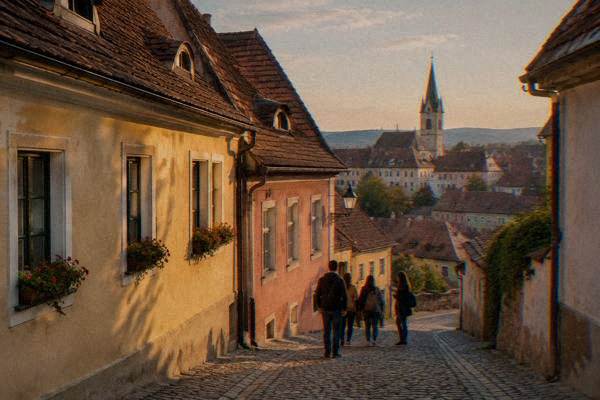
Upper Town: Piața Mare, Huet Square And The Cathedral
The Upper Town is the historic core of Sibiu, in Transylvania, Romania: the plateau where Saxon merchants built Piața Mare, Piața Mică and Piața Huet, and where the city's cathedral, museums and the famous 'eyes of Sibiu' roof windows line the lanes.
Short answer
The Upper Town (Orașul de Sus) is Sibiu's historic high ground, about 431 m above sea level, holding Piața Mare, Piața Mică and Piața Huet, the Evangelical Cathedral, the Brukenthal National Museum and the Bridge of Lies. The squares and lanes are free to wander; the museums and the cathedral tower charge tickets, and the Council Tower is closed for restoration until about January 2028.
The Upper Town of Sibiu, in Transylvania, Romania, is the plateau where the medieval city grew rich. Sitting at about 431 m above sea level, a few metres above the Lower Town that slopes to the Cibin river, it holds the three great squares laid out by the Transylvanian Saxon merchants who settled here from the Moselle area in the 12th century: Piața Mare, Piața Mică and Piața Huet. The Brukenthal National Museum fronts the first, the Bridge of Lies crosses to the second, and the Evangelical Cathedral towers over the third. This page walks the whole plateau, square by square, with the ticket prices the museums themselves publish and the closures that matter in 2026.
What Is The Upper Town In Sibiu?
The Upper Town (Orașul de Sus) is the historic core of Sibiu, the higher of the two halves of the old Saxon city, lying about 0.1 km from Piața Mare and about 431 m above sea level per the city's own figures. It contains Piața Mare, Piața Mică and Piața Huet, the Evangelical Cathedral, the Brukenthal National Museum's palace and the Bridge of Lies, and it sits above the Lower Town, which reaches the Cibin river through the Stairs Passage.
The split is geological as much as historical. The city's official presentation gives the elevation range as 415 m in the Lower Town to 431 m on the Upper Town plateau, and the step between them is exactly where the old fortification line ran. The Upper Town was the merchants' and council's ground; the Lower Town was the craftsmen's. Today the distinction survives in the street pattern: the Upper Town's lanes run level between the squares, while the Stairs Passage (Pasajul Scărilor) drops steeply toward the river quarter.
Sibiu was first documented in 1191 as Cibinium, per the city's own history page, and the Upper Town grew around the successive walls described in the city's UNESCO dossier. The area is compact. Straight-line distances computed for this site put the Lower Town just 0.4 km from Piața Mare, the Terezian quarter 1.2 km, Turnișor 2.7 km and the Dumbrava forest edge 4.6 km, with the train and bus stations 0.8 km each. Everything an visitor needs for a first day sits within a ten-minute walk.
| Area of Sibiu | Straight-line distance from Piața Mare | Character |
|---|---|---|
| Upper Town (Orașul de Sus) | 0.1 km | Squares, cathedral, museums, cafés |
| Lower Town (Orașul de Jos) | 0.4 km | Craftsmen's lanes, city walls, river side |
| Terezian | 1.2 km | Quiet quarter east of the centre |
| Turnișor | 2.7 km | Historic suburb with its own church |
| Dumbrava Sibiului | 4.6 km | Forest park, ASTRA Museum, zoo |
For first-time orientation, the Sibiu map guide and the one day in Sibiu itinerary both start on this plateau; if you have longer, the two days in Sibiu plan adds the Lower Town and Dumbrava.
What Can You See Around Piața Mare In Sibiu's Upper Town?
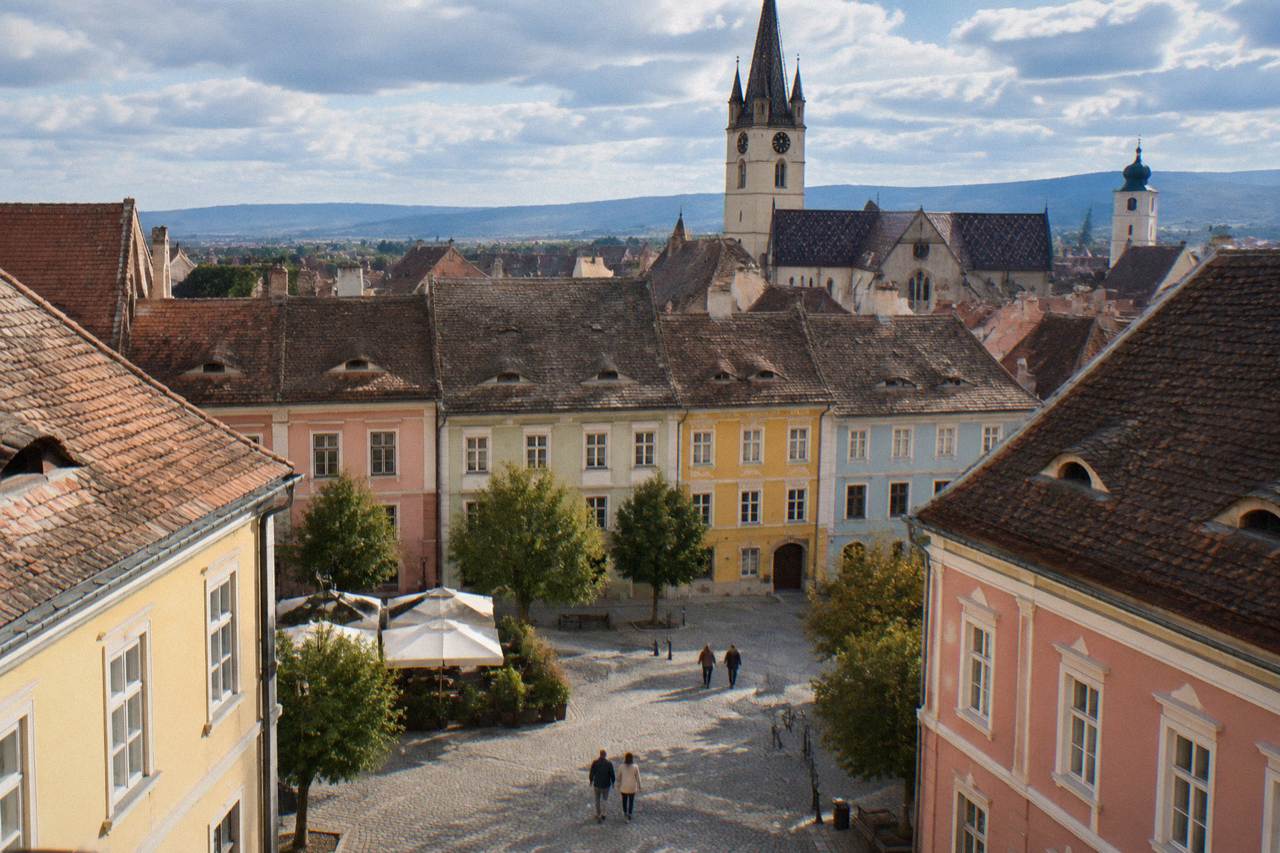
Piața Mare, the Great Square, is the largest open space in the Upper Town and it is free public ground with no ticket and no opening hours, framed by the Brukenthal National Museum's baroque palace, the Jesuit church, the Council Tower (closed for restoration) and the ring of merchant houses with the famous 'eyes of Sibiu' roof windows, and it hosts the Christmas market from 13 November 2026 to 3 January 2027.
The square is the natural first stop off any arrival into the city. The Brukenthal palace occupies the western side; its art galleries cost 50 RON for an adult ticket per the Brukenthal National Museum's own price page, with pensioners paying half and pupils, students and Euro26 holders a quarter. The same price page lists a 48-hour combined ticket covering every open Brukenthal site at 120 RON. The museum's own visiting page gives the palace hours as Wednesday to Sunday 10:00 to 18:00, closed Monday and Tuesday, with the cashier closing at 17:15. Confirm before you go, since the museum has spoken in the local press about a possible price adjustment, though the official page still lists the figures above.
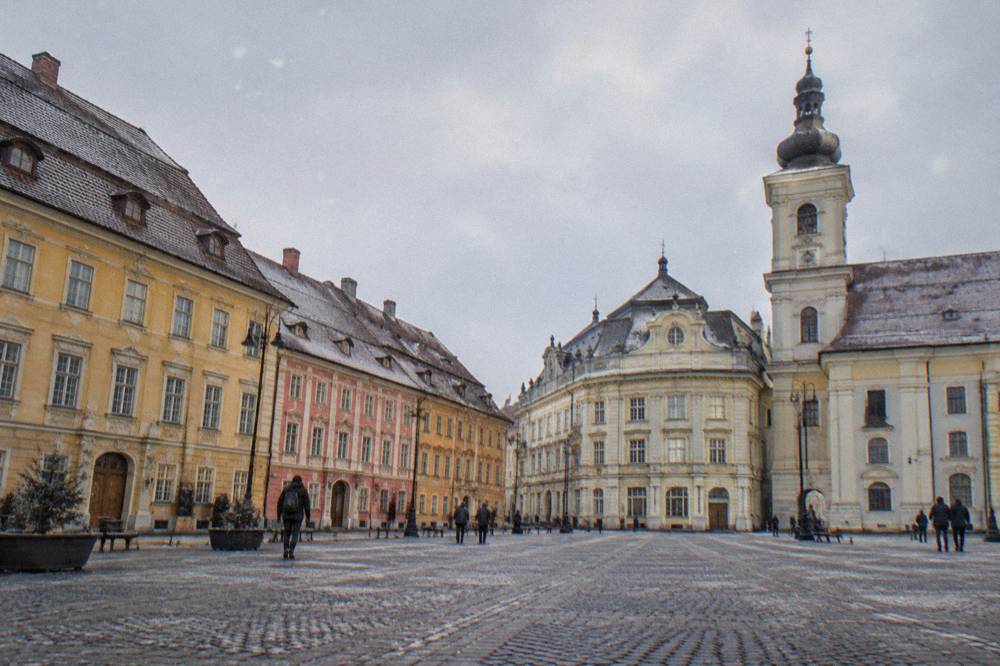
The Council Tower (Turnul Sfatului) stands at the square's south-east corner as a visual anchor, but it cannot be climbed; its closure is covered in its own section below. The rest of the square is open-air sightseeing at no cost: the facades, the roof windows that locals call the eyes of Sibiu, and the seasonal stages of whatever festival is running. The Christmas market's official site confirms the 2026 edition runs 13 November 2026 to 3 January 2027, with free entry, a 600 sqm ice rink and roughly a third of exhibitors new this edition.
The full detail on the square itself is on the Piața Mare guide, and the museum on its flank has its own page on the Brukenthal National Museum.
A guided walk is one way to absorb the square's layers quickly, and the site's featured city tour covers exactly this plateau: the Upper Town landmarks city tour runs as a small-group walk of the squares and their stories, with live pricing and free cancellation on the operator's listing. For readers who prefer to go deeper on the art, the Scholar-Led Baroque Masterclass pairs the church and the Brukenthal collection with an art-historian commentary.
What Awaits On Piața Mică And The Bridge Of Lies In Sibiu?
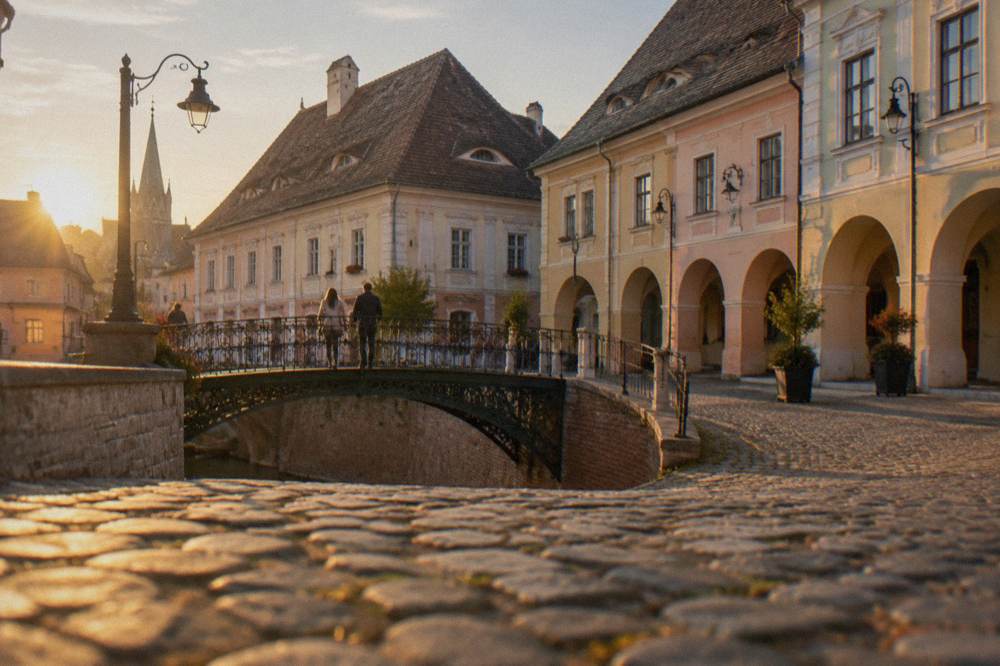
Piața Mică, the Little Square, and the Bridge of Lies (Podul Minciunilor) are free public spaces a few steps downhill from Piața Mare, crossed by one of the pedestrian bridges that link the two squares; the Bridge of Lies is described as the first cast-iron bridge in Romania, reportedly built 1859 to 1860, and the square beneath it holds the Pharmacy History Museum at 16 RON per the Brukenthal price page.
Piața Mică is the narrower, livelier of the two main squares, lined with the arcaded houses of the old guilds and reached from Piața Mare across two iron bridges. The second of them is the Bridge of Lies, whose name comes from the legend that it would collapse under anyone telling a lie, a story the city retells as legend, not history. The date of the bridge's construction is reported in secondary sources as 1859 to 1860, cast at the Friedrichshütte works; treat the year as reported rather than certified. The Bridge of Lies page collects the stories and the viewing angles.
The Pharmacy History Museum, at Piața Mică 26 in the house known as "Sub Ursul Negru", is a Brukenthal branch inside a former apothecary. The Brukenthal price page lists the adult ticket at 16 RON, and the museum's visiting page places it in the Wednesday-to-Sunday group, 09:00 to 17:00, closed Monday and Tuesday. The Pharmacy Museum has its own detailed page alongside the Piața Mică guide.
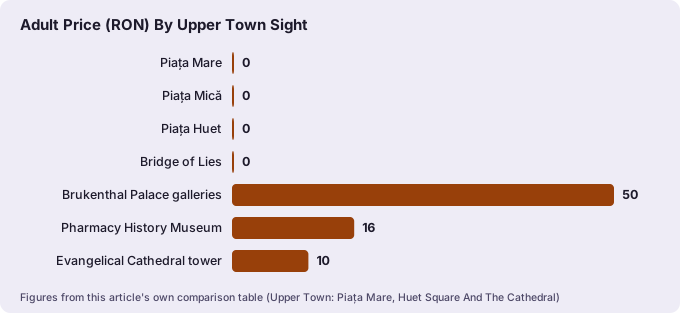
| Upper Town sight | Access | Adult price (RON) | Hours to confirm |
|---|---|---|---|
| Piața Mare | Open public square | Free | Always open |
| Piața Mică | Open public square | Free | Always open |
| Piața Huet | Open public square | Free | Always open |
| Bridge of Lies | Public pedestrian bridge | Free | Always open |
| Brukenthal Palace galleries | Ticket | 50 | Wed-Sun 10:00-18:00 |
| Pharmacy History Museum | Ticket | 16 | Wed-Sun 09:00-17:00 |
| Evangelical Cathedral tower | Ticket | 10 | Mon 12:00-17:00, Tue-Thu 10:00-17:00, Fri-Sat 10:00-20:00, Sun 11:00-17:00 |
| Council Tower | Closed | Closed | Restoration to about January 2028 |
The evening light on Piața Mică is one of the reasons photographers give the Upper Town a second circuit after dark, and the photography spots roundup marks the viewpoint above the square. For a panorama from outside the medieval core, the Gusterita Hill evening tour looks back at the whole plateau from across the valley.
Why Is The Council Tower Closed And Where Can You Climb In Sibiu Instead?
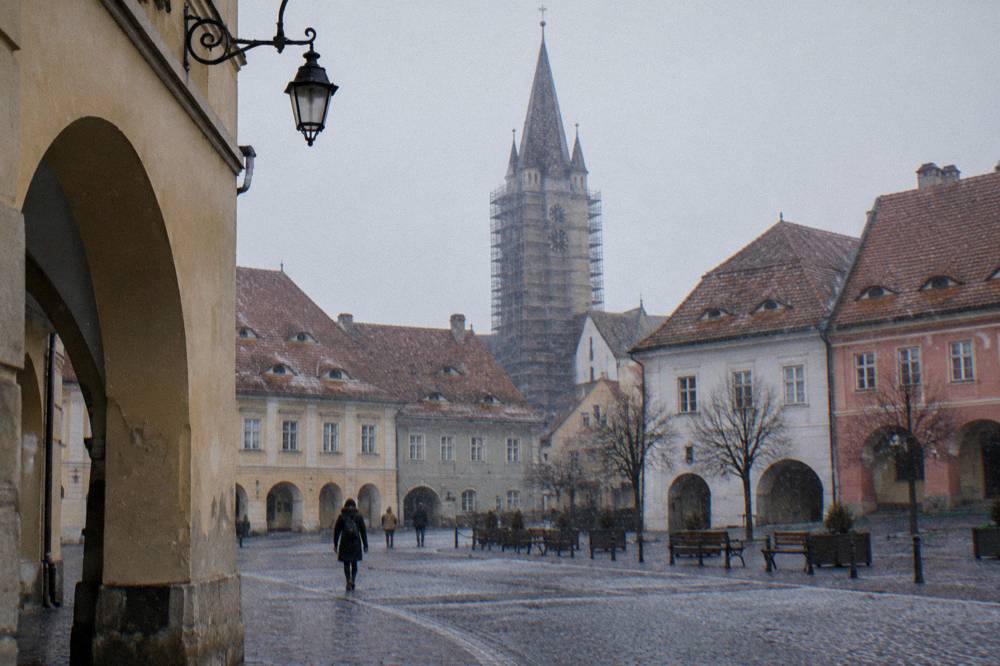
The Council Tower (Turnul Sfatului) has been closed to visitors since 19 January 2026 for a restoration planned at about 24 months, with completion expected about January 2028, per the city hall's own statement of 30 September 2026, which reported the walls cleaned and re-plastered and the copper roof removed; the open viewpoint in the Upper Town is instead the Evangelical Cathedral tower, which charges 10 RON for adults and 5 RON for pupils, students and pensioners.
There is no ticket, no hours and no climb for the Council Tower for the rest of this decade's works. What a visitor can do is see it: the tower still stands between Piața Mare and Piața Mică as the Upper Town's vertical landmark, wrapped in the scaffolding of an active site. The closure is confirmed by Primăria Sibiu's statement carried in the local press on 30 September 2026, and the two-year duration and January 2028 completion are reported by the same outlets, so treat the end date as expected rather than fixed.
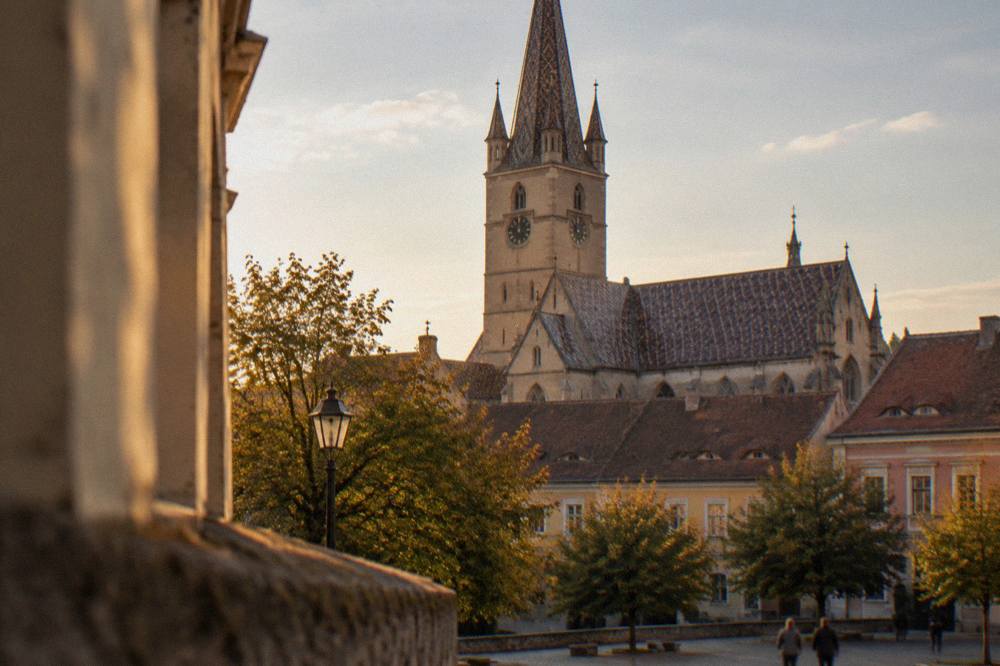
The substitute is better than a consolation. The Evangelical Cathedral tower on Piața Huet is open and priced on the city tourism site's own attraction page: 10 RON adult, 5 RON reduced, Monday 12:00 to 17:00, Tuesday to Thursday 10:00 to 17:00, Friday and Saturday 10:00 to 20:00, Sunday 11:00 to 17:00, with guided visits on request in Romanian, German and English. The tower's viewing level looks over the terracotta of the Upper Town and down to the Lower Town roofs. Hours can shift around services, so a quick check before climbing is wise.
The Council Tower page and the Evangelical Cathedral page carry the full detail, including what the restoration reports have said month by month.
What Sits On Piața Huet In Sibiu's Upper Town?
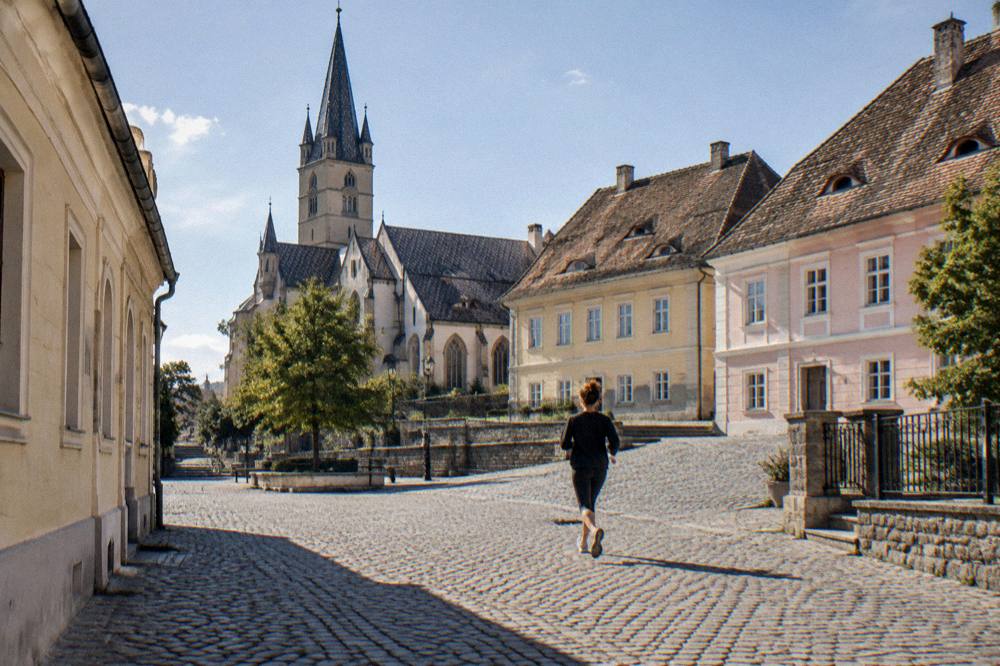
Piața Huet is the smallest and quietest of the Upper Town's three squares, free public ground around the Evangelical Cathedral and the former parochial school, with the cathedral tower as its paid attraction at 10 RON and the square's Georgian and gothic frontages marking the original centre of the Saxon settlement, a short walk uphill from both Piața Mare and Piața Mică.
Huet is where the medieval city began its ecclesiastical life, and the square keeps a churchyard stillness the two larger squares never have. The Evangelical Cathedral dominates it; the building is a gothic hall church, and the site's cathedral page sets out what is known about it, which excludes the organ-pipe counts and construction dates that circulate elsewhere. Around the square stand the old school buildings tied to the city's own chronology, which credits Sibiu with a school from 1380 and a pharmacy from 1494 on current Romanian territory, claims the city makes in its own name.
The square also connects the plateau to its defences: from Huet, the lane runs to the remains of the city walls and the towers of the Potters, Arquebusiers and Stairs, all free public structures described on the city walls and towers page. The Piața Huet guide covers the square itself, and the walking tour overview explains how guides thread all three squares into one loop.
| Brukenthal site in or near the Upper Town | Adult (RON) | Reduced (RON) | Days closed |
|---|---|---|---|
| Palace, European and National Art galleries | 50 | 25 pensioners, 12.50 pupils/students | Monday, Tuesday |
| History Museum, Casa Altemberger | 36 | 18 / 9 | Monday, Tuesday |
| Pharmacy History Museum | 16 | 8 / 4 | Monday, Tuesday |
| Contemporary Art Museum | 15 | 7.50 / 3.75 | Saturday, Sunday |
| Hunting Museum | Closed indefinitely | Closed | Closed |
| 48-hour combined ticket | 120 | 60 / 30 | Site-dependent |
One quirk worth planning around: while the main Brukenthal museums rest on Monday and Tuesday, the Contemporary Art Museum on Str. Tribunei runs the opposite pattern, open Monday to Friday 09:00 to 17:00 and closed at weekends, per the museum's own visiting page. That makes a Monday in the Upper Town not a write-off, just a different itinerary. Prices are the official list; confirm current figures on the museum's own site before booking.
How Do The Upper Town And Lower Town Connect In Sibiu?
The Upper Town and the Lower Town of Sibiu connect through the Stairs Passage (Pasajul Scărilor), a free public stairway of covered steps that drops from the wall line near the Council Tower down into the craftsmen's lanes, together with gentler sloping streets further east; both halves sit within about 0.4 km of Piața Mare, so the crossing takes minutes on foot.
The Stairs Passage is the picturesque route: a cobbled, vaulted stair that once carried the wall's defenders and now carries visitors between the two levels. It is open-air public space, no ticket and no hours, and it deposits you in the Lower Town's lane network close to the surviving towers. The gentler alternatives suit anyone with a pram or a suitcase: the sloping streets around the Orthodox Cathedral, whose own page describes the city's principal Orthodox church, wind down without steps.
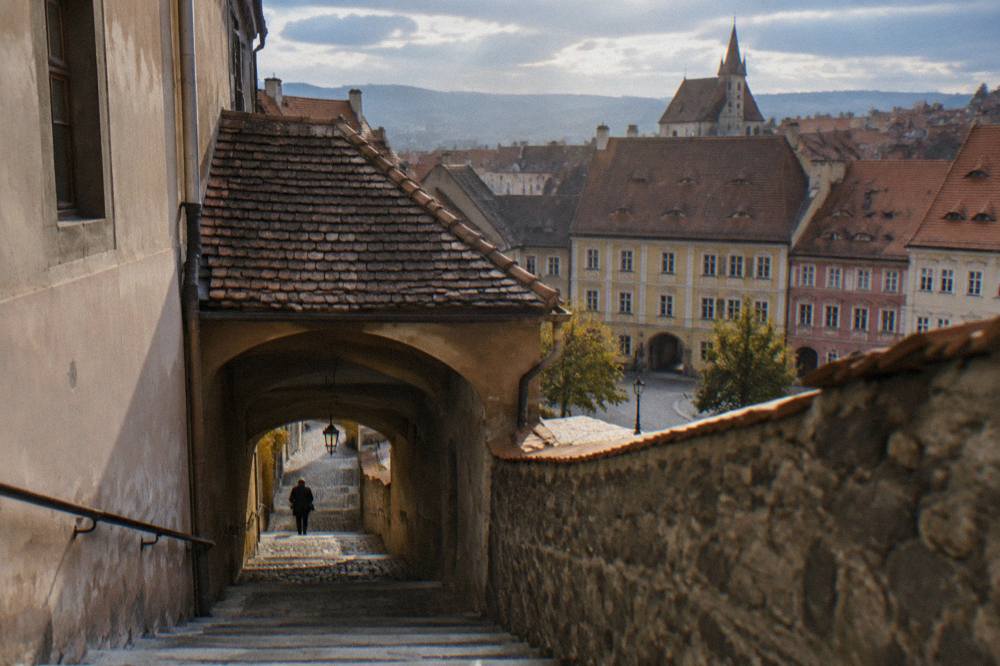
The Lower Town rewards the descent. Its page, Lower Town Sibiu, maps the streets inside the line of the old wall and the surviving towers, and the Stairs Passage page covers the stairway itself. For a half-day that pairs both halves of the city with the story of the walls, the site's broader overview on the things to do in Sibiu page sets the Upper Town in the context of everything else the city offers, from Dumbrava to the day trips into the Făgăraș mountains.
If rain interrupts the walk, the Upper Town is the right half to be caught in: the Brukenthal palace galleries alone can fill hours, and the Sibiu in the rain guide lists the covered options in order of distance from Piața Mare.
Which Upper Town Sights In Sibiu Are Free And Which Need A Ticket?
The free sights of Sibiu's Upper Town are its open-air public spaces, Piața Mare, Piața Mică, Piața Huet, the Bridge of Lies and the city walls with their towers, all accessible at any hour with no ticket; the paid sights are the Brukenthal palace galleries at 50 RON, the cathedral tower at 10 RON and the Pharmacy History Museum at 16 RON, all per the museums' own published prices, while the Council Tower and the Hunting Museum are closed.
This split is the budget story of the plateau. A visitor can spend a full day on the squares, the bridge, the Stairs Passage and the walls without paying a leu, then choose one or two paid interiors. The order most itineraries suggest: the cathedral tower first, for the view and the modest price, then the Brukenthal palace if the day is long, and the Pharmacy Museum as a short, atmospheric add-on from Piața Mică.
| Free sight | What you get | Best light |
|---|---|---|
| Piața Mare | Baroque facades, roof windows, market stages | Morning |
| Bridge of Lies | Iron bridge, legend, square views | Late afternoon |
| Piața Huet | Cathedral exterior, school buildings | Midday |
| Stairs Passage | Covered stairway, wall towers | Any |
| City walls and towers | Potters, Arquebusiers, Stairs towers | Afternoon |
Two money notes from the city's own announcements. Since 1 January 2026, hotels collect a 2 percent tax on the accommodation value, so a hotel bill in the Upper Town carries that line. And Romania's currency is the leu (RON), trading at about 5.3 lei to the euro, a rate to check on the day. The Sibiu cost guide and budget guide break down a full stay, and money and tipping in Sibiu covers the practicalities.
Where Should You Stay Near The Upper Town In Sibiu?
The best base for exploring the Upper Town is the old town itself, within the about 0.4 km radius of Piața Mare that contains both the Upper and Lower Town, with the Terezian quarter 1.2 km and Turnișor 2.7 km as quieter alternatives, per the distances computed for this site; no neighbourhood has a published safety score or price level, so the choice comes down to location, and hotels in the city add the 2 percent accommodation tax introduced on 1 January 2026.
Inside the old town, everything on this page is a walk of minutes. The trade-off is standard for a medieval core: cobbles, car restrictions and a premium for a window over a square. Terezian and Turnișor, the historic suburbs east and west, put you a short bus or taxi ride out, on the Tursib network whose 60-minute ticket costs 3.5 lei, per the operator's tariff page. The where to stay in Sibiu guide compares the quarters in full, and the site's hotel cards carry current rates.
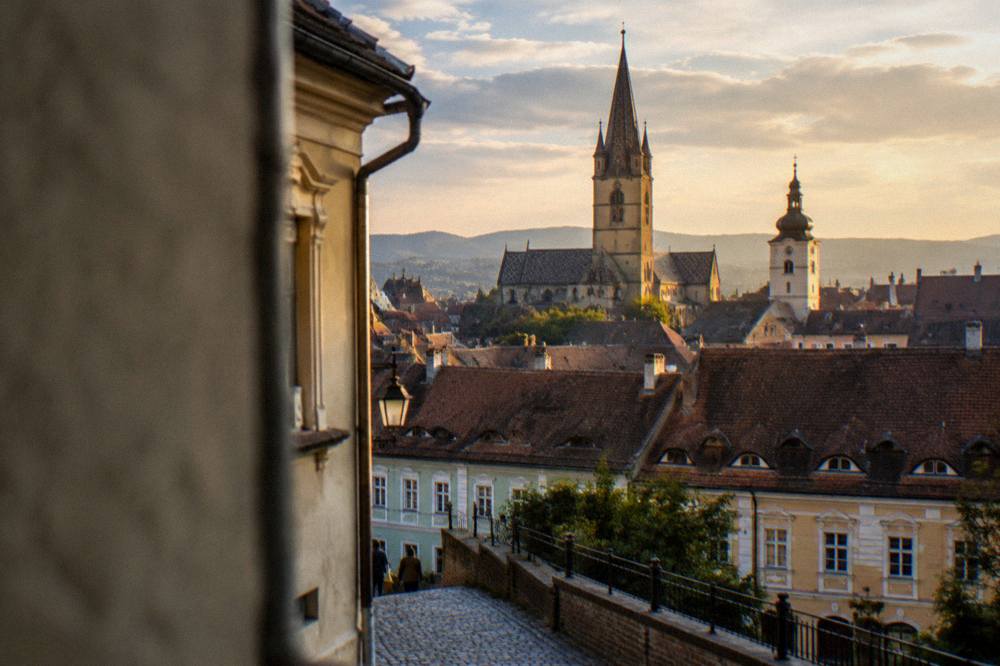
For the evening, the Upper Town's cafés and terraces ring the three squares, and the dishes to look for, the Sibiu salad, ciorbă, mici, sarmale and papanași for dessert, are covered on the what to eat in Sibiu page. Romanian wine bars pour Transylvanian whites; the Romanian wine near Sibiu guide explains the local labels, and a tasting with a sommelier is bookable as the Romanian wine tasting experience in the city centre.
A final orientation thought. The Upper Town is the part of Sibiu that rewards slowing down: the squares change character by the hour, the museums carry more than a flying visit allows, and the plateau's edges, at the Stairs Passage and the wall towers, frame the views down to the river and out toward the Carpathian foothills. Give it a full day at minimum, and let the Sibiu Travel Guide map the rest of the city and the day trips around it.
Common Questions About The Sibiu Upper Town
Is the Sibiu Upper Town free to visit?
Yes. Piața Mare, Piața Mică, Piața Huet, the Bridge of Lies, the Stairs Passage and the city walls are open-air public spaces with no ticket and no hours. Only the interiors charge: the Brukenthal palace galleries, the cathedral tower and the Pharmacy History Museum.
Can you climb the Council Tower in Sibiu?
No. The Council Tower has been closed to visitors since 19 January 2026 for a restoration planned at about 24 months, with completion expected about January 2028. The open viewpoint is the Evangelical Cathedral tower, 10 RON for adults.
What are the eyes of Sibiu?
The 'eyes of Sibiu' are the small attic roof windows on the Upper Town's old houses, which from street level look like eyelids watching passers-by. They are a free architectural feature visible on facades all over the plateau.
Which Brukenthal museums are open on Monday in Sibiu?
The main Brukenthal museums, including the palace galleries, are closed Monday and Tuesday. The exception is the Contemporary Art Museum, which per the museum's own visiting page is open Monday to Friday and closed at weekends. The Hunting Museum is closed indefinitely.
How long do you need for the Sibiu Upper Town?
A full day covers the three squares, the cathedral tower and one museum comfortably; two days let you add the Brukenthal palace galleries properly and drop into the Lower Town. The site's one-day and two-day itineraries show both paces.