Pharmacy Museum: The Black Eagle Apothecary
The Pharmacy History Museum in Sibiu, in the house called Sub Ursul Negru on Piața Mică, is the Brukenthal National Museum's branch for the history of pharmacy: one room of a Sibiu trade the city's own chronology traces back to 1494.
Short answer
The Pharmacy History Museum in Sibiu costs 16 RON for an adult ticket, per the Brukenthal National Museum's own price page. It stands on Piața Mică at number 26, is open Wednesday to Sunday 09:00 to 17:00 and is closed on Mondays and Tuesdays like the other main Brukenthal museums.
The Pharmacy History Museum in Sibiu occupies the house at Piața Mică 26, a building known by the name Sub Ursul Negru, or Under the Black Eagle, and it is one of the separate sites that together make up the Brukenthal National Museum. The museum's own price page lists an adult ticket at 16 RON, with reductions for pensioners and students, and the visiting page gives hours of Wednesday to Sunday 09:00 to 17:00 with the cashier closing about 16:15 to 16:30. The subject is narrow and the building is small, but the story it tells is unusually deep: the city's own chronology places a pharmacy in Sibiu in 1494, described as the first on current Romanian territory, and the trade the museum documents ran continuously through the Saxon centuries that shaped the old town around it.
This page sets out what the Pharmacy History Museum holds, what a ticket costs, how the hours work, how the branch fits into the wider Brukenthal family, and how to fold a visit into a walk around Piața Mică and the squares beyond it. Where a figure comes from the museum's own pages it is stated as such, and where something is not published, the advice is simply to confirm it locally before setting out. Nothing here is a personal account: this desk reports what the primary sources say.
What Is The Pharmacy Museum In Sibiu?
The Pharmacy History Museum in Sibiu is a branch of the Brukenthal National Museum dedicated to the history of pharmacy, housed in the historic building at Piața Mică 26 known as Sub Ursul Negru, the Black Eagle house, inside the pedestrian core of the old town. Per the Brukenthal price page, entry costs 16 RON for an adult, and per the visiting page the museum opens Wednesday to Sunday from 09:00 to 17:00 and is closed on Mondays and Tuesdays. The collection covers the tools, vessels, laboratory equipment and stock of the apothecary trade as it was practised in Sibiu across the Saxon centuries.
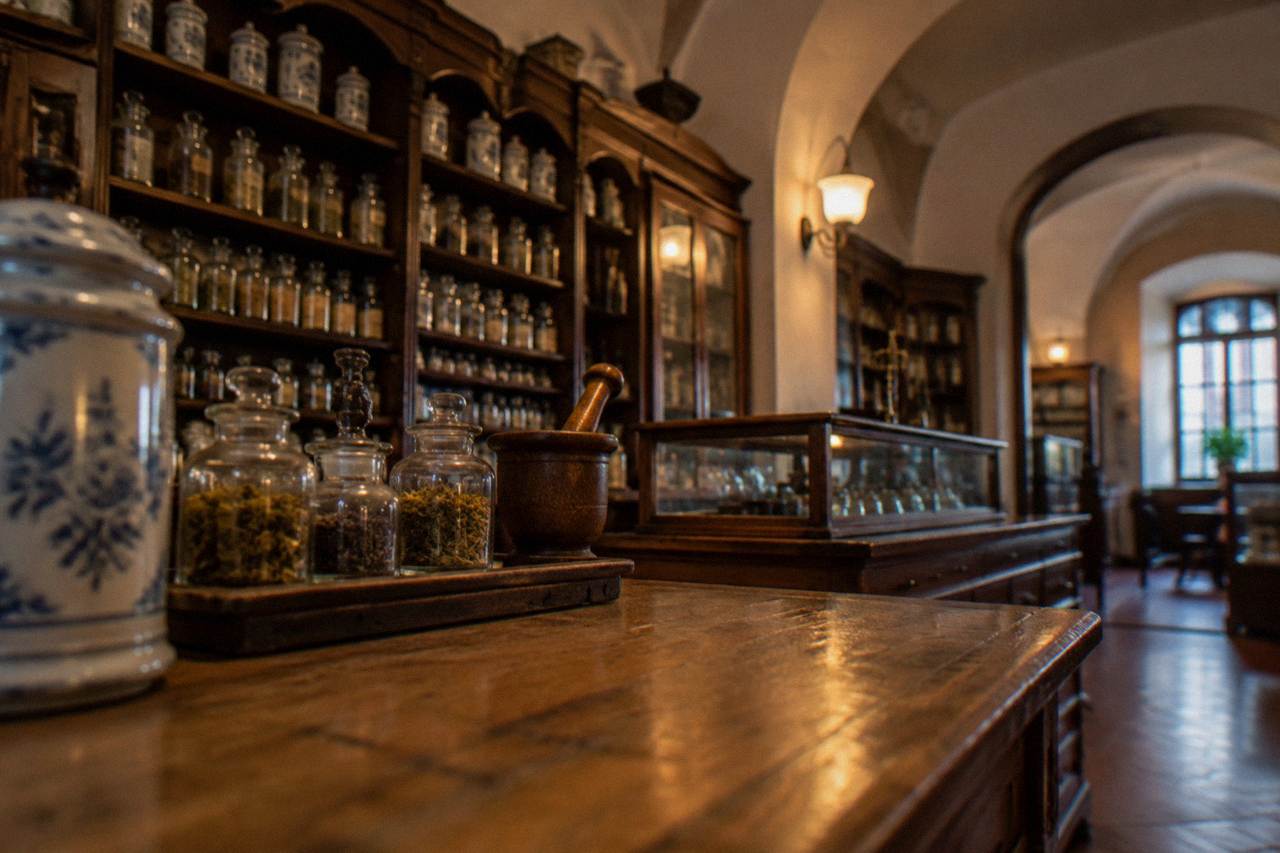
The building itself is part of the exhibit. Sub Ursul Negru is a merchant house on the north side of Piața Mică, and the museum layout preserves the look of a working apothecary: wooden counters, glass and ceramic jars on shelving, and laboratory apparatus of the kind a Sibiu pharmacist would have used. The Brukenthal National Museum presents the branch as its history-of-pharmacy section, the same way Casa Altemberger holds the history collection and the Natural History Museum holds the natural sciences. It is not a large site, and it is best treated as one stop among several in the old town rather than a destination in its own right.
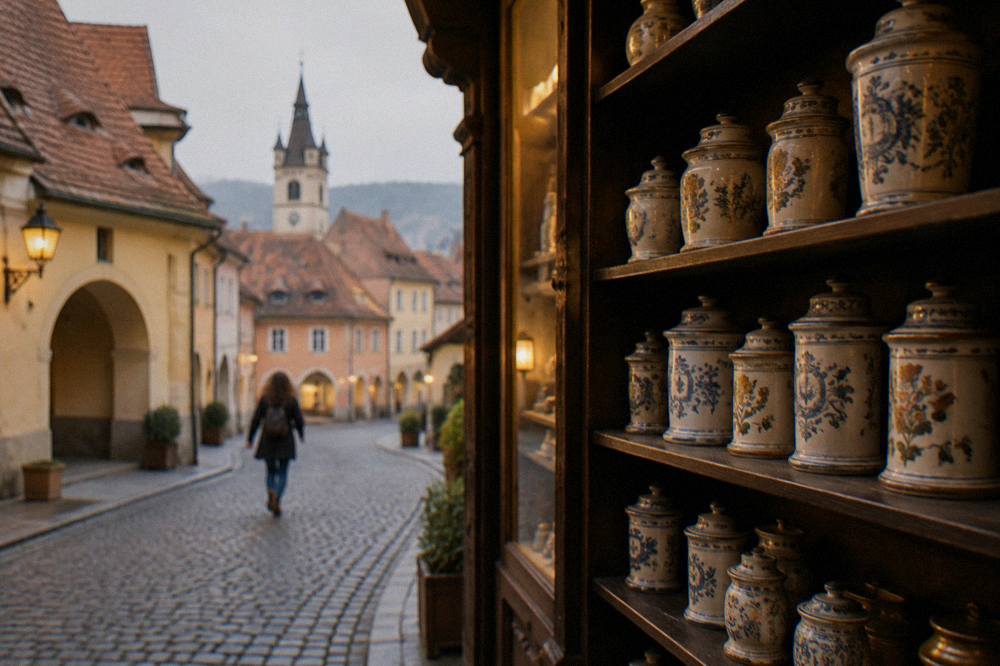
The deeper story the museum leans on is the one the city tells about itself. The city's own chronology, published on the municipal site, lists a hospital in 1292, a school in 1380 and a pharmacy in 1494, each described as the first of its kind on current Romanian territory. Those claims belong to the city's account of its own past rather than to an independent scholarly finding, so they are repeated here as the city's chronology, not as settled fact. Either way, a museum of pharmacy sits naturally in a town that has made this claim a piece of its identity for a long time.
How Much Does The Pharmacy Museum In Sibiu Cost?
An adult ticket to the Pharmacy History Museum in Sibiu costs 16 RON, according to the Brukenthal National Museum's own price page, with pensioners paying half and pupils and students paying a quarter of the full price, and children under six admitted free. The same page lists a combined 48-hour ticket covering every open Brukenthal site at 120 RON for an adult, 60 RON for pensioners and 30 RON for pupils and students. A guided tour in Romanian or English is listed at 200 RON per 60 minutes as a group fee. Confirm current prices on the museum's own site before booking, since press reports in May 2026 discussed a possible rise, though the official page still shows these figures.
The reductions are where the value sits for some travellers. The Brukenthal scheme is uniform across the branches: pensioners pay half price everywhere, and pupils, students and Euro26 cardholders pay a quarter. At the Pharmacy History Museum that makes a pensioner ticket 8 RON and a pupil or student ticket 4 RON, applying the page's stated fractions to the branch's own adult price. Children under six are admitted free, per the same listing.
| Ticket | Adult | Pensioner (half) | Pupil or student (quarter) |
|---|---|---|---|
| Pharmacy History Museum | 16 RON | 8 RON | 4 RON |
| Brukenthal Palace (European and National Art) | 50 RON | 25 RON | 12.50 RON |
| History Museum, Casa Altemberger | 36 RON | 18 RON | 9 RON |
| Natural History Museum | 20 RON | 10 RON | 5 RON |
| Contemporary Art Museum | 15 RON | 7.50 RON | 3.75 RON |
| Combined 48-hour Brukenthal ticket | 120 RON | 60 RON | 30 RON |
For a traveller planning to see two or more Brukenthal sites, the arithmetic of the 48-hour ticket is worth doing in advance. At the official prices above, the combined ticket costs the same as the Palace plus roughly two mid-priced branches, so it pays off once a plan reaches three or four sites. For a visitor whose appetite is the Pharmacy Museum alone plus a walk through the squares, a single 16 RON ticket is the honest answer.
| Combination | Separate tickets | 48-hour ticket | Cheaper option |
|---|---|---|---|
| Pharmacy Museum only | 16 RON | 120 RON | Single ticket |
| Pharmacy plus History Museum | 52 RON | 120 RON | Single tickets |
| Pharmacy, History and Natural History | three single tickets | 120 RON | compare on the day |
| Four or five branches | adds up above the 48-hour price | 120 RON | 48-hour ticket |
The ticket price is the same whether it is bought at the door or, where offered, in another channel; the Brukenthal pages note that online purchase exists for some sites, but no separate online pricing was found, so treat the door price as the price. Payment and card-acceptance details could not be confirmed: take cash in lei as a fallback and confirm locally.
When Is The Pharmacy Museum In Sibiu Open?
The Pharmacy History Museum in Sibiu is open Wednesday to Sunday from 09:00 to 17:00, with the cashier closing between about 16:15 and 16:30, and it is closed all day on Mondays and Tuesdays, per the Brukenthal National Museum's visiting page. The Monday and Tuesday closure applies to the main Brukenthal museums alike, including the Palace, the History Museum and the Natural History Museum, so a start-of-week visit to Sibiu needs a plan built around the open-air sights instead. The museum may also receive groups by appointment, so a quiet visit is more likely early or late in the opening window.
The closure pattern matters more in Sibiu than in cities with later museum hours. A traveller arriving on a Monday or Tuesday still has the whole of the free old town: Piața Mare, Piața Mică, the Bridge of Lies, the Stairs Passage and the city walls are all public space with no tickets or hours at all. What shuts on those two days is the paid indoor culture, and the Pharmacy Museum shuts with it.
| Brukenthal site | Days open | Hours | Cashier closes |
|---|---|---|---|
| Pharmacy History Museum | Wednesday to Sunday | 09:00 to 17:00 | about 16:15 to 16:30 |
| Brukenthal Palace | Wednesday to Sunday | 10:00 to 18:00 | 17:15 |
| History Museum, Casa Altemberger | Wednesday to Sunday | 09:00 to 17:00 | about 16:15 to 16:30 |
| Natural History Museum | Wednesday to Sunday | 09:00 to 17:00 | about 16:15 to 16:30 |
| Contemporary Art Museum | Monday to Friday | 09:00 to 17:00 | not published |
| Hunting Museum (Muzeul Cinegetic August von Spiess) | closed indefinitely | not applicable | not applicable |
Two traps hide in that table. The first is the Hunting Museum, listed on the Brukenthal price page but closed for an indefinite period, receiving only pre-booked groups of ten or more; it should not appear in any day plan. The second is the Contemporary Art Museum, which now runs the opposite week to its siblings: open Monday to Friday and closed on Saturday and Sunday. A Sunday visitor who assumed all Brukenthal sites share one schedule would find the Pharmacy Museum open and the Contemporary Art Museum shut.
What Will You See Inside The Pharmacy Museum In Sibiu?
Inside the Pharmacy History Museum in Sibiu the visitor sees a preserved apothecary interior and the material culture of the pharmacist's trade: wooden counters and shelving, glass and ceramic drug jars, mortars and pestles, laboratory glassware, scales and the instruments of historical preparation and sale of medicines. The Brukenthal National Museum presents the branch as its section for the history of pharmacy collections, in the building at Piața Mică 26, and the display follows the trade rather than any single famous pharmacist or firm.
The permanent feel of the place is the shop itself. A historical pharmacy in a Saxon town was a public-facing room, with the pharmacist's counter facing the door and the stock arranged behind and above it in labelled vessels, and the museum keeps that arrangement legible. The vessels are the vocabulary of the old trade: Albungen for milky preparations, Electuaria for confections, Olea for oils, each Latin label a class of medicine rather than a brand. Reading the shelf is the closest thing the museum has to a guided narrative, and it needs no Romanian.
Beyond the shopfront room, the museum holds the back-of-house side of the trade: the laboratory apparatus with which raw materials were turned into preparations, and the measuring equipment with which they were dispensed. Scales, weights, brass and glass measures and distillation equipment carry the story from retail into production. The character of the collection is what is documented, not an inventory.
Where Is The Pharmacy Museum And How Do You Reach It?
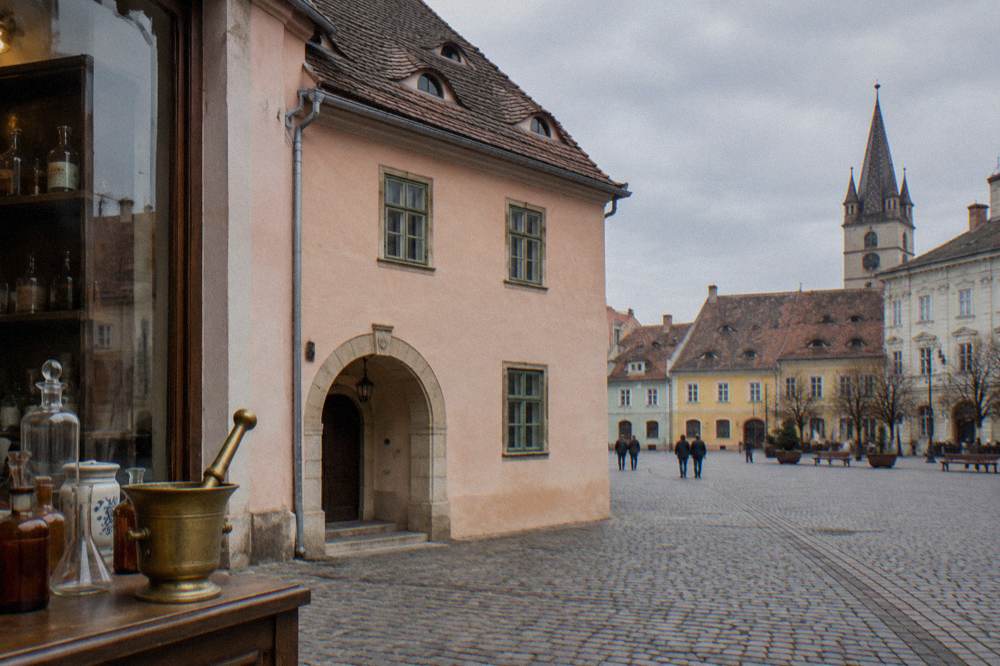
The Pharmacy History Museum stands at Piața Mică 26, on the Small Square of Sibiu's old town, a short walk from Piața Mare and within the pedestrian core of the Upper Town; the building is known as Sub Ursul Negru, the Black Eagle house, and its entrance is reached from the square itself. Sibiu's train station and its bus station are both about 0.8 km from Piața Mare, and the airport bus, Tursib line 11 from the terminal in front of arrivals, uses a 3.5 lei ticket valid for 60 minutes bought contactless on the bus.
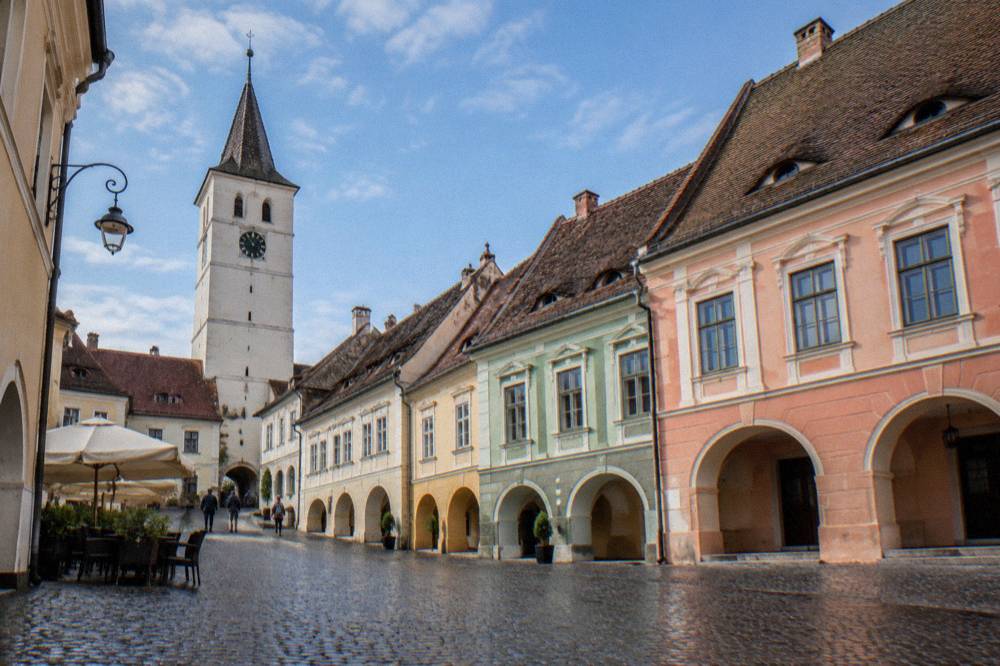
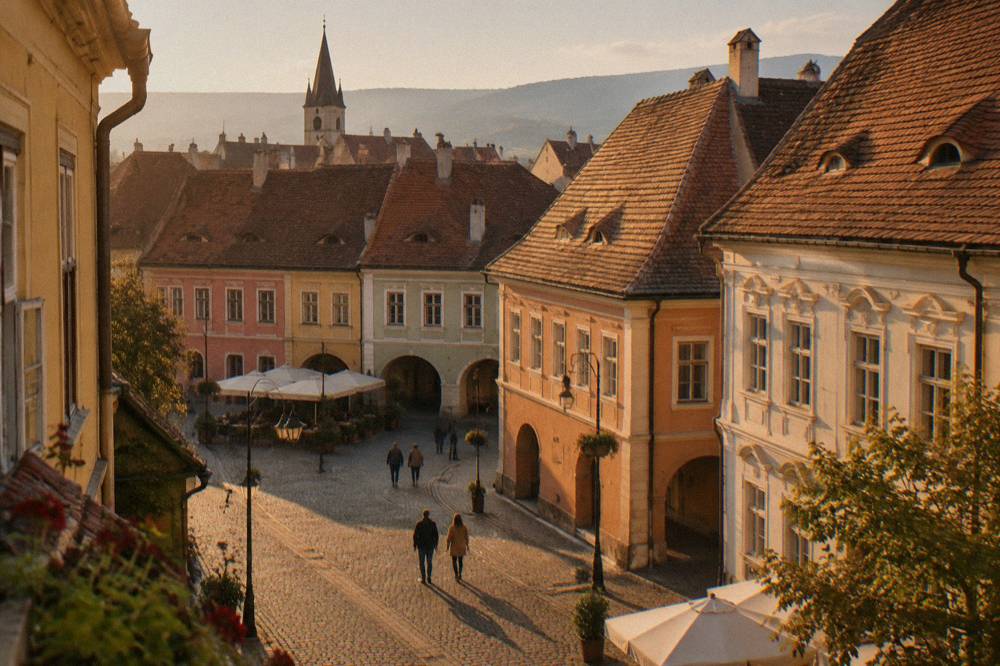
Piața Mică is the second of the two great squares, the narrower one lying just below and east of Piața Mare, connected to it by short lanes, and ringed by the coloured burgher houses the old town is known for. The museum building is one of those houses. From the square, the rest of the old town unfolds on foot: the Bridge of Lies crosses at the top of the square toward Piața Huet and the Evangelical Cathedral, and the Stairs Passage drops from the square's east side into the Lower Town.
| Sight near Piața Mică | Relationship to the museum | Ticket |
|---|---|---|
| Piața Mare | adjacent, uphill via short lanes | free public space |
| Bridge of Lies | at the top of the square | free public space |
| Piața Huet and the Evangelical Cathedral | a few minutes on foot | tower 10 RON adult |
| Stairs Passage and the Lower Town | descend from the square's east side | free public space |
| History Museum, Casa Altemberger | a walk across the old town | 36 RON adult |
| Council Tower | between the two main squares | closed for restoration |
One 2026 change needs repeating because so many older guides get it wrong. The Council Tower, which stands between Piața Mare and Piața Mică and would once have been the obvious viewpoint after a museum visit, has been closed to visitors since 19 January 2026 for a restoration planned at about 24 months, with completion reported at about January 2028. The open viewpoint is the Evangelical Cathedral tower, at 10 RON for an adult with hours published by the city's tourism site. Plan the panorama there, not at the tower.
How Does The Pharmacy Museum Fit Into The Brukenthal National Museum?
The Pharmacy History Museum is one of the separate sites of the Brukenthal National Museum in Sibiu, each with its own ticket: the Palace at 50 RON, the History Museum at 36 RON, the Natural History Museum at 20 RON, the Pharmacy History Museum at 16 RON and the Contemporary Art Museum at 15 RON, with a combined 48-hour ticket at 120 RON, per the museum's price page. The Pharmacy Museum is not included in the Palace ticket, and the Palace ticket does not cover it.
The Brukenthal institution is old and scattered. The museum's collections were assembled by Samuel von Brukenthal, governor of Transylvania, and the museum is reported to have opened to the public in 1817, per the museum's own historical pages. Over the two centuries since, the institution grew into a family of sites across the city rather than a single building, and the visitor who says "the Brukenthal" must decide which Brukenthal. The Brukenthal National Museum page on this site unpacks the whole family in detail.
| Brukenthal site | Subject | Street presence |
|---|---|---|
| Brukenthal Palace | European art and Romanian national art galleries | Piața Mare 4-5 |
| History Museum | Transylvanian history in Casa Altemberger | Casa Altemberger, old town |
| Natural History Museum | natural sciences | Sibiu, separate building |
| Pharmacy History Museum | history of pharmacy | Piața Mică 26 |
| Contemporary Art Museum | contemporary art | Strada Tribunei 6 |
| Hunting Museum | closed indefinitely, pre-booked groups only | not applicable |
The Pharmacy Museum's nearest siblings in spirit are the smaller specialist branches: the History Museum in Casa Altemberger for the city's past, the Natural History Museum for the sciences, the Pharmacy Museum for medicine and trade. A themed day of Brukenthal's smaller sites is a real itinerary: the three smaller branches each sit well below the 48-hour ticket on their own, but adding the Palace at 50 RON tips the balance to the combined ticket for a keen visitor. The reported Dürer-inspired temporary exhibition at the Palace, running to 31 December 2026, is one more reason the full ticket earns its price for a keen visitor.
How Long Does A Visit To The Pharmacy Museum Take?
A visit to the Pharmacy History Museum in Sibiu is a short one: the branch occupies a single historic building on Piața Mică, and a careful look at the apothecary interior and the instruments on display fits comfortably inside an hour, with the museum itself open for a window of 09:00 to 17:00 on its open days. The realistic plan is to pair it with the squares around it, treating the museum as one anchor on a walking route rather than the day's main event.
The old town rewards exactly that structure. Piața Mică and Piața Mare together, the Bridge of Lies, Piața Huet with the cathedral, and the drop down the Stairs Passage into the Lower Town form a loop that can absorb a half day without any paid entry at all, and the Pharmacy Museum slots into it as the indoor pause. Visitors who want the full historical picture can add Casa Altemberger or the Palace; visitors who want the view can add the cathedral tower. The Sibiu in one day itinerary on this site sequences the same logic at whole-city scale.
For travellers who would rather have a guide than a map, a self-guided walk with audio commentary and a quiz covers the essential landmarks of the old town, and this desk's Sibiu walking tour round-up compares the bookable options, including a self-guided audio walk whose route through the old town passes the squares the museum sits between. The listing carries the current price and availability.
Is The Pharmacy Museum Worth Visiting With Kids?
The Pharmacy History Museum suits curious older children and teenagers better than small ones: the display is a dense room of glass, brass and labelled vessels with little interactive material documented, the adult ticket is 16 RON with pupils paying a quarter of that, and children under six enter free, per the Brukenthal price page. There is no published family programme or activity sheet for the branch, so treat it as a look-and-talk museum rather than a hands-on one.
The honest framing for families is the contrast. Sibiu has genuinely child-friendly outdoor options, from the squares and the walls to the Sibiu Zoo out toward Dumbrava, and the Sibiu with kids guide builds on those. The Pharmacy Museum belongs to the calmer end of the spectrum: a short visit, a fascinating room, and a conversation about what medicine looked like before pills came in foil strips. For a family splitting up, its Piața Mică address is convenient: one parent and the keenest child can do the museum while the rest of the party takes the squares, the Bridge of Lies and an ice cream five minutes away.
What Else Should You See Near The Pharmacy Museum In Sibiu?
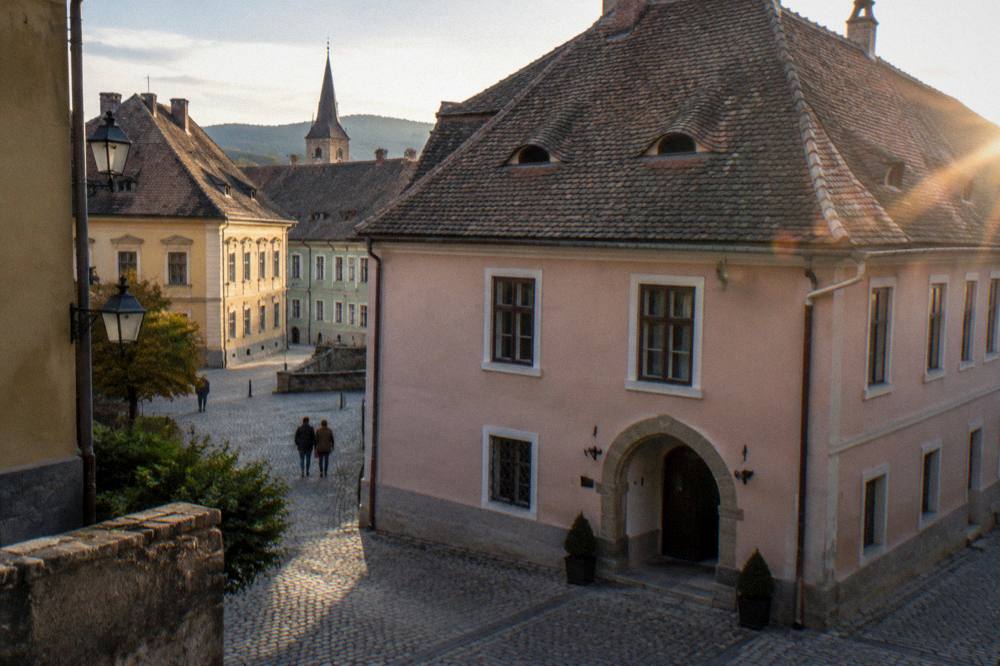
Within a short walk of the Pharmacy History Museum in Sibiu the visitor reaches the Bridge of Lies at the top of Piața Mică, the Evangelical Cathedral and Piața Huet, the Stairs Passage down into the Lower Town, the city walls with their towers, and the Brukenthal Palace on Piața Mare, all free public space except the cathedral tower at 10 RON and the Palace galleries at 50 RON. The museum's position on the Small Square puts the whole core of the old town within a few minutes on foot.
The order that works is the geographic one. Start on Piața Mică, do the museum first while legs are fresh, then climb to the Bridge of Lies and cross into Piața Huet for the cathedral and its tower view. Return through the lanes to Piața Mare for the Palace frontage and the Council Tower site, noting again that the tower itself is closed for restoration until about January 2028. Finish with the Stairs Passage and the walls, or leave the descent for another day. The Sibiu itinerary page stretches this skeleton across two and three days.
For a different register entirely, the city's folk-culture counterpart is the ASTRA Museum, the open-air museum in Dumbrava that has functioned since 1963, with an adult ticket at 50 RON per its own tickets page and an autumn schedule running 21 September to 26 October 2026 with last entry about 16:00. A morning of apothecary jars and an afternoon of village houses is a genuinely Sibiu pairing: the indoor trade and the outdoor world that trade served.
| Stop on a walk from the Pharmacy Museum | Direction | Cost |
|---|---|---|
| Bridge of Lies | top of Piața Mică | free |
| Piața Huet and the Evangelical Cathedral | north of the square | tower 10 RON adult, 5 RON reduced |
| Stairs Passage to the Lower Town | east side of the square | free |
| Piața Mare and the Brukenthal Palace frontage | uphill, west | square free, galleries 50 RON |
| City walls and towers | below the Upper Town | free public access |
What Should You Know Before You Go To The Pharmacy Museum?
Before visiting the Pharmacy History Museum in Sibiu, know three things: the branch is closed on Mondays and Tuesdays like the other main Brukenthal museums, the adult ticket is 16 RON with reductions at half and a quarter, and the visit is short enough to plan as part of a walking day around Piața Mică and Piața Mare, per the Brukenthal National Museum's own price and visiting pages. Confirm hours and prices on the museum's own site before travelling, since press discussion of a price rise circulated in May 2026 while the official figures stood unchanged.
A few practical notes round out the picture. Romania's currency is the leu, at about 5.3 lei to the euro, and Sibiu's museums price in lei; card acceptance inside the small branches is uncertain, so carry cash as a fallback. Romania is a full Schengen member and the emergency number is 112. Since 1 January 2026 hotels in Sibiu add a 2 percent tax on the accommodation value, a city levy that appears on the hotel bill rather than at any museum desk. And clocks go back on Sunday 25 October 2026, which matters for anyone planning an autumn visit around the shorter afternoons.
For travellers who want a themed day beyond the city, the same Saxon world the museum documents survives in the villages around Sibiu. A guided tour through the heart of the Mărginimea Sibiului, the shepherd-village region south and west of the city, is one bookable option, and wine from the same hills can be tasted in town on a sommelier-led tasting; both appear among the picks below, and this desk's things to do in Sibiu round-up places them in the wider menu. The Sibiu Travel Guide homepage holds the full frame.
Common Questions About The Pharmacy Museum In Sibiu
How much is the Pharmacy Museum in Sibiu?
An adult ticket costs 16 RON, per the Brukenthal National Museum's own price page. Pensioners pay half and pupils and students pay a quarter of the full price. A combined 48-hour ticket covering every open Brukenthal site costs 120 RON for an adult. Confirm the current price on the museum's own site before booking.
Is the Pharmacy Museum in Sibiu open on Monday?
No. The Pharmacy History Museum is closed on Mondays and Tuesdays, open Wednesday to Sunday from 09:00 to 17:00, with the cashier closing between about 16:15 and 16:30. The same Monday and Tuesday closure applies to the Palace, the History Museum and the Natural History Museum. The Contemporary Art Museum runs the opposite week, open Monday to Friday only.
Where is the Pharmacy Museum in Sibiu?
It stands at Piața Mică 26, on the Small Square of the old town, in the historic house known as Sub Ursul Negru, the Black Eagle house. The square lies just below and east of Piața Mare, inside the pedestrian core of the Upper Town, a few minutes on foot from the Bridge of Lies and the Stairs Passage.
Is the Pharmacy Museum part of the Brukenthal National Museum?
Yes. It is one of the Brukenthal National Museum's separate sites, each with its own ticket: the Palace at 50 RON, the History Museum at 36 RON, the Natural History Museum at 20 RON, the Pharmacy History Museum at 16 RON and the Contemporary Art Museum at 15 RON, with a 120 RON combined 48-hour ticket. One branch ticket does not cover the others.
How long does a visit to the Pharmacy Museum take?
The branch occupies a single historic building and a careful visit fits comfortably inside an hour. The realistic plan is to pair it with a walking loop of Piața Mică, the Bridge of Lies, Piața Huet and Piața Mare, treating the museum as one anchor stop on a half-day walk rather than a standalone outing.
Is the Pharmacy Museum in Sibiu worth it?
For anyone with an interest in medical history, Saxon trade or the small specialist museums of old European towns, yes: the preserved apothecary interior and the labelled vessel and instrument collections are a documented, distinctive slice of the city's past, and the 16 RON ticket is one of the cheapest Brukenthal entries. For a traveller with one day and no particular interest in the subject, the free squares and the cathedral tower come first.
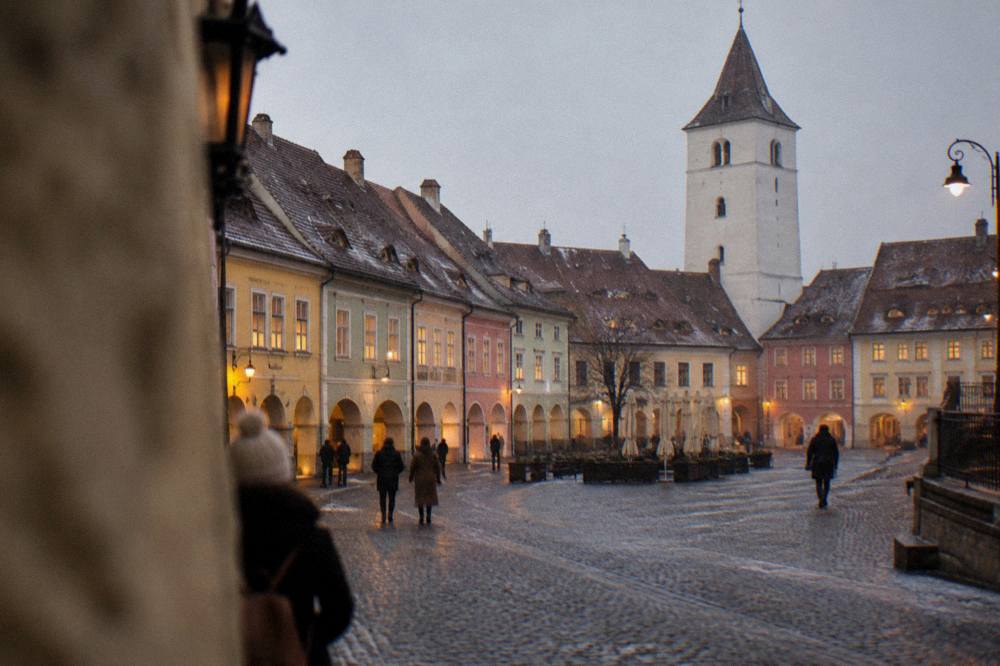
The Pharmacy History Museum will not fill a day, and it is not meant to. What it offers is a focused, inexpensive hour inside one of the old town's historic houses, a trade story the city has told about itself since the chronology placed a pharmacy here in 1494, and a front-row seat on Piața Mică from which the rest of Sibiu's core unfolds on foot. Buy the ticket on an open weekday, read the Latin labels on the shelves, and step back out into the square.
