Sibiu Zoo In Dumbrava Forest
The Sibiu Zoo sits inside the Dumbrava forest on the southern edge of Sibiu, a short bus or taxi ride from Piața Mare and a natural pairing with the ASTRA open-air museum on the same forest edge.
Short answer
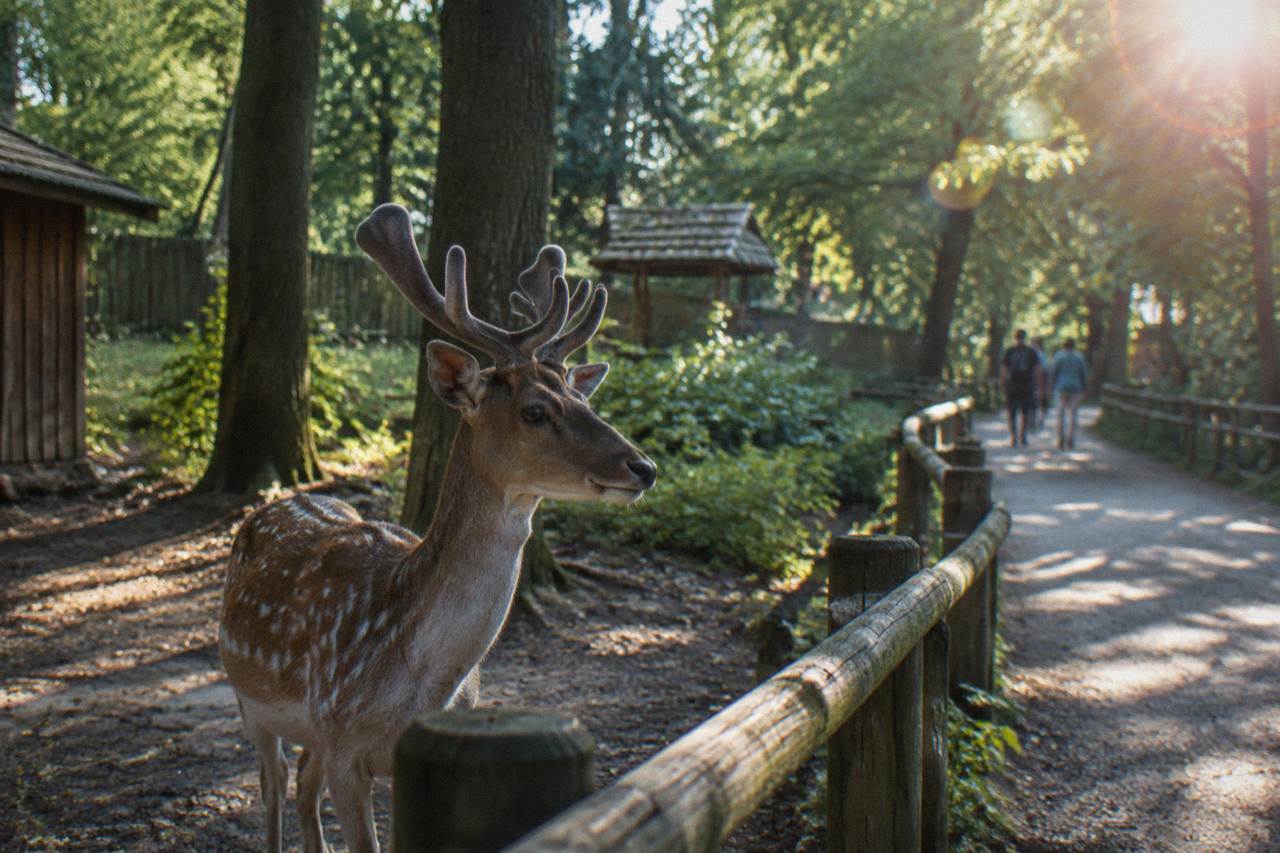
The Sibiu Zoo is a city zoo inside the free public Dumbrava forest park, about 5 km south of the old town. Reach it by Tursib bus along Calea Dumbrăvii, pair it with the ASTRA Museum in the same forest, and confirm the zoo's current price and opening hours on the zoo's own channels before you go.
Sibiu, in Transylvania, central Romania, is usually described through its medieval squares and its museums, but the city has a green southern edge too. Beyond the Lower Town and the Cibin river, the Dumbrava forest stretches away from the streets, and inside it sit two of the city's family attractions: the ASTRA Museum of traditional folk civilization and the Sibiu Zoo. The zoo is the smaller and simpler of the two, a city zoo in a woodland setting rather than a headline sight, and that is exactly why it works well as a half-day outing for travellers with children or for anyone who wants a break from museum corridors. This page from the Sibiu Travel Guide sets out what is known about the zoo from the sources available, what is not, and how to plan a visit around it.
Where Is The Sibiu Zoo And What Kind Of Zoo Is It?
The Sibiu Zoo is a municipal zoo inside the Dumbrava forest on Sibiu's southern edge, reached along Calea Dumbrăvii, roughly 5 km from Piața Mare in the old town. It shares its woodland setting with the ASTRA open-air museum, which stands on the same forest edge along Calea Rășinari, and together the two form the city's main green-attraction cluster away from the medieval core.
Dumbrava itself is a free public park, open woodland that the city treats as an ordinary recreation space rather than a ticketed attraction. The forest lies south of the centre, beyond the Cibin, in the area the site's map calls Dumbrava Sibiului, which sits about 4.6 km from Piața Mare as a straight-line distance. The zoo sits within this belt of trees on Calea Dumbrăvii, the road that runs out of the city toward the forest, while the ASTRA Museum occupies a separate site on Calea Rășinari, the continuation toward the village of Rășinari in the Dumbrava area.
What kind of zoo it is matters for expectations. This is not a large regional wildlife park of the kind some capitals run; it is a city zoo, modest in scale, set in mature forest, and oriented toward local families and casual visitors. No list of its animal collection appears in the sources used on this site, so this page names no species and claims no exhibit details. The zoo's own communication channels and the city's tourism site are the right places to check what is currently housed there, and the practical sections below stick to access, timing and combinations, which the sources do support.
How Do You Get To The Sibiu Zoo From The Sibiu Old Town?
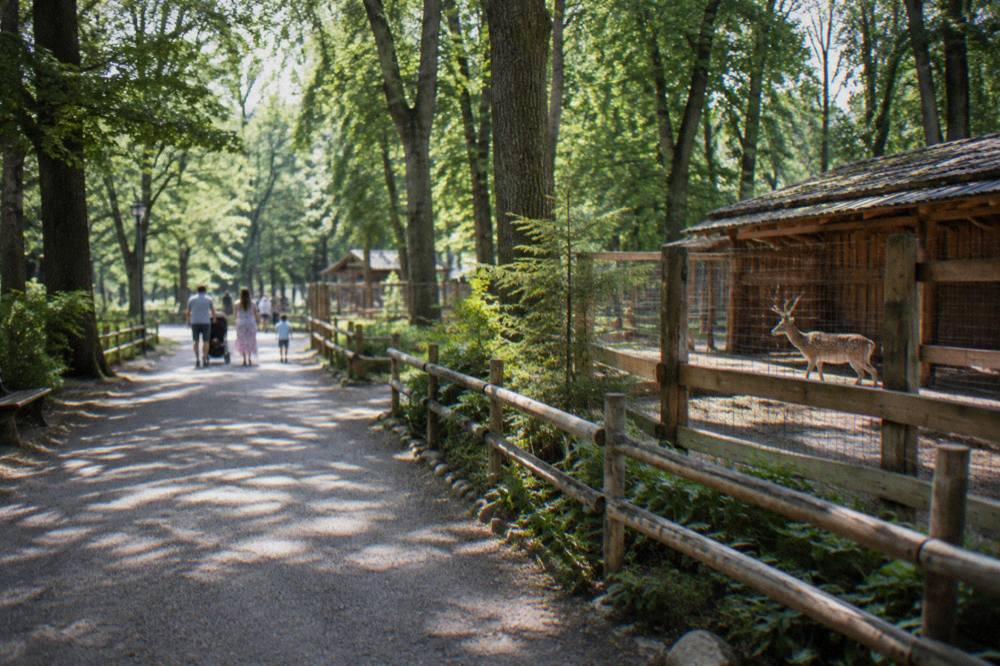
The Sibiu Zoo is about 5 km south of Piața Mare along Calea Dumbrăvii, and the practical ways to reach it are the city bus, a taxi or a ride-hailing car, or a drive of roughly 10 to 15 minutes from the centre. The straight-line distance from the old town to the Dumbrava area is about 4.6 km, so this is a short vehicle trip, not a walk, for anyone starting at the squares.
The Tursib network is the city's public bus system, and its ticket prices are as follows: a 60-minute internal ticket costs 3.5 lei, a 75-minute ticket with one transition costs 5 lei, and a 90-minute ticket with two transitions costs 7 lei, per the Tursib tariff page. Tickets can be bought contactless on the bus. Lines serving the hospital and the southern corridors toward Calea Dumbrăvii and Calea Rășinari are the ones that reach the forest edge; check the Tursib site or app for the current line numbers and stops before travelling, because line numbering changes more often than fares do. Bolt and Uber both operate in Sibiu, and metered taxis are available, though this site carries no fare figure for the centre-to-forest run, so ask the driver or the app for the price.
For orientation, the distances below are computed figures for this site's map, and they show how the zoo's forest location sits relative to the places a visitor already knows.
| From Piața Mare to | Straight-line or road distance | Character of the trip |
|---|---|---|
| Orașul de Sus (Upper Town) | 0.1 km | On foot, immediately |
| Orașul de Jos (Lower Town) | 0.4 km | On foot, downhill |
| Terezian | 1.2 km | Walkable or one bus stop |
| Turnișor | 2.7 km | Bus or short drive |
| Dumbrava Sibiului (forest area) | 4.6 km | Bus, taxi or drive |
| ASTRA Museum (Calea Rășinari) | about 5.5 km | Bus, taxi or drive |
Cyclists should know that the flat run out of the Lower Town toward the forest is one of the city's natural riding directions, and several bike-based outings on this site's roster use it, though this page prints no route times for it. Drivers will find the zoo along Calea Dumbrăvii, the same corridor that serves the whole forest fringe; parking arrangements at the zoo itself are unclear, so plan for street or museum-area parking and confirm locally. The train and bus stations are both only 0.8 km from Piața Mare, so a visitor arriving by train walks into the centre first and then heads south from there.
What Does A Visit To The Sibiu Zoo Cost And When Is It Open?
The zoo's entry price and daily hours are published on the zoo's own channels, so check those before you travel out to the forest, since figures quoted elsewhere online go unconfirmed on any official page. The setting is the draw: Dumbrava forest is a free public park around it, and the neighbouring ASTRA Museum charges 50 RON for an adult ticket, 20 RON for pensioners, with group rates at 40 and 15 RON respectively.
That asymmetry is worth stating plainly rather than papering over. The same discipline applies to hours: no current schedule appears on an official page, and city zoos across the region commonly shift between longer summer and shorter winter openings, so a February visit and a July visit may face very different gates. The practical move is to treat the zoo as a confirm-first attraction: one check of the city's tourism site or the zoo's own page settles price, hours and any seasonal closure in a minute.
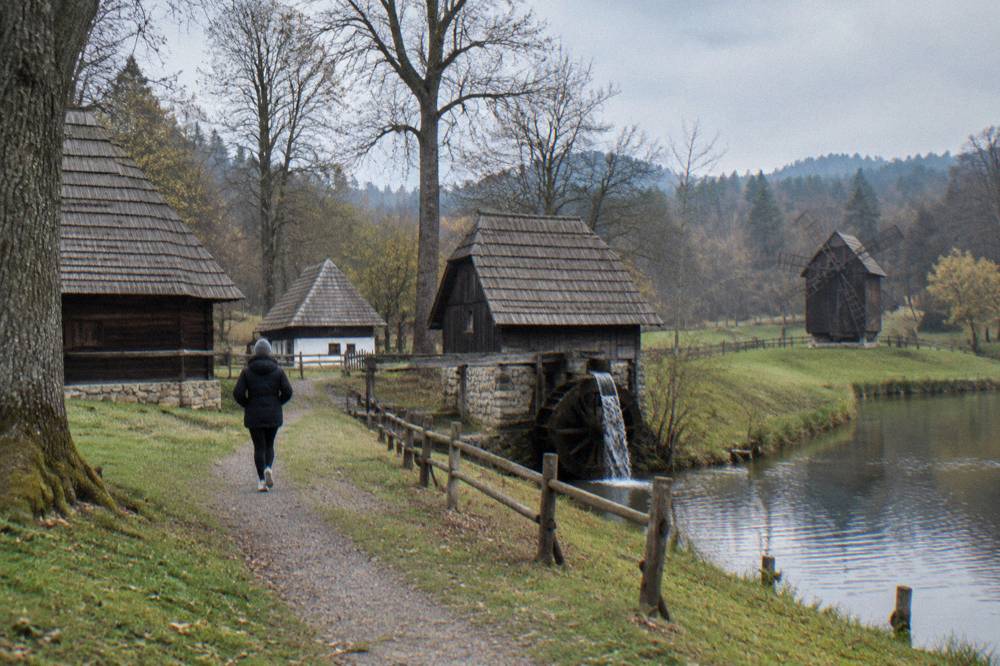
The pattern of a Dumbrava outing is otherwise inexpensive. The forest paths cost nothing, the bus fare is 3.5 lei for an hour's travel, and the ASTRA Museum next door has its prices in the table below, quoted from the museum's own ticket page. Note the schedule trap too: the ASTRA autumn schedule ran 21 September to 26 October 2026 with last entry about 16:00, and the winter schedule had not been announced, so check the museum's own site for winter hours before promising yourself a November afternoon among the windmills.
| Ticket at the ASTRA Museum (Dumbrava forest) | Price |
|---|---|
| Adult | 50 RON |
| Adult in a group of 20 or more | 40 RON |
| Pensioner | 20 RON |
| Pensioner in a group | 15 RON |
Can You Combine The Sibiu Zoo With The ASTRA Museum In One Day?
Yes, and it is the natural plan: the Sibiu Zoo and the ASTRA Museum sit on opposite edges of the same Dumbrava forest, a few minutes apart by bus or car, so a morning at the open-air museum followed by an afternoon at the zoo is a standard family day. Allow the museum the larger share of the time, since it spans a lake and over forest paths with more than a hundred buildings to walk between.
The ASTRA Museum is the anchor of any Dumbrava day. It has operated in the forest since 1963, per the city's tourism site, continuing the traditions of the ASTRA association founded in 1905, and it gathers farmsteads, mills and craft workshops from across Romania into one walkable landscape. Its hours pattern is Wednesday to Sunday in the main season, and its autumn 2026 schedule ended 26 October with a last entry around 16:00, which tells you the practical thing: in the shorter months the museum wants visitors early. The zoo, by contrast, is a compact circuit, and even at an unhurried family pace it does not need the half-day the museum does.
A sample structure for the day:
| Time | Activity | Cost basis |
|---|---|---|
| Morning | ASTRA Museum, forest paths and mills | 50 RON adult, 20 RON pensioner |
| Midday | Return toward Calea Dumbrăvii, picnic or snack in the free forest park | Free |
| Afternoon | Sibiu Zoo along Calea Dumbrăvii | Confirm price and hours on the zoo's own site |
| Late afternoon | Bus or taxi back to Piața Mare | 3.5 lei bus ticket per 60 minutes |
The combination also solves the food question sensibly. No restaurant or cafe names appear anywhere on this site, because none was found in a trusted source, and the forest is the better picnic ground anyway. Bring water and snacks from the centre, or return to the old town for dinner, where the dishes worth seeking out are the classic Transylvanian ones: ciorbă, mici, sarmale, papanași for dessert, and the local Sibiu salad. A glass of Romanian wine goes with them well, and a Check availability link to a guided tasting is one way to learn what is in the glass before ordering blind.
When Is The Best Time Of Year To Visit The Sibiu Zoo?
The best months for a Sibiu Zoo visit are May to June and September to early October, when the ERA5 reanalysis, 1991-2020, shows daytime highs of 19 to 24 C, low snowfall and 10 or more hours of modelled sunshine a day, and the surrounding Dumbrava forest is at its greenest. July and August are warmer still, with highs near 24.5 C, while November to March brings snow on the ground and short days.
The climate table below is drawn from the ERA5 reanalysis for the Sibiu grid cell, 1991-2020, a modelled dataset rather than a weather-station record, and it is the honest basis for choosing a month. The city's own official figures give a mean annual temperature of 8.9 C and mean annual rainfall of 662 mm, with June the wettest month at 113 mm and February the driest at 26.7 mm, so pack a rain layer for early summer regardless of the sunshine numbers.
| Month | Mean high C | Mean low C | Modelled sun h/day | Snowfall cm |
|---|---|---|---|---|
| Jan | 2.2 | -5.7 | 6.2 | 23.3 |
| Feb | 4.3 | -4.4 | 7.1 | 22.3 |
| Mar | 8.7 | -0.8 | 8.7 | 18.2 |
| Apr | 14.6 | 4.0 | 10.4 | 7.8 |
| May | 19.1 | 9.0 | 11.3 | 0.3 |
| Jun | 22.4 | 12.9 | 12.4 | 0.0 |
| Jul | 24.2 | 14.6 | 12.8 | 0.0 |
| Aug | 24.5 | 14.8 | 11.8 | 0.0 |
| Sep | 19.6 | 10.5 | 9.7 | 0.1 |
| Oct | 14.5 | 5.7 | 8.0 | 2.7 |
| Nov | 8.7 | 0.9 | 6.4 | 13.0 |
| Dec | 3.1 | -3.9 | 5.6 | 20.8 |
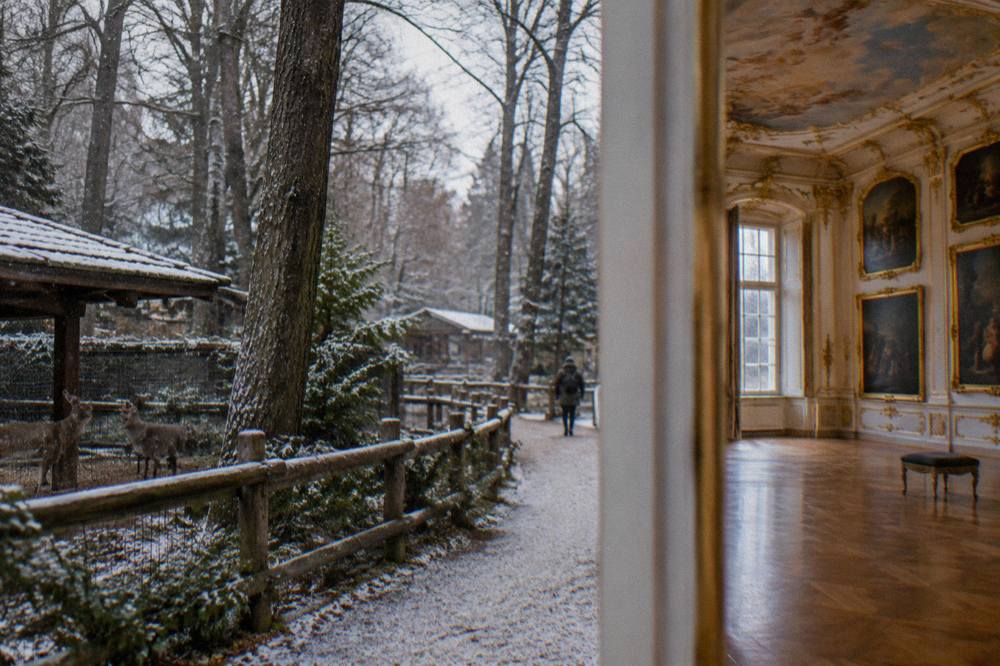
Winter deserves a separate word. Snow falls in Sibiu from November to March, and a zoo visit in that window is a different experience: fewer animals active, cold paths, short afternoons. The compensations are nearby, though. The Dumbrava forest is quiet and pretty under snow, and from late November the city's calendar turns to winter events: the Sibiu Christmas Market runs 13 November 2026 to 3 January 2027 in Piața Mare with free entry and a 600 sqm ice rink, and the Păltiniș ski resort opens its season on 28 November 2026 in the mountains about 32 km away. A December zoo morning, hours permitting, slots easily into a weekend built around the market.
Is The Sibiu Zoo A Good Outing For Families With Kids?
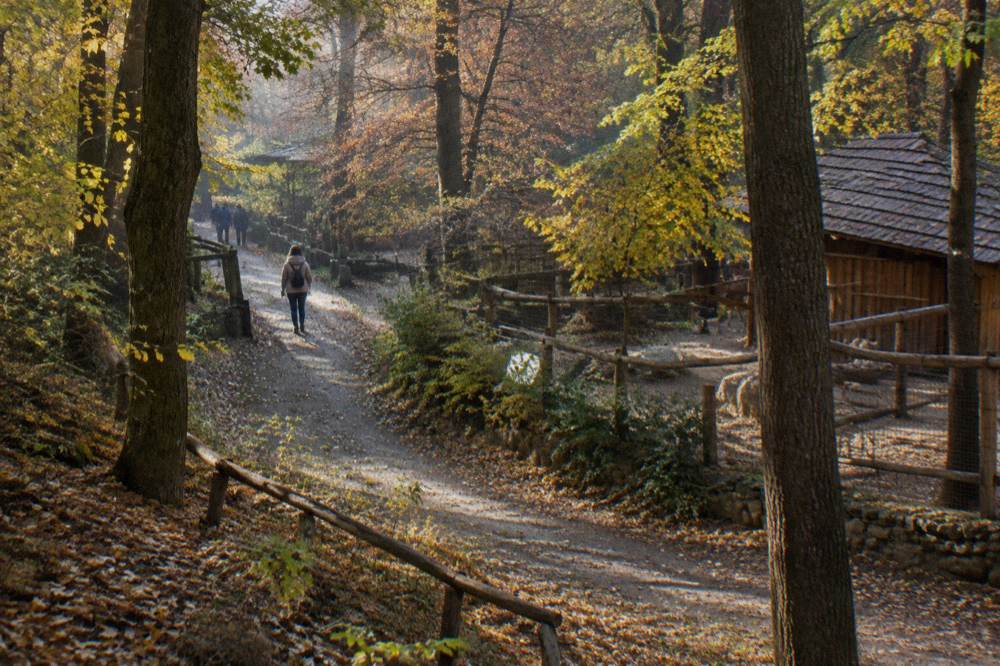
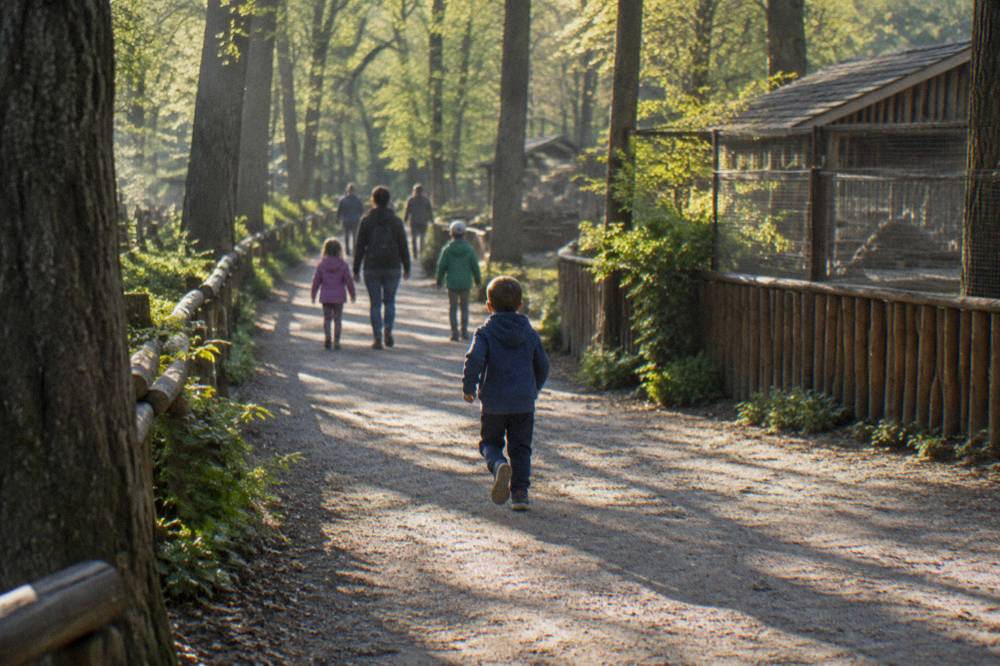
The Sibiu Zoo is one of the few Sibiu attractions built squarely around children, set in a traffic-light forest environment with the free Dumbrava park around it, and it pairs naturally with the playground-friendly forest paths and the ASTRA Museum's open-air layout, where kids can run between farmsteads rather than stand still in galleries. For families, the zoo-plus-museum day is the city's most complete child-facing itinerary outside the Christmas season.
What makes the combination work for families is the contrast with the old town. Sibiu's centre is a museum-and-squares experience: the Brukenthal National Museum's Palace gallery, the History Museum in Casa Altemberger, the Pharmacy Museum in Piața Mică. These are rewarding but quiet, and the main Brukenthal museums are closed Monday and Tuesday, which catches families out early in a stay. The forest fringe has no such constraints beyond the museum's own schedule, and the zoo adds the animal interest that no church tower or art gallery provides. Note the 2026 trap while planning the old-town half of any trip: the Council Tower has been closed to visitors since 19 January 2026 for a restoration planned at about 24 months, and the Evangelical Cathedral tower, at 10 RON for an adult, is the open viewpoint in the centre instead.
Accessibility inside the zoo is a gap this page will not paper over: no information on lifts, ramps or step-free routes appears on the zoo's own materials or anywhere else on this site's attraction list, so families with strollers or wheelchairs should ask the zoo directly. The forest paths themselves are wide and generally flat, which helps. For the journey out, the bus is the cheapest family option at 3.5 lei per 60-minute ticket each, and a taxi or Bolt car avoids the walk from a bus stop with small children in tow.
What Else Is Near The Sibiu Zoo In The Dumbrava Forest?
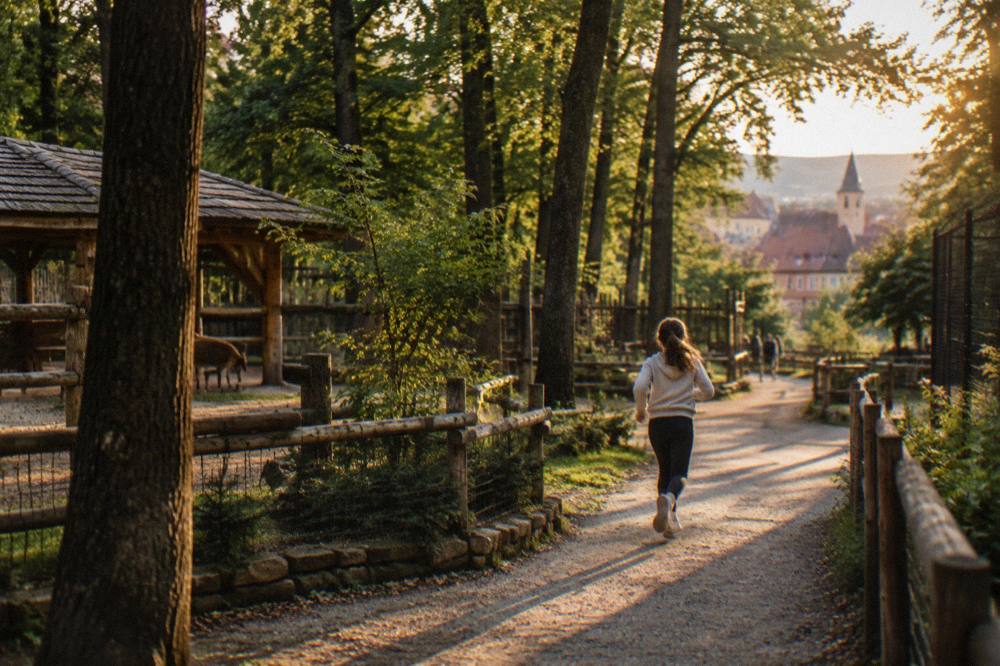
Beyond the zoo itself, the Dumbrava forest holds the ASTRA Museum on Calea Rășinari, a free public park of woodland paths, and the road south that continues to the villages of Mărginimea Sibiului, with Rășinari about 13 km and 18 minutes from the centre by road. The forest is the city's biggest single green space and the practical southern gateway to the shepherd villages.
The Mărginimea Sibiului is the string of villages along the Cibin's southern valleys, Rășinari, Sibiel, Săliște and their neighbours, historically tied to shepherding and transhumance. Sibiel lies about 25 km and 36 minutes out, Săliște about 23 km. These are half-day or full-day trips in their own right, and the same southern corridor that serves the zoo serves them, which is why a family car makes sense for a stay that wants both the forest fringe and the villages. For travellers without a car, guided village outings exist: the Marginimea tour above covers the region, and a Check availability link shows its live details.
Back inside the city, the zoo's forest location also makes it a natural endpoint for a day that starts among the squares. A morning walking the Upper Town, from Piața Mare past the Bridge of Lies to Piața Huet, followed by the bus south after lunch, gives a day with two completely different Sibius in it. The Sibiu walking tour page lays out the centre's route in detail, and the Sibiu map shows how the forest sits relative to everything else. For the full picture of the city's sights, the root things to do in Sibiu page is the site's master list.
| Destination south and west of the centre | Road distance | Approximate drive time |
|---|---|---|
| Rășinari (Mărginimea village) | 13 km | about 18 min |
| Păltiniș mountain resort | 32 km | about 40 min |
| Sibiel (icon museum village) | 25 km | about 36 min |
| Transfăgărășan entrance area (Bâlea Cascadă) | 63 km | about 69 min |
One warning on that last row: the Transfăgărășan's alpine section reopened for the 2026 season on 12 June with daily hours of 07:00 to 21:00, but by rule it can be closed on any day from 20 October, and driving the closed section carries fines of 10,000 to 30,000 lei. Never assume it is open; check the live road status the day before. It is a day trip from Sibiu, never a spur of the moment addition to a zoo afternoon.
How Does The Sibiu Zoo Fit Into A First Visit To Sibiu?
For a first visit of two or three days, the Sibiu Zoo belongs on day two or three, after the old town's squares, the Brukenthal Palace gallery and one viewpoint have been covered, and it works best folded into a Dumbrava morning alongside the ASTRA Museum rather than treated as a standalone destination. A first-time visitor with only one full day should walk the centre instead and save the forest for a longer stay.
The reasoning is simple arithmetic of interest. The old town holds the sights Sibiu is known for: Piața Mare and Piața Mică, the Bridge of Lies, the Evangelical Cathedral, and the Brukenthal collections spread across several buildings with separate tickets. The Palace gallery costs 50 RON, the History Museum 36 RON, the Natural History Museum 20 RON and the Pharmacy Museum 16 RON, per the Brukenthal National Museum's own price page, and a 48-hour combined ticket covers the set for 120 RON. Those prices reward planning: the main museums close Monday and Tuesday, so a visitor who arrives on a Monday and puts Brukenthal on Tuesday sees nothing but doors. The zoo, by contrast, is a fair-weather filler that flexes around whatever the museums and the weather allow.
A visitor with a deeper interest in the city's art may prefer to give the forest a pass entirely and spend the time indoors. The scholar-led baroque masterclass on this page's roster pairs the Brukenthal collection with the city's baroque churches under a specialist guide, and it suits a traveller whose highlight is the painting gallery rather than the petting zoo. The live details are on the operator's listing, and a Check availability link shows them.
What Should You Know Before You Go To The Sibiu Zoo?
Before setting out for the Sibiu Zoo, confirm three things on the zoo's own channels: the current entry price, the day's opening hours, and whether any part is closed. Beyond that, bring cash in lei for small purchases, allow half a day if the ASTRA Museum is on the same trip, and save the emergency number 112 in your phone, which is Romania's single European emergency number.
Money matters are straightforward in Sibiu. The currency is the Romanian leu, RON, with an exchange rate of about 5.3 lei to the euro, and the city is inside the Schengen area, with Romania a full member and internal land border checks lifted since 1 January 2025. Two city-specific costs are worth knowing in 2026: Tursib bus tickets run 3.5 to 7 lei depending on duration, and hotels collect a 2 percent tourism-promotion tax on the accommodation value since 1 January 2026, which appears on the hotel bill rather than at any attraction gate. Tipping norms, card acceptance and ATM fees are not covered here, so carry some cash as a default.
Timing has one more quirk in late October: clocks in Romania go back on Sunday 25 October 2026, from EEST to EET, which shortens the evening by an hour right at the point when the forest's afternoons are already closing in. An October zoo visit planned around that weekend should aim for the morning. In every season, the forest's shade keeps the paths cooler than the squares in summer and holds snow longer in winter, so dress one notch warmer than the city forecast suggests.
Common Questions About The Sibiu Zoo
How much does the Sibiu Zoo cost?
Check the current price on the zoo's own site or the city's tourism site before booking, since figures quoted elsewhere online go unconfirmed on an official page.
What are the Sibiu Zoo opening hours?
City zoos commonly run shorter winter hours than summer ones, so confirm the day's hours on the zoo's own site before travelling out to the forest.
How do I get to the Sibiu Zoo from the city centre?
The zoo sits along Calea Dumbrăvii in the Dumbrava forest, about 5 km south of Piața Mare. Take a Tursib bus toward the forest corridor, a taxi, or a Bolt or Uber car; the 60-minute Tursib ticket costs 3.5 lei. Check the Tursib site for the current line serving that corridor.
Can you visit the Sibiu Zoo and the ASTRA Museum on the same day?
Yes. Both sit on the edge of the same Dumbrava forest, a few minutes apart. The ASTRA Museum's adult ticket is 50 RON, and its autumn 2026 schedule ended 26 October with a last entry about 16:00; the winter schedule had not been announced, so check the museum's own site for winter hours.
Is the Sibiu Zoo good for children?
It is one of the city's most child-friendly attractions, set in the free public Dumbrava forest with wide, generally flat paths, and it pairs well with the open-air ASTRA Museum, where children can move freely between the buildings. No information is available on step-free access or facilities, so ask the zoo directly about strollers and wheelchairs.
When is the best time of year to visit the Sibiu Zoo?
May, June and September offer the best combination of warmth and daylight, with modelled daytime highs of 19 to 24 C in the ERA5 reanalysis, 1991-2020, for the Sibiu grid cell. November to March brings snow and short days, though a winter visit can be folded into a Christmas-market weekend, with the market running 13 November 2026 to 3 January 2027.
The Sibiu Zoo will never top a list of the city's famous sights, and it does not need to. It is the relaxed, low-stakes half of a Dumbrava day, the part of a family trip that lets everyone breathe between the Brukenthal galleries and the Council Tower's scaffolding, and a sensible reason to ride a city bus out of the medieval core into the green belt that Sibiu keeps on its southern edge. Confirm the price and hours, pick a dry month, and pair it with the windmills.
