Is Sibiu, Romania Worth Visiting?
A sourced answer to whether Sibiu, in Transylvania, Romania, is worth visiting: what the old town offers, what tickets and day trips cost, and when to go.
Sibiu sits inland in central Transylvania, Romania, on the Cibin river, at 415 to 431 m above sea level, and it has been a city since it was first documented in 1191 as Cibinium, the seat of the free prepositure of the Germans in Transylvania. There is no sea and no coast here: the appeal is a Saxon old town of two levels, an Upper Town and a Lower Town wrapped around Piața Mare, with the Făgăraș mountains and the Transfăgărășan road a day trip to the south. Whether that package is worth your travel days is a fair question, and the honest answer comes from what the museums, the roads and the calendar actually offer, not from slogans. This Sibiu Travel Guide page lays out the facts so you can judge for yourself.
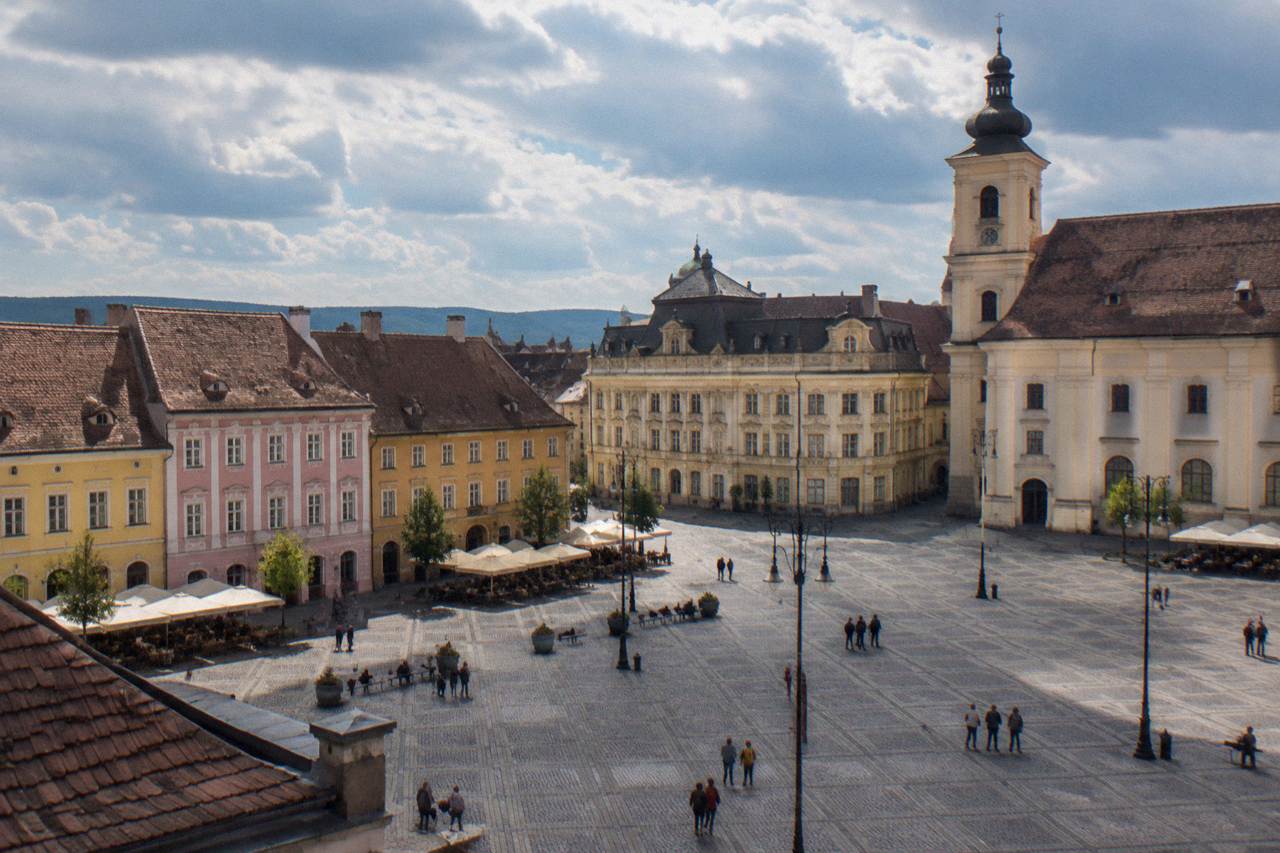
Is Sibiu, Romania Worth Visiting?
Yes, for travellers who want a walkable Saxon old town, serious museums at modest prices and some of Romania's headline mountain scenery within a day's drive, Sibiu earns its place on an itinerary. The city's own tourism resources document a compact medieval core around Piața Mare, the Brukenthal National Museum opened to the public in 1817, and the Transfăgărășan road within reach. It is not a beach destination and it is not a nightlife capital: it rewards visitors who come for architecture, history and landscapes.
The case for Sibiu starts with geography. The city is small enough that the train station, Gara Sibiu, sits about 0.8 km from Piața Mare, and the bus station about the same, so arrival is a walk rather than an expedition. Sibiu International Airport is about 5 to 6 km from the square, with public bus line 11 serving a stop in front of arrivals on a 60-minute ticket of 3.5 lei. The old town itself divides into the Upper Town, where the main squares and the great houses sit, and the Lower Town below, connected by the Stairs Passage (Pasajul Scărilor). For more on the city's identity, see what Sibiu is known for.
Against that, be clear about what Sibiu is not. It is not on the coast, it has no lake beach of its own, and its 2021 census population of 134,308 for the municipality, with the city itself speaking of about 155,000 permanent residents plus about 25,000 temporary ones, makes it a regional city rather than a capital. Anyone comparing it with Sighișoara or Brașov should stick to the sourced facts, which for those cities are mainly the road distances: Sighișoara about 96 km, Brașov about 142 km.
What Makes Sibiu Old Town Worth Seeing?
The old town's core sights are free to walk and cheap to enter: Piața Mare, Piața Mică, the Bridge of Lies, Piața Huet and the city walls are open public space with no ticket, the Evangelical Cathedral tower charges 10 RON for an adult, and the Brukenthal Palace art gallery charges 50 RON per the Brukenthal National Museum's own price page. The Council Tower, the classic viewpoint, is closed for restoration since 19 January 2026. A full old-town circuit costs very little beyond shoe leather.
The free layer is genuinely the main event. The Bridge of Lies, an iron bridge first built in 1859 to 1860 per secondary sources, the "eyes of Sibiu", the steep attic windows that seem to watch the street, and the towers of the old city wall can all be seen from the pavement without paying anything. The pharmacy museum in Piața Mică 26 costs 16 RON as a Brukenthal branch. For the paid sights, the ticket prices look like this, all from the Brukenthal price page and the Evangelical Cathedral's tourism listing, and all worth confirming before you go:
| Sight | Adult ticket | Notes |
|---|---|---|
| Brukenthal Palace (art galleries) | 50 RON | Closed Monday and Tuesday; Wed to Sun 10:00 to 18:00, cashier closes 17:15 |
| Brukenthal History Museum, Casa Altemberger | 36 RON | Closed Monday and Tuesday |
| Brukenthal Natural History Museum | 20 RON | Closed Monday and Tuesday |
| Brukenthal Pharmacy Museum | 16 RON | Piața Mică 26 |
| Brukenthal Contemporary Art Museum | 15 RON | Open Monday to Friday only, closed at weekends |
| Brukenthal 48-hour combined ticket | 120 RON | Covers the open sites; pensioners 60, students and pupils 30 |
| Evangelical Cathedral tower | 10 RON | The open viewpoint while the Council Tower is closed |
| Council Tower | Closed | Closed to visitors since 19 January 2026 for a restoration planned at about 24 months |
Two traps catch out travellers in 2026, and both are documented on official pages. The Council Tower has been closed since 19 January 2026, with a restoration planned at about 24 months, so the Evangelical Cathedral tower is the viewpoint that is actually open. And Brukenthal is several separate museums, not one building with one ticket: the Hunting Museum is closed for an indefinite period, the main museums close Monday and Tuesday, and the Contemporary Art Museum closes at weekends. Plan around those closure days or you will find doors shut mid-visit. The ASTRA open-air museum in the Dumbrava forest, functioning since 1963, charges 50 RON for an adult and is a half-day in itself.
If you would rather have the old town interpreted than merely walked, a guided option exists. The Scholar-Led Baroque Masterclass pairs the church and the Brukenthal collections with expert commentary, and Check availability if that format suits you.
How Many Days Do You Need In Sibiu?
Two days covers the old town properly: day one for Piața Mare, the Brukenthal Palace galleries, the Bridge of Lies and the Lower Town, day two for the ASTRA open-air museum and one half-day excursion such as the Saxon villages of Cisnădie and Cisnădioara, 10 and 13 km away. A third day turns Sibiu into a base for the Transfăgărășan, Bâlea Lake or Sighișoara, each under two hours by road.
The pacing matters because the city's density is its strength. The squares, the cathedral tower and the walls sit within a few minutes' walk of one another, so a single well-planned day clears the free outdoor layer and one museum. The Brukenthal closure days, Monday and Tuesday for the main sites, argue for anchoring museum days between Wednesday and Sunday. Anyone wanting the deeper cut, the gastronomy, the evening panorama from Gusterita Hill or a baroque deep-dive, stretches to three. A longer treatment of the question sits in how many days you need in Sibiu, and the practical root page of this site lists the headline things to do in Sibiu for day-by-day planning.
If the baroque route through the city appeals, the same scholar-led format can anchor a whole morning of a two-day stay, with the church interior and the galleries explained in one thread. Free cancellation is offered on the operator's live listing, so a change of plan costs nothing. The wider set of guides lives on Sibiu Travel Guide.
Is Sibiu A Good Base For Day Trips?
Sibiu works as a day-trip base better than its size suggests: the Transfăgărășan road is about 69 minutes and 63 km from Piața Mare to the Bâlea Cascadă area, Bâlea Lake about 88 minutes and 76 km, Sighișoara about 102 minutes and 96 km, and the ski resort of Păltiniș about 40 minutes and 32 km, all computed over OSM routing in free-flow conditions. The alpine road, though, can be closed any day from 20 October under the standing rule.
Those figures make Sibiu a legitimate launch pad for Transylvania's signature sights. The road distances below are computed, free-flow figures, not timetables, and winter conditions change them:
| Destination | Distance from Piața Mare | Drive time |
|---|---|---|
| Rășinari (Mărginimea Sibiului) | 13 km | about 18 min |
| Cisnădie | 10 km | about 14 min |
| Păltiniș | 32 km | about 40 min |
| Transfăgărășan (Bâlea Cascadă) | 63 km | about 69 min |
| Bâlea Lake | 76 km | about 88 min |
| Sighișoara | 96 km | about 102 min |
| Alba Iulia | 71 km | about 81 min |
| Brașov | 142 km | about 154 min |
The Transfăgărășan deserves its own caveat. The 2026 season reopened on 12 June with daily hours of 07:00 to 21:00 on the high stretch, and by rule the road can be closed on any day from 20 October; the fines for driving the closed section run from 10,000 to 30,000 lei. Never assume it is open: check the live road status, and see whether the Transfăgărășan road is currently open before you build a day around it. The Bâlea cable car runs on its own schedule and is the winter fallback. For a different direction, Sighișoara's UNESCO-listed historic centre, inscribed in 1999, and the Biertan fortified church, adult ticket 20 RON per the sibiu-turism.ro listing, make a full and documented day out.
When Is The Best Time To Visit Sibiu?
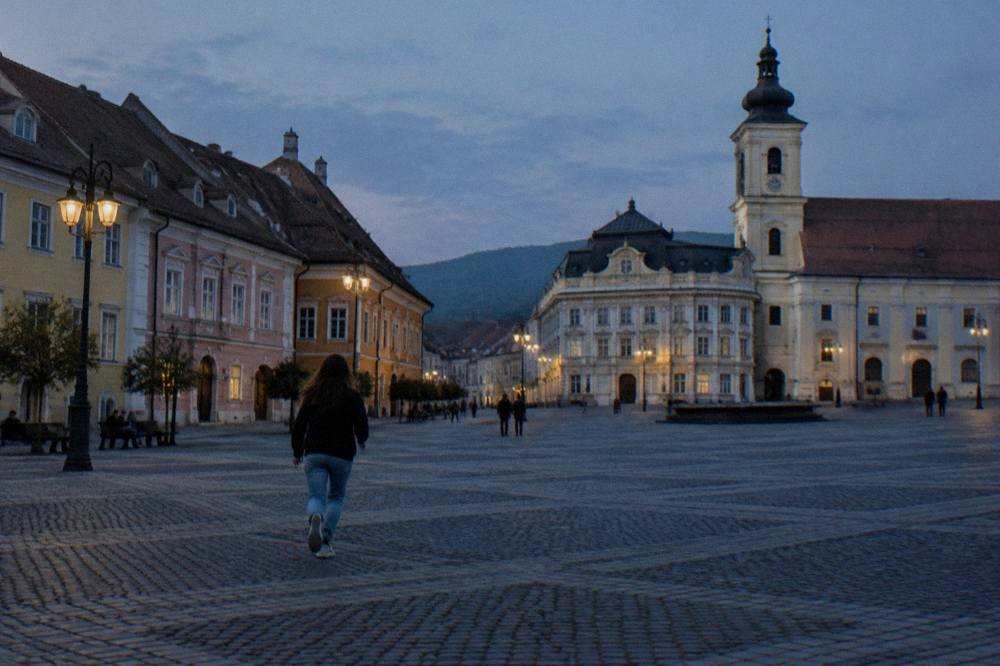
Late May to June and September to October are the months the tourism sources themselves recommend, with mild temperatures and the cultural calendar filling in around them: the Sibiu International Theatre Festival ran 19 to 28 June in 2026 and returns 18 to 27 June in 2027, and the Christmas market runs 13 November 2026 to 3 January 2027. Winters are cold and snowy, with a January mean low of -5.7 C on the ERA5 reanalysis, 1991-2020.
Climate here is temperate continental. The city's official figures give a mean annual temperature of 8.9 C and mean annual rainfall of 662 mm, with June the rainiest month at 113 mm. The modelled monthly picture, ERA5 reanalysis, 1991-2020, looks like this:
| Month | Mean high C | Mean low C | Sunshine h/day | Snowfall cm |
|---|---|---|---|---|
| January | 2.2 | -5.7 | 6.2 | 23.3 |
| April | 14.6 | 4.0 | 10.4 | 7.8 |
| July | 24.2 | 14.6 | 12.8 | 0.0 |
| October | 14.5 | 5.7 | 8.0 | 2.7 |
| December | 3.1 | -3.9 | 5.6 | 20.8 |
Snow falls from November to March, and the ski season at Păltiniș is announced to open on 28 November 2026. Winter visitors get the Christmas market in Piața Mare, free entry, with a 600 sqm ice rink and about a third of the exhibitors new this edition, per the market's own site; the reported Golden Ticket, at 100 lei, covers the wheel, carousel and mini-train. Summer brings the festivals, and the shoulder months bring the walking weather. Whatever the season, the practical basics are stable: Romania is a full Schengen member, the currency is the leu (RON, about 5.3 lei to the euro), the emergency number is 112, and since 1 January 2026 hotels collect a 2 percent tax on the accommodation value, which is worth expecting on your bill rather than discovering on it.
Who Should Think Twice About Sibiu?
Travellers chasing a beach, a big-city pace or round-the-clock nightlife should think twice, because Sibiu offers none of those: it is an inland city of 134,308 residents in the 2021 census, whose assets are medieval architecture, museums and mountain access. The main Brukenthal museums close Monday and Tuesday, the Council Tower is shut until about January 2028, and the alpine road has a season, so a carelessly timed visit meets closed doors.
That is the whole honest picture. Time the visit around the closure days, keep a mountain plan B such as the cable car for the Transfăgărășan, and the city delivers what its sources promise: a documented 1191 origin, an art museum open since 1817, an open-air folk museum since 1963, and one of the great drives of Europe about an hour away. Safety questions are treated separately in is Sibiu safe, and the region-wide case is weighed in is Transylvania worth visiting for tourists.
Common Questions About Visiting Sibiu
Is Sibiu, Romania Worth Visiting?
For history, architecture and mountain day trips, yes: the old town is free to explore, museum tickets run from 10 to 50 RON, and the Transfăgărășan and Sighișoara sit within about two hours by road. It is not a coastal or nightlife destination.
Is the Council Tower open in Sibiu?
No. It has been closed to visitors since 19 January 2026 for a restoration planned at about 24 months. The Evangelical Cathedral tower, at 10 RON for an adult, is the open viewpoint in the old town.
When is the Sibiu Christmas market?
The market runs 13 November 2026 to 3 January 2027 in Piața Mare, with free entry, a 600 sqm ice rink and a reported Golden Ticket at 100 lei covering the wheel, carousel and mini-train.
Can you visit the Transfăgărășan from Sibiu?
Yes, as a day trip of roughly 69 minutes by road to the Bâlea Cascadă area in free-flow conditions. The 2026 season opened 12 June with daily hours 07:00 to 21:00, and by rule the road can close on any day from 20 October, so check the live status before you go.
Is Sibiu expensive?
No: city bus tickets are 3.5 lei for 60 minutes, the cathedral tower is 10 RON, the main Brukenthal gallery is 50 RON, and a 48-hour combined Brukenthal ticket is 120 RON. Hotels add a 2 percent tax on the accommodation value since 1 January 2026.
