Is Sibiu Safe?
Is Sibiu safe? A straight answer for visitors to this Transylvanian city: the old town on foot, nights out, emergency numbers, day-trip roads and the precautions that matter.
Sibiu, in Transylvania, Romania, is a compact Saxon-founded city on the Cibin river, and the honest answer to the safety question is that no Sibiu-specific crime statistic, official tourist warning or travel-advisory level exists in the sources this site reports from. What the sources do support is practical: an old town built for walking, a single European emergency number, 112, confirmed by the city's tourism site, and a set of ordinary precautions that would serve you in any mid-sized European city. This page lays out what can be said with attribution and what is simply a matter of planning.
Is Sibiu Safe?
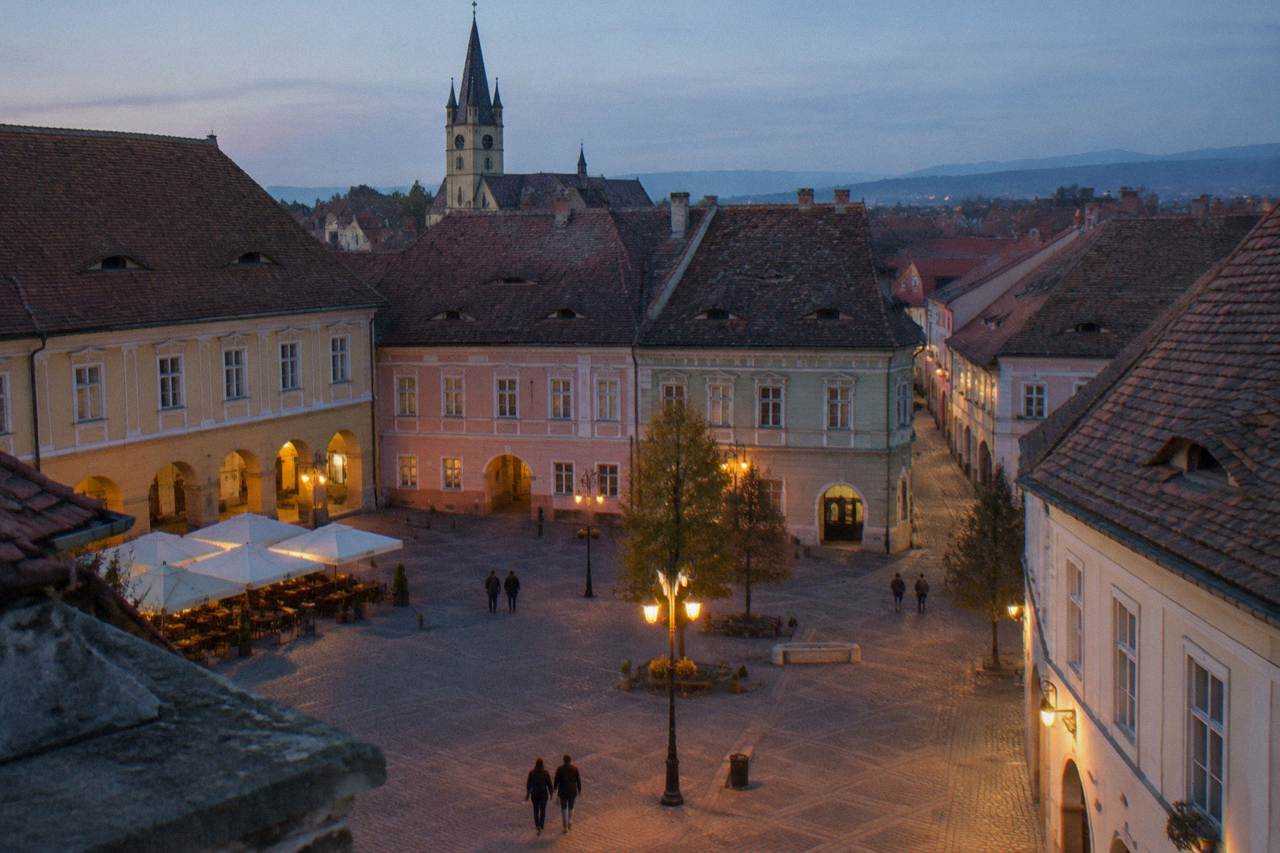
No published Sibiu crime figure, safety ranking or official tourist warning appears in any source this site reports from, so no verdict is offered here. What the sources do establish is structure: the old town around Piața Mare and Piața Mică is a compact pedestrian core, the single European emergency number 112 serves Romania, and Sibiu is a city of 134,308 residents in the 2021 census, small enough that the historic centre is walkable end to end.
Normal city precautions apply, and that is the whole of the advice that can be honestly given. Keep valuables out of back pockets in crowds, watch for pickpockets where people gather, which in Sibiu means the squares during events and the Christmas market season, and take a licensed taxi or a ride-hailing app late at night rather than an unmarked car. Those are universal habits, not Sibiu-specific warnings, and presenting them as anything more would be inventing a local problem no source documents.
For country-level context, this site's companion page on the broader question, is it safe to visit Romania right now, takes the same position: no verdict, no current-events claim, and a standing recommendation to check your own government's travel advice before you travel, since advisories change for reasons no city guide can predict.
How Safe Is Sibiu's Old Town On Foot?
The old town is a pedestrian-scale historic core, and walking is the normal way to move through it: the Upper Town around Piața Mare, Piața Mică and Piața Huet sits above the Lower Town, linked by the Stairs Passage, and the whole distance between the main squares is a few minutes on foot. The city's tourism site presents the squares, the Bridge of Lies and the city walls as free, open, public spaces with no ticket or gate.
That pedestrian character does a lot of quiet safety work. Fewer cars means fewer crossings, fewer blind corners and a street life that continues into the evening, since the squares hold restaurants and cafes and, in winter, the Christmas market from 13 November 2026 to 3 January 2027. The "eyes of Sibiu", the famous roof windows that seem to watch the street, are an architectural curiosity rather than a security measure, but the streets they look down on are exactly the kind of busy, walkable lanes that feel straightforward at night.
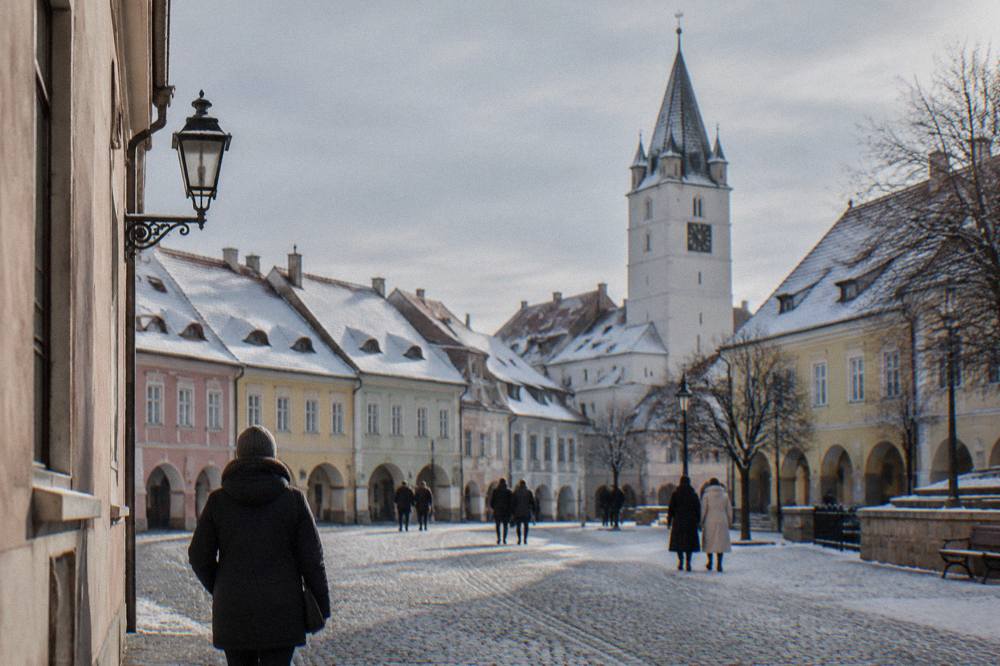
The practical cautions are the obvious ones. Cobbles and the descent to the Lower Town reward decent shoes, especially from November to March when snow falls, 23.3 cm modelled for January alone in the ERA5 reanalysis, 1991-2020, and ice can sit in shaded lanes. If you would rather have a structured introduction than a solo wander after dark, the city's sightseeing walks and the self-guided options in the picks below all cover this same core.
What Should You Do In An Emergency In Sibiu?
The single European emergency number, 112, works in Sibiu for police, ambulance and fire, and it is the number the city's tourism site lists for visitors. Romania is a full Schengen member, the currency is the leu (RON), roughly 5.3 lei to the euro, and the time zone is Europe/Bucharest, so a call to 112 from any phone follows the same rules as anywhere in the European Union.
Beyond the number itself, the planning details that matter in a slow-hour situation are transport ones. The public bus system, Tursib, sells a 60-minute internal ticket for 3.5 lei, payable contactless on board, and line 11 runs from the airport terminal stop to the centre. Bolt and Uber both operate in the city. None of this is safety equipment in the dramatic sense, but knowing the bus fare before you board, and knowing the airport is about 5 to 6 km from Piața Mare, removes the small confusions that spoil evenings.
| Situation | What To Do | Figure Or Note |
|---|---|---|
| Police, ambulance, fire | Dial 112 | Single European emergency number, listed by sibiu-turism.ro |
| Getting around at night | Licensed taxi or ride-hailing app | Bolt and Uber both operate in Sibiu |
| Airport to centre | Tursib bus line 11 from arrivals | 3.5 lei for a 60-minute ticket, contactless on board |
| Cash and cards | Romanian leu (RON) | About 5.3 lei to the euro; confirm the day's rate locally |
| Winter evenings | Note the clock change | UTC+2 from Sunday 25 October 2026 |
For travellers weighing Sibiu against other stops, the is Sibiu Romania worth visiting page covers what the city offers, and how many days do you need in Sibiu helps with pacing, both of which shape how much evening wandering a trip actually involves.
Is Sibiu Safe At Night?
The sources say nothing about Sibiu after dark that they do not say about it by day: the squares and lanes of the old town are public, free and walkable, and no named unsafe street, curfew or nightlife warning appears anywhere. Events run into the evening in the same public spaces, including the Christmas market with extended hours around 31 December, and the ordinary rule applies: stay where the streets are lit and walked, and use a licensed taxi or an app for long late trips.
No bar, club or venue name is named for this site, so none is recommended here. What can be said is structural. Piața Mare hosts open-air events, the Artmania Festival ran there as a free-access edition in July 2026, and the Christmas market's ice rink, wheel and stalls keep the square active from 13 November 2026 through the New Year. Busy squares with families in them until late are a reasonable proxy for a city that treats its centre as a living room.
The one nighttime caution with real numbers behind it is seasonal rather than criminal. From November to March snow falls regularly, and the modelled January low sits at -5.7 C in the ERA5 reanalysis, 1991-2020, so a late walk home is a question of footwear and warmth more than anything else.
Are The Day Trips Around Sibiu Safe?
The day trips are safe in the sense that the risks are known and posted: the mountain roads are the one genuinely rules-bound item, because the Transfăgărășan's high stretch can be closed on any day from 20 October by rule, and driving the closed section carries fines of 10,000 to 30,000 lei. The Saxon villages, Sighișoara and Alba Iulia involve ordinary main-road driving on routes the facts file times at about 14 minutes to Cisnădie and about 102 minutes to Sighișoara from Piața Mare.
The Transfăgărășan deserves its own sentence in any safety answer, not because it is dangerous but because it is administratively special. The 2026 season reopened on 12 June with daily hours of 07:00 to 21:00 on the high stretch, and by rule the road can close any day from 20 October onward, weather permitting or not. Never plan the drive on the assumption it is open; check the live road status, and read is the Transfăgărășan road currently open for the rule in full.
| Day Trip From Piața Mare | Distance And Drive Time | Safety Note From The Sources |
|---|---|---|
| Cisnădie fortified church | about 10 km, about 14 minutes | Ordinary main-road driving |
| Rășinari, Mărginimea Sibiului | about 13 km, about 18 minutes | Village roads, year-round |
| Păltiniș mountain resort | about 32 km, about 40 minutes | Ski season opens 28 November 2026; mountain road in winter |
| Bâlea Cascadă, Transfăgărășan | about 63 km, about 69 minutes | High stretch closable any day from 20 October; fines 10,000 to 30,000 lei |
| Sighișoara historic centre | about 96 km, about 102 minutes | Main roads; UNESCO site, citadel grounds open |
One road warning with a fixed date: the A1 motorway section from Sibiu to Boița is closed from 5 October to 19 December 2026 for overpass works, with traffic diverted onto DN7, and the Sibiu to Pitești motorway is unfinished beyond that. Anyone heading towards Bucharest, about 250 km away, should allow extra time and expect the diversion, per the road authority statements reported in the sources.
What Precautions Actually Matter For A Sibiu Trip?
The precautions that matter are planning ones: carry the emergency number 112, book museum days around the Monday and Tuesday closures at the main Brukenthal museums, plan the Transfăgărășan against the 20 October closure rule, and check your own government's travel advice for Romania before you go. No source supports any Sibiu-specific threat, and inventing one would serve nobody, so the honest closing note is that ordinary city habits plus mountain-road awareness cover the realistic risks.
Museum scheduling is a gentle safety issue of the disappointment kind. The Brukenthal Palace is open Wednesday to Sunday, 10:00 to 18:00, and closed Monday and Tuesday, the Contemporary Art Museum is now open weekdays only, and the Hunting Museum is closed indefinitely. The Council Tower has been closed to visitors since 19 January 2026 for a restoration planned at about 24 months, so the open viewpoint is the Evangelical Cathedral tower at 10 RON. None of this is dangerous, but knowing it prevents the wasted walks that turn a good day sour.
Winter adds two more items with dates attached. The Christmas market runs 13 November 2026 to 3 January 2027 in Piața Mare with free entry, and the Păltiniș ski season opens 28 November 2026. Snow, ice and early darkness are the seasonal realities; the emergency number, sensible shoes and a checked weather forecast are the seasonal responses. If a longer stay is on the cards, the things to do in Sibiu round-up and this site's Sibiu Travel Guide Sibiu Travel Guide pages cover the rest of the planning picture.
Common Questions About Safety In Sibiu
Is Sibiu safe?
No Sibiu-specific crime statistic, official tourist warning or safety ranking exists in the sources this site reports from, so no verdict is offered. The old town is a compact pedestrian core, the emergency number is 112, and normal city precautions apply.
Is Sibiu safe to walk around at night?
The old town squares and lanes are public, lit and active into the evening, especially during the Christmas market from 13 November 2026 to 3 January 2027. No named unsafe street or nightlife warning appears in any source. Use a licensed taxi or a ride-hailing app for long late trips, as anywhere.
What is the emergency number in Sibiu?
112, the single European emergency number for police, ambulance and fire, as listed by the city's tourism site.
Is the water in Sibiu safe to drink?
No source settles tap-water safety for Sibiu, so this site offers no verdict; see the dedicated page on water in Sibiu for what is and is not documented.
Are the mountain roads near Sibiu safe?
They are rules-bound rather than risky by nature. The Transfăgărășan high stretch can be closed on any day from 20 October by rule, with fines of 10,000 to 30,000 lei for driving the closed section, and the A1 Sibiu to Boița section is closed from 5 October to 19 December 2026 with traffic diverted onto DN7. Check live road status before any mountain drive.
Is Sibiu safe for solo travellers and families?
The sources contain nothing that distinguishes Sibiu from any other mid-sized European city for solo or family travel: a walkable pedestrian centre, a working emergency number and public transport with a 3.5 lei bus ticket. Standard precautions apply, and government travel advice should be checked before any trip.
