Is It Safe To Visit Romania Right Now?
An honest look at safety for visitors to Romania and Sibiu: the emergency number, Schengen status, driving realities, and what no statistic can tell you.
Sibiu sits in the south of Transylvania, an inland Saxon-founded city on the Cibin river, and the question of whether Romania is safe to visit right now reaches this desk regularly. The honest answer is that this site reports on Sibiu from sources rather than from a visit, and none of the sources behind it carry a Sibiu-specific crime statistic, a tourist warning or an advisory level. What the sources do carry is concrete: Romania's emergency arrangements, its border status, its road rules and the fines attached to one famous mountain road. That is what this page sets out, plainly, together with the practical safety facts that actually shape a trip here, from pedestrian squares to mountain weather. For the city-specific picture, the companion page on whether Sibiu itself is safe goes deeper, and what Sibiu is known for explains why people come in the first place.
Is It Safe To Visit Romania Right Now?
This desk publishes no verdict on whether Romania is safe to visit right now, because no advisory level, crime figure or official warning appears in any source this site reports from. The sources do show Romania is in Schengen, the emergency number 112 works there, and Sibiu's largely pedestrian historic core asks only for the ordinary precautions of any European city. What the sources do support is this: Romania is a full member of the Schengen area, the single European emergency number 112 works there as everywhere in the EU, and Sibiu's historic core is a compact, largely pedestrian area where the same ordinary precautions you would take in any European city are the only guidance any cited source offers. Before booking, readers should check their own government's current travel advice for Romania, which this page neither summarises nor substitutes for.
That is the whole, unglamorous truth of it. What can be done instead is to lay out the things a visitor can actually verify and act on.
Romania's practical arrangements are well documented. The country is in Schengen, with air and sea borders included since 31 March 2024 and land border checks with Hungary and Bulgaria lifted from 1 January 2025, so travel within the area is treated like domestic movement. The emergency number 112 is confirmed by the Sibiu tourism site itself. Romania's currency is the leu (RON), its official language is Romanian, and it keeps Europe/Bucharest time, with clocks going back on Sunday 25 October 2026. None of this is safety advice in the alarm sense; all of it is safety in the sense that matters when something goes wrong or a plan needs adjusting.
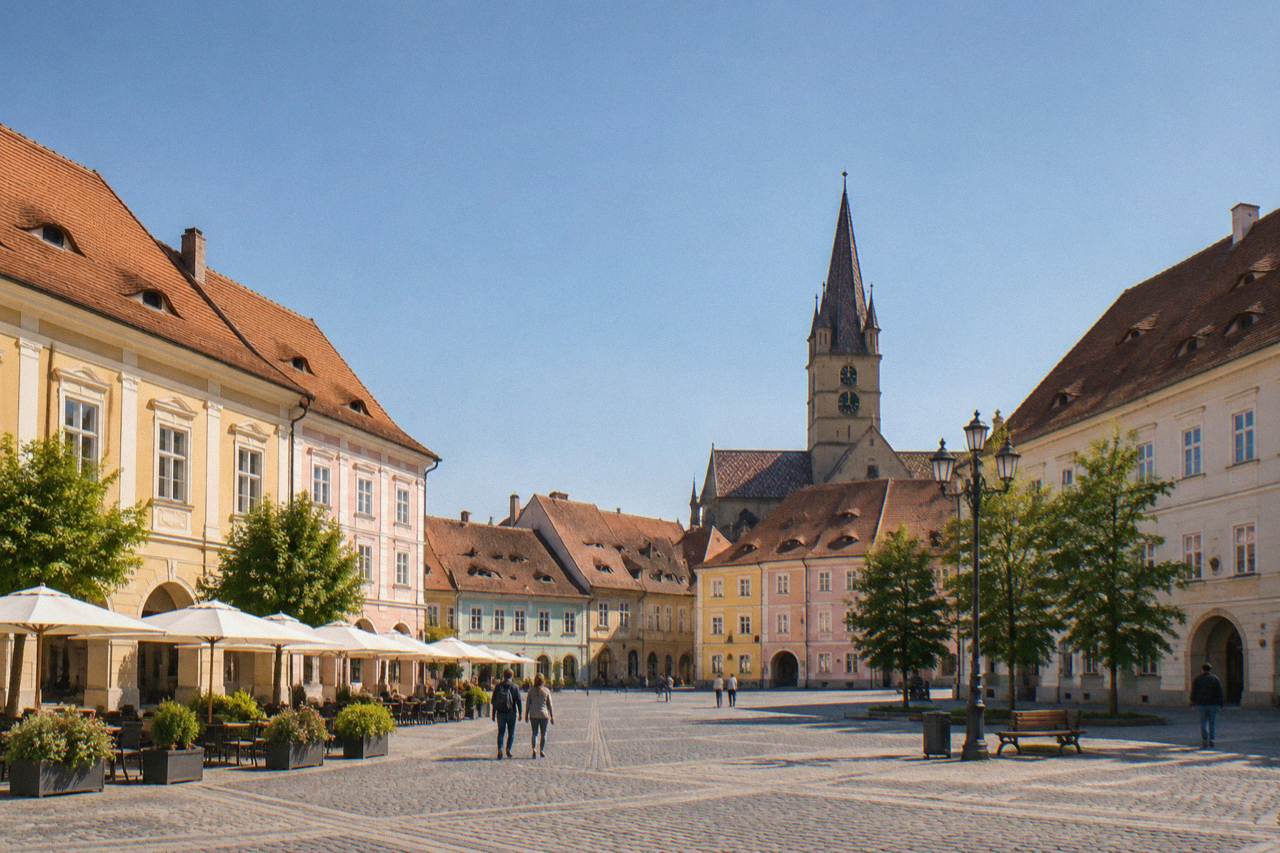
Sibiu's own geography helps the visitor. The old town splits into an Upper Town and a Lower Town around Piața Mare and Piața Mică, and the historic centre is largely pedestrian, with the Stairs Passage connecting the two levels on foot. The squares, the Bridge of Lies, the city walls and towers are all free, open, public spaces with no tickets and no opening hours. A city you walk rather than drive is a city with fewer of the friction points that produce trouble anywhere.
What Can You Actually Verify About Safety In Sibiu?
The verifiable safety facts for Sibiu are few and plain: the emergency number is 112, the old town is a compact pedestrian core, and no official source cited by this desk publishes a Sibiu crime statistic, a stray-dog count or a bear-warning figure for the city itself. Sibiu International Airport (SBZ) lies about 5 to 6 km from Piața Mare, the Tursib bus line 11 serves a dedicated stop in front of the arrivals terminal with a 60-minute ticket at 3.5 lei, and the train and bus stations sit about 0.8 km from the main square, so the arrival and departure legs of a trip are short and simple. Beyond that, this desk states no rating, names no unsafe street and offers no verdict.
What follows is the checkable layer, the things you can confirm yourself from official pages rather than take from a blog. Prices and hours change; the structures do not.
| Safety-relevant fact | What the source says | Where to confirm |
|---|---|---|
| Emergency number | 112, the single European emergency number, confirmed by the Sibiu tourism site | sibiu-turism.ro |
| Border status | Romania is a full Schengen member; land checks with Hungary and Bulgaria lifted 1 January 2025 | Romanian Ministry of Foreign Affairs |
| Tourist tax | Hotels collect a 2 percent tax on accommodation value since 1 January 2026; no per-night amount is published | Local council decision reported by oradesibiu.ro |
| Mountain road fines | 10,000 to 30,000 lei for driving the closed Transfăgărășan section, in force since November 2025 | wall-street.ro, CNAIR rules |
| Currency and rate | Leu (RON); about 5.3 lei to the euro as a planning figure | Banca Națională a României |
The bear question deserves its own plain words. Romania has bears in the Carpathians, and the mountains south of Sibiu, the Făgăraș range and the Cindrel massif above Păltiniș, are real bear country. But no bear-safety rule, bear count or bear fine for the Sibiu area appears in the sources this desk reports from. The standing advice for any Carpathian hike is the generic mountain kind: stay on marked trails, do not leave food around, and check locally about conditions before setting out. Anyone heading into the hills might read the companion guide to day trips from Sibiu first, and the question of whether the Transfăgărășan road is currently open matters more to a mountain day than any statistic.
City sightseeing is the low-friction part of a Sibiu trip. A guided walk is one way to get oriented quickly, and the roster's private option covers the main landmarks of both towns.
What Should You Know About Roads And Driving Around Sibiu?
The road facts around Sibiu matter more to a safe trip than any crime question: the Transfăgărășan high section can be closed any day from 20 October, driving it while closed carries fines of 10,000 to 30,000 lei, and the A1 Sibiu to Boița motorway section is closed from 5 October to 19 December 2026 with traffic diverted onto DN7. Bucharest is about 250 km away and is not a day trip; the motorway to Pitești is unfinished, so no motorway drive time to the capital can be promised. These are not scare stories but scheduling facts, and they are the ones most likely to bite a visitor who plans from an outdated page.
The Transfăgărășan rule deserves its own sentence. The 2026 season reopened on 12 June, running daily from 07:00 to 21:00 on the high stretch between Bâlea Cascadă and Piscu Negru, and the regulation allows closure on any day from 20 October onward. This page will never say the road is "open today", because status changes with the weather. The fine for driving the closed section, in force since November 2025, is enormous by any traveller's budget. Check the live road status before you drive it, or take one of the organised Transfăgărășan day trips, where the operator carries the responsibility for the route. The Bâlea cable car runs on its own schedule as the winter alternative access. The wider set of guides lives on Sibiu Travel Guide.
| Road or route | The standing fact | What to do |
|---|---|---|
| Transfăgărășan (DN7C) | Season from 12 June 2026, 07:00 to 21:00 daily; closable any day from 20 October; fines 10,000 to 30,000 lei on the closed section | Check live status before setting out |
| A1 Sibiu to Boița | Closed 5 October to 19 December 2026 for overpass works, traffic diverted onto DN7 | Allow extra time on the Bucharest road |
| Sibiu to Păltiniș | About 32 km and 40 minutes by road; ski season opens 28 November 2026 | Mountain road; check conditions in winter |
| Sibiu to Brașov | About 142 km and around 2.5 hours by road; train around 3 to 4 hours, check cfrcalatori.ro | A day trip either way |
| Sibiu to Sighișoara | About 96 km and 102 minutes by road; train around 2 to 2.5 hours, check cfrcalatori.ro | Doable as a day trip |
Winter adds its own layer, and Sibiu genuinely has one: the ERA5 reanalysis, 1991-2020, shows snow falling from November to March, with January modelled at 23.3 cm of snowfall and a mean daily low of -5.7 C. That is normal, manageable central-European winter, but it argues for proper shoes on the cobbles of Piața Mare and for checking mountain road status rather than assuming anything. The city's official climate page puts mean annual rainfall at 662 mm, with June the wettest month at 113 mm, so summer visitors mostly meet heat and the occasional storm rather than danger.
The 2026 museum schedule is a softer kind of trap, the kind that spoils a day rather than threatens anyone. The main Brukenthal museums are closed Monday and Tuesday, the Contemporary Art Museum is now open Monday to Friday only, and the Hunting Museum is closed indefinitely. The Council Tower, the postcard viewpoint over Piața Mare, has been closed to visitors since 19 January 2026 for a restoration planned at about 24 months; the Evangelical Cathedral tower, at 10 RON for an adult ticket, is the open viewpoint in the meantime. Anyone planning a packed single day should read how many days you need in Sibiu before committing.
What Precautions Make Sense, Without The Numbers?
The precautions that any cited source supports for Sibiu are the ordinary European city kind: keep an eye on belongings in the busy squares, carry the 112 number, use a licensed metered taxi or the Tursib buses with a 3.5 lei 60-minute ticket, and treat money sensibly with the leu as the currency and cards widely usable in the centre. Sibiu's old town is small enough that getting lost is difficult, the squares are public and free, and the airport, train and bus links all land within a short ride or walk of the centre. No source this desk reports from asks for anything beyond that.
Practical notes fill in the edges. Romania's leu trades at about 5.3 lei to the euro as a planning figure; the exact rate moves, so check it when you travel. Public transport inside Sibiu is the Tursib network, with 60-minute tickets at 3.5 lei, 75-minute at 5 lei and 90-minute at 7 lei, all listed on the operator's own tariff page. FlixBus runs Sibiu to Bucharest from a reported fare of about 46 RON, and CFR trains cover Brașov in a reported 3 to 4 hours; for any train journey, check cfrcalatori.ro for the live timetable and fares. Taxi and ride-hailing fares are not given either, and nor are hotel rates; a 2 percent accommodation tax is collected by hotels since 1 January 2026, and it is a tax on the bill, not a safety matter.
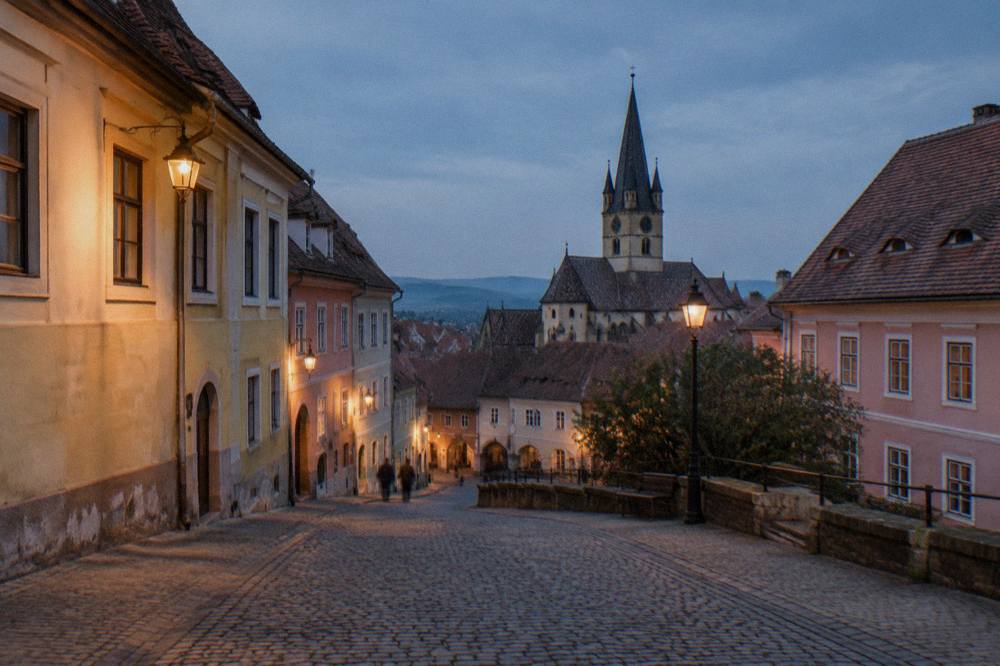
Health and practical care questions get their own pages: the question of whether the water in Sibiu is safe to drink is answered there, with no verdict repeated here. What this page can add is that Sibiu has a functioning normal-city infrastructure, a hospital history the city's own chronology traces back to 1292, and an emergency service reachable on one three-digit number. Tap-water safety, medical costs and insurance questions belong to your own government's advice and your own insurer, and those are the two places to check before any international trip, Romania included.
The mountains deserve respect rather than fear. The Făgăraș day hikes, the Cindrel trails above Păltiniș and the climb toward Bâlea Cascada are real mountain outings, weather-exposed and seasonally restricted, and the guided options in the roster exist partly because of that. Going with a guide on the high routes is the choice this desk would point to for anyone without local knowledge, and the Transfăgărășan's closure rule and fines, described above, are the clearest safety instruction in the whole region.
For travellers weighing Romania as a whole rather than Sibiu alone, the neighbouring pages cover whether Transylvania is worth visiting for tourists and whether Sighișoara is worth the trip. None of them rates safety, because none of the sources behind this site supplies a rating, and a page that does supply one is guessing.
What Should You Check Before You Go?
Check three things before you travel: your own government's current travel advice for Romania, the live status of the Transfăgărășan if it features in your plans, and the official opening hours of the specific museums you want, because the 2026 schedule is uneven, with the main Brukenthal sites closed Monday and Tuesday and the Council Tower shut for restoration until about January 2028. Add the 112 number to your phone, keep a card and a little cash in lei, and treat the mountain weather forecast as part of the plan for any day trip south of the city. That is the entire checklist, and every line of it is verifiable.
The walking tours above suit the city itself, and the village and Sighișoara options suit the wider region, with a guide handling the roads and the timings.
Common Questions About Visiting Romania And Sibiu Safely
Is It Safe To Visit Romania Right Now?
This desk gives no verdict and no current-events claim. Romania is a full Schengen member, the emergency number is 112, and no Sibiu-specific warning or crime figure appears in any source this site reports from. Check your own government's travel advice before you go.
Is Sibiu safe at night?
No source this desk reports from publishes a Sibiu crime statistic or names an unsafe street. The old town is a compact, largely pedestrian core of public squares and lanes, and normal city precautions are the only guidance any cited source offers.
Are there bears near Sibiu?
The Carpathians south of Sibiu are bear country, but no bear count, safety rule or fine for the Sibiu area appears in the sources behind this site, so none is printed. Generic mountain sense applies: stay on marked trails and check local conditions before hiking.
Is it safe to drive the Transfăgărășan?
When open, the high section runs daily 07:00 to 21:00 in season. The rule allows closure any day from 20 October, and driving the closed section carries fines of 10,000 to 30,000 lei. Always check the live road status first.
What is the emergency number in Romania?
112, the single European emergency number, confirmed by the Sibiu tourism site's own practical information page.
Is the tap water in Sibiu safe to drink?
No statement either way appears in the sources behind this page, so this desk prints no verdict. The dedicated question is covered on its own page, and bottled water is widely available in the city.
The short version of everything above: Romania's arrangements are ordinary European ones, Sibiu's historic centre is walkable and pedestrian-friendly, and the real safety planning for this region is about mountain roads, winter weather and museum schedules rather than anything on a warning list. Bring the normal city precautions, check the live road status before any high route, and the rest of the trip takes care of itself.
