Is Water In Sibiu Safe To Drink?
No official statement on Sibiu's tap water was found in trusted sources. Here is what the desk can say, what to ask your hotel, and how to plan around it in Sibiu, Transylvania.
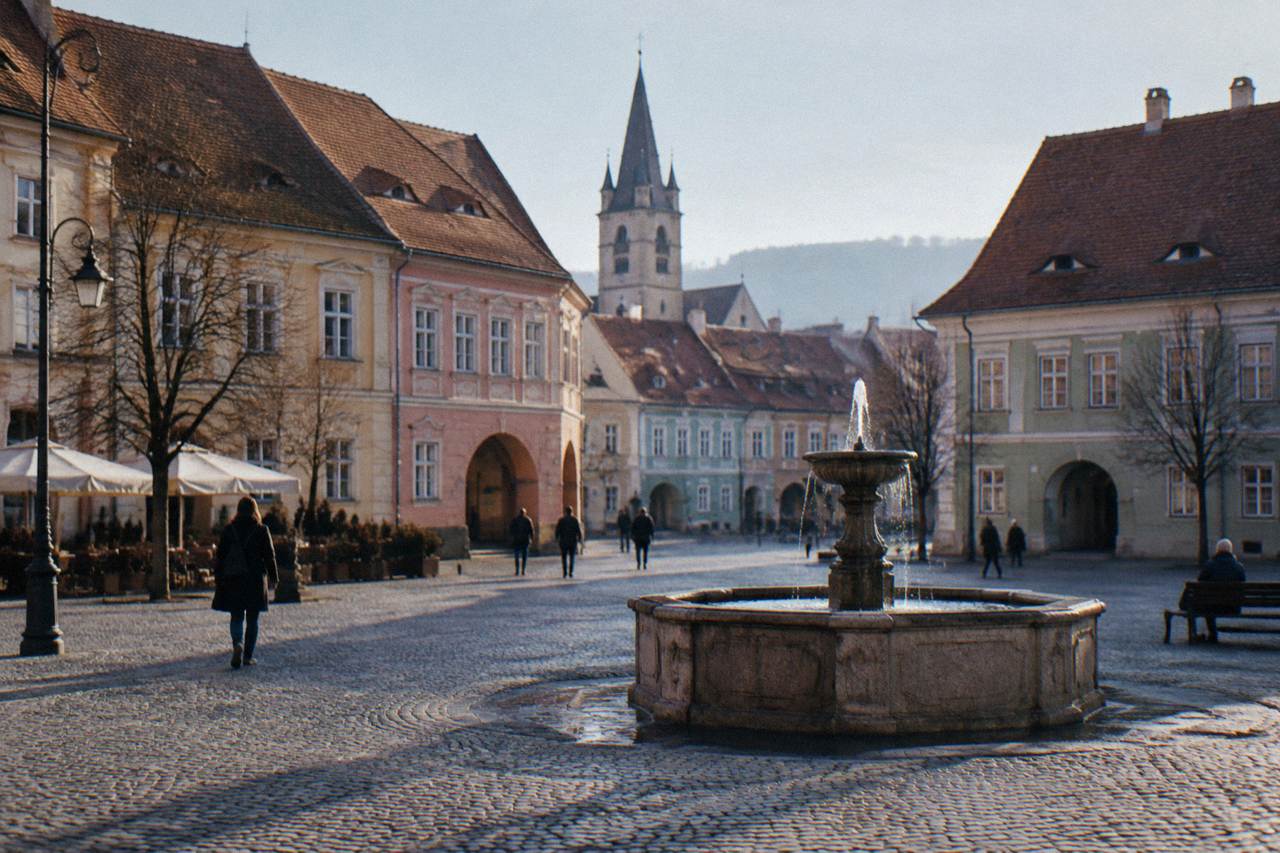
Sibiu, in Transylvania, central Romania, is an inland Saxon-founded city on the Cibin river, and the tap water question comes up for every traveller who lands here. The honest answer is that no official, trusted statement on Sibiu's tap water quality appears in the sources this site relies on: no municipal water-quality report, no national ministry page and no tourism-office guidance surfaced. That is not a warning and not an all-clear. It is a gap, and this page tells you plainly how to handle it: ask your accommodation, or buy bottled water, which is cheap and available everywhere in the city.
Is Water In Sibiu Safe To Drink?
No official statement on the safety of Sibiu's tap water was found in the trusted sources behind this page, so this desk cannot give a verdict either way. The practical guidance is simple: ask your hotel or guesthouse host directly, since local accommodation operators deal with the question daily, or drink bottled water, which is sold across the city at low cost. Romania is a full Schengen member with European Union drinking-water rules in force nationally.
That national context matters, even though it stops short of a Sibiu-specific answer. Romania, as an EU member state, applies the EU Drinking Water Directive, which sets binding quality standards for water intended for human consumption. What the research could not find is a published, current water-quality report for Sibiu's own network, the kind of document a city water utility would publish with test results. Without that document, no honest travel guide should print "the tap water is safe" as a flat claim, and none should print the opposite either.
The advice that follows is therefore procedural rather than verdict-like. Ask at check-in, in an email before arrival, or at the front desk of your guesthouse. Hosts in a city of about 134,308 residents in the 2021 census, one that receives foreign guests year round, will have answered this question many times. If you prefer not to ask, bottled water removes the question entirely.
It also helps to read what this site does say about the wider picture. The safety page at is Sibiu safe covers the city's general safety picture in the same reporting style, and the overview at where is Sibiu in Romania grounds the city's geography: Transylvania, the Cibin river, an altitude of 415 m in the Lower Town rising to 431 m in the Upper Town.
Where Does Sibiu's Water Come From?
Sibiu sits on the Cibin river, which drains the Cindrel and Făgăraș foothills before passing the city, but the research found no description of the city's water sources, treatment plants or supply network, so no specific claim about intake points or treatment stages appears here. What is certain is the geography: an inland city at 415 to 431 m, on a river that rises in the Carpathians.
Romanian cities generally draw on a mix of surface water and groundwater, and municipal utilities treat to national and EU standards, but general national context is not a substitute for a Sibiu-specific statement, and this desk will not dress one up as one. The practical question for a visitor is narrower anyway: is the water at my tap tested and declared drinkable? Only your accommodation or the local utility can answer that for a specific address, and only they can tell you whether an individual building has older internal piping that affects taste or quality even when the network supply is compliant.
Taste is a separate matter from safety, and travellers often conflate the two. Chlorination levels, mineral content and old building pipes can all change how water tastes without saying anything reliable about whether it is safe. If tap water in your Sibiu guesthouse tastes of chlorine, that is a treatment artefact, not a verdict. If it runs rusty in an old town building, ask the host about the internal plumbing before drinking it.
Should You Drink Tap Water Elsewhere In Romania?
No national statement on tap water safety for visitors is available, so the same honest gap applies across the country: no verdict can be given. The same practical rule travels well. Ask your host wherever you sleep, whether that is Sibiu, Brașov, Sighișoara or Bucharest, and fall back on bottled water whenever the answer is unclear.
Travellers moving between Sibiu and the surrounding region spend a lot of the day away from any tap. Day-trip destinations from Piața Mare include Sighișoara at about 102 minutes by road, Brașov at about 154 minutes, and the Transfăgărășan high section, which reopened for the 2026 season on 12 June and can be closed on any day from 20 October under the standing rule. On those days you will be buying water at shops, kiosks and mountain stalls regardless of what the tap in your guesthouse does, and this desk prints no price for bottled water. Check prices locally.
One thing worth planning around: tap water in restaurants. If you have decided to drink bottled water, order it at meals too, since Romanian restaurants commonly serve bottled water by default and some do not serve tap water at all. This is a service convention, not a safety statement, and it removes any need to interrogate staff about the kitchen's plumbing.
For travellers widening the question from water to the country as a whole, the page on is it safe to visit Romania right now takes the same no-verdict reporting approach, and the round-up of things to do in Sibiu covers everything from the Brukenthal National Museum's ticket prices to the city walls.
What About Ice, Coffee And Cooked Food In Sibiu?
No food-safety or water-safety rules for Sibiu establishments were found, so this desk makes no claim about ice, coffee machines or restaurant kitchens. Boiling is the standard water-treatment method everywhere, and coffee and tea are made with boiled water in normal preparation, which is why the tap-water question matters mainly for water drunk straight from the tap or used to brush teeth.
If you are being cautious, the consistent approach is to use bottled water for drinking and tooth-brushing and to treat hot drinks and cooked food as a separate category, since they involve boiled or heated water. This is the same logic travellers apply anywhere the local supply is unknown to them, and it needs no special claim about Sibiu's restaurants to make sense. The rest of the planning pages sit on Sibiu Travel Guide.
Food itself is a different and much better-documented pleasure here. Dishes this site can name from its sources include Sibiu salad, papanași (fried cheese doughnuts), ciorbă (sour soup), mici (grilled minced-meat rolls), sarmale (cabbage rolls), zacuscă (vegetable spread) and balmoș, alongside Transylvanian Saxon cooking. No restaurant, cafe or bar name appears on this page. A guided way to encounter the local table, with a host who can also answer practical questions like where the kitchen's water comes from, is the gastronomy walk described below, and you can Check availability on the operator's live listing.
How Much Does Bottled Water Cost In Sibiu?
No price for bottled water in Sibiu is given, not even a range. The currency facts that help you judge any price you see are these: Romania uses the leu (RON, lei), which trades at about 5.3 lei to the euro, and card acceptance details for individual shops were not checked, so carry some cash for small purchases.
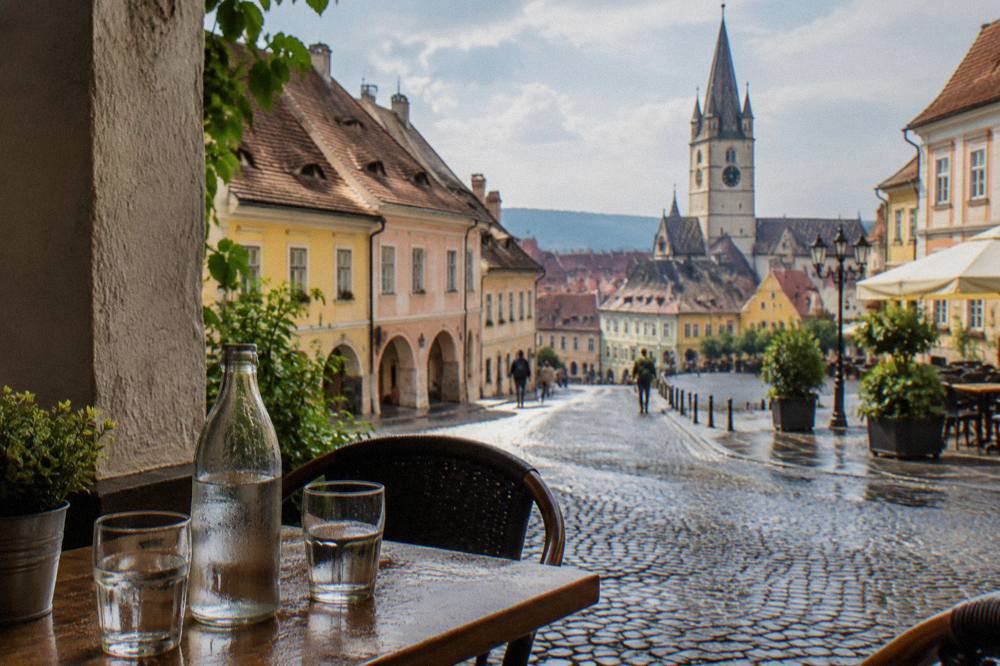
Supermarkets, kiosks and market stalls around Piața Mare, Piața Mică and the train station area all stock bottled water, both still and sparkling, in local and imported brands. Prices vary by bottle size and shop type, and a corner kiosk will charge more than a large supermarket on the edge of the centre; check the shelf label rather than relying on any figure from a guide. The market named Piața Cibin appears in this site's sources by name only, with no listed hours, so confirm locally if you plan to shop there.
One accommodation figure belongs on any budget note for the city: hotels in Sibiu add a 2 percent tax on the accommodation value, a charge that appears on your bill rather than in any shop price, so factor it into what a night's stay costs alongside whatever you spend on water.
What Practical Facts Help You Plan Around The Water Question?
The planning facts are these: the emergency number is 112, the city bus charges 3.5 lei for a 60-minute ticket, the airport is about 5 to 6 km from Piața Mare, and the city's climate runs from a January mean daily low of -5.7 C to an August mean daily high of 24.5 C per the ERA5 reanalysis, 1991-2020, which shapes how much water you carry on any given day.
Hot weather planning deserves the climate table, because hydration need changes through the year. The figures below are modelled normals, labelled as such, and the official city figures sit alongside them.
| Month | Mean Daily High (C) | Mean Daily Low (C) | Sunshine (h/day) | Snowfall (cm) |
|---|---|---|---|---|
| Jan | 2.2 | -5.7 | 6.2 | 23.3 |
| Feb | 4.3 | -4.4 | 7.1 | 22.3 |
| Mar | 8.7 | -0.8 | 8.7 | 18.2 |
| Apr | 14.6 | 4.0 | 10.4 | 7.8 |
| May | 19.1 | 9.0 | 11.3 | 0.3 |
| Jun | 22.4 | 12.9 | 12.4 | 0.0 |
| Jul | 24.2 | 14.6 | 12.8 | 0.0 |
| Aug | 24.5 | 14.8 | 11.8 | 0.0 |
| Sep | 19.6 | 10.5 | 9.7 | 0.1 |
| Oct | 14.5 | 5.7 | 8.0 | 2.7 |
| Nov | 8.7 | 0.9 | 6.4 | 13.0 |
| Dec | 3.1 | -3.9 | 5.6 | 20.8 |
Source: ERA5 reanalysis, 1991-2020, a modelled grid cell near Sibiu, not a weather-station record. The official city figures, per the city's own page, are a mean annual temperature of 8.9 C and mean annual rainfall of 662 mm, with June the wettest month at 113 mm and February the driest at 26.7 mm. In the July and August weeks, when the mean daily high sits at 24.2 and 24.5 C, carry a bottle on any walking day, whether or not you drink from the tap. In January, with snow on the ground and a mean low of -5.7 C, the question shrinks to coffee and tea, both made with boiled water.
A compact quick-reference table closes the practical picture:
| Item | Figure | Source Basis |
|---|---|---|
| Emergency number | 112 | Single European number, confirmed on the city tourism site |
| Currency | Leu (RON, lei), about 5.3 lei to the euro | National bank reference, approximate |
| City bus ticket | 3.5 lei for 60 minutes | Tursib official fares |
| Airport distance | About 5 to 6 km from Piața Mare | Computed road distance |
| Accommodation tax | 2 percent of accommodation value | Local council decision, in force since 1 January 2026 |
| Altitude | 415 m Lower Town to 431 m Upper Town | Official city page |
Sibiu rewards planning in other ways too, and the compact pedestrian old town means water bought once in Piața Mare or Piața Mică lasts most of a sightseeing loop between the Bridge of Lies, the Evangelical Cathedral and the Stairs Passage, all of which are free open-air sights with no tickets or hours. Note one 2026 closure if you are mapping viewpoints: the Council Tower has been closed to visitors since 19 January 2026 for a restoration planned at about 24 months, and the Evangelical Cathedral tower, at 10 RON for an adult ticket, is the open viewpoint instead.
Common Questions About Drinking Water In Sibiu
Is Water In Sibiu Safe To Drink?
No official statement on Sibiu's tap water quality was found in the trusted sources behind this site, so no verdict is offered. Ask your accommodation or drink bottled water, which is widely sold. Romania applies EU drinking-water standards nationally.
Can I Drink Tap Water In Sibiu Restaurants?
No food-safety rules for Sibiu establishments were found. Romanian restaurants commonly serve bottled water by default. If you prefer bottled water, order it explicitly at meals.
What About Ice And Coffee?
No rules exist for ice or coffee machines. Coffee and tea are prepared with boiled water, which is why the tap-water question mainly matters for water drunk straight or used for brushing teeth.
How Much Does Bottled Water Cost In Sibiu?
No single price could be confirmed, so none is printed. Romania uses the leu, at about 5.3 lei to the euro; check shelf labels in supermarkets and kiosks, since prices vary by size and shop.
Is The Tap Water Safe Elsewhere In Romania?
No national statement for visitors was found, so the same gap applies. The same rule travels: ask your host wherever you stay, and fall back on bottled water when the answer is unclear.
Where Can I Get Help If I Feel Unwell In Sibiu?
The single European emergency number, 112, works throughout Romania including Sibiu. For non-emergency advice, ask at your accommodation or a local pharmacy.
