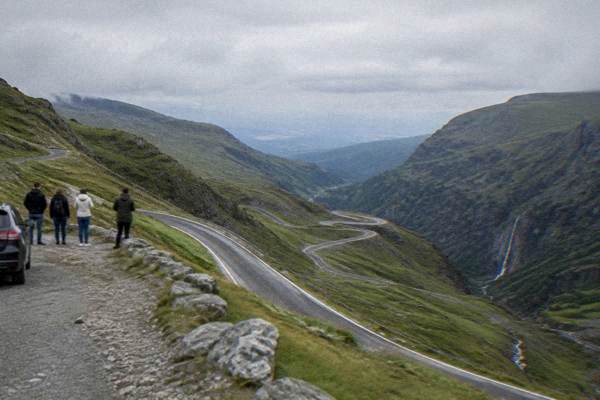
BaleaLake: The Glacial Lake At The Top Of The Pass
Bâlea Lake sits at 2,034 m in the Făgăraș mountains, about 88 minutes by road from Sibiu's Piața Mare, at the top of the Transfăgărășan. This guide covers the road season rules, the cable car, day tours and the other stops on the route.
Short answer
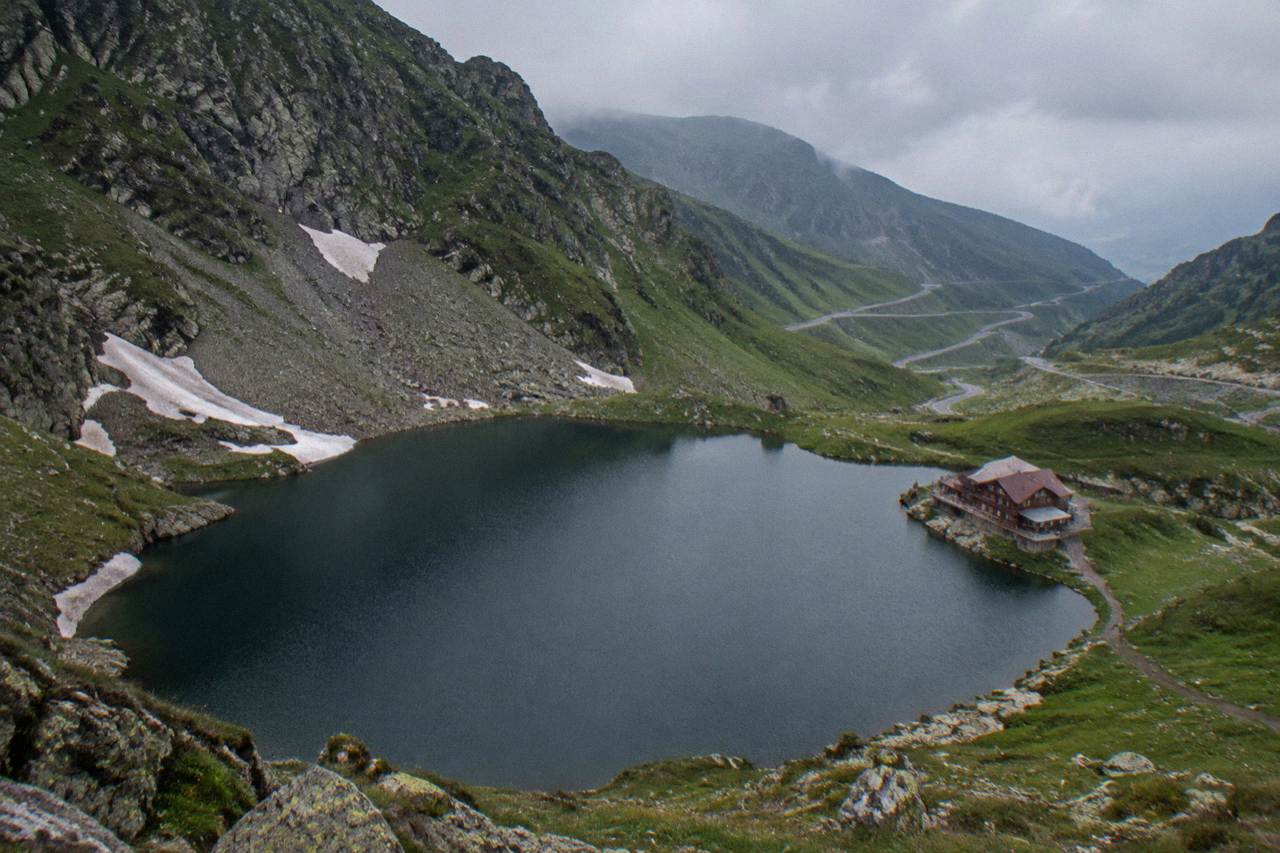
Bâlea Lake (Bâlea Lac) is a glacial lake at 2,034 m in the Făgăraș mountains, reached from Sibiu by the Transfăgărășan road in about 88 minutes, or year-round by the Bâlea Cascadă cable car when the road is closed. The high road runs daily 07:00 to 21:00 in season and can close on any day from 20 October.
Bâlea Lake, or Bâlea Lac in Romanian, is a glacial lake at 2,034 m in the Făgăraș mountains of Transylvania, and Sibiu, the Saxon-founded city on the Cibin river about 76 km away by road, is the natural base for reaching it. The lake sits at the top of the Transfăgărășan (DN7C), the mountain road that climbs from the Bâlea Cascadă waterfall on the southern side of the pass. This page gathers what the road authority, the cable car operator and the tour listings actually say about getting there, when the road runs, and what a day at the lake involves. For the wider picture of the city itself, see Sibiu Travel Guide and the main things to do in Sibiu page.
Where Is Balea Lake And How Far Is It From Sibiu?
Bâlea Lake lies at 2,034 m in the Făgăraș mountains, about 76 km and 88 minutes by road from Piața Mare in Sibiu, at the crest of the Transfăgărășan (DN7C). The road distance is computed over free-flow routing to the lake itself; the Bâlea Cascadă end of the pass, where the southern climb begins, is about 63 km and 69 minutes from the city.
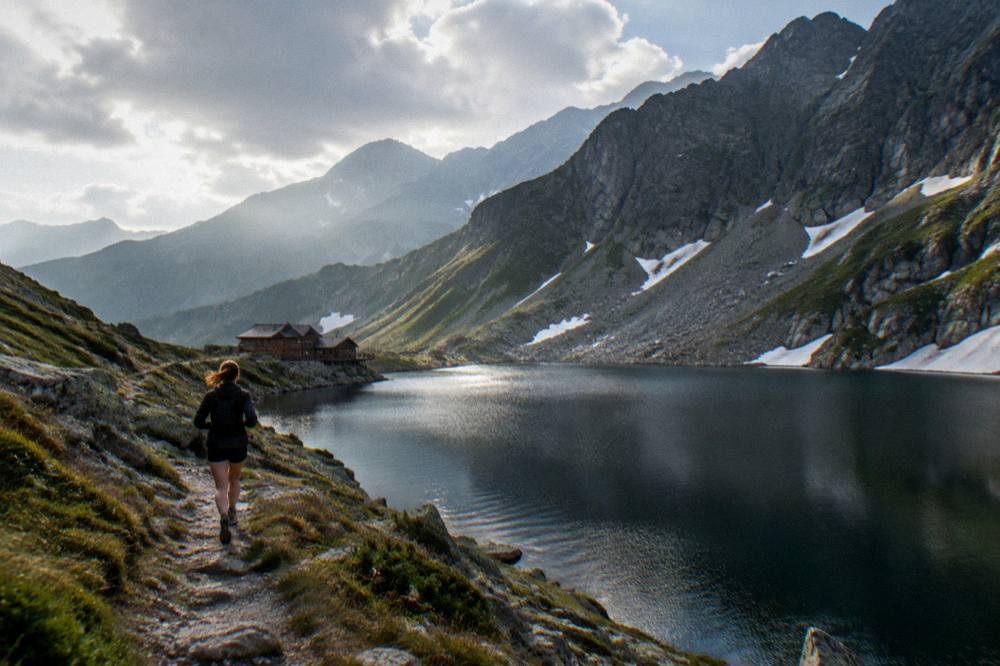
The lake is a cirque glacier relic: a bowl of water carved into the top of the pass, hemmed in by the Făgăraș ridgeline. Sibiu, at 415 to 431 m of elevation, sits in the valley below, which means the drive from the city to the lake climbs from valley floor to high mountain crest in under two hours of driving. The mountains here are a day trip, not part of the city itself: Sibiu is inland, on the Cibin river, and the Făgăraș range forms its southern horizon.
The route from Sibiu leaves the city on the DN7 toward the Olt valley, then branches onto the DN7C at the Bâlea Cascadă end. Note one live complication for autumn 2026: the A1 motorway's Sibiu to Boița section is closed from 5 October to 19 December 2026 for overpass works, with traffic diverted onto the DN7, so the first leg of the drive can carry more traffic than usual. Allow extra time.
| Route from Piața Mare, Sibiu | Distance (about) | Free-flow drive time (about) |
|---|---|---|
| Bâlea Cascadă (start of the pass road) | 63 km | 69 minutes |
| Bâlea Lake (lake pin at the crest) | 76 km | 88 minutes |
| Păltiniș ski resort (alternative mountain day) | 32 km | 40 minutes |
| Rășinari, Mărginimea Sibiului | 13 km | 18 minutes |
| Sibiel | 25 km | 36 minutes |
Distances are computed over standard routing and are free-flow figures, not timetables: mountain traffic, weather and the switchbacks themselves slow the last stretch considerably. For other mountain and heritage options from the city, see the Sibiu day trips along the Transfăgărășan page and the Păltiniș guide.
Is The Transfăgărășan Road To Balea Lake Open?
The Transfăgărășan's high stretch between Bâlea Cascadă and Piscu Negru reopened for the 2026 season on 12 June and runs daily from 07:00 to 21:00, but by rule it can be closed on any day from 20 October onward, so no source can promise it is open on any given day. Driving the closed section is fined 10,000 to 30,000 lei under a law in force since November 2025.
That is the single most important fact about this trip. The alpine section of the DN7C is a summer road: the road authority allows closure from 20 October each year, and early snow can shut it before that date. The 2026 season opened at midday on 12 June, with the daily 07:00 to 21:00 window in force through the summer. On 23 September 2026 the road was still open, in winter conditions at the top; its status after that date could not be confirmed. Never plan around the assumption that the road is open in late October, and always check the road authority's live status on the morning you drive.
The fine regime matters. Driving the closed high section carries a fine of 10,000 to 30,000 lei, a rule in force since November 2025, so the closure is enforced, not advisory. Outside the road season the only vehicle access to the lake is the cable car from Bâlea Cascadă, covered below.
The Transalpina (DN67C), the other high Transylvanian road, follows the same logic: it reopened on 29 May 2026 in daytime hours, reported at 09:00 to 18:00 from 26 September, and no autumn closure date has been announced for it either. Both roads answer to snow, not to calendars.
For travellers who would rather not read road-status bulletins in Romanian, a guided day tour removes the question of driving altogether: the operator handles the route and the timing, and cancellation terms are stated at booking.
A related question worth settling early: the road is a destination in itself, and the full Transfăgărășan guide covers the southern side, the dam and the climb in detail. This page stays with the lake at the top.
How Do You Get To Balea Lake From Sibiu?
There are three realistic ways from Sibiu: drive the DN7C yourself in the road season (about 88 minutes from Piața Mare), take a shared or private day tour that includes the pass, or drive only to Bâlea Cascadă, about 69 minutes, and ride the cable car up, which also works when the high road is closed. City buses do not serve the pass.
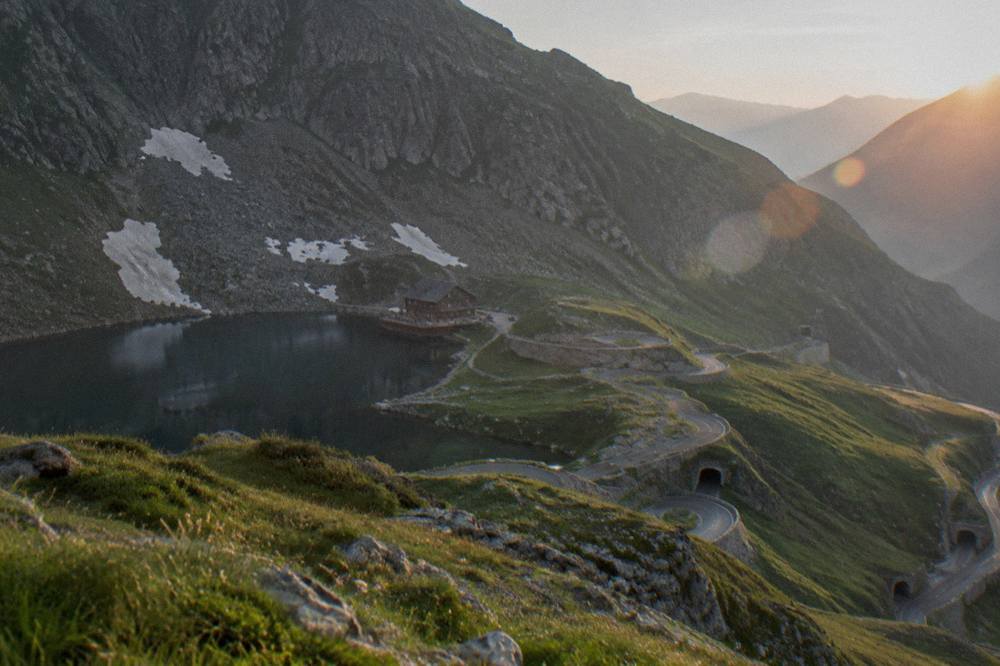
Self-driving gives the most freedom and the most responsibility. The DN7C's northern climb is a sequence of switchbacks and short tunnels, and the 07:00 to 21:00 window means an early start from Sibiu lands you at the lake with a full day ahead. Fuel and time margin matter: the pass has no motorway alternative, and the A1 diversion onto the DN7 between Sibiu and Boița adds traffic to the valley leg until 19 December 2026.
A guided tour trades that flexibility for certainty. The featured day tour from this site's roster covers the Transfăgărășan, Bâlea Lake and Avrig in one escorted day from Sibiu; read more about it on the Transfăgărășan, Bâlea Lake and Avrig tour page, or Check availability for live dates. There is also a direct bus transfer product from Sibiu to Bâlea for travellers who want transport only, without a guide.
The table below compares the three approaches on what the sources actually support.
| Approach | Works in road season? | Works when the road is closed? | What the sources say |
|---|---|---|---|
| Self-drive on the DN7C | Yes, 07:00 to 21:00 daily | No; fines of 10,000 to 30,000 lei on the closed section | Road authority rules |
| Guided day tour from Sibiu | Yes, tours follow the open road | Tours reroute or cancel per their terms | Operator listings |
| Drive to Bâlea Cascadă, cable car up | Yes | Yes, the cable car is the winter access | Operator page, reported hours |
One planning note that follows from the road rules: a day trip that combines Bâlea Lake with anything else in the mountains needs the pass open. In the closed season, from roughly late October to mid-June, the cable car is the route up, and the rest of the Făgăraș day becomes valley sightseeing instead.
Can You Take The Cable Car To Balea Lake?
Yes: a cable car runs from Bâlea Cascadă, at the foot of the pass, up to Bâlea Lake, reported by the operator at about 09:00 to 18:00, roughly every 30 minutes, with a ride of about 15 minutes, and it keeps running in October and November as the winter access when the road shuts. Its ticket price is not confirmed in the sources checked, so confirm at the operator before you go.
The cable car is the year-round answer to the road's season. When the DN7C's high section closes, which by rule can happen from 20 October, the gondola from Bâlea Cascadă becomes the only public way up to the lake, and the operator's page states it runs in October and November for exactly that purpose. In the open season you can use it in either direction: drive up the pass and ride down to the waterfall, or park at the bottom and leave the hairpins to the cable.
The price question deserves a straight answer: two different figures appear on the operator's own page for what may be different lines, and which one applies to the Cascadă to Lac run is not clear. Confirm the current ticket price on the operator's own site or at the bottom station before you travel. The full detail sits on the is there a cable car to Bâlea Lake answers page.
| Cable car fact | Figure | Source basis |
|---|---|---|
| Route | Bâlea Cascadă to Bâlea Lake | Operator page |
| Reported hours | About 09:00 to 18:00 | Operator page, reported |
| Frequency | Roughly every 30 minutes | Operator page, reported |
| Ride length | About 15 minutes | Operator page, reported |
| Winter role | Runs October and November as road-closed access | Operator page |
| Ticket price | Not confirmed; two figures appear | Confirm before you go |
The drive to Bâlea Cascadă itself is the same valley route as the pass: about 63 km and 69 minutes from Sibiu's centre, all on the open, year-round part of the road network.
What Is There To Do At Balea Lake?
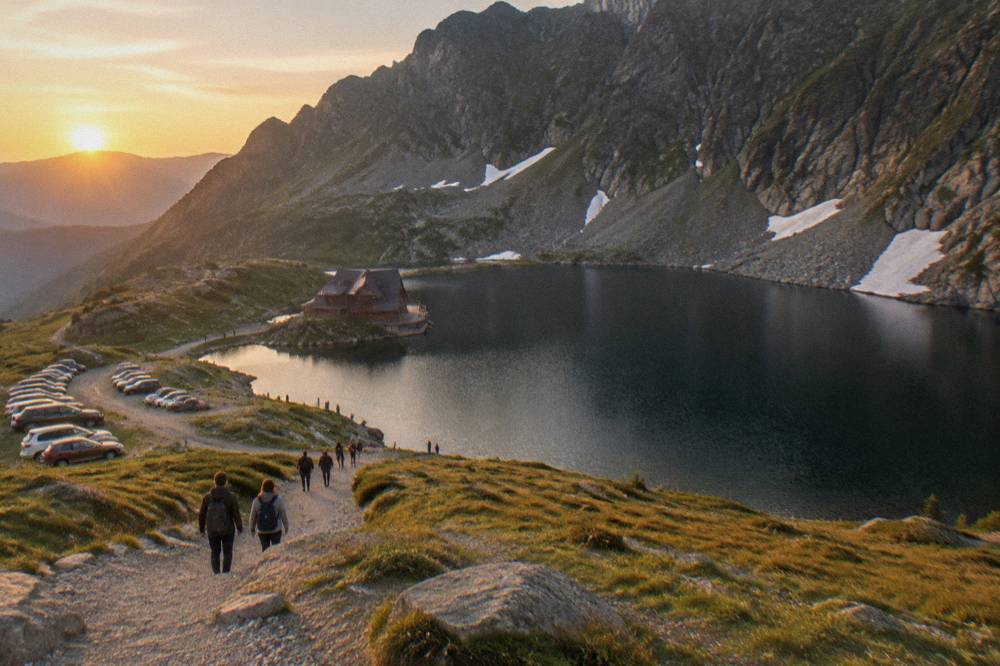
The lake itself is the attraction: a glacial cirque at 2,034 m with short walks along the shore, views across the Făgăraș crest, and, in season, food and drink stalls at the top near the cable car station and the road. There is no museum, no ticketed site and no activity operator at the lake; the day is walking, photography and the descent.
What the sources support is modest and honest. The lake is a natural feature with open access; the pass road, the cable car and the waterfall below are the built attractions around it. Walks around the cirque are short and unpaved, and at 2,034 m the air is thin enough that the walk to the far shore is slower than its distance suggests. Weather at the crest changes fast, and the same day can produce sun, wind and sleet in an hour, which is why every practical account of the pass tells drivers to carry a layer even in July.
For a structured day, the tour roster offers two shapes. The featured Transfăgărășan, Bâlea Lake and Avrig tour covers the road, the lake and the Avrig stop in one guided day. Hikers have a dedicated option that climbs to Bâlea Cascadă and the lake on foot from Sibiu with a guide, the Carpathian Heights hike to Bâlea Cascadă and Lake, a different way to earn the view.
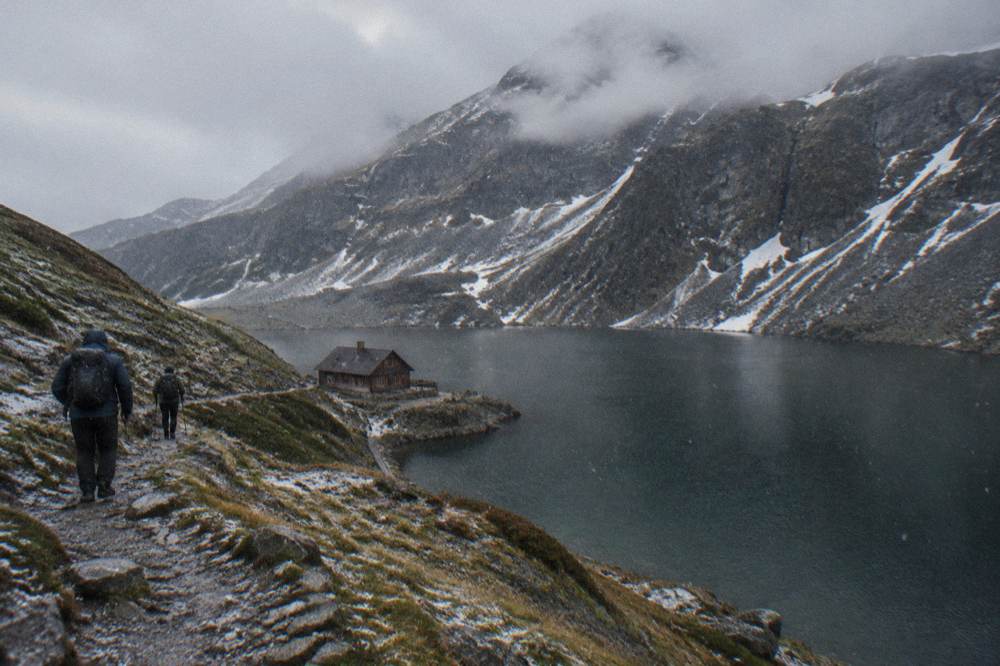
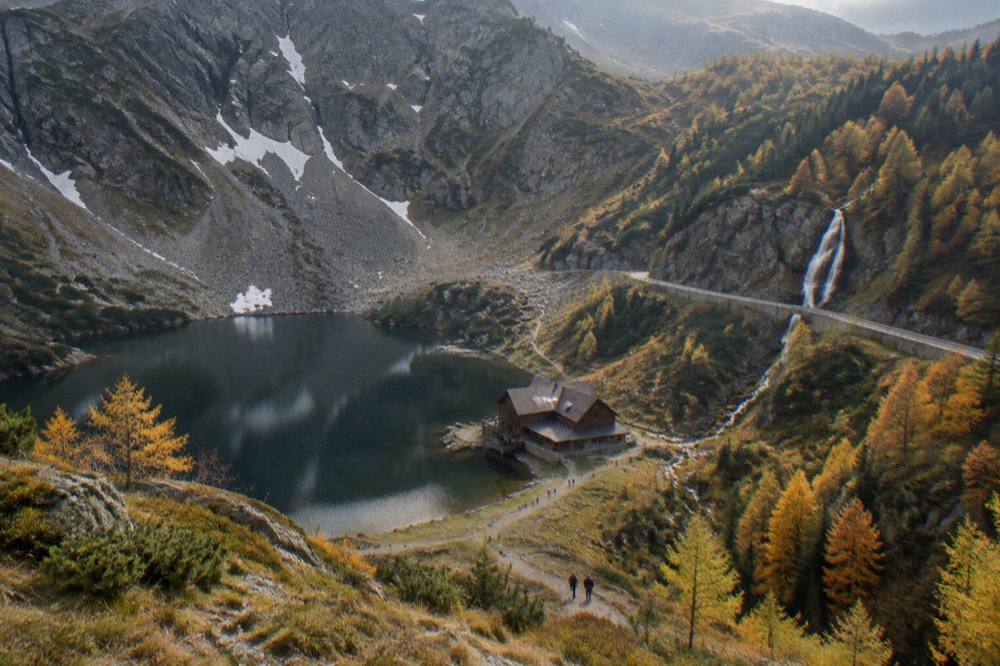
Below the lake, on the northern side, the Bâlea Cascadă waterfall gives the pass its other landmark, and the cable car's bottom station sits beside it. The waterfall and the lake make a natural pair: one stop at the bottom, one at the top, connected by road or gondola.
Can You Swim In Balea Lake?
The sources checked give no swimming rule for Bâlea Lake in either direction: no ban is published, and no statement that swimming is allowed or safe appears either. It is a cold glacial lake at 2,034 m, fed by snowmelt, which is a fact about the water, not a verdict on swimming; treat the question as unanswered and follow any signage at the lake itself.
This is a question the internet answers confidently and the primary sources do not. Rather than repeat a claim nobody publishes, the honest position is that no rule was found, and the lake's own character, high altitude and snowmelt water, is the relevant context. The full discussion, including why the question keeps coming up, is on the can you swim in Lake Bâlea page.
What Is The Weather Like At Balea Lake?
No mountain-station weather record for the lake is published in the sources here; the Sibiu valley figures show the pattern below it, with July mean highs of 24.2 C and January mean lows of -5.7 C (ERA5 reanalysis, 1991-2020), and the lake at 2,034 m runs markedly colder, windier and snowier than the valley in every month.
The honest way to write mountain weather is to say what the modelled valley normals show and let the altitude do the rest. Sibiu's own official figures give a mean annual temperature of 8.9 C and 662 mm of rainfall, with June the city's wettest month at 113 mm. The ERA5 reanalysis for the Sibiu grid cell, 1991 to 2020, adds sunshine and snow: valley sunshine runs from 5.6 hours a day in December to 12.8 in July, and snowfall in the valley cell runs from November to March, peaking in January.
| Month | Sibiu grid mean high C | Mean low C | Sun h/day | Valley snowfall cm |
|---|---|---|---|---|
| Jan | 2.2 | -5.7 | 6.2 | 23.3 |
| Feb | 4.3 | -4.4 | 7.1 | 22.3 |
| Mar | 8.7 | -0.8 | 8.7 | 18.2 |
| Apr | 14.6 | 4.0 | 10.4 | 7.8 |
| May | 19.1 | 9.0 | 11.3 | 0.3 |
| Jun | 22.4 | 12.9 | 12.4 | 0.0 |
| Jul | 24.2 | 14.6 | 12.8 | 0.0 |
| Aug | 24.5 | 14.8 | 11.8 | 0.0 |
| Sep | 19.6 | 10.5 | 9.7 | 0.1 |
| Oct | 14.5 | 5.7 | 8.0 | 2.7 |
| Nov | 8.7 | 0.9 | 6.4 | 13.0 |
| Dec | 3.1 | -3.9 | 5.6 | 20.8 |
ERA5 reanalysis, 1991-2020, modelled grid values for the Sibiu cell near 430 m; the lake sits far higher on the crest, where snow can fall in any month of the road season and the road authority's closure window exists for exactly that reason. Pack for two climates: valley summer at the bottom of the drive, autumn at the top.
What Else Can You Stop At On The Balea Lake Route?
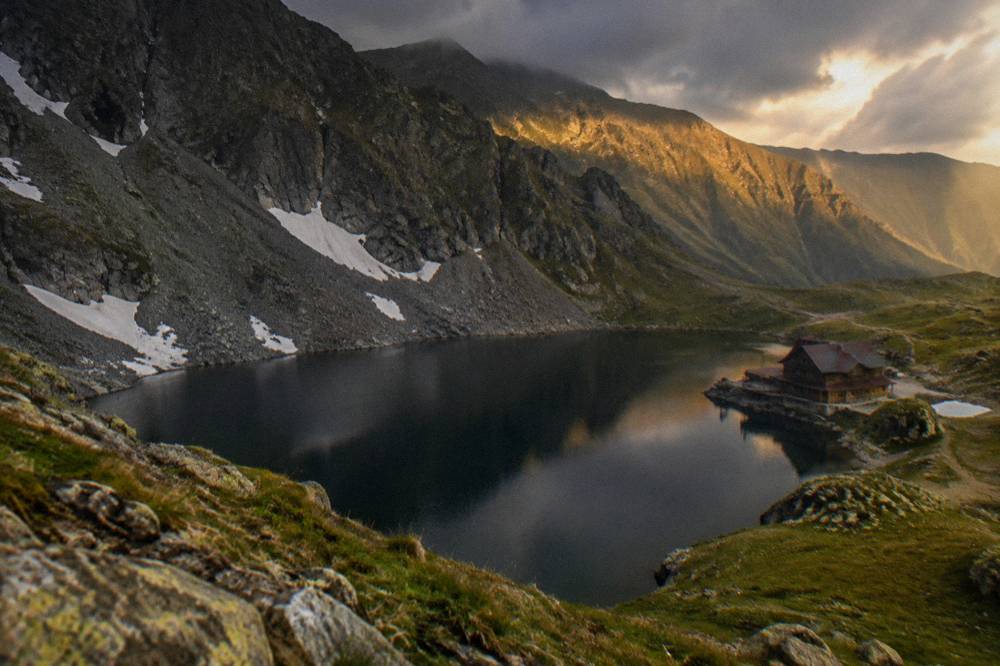
The northern approach from Sibiu supports three stops beyond the pass itself: the Bâlea Cascadă waterfall at the foot of the climb, the Avrig parkland south-east of the city on the tour route, and, for a longer loop, the Făgăraș fortress about 80 minutes east at 75 km, plus Vidraru dam and Poenari fortress on the southern side of the pass.
The southern side of the Transfăgărășan, reached by driving over the crest toward Piscu Negru, holds the Vidraru dam and, on the Transfăgărășan's continuation toward Curtea de Argeș, Poenari fortress. For both, the sources here carry distances only: opening hours, step counts and prices for Poenari were not found, so confirm locally before committing a day. The same applies to the Făgăraș fortress: the drive is about 75 km and 80 minutes from Piața Mare, but no 2026 entry details are published in the sources checked.
Closer to the city, Avrig appears on the featured tour's route as the landscaped estate stop, and the valley towns of the Olt corridor break up the drive. If the pass is closed and the lake is reachable only by cable car, a good fallback day pairs Bâlea Cascadă with the Saxon heritage circuit: Cisnădie and Cisnădioara at 10 and 13 km, or Sibiel with its icon museum at 25 km, both under 40 minutes from the centre.
| Stop from Sibiu | Distance (about) | Free-flow time (about) | Entry details |
|---|---|---|---|
| Bâlea Cascadă waterfall | 63 km | 69 minutes | Open roadside access |
| Bâlea Lake | 76 km | 88 minutes | Open access at the crest |
| Făgăraș fortress | 75 km | 80 minutes | Not found; confirm locally |
| Cisnădie fortified church | 10 km | 14 minutes | Not found; confirm locally |
| Sibiel | 25 km | 36 minutes | Museum hours not retrieved |
| Brașov (longer loop) | 142 km | 154 minutes | See the Brașov guide |
For a two-day mountain-and-heritage plan, the Sibiu and Transfăgărășan itinerary page sequences the pass with city days.
Should You Drive Yourself Or Take A Tour To Balea Lake?
Drive yourself if the road is in season, you are comfortable with hairpins and you want to set your own pace at the crest; take a tour if you are travelling without a car, want the pass's timing handled, or are visiting outside the road window, when the shared tours and the bus transfer are the practical options and the cable car covers the last stretch.
The decision is mostly a transport decision. The DN7C's northern climb is engineered and maintained, but it is a mountain road with tunnels, one-lane stretches and weather that changes by the switchback; the 07:00 to 21:00 window and the 20 October closure rule reward drivers who check the live status on the day. Tours absorb that risk: the operator reroutes or cancels on road status, and the cancellation terms are stated on the listing before payment.
For the tour route itself, three products in this site's roster fit the Bâlea Lake day, and the featured one, the Transfăgărășan, Bâlea Lake and Avrig tour, is the general-audience choice: the pass, the lake and a landscaped estate stop in one escorted day.
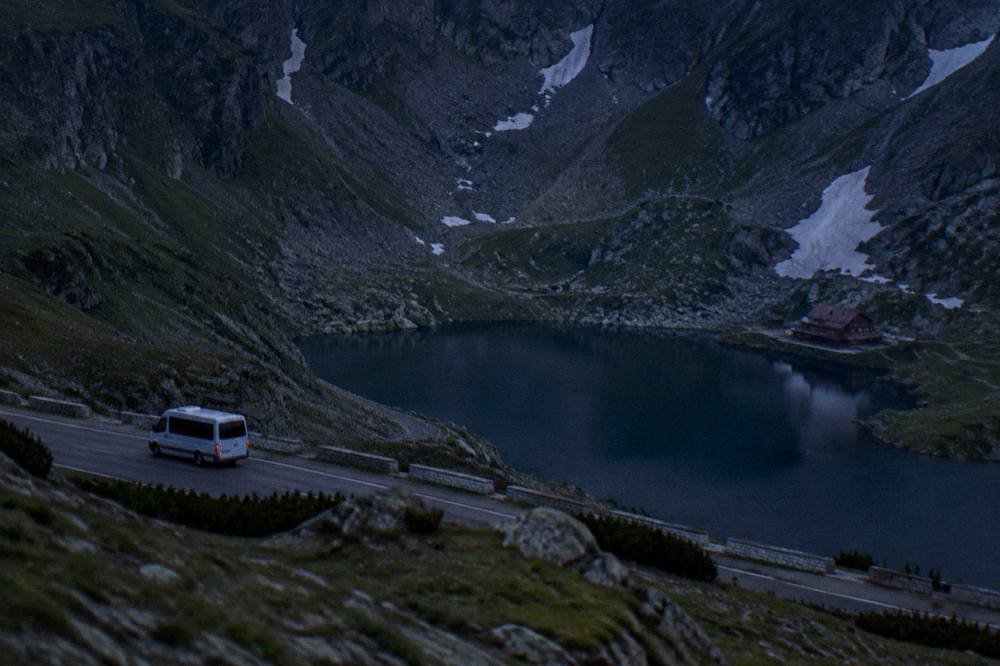
The transfer-only option suits confident travellers who want to walk the crest alone: the Sibiu to Bâlea bus transfer moves you up and back without a guide, and the day at the top is your own.
One more planning fact from the pack: the fines for driving the closed section, 10,000 to 30,000 lei, are the sharpest argument for the tour or the cable car in the shoulder weeks, when the road's status is genuinely uncertain.
How Does Balea Lake Fit Into A Longer Transylvania Trip?
Bâlea Lake works as the mountain day of a Sibiu-based stay of three or more days, with the city's squares and museums on the other days and the Saxon and citadel towns, Sighișoara at about 96 km, Brașov at about 142 km and Alba Iulia at about 71 km, as separate day trips on the east and west axes.
The geography pushes this shape. Bâlea Lake and the pass sit due south; Sighișoara and Biertan sit east; Brașov, Bran Castle and Râșnov sit south-east; Alba Iulia and the Corvin Castle routes sit west. Trying to pair the pass with any of them in one day means hours of extra driving on mountain and valley roads, and the sources' drive times say so plainly: Brașov is about 154 minutes from Piața Mare on its own.
A sensible week from Sibiu: two city days for Piața Mare, the Brukenthal museums and the Evangelical Cathedral tower, one pass day for Bâlea Lake, then one eastern day for Sighișoara or Biertan, one south-eastern day for Brașov and Bran Castle, and one western day for Alba Iulia or the Corvin Castle route. The Sibiu in 3 days and Transylvania road trip from Sibiu pages sequence the full versions.
| Day-trip axis from Sibiu | Headline stop | Distance (about) | Time (about) |
|---|---|---|---|
| South | Bâlea Lake via the Transfăgărășan | 76 km | 88 minutes |
| East | Sighișoara historic centre | 96 km | 102 minutes |
| East-north | Biertan fortified church | 76 km | 1 h 15 to 1 h 30 |
| South-east | Brașov | 142 km | 154 minutes |
| South-east | Bran Castle | 138 km | 154 minutes |
| West | Alba Iulia citadel | 71 km | 81 minutes |
Timing matters for the mountain day in any longer plan: the pass's 20 October rule means a late-October trip may find the road shut, and the cable car, not the drive, becomes the lake day.
For a mixed group or a second mountain day, the tour roster also runs a Corvin Castle, Deva Fortress and Alba Iulia circuit, a fortress-and-citadel western alternative when the weather closes the pass.
Bâlea Lake rewards the planner who reads the rules before the road: check the live status the morning you drive, keep the cable car as the fallback, and give the crest more time than the drive time suggests. The lake has been at the top of this pass since the ice left it there, and it will keep the same hours next season regardless of anyone's itinerary; the only variable you control is which day you go up.
Common Questions About Balea Lake
Is the Transfăgărășan open right now?
The high section between Bâlea Cascadă and Piscu Negru runs daily 07:00 to 21:00 in season, but by rule it can be closed on any day from 20 October, and no page can promise live status. Check the road authority's current bulletin on the morning you drive.
How far is Balea Lake from Sibiu?
About 76 km and 88 minutes by road from Piața Mare to the lake pin, computed over free-flow routing. The Bâlea Cascadă end of the pass, where the cable car starts, is about 63 km and 69 minutes.
Can you get to Balea Lake when the road is closed?
Yes, by the cable car from Bâlea Cascadă, which the operator reports runs about 09:00 to 18:00, roughly every 30 minutes, and keeps running in October and November as the winter access. Its ticket price is not confirmed in the sources checked; confirm with the operator.
Is there a cable car to Balea Lake?
Yes, from Bâlea Cascadă at the foot of the pass to the lake, a ride of about 15 minutes per the operator's page. Confirm current hours and prices before you go.
Can you swim in Balea Lake?
No swimming rule was found in either direction: no published ban, and no statement that swimming is allowed. It is a cold glacial lake at 2,034 m; follow any signage at the site.
What is the fine for driving the closed Transfăgărășan section?
Driving the closed high section is fined 10,000 to 30,000 lei under the law in force since November 2025.