Sibiu To Cluj-Napoca: Train, Bus And Car
Cluj-Napoca sits about 169 km northwest of Sibiu, and the trip links two of Transylvania's largest cities through Alba Iulia and Turda.
Short answer
Cluj-Napoca is about 169 km and 151 minutes by road from Sibiu, with trains taking roughly four to six hours on connected routings; a car lets you stop at Alba Iulia and Turda.
Sibiu and Cluj-Napoca are the two largest cities of Transylvania, and the roughly 169 km of road between them crosses some of the region's most rewarding stopovers, including the Alba Carolina citadel at Alba Iulia and the salt mine at Turda. This guide sets out what the sources actually say about each way of making the trip: the train connection, the long-distance bus, and the drive, plus what a one-day tour covers when a self-planned round trip feels too long. Whether the journey is a transfer between two city breaks or the spine of a wider Transylvania route, the numbers below come from road-routing computations and reported timetables rather than guesswork.
How Far Is It From Sibiu To Cluj-Napoca?
Cluj-Napoca lies about 169 km from Piața Mare in Sibiu by road, with a computed free-flow driving time of about 151 minutes, roughly two and a half hours in normal conditions. Cluj-Napoca's airport is slightly farther at about 177 km and 153 minutes. These are routing estimates over the road network, not timetables, and they assume clear roads with no stops.
Those figures come from OpenStreetMap routing calculations, which measure free-flow travel and exclude traffic, roadworks and rest stops. In practice, a self-drive day that includes sightseeing takes much longer than the raw number suggests, because the same corridor carries Alba Iulia, Turda and, on a detour, Corvin Castle. Anyone planning to treat the drive as a sightseeing day rather than a transfer should budget the whole day for it.
The straight-line picture is simpler: Cluj-Napoca sits to the northwest of Sibiu, and the road route runs broadly through the Mureș corridor via Alba Iulia and Turda before climbing into the hills above Cluj. For context within the region, Brașov is farther at about 142 km and 154 minutes to the southeast, so Cluj and Brașov make similar demands on a day, in opposite directions.
| Destination from Piața Mare | Road distance | Free-flow drive time |
|---|---|---|
| Alba Iulia | about 71 km | about 81 minutes |
| Cetatea Făgăraș | about 75 km | about 80 minutes |
| Castelul Corvinilor (Corvin Castle) | about 130 km | about 123 minutes |
| Salina Turda | about 143 km | about 129 minutes |
| Cluj-Napoca | about 169 km | about 151 minutes |
| Aeroportul Cluj-Napoca | about 177 km | about 153 minutes |
The table shows why the Cluj run doubles as a sightseeing corridor: three of the region's headline stops sit along or near it. Distances are computed point-to-point and should be read as planning figures, with extra time added for parking, ticket queues and winter conditions.
What Is The Train From Sibiu To Cluj Like?
There is no fast direct rail line between Sibiu and Cluj-Napoca, and reported journey times run from about four to six hours or more, typically with a connection via Alba Iulia or Mediaș. The train is the slow option of the three, but Gara Sibiu is only about 0.8 km from Piața Mare, so the station access on the Sibiu end costs almost nothing. Check current timetables on cfrcalatori.ro before committing, because routings and frequencies change.
The railway geography explains the time. Sibiu's line is a branch that joins the main Transylvanian corridor at either Alba Iulia or Mediaș, and Cluj-bound passengers change there onto the mainline. That double-back through the junction is why a 169 km road trip becomes a five-hour rail journey. Reported times on comparable regional routings, such as Sibiu to Sighișoara at two to two and a half hours and Sibiu to Brașov at three to four hours, follow the same pattern of branch-line speeds.
For travellers with luggage or a tight schedule, the train rewards patience rather than speed. For everyone else it is a working way to cross Transylvania without a car, and the Sibiu station's proximity to the old town makes the start of the journey easy. The Sibiu train station guide covers what the station itself offers.
No train fare for this route can be quoted here, because none was confirmed at a reliable source. Prices and seat availability should be checked at booking, and the same applies to daily frequencies.
Should You Take The Bus From Sibiu To Cluj-Napoca?
The long-distance bus is a real alternative on this corridor, with Sibiu's bus station (Autogara, at Piața 1 Decembrie 1918) about 0.8 km from Piața Mare, the same walking distance as the train station. FlixBus serves Sibiu, with the Sibiu to Bucharest run reported at 4 hours 25 minutes to 6 hours from about 46 RON, which shows the operator's pricing scale, but the Cluj schedule and fare must be checked on the operator's own site before booking.
The bus station and the train station sit at opposite ends of the same short walk from the old town, so the choice between them comes down to schedule and price on the day of travel rather than access. Buses in Romania generally follow the main roads, so the Cluj run covers the same corridor a car would, without the parking question at the far end.
Reported fares exist only for the Bucharest route on this site's sources, and they are attributed to the operator's own page. For Cluj, the practical advice is to compare the bus and the train on the specific travel date, since neither has a confirmed fixed price or frequency in the sources behind this guide. Booking platforms and the operators' sites carry live schedules.
For travellers arriving by air, note that Sibiu's own airport is about 5 to 6 km from Piața Mare and served by Tursib line 11 with a 3.5 lei 60-minute ticket bought contactless on board. Wizz Air's winter 2026-27 schedule from 25 October runs 17 flights a week at Sibiu, so anyone flying in to make this trip should check flight days against bus and train days rather than assuming a daily rhythm.
Is Driving From Sibiu To Cluj-Napoca A Good Idea?
Driving is the fastest and most flexible way to cover the 169 km, at about 151 minutes of free-flow road time from Piața Mare, and it is the only option that turns the corridor into a sightseeing day at Alba Iulia and Turda. The trade-offs are parking in Cluj-Napoca, winter weather on the Transylvanian plateau, and the fact that the round trip with stops is a full day of driving.
A car converts the transfer into the region's most efficient multi-stop day. The natural sequence runs Sibiu to Alba Iulia (about 81 minutes), where the grounds of the Alba Carolina citadel are reported to be free to walk, then on to the Turda salt mine (a further stretch on the same corridor), and finally into Cluj-Napoca. Reversing the order works too, and Corvin Castle at Hunedoara can be folded in as a detour at about 130 km and 123 minutes from Sibiu, though that version is over four hours of driving before any sightseeing.
Two cautions apply. First, no 2026 ticket prices or opening hours were confirmed for the Turda salt mine, the Alba Iulia museums or Cluj sights, so each stop's current price and schedule should be confirmed before the trip is locked in. Second, the A1 motorway picture in Romania is uneven: the Sibiu to Pitești section towards Bucharest is unfinished, with the Sibiu to Boița stretch closed from 5 October to 19 December 2026 and traffic diverted onto DN7. That closure sits on the southern route rather than the Cluj corridor, but anyone combining Cluj with a Bucharest leg should allow extra time and check the live road status.
For a fuller treatment of the car question across the whole country, see is it worth renting a car in Romania, and for the local specifics, the car rental in Sibiu guide.
What Should You Stop And See On The Sibiu To Cluj Route?
The three stops that justify driving rather than riding through are the Alba Carolina citadel at Alba Iulia, the Turda salt mine, and, on a longer version, Corvin Castle at Hunedoara, at about 81, 129 and 123 minutes from Piața Mare respectively. Alba Iulia's citadel grounds are reported to be free to walk at any hour, while the salt mine and the castle need confirmed tickets and hours booked or checked in advance.
Alba Iulia is the easiest add-on because it sits directly on the corridor at about 71 km. The star-shaped Alba Carolina citadel is the town's whole reason to stop, and its grounds being free removes the ticket question entirely. Museum exhibits inside the citadel have their own prices and schedules, none confirmed for 2026, so confirm those on the spot if a museum visit matters.
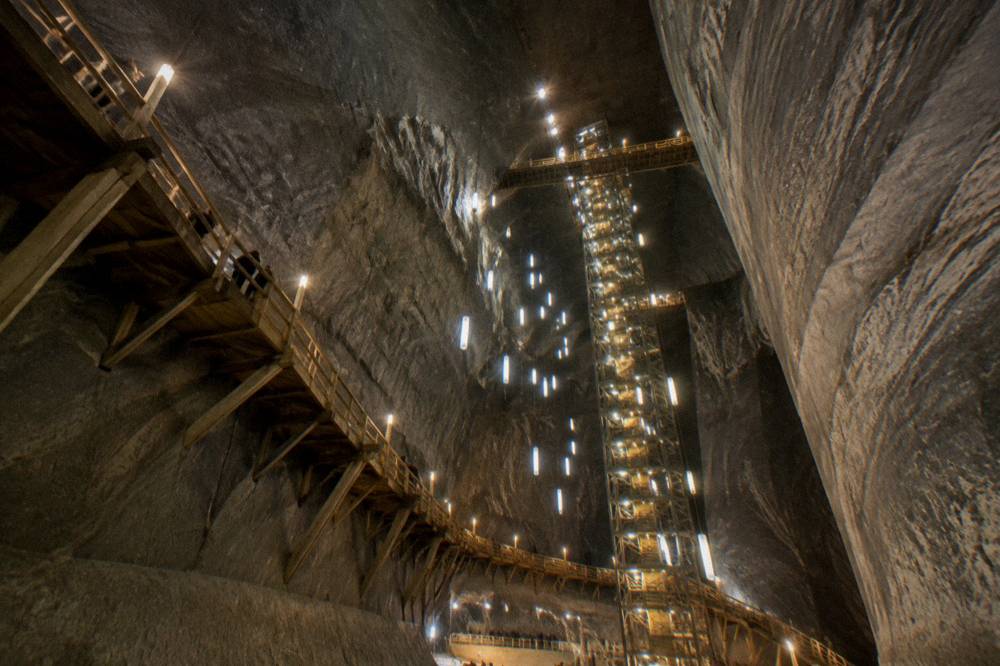
Turda is the headline stop for many travellers. The salt mine is one of Romania's best-known underground attractions, but this site's sources confirmed no 2026 ticket price, hours or depth figure, so treat it as a stop to book ahead rather than one to arrive at on spec. Corvin Castle, if taken as the detour, has the same status: its reported Guided Royal Tour Plus Fast Pass from 150 RON appears on the castle's own ticket page, but the standard adult price is unconfirmed here, and whether the castle has any Dracula connection is a separate question with no sourced answer.
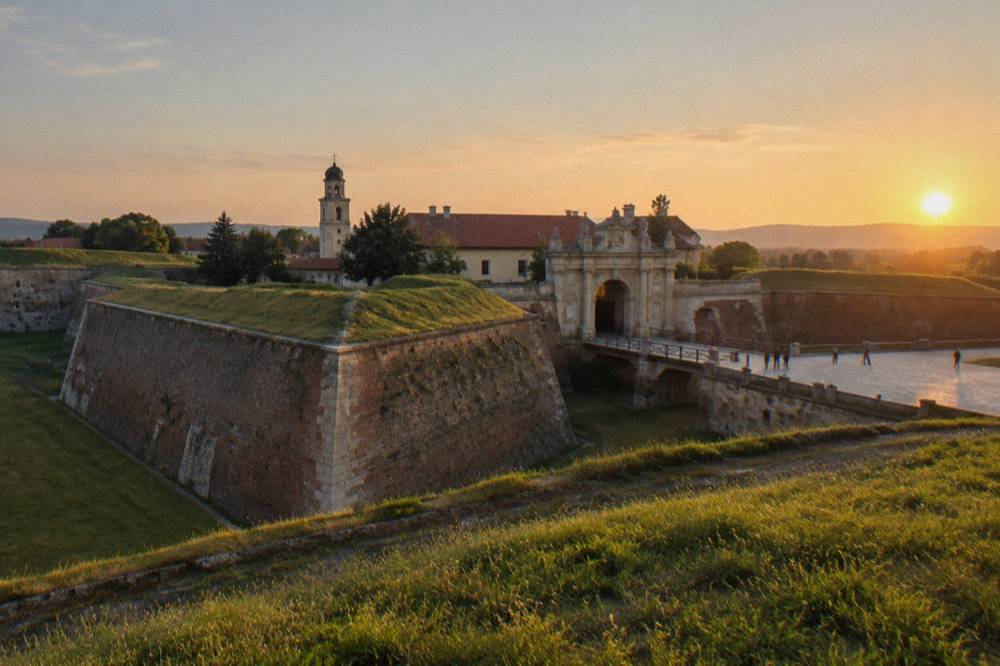
A workable one-day driving shape looks like this:
| Stop | Distance from Sibiu | What it adds |
|---|---|---|
| Alba Iulia | about 71 km | Walkable citadel grounds, reported free entry |
| Salina Turda | about 143 km | The salt mine, tickets to confirm before visiting |
| Castelul Corvinilor | about 130 km | Gothic castle, detour off the direct corridor |
| Cluj-Napoca | about 169 km | City break destination, main square and cafes |
Distances are computed from Piața Mare and assume free-flow conditions. Combining Corvin Castle with both Alba Iulia and Turda in one day pushes well past four hours of total driving and is better split across two days or handed to a guided tour.
Can You Visit Cluj-Napoca As A Day Trip From Sibiu?
Yes, but only just: at about 151 minutes each way, Cluj-Napoca is around five hours of round-trip driving, which fits a day trip in summer daylight but leaves little margin for sightseeing stops on the way. Trains, at a reported four to six hours each way, do not work as a day trip. The day-trip version of this corridor is really an Alba Iulia plus Turda plus Cluj itinerary, and it is a full day.
The honest framing is that Cluj-Napoca works best as an overnight or as the next base on a two-city Transylvania trip, not as a there-and-back day. The city has its own weight of sights and cafe life, and arriving at midday only to leave by late afternoon undersells it. Travellers who want the corridor's highlights without spending a night away are better served by a guided tour that compresses Alba Iulia, the Turda salt mine and Cluj into a single structured day, with a driver handling the hours behind the wheel.
That is exactly what the Alba Iulia, Turda and Cluj day trip covers, and it exists because the self-drive version is demanding. For anyone weighing the two cities against each other as a base, the Sibiu versus Cluj comparison lays out the differences, and the Cluj-Napoca day trip page covers what to do once there.
How Do Sibiu And Cluj-Napoca Compare As Bases?
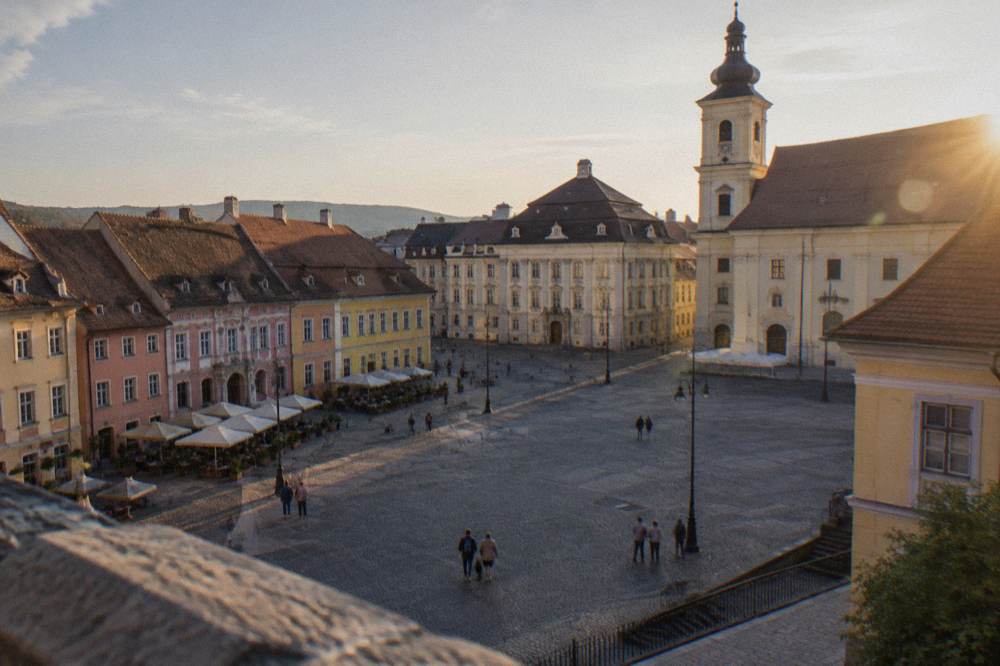
Sibiu is the smaller, Saxon-founded city of the two, with a documented history from 1191, a medieval old town around Piața Mare and Piața Mică, and a position that puts the Făgăraș mountains, the Transfăgărășan and the Saxon fortified-church villages within day-trip range. Cluj-Napoca is larger, livelier and a transport hub in its own right, with its own airport about 177 km from Sibiu. Neither is a substitute for the other.
Sibiu's case as a base rests on the old town and the day-trip ring. The Upper Town and Lower Town, the Bridge of Lies and the city walls are all free to walk, and the Brukenthal National Museum network anchors the rainy-day options, though its main museums are closed Monday and Tuesday and the Council Tower is closed for restoration. Cluj's case rests on scale: more flights, more nightlife and a big-city energy, at the cost of being farther from the mountain roads.
For a trip that includes both, the practical shape is two or three nights in each, joined by the corridor described above. The things to do in Sibiu page covers the Sibiu end, and where to stay in Sibiu handles the neighbourhood question for the first base.
When Is The Best Time Of Year To Make This Trip?
Late spring and early autumn are the comfortable windows: May and June and September and October are the months tourism sources name for the region, with ERA5 reanalysis 1991-2020 showing July highs averaging 24.2 C and January lows averaging minus 5.7 C in Sibiu. Winter travel is possible but the Transylvanian plateau carries snow from November to March, and the mountain roads are a separate, seasonal question.
The climate numbers frame the choice. The city's own official figures give a mean annual temperature of 8.9 C and mean annual rainfall of 662 mm. The ERA5 reanalysis for the Sibiu grid cell shows snowfall in every month from November through March, peaking in January, and sunshine running from about 12.8 hours a day in July down to 5.6 in December. None of that closes the corridor, but it argues for daylight-aware planning in winter.
Two seasonal notes matter for timing. Clocks in Romania go back on Sunday 25 October 2026, which shortens the evening for late-season drivers. And the Brukenthal museums' Monday and Tuesday closure applies year-round, so a Cluj trip that starts or ends with museum time in Sibiu should be planned around it.
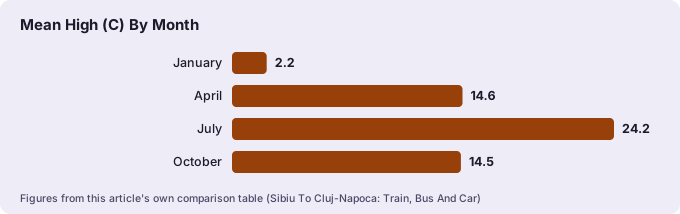
| Month | Mean high (C) | Mean low (C) | Sunshine (h/day) | Snowfall (cm) |
|---|---|---|---|---|
| January | 2.2 | -5.7 | 6.2 | 23.3 |
| April | 14.6 | 4.0 | 10.4 | 7.8 |
| July | 24.2 | 14.6 | 12.8 | 0.0 |
| October | 14.5 | 5.7 | 8.0 | 2.7 |
Values are ERA5 reanalysis, 1991-2020, modelled for a grid cell near Sibiu, not a weather-station record. The Sibiu weather and best time to visit Sibiu pages carry the full monthly picture.
What Does The Trip Cost Beyond The Ticket?
The confirmed money figures on this corridor are small and local: the city bus in Sibiu charges 3.5 lei for a 60-minute ticket, 5 lei for 75 minutes and 7 lei for 90 minutes, and Sibiu hotels add a 2 percent tourism tax on the accommodation value since 1 January 2026. Train and long-distance bus fares for the Cluj route were not confirmed at a reliable source and should be checked at booking.
The local costs matter at both ends of the journey. Line 11 connects Sibiu airport to the city for 3.5 lei, bought contactless on the bus, and the same fare structure covers city riding while waiting on a departure. At the accommodation end, the 2 percent tax is collected through hotels rather than paid separately, but it appears on the bill, so it is worth knowing about before the invoice arrives.
The bigger budget questions, such as the salt mine ticket, Corvin Castle's standard entry and Cluj's museums, all sit in the confirm-before-you-go category. The Sibiu cost guide gathers what is confirmed for the Sibiu end of the trip.
Which Guided Tours Cover This Corridor From Sibiu?
Guided options exist for travellers who want the corridor without the driving, and the most direct one is a day trip covering Alba Iulia, the Turda salt mine and Cluj-Napoca from Sibiu. Other full-day tours from the same operator pool run to Sighișoara and Biertan, both UNESCO-listed, and to Bran Castle country, which suit travellers adding days in Sibiu before or after the Cluj leg.
The guided version solves the corridor's real problem, which is that its highlights are spread across five hours of driving. A tour compresses the citadel, the mine and the city into one calendar day with the timing handled. For travellers structuring a wider Transylvania trip from a Sibiu base, the Sibiu to Sighișoara and Sibiu to Brașov corridors work the same way, each a full day in a different direction.
The Sighișoara and Biertan option runs the other direction from Cluj, towards the UNESCO-listed fortified churches, with Sighișoara's historic centre about 96 km and 102 minutes from Piața Mare by road. Paired over two days, the two tours bracket Sibiu nicely: one day of citadels and salt, one day of medieval towns and churches.
What About Combining Cluj With A Longer Transylvania Route?
Cluj-Napoca works well as the northern anchor of a loop that returns to Sibiu through the fortified-church country, or as the exit point for a flight from its airport, about 177 km and 153 minutes by road from Piața Mare. A loop that runs Sibiu to Cluj and back through Mediaș or Sighișoara, with Biertan on the way, turns the corridor into a two-day circuit rather than an out-and-back.
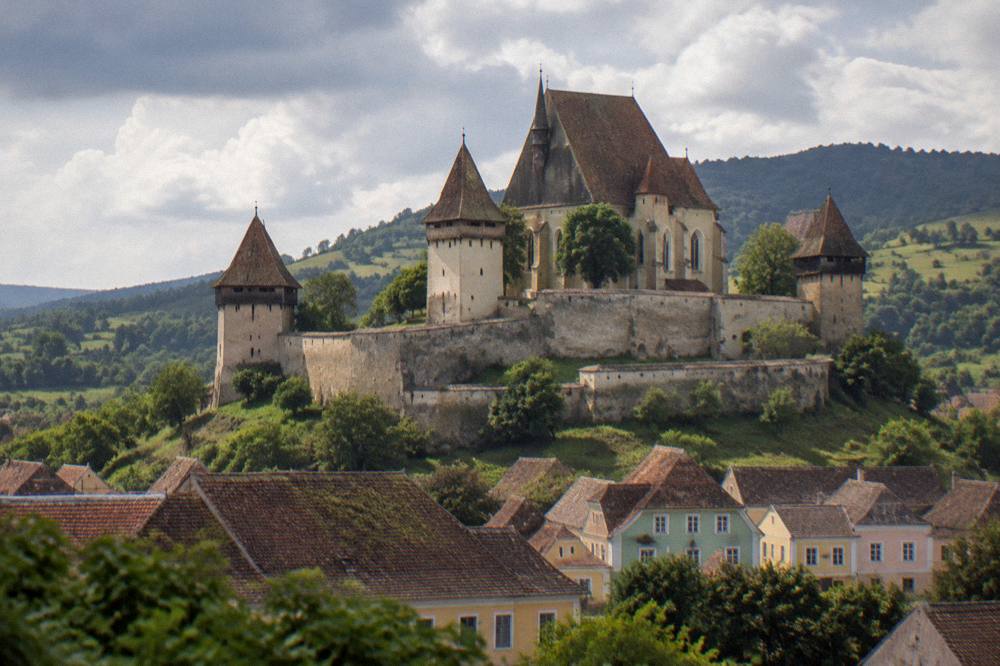
The two-day shape is the one this site's own itinerary pages build on. Day one covers the drive north with Alba Iulia and Turda; day two returns via the church villages, with Biertan's fortified church at about 76 km from Sibiu carrying a reported 20 RON adult ticket on its own seasonal schedule. Mediaș sits between the two at about 68 minutes and 56 km from Sibiu, a natural fuel or lunch stop.
For travellers flying out rather than looping back, Cluj's airport broadens the flight options beyond Sibiu's own schedule, which runs 17 Wizz Air flights a week in winter 2026-27 from 25 October. One-way car rental between the two cities is the usual mechanism, covered in the car rental in Sibiu guide, and the how to get to Sibiu page covers the arrival end of the same question.
Common Questions About Travel From Sibiu To Cluj-Napoca
How far is Cluj-Napoca from Sibiu?
About 169 km by road from Piața Mare, with a computed free-flow drive time of about 151 minutes. Cluj-Napoca's airport is about 177 km and 153 minutes. These are routing estimates, not timetables.
Is there a direct train from Sibiu to Cluj-Napoca?
The route typically involves a connection via Alba Iulia or Mediaș, with reported journey times of roughly four to six hours or more. Check current timetables on cfrcalatori.ro before travelling, as routings and frequencies change.
How long does the bus from Sibiu to Cluj take?
The Sibiu bus station sits about 0.8 km from Piața Mare, and long-distance coaches serve the corridor, but no confirmed journey time or fare for the Cluj route appears in this site's sources. Check the operator's live schedule before booking.
What is there to see between Sibiu and Cluj-Napoca?
The Alba Carolina citadel at Alba Iulia, about 71 km out, with grounds reported free to walk; the Turda salt mine at about 143 km; and, on a detour, Corvin Castle at about 130 km. Tickets and hours for the mine and castle should be confirmed before visiting.
Can you do Cluj-Napoca as a day trip from Sibiu?
It is possible by car at about 151 minutes each way, but it is around five hours of round-trip driving and leaves little time for stops. The train, at a reported four to six hours each way, does not suit a day trip. An overnight or a guided tour covering Alba Iulia, Turda and Cluj works better.
Is it better to fly into Sibiu or Cluj-Napoca?
Both work. Sibiu airport is about 5 to 6 km from Piața Mare with a 3.5 lei bus connection on line 11, and runs 17 Wizz Air flights a week in winter 2026-27. Cluj's airport is a larger hub about 177 km by road from Sibiu. The choice depends on flight availability from your origin, so check the airlines.
How Should You Plan The Trip In One Page?
The short version: drive or take a guided tour if the corridor's stops matter, take the bus if the schedule and price work on your date, and take the train only if time is not the priority. Base yourself in Sibiu for the old town and the day-trip ring, then give Cluj-Napoca at least a night of its own. Confirm every stop's tickets and hours at the source before locking the day.
Two cities, one corridor, and a set of stops that justify the slower pace. The Sibiu end rewards a base of two or three nights around Piața Mare, with the free old town sights and the Brukenthal museums (closed Monday and Tuesday) filling the in-between hours, and the Sibiu Travel Guide homepage gathering the full range. The Cluj end rewards arriving early enough to enjoy it, whether that means an overnight or a tour that times the arrival for you.
However the corridor is covered, the distances are fixed and the sights are open to planning: 169 km, a citadel, a mine and two of Transylvania's best cities at either end. Confirm the tickets, check the timetables, and the rest is a good day's drive.