Is It Better To Use Cash Or Card In Romania?
Cash or card in Romania? What works in Sibiu's old town, market stalls, museums and buses, with the leu, prices and tax facts that decide it.
Sibiu, the Saxon-founded city in Transylvania, runs on the Romanian leu (RON), and the honest answer to the cash-versus-card question is that both belong in your pocket. Romania's own tourism pages describe a modern European city, and Sibiu's museums, hotels and larger restaurants take cards, while market stalls, the city bus and a handful of small ticket desks still expect lei in hand. The National Bank of Romania sets the reference rate, which has been running at about 5.3 lei to the euro, so any euros you carry should be exchanged, not spent directly. What follows is what the official sources actually say, and where each payment method earns its place.
Is It Better To Use Cash Or Card In Romania?
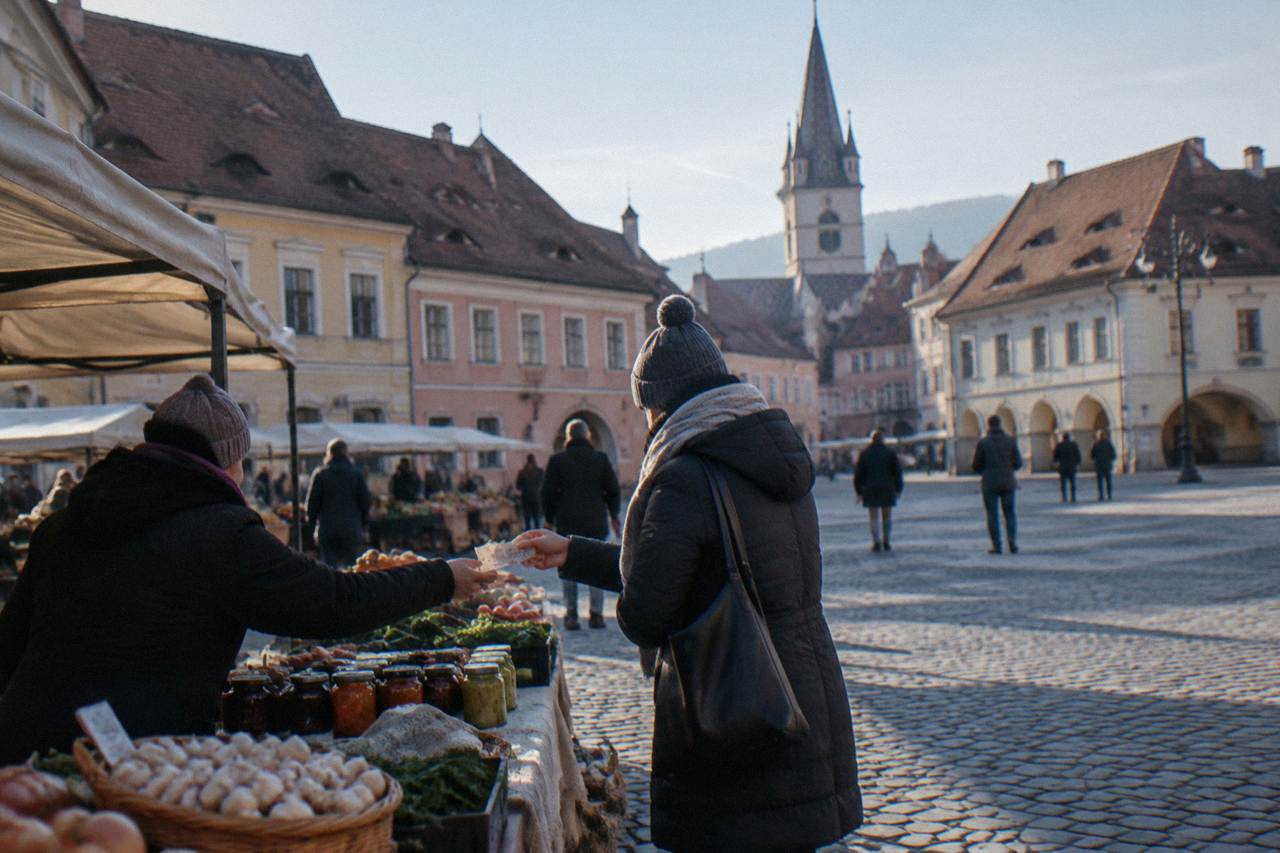
Use a card for hotels, museum tickets and restaurant meals, and carry a modest amount of lei for the city bus, market stalls and small vendors, and that combination covers Sibiu without friction. Romania's currency is the leu (RON), priced at about 5.3 lei to the euro, and while card payments are normal in the old town's established businesses, the bus, the Christmas market stalls and some rural stops on day trips work best in cash.
No official source publishes a card-acceptance rate, so confirm locally where a payment matters.
The leu is the only legal currency, and prices are quoted in it everywhere: the Brukenthal National Museum's own price page lists the Palace gallery at 50 RON, the History Museum at Casa Altemberger at 36 RON and the 48-hour combined ticket at 120 RON. Cards work at those museum desks, and online tickets are sold through the museum's own site. The practical split in Sibiu is between the old town's permanent businesses, where a card is fine, and the mobile or informal economy, where notes and coins still decide whether a transaction happens.
One cost that no cash-or-card strategy avoids: since 1 January 2026, Sibiu hotels collect a 2 percent tourism-promotion tax on the total accommodation value, approved by the local council on 30 December 2025. It is a percentage of the room bill, not a per-night flat fee, and it appears on the hotel invoice however you pay. Confirm how it appears on your bill at booking.
Where Cash Still Matters Around Sibiu?
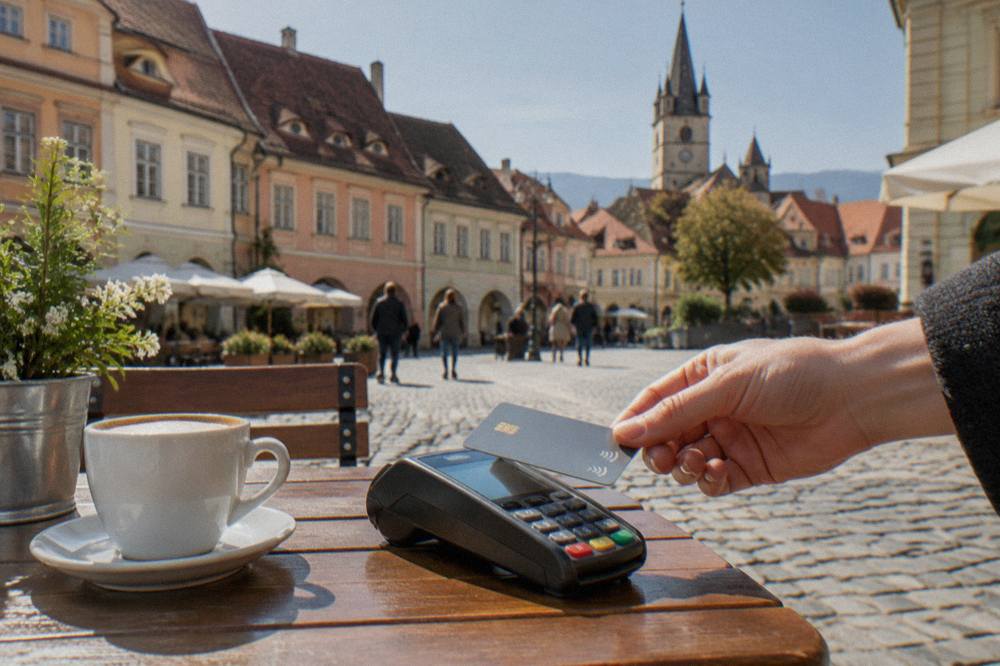
Cash matters on the city bus, at the Christmas market stalls in Piața Mare, at small village stops on day trips and anywhere a card terminal is absent, and the bus fare shows the pattern exactly: a 60-minute ticket costs 3.5 lei, bought contactless on board or in the app, so even the bus takes a card through your phone.
The Christmas market runs 13 November 2026 to 3 January 2027 with free entry, but the stalls, the ice-rink skate hire and the 100 lei Golden Ticket for the wheel, carousel and mini-train are cash-first territory. Keep small notes for all of it.
The Tursib fare table, published by the operator, prices the 60-minute internal ticket at 3.5 lei, the 75-minute ticket with one transition at 5 lei and the 90-minute ticket with two transitions at 7 lei. Line 11 connects the airport terminal to the centre, so the same rules apply on arrival. Contactless payment on the bus means you can land in Sibiu with no lei at all and still reach Piața Mare; the cash need starts at the first market stall, not the first ride.
Day trips shift the balance back toward notes. The Saxon villages of Mărginimea Sibiului, the fortified churches at Cisnădie and Cisnădioara, and stalls near Bâlea Lake on the Transfăgărășan are small-cash economies, and no official source publishes card coverage for them. The Biertan fortified church ticket desk, at 20 RON for an adult per the regional tourism site, is a rural counter where cash removes any doubt. No source gives an ATM fee or a card-refusal statistic, so the honest instruction is to carry what you need before leaving the city.
| Where you are paying | Cash or card works best | Official figure where one exists |
|---|---|---|
| city bus (line 11 from the airport) | Contactless card or app, coins for ticket machines | 60-minute ticket 3.5 lei |
| Brukenthal Palace gallery | Card at the desk, online via the museum site | Adult 50 RON |
| Evangelical Cathedral tower | Small cash payment is the safe assumption | Adult 10 RON |
| ASTRA Museum, Dumbrava | Card at the ticket office | Adult 50 RON |
| Christmas market stalls, Piața Mare | Cash in lei | Golden Ticket 100 lei |
| Village stops and fortified churches | Cash in lei | Biertan adult 20 RON |
A private walking tour is one purchase where the question answers itself before you leave home. The Check availability link for the Private Walking Tour of Sibiu takes you to the operator's live listing, where payment is settled online in your own currency, so nothing on the walk itself depends on your lei supply. The same applies to day-trip bookings: pay from home, carry walking-around money only.
How Much Cash Do You Need For A Few Days In Sibiu?
There is no per-day spending figure for Sibiu, and no official source publishes meal, coffee or hotel prices, so the honest method is to count your fixed cash costs, not a budget average: bus fares of 3.5 lei a ride, museum towers at 10 RON, market snacks and market rides, plus a buffer, and you have a number built from real prices rather than guesswork. Anyone quoting a daily euro figure for Romania is estimating. The prices below are the ones you can build on.
| Fixed cost | Official price | Notes |
|---|---|---|
| Tursib 60-minute ticket | 3.5 lei | Contactless on the bus |
| Brukenthal History Museum | 36 RON | Casa Altemberger |
| Brukenthal 48-hour combined ticket | 120 RON | All open branches |
| Evangelical Cathedral tower | 10 RON | Open viewpoint, the Council Tower being closed |
| Biertan fortified church | 20 RON | Rural day trip, cash-safest |
| Christmas market Golden Ticket | 100 lei | Wheel, carousel, mini-train |
Two corrections keep that budget honest. The Council Tower, the landmark between Piața Mare and Piața Mică, has been closed to visitors since 19 January 2026 for a restoration planned at about 24 months, so no ticket price exists for it; the Evangelical Cathedral tower at 10 RON is the open viewpoint in the old town. And the main Brukenthal museums are closed Monday and Tuesday, which shapes when your museum money gets spent, not how much of it you need. The rest of the planning pages sit on Sibiu Travel Guide.
If you want a fuller itinerary to hang these costs on, the guides on how many days you need in Sibiu and whether Sibiu is worth visiting lay out the sequence, and neither requires more cash discipline than the figures above imply.
Should You Exchange Euros Or Withdraw Lei In Sibiu?
Exchange a small amount before you travel and withdraw lei locally as needed, because the only exchange figure any official source supports is the reference rate of about 5.3 lei to the euro, set by the National Bank of Romania, and that rate moves daily. No source publishes Sibiu ATM fees, exchange-office commissions or a comparison between them, so no page can honestly tell you which is cheaper on the ground.
Treat fee claims you read elsewhere with caution and check the screen before you confirm.
What the sources do support is structure. Romania is a full Schengen member, with land border checks with Hungary and Bulgaria lifted on 1 January 2025, so arriving from inside Schengen involves no border money-changing stop; you cross with the euros or card you brought. The leu is the currency, prices are posted in it, and mental conversion at roughly 5.3 lei to the euro is accurate enough for planning. Avoid paying in euros directly at stalls: the transaction is in lei, and an ad-hoc euro price helps the seller, not you.
The ATMs question is where honest silence beats invented detail. No official Romanian or Sibiu source in the research pass publishes ATM counts, fee schedules or dynamic-currency-conversion warnings for Sibiu. The standard European caution applies: choose to be charged in lei when a terminal offers your home currency, and decline conversions offered at an ATM screen. Those are general card-network behaviours, not Sibiu statistics, and they are the limit of what can responsibly be said.
Do Card Payments Work On Sibiu Day Trips?
Card payments work for anything you book in advance, including every tour listing on this site, and become unreliable exactly where day trips go: village shops, church ticket desks, mountain stalls and seasonal stops along the Transfăgărășan, none of which has a published card-acceptance policy.
The road itself adds a timing rule that outranks any payment question: the high section between Bâlea Cascadă and Piscu Negru reopened on 12 June 2026 with daily hours of 07:00 to 21:00, and by rule it can close on any day from 20 October, with fines of 10,000 to 30,000 lei for driving a closed section.
That last figure deserves attention precisely because it is a cash-adjacent number people underestimate: driving the alpine stretch when it is shut is an administrative offence priced in thousands of lei, not a parking ticket. Check the live road status before you drive, and plan the Bâlea cable car as the winter alternative; its schedule runs on its own and should be confirmed with the operator before you rely on it.
For the classic destinations, the split is predictable. Sighișoara's Clock Tower museum lists an adult ticket at 50 RON through its own visitor site, an established desk where a card is plausible but cash is certain. Bran Castle's standard ticket price was not extractable from the official page, so check the castle's own ticket page before you go; its Guided Royal Tour Plus Fast Pass is listed from 150 RON. And if you are weighing Sibiu against its rivals first, the guides on whether Sighișoara is worth visiting and how to get from Brașov to Sibiu by train cover the comparisons the sources support.
The cleanest solution for day trips is to remove payment from the day entirely. A booked tour with pickup in Sibiu covers transport and guiding in one online transaction, and the lei in your pocket become coffee money at the stops instead of the price of admission.
Common Questions About Cash And Card In Romania
Is It Better To Use Cash Or Card In Romania?
Both, in defined roles. Cards cover hotels, museums, restaurants and anything booked online; lei in hand cover the city bus if you skip contactless, market stalls, village ticket desks and small day-trip stops. No official source publishes a card-acceptance rate, so confirm locally where a payment matters.
Can I pay in euros in Sibiu?
No. Romania's currency is the leu (RON), prices are posted in lei, and the reference rate runs at about 5.3 lei to the euro. Euros are useful to exchange, not to spend directly.
How do I pay for the bus from Sibiu airport?
Tursib line 11 serves the airport terminal, and a 60-minute ticket costs 3.5 lei, bought contactless on the bus or in the app. You can reach the centre without any cash at all.
Are there ATM fees in Sibiu?
No official source publishes Sibiu ATM fees, so treat any specific figure you read with caution. The general European caution applies: choose to be charged in lei when a terminal offers your home currency.
Does the Sibiu tourist tax change how I pay?
No. Since 1 January 2026 hotels collect a 2 percent tourism-promotion tax on the total accommodation value. It is a percentage on the bill, not a per-night flat fee, and it appears on your invoice however you settle it. Confirm at booking.
Do I need cash for the Sibiu Christmas market?
Yes, plan on it. Entry to the market in Piața Mare, running 13 November 2026 to 3 January 2027, is free, but stalls, skate hire and the 100 lei Golden Ticket for the wheel, carousel and mini-train are cash-first. Carry small notes.
