What Is Famous In Romania To Buy?
What Romania and Sibiu are famous for buying: painted glass icons, Saxon crafts, wine, zacusca and Christmas-market finds, with where they come from and how to carry them home.
Sibiu, in Transylvania, central Romania, is a Saxon-founded city on the Cibin river, and its markets and museum shops sit inside one of the richest craft regions in the country. The things Romania is famous for buying, painted glass icons, peasant pottery, wool textiles, wine and jarred preserves, are all made within reach of Piața Mare. This page reports what the categories are, where each one comes from, and what the sources say about finding them.
What Is Famous In Romania To Buy?
Romania is famous for buying painted glass icons, traditional pottery, wool and woven textiles, honey, preserved foods such as zacusca, and Romanian wine, and Transylvania is the historic heartland of several of these crafts. Around Sibiu the strongest category is the painted glass icon, a peasant religious art form associated with the village of Sibiel, whose museum of glass icons lies about 25 km and 36 minutes by road from Piața Mare.
The painted glass icon is the item with the deepest local connection. Icons painted on the reverse of glass became a peasant art form across Transylvania, and Sibiel, in the Mărginimea Sibiului pastoral region south-west of the city, became a recognised centre of the tradition. No individual workshop, price or opening time has been sourced, so treat Sibiel as a destination to arrange locally rather than a shop with fixed hours.
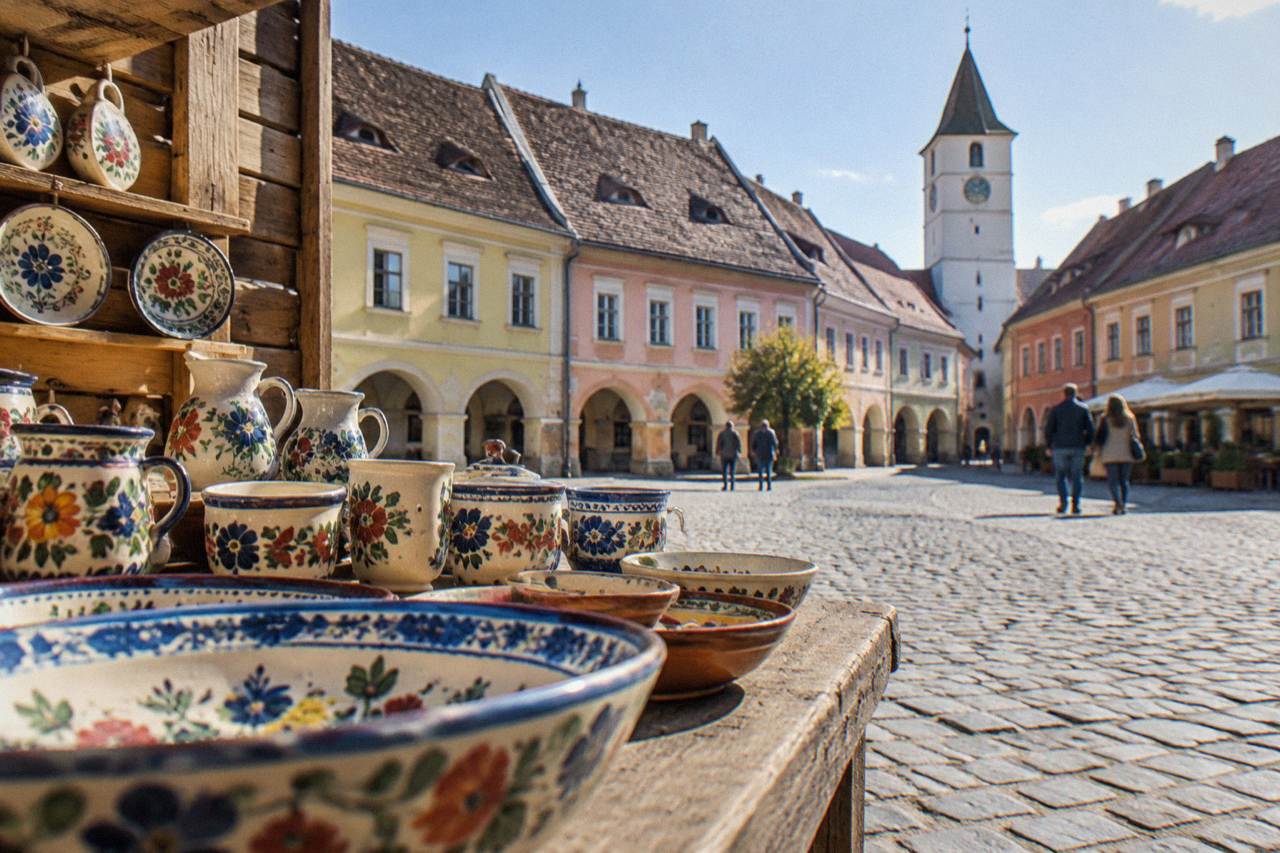
Beyond icons, the classic Romanian purchases are functional ones: unglazed and glazed pottery from the country's historic kiln villages, hand-woven rugs and blouses, wooden spoons and carved objects, and food that survives the journey home. Pottery deserves a special word. Romania's kiln villages each developed their own clay body, glaze colour and decorative grammar, so two plates from different regions can look unrelated even though both are unmistakably Romanian peasant ware. Look for the marks of hand throwing and hand painting rather than a factory finish if authenticity matters to you.
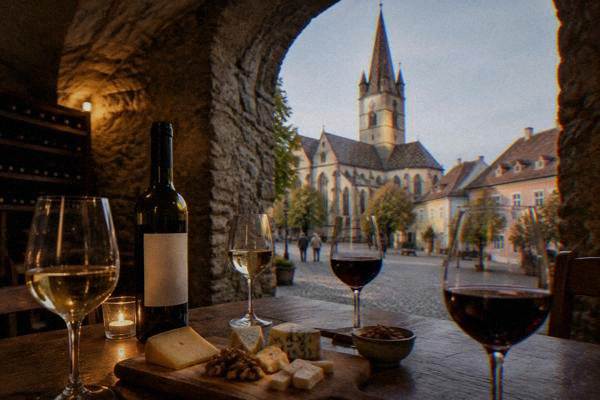
Wine belongs on the list too. Romanian wine has an old reputation in Transylvania, and Sibiu runs a dedicated wine-tasting scene built around local bottles; the cellar traditions of Mediaș and the wider Târnavelor valley, about an hour's drive away, sit behind much of it.
For context on the country's wider claims to fame, see what Romania is most famous for and what Sibiu is known for.
Which Food And Drink From Sibiu Travels Well Home?
The foods that travel best from Sibiu are jarred preserves, above all zacusca, a cooked vegetable spread of aubergine, peppers and beans, together with honey, plum products, dried mushrooms and Romanian wine in sealed bottles. Dishes to look for while still in the city include Sibiu salad, papanași, ciorbă, mici, sarmale and balmoș, but those are things to eat on the spot, not things to pack.
Zacusca is the preserve with the strongest claim to a place in your luggage. It is produced in home kitchens and small workshops across Romania every autumn, sold in jars at markets and food fairs, and it keeps without refrigeration until opened. Honey is nearly as portable, and Transylvania's mixed-flower and acacia honeys are widely sold. Plum jam, and the plum brandy called țuică, are the other classic pantry items; check your airline's rules on alcohol before packing any.
Wine is heavier but worth it. A tasting in Sibiu is the low-risk way to choose bottles, because you try before you buy; Romanian wine tasting sessions run in the city with a sommelier, and the country's dry whites and reds travel well when the bottle is padded. When packing, wrap each bottle in clothing, cushion the neck, and keep the whole bundle in the middle of the case rather than against its wall.
The list below separates what to eat on the spot from what to carry home.
| Category | Examples | Buy to eat there or carry home? |
|---|---|---|
| Preserves | zacusca, plum jam, pickled vegetables | Carry home, sealed jars |
| Honey | acacia, mixed-flower | Carry home, jar |
| Wine | Romanian white and red still wines | Carry home, padded bottles |
| Spirits | țuică (plum brandy) | Carry home, check airline limits |
| Fresh dishes | Sibiu salad, papanași, ciorbă, mici, sarmale, balmoș | Eat there |
| Baked goods | cozonac and regional pastries | Eat there or 1 to 2 days |
Customs rules matter at the margin. Romania is a full member of the Schengen area, so travelling onward inside Schengen with jars and bottles involves no border declaration, but flying home to the United Kingdom, the United States or beyond means your destination's own allowances for alcohol and food apply. Vacuum-sealed and clearly labelled products clear inspection more easily than unmarked home jars, whatever the seller tells you.
A guided introduction to the city's food traditions, and to the squares where markets set up, comes with the walks and trips below, including the Upper Town landmarks city tour that starts from Piața Mare.
Where Do Craft Villages Around Sibiu Sell Their Work?
The craft villages closest to Sibiu are Sibiel, known for painted glass icons, about 25 km and 36 minutes by road from Piața Mare, and Rășinari, about 13 km and 18 minutes, both in the Mărginimea Sibiului region, with Cisnădie about 10 km and 14 minutes away and the wine town of Mediaș about 56 km and 68 minutes. Each sells directly and informally, and no shop, price or opening time has been sourced, so arrange visits ahead.
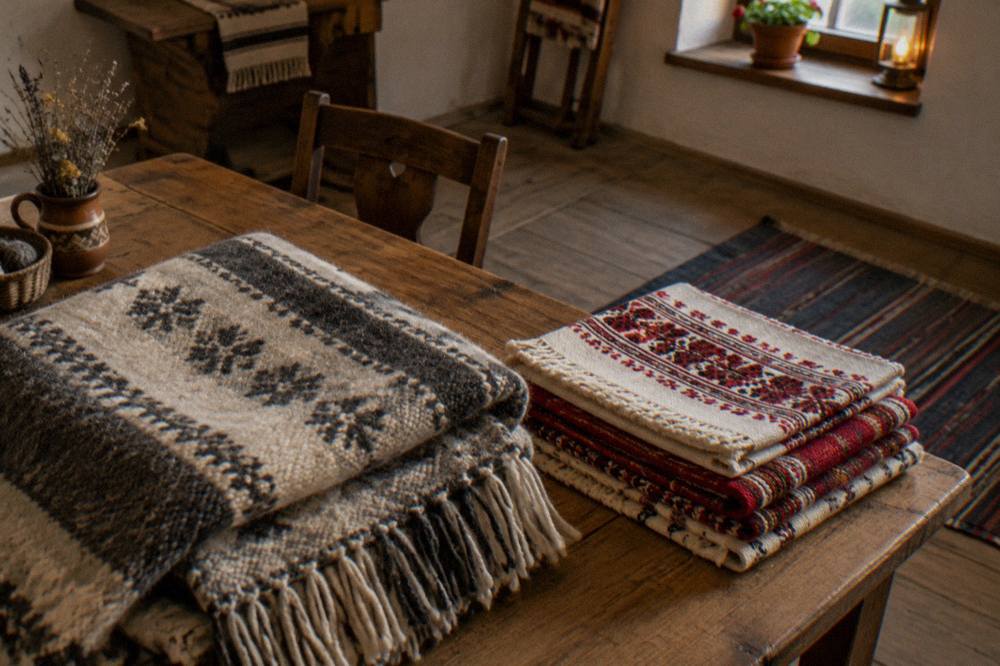
The Mărginimea Sibiului is a band of shepherd villages south-west of the city whose wealth was built on transhumance, the seasonal movement of sheep flocks between lowland and mountain pastures. That pastoral economy produced the region's wool textiles, its leather work and its distinctive folk costume, and it is the reason a guided day trip through the area is one of the more rewarding shopping-adjacent excursions from Sibiu. Sibiel adds the glass-icon museum to the mix, and Rășinari, reached by a road of about 18 minutes, keeps the region's village texture closest to the city.
Craft buying in these villages works differently from retail at home. Workshops are often homes, opening depends on who is there, and payment in cash is the safe assumption. That informality is part of the value: the wool rug you buy is likely to have been carded, spun and woven a few hundred metres from where you stand.
| Village or town | Distance and drive time from Piața Mare | Known for |
|---|---|---|
| Rășinari | about 13 km, 18 minutes | Mărginimea pastoral village, folk costume |
| Cisnădie | about 10 km, 14 minutes | Fortified church, small-town crafts |
| Sibiel | about 25 km, 36 minutes | Painted glass icons, icon museum |
| Păltiniș | about 32 km, 40 minutes | Mountain resort, weekend market stalls |
| Mediaș | about 56 km, 68 minutes | Wine town of the Târnavelor valley |
Sighișoara, about 96 km and around 102 minutes by road, is a UNESCO-listed craft town in its own right, with a citadel full of small workshops; the question of whether Sighișoara is worth visiting answers itself for anyone shopping for medieval-town souvenirs. A day trip there pairs well with the city's own offerings, and the Saxon fortified churches along the way, Biertan among them, hold their own small treasury of local craft and produce stalls in season.
Thinking Of A Guided Craft Day Out?
Prefer a guide to handle the village roads? Bookings can be cancelled if plans change.
What Should Shoppers Know About Money And Markets In Sibiu?
Shoppers in Sibiu should know three things: Romania's currency is the leu (RON, lei), with the exchange rate running at about 5.3 lei to the euro; the Christmas market in Piața Mare runs 13 November 2026 to 3 January 2027 with free entry and a Golden Ticket at a reported 100 lei for the rides; and since 1 January 2026 hotels add a 2 percent tax on the accommodation value. No individual shop, market-stall price or opening time has been sourced.
Pay in lei. Card and cash habits vary by stall, and small village sellers in particular may take cash only, so carry notes for the craft villages even if the city centre is card-friendly. The city's own covered food market is Piața Cibin, which is the place locals name for produce, so go and see.
The Christmas market is the single biggest shopping event of the Sibiu year. It fills Piața Mare for roughly 52 days with more than 120 exhibitors, an ice rink of 600 square metres and a programme that runs past New Year; the reported Golden Ticket at 100 lei covers the wheel, carousel and mini-train, and the full Christmas-market picture covers dates and detail. Handmade ornaments, knitwear and jars of preserves dominate the stalls. One practical note for winter shoppers: the market runs through to early January, so a trip in the quieter second half of December, between the holidays, still lands you in the middle of it.
If Sibiu is your base for a wider trip, how many days you need in Sibiu shapes how many craft villages you can fit in; two or three days covers the city plus one village loop, and a longer stay adds Sighișoara or the wine country comfortably.
Common Questions About Shopping In Romania
What Is Famous In Romania To Buy?
Romania is famous for painted glass icons, peasant pottery, woven wool textiles and blouses, honey, zacusca and other jarred preserves, plum products including țuică, and Romanian wine. Around Sibiu the glass icons of Sibiel and the pastoral crafts of the Mărginimea Sibiului villages are the strongest local categories.
Where can I buy painted glass icons near Sibiu?
Sibiel, about 25 km and 36 minutes by road from Piața Mare, is the village associated with the painted glass icon tradition and has a museum of glass icons. No workshop names, prices or hours are listed here, so arrange a visit locally or through a guided village tour.
Is Sibiu good for Christmas shopping?
Yes. The Sibiu Christmas Market runs 13 November 2026 to 3 January 2027 in Piața Mare, with free entry, more than 120 exhibitors and a 600 square metre ice rink. Handmade ornaments, knitwear and food stalls are the core offering.
Can I bring Romanian wine or țuică home on a plane?
Sealed bottles of Romanian wine travel well when padded, and țuică, the plum brandy, is a classic purchase too. Check your airline's and destination country's alcohol limits before packing spirits in hold or cabin luggage.
What food should I eat in Sibiu rather than carry home?
Eat the fresh dishes on the spot: Sibiu salad, papanași, ciorbă, mici, sarmale, balmoș and Transylvanian Saxon specialities. Carry home the sealed jars instead, above all zacusca, plus honey and jam.
The last word on any purchase belongs to the maker: village crafts around Sibiu sell informally, prices are set stall by stall, and the best protection is to buy what you have seen made or tasted on the spot. The team behind Sibiu Travel Guide keeps the shopping categories and the market dates on this page tied to what the sources actually say.