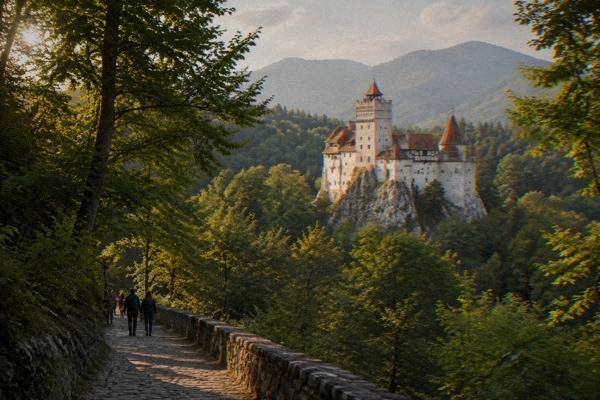
What Is Romania Most Famous For?
Romania is famous for Transylvania, Dracula and Bran Castle, the Transfăgărășan road, Saxon fortified churches and medieval towns like Sibiu and Sighișoara. Here is how Sibiu fits into the story.
Romania is famous above all for Transylvania, the forested, castle-dotted region in the centre of the country, and Sibiu is one of the places that reputation was built on. This page, from the editorial desk behind Sibiu Travel Guide, lays out what Romania is genuinely known for, castle by castle and road by road, and shows where this Saxon-founded city on the Cibin river fits in. Sibiu was first documented in 1191 as Cibinium, the seat of the free prepositure of the Germans in Transylvania, and its Upper Town and Lower Town still ring Piața Mare today.
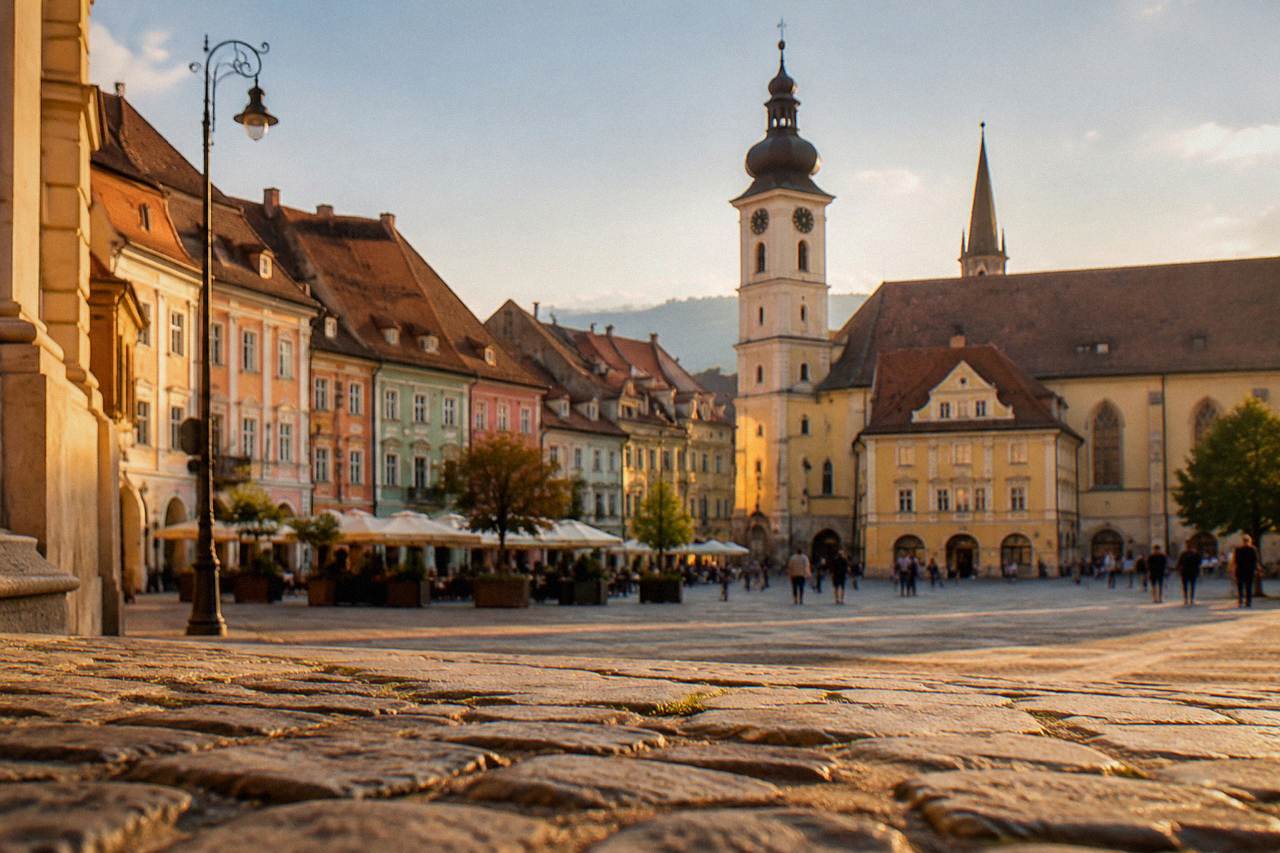
What Is Romania Most Famous For?
Romania is most famous for Transylvania and its castles: Bran Castle, marketed worldwide as Dracula's Castle, the Gothic Corvin Castle at Hunedoara and the royal Peleș Castle at Sinaia. Beyond castles, the country is known for the Transfăgărășan mountain road, the UNESCO-listed fortified Saxon churches, medieval towns such as Sibiu, Sighișoara and Brașov, the Dacia car brand and hearty food from sarmale to papanași.
That is the short version travellers arrive with. The longer version is that Romania's fame is unevenly spread: the castles and the mountain roads get the postcards, while the Saxon townscapes that fill the UNESCO lists get less attention despite being easier to reach. Sibiu is a good base for both halves of that fame. From Piața Mare you are about 154 road minutes from Brașov, about 154 minutes from Bran Castle and about 102 minutes from Sighișoara, all computed over standard routing.
Why Is Transylvania, And Sibiu, The Part Of Romania Everyone Recognises?
Transylvania is the part of Romania the world recognises because it carries the Dracula legend and the best-preserved medieval towns at once. Sibiu, with its Upper Town squares, the Bridge of Lies and the Brukenthal National Museum, is a core example of that Saxon heritage. The city was a European Capital of Culture in 2007, as widely reported, and its old squares are free to wander at any hour.
The Dracula association runs through Bran Castle, roughly a 154-minute drive from Sibiu, which tourism has branded as Dracula's Castle. The castle's own ticket page sells a Guided Royal Tour Plus Fast Pass from 150 RON; whether Vlad the Impaler ever set foot there is a question the historical record does not settle. If you are weighing a visit, the companion piece is Bran Castle worth going inside covers what the ticket buys.
Sibiu's own fame is quieter but structural. The Transylvanian Saxons, settlers reported to have come from the Moselle valley area in the 12th century, built the towns and the fortified churches that now define the region's image. Their legacy is why Sibiu's German name is Hermannstadt, a topic covered in what Sibiu is known for. The Bridge of Lies, reported to have been built in 1859 and 1860, anchors the old town alongside Piața Mare and Piața Mică.
One more layer of Romanian fame runs on four wheels: the Dacia. The brand that began as a licensed Renault build became the car of the communist decades and is now exported across Europe. You can read that history in the streets of Sibiu on a tour in a preserved Dacia 1300, whose listing is live at the operator's page: Check availability. The city's own tour page at Dacia 1300 classic car tour covers what the ride includes.
What Are The Fortified Saxon Churches Around Sibiu Famous For?
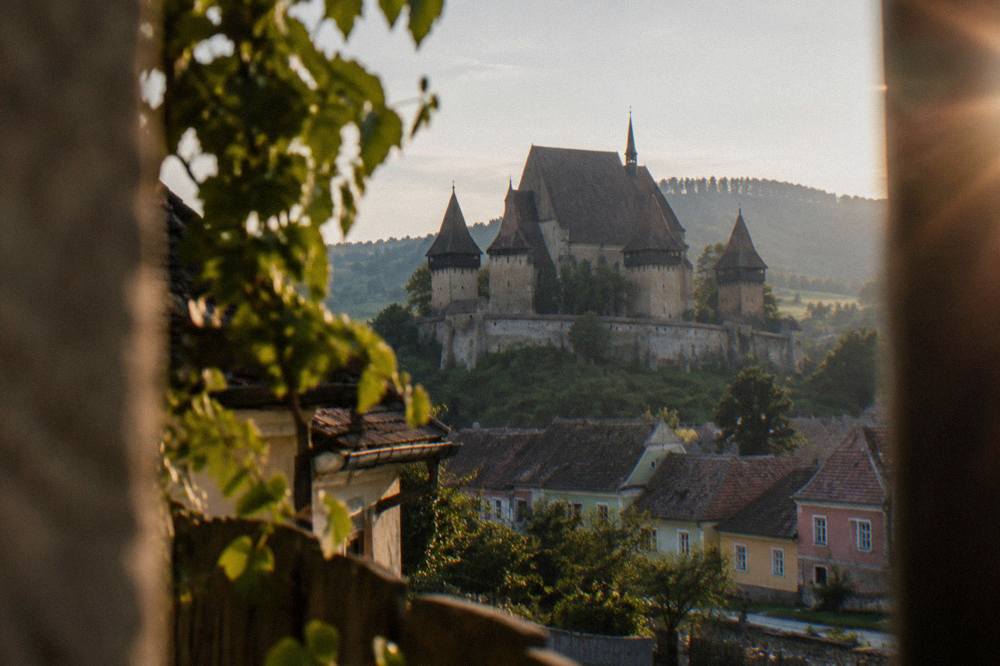
The fortified Saxon churches are famous as a UNESCO World Heritage serial site, the Villages with Fortified Churches in Transylvania, inscribed in 1993 at Biertan and extended to seven villages in 1999. These are peasant fortresses: churches wrapped in walls, towers and grain stores so villagers could survive medieval raids. Biertan, about 76 km and 1 hour 15 to 1 hour 30 from Sibiu, is the emblem.
Biertan's adult ticket is 20 RON, per the sibiu-turism.ro listing, with hours that shorten in winter (November to March, Tuesday to Sunday, 11:00 to 15:00), so confirm before you go. Sighișoara's walled old town, another UNESCO inscription from 1999, is a different expression of the same Saxon world, and whether Sighișoara is worth visiting is a fair question with a well-documented answer.
| Famous Romanian sight | Distance from Sibiu | Road time from Piața Mare |
|---|---|---|
| Biertan fortified church (UNESCO) | about 76 km | about 1 hour 15 to 1 hour 30 |
| Sighișoara old town (UNESCO) | about 96 km | about 102 minutes |
| Brașov | about 142 km | about 154 minutes |
| Bran Castle | about 138 km | about 154 minutes |
| Alba Iulia citadel | about 71 km | about 81 minutes |
| Transfăgărășan (Bâlea Cascadă) | about 63 km | about 69 minutes |
The villages closer to Sibiu, Cisnădie at about 14 minutes and Cisnădioara at about 18, and the Mărginimea Sibiului sheepherding villages such as Rășinari at about 18 minutes, carry the same heritage without the tour-bus rhythm. Opening hours for individual churches are not published centrally: check locally before driving out.
Why Is The Transfăgărășan One Of Romania's Claims To Fame?
The Transfăgărășan is famous as a dramatic high-mountain road built across the Făgăraș range, climbing to Bâlea Lake at 2,034 m, and it is routinely described as one of the world's great drives. The 2026 season reopened on 12 June, daily 07:00 to 21:00 on the high stretch, and by rule the road can be closed any day from 20 October onward.
That closure rule matters more than any superlative. The fines for driving the closed alpine section run from 10,000 to 30,000 lei, and status after late September 2026 was not confirmed, so check the live road status before committing a day. The companion answers on whether the Transfăgărășan is currently open and the most scenic road in Romania go deeper. Bâlea Lake is reached from Sibiu in about 88 minutes and 76 km when the road is open; outside that window a cable car serves the lake on its own schedule, reported to run year-round, weather permitting.
Sibiu's role in the road's fame is geographic: the city is the natural base at the northern foot of the Făgăraș, with the road's entrance about 69 minutes from the centre. Păltiniș, the small ski resort about 40 minutes and 32 km away, adds the winter half of the mountain story, with its 2026 to 2027 season announced to open on 28 November 2026.
What Is Romanian Food Famous For, And What Should You Eat In Sibiu?
Romanian food is famous for hearty peasant dishes: sarmale (cabbage rolls), mici (grilled skinless sausages), ciorbă (sour soups), papanași (fried doughnuts with cream and jam), zacuscă (vegetable spread) and balmoș, a polenta dish with cheese. Sibiu adds its own namesake, the Sibiu salad, and a layer of Transylvanian Saxon cooking to that national list.
The honest position on restaurants is that no venue name in Sibiu survives the editorial desk's sourcing standard: eat by dish, not by guidebook star. The city's Christmas Market, running 13 November 2026 to 3 January 2027 in Piața Mare, is the reliable seasonal food event, with free entry and stalls across the square; the market's Golden Ticket, reported at 100 lei, covers the wheel, carousel and mini-train. For the wider planning picture, is there a Christmas market in Sibiu, Romania has the detail.
Wine belongs on the fame list too. Romanian cellar traditions, particularly the whites around Mediaș, about 68 minutes from Sibiu, are part of the Saxon legacy, and tasting flights in Sibiu itself are among the city's bookable experiences. Prices, ratings and durations for those experiences render on the tour cards below rather than in prose.
How Does Sibiu Fit Into Romania's Famous Story?
Sibiu fits into Romania's famous story as the Saxon city at the centre of Transylvania: documented in 1191, reported as a European Capital of Culture in 2007, home to the Brukenthal National Museum opened to the public in 1817, and gateway to the Făgăraș mountains and the fortified-church villages. Its population of 134,308 in the 2021 census makes it one of Transylvania's significant historic cities.
The practical fame is closeness. Brukenthal's Palace gallery costs 50 RON and holds the country's principal European art collection; the ASTRA open-air museum in Dumbrava, functioning since 1963, is the folklore counterpart, at 50 RON for an adult ticket. One caution for 2026 and 2027: the main Brukenthal museums close Monday and Tuesday, the Hunting Museum is closed indefinitely, and the Council Tower is shuttered until about January 2028, with the Evangelical Cathedral tower, at 10 RON, the open viewpoint instead.
| Brukenthal site | Adult ticket | Days closed |
|---|---|---|
| Palace, Piața Mare | 50 RON | Monday, Tuesday |
| History Museum, Casa Altemberger | 36 RON | Monday, Tuesday |
| Natural History Museum | 20 RON | Monday, Tuesday |
| Pharmacy History Museum, Piața Mică | 16 RON | Monday, Tuesday |
| Contemporary Art Museum | 15 RON | Saturday, Sunday |
| 48-hour combined ticket | 120 RON | follows each site |
For trip sizing, how many days you need in Sibiu is the standard reference, and is Transylvania worth visiting for tourists frames the regional question. Romania is a full Schengen member, uses the leu (RON, at roughly 5.3 lei to the euro), and keeps the emergency number 112.
Common Questions About Romania's Fame
What Is Romania Most Famous For?
Castles and Transylvania: Bran Castle as Dracula's Castle, Corvin Castle, Peleș Castle, plus the Transfăgărășan road, the UNESCO fortified Saxon churches and medieval towns such as Sibiu, Sighișoara and Brașov.
Is Sibiu the same as the Dracula castle place?
No. Sibiu is a Saxon city with no Dracula castle. Bran Castle, the one marketed as Dracula's, is about a 154-minute drive away and is covered by how much it costs to go inside Bran Castle.
What is Romania's most famous road?
The Transfăgărășan, across the Făgăraș range to Bâlea Lake at 2,034 m. It can be closed any day from 20 October, so check the live status before driving.
What food is Romania famous for?
Sarmale, mici, ciorbă, papanași, zacuscă and balmoș, plus the Sibiu salad and Transylvanian Saxon dishes in this region.
Why does Romania have fortified churches?
Transylvanian Saxon settlers, reported to have arrived from the Moselle valley area in the 12th century, fortified their village churches against medieval raids. Seven of the villages are a UNESCO serial site, with Biertan inscribed in 1993.
Romania's fame, in the end, is a fame of landscapes with fortifications on them, and Sibiu is the city where that pattern is easiest to read: a walled Saxon old town, a river valley below and the Făgăraș crests on the horizon, all within a morning's reach.