What Is The Most Scenic Road In Romania?
The Transfăgărășan, reached from Sibiu in about an hour, is the road named again and again as Romania's most scenic drive. Here is what the sources say about it, the Transalpina alternative, and how to plan either.
The answer starts with geography. Sibiu, the Saxon-founded city in central Romania on the Cibin river, sits at the foot of the Făgăraș mountains, and the road that runs through those mountains, the Transfăgărășan (DN7C), is the drive named again and again when the question is which Romanian road is the most scenic. It climbs to Lake Bâlea at 2,034 m, crosses the highest reaches of the southern Carpathians, and is reachable from Sibiu's Piața Mare in about 69 minutes and 63 km by road to the Bâlea Cascadă end, a computed free-flow figure from OpenStreetMap routing rather than a timetable. It is a summer road with a hard seasonal rule, not a year-round route, and that rule shapes every plan built around it.
What Is The Most Scenic Road In Romania?
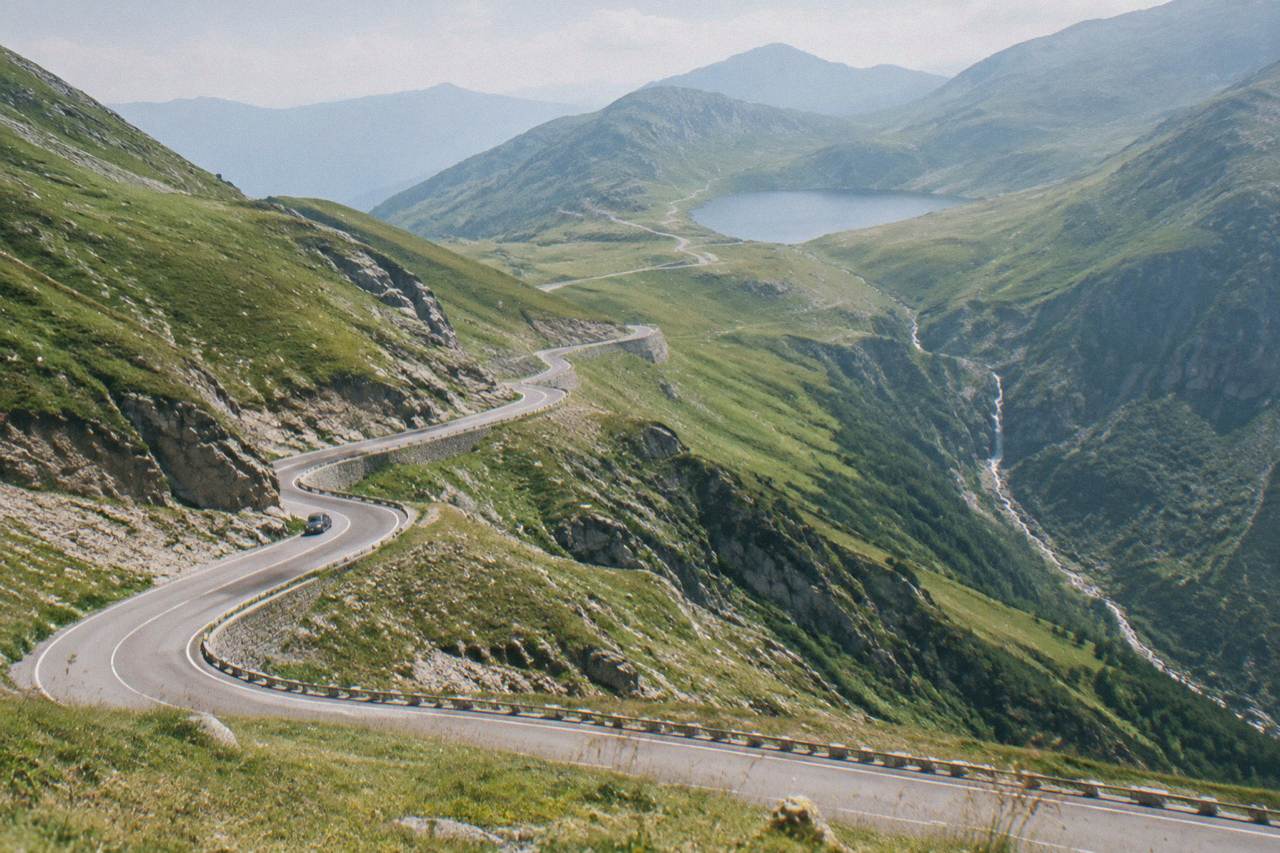
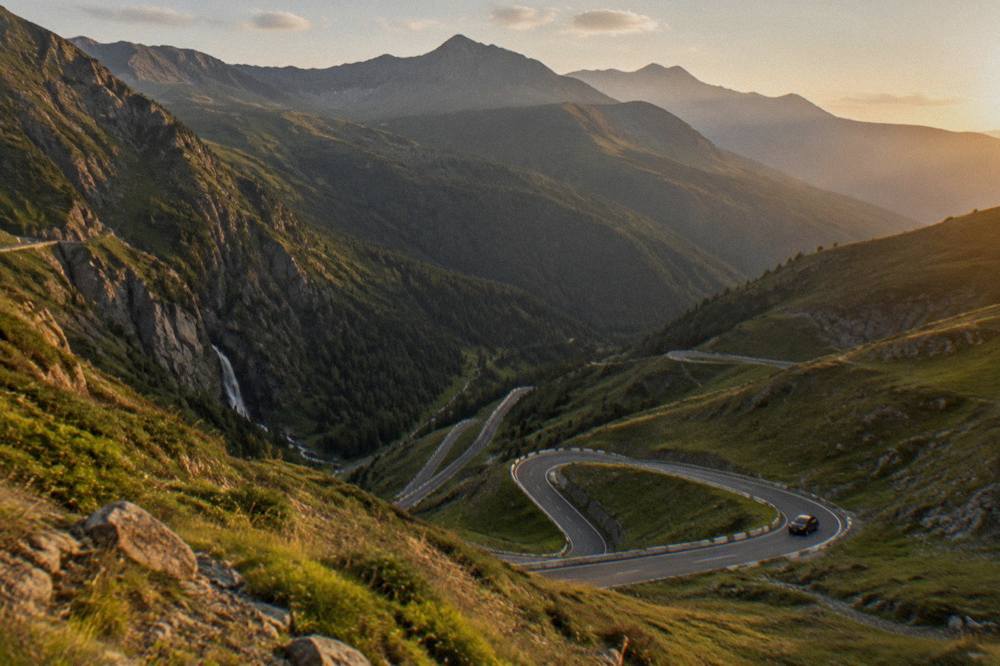
The Transfăgărășan (DN7C), the road crossing the Făgăraș mountains south of Sibiu, is the answer given by nearly every source that ranks Romanian drives, and the road itself supports the claim: it rises to Lake Bâlea at 2,034 m, runs a high alpine stretch between Bâlea Cascadă and Piscu Negru, and pairs hairpin switchbacks with glacial scenery. Its main rival is the Transalpina (DN67C) further west, which crosses even higher ground between Rânca and Obârșia Lotrului. Both are seasonal mountain roads. The Transfăgărășan is the one within about an hour's drive of Sibiu, which is why this site, written from a Sibiu base, treats it as the headline drive.
The case for the Transfăgărășan is not just the views. It is the concentration of them: waterfalls at the lower end, the Bâlea Cascadă to Bâlea Lac cable car, the lake at the top, and the long descent toward the Vidraru dam on the southern side. The road authority opens the high stretch only between 07:00 and 21:00 when the season runs, and driving it outside those hours, or when it is closed, carries fines of 10,000 to 30,000 lei under the law in force since November 2025, per the same reporting that documented the 2026 reopening. That severity tells you what kind of road it is: an alpine route kept closed by snow for much of the year.
For readers planning around Sibiu rather than Bucharest or Brașov, the logistics are unusually kind. The Bâlea Cascadă entry point is about 63 km and roughly 69 minutes by road from Piața Mare, computed over free-flow routing, and the lake pin at the top is about 76 km and 88 minutes. That places Romania's most famous drive within a half-day loop of the old town, with the Transfăgărășan day trip guide covering the route in detail and the live road-status question covering the opening rules.
When Can You Actually Drive The Transfăgărășan From Sibiu?
The high stretch of the Transfăgărășan reopened for the 2026 season on 12 June 2026, is open to traffic only daily 07:00 to 21:00, and by rule can be closed on any day from 20 October onward, so the honest answer is a summer window of roughly mid-June to mid-October with no guaranteed single closing date. On 23 September 2026 the road was still open in winter conditions, per the road-status reporting, and its status after that date is not known. The road authority's live status is the only reliable source on the day.
That rule matters more than any itinerary. Snow can shut the alpine stretch early, and it has shut on the rule date in past years. The fines for driving the closed section, 10,000 to 30,000 lei, apply to the alpine stretch between Bâlea Cascadă and Piscu Negru, and they are enforced with barriers and checks. A plan that treats the road as a summer road that typically closes from 20 October, and that checks the live status the morning of the drive, is the plan the facts support.
There is a winter fallback, and it is reported by the operator's own page. The Bâlea Cascadă to Bâlea Lac cable car runs about 09:00 to 18:00, roughly every 30 minutes, a ride of about 15 minutes, and keeps running in October and November as the access to the lake when the road is shut. Its ticket price is not confirmed in the sources, so check it with the operator before you go. Whether swimming in Lake Bâlea is allowed was not found in any source checked: it is a cold glacial lake at altitude, and the sources give no swimming rule either way.
| Route fact | Figure | Basis |
|---|---|---|
| 2026 season opening | 12 June 2026 | road-authority reporting |
| Daily open hours | 07:00 to 21:00 | same reporting |
| Earliest closure rule date | any day from 20 October | standing rule |
| Fine for driving the closed stretch | 10,000 to 30,000 lei | law in force since November 2025 |
| Lake Bâlea altitude | 2,034 m | measured |
| Drive from Piața Mare to Bâlea Cascadă | about 63 km, about 69 minutes | computed, free-flow |
| Drive from Piața Mare to Bâlea Lac | about 76 km, about 88 minutes | computed, free-flow |
Is The Transalpina A Better Scenic Drive Than The Transfăgărășan?
The Transalpina (DN67C) is the genuine rival: it reopened for 2026 on 29 May, crosses higher ground than the Transfăgărășan between Rânca and Obârșia Lotrului, and its reported hours were cut to 09:00 to 18:00 from 26 September 2026 as autumn weather arrived, with no fixed autumn closure date published. It is further from Sibiu, roughly a half-day commitment just to reach the good stretch, and its scenery runs to long alpine plateaus rather than the Transfăgărășan's concentrated drama of lake, waterfalls and switchbacks.
"Better" is not a claim the sources settle. What the record supports is a difference of character. The Transfăgărășan compresses its spectacle into a climb almost anyone can reach from Sibiu in about an hour. The Transalpina spreads its heights across a longer crossing and asks for more driving either side. Neither road is open year-round: both are seasonal alpine routes closed by snow, both have gated hours rather than open access, and both demand a live status check on the day.
For a trip based in Sibiu, the practical ranking is geographic before it is aesthetic. The Transfăgărășan is the local mountain road; the Transalpina is a commitment. A wider Transylvania road trip from Sibiu can string the two together with the Saxon villages, but that is a multi-day plan, not a day trip. This desk's reading of the facts: drive the Transfăgărășan first, and treat the Transalpina as the second act.
What Does A Scenic-Road Day From Sibiu Look Like?
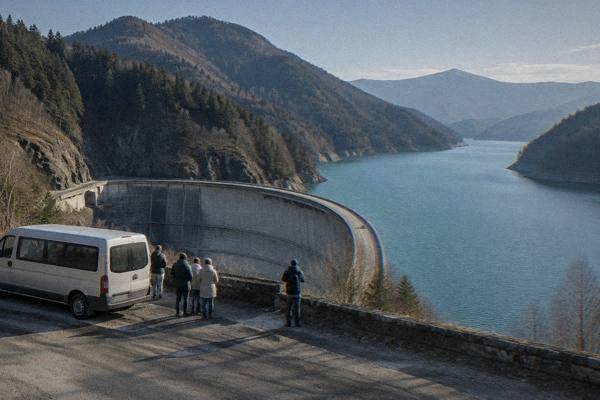
A scenic-road day from Sibiu runs roughly: leave Piața Mare, drive about 69 minutes to Bâlea Cascadă, ride or walk up to Lake Bâlea at 2,034 m, then continue over the high stretch and down the south side to the Vidraru dam, an arc that pairs Romania's most scenic road with its most dramatic dam wall. The whole loop is a full day. The figures are computed free-flow drives, and in season the road's own traffic and photo stops add time that no routing engine counts.
The stops give the day its shape. Bâlea Cascadă, the waterfall at the northern entry, is where the cable car also starts. The lake at the top sits in a glacial cirque with a short walk from the parking area. The southern descent passes the Vidraru dam, whose arch wall and downstream gorge are the engineering counterpoint to the natural scenery. Poenari fortress stands in the same region; confirm its opening hours and prices locally before counting on a visit.
Two warnings belong in any plan. First, the A1 motorway toward Bucharest is unfinished, and the Sibiu to Boița section is closed from 5 October to 19 December 2026 for overpass works with traffic diverted onto DN7, which is exactly the road area some Transfăgărășan approaches use: allow extra time and do not trust a motorway estimate toward the south. Second, mountain weather decides the day. The road can be open and blanketed in early-winter conditions, as it was on 23 September 2026, so check the road authority's live status that morning.
For travellers who would rather not do the alpine driving themselves, there is a guided option that covers the same ground. The Check availability link leads to the operator's live listing for a day tour from Sibiu built around the road, Bâlea Lake and the Vidraru dam.
Are There Other Scenic Drives Near Sibiu Worth The Road?
Yes, three stand out within day-trip range of Sibiu: the DN7 along the Olt valley toward Turnu Roșu as the year-round mountain-adjacent route, the road to Păltiniș at about 32 km and 40 minutes as the short forest climb, and the Saxon-village lanes of the Mărginimea Sibiului toward Rășinari and Sibiel as the pastoral alternative, at about 13 km and 18 minutes and about 25 km and 36 minutes respectively. None matches the Transfăgărășan's altitude or drama, but all three run when the alpine road does not.
The Olt valley route deserves the note. It is the winter alternative when the high passes shut, passable year-round, and it is the corridor the DN7 diversion is using while the A1 Sibiu to Boița section is closed. Păltiniș, the small resort at the top of its climb, opens its ski season on 28 November 2026, which makes that road a winter drive with a destination at the end of it. The Mărginimea villages are the quiet option: sheep-farming country, plain churches and the icon-on-glass museum tradition at Sibiel, though that museum's hours were not found and should be confirmed locally.
For a broader frame on the country behind these roads, the what is Romania most famous for page sets the scene, and the is Transylvania worth visiting for tourists page covers the region these drives cross.
Common Questions About Romania's Most Scenic Road
What Is The Most Scenic Road In Romania?
The Transfăgărășan (DN7C) through the Făgăraș mountains south of Sibiu. It climbs to Lake Bâlea at 2,034 m and runs a gated alpine stretch open roughly mid-June to mid-October, daily 07:00 to 21:00, with closure possible any day from 20 October. The Transalpina (DN67C) is the main rival.
How far is the Transfăgărășan from Sibiu?
About 63 km and 69 minutes by road from Piața Mare to the Bâlea Cascadă entry, and about 76 km and 88 minutes to Lake Bâlea itself, computed over free-flow routing. Traffic and photo stops add time in season.
Can you drive the Transfăgărășan in winter?
No. The high stretch is a summer road, closed by snow and closable any day from 20 October under the standing rule. In the closed season the reported access is the Bâlea Cascadă to Bâlea Lac cable car, which runs about 09:00 to 18:00, roughly every 30 minutes, in October and November. Confirm the ticket price with the operator.
What happens if you drive the Transfăgărășan when it is closed?
Fines of 10,000 to 30,000 lei apply for driving the closed alpine section, under the law in force since November 2025. Check the road authority's live status on the morning of your drive.
Is the Transalpina open longer than the Transfăgărășan?
Not reliably. The Transalpina reopened on 29 May 2026 and its reported hours were already cut to 09:00 to 18:00 from 26 September 2026 as autumn weather arrived. No fixed autumn closure date was published; treat both roads as seasonal and check live status.
Can you see the Transfăgărășan without driving it?
Yes. Guided day tours from Sibiu cover the road, Bâlea Lake and the Vidraru dam, and the Sibiu Travel Guide site lists the options. The how long does it take to drive the Transfăgărășan page covers the timing question for self-drivers.
The short version: the Transfăgărășan is the scenic road the sources name, it sits an hour from Sibiu, and it exists on the calendar's terms rather than yours. Plan for mid-June to mid-October, check the live status the morning of the drive, and hold the Transalpina in reserve as the second crossing when one alpine road is not enough.