Sibiu Accessibility: Cobbles, Stairs And Step-Free Routes
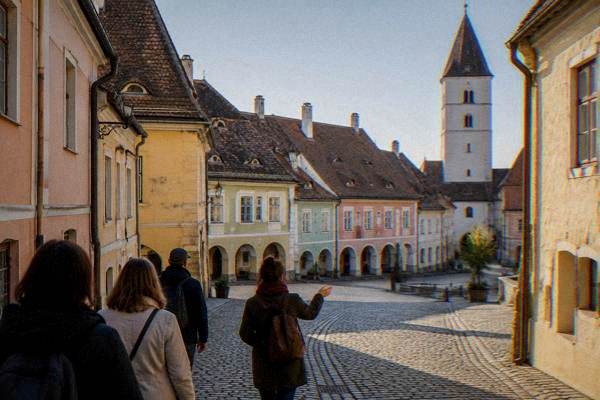
Sibiu, in Transylvania, Romania, is a Saxon-founded hill town of cobbles, steps and sloping squares, and honest accessibility planning starts with knowing exactly where the difficult ground lies.
Short answer
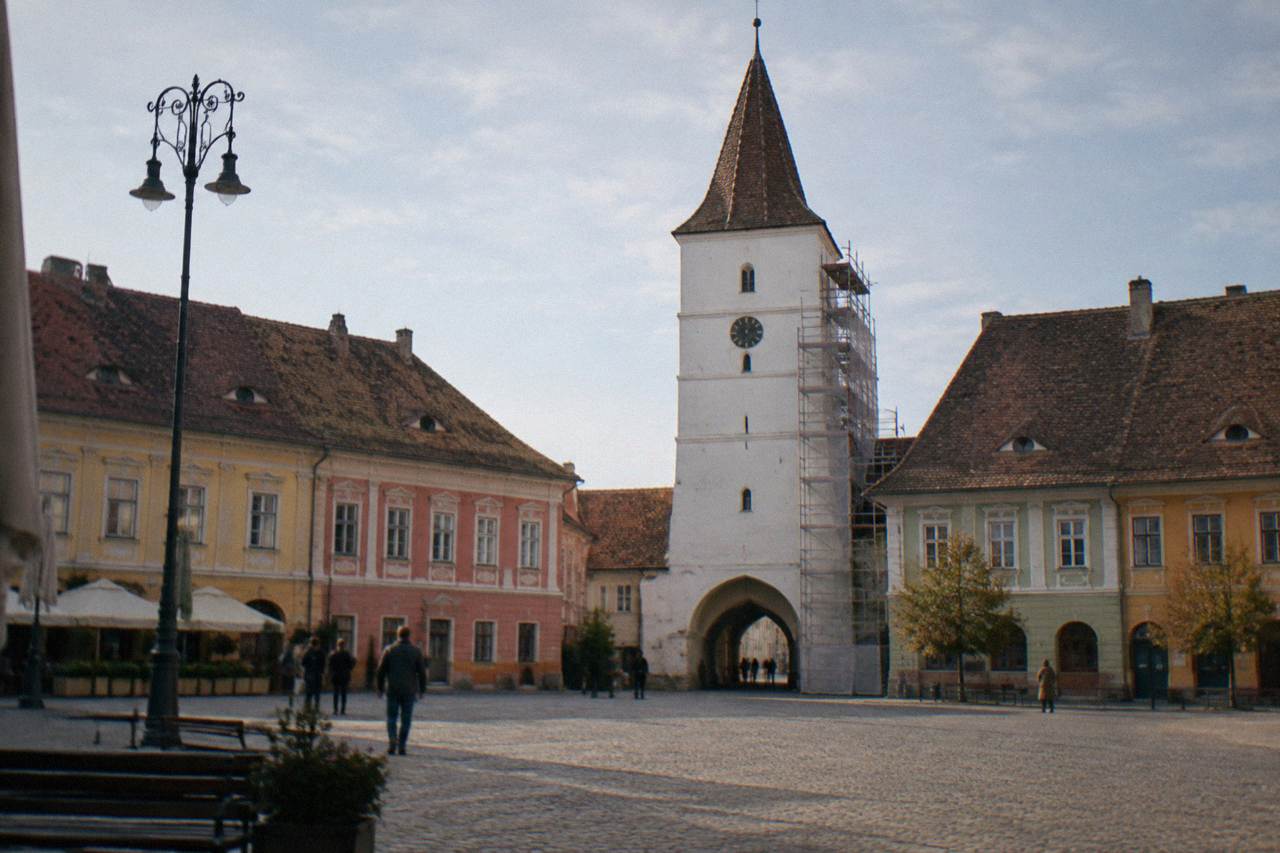
Sibiu's Upper Town squares, Piața Mare and Piața Mică, are reachable by car and largely flat once you are there, but the Stairs Passage links the Lower Town by steps, the cobbles are uneven, and no venue in the city publishes a confirmed lift, ramp or step-free route, so contact each museum, church and station directly before you go.
Sibiu, in Transylvania, Romania, sits at 415 to 431 metres above sea level, a Saxon old town split between an Upper Town and a Lower Town around the great open rectangle of Piața Mare. That vertical layout is the single fact that shapes every accessibility question here. The upper squares sit on a plateau; the lower streets sit below them; the two are joined by sloping lanes and by the stepped Pasajul Scărilor, the Stairs Passage. Cobbles, worn kerbs and gradients are part of the historic fabric and are not going anywhere. This guide from the Sibiu Travel Guide editorial desk lays out what the city's own sources say about the terrain, the museums, the transport and the day trips, and is blunt about what no source confirms: step-free routes, lifts and ramps at individual venues were not found in any official material, so the honest instruction is to contact each place directly before travelling.
Is Sibiu Accessible For Wheelchair Users And Slow Walkers?
Sibiu is partly accessible but not reliably step-free: the Upper Town squares, Piața Mare and Piața Mică, are open, mostly level public spaces reachable by road, while the Lower Town sits below and is joined to it by sloping streets and the stepped Stairs Passage, and no official source confirms a single lift, ramp or step-free route at any museum, church, station or attraction in the city. Wheelchair users and slow walkers can see a great deal of the city at the top of the hill, but the visit needs to be planned around the plateau, not the postcard view of both towns linked by stairs. Anyone with specific mobility needs should email or phone each venue in advance, in English, and ask the direct question.
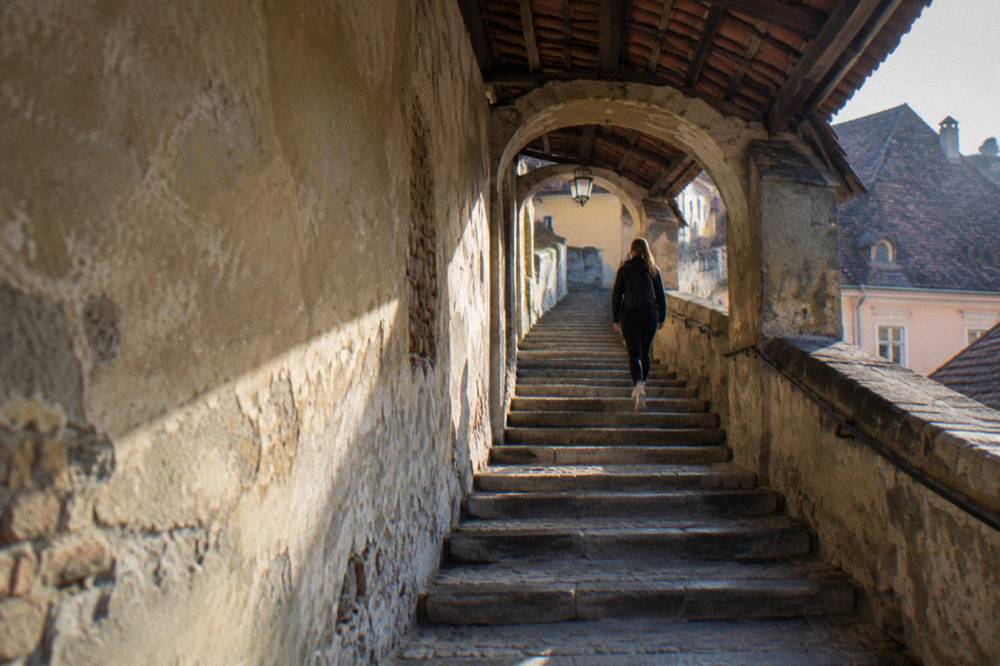
The city's own geography explains the problem. Sibiu's old centre rises from 415 metres in the Lower Town to 431 metres in the Upper Town, a difference of about 16 metres, modest in a ski resort, significant in a medieval street plan. The historic route between the two levels is the Stairs Passage, a stepped lane that connects the Lower Town to Piața Huet above; by name and by geometry it is a stairway, so the Upper Town is not reachable step-free on that route. Sloping streets exist as alternatives, but the Stairs Passage itself is out for anyone who cannot manage steps, and its worn stone treads demand care even from steady walkers in wet weather.
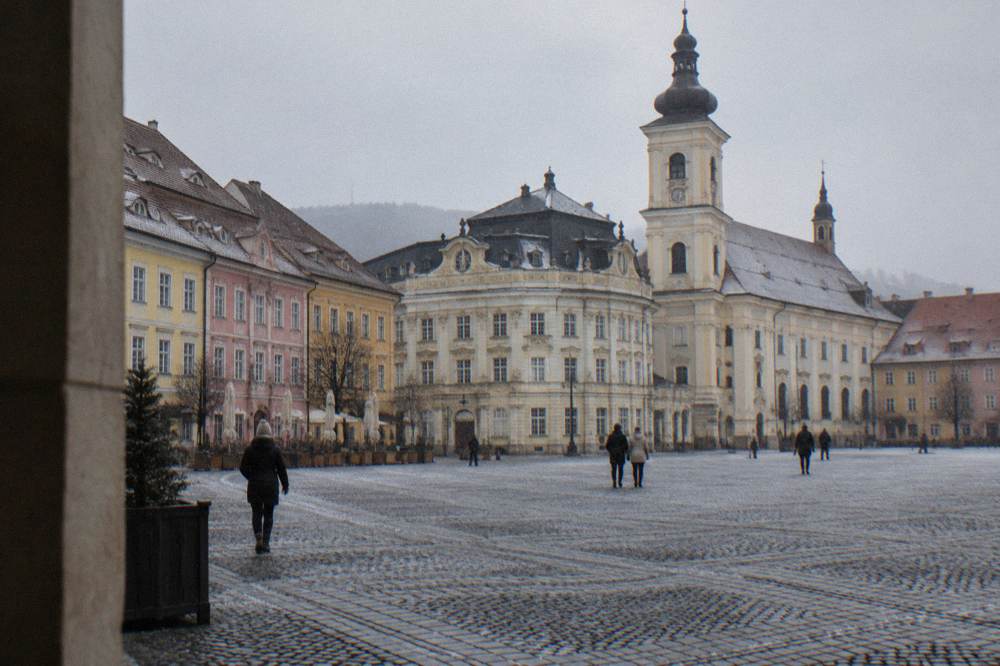
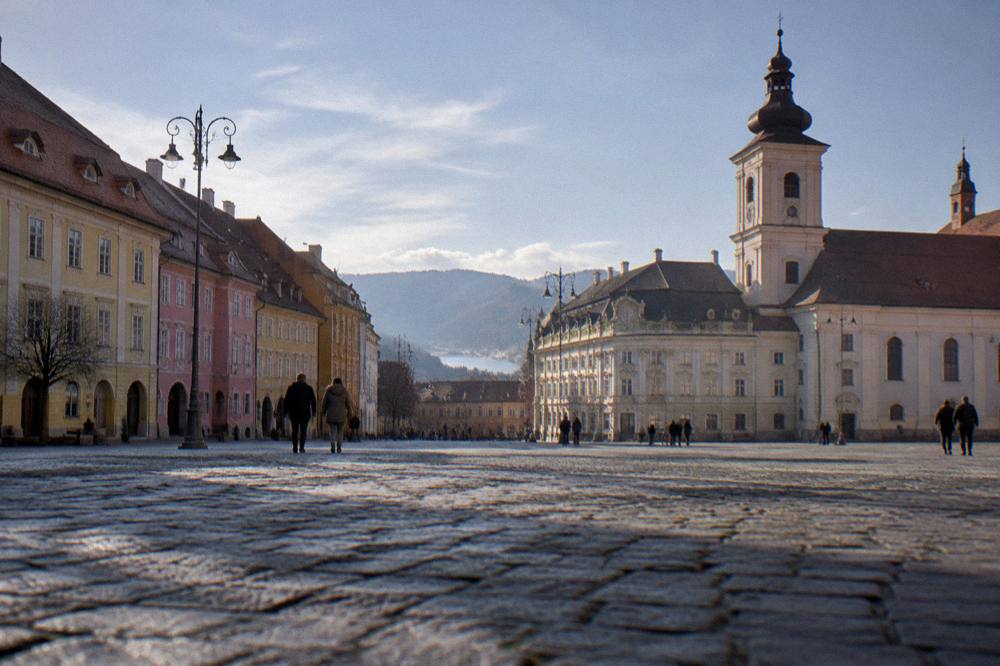
Cobblestones deserve a paragraph of their own. Piața Mare, Piața Mică and the lanes around them are paved with historic stone setts of varying size and condition. A powered wheelchair with large castors copes; a small-wheeled manual chair or a rollator finds the joints punishing. The wide, open squares are the friendliest ground in the centre, and the free, open-air sights, all listed in the table below, need no ticket and no opening hours, so a visit can be paced however suits.
| Open-air sight | Position | Ground | Ticket |
|---|---|---|---|
| Piața Mare (Great Square) | Upper Town | Cobbles, largely level | Free, no hours |
| Piața Mică (Little Square) | Upper Town | Cobbles, gentle slope | Free, no hours |
| Piața Huet | Upper Town | Cobbles, level | Free, no hours |
| Bridge of Lies | Between Piața Mare and Piața Huet | Cobbles, short climb | Free, no hours |
| Stairs Passage | Lower Town to Upper Town | Steps, worn stone | Free, no hours |
| City walls and towers (Potters, Arquebusiers, Stairs) | Lower Town edge | Cobbles and grass paths | Free, no hours |
For a fuller list of sights that cost nothing, the free things to do in Sibiu guide covers the squares, the walls and the viewpoints, all of which can be attempted or skipped at will, which is exactly the flexibility an accessible visit needs.
Which Parts Of The Sibiu Old Town Are Step-Free?
The Upper Town is the step-free zone to plan around: Piața Mare, Piața Mică and Piața Huet form a connected plateau of open squares reachable by car and taxi, while the Lower Town and the connecting Stairs Passage involve steps, slopes and uneven cobbles, and the Council Tower, the historic viewpoint between the squares, has been closed to all visitors since 19 January 2026 for a restoration of about 24 months. A sensible accessible route stays high: arrive by vehicle at the edge of Piața Mare, cross the great square, view the Bridge of Lies from street level, and finish in Piața Huet by the Evangelical Cathedral. That loop is flat to gently sloping and needs no stairs.
The Council Tower closure deserves emphasis because so many guides still send readers up it. The tower between Piața Mare and Piața Mică has been closed to visitors since 19 January 2026 for a rehabilitation planned at about 24 months, with completion reported at about January 2028; the walls have been cleaned and re-plastered and the copper roof removed. No ticket, price or hours apply because there is nothing to enter. The open viewpoint in the old town is the Evangelical Cathedral tower, at 10 RON for an adult, with hours published by the city's tourism site: Monday 12:00 to 17:00, Tuesday to Thursday 10:00 to 17:00, Friday and Saturday 10:00 to 20:00, Sunday 11:00 to 17:00. A tower climb is a stair activity by definition, so it suits companions rather than wheelchair users, but the cathedral itself stands at street level on Piața Huet and can be seen from the square.
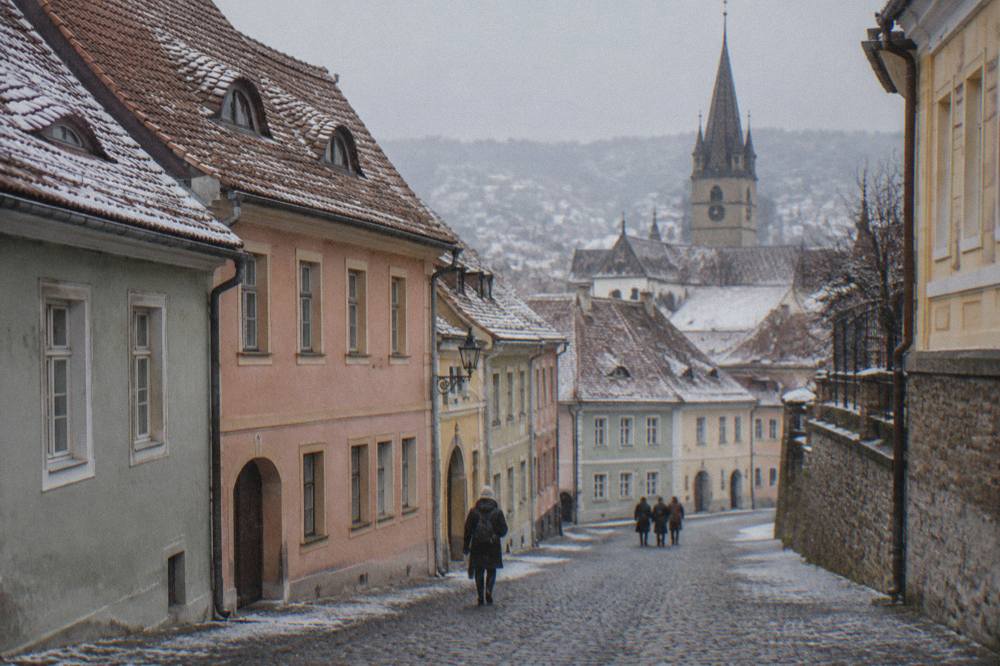
The Lower Town, Orasul de Jos, is not off limits, only harder. Its streets are narrower, its cobbles older, and the return trip means either retracing a slope or taking the steps of the Stairs Passage. Wheelchair users who want to see the Lower Town walls and towers can be driven down and around by road rather than descending on foot, and the lower town and upper town pages of this site describe both halves of the city so the choice can be made with a map rather than a surprise. Drivers should read the parking in Sibiu notes; zone-by-zone parking prices for the old town were not established, so confirm rates and disabled-badge rules locally.
A guided walk can carry the orientation work. The operator's listing for the Upper Town landmarks walk covers the plateau sights around the great squares, and the tour page on this site, Upper Town landmarks city tour, describes what it includes; anyone with mobility needs should message the operator first to confirm the route, pace and any rest stops. A vehicle-based option exists too, and a private walk of the whole centre can be slowed to a schedule that suits.
What Do Sibiu Museums Offer Visitors With Mobility Needs?
The Brukenthal National Museum's own price page lists separate tickets for seven sites, 50 RON for the Palace art gallery, 36 RON for the History Museum, 20 RON for Natural History, 16 RON for Pharmacy History, 15 RON for Contemporary Art and 120 RON for a 48-hour combined ticket, but no museum in Sibiu publishes a confirmed lift, ramp or step-free route, and two of the sites, the Hunting Museum and, at weekends, the Contemporary Art Museum, are closed, so contact each site about access before buying. The Palace itself stands on the north side of Piața Mare at street level, which is a reasonable start, but entry halls, staircases and gallery floors are exactly the kind of detail official pages here do not describe.
The headline facts, from the Brukenthal National Museum's own site, are these: the Palace is open Wednesday to Sunday, 10:00 to 18:00, cashier closing 17:15, and closed Monday and Tuesday; the History Museum at Casa Altemberger, Natural History and Pharmacy History run Wednesday to Sunday, 09:00 to 17:00, with cashiers closing at 16:15 or 16:30; the Contemporary Art Museum on Strada Tribunei is now open Monday to Friday only, 09:00 to 17:00, and closed at weekends; and the Hunting Museum, Muzeul Cinegetic August von Spiess, is closed for an indefinite period, opening only to pre-booked groups. Reduced tickets exist: pensioners pay half at the sites listed, pupils and students a quarter, prices the museum's price page states directly.
| Brukenthal site | Adult ticket | Schedule pattern | Confirmed step-free access |
|---|---|---|---|
| Brukenthal Palace, Piața Mare | 50 RON | Wed to Sun, 10:00 to 18:00 | Not published, contact the museum |
| History Museum, Casa Altemberger | 36 RON | Wed to Sun, 09:00 to 17:00 | Not published, contact the museum |
| Natural History Museum | 20 RON | Wed to Sun, 09:00 to 17:00 | Not published, contact the museum |
| Pharmacy History Museum, Piața Mică | 16 RON | Wed to Sun, 09:00 to 17:00 | Not published, contact the museum |
| Contemporary Art Museum | 15 RON | Mon to Fri only, closed weekends | Not published, contact the museum |
| Hunting Museum | Closed indefinitely | Pre-booked groups only | Closed |
| Combined 48-hour ticket | 120 RON | Valid across open sites | Contact the museum |
The ASTRA Museum of Traditional Folk Civilization is a different proposition: an open-air museum of traditional houses and farmsteads spread through the Dumbrava forest, about 5.5 km from Piața Mare, with an adult ticket at 50 RON and a pensioner rate of 20 RON per the museum's own tickets page. Open ground, gravel and grass paths replace staircases, and a visit can be as short or as long as energy allows, but the terrain is rural rather than paved, so wheelchair users should ask the museum directly about path conditions, accessible toilets and whether any vehicle or shuttle runs inside the site. Its autumn 2026 schedule ran to 26 October with last entry about 16:00; the winter schedule had not been announced, so check the museum's own site for current hours. The neighbouring Dumbrava forest itself is free and flat, a genuinely easy outing; the ASTRA Museum guide on this site has the fuller picture.
Two smaller notes close this section. The Orthodox Cathedral and the Holy Trinity Catholic Church publish no confirmed access details, so the same rule applies: ask before setting out. And the Franz Binder Museum of ethnography has no 2026 hours or prices in any source this desk could use, so say nothing about it beyond its existence and confirm locally. For museum lovers who want the city's perspective, the Brukenthal National Museum guide collects the visiting details in one place.
Planning several museums into one stay makes sense for anyone who wants the flat squares at a slow pace, and a shorter walk with a local guide can handle the orientation while conserving energy for the galleries.
How Accessible Are Sibiu Transport, The Airport And The Train Station?
Sibiu International Airport lies about 5 to 6 km west of Piața Mare and is served by city bus line 11 from a dedicated stop in front of arrivals, with a 60-minute ticket at 3.5 lei bought contactless on the bus, but neither the airport, the train station nor the bus operator publishes a confirmed ramp, lift or step-free boarding facility, so travellers with mobility needs should contact the airport and the railway operator directly before travelling. The airport's own transport page is clear about the bus routes, 11, 112, 116, 117 and 118, and about the 3.5 lei fare; it says nothing about accessibility features, and an absence of a claim is not a claim of absence.
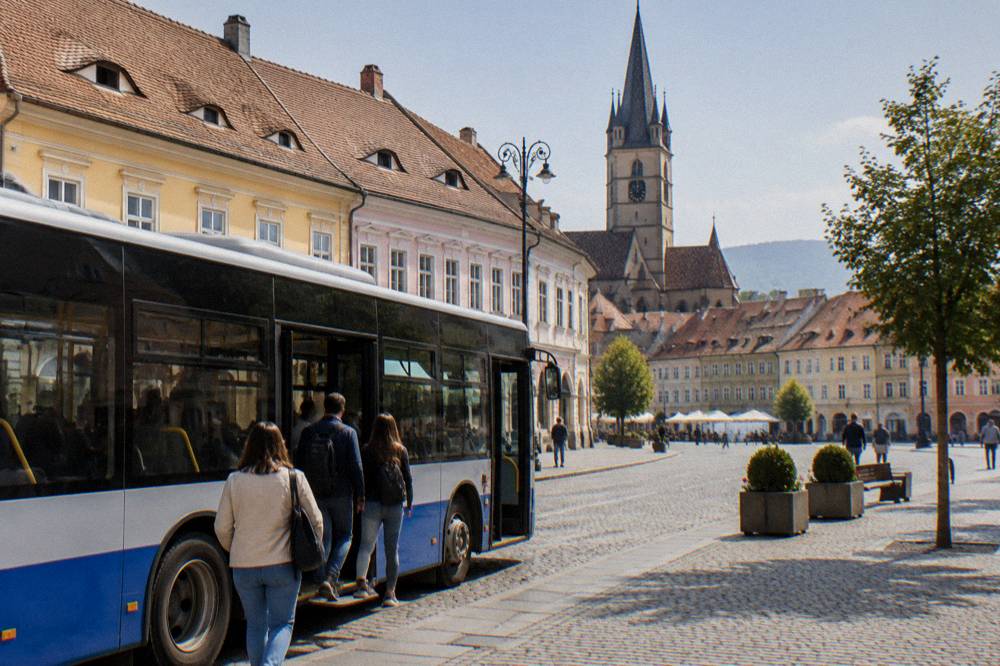
The bus network's fares are the one set of figures fully documented: 3.5 lei for 60 minutes within the city, 5 lei for 75 minutes with one transition, and 7 lei for 90 minutes with two transitions, per the Tursib tariff page. Low-floor buses are the norm on many European networks, but Tursib publishes no fleet accessibility statement this desk could find, so confirm with the operator whether the line 11 vehicles suit your needs, or plan a taxi or ride-hailing trip from the arrivals forecourt instead. Bolt and Uber both operate in Sibiu, and app bookings let a passenger request a larger vehicle, though fares vary with demand. Full arrival detail, including the winter 2026-27 flight cuts to 17 weekly Wizz Air flights, sits in the Sibiu airport guide and the wider how to get to Sibiu page.
| Transport item | What the sources say | Access detail |
|---|---|---|
| Airport distance | About 5 to 6 km to Piața Mare, computed over road routing | Confirm taxi or bus suitability in advance |
| Tursib bus line 11 | Serves arrivals terminal; 60-minute ticket 3.5 lei | Fleet access details not published, ask Tursib |
| Tursib city fares | 3.5 lei (60 min), 5 lei (75 min), 7 lei (90 min) | Same answer for every line |
| Gara Sibiu (train station) | About 0.8 km north-east of Piața Mare | Access details not published, ask CFR |
| FlixBus to Bucharest | From about 46 RON, reported | Access details on the operator's listing |
| Emergency number | 112, per the city tourism site | Single European number |
The train station is genuinely close, roughly 0.8 km from the great square, but that stretch of city cobbles and crossings is a real distance for a slow walker with luggage, and the station itself publishes no step-free confirmation for its platforms and subways. The practical advice is to arrange a vehicle for the station leg and to contact the railway operator about boarding assistance when booking, because assistance requests on Romanian railways generally need advance notice. Journeys themselves are reported rather than guaranteed: Brașov about 3 to 4 hours, Sighișoara 2 to 2.5 hours, Bucharest 5 to 7 hours, and fares are not published in any source this desk may use, so check cfrcalatori.ro for live times and tickets. The Sibiu train station guide collects what is known.
One road warning matters for anyone being driven in from the south or towards Bucharest. The A1 motorway between Sibiu and Pitești is unfinished, and the Sibiu to Boița section is closed from 5 October to 19 December 2026 for overpass works, with traffic diverted onto the DN7. A diversion adds time and rural road to a transfer, so build slack into any car journey in that direction, and see the Sibiu to Bucharest page for the fuller picture. Car-hire travellers will find the practicalities, without invented prices, in the car rental in Sibiu guide.
Can You Do Sibiu Day Trips With Limited Mobility?
Day trips from Sibiu are feasible with limited mobility only by road, not by mountain path: the Transfăgărășan, Păltiniș, the Saxon villages and the citadels of Alba Iulia and Sighișoara are all reached by car, coach or private tour in under three hours, but the high mountain roads are seasonal, the Transfăgărășan can be closed any day from 20 October, and no heritage site among them publishes a confirmed step-free route. The good news is that several of the region's sights are, like Sibiu's squares, open ground you can view from a vehicle threshold, so pick road-based destinations and confirm access at each stop.
The drive times, computed over routing from Piața Mare in free-flow conditions, are the planning skeleton. They are approximations, not timetables, and the A1 diversion described above can stretch anything heading south.
| Day trip destination | Approximate drive from Piața Mare | Terrain at the destination |
|---|---|---|
| Rășinari, Mărginimea Sibiului | About 18 minutes, 13 km | Village roads, modest slopes |
| Cisnădie and Cisnădioara churches | About 14 to 18 minutes, 10 to 13 km | Village streets; church access unconfirmed |
| Sibiel | About 36 minutes, 25 km | Village lanes; museum hours not found |
| Păltiniș resort | About 40 minutes, 32 km | Mountain road, ski area opens 28 November 2026 |
| Transfăgărășan (Bâlea Cascadă) | About 69 minutes, 63 km | High mountain road, seasonal rules apply |
| Bâlea Lake | About 88 minutes, 76 km | At 2,034 m; road seasonal, cable car alternative |
| Alba Iulia citadel | About 81 minutes, 71 km | Citadel grounds free and open, level ramparts |
| Sighișoara | About 102 minutes, 96 km | UNESCO old town on a hill, cobbles and slopes |
| Brașov | About 154 minutes, 142 km | Old town compact, surrounding roads fast |
Alba Iulia is the standout for easier access: the Alba Carolina citadel grounds are free and open around the clock, and a car can deliver a visitor close to the ramparts, where the walking is broad and level compared with anything in Sibiu's old lanes. Museum prices inside the citadel remain a confirm-locally item, so treat the museums as something to check on arrival and the grounds as the destination. The Transfăgărășan demands a different caution: the 2026 season reopened on 12 June with daily hours 07:00 to 21:00 on the high stretch, but by rule the alpine section can be closed any day from 20 October, driving the closed section carries fines of 10,000 to 30,000 lei, and outside the road season the Bâlea cable car runs on its own schedule on the operator's page, with no price this desk may print. The road itself is the attraction, which makes it one of the few mountain sights a non-walker can fully enjoy from a seat. Check the live road status before setting out, and read the site's Transfăgărășan and Sibiu day trip planning pages for seasonality.
Sighișoara is the toughest of the classic trips: a beautiful UNESCO-listed old town on a hill, with the Clock Tower museum at 50 RON per the citadel's own information page and steep cobbled lanes below it. A slow walker can manage the lower streets; a wheelchair user will see the town from the flat base and the vehicle. The Saxon villages, Biertan at about 1 hour 15 to 1 hour 30 and about 76 km, are quiet and rural: Biertan's fortified church charges 20 RON for an adult, per the city's tourism listings, but the church interior and tower involve steps and historic thresholds, so confirm access locally. Private day tours solve the transport problem entirely, and several from this site's roster, from the Sighișoara day trip guide, can be messaged in advance about pace and stops.
When Is The Easiest Season For An Accessible Sibiu Trip?
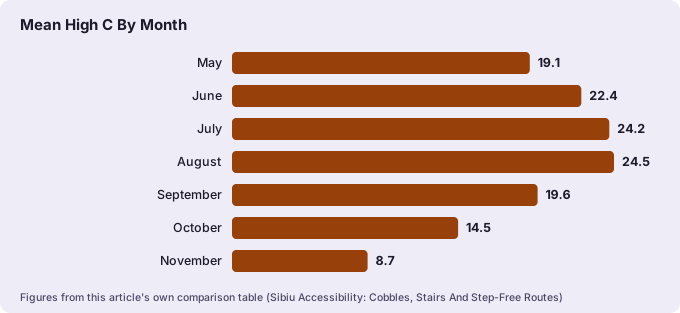
Late spring and early autumn are the easiest seasons for an accessible Sibiu trip: May and June and September and October bring mild temperatures, the highest sunshine figures of the year outside midsummer, and none of the ice that makes winter cobbles hazardous, while the city's official climate page records a mean annual temperature of 8.9 C and 662 mm of annual rainfall, with June the wettest month at 113 mm, so a shoulder-month visit trades a small rain risk for safe footing and comfortable walking distances. The climate table below comes from the ERA5 reanalysis, 1991-2020, a modelled grid cell near Sibiu, not a weather station record.
Snow is the accessibility villain. Snowfall runs from November to March in the modelled normals, January the snowiest month at 23.3 cm, and a historic stone square under ice or packed snow is a fall risk for everyone and a barrier for wheels. If winter is the only window, the Christmas market, which runs 13 November 2026 to 3 January 2027 in Piața Mare with free entry and a 600 sqm ice rink, is at least a single-square event reachable by vehicle, though the rink, the wheel and the stalls add crowds and cables to the cobbles. The Sibiu Christmas market guide has the dated detail, and the Sibiu winter itinerary page plans a short cold-weather stay.
| Month | Mean high C | Mean low C | Sunshine h/day | Snow cm |
|---|---|---|---|---|
| May | 19.1 | 9.0 | 11.3 | 0.3 |
| June | 22.4 | 12.9 | 12.4 | 0.0 |
| July | 24.2 | 14.6 | 12.8 | 0.0 |
| August | 24.5 | 14.8 | 11.8 | 0.0 |
| September | 19.6 | 10.5 | 9.7 | 0.1 |
| October | 14.5 | 5.7 | 8.0 | 2.7 |
| November | 8.7 | 0.9 | 6.4 | 13.0 |
August has the highest mean daily high of the year at 24.5 C in the ERA5 reanalysis, 1991-2020, but summer heat on stone squares is its own fatigue problem for slow walkers, and the festival calendar fills Piața Mare: FITS, the international theatre festival, ran 19 to 28 June in 2026, and Artmania filled the square on 24 and 25 July. A quieter square is an easier square, so cross-check the Sibiu festivals calendar before fixing dates, and use the best time to visit Sibiu and Sibiu weather pages for the month-by-month detail.
Which Sibiu Tours And Experiences Suit Visitors Who Cannot Walk Far?
The tours that suit visitors who cannot walk far are the seated and vehicle-based ones: a wine tasting in the city, an e-bike ride with electric assist, a private driving day trip to the castles and citadels, and a short guided walk of the flat Upper Town squares, while long mountain hikes and the stepped parts of the old town are the experiences to skip. Every operator should be messaged in advance about pace, seating, rest stops and vehicle access, because no listing publishes an accessibility certification this desk could rely on. Booking a private rather than shared experience is the single biggest lever: a private guide sets the pace, and a private car removes the walking between sights entirely.
Food and drink experiences are the friendliest category. A Romanian wine tasting is seated by nature, a cooking workshop stands in one place, and both keep the historic-centre setting without the distance. Active options have real range: an e-bike tour trades walking for pedal assistance, a paragliding tandem is seated by definition, and an evening panorama drive to Gusterița Hill reaches a viewpoint above the city roofs without a climb. The classic mountain hikes, a day on the Făgăraș ridges or the trail up to Bâlea Cascada and Bâlea Lake, are for steady legs, and the Transfăgărășan by road is the sensible substitute, delivering the same scenery from a seat.
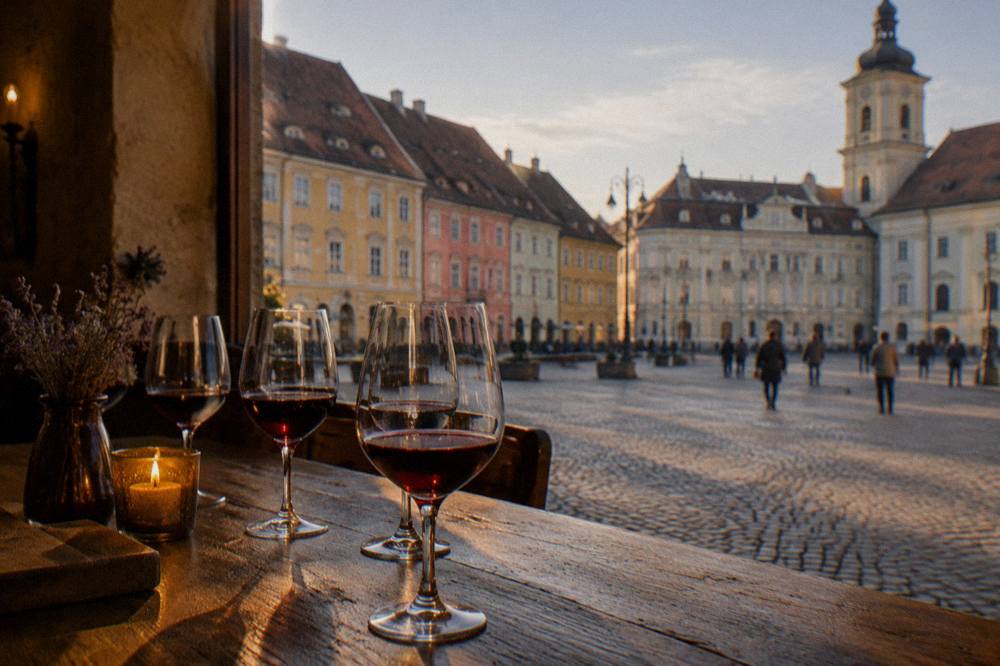
Cost planning helps too, and no figure needs inventing: the Sibiu cost and Sibiu budget pages collect the museum prices and transport fares in one place, and the money and tipping in Sibiu notes cover the currency, the leu, at about 5.3 lei to the euro. Families balancing a wheelchair or stroller with children's energy will find the flat squares, the free walls and Dumbrava forest picked out in the Sibiu with kids guide, and the same logic applies to both: open ground, no tickets, exit whenever you like.
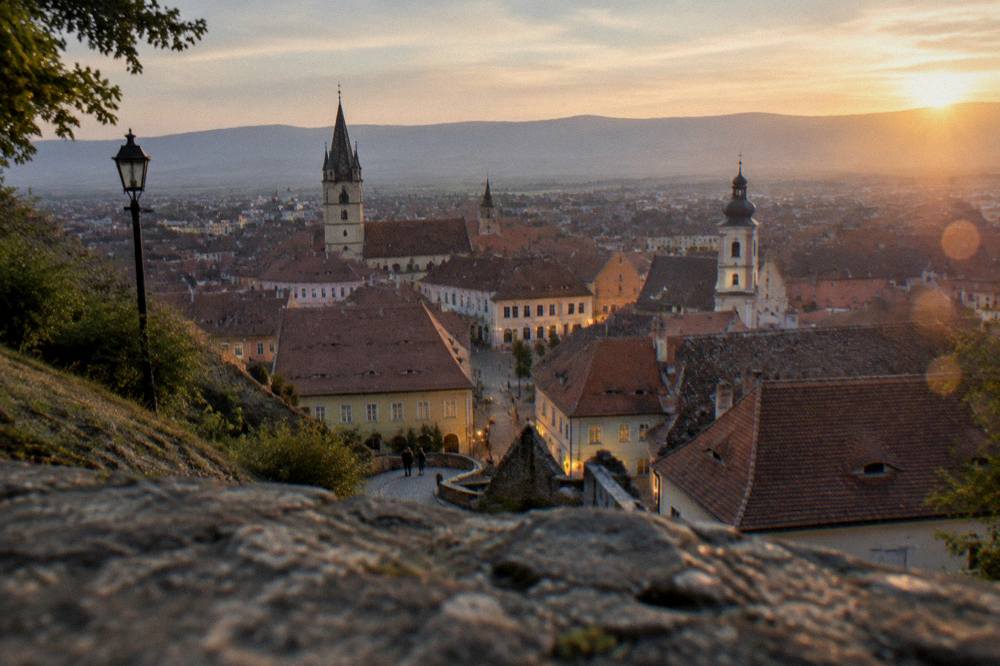
A seated evening above the roofs is the one panorama that excludes nobody who can be driven uphill.
How Do You Plan An Accessible Stay In Sibiu?
An accessible Sibiu stay comes down to four choices: sleep inside or beside the Upper Town plateau so the flat squares are on the doorstep, arrive by air or rail with a vehicle arranged for the last kilometre, book private or seated experiences instead of long shared walks, and contact every museum, church and station directly about lifts, ramps and step-free routes, because no official source in this city publishes them and the honest answer to "is it step-free" is always "ask the venue". Build the itinerary around the plateau, treat the Lower Town and the Stairs Passage as optional, and let the day trips run on wheels rather than boots.
Practical details to fix before travel: where to base, covered in the where to stay in Sibiu guide, keeping in mind that hotels add a 2 percent tourism-promotion tax on the accommodation value since 1 January 2026; what to eat, since traditional dishes such as Sibiu salad, papanași, ciorbă, mici and sarmale are named on menus across the city without a single venue this desk is permitted to recommend, so choose a restaurant on the flat squares and check the step at the door on arrival, with the what to eat in Sibiu page as the primer; and how to handle emergencies, where the single number is 112. Romanian is the official language, and English and German are commonly used in the tourist areas.
The city rewards this kind of planning more than most, because its beauty concentrates in two connected squares that a car can reach and a wheelchair can cross. Piața Mare alone holds the Brukenthal Palace at street level, the closed Council Tower's scaffolded silhouette, restaurant terraces and the opening arcades of the lanes towards Piața Mică, all on ground that, while cobbled, is level and open. The rest, the tower steps, the mountain trails, the scramble to Bâlea, can wait for another trip or another traveller. Sibiu does not hide its difficulty; it simply puts its grandest room on the top floor of the hill, and sends the lift information only to those who ask.
Common Questions About Sibiu Accessibility
Is Sibiu wheelchair accessible?
Partly. The Upper Town squares, Piața Mare, Piața Mică and Piața Huet, sit on a plateau reachable by road and are largely level once you are there, though cobbled. The Lower Town involves slopes and the stepped Stairs Passage, and no venue publishes a confirmed step-free route, so contact each museum, church and station directly.
Can you avoid the Stairs Passage in Sibiu?
Yes. The Stairs Passage is a stepped lane linking the Lower Town to the Upper Town, so anyone who cannot manage steps should travel between the two levels by road, by taxi or ride-hailing app, rather than on foot.
Is the Council Tower in Sibiu open to visitors?
No. The Council Tower has been closed to visitors since 19 January 2026 for a restoration planned at about 24 months, with completion reported at about January 2028. The open viewpoint in the old town is the Evangelical Cathedral tower, 10 RON for an adult.
Is the bus from Sibiu airport accessible?
Tursib bus line 11 serves a dedicated stop in front of arrivals, with a 60-minute ticket at 3.5 lei, but the operator publishes no confirmed accessibility details for its fleet. Confirm with Tursib, or book a taxi or ride-hailing vehicle from the forecourt.
Are Brukenthal museums step-free?
No step-free route is published for any Brukenthal site. The Palace stands at street level on Piața Mare, but lifts and ramps are not described on the museum's own pages, so contact the museum before buying, and note the main sites close on Monday and Tuesday.
What is the easiest season to visit Sibiu with limited mobility?
May, June, September and October, when temperatures are mild and snow is absent. Snow falls from November to March in the modelled normals and makes the cobbles hazardous, so winter visits should stay close to the flat squares.