Sibiu European Capital Of Culture 2007: What Changed
Sibiu, a Saxon-founded city in Transylvania, Romania, held the European Capital of Culture title in 2007 together with Luxembourg, and the year left the city with restored squares, fuller museums and a theatre festival that now fills the streets every June.
Short answer
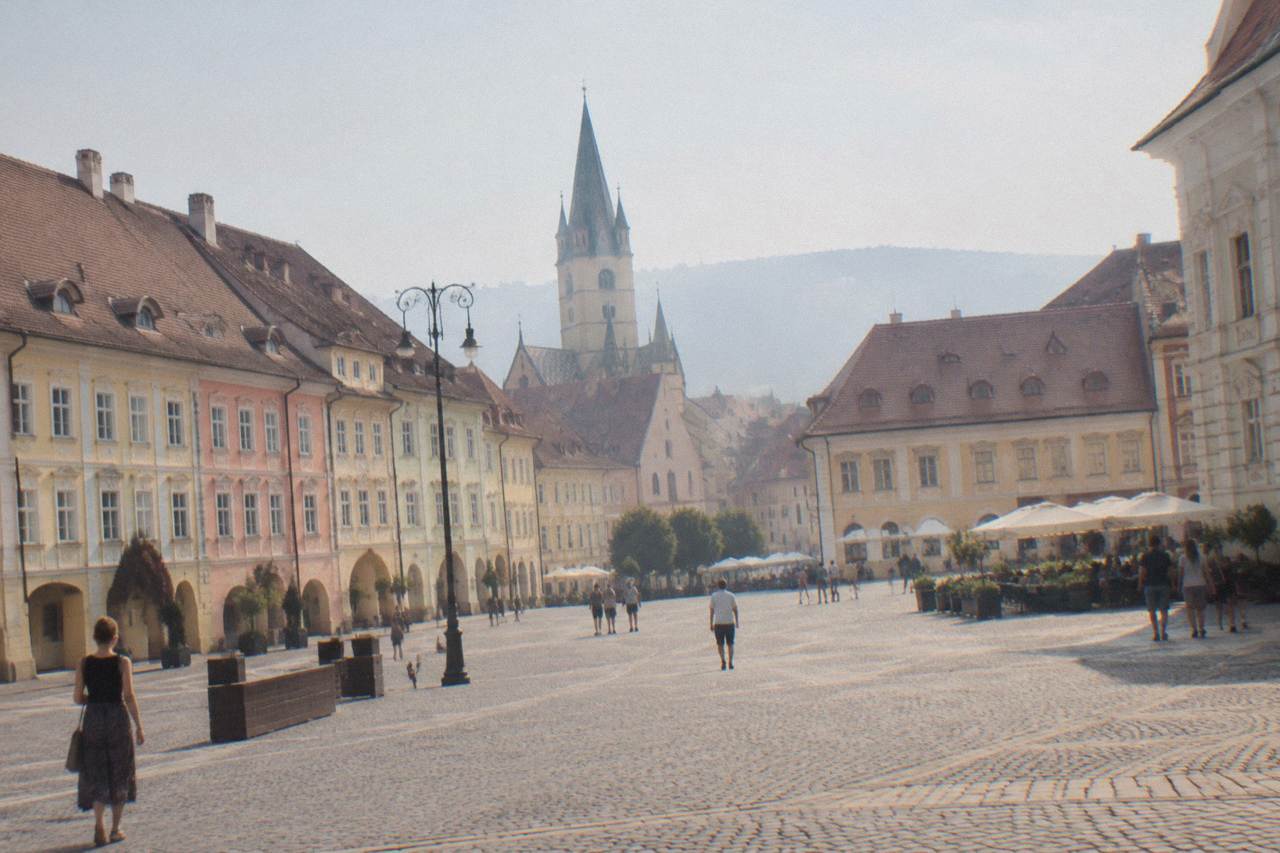
Sibiu was European Capital of Culture in 2007, sharing the title with Luxembourg. The year is reported to have brought wide restoration to the old town and a lasting festival economy; today its legacy is visible in Piața Mare, the Brukenthal National Museum network and the annual FITS theatre festival, next held 18 to 27 June 2027.
Sibiu, an inland Saxon-founded city on the Cibin river in Transylvania, Romania, is one of the smaller places ever to have held the European Capital of Culture title. The year was 2007, shared with Luxembourg, and it is the single event that turned a quiet Romanian county seat into a city that now runs an international theatre festival every June, a jazz festival in September and a Christmas market that stretches across 52 days of winter. The city was first documented in 1191 as Cibinium, and by the time the title year arrived its Upper Town and Lower Town still formed one of the best-preserved medieval cores in the country. This guide reports what the sources say the 2007 year changed, what a visitor can still see of it, and how to plan a culture-focused trip around it.
What Was Sibiu European Capital Of Culture 2007?
Sibiu held the European Capital of Culture title in 2007, sharing the year with Luxembourg, and the designation is reported widely as the moment the city stepped onto Europe's cultural stage. Romania's own UNESCO nomination documentation for 2007, cited by the city, frames Sibiu's historic core as the backdrop, and the title year is treated by every later account of the city as its turning point. The European Capital of Culture programme rotates between EU member states, and 2007 was Romania's first turn in the cycle, awarded shortly after the country joined the European Union that January. Sibiu, then a city of roughly 155,000 permanent residents plus some 25,000 temporary ones in term time, per the city's own presentation page, was a bold choice against larger rivals. The designation belongs to the city's modern identity so completely that the local discourse still measures events against it. For the historical frame behind the 2007 bid, see the companion guide to Sibiu's documented history.
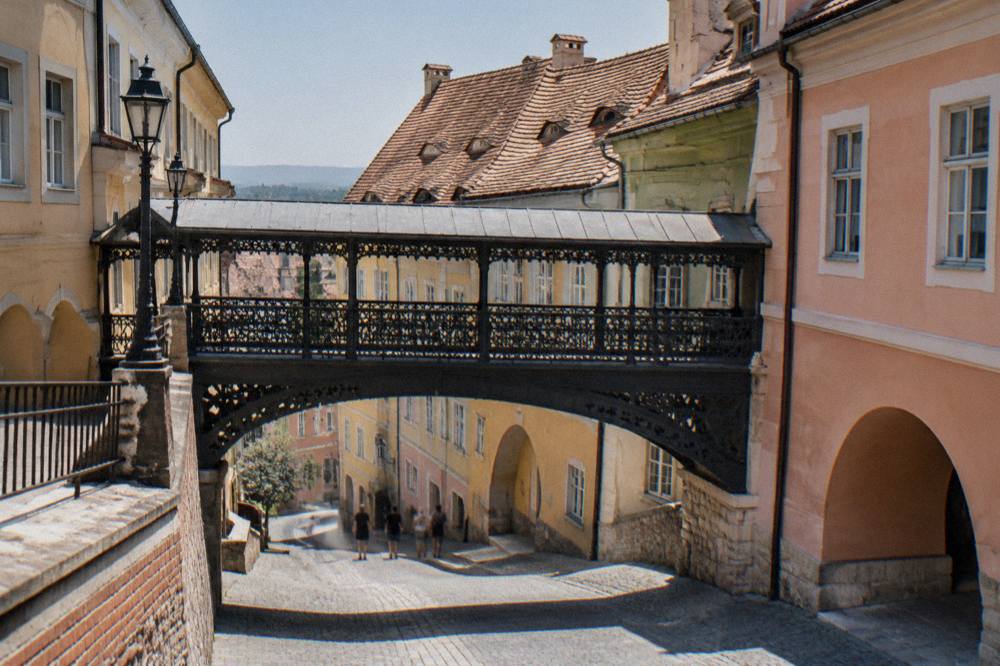
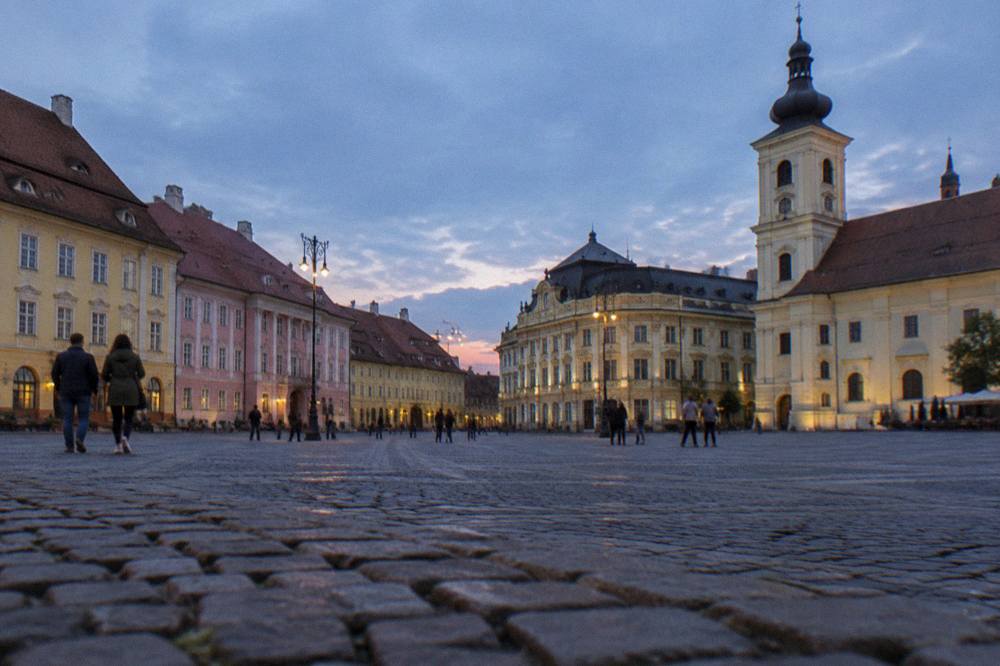
The city that received the title is the city you walk today. The Upper Town holds the three great squares, Piața Mare, Piața Mică and Piața Huet, strung together with the Bridge of Lies, reported to have been built in 1859 to 1860 as the first iron bridge in Romania. The Lower Town sits below, linked by the Stairs Passage, Pasajul Scărilor. The old town's pedestrian character, the restored facades and the squares that now host festivals are the visible inheritance of the cultural programme, and they are all free to wander, as the free things to do in Sibiu guide sets out.
A few fixed numbers help frame the city that held the title:
| Fact | Figure | Source basis |
|---|---|---|
| First documented | 1191, as Cibinium | The city's own history pages |
| Population | 134,308 (2021 census, municipality) | Census data |
| City's own estimate | About 155,000 permanent plus 25,000 temporary residents | The city's presentation page |
| Elevation | 415 m Lower Town to 431 m Upper Town | The city's presentation page |
| Capital of Culture year | 2007, with Luxembourg | Reported widely |
| Mayor 2000 to 2014 | Klaus Iohannis | Public record |
What Did The 2007 Year Change In Sibiu?
The reported changes centre on the old town's fabric and its cultural calendar: restoration of squares and facades across the Upper Town and Lower Town, upgraded museum spaces, and a festival infrastructure that outlived the year itself. The city's tourism site and later reporting treat 2007 as the moment Piața Mare became a permanent stage rather than a parking-lot candidate, and the theatre festival grew into the annual fixture it remains. No official itemised budget or visitor figure for 2007 is published in the sources this site uses, so those numbers stay off the page. What can be stated is the structural after-effect: the city kept investing in culture, kept its pedestrian squares car-free, and kept building a calendar that now includes theatre, jazz, film and a rock festival in the same squares.
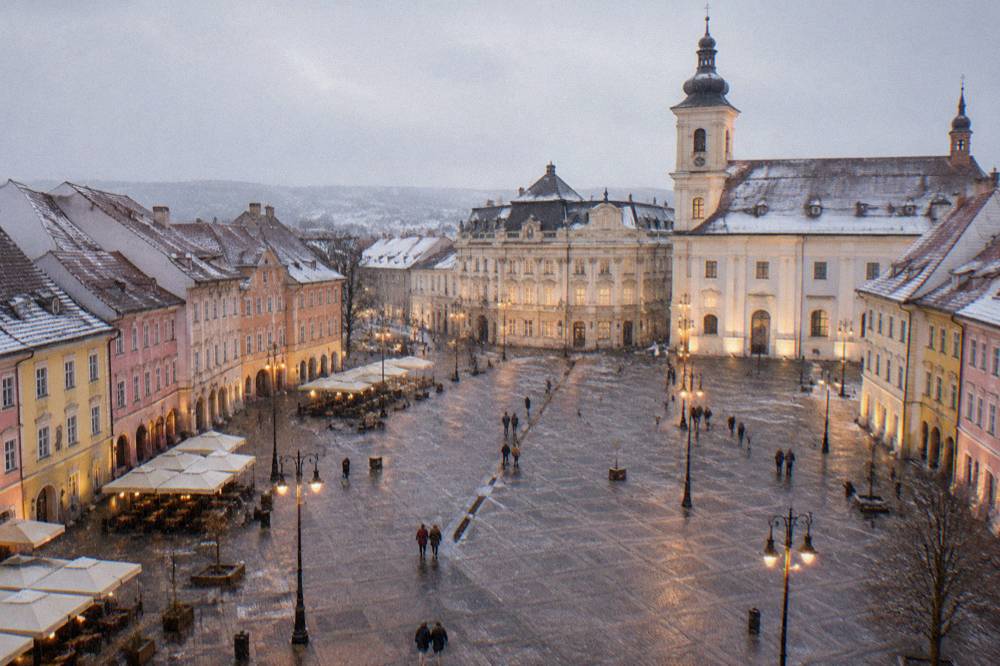
The physical legacy is easiest to see in three places. First, Piața Mare, the Grand Square, which today hosts the Christmas market from 13 November 2026 to 3 January 2027, the Artmania Festival and public stages, and which was fully pedestrianised in the city's cultural-era remodelling. Second, the Brukenthal National Museum, whose baroque palace on the square's north side anchors the museum network described below; the museum itself opened to the public in 1817 out of Governor Samuel von Brukenthal's collection, so 2007 did not create it, but the year is when its international profile rose. Third, the ASTRA Museum in the Dumbrava forest, an open-air museum of traditional civilisation functioning since 1963 on a site the ASTRA association had used for cultural purposes since 1905, which the cultural decade turned into one of Romania's flagship folk museums.
The institutional legacy also runs through the city's leadership. Klaus Iohannis, mayor from 2000 to 2014, was the public face associated with the title year and the restoration programme that followed it, and his long tenure overlaps almost exactly with the city's cultural reinvention. That political continuity is part of why the festival calendar kept growing after 2007 rather than collapsing once the title moved on.
The cultural walk that pairs most directly with this history is the Scholar-Led Baroque Masterclass of church and Brukenthal, which works through the same palace and square architecture the 2007 programme restored. Check availability
What Can You Still See Of The 2007 Legacy In Sibiu Today?
Almost all of it: the pedestrian squares, the restored bridge and towers, the Brukenthal network operating at full scale, and a festival calendar that fills Piața Mare from June to January, all survive as the working fabric of the city. One correction matters for 2026 visitors: the Council Tower, the symbol of the old town, has been closed to visitors since 19 January 2026 for a restoration planned at about 24 months, and the Evangelical Cathedral tower, at 10 RON adult, is the open viewpoint in the meantime. The squares themselves, the Bridge of Lies, the Stairs Passage, the city walls and their towers remain free, open-air public space with no ticket and no hours, as they have been since the cultural-era remodelling.
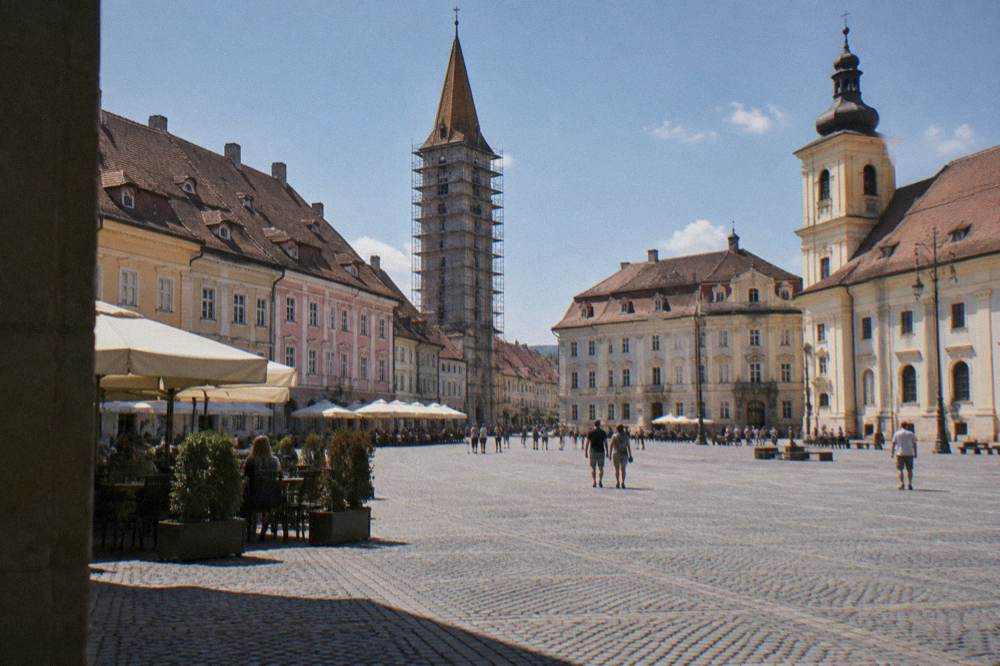
The Council Tower closure deserves emphasis because so much older copy online still tells readers to climb it. The tower has been shuttered since 19 January 2026, with walls cleaned and re-plastered and the copper roof removed as of September 2026, per the city's statements, and completion is reported for about January 2028. The Council Tower guide keeps the full story. Until it reopens, the Evangelical Cathedral tower in Piața Huet is the sanctioned viewpoint, open Monday 12:00 to 17:00, Tuesday to Thursday 10:00 to 17:00, Friday and Saturday 10:00 to 20:00 and Sunday 11:00 to 17:00, with an adult ticket at 10 RON and reductions to 5 RON, per the tourism site's listing; confirm hours before you go, since services can change them.
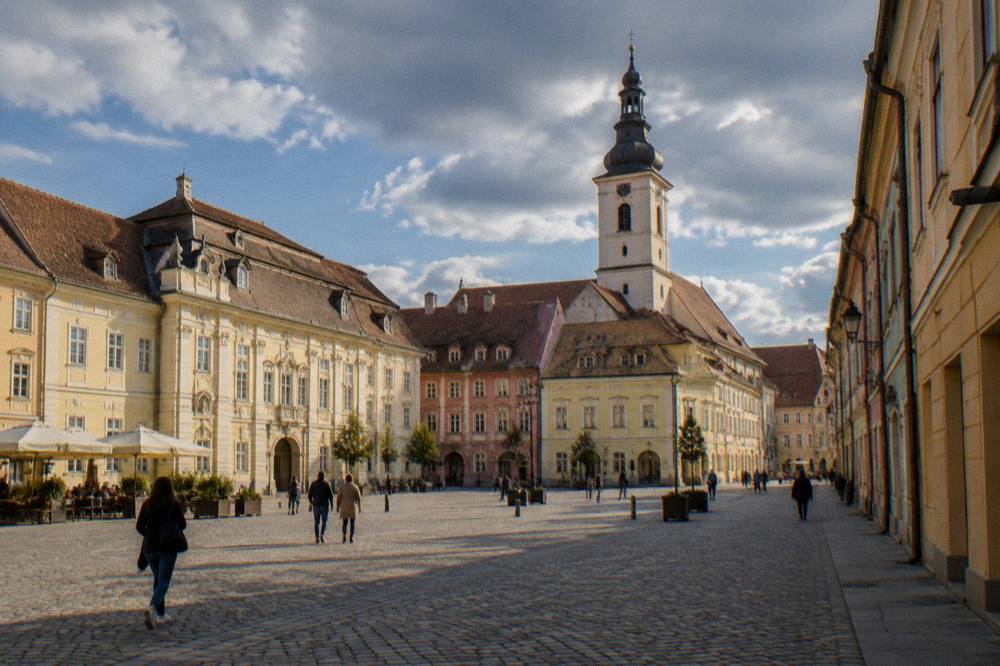
The legacy squares, and what you will actually find in each in late 2026 and 2027:
| Place | 2026/2027 status | Cost |
|---|---|---|
| Piața Mare | Open public square; Christmas market 13 Nov 2026 to 3 Jan 2027 | Free entry |
| Piața Mică | Open public square; Pharmacy Museum at no. 26 | Square free; museum 16 RON |
| Piața Huet | Open; Evangelical Cathedral and tower viewpoint | Tower 10 RON adult |
| Bridge of Lies | Open, no ticket | Free |
| Council Tower | Closed since 19 Jan 2026, restoration to about Jan 2028 | No access |
| Stairs Passage | Open public walkway | Free |
Prices are the Brukenthal National Museum's and the cathedral listing's current published figures; confirm on the museum's own site before booking.
Which Sibiu Museums Grew Out Of The Cultural Era?
The Brukenthal National Museum network and the ASTRA Museum are the two institutions the cultural decade raised to international standard: Brukenthal operates seven sites across the old town with separate tickets, from 50 RON at the Palace to 15 RON at the Contemporary Art Museum, plus a 48-hour combined ticket at 120 RON, while ASTRA, the open-air museum in the Dumbrava forest, charges 50 RON adult with reductions to 20 RON for pensioners. Brukenthal's own price page carries all of these figures, and they should be confirmed there before a visit because the museum has discussed inflation-linked adjustments in the press. The network was not built in 2007, the core collection went public in 1817, but the cultural era consolidated it as a multi-site institution rather than a single gallery.
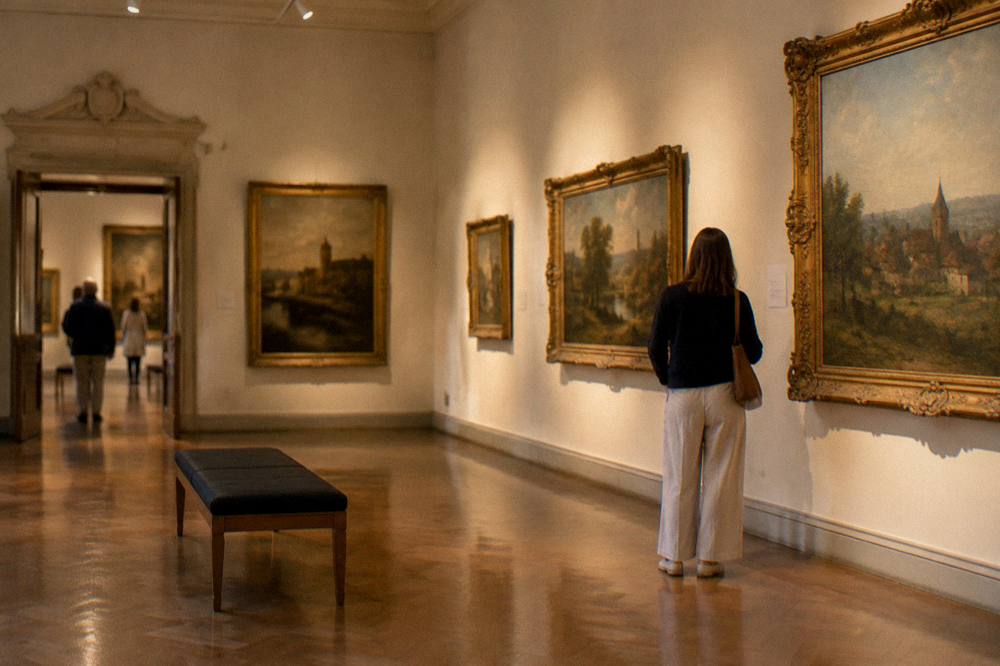
The 2026 visiting picture has three traps in it, all confirmed on the museum's own pages. The main Brukenthal museums are closed Monday and Tuesday: the Palace runs Wednesday to Sunday 10:00 to 18:00 with the cashier closing at 17:15, and History, Natural History and Pharmacy run Wednesday to Sunday 09:00 to 17:00. The Contemporary Art Museum now runs the opposite pattern, Monday to Friday 09:00 to 17:00, closed at weekends. And the Hunting Museum, Muzeul Cinegetic August von Spiess, is closed for an indefinite period, opening only to pre-booked groups. A temporary exhibition, "Umbre colorate. Picturalizări după Dürer", runs at the Palace to 31 December 2026, per the museum's September announcement. The full index of guides sits on Sibiu Travel Guide.
| Brukenthal site | Adult ticket | 2026 schedule |
|---|---|---|
| Palace, Piața Mare 4-5 | 50 RON | Wed to Sun 10:00-18:00, closed Mon-Tue |
| History Museum, Casa Altemberger | 36 RON | Wed to Sun 09:00-17:00, closed Mon-Tue |
| Natural History Museum | 20 RON | Wed to Sun 09:00-17:00, closed Mon-Tue |
| Pharmacy History Museum | 16 RON | Wed to Sun 09:00-17:00, closed Mon-Tue |
| Contemporary Art Museum | 15 RON | Mon to Fri 09:00-17:00, closed Sat-Sun |
| Hunting Museum | 12 RON | Closed indefinitely |
| 48-hour combined ticket | 120 RON | All open sites |
Reductions are meaningful: pensioners pay half at the Palace and on the combined ticket, pupils, students and Euro26 holders a quarter, per the museum's price page. A guided tour in Romanian or English is listed at 200 RON per 60 minutes. The Brukenthal National Museum guide carries the full breakdown, and the History Museum guide covers Casa Altemberger specifically.
ASTRA sits outside the old town in the Dumbrava forest, about 5.5 km from Piața Mare, reachable through the Dumbrava forest area. Its autumn 2026 schedule ran 21 September to 26 October with last entry about 16:00; a winter schedule had not been announced, so check the museum's own programme page before travelling out there. The open-air museum's hundred-odd hectares of farmsteads, mills and workshops are the clearest single answer to what a "museum of civilisation" means in the cultural-city sense.
Is Sibiu Still A Festival City After 2007?
Yes, and measurably so: Sibiu's 2026 calendar ran the FITS international theatre festival from 19 to 28 June (its 33rd edition, themed "Soul"), the Artmania Festival free-access in Piața Mare on 24 and 25 July, the Sibiu Jazz Festival from 2 to 6 September (its 54th edition) and the ASTRA Film Festival from 17 to 21 October, with FITS 2027 already fixed for 18 to 27 June under the theme "Lumină". The theatre festival is the direct institutional child of the cultural year and the one event that fills the whole city, using squares, churches and theatres across the old town. Dates for the smaller 2027 festivals had not been announced, so plan against the organisers' own pages. The full rundown lives in the Sibiu festivals guide.
| Festival | 2026 dates | Notes |
|---|---|---|
| FITS theatre festival | 19 to 28 June 2026 | 33rd edition, theme "Soul" |
| Artmania Festival | 24 to 25 July 2026 | Free access, Piața Mare |
| Sibiu Jazz Festival | 2 to 6 September 2026 | 54th edition |
| ASTRA Film Festival | 17 to 21 October 2026 | Documentary film |
| FITS 2027 | 18 to 27 June 2027 | 34th edition, theme "Lumină" |
| Christmas market | 13 Nov 2026 to 3 Jan 2027 | Piața Mare, free entry |
The Christmas market is the winter half of the same inheritance: 52 days in Piața Mare, a 600 sqm ice rink, over 120 exhibitors in its 19th edition, and a reported Golden Ticket at 100 lei covering the wheel, carousel and mini-train, per the market's own announcement. Roughly a third of the exhibitors are new this edition, the organisers say. The Sibiu Christmas market guide covers it in full, and the Sibiu in December page builds a weekend around it.
How Do You Plan A Culture-Focused Trip To Sibiu?
Plan around two rhythms: the museum week, in which Brukenthal's Monday-Tuesday closure pushes gallery days to Wednesday onward, and the festival calendar, which peaks in late June and again across the Christmas market from mid-November. Two or three days cover the old town's squares, the Brukenthal Palace, the cathedral tower and the ASTRA museum; a fourth day reaches the Saxon villages or the Făgăraș mountains, which are day trips, not city sights. Sibiu's old town is compact, roughly a kilometre from the train station to Piața Mare, and the city buses cost 3.5 lei for a 60-minute ticket, 5 lei for 75 minutes or 7 lei for 90, per the operator's fare page.
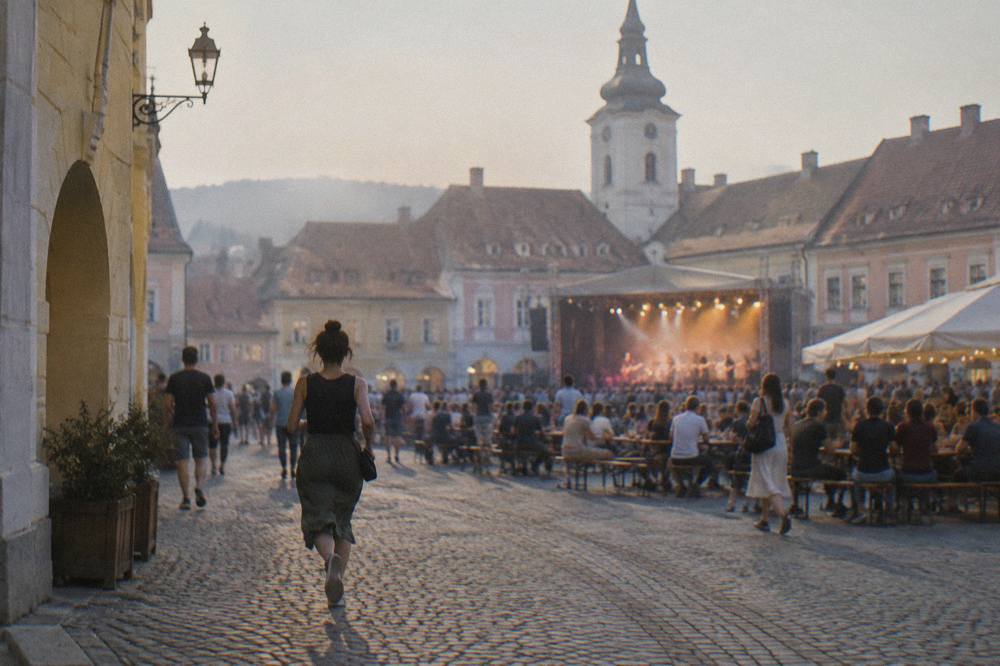
Getting there is covered in the how to get to Sibiu guide; the essentials are that Sibiu International Airport sits about 5 to 6 km from Piața Mare with bus line 11 serving the arrivals terminal, and that Wizz Air's winter schedule from 25 October 2026 runs 17 flights a week, down from 20, per the airport director's statement. Where to sleep is covered in where to stay in Sibiu; note that since 1 January 2026 hotels collect a 2 percent tax on the accommodation value, so a small surcharge on the bill is expected rather than an error.
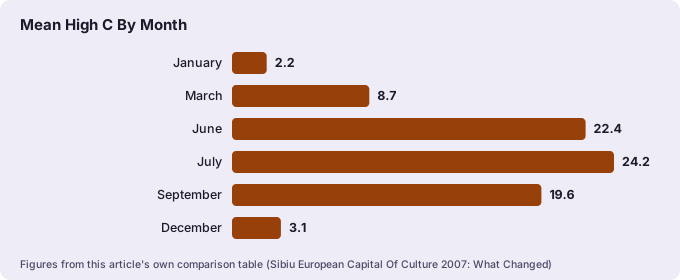
For timing, the climate data helps: the ERA5 reanalysis, 1991-2020, puts July and August mean daily highs at 24.2 and 24.5 C with about 12.8 and 11.8 hours of modelled sunshine a day, against January's 2.2 C high and -5.7 C low with 23.3 cm of snow. June, the theatre festival month, averages a 22.4 C high. The official city figures give a mean annual temperature of 8.9 C and 662 mm of rainfall, with June the wettest month at 113 mm, worth knowing before a festival trip. The best time to visit Sibiu and Sibiu weather guides carry the detail.
| Month | Mean high C | Mean low C | Sunshine h/day | Snow cm |
|---|---|---|---|---|
| January | 2.2 | -5.7 | 6.2 | 23.3 |
| March | 8.7 | -0.8 | 8.7 | 18.2 |
| June | 22.4 | 12.9 | 12.4 | 0.0 |
| July | 24.2 | 14.6 | 12.8 | 0.0 |
| September | 19.6 | 10.5 | 9.7 | 0.1 |
| December | 3.1 | -3.9 | 5.6 | 20.8 |
Figures are ERA5 reanalysis, 1991-2020, a modelled grid cell near Sibiu at about 430 m, not a weather-station record.
Beyond the city, the cultural day trips reach the Saxon fortified-church landscape: Cisnădie about 14 minutes and 10 km away, Cisnădioara 18 minutes and 13 km, Rășinari about 18 minutes and 13 km in the Mărginimea Sibiului, Sibiel 36 minutes and 25 km, and Biertan's UNESCO-listed fortified church about 76 km away, allow about 1 hour 15 to 1 hour 30, with an adult ticket reported at 20 RON, per the tourism site's listing, confirm before you go. The fortified churches near Sibiu guide maps them all. A guided option through the Mărginimea villages pairs well with the museum days, and the Private Tour Exploring Sighișoara, Biertan and Viscri extends the same theme to the UNESCO belt.
For the city core itself, the Daily Sightseeing Guided Tour is the straightforward orientation walk, and the Upper Town landmarks tour focuses on the squares the 2007 programme restored.
What Remains Of The 2007 Story On The Ground?
The honest summary is that 2007's legacy in Sibiu is not a monument but an operating system: pedestrian squares that host a theatre festival, a Christmas market and a rock festival; a seven-site museum network with published prices; and an open-air folk museum in the forest that anchors the city's rural identity. The one physical symbol under wraps, the Council Tower, is closed for restoration until about January 2028, and its reopening will complete rather than begin the story. What the sources support is a city that kept the cultural institutions running for two decades after the title year, which is rarer than the title itself.
The city's own chronology adds depth for readers who want it: it claims the first hospital on current Romanian territory in 1292, the first school in 1380 and the first pharmacy in 1494, and the Pharmacy History Museum in Piața Mică still operates in that tradition at 16 RON. The Bridge of Lies, reported to have been built 1859 to 1860, carries the legends that give the old town its storytelling layer. None of this requires a ticket beyond the museum prices listed above, and the whole circuit is walkable in a compact old town of about 121 square kilometres of municipality around it.
Practical anchors for the visit: the currency is the Romanian leu, at about 5.3 lei to the euro; the emergency number is 112; Romania is a full Schengen member; and clocks go back on Sunday 25 October 2026. Costs across a stay are broken down in the Sibiu cost guide, and the full sight list, festival calendar and day trips are indexed from the things to do in Sibiu page on this site.
Whether a 2007 title still justifies a trip is a fair question, and the answer the evidence gives is that the title's real product was the calendar and the restored stage, both of which run every year. June brings the theatre festival, December the market, and the museums run Wednesday through Sunday in between, with the cathedral tower open as the viewpoint while the Council Tower's scaffolding comes down.
Common Questions About Sibiu European Capital Of Culture
When was Sibiu European Capital of Culture?
Sibiu held the title in 2007, sharing the year with Luxembourg. It was Romania's first turn in the programme, and the year is reported widely as the city's cultural turning point.
What changed in Sibiu after 2007?
The reported changes centre on the restored old town, the pedestrianisation of the squares, upgraded museum spaces and a festival infrastructure that outlived the title, including the FITS theatre festival that runs every June.
Is the Council Tower open in Sibiu?
No. The Council Tower has been closed to visitors since 19 January 2026 for a restoration planned at about 24 months, with completion reported for about January 2028. The Evangelical Cathedral tower, 10 RON adult, is the open viewpoint meanwhile.
Is the Brukenthal Museum open every day?
No. The main Brukenthal museums are closed Monday and Tuesday and open Wednesday to Sunday, while the Contemporary Art Museum runs Monday to Friday only and the Hunting Museum is closed indefinitely. Confirm hours on the museum's own site before you go.
What festivals run in Sibiu now?
The 2026 calendar ran FITS theatre from 19 to 28 June, Artmania free-access in Piața Mare on 24 and 25 July, Sibiu Jazz from 2 to 6 September and ASTRA Film from 17 to 21 October, followed by the Christmas market from 13 November 2026 to 3 January 2027. FITS 2027 is set for 18 to 27 June.
How many days does a culture trip to Sibiu need?
Two to three days cover the squares, the Brukenthal Palace, the cathedral tower and the ASTRA museum; a fourth day adds the Saxon fortified-church villages or the Făgăraș mountains as a day trip. Museum days should avoid Monday and Tuesday.

Before you go, the pick for this guide:
Daily Guided Sightseeing Walk
★ 4.7 448 reviews · From $16
Check availability →