Sibiu History: From Hermannstadt To Today
Sibiu, in Transylvania, Romania, was first documented in 1191 as Cibinium and grew over eight centuries into the Saxon city of Hermannstadt, a place of guild towers, city walls, a baroque governor's museum and a modern cultural capital.
Short answer
Sibiu was first documented in 1191 as Cibinium, the seat of the free prepositure of the Germans in Transylvania. Saxon settlers from the Moselle valley built the city the Germans call Hermannstadt; its medieval walls, the Brukenthal museum opened in 1817 and its Upper Town squares carry that layered history today.
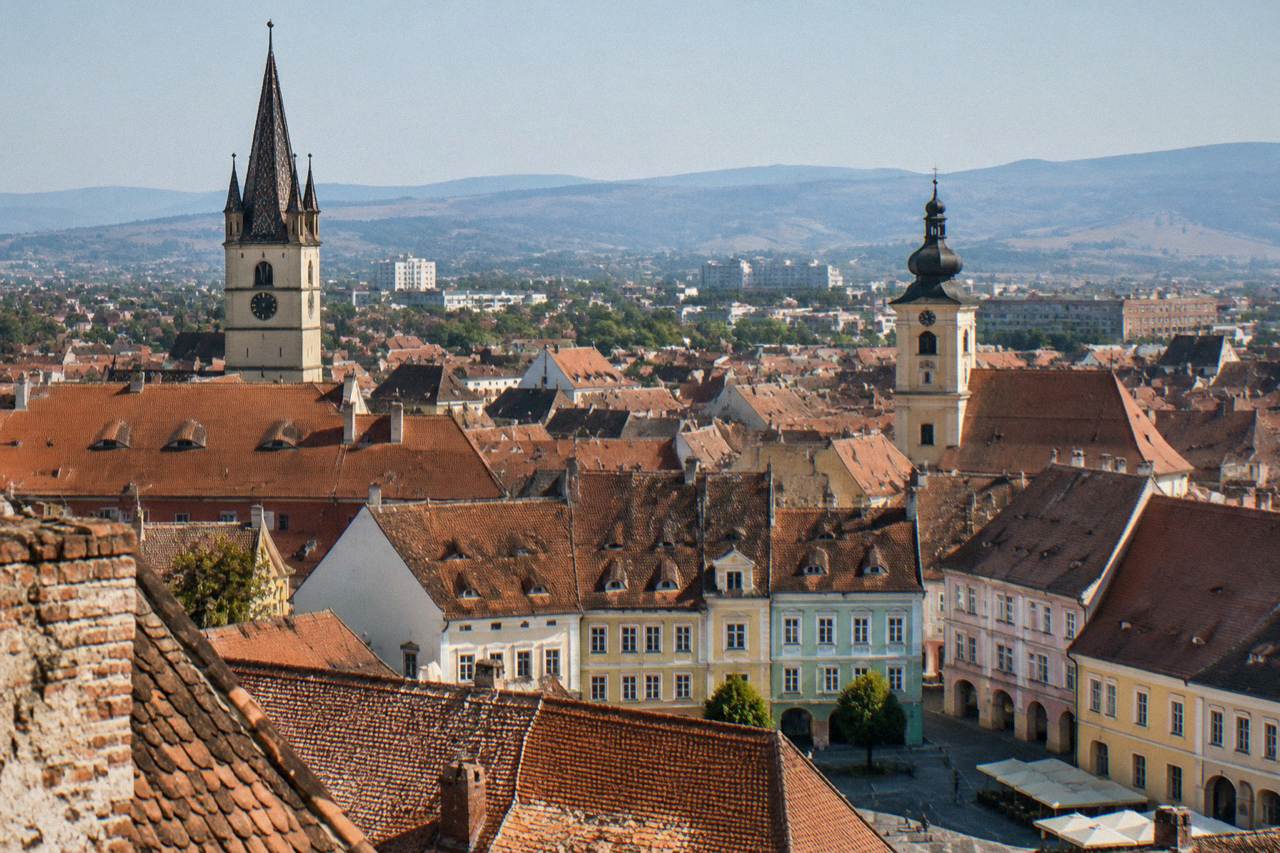
Sibiu sits on the Cibin river in central Transylvania, Romania, an inland city of about 415 to 431 m elevation with the Carpathian foothills a day trip to the south. Its documented history begins in 1191, when a papal document names it as Cibinium, the seat of the free prepositure of the Germans in Transylvania, per the city's own history page at sibiu.ro. Everything a visitor now walks past, the Upper Town squares, the guild towers of the city wall, the Bridge of Lies, the Brukenthal palace, is a layer of that long story, built by a German-speaking community that called the city Hermannstadt. This guide follows that story in order, from Saxon settlement to the present, and points to where each era can still be seen on the ground.
Where Is Sibiu And When Was It First Documented?
Sibiu is a city in Transylvania, central Romania, on the Cibin river, first documented in 1191 as Cibinium, when a document confirmed by Pope Celestine III placed the seat of the free prepositure of the Germans in Transylvania there, according to the city's own history page. The municipality counted 134,308 residents at the 2021 census, and the city speaks of about 155,000 permanent plus 25,000 temporary residents such as students.
The setting matters to the story. Sibiu stands where the Cibin valley meets the plateau above it, which is why the city splits into a Higher Town and a Lower Town: the Upper Town, at about 431 m, holds the main squares and the main churches, while the Lower Town, at about 415 m, spreads below them, connected by lanes and the Stairs Passage. The Cibin river gave the medieval settlement its Latin name, and the foothills of the Făgăraș range begin a short drive south, close enough that mountain routes such as the Transfăgărășan became part of the region's later history.
The 1191 date is the anchor. As the sibiu.ro history page states, the settlement appears in that year as the headquarters of a free prepositure covering the Germans of Transylvania, an administrative recognition of a settler community that had arrived earlier. Hungarian royal authority structured the region, but the day-to-day city that grew here was German in language, law and building, and it kept those traits for centuries. For planning a visit around the city's geography, the Sibiu walking tour guide covers the Upper Town and Lower Town street by street.
Who Were The Transylvanian Saxons Of Hermannstadt?
The Transylvanian Saxons were German settlers invited into Transylvania from the 12th century onward, reported by the patrimoniu.sibiu.ro heritage site as coming from the Moselle valley area, and they founded and built the city its German name, Hermannstadt, still records. Sibiu became their leading city, and in 2011, long after emigration had thinned the community, the census still recorded Germans as 1 percent of the city.
The settlers arrived in waves during the 12th century, under Hungarian kings who wanted farmers, craftsmen and defenders on the kingdom's exposed southern edge. They brought western building methods and a habit of organisation: fortified churches in the villages, walls and guilds in the towns. Hermannstadt became the administrative centre of the Saxon university, the regional assembly of the Saxon nation, and the seat of its church structure, so the city's fortunes and the community's fortunes moved together.
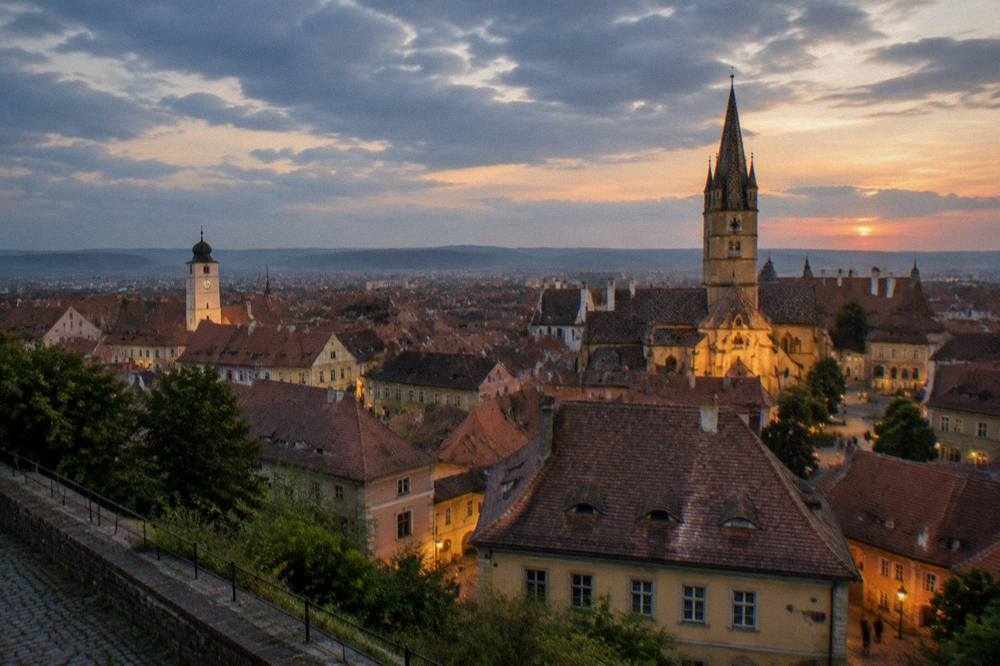
That inheritance is visible in three ways. First, the architecture: the Gothic hall church of the Evangelical Cathedral on Piața Huet, the burgher houses with the famous "eyes of Sibiu" roof windows, the defensive towers named for guilds. Second, the language: German remained a working language of the city for centuries, and Klaus Iohannis, the city's mayor from 2000 to 2014 before becoming Romania's president, emerged from that German-speaking civic tradition, per the public record. Third, the countryside: the ring of Saxon villages and fortified churches around the city, in the Mărginimea Sibiului and beyond, was the city's hinterland, and several of its churches now form part of a UNESCO serial site. The fortified churches near Sibiu guide lists them.
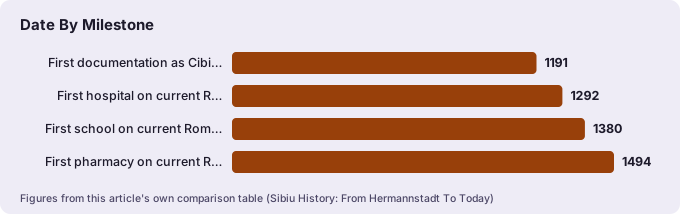
A table of the settlement's early documented milestones, each attributed to the source the city itself uses:
| Milestone | Date | Source basis |
|---|---|---|
| Saxon settlement from the Moselle area | 12th century | patrimoniu.sibiu.ro, reported |
| First documentation as Cibinium | 1191 | sibiu.ro history page |
| First hospital on current Romanian territory | 1292 | the city's own chronology |
| First school on current Romanian territory | 1380 | the city's own chronology |
| First pharmacy on current Romanian territory | 1494 | the city's own chronology |
The hospital, school and pharmacy dates come from the city's own chronology, which is how they should be read: local tradition recorded by the municipality, not a claim this site independently examined.
What Did Medieval Sibiu Build?
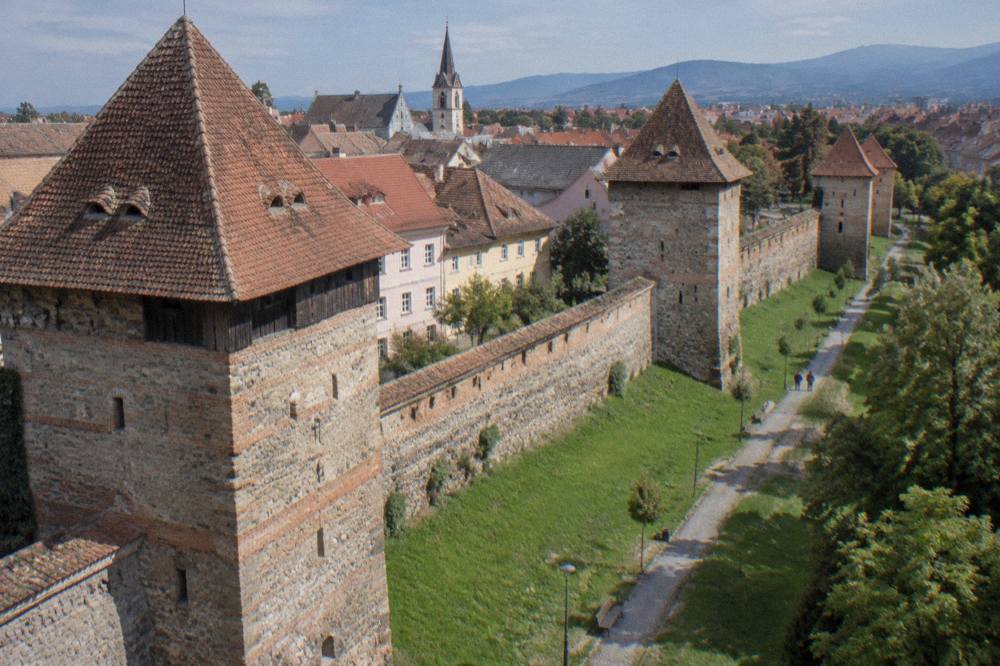
Medieval Sibiu built two lines of defence and a guild-run town: the Upper Town grew around Piața Mare, Piața Mică and Piața Huet, while the Lower Town housed craftsmen, and a wall with guild towers, of which the Potters, Arquebusiers and Stairs towers still stand, enclosed the whole. The Council Tower, now closed for restoration since 19 January 2026, was part of this defensive core.
The wall and its towers are the clearest physical history lesson in the city. Each guild maintained a tower, so the surviving names read like a trade directory of the walled town: potters, carpenters, arquebusiers. The city walls and towers guide walks the full circuit. The Council Tower, which linked the two main squares, has been closed to visitors since 19 January 2026 for a restoration planned at about 24 months, with completion reported at about January 2028, and its walls had been cleaned and re-plastered and its copper roof removed by September 2026, per the Primăria Sibiu statement. The open viewpoint in the old town is now the Evangelical Cathedral tower, which charges 10 RON for an adult ticket, per the sibiu-turism.ro listing, with hours to confirm before a visit.
The Bridge of Lies belongs to a later era, not the middle ages, though tourists often assume otherwise. Reported sources date its iron structure to 1859 to 1860, making it, as usually described, the first cast-iron bridge in Romania, and its legends, of a bridge that collapses when a liar crosses, attach to the name rather than the metal. The Bridge of Lies guide separates the two.
A table of the standing medieval and early structures and where to see them:
| Structure | Era and status | Access |
|---|---|---|
| Evangelical Cathedral, Piața Huet | Gothic hall church, Saxon-built | Church and tower ticketed, 10 RON adult tower |
| Council Tower | Medieval core tower | Closed for restoration since 19 January 2026 |
| Potters, Arquebusiers and Stairs towers | Guild towers on the wall circuit | Free, open-air viewing |
| Stairs Passage | Linked Upper and Lower Town | Free, open-air passage |
| Bridge of Lies | Iron bridge, reported 1859 to 1860 | Free, open-air crossing |
| Piața Mare and Piața Mică | Main squares of the walled town | Free public squares |
How Did Brukenthal Turn Sibiu Into A Museum City?
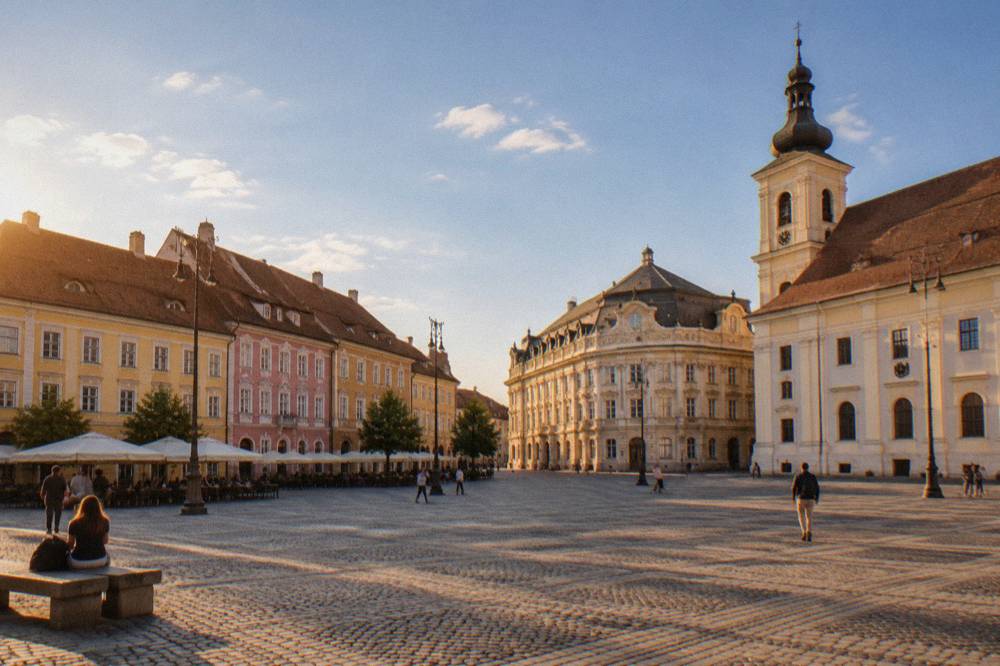
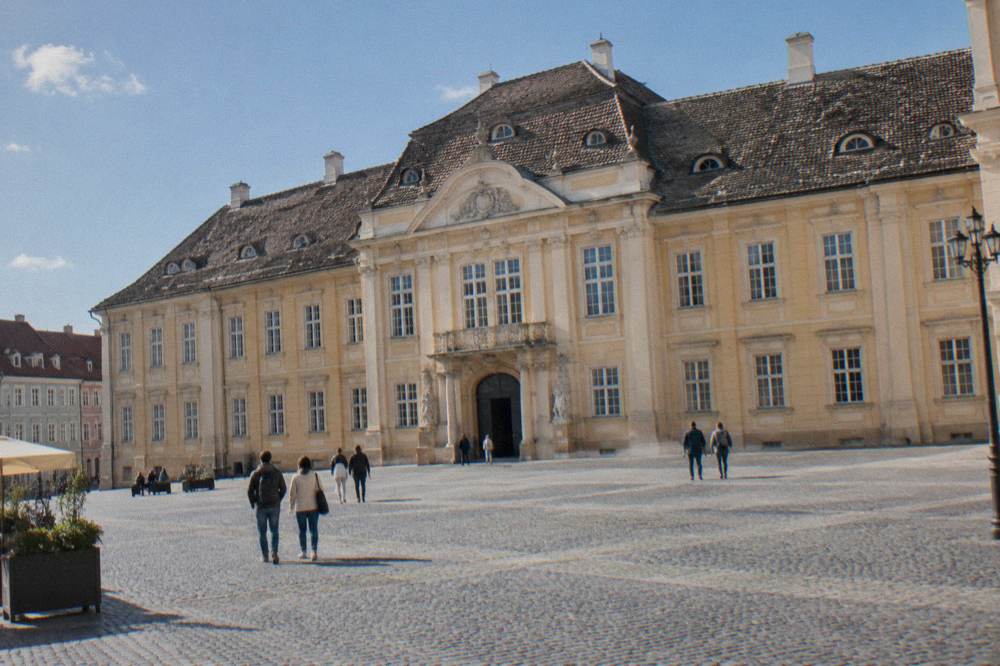
Samuel von Brukenthal, Governor of Transylvania from 1777 to 1787, left his palace and art collections to the public, and the Brukenthal museum opened in 1817, according to the museum's own historical pages, making it one of Europe's early public galleries. Today the Brukenthal National Museum spreads across seven sites with separate tickets, from 50 RON at the Palace to a 120 RON combined 48-hour ticket, per the museum's price page.
Brukenthal's palace fronts Piața Mare and holds the European and Romanian art galleries. His bequest created an institution that outgrew one building: the History Museum in Casa Altemberger, the Pharmacy History Museum in Piața Mică, the Natural History Museum, the Contemporary Art Museum and the closed Hunting Museum all carry the Brukenthal name, and each sells its own entry. The current prices, from the museum's own price page, which visitors should still confirm before travelling, are:
| Brukenthal site | Adult ticket | Notes |
|---|---|---|
| Palace, European and Romanian art | 50 RON | Closed Monday and Tuesday |
| History Museum, Casa Altemberger | 36 RON | Closed Monday and Tuesday |
| Natural History Museum | 20 RON | Closed Monday and Tuesday |
| Pharmacy History Museum | 16 RON | In Piața Mică 26 |
| Contemporary Art Museum | 15 RON | Open Monday to Friday, closed at weekends |
| Hunting Museum | 12 RON listed | Closed for an indefinite period |
| Combined 48-hour ticket | 120 RON | Covers all open Brukenthal sites |
The temporary exhibition "Umbre colorate. Picturalizări după Dürer" runs to 31 December 2026, per the museum's press release. The Brukenthal National Museum guide covers each branch in detail, and the History Museum guide focuses on Casa Altemberger itself, a merchant house older than the museum it hosts.
What Shaped Sibiu After The Saxons?
After the Habsburg era, Sibiu's story turned on the fate of its German community: the fall of communism and the union of Transylvania with Romania reshaped the city, and mass Saxon emigration, chiefly to Germany, emptied many of the old community's institutions while the built city survived intact. Klaus Iohannis, mayor from 2000 to 2014, per the public record, symbolised the community's continuing civic role.
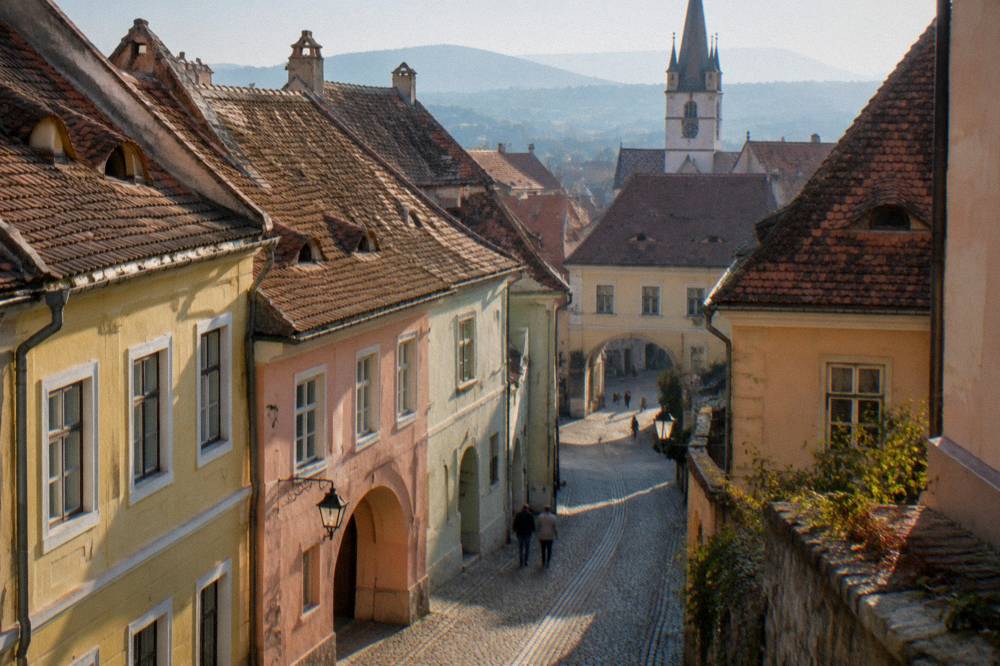
The Habsburg connection explains much of the city's baroque layer. Governors like Brukenthal ruled Transylvania from Sibiu between 1777 and 1787, and the administrative class left palaces, churches and the Catholic Holy Trinity church that now stands a street from Piața Mare. When Transylvania joined Romania, Hermannstadt became Sibiu for good, a Romanian city with a German and Hungarian inheritance. The communist decades that followed nationalised property and squeezed the churches, but they also, by economic accident, froze the old town, leaving its fabric largely unmodernised.
The fall of communism brought the hardest demographic blow, as the bulk of the remaining Saxons emigrated to Germany, and then an unexpected revival. Restoration work in the years before its cultural turn prepared the city for its reported role as a European Capital of Culture in 2007, the year the renovation of the old town became visible in every square. The Saxon heritage in Sibiu guide and the what Sibiu is known for piece expand both threads.
What Is Sibiu Like Today?
Sibiu today is a Romanian city of 134,308 residents at the 2021 census, a university and festival town whose economy runs on culture and industry, spread over 121 km2 at the edge of the Carpathian foothills, with the old town as its centre of gravity and the mountain roads of the Făgăraș range as its summer excursion ground. It is inland, on the Cibin river, and has no coast of any kind.
The festival calendar drives the modern city's rhythm. The Sibiu International Theatre Festival, FITS, filled the town from 19 to 28 June 2026 in its 33rd edition and is announced for 18 to 27 June 2027; the Sibiu Jazz Festival ran 2 to 6 September 2026; Artmania took Piața Mare on 24 and 25 July 2026; and the ASTRA Film Festival ran 17 to 21 October 2026, per the cultura.sibiu.ro calendar. The Sibiu festivals guide tracks the annual cycle, and the Christmas market, which runs 13 November 2026 to 3 January 2027 in Piața Mare, gives the historic square its winter role, covered in the Sibiu Christmas market guide.
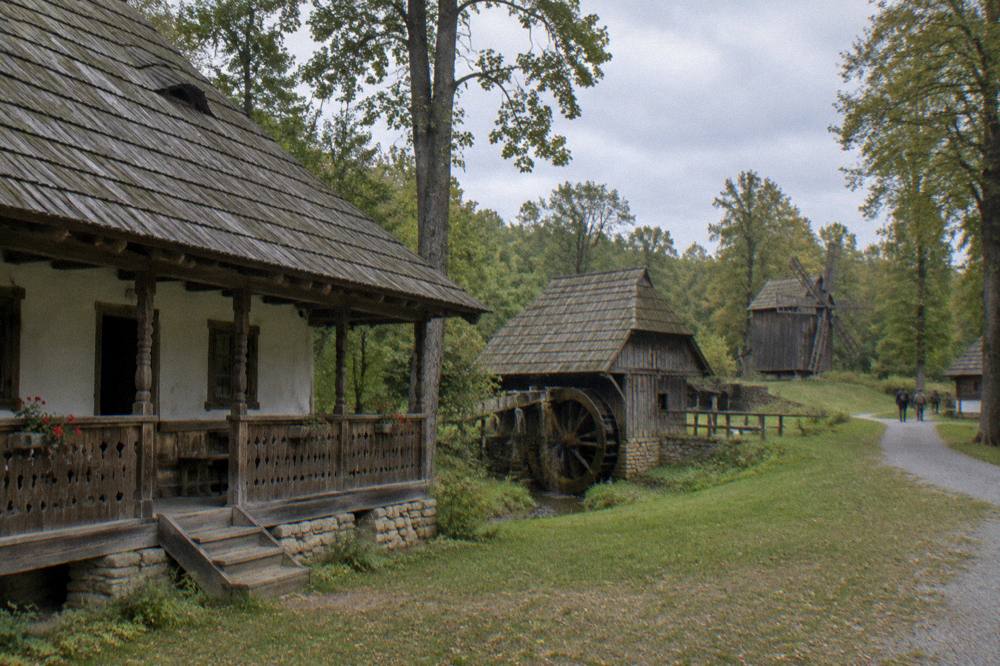
The ASTRA Museum of Traditional Folk Civilization belongs to the modern story too: the open-air museum has functioned in the Dumbrava forest since 1963, per the turism.sibiu.ro museum page, carrying folk buildings from across Romania into a single landscape. An adult ticket is 50 RON, per the museum's own ticket page, with an autumn 2026 schedule running to 26 October and the winter schedule not yet announced. The ASTRA Museum guide covers the layout.
Where Can You Still See Each Era Of Sibiu History?
Each era of Sibiu's history has a fixed address in the modern city: the Saxon medieval centuries survive in the Evangelical Cathedral, the guild towers and the Upper Town squares; the Brukenthal era in the palace on Piața Mare; the iron bridge of 1859 to 1860 in the rail age; and the modern revival in the restored squares and the festival stages. A visitor can walk all of these eras in one loop of the old town.
This is the practical payoff of the history. The loop runs from Piața Mare past the Brukenthal palace, through Piața Mică and the closed Council Tower, over to Piața Huet and the Evangelical Cathedral, down the Stairs Passage into the Lower Town, and back along the wall towers. The Sibiu in one day and Sibiu itinerary guides pace the same ground for shorter and longer stays.
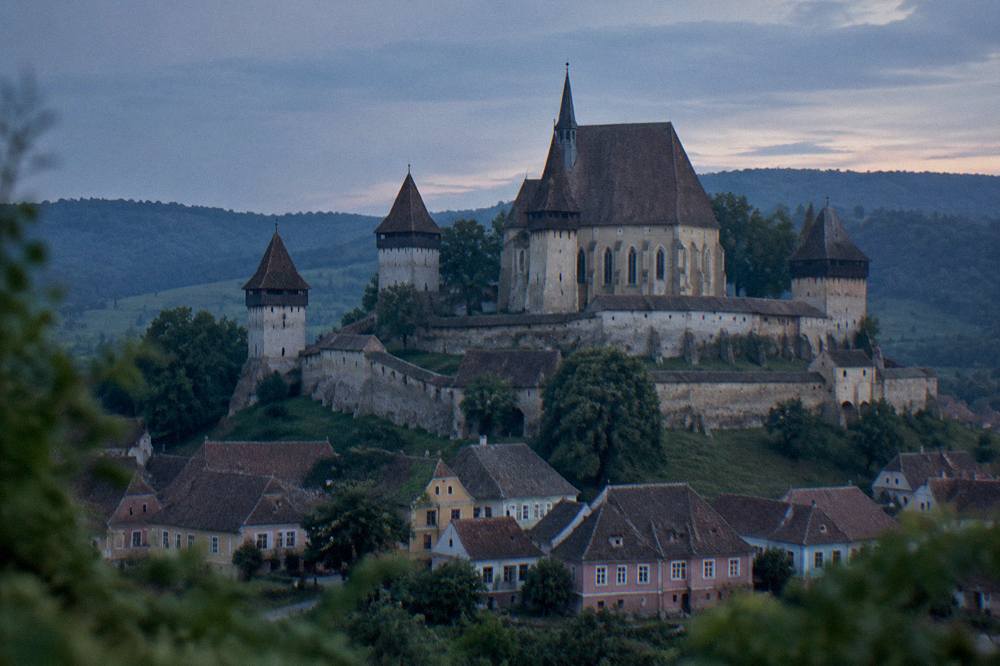
Beyond the city, the history extends outward. The Saxon fortified churches of Biertan, about 76 km away with a drive of about 1 hour 15 to 1 hour 30, sit inside a UNESCO serial site inscribed in 1993 and extended in 1999. The Mărginimea Sibiului villages to the south and west, Rășinari about 13 km and Sibiel about 25 km out, preserve the pastoral Romanian world that always surrounded the Saxon town. A table of the historical excursions:
| Excursion | Distance and drive from Piața Mare | Historical layer |
|---|---|---|
| Rășinari | about 13 km, about 18 minutes | Mărginimea pastoral villages |
| Sibiel | about 25 km, about 36 minutes | Village and icon-on-glass tradition |
| Biertan fortified church | about 76 km, about 1 hour 15 to 1 hour 30 | UNESCO Saxon church, 20 RON adult |
| Sighișoara historic centre | about 96 km, about 102 minutes | Saxon citadel, UNESCO since 1999 |
| Păltiniș | about 32 km, about 40 minutes | Mountain resort above the city |
The Sighișoara drive time is computed over road routing and the Biertan window comes from the sibiu-turism.ro listing; confirm church hours before a winter trip, as Biertan runs shorter November to March.
How Should A History-Focused Visit To Sibiu Be Planned?
Plan a history-focused Sibiu visit around three anchors: the free outdoor layer of squares, walls and the Lower Town; the ticketed layer of the Brukenthal sites and the Evangelical Cathedral tower, whose prices run from 10 to 50 RON per site; and the excursion layer of Saxon villages and fortified churches, each within about an hour and a half by road. Allow at least two full days for the first two layers and a third for the excursions.
Two seasonal facts shape the plan. The Brukenthal museums close on Monday and Tuesday, and the Contemporary Art Museum closes at weekends, so midweek days carry the museum load. The Christmas market from 13 November 2026 transforms Piața Mare, which suits the history of the square but crowds it; the best time to visit Sibiu guide weighs the seasons, and the Sibiu weather page gives the monthly climate normals, labelled ERA5 reanalysis, 1991-2020, alongside the city's official figures of a mean annual 8.9 C and 662 mm of rainfall.
A compact planning table for the historical sights:
| Sight | Layer | Ticket |
|---|---|---|
| Piața Mare, Piața Mică, Piața Huet | Free outdoor | None |
| City wall towers and Stairs Passage | Free outdoor | None |
| Bridge of Lies | Free outdoor | None |
| Evangelical Cathedral tower | Ticketed | 10 RON adult |
| Brukenthal Palace galleries | Ticketed | 50 RON adult |
| ASTRA open-air museum | Ticketed | 50 RON adult |
Prices are from the museums' own pages and should be confirmed before travel, since a rise has been discussed in the local press without appearing on the official price page.
Common Questions About Sibiu History
How old is Sibiu?
Sibiu was first documented in 1191 as Cibinium, per the city's own history page, though Saxon settlers had arrived in the area during the 12th century, per the patrimoniu.sibiu.ro heritage site.
What was Sibiu called in German?
The German name is Hermannstadt, and the Saxon community that built the city used it for centuries; the name still appears on buildings and institutions.
Who founded Sibiu?
Transylvanian Saxon settlers from the Moselle valley area, arriving in the 12th century under Hungarian royal invitation, founded the town that the 1191 document records as Cibinium, per the patrimoniu.sibiu.ro site.
Is the Council Tower open?
No. The Council Tower has been closed to visitors since 19 January 2026 for a restoration planned at about 24 months, with completion reported at about January 2028. The Evangelical Cathedral tower, at 10 RON adult, is the open viewpoint.
When did the Brukenthal Museum open?
The museum opened to the public in 1817, according to the museum's own historical pages, following the testament of Samuel von Brukenthal, governor of Transylvania from 1777 to 1787.
Was Sibiu a European Capital of Culture?
Sibiu is reported to have held the European Capital of Culture title in 2007, the year its old-town restoration programme culminated; this site reports the title as stated in secondary sources rather than as an independently checked figure.
The long arc from Cibinium to today is the reason Sibiu rewards a second and third day: every square and tower belongs to a different century, and the Sibiu Travel Guide homepage gathers the walks, day trips and seasonal planning that turn that history into an itinerary.
