Sibiu Safety Tips: Scams, Night Walks And Mountain Roads
Sibiu is a compact, walkable Saxon city in Transylvania, and the safety questions worth preparing for are the practical ones: night walking in the old town, the seasonal rules of the Transfăgărășan mountain road, winter ice and what to do in an emergency.
Short answer
Sibiu's old town is a small pedestrian core where normal city precautions apply; the emergency number is 112; the Transfăgărășan high road can close any day from 20 October and driving it closed is fined 10,000 to 30,000 lei; and winter brings snow and ice from November to March.
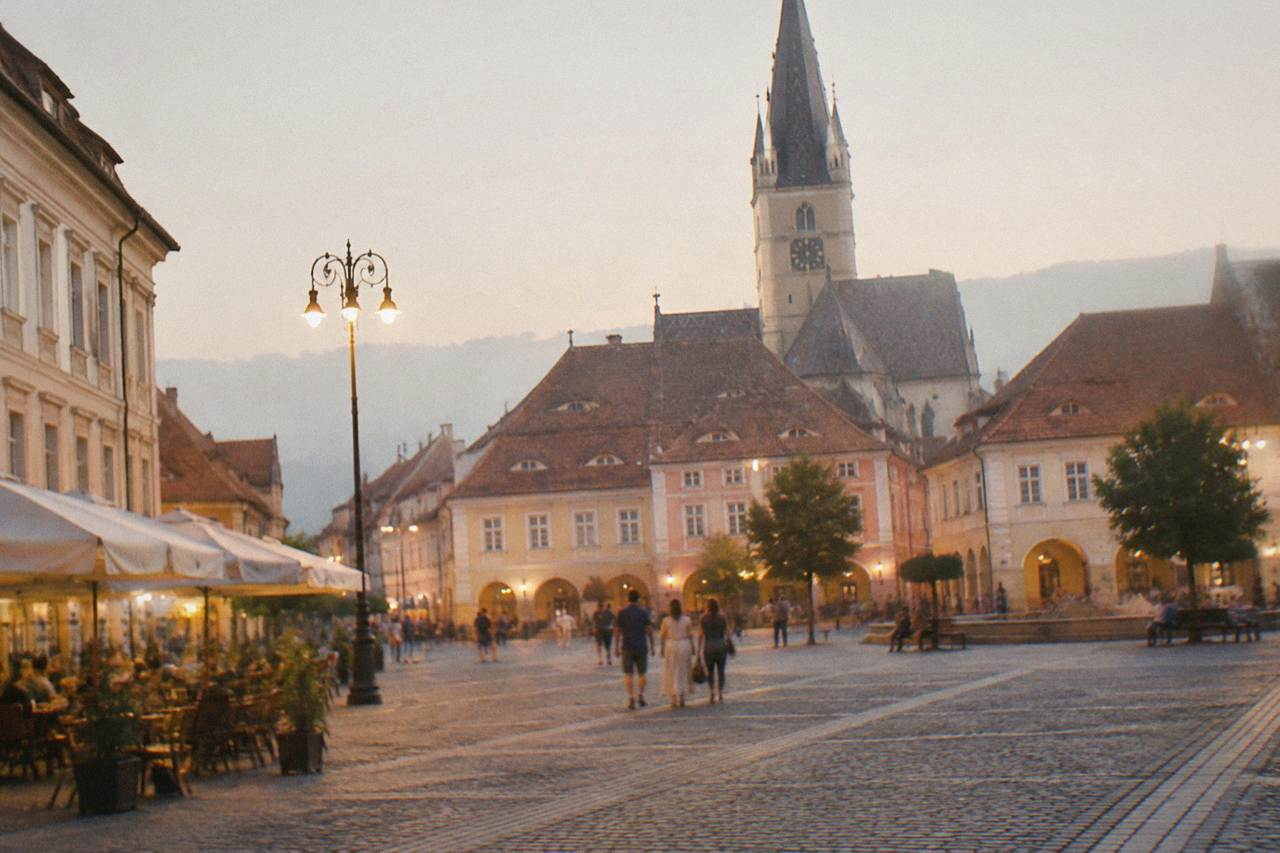
Sibiu, in central Transylvania on the Cibin river, is a small Saxon-founded city whose old centre folds into itself: an Upper Town and a Lower Town around Piața Mare, all of it walkable, with the Carpathian foothills a day trip away. That shape drives almost every safety question worth asking. The city itself is a compact pedestrian core where normal precautions apply, while the real planning risk sits on the mountain roads outside it, above all the Transfăgărășan, which is a summer-only alpine route with closure rules and heavy fines attached. This page works through both, plus night walking, scams, winter ice, bears and the emergency number, using only what official and operator sources state.
No Sibiu-specific crime statistic, official tourist warning or safety ranking was published by the sources this site reports from, so none appears here. What the sources do give is concrete: a single European emergency number, dated road closures, museum restorations that change where you can and cannot go, and a climate record that tells you exactly when ice and snow arrive. Those are the facts that keep a trip trouble-free.
Is Sibiu Safe To Walk Around At Night?
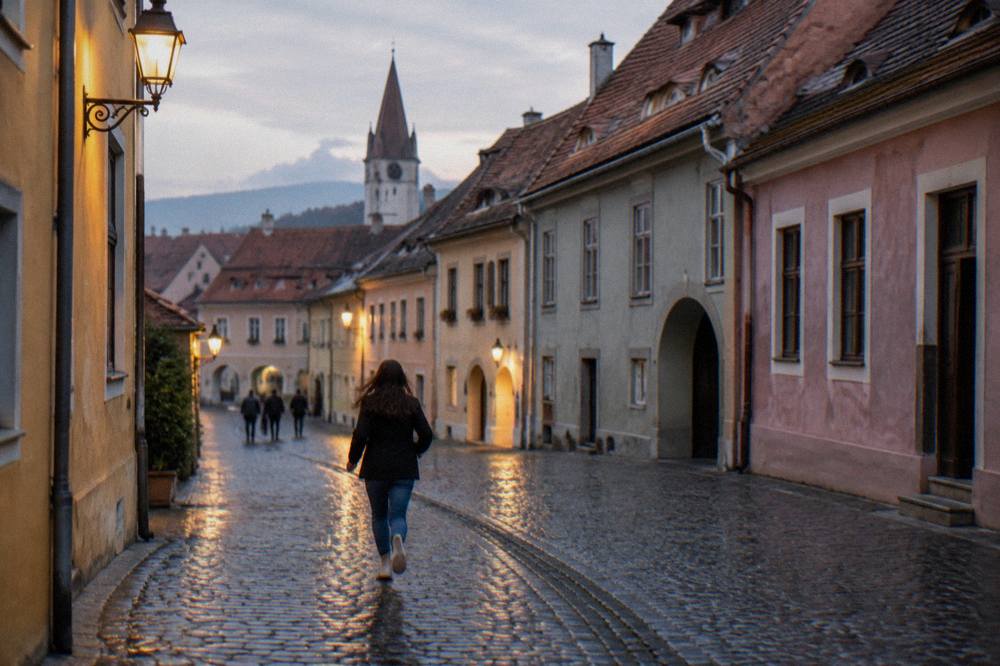
Sibiu's historic centre is a compact, largely pedestrian core of squares and cobbled lanes, and the sources this site reports from publish no crime figure, no named unsafe street and no travel-advisory level for the city, so no safety rating is claimed here. Normal city precautions apply, as they would in any regional city, and the single European emergency number, 112, works in Sibiu as everywhere in Romania.
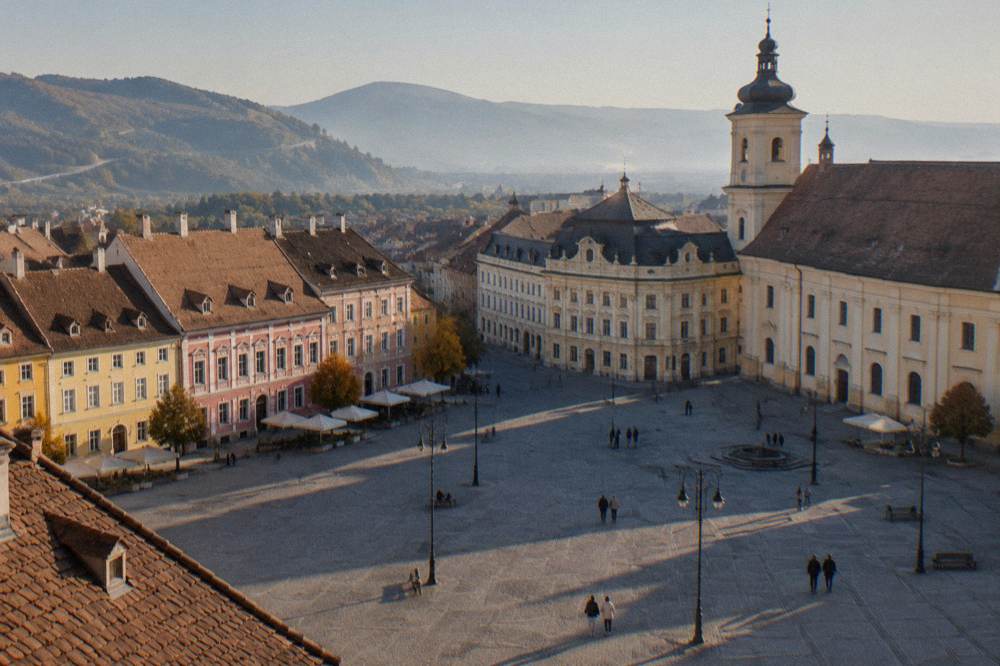
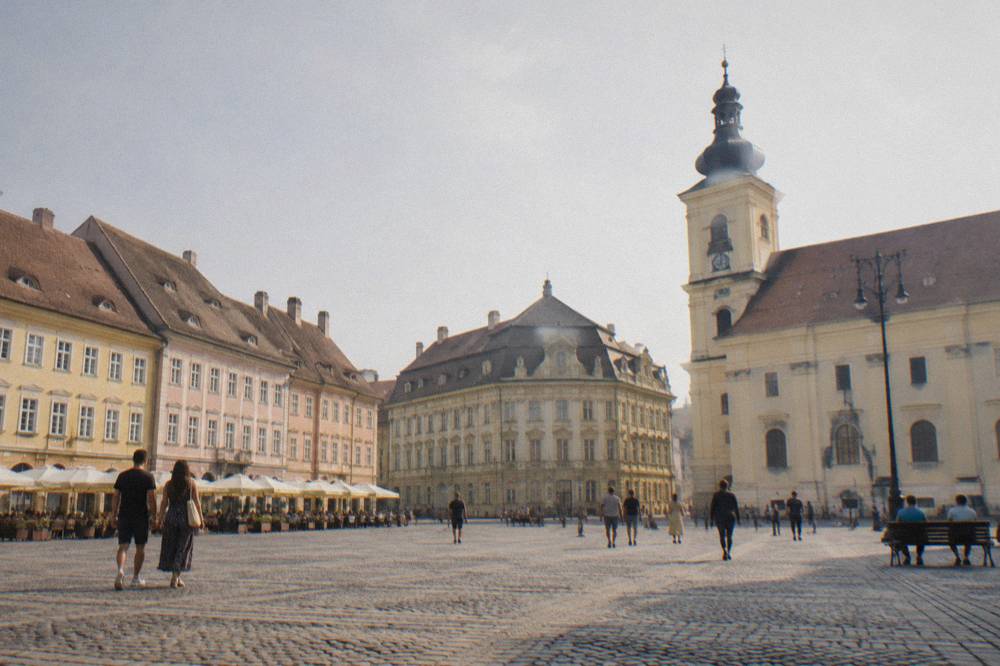
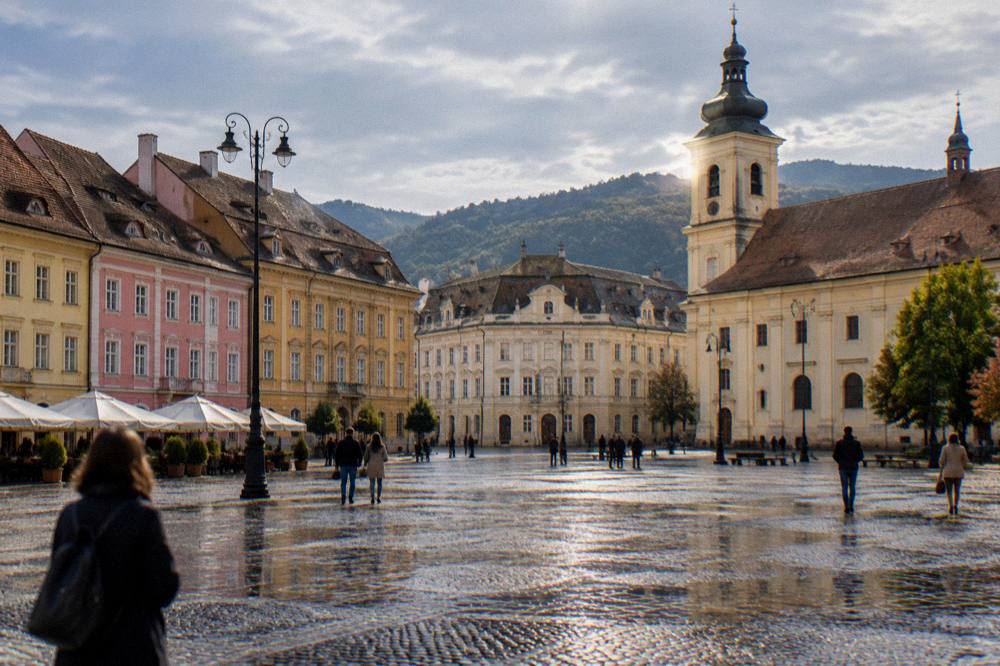
The practical reality of an evening in Sibiu is shaped by geography rather than by any reported threat. Piața Mare, Piața Mică and Piața Huet are open public squares with no ticket and no closing time, and the Council Tower, the Bridge of Lies and the Stairs Passage all sit within a few minutes' walk of one another. The Stairs Passage, which links the Lower Town to the Upper Town, is a historic stepped lane: at night, in low light or wet weather, the steps themselves are the hazard worth minding, not the surroundings.
Public transport also stays simple after dark. city buses use time-based tickets, bought contactless on board or in the app, and the fare table is short:
| Tursib ticket | Validity | Price |
|---|---|---|
| Internal ticket | 60 minutes | 3.5 lei |
| 1-transition ticket | 75 minutes | 5 lei |
| 2-transition ticket | 90 minutes | 7 lei |
Bolt and Uber operate in Sibiu, and metered taxis serve the city, so confirm the price in the app or on the meter before you ride. For orientation before dark hours matter, the Sibiu three-day itinerary lays out the old town's walkable structure, and free things to do in Sibiu lists the squares and walls that cost nothing to wander.
One 2026 change worth knowing at night: the Council Tower has been closed to visitors since 19 January 2026 for a restoration planned at about 24 months, with completion reported at about January 2028. There is no climbing it, day or night, and the scaffolding around it is a worksite. The open viewpoint in the centre is the Evangelical Cathedral tower, 10 RON for an adult, with hours that vary by day of the week; the detailed schedule is in the Sibiu walking tour guide.
What Scams And Tourist Traps Should You Watch For In Sibiu?
No scam specific to Sibiu appears in the official and operator sources this site reports from, so no invented warning list is offered; the recurring money traps are structural ones, and all are documented: a 2 percent accommodation tax added to hotel bills since 1 January 2026, several separate Brukenthal tickets rather than one, and a 100 lei Christmas-market Golden Ticket that covers rides but not food or drink.
The accommodation tax is the one that surprises people on checkout. Since 1 January 2026, Sibiu levies a 2 percent tourism-promotion tax on the total accommodation value, approved by the local council on 30 December 2025. It is charged on the bill, not as a fixed per-night amount, and no nightly hotel rate appears in the sources, so budget for a percentage, not a figure. Where to sleep in the first place is covered in where to stay in Sibiu.
The Brukenthal National Museum is the second structural trap, because it is not one museum with one door. Its own price page lists separate tickets per site:
| Brukenthal site | Adult ticket | Days open |
|---|---|---|
| Brukenthal Palace, Piața Mare | 50 RON | Wednesday to Sunday |
| History Museum, Casa Altemberger | 36 RON | Wednesday to Sunday |
| Natural History Museum | 20 RON | Wednesday to Sunday |
| Pharmacy History Museum | 16 RON | Wednesday to Sunday |
| Contemporary Art Museum | 15 RON | Monday to Friday only |
| Museum of Hunting | closed indefinitely | pre-booked groups only |
| 48-hour combined ticket | 120 RON | per site schedules |
Two details from the museum's own schedule matter for planning: the main museums are closed Monday and Tuesday, and the Contemporary Art Museum now closes at weekends. The Pharmacy History Museum sits in Piața Mică at number 26, easy to fold into a square-side walk.
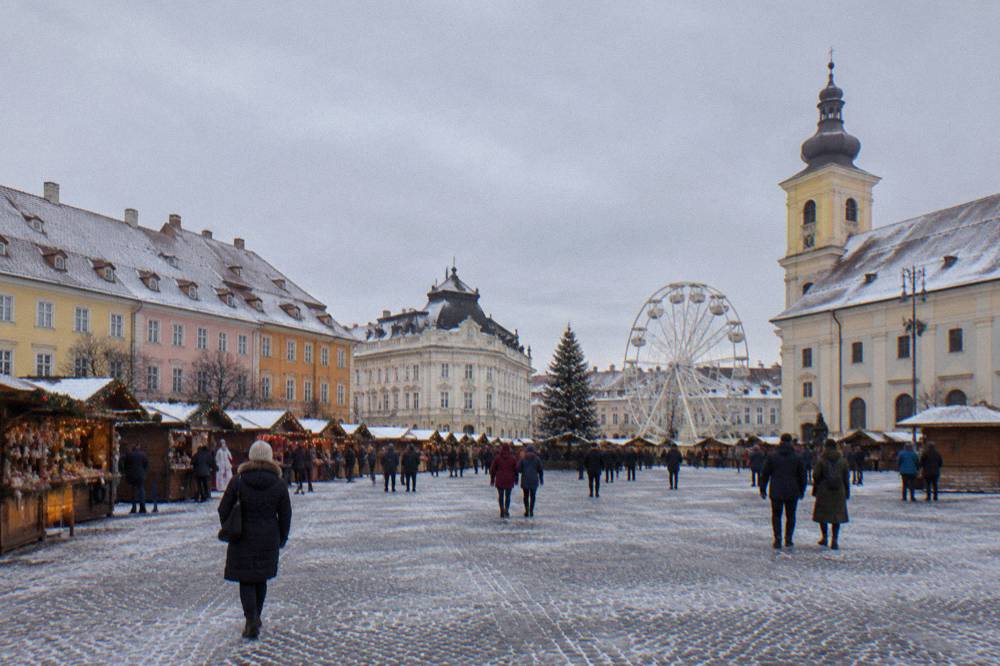
The Christmas market's Golden Ticket, reported at 100 lei, buys unlimited access to the wheel, the carousel, the mini-train and the Enchanted Elevator; it does not cover food or drink, and no hot-wine or food price was found in the sources, so check prices at the stall. The market runs 13 November 2026 to 3 January 2027 in Piața Mare, entry free, with a 600 sqm ice rink. Full details are in the Sibiu Christmas market guide.
Currency is the last structural note. Romania uses the leu (RON), with the reference rate at about 5.3 lei to the euro; rates move, so check the day you change money. Card and ATM specifics go unaddressed in the sources, and no tipping percentage is claimed here. The money and tipping guide collects what is documented.
Beyond those structural items, the ordinary anti-pickpocket habits of any tourist square apply in Piața Mare during the market and festival crowds.
Is The Transfăgărășan Road Dangerous To Drive?
The Transfăgărășan high section is a seasonal alpine road, not a dangerous road in itself: the 2026 season reopened on 12 June with traffic allowed only 07:00 to 21:00 daily, the stretch can legally close on any day from 20 October, and driving it while closed draws fines of 10,000 to 30,000 lei under the law in force since November 2025.
Those rules come from the road-reopening reporting and the Romania guidebook's status page, and they are the whole safety story. The high stretch between Bâlea Cascadă and Piscu Negru climbs to Lake Bâlea at 2,034 m; the road is open only in a daily window, and the rule allows closure from 20 October onward, earlier or later with snow. Its status on any given late-autumn day is not something this site can state, and no page should: check the road authority's live status the morning you drive. The full background is in the Transfăgărășan day-trip guide.
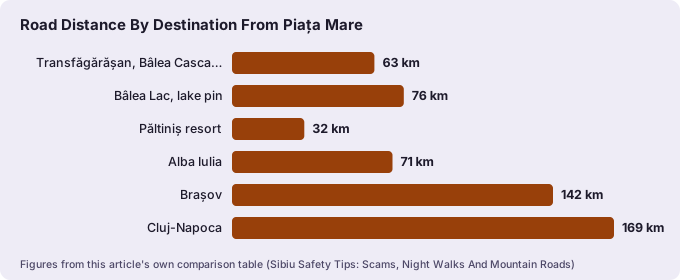
Drive times from Piața Mare, computed over OSRM free-flow routing, give the scale of the day:
| Destination from Piața Mare | Road distance | About (free-flow) |
|---|---|---|
| Transfăgărășan, Bâlea Cascadă end | 63 km | 69 minutes |
| Bâlea Lac, lake pin | 76 km | 88 minutes |
| Păltiniș resort | 32 km | 40 minutes |
| Alba Iulia | 71 km | 81 minutes |
| Brașov | 142 km | 154 minutes |
| Cluj-Napoca | 169 km | 151 minutes |
These are free-flow figures, not timetables, and they exclude the queueing that builds on the alpine stretch in peak summer weeks. Add margin, fuel up in the city, and treat the 07:00 to 21:00 window as a hard frame: the fines for driving the closed section, 10,000 to 30,000 lei, are set high precisely because weather shuts the road without ceremony.
If you would rather not carry the seasonal rules, the queueing and the parking yourself, a guided day tour is the alternative the roster supports. The Transfăgărășan and Vidraru Dam day tour covers the road and the dam with a driver who tracks the status daily, Check availability.
The Transalpina, the other high road in the region, reopened for 2026 on 29 May and its hours were reported reduced to 09:00 to 18:00 from 26 September; no autumn closure date was found, so the same rule applies, check the live status before setting out.
Are The Bucharest And Brașov Roads From Sibiu Safe?
The A1 motorway toward Bucharest is not a finished road, and the Sibiu to Boița section is closed from 5 October to 19 December 2026 for overpass works, with traffic diverted onto DN7, so allow extra time and do not trust any promised motorway drive time; Bucharest is about 250 km away and not a day trip.
The diversion is documented in the road-authority reporting of October 2026, and it matters in both directions: anyone driving south from Sibiu toward the Olt valley or Bucharest meets the works. No motorway drive time to Bucharest is claimed on this site, because the road does not yet support one. Train and long-distance bus options, with the reported FlixBus fare from about 46 RON and the instruction to check cfrcalatori.ro for rail times, are laid out in how to get to Sibiu and Sibiu to Bucharest.
The Brașov road, about 142 km and 154 minutes free-flow, is a national-road drive through the Făgăraș foothills: ordinary European driving, with overtaking patience. Foreign drivers should confirm the Romanian road vignette, the rovinieta, before using motorway sections; buy it at the border, at a fuel station or online rather than guessing. Rental-car prices, parking tariffs and old-town traffic restrictions were likewise not found: confirm each locally, and see car rental in Sibiu for the documented trade-off between driving and the train-and-bus network.
Are There Bears On The Trails Near Sibiu?
Bears live in the Carpathian forests around Sibiu, and the honest advice the sources support is qualitative only: follow local signs, keep to marked routes, do not leave food out and make your presence known on quiet forest paths, because no bear count, no fine amount and no named dangerous trail appears in any source this site reports from.
That is the whole of what can responsibly be printed. The Carpathians, including the Făgăraș range and the Cindrel mountains above Păltiniș, are bear country in the same generic sense as most of rural Romania, and mountain signage exists for a reason. What does not exist in the sources is a number: no bear population figure, no incident statistic and no specific trail warning, so any page selling a "bear safety rating" for a given path is guessing.
The same honesty rule covers the trails themselves. No trail length, walking time or hut name appears in the sources, so this site publishes none. Two safe structures exist instead. One is to walk with a guide: the roster carries a private Făgăraș day hike and a Cindrel mountains hike with optional traditional brunch, both bookable products whose details render on their own pages. The other is to let the mountain come to you in managed form, on a paragliding experience with photos and video included.
Păltiniș, 32 km and about 40 minutes from the city, is the closest mountain resort; its ski season opens on 28 November 2026, with the same number of slopes and lift prices reported to rise by at most about 5 percent. Ski, rental and slope figures were not found, so confirm at the resort, and see the Păltiniș guide for the full picture.
Is Winter In Sibiu Safe For Visitors?
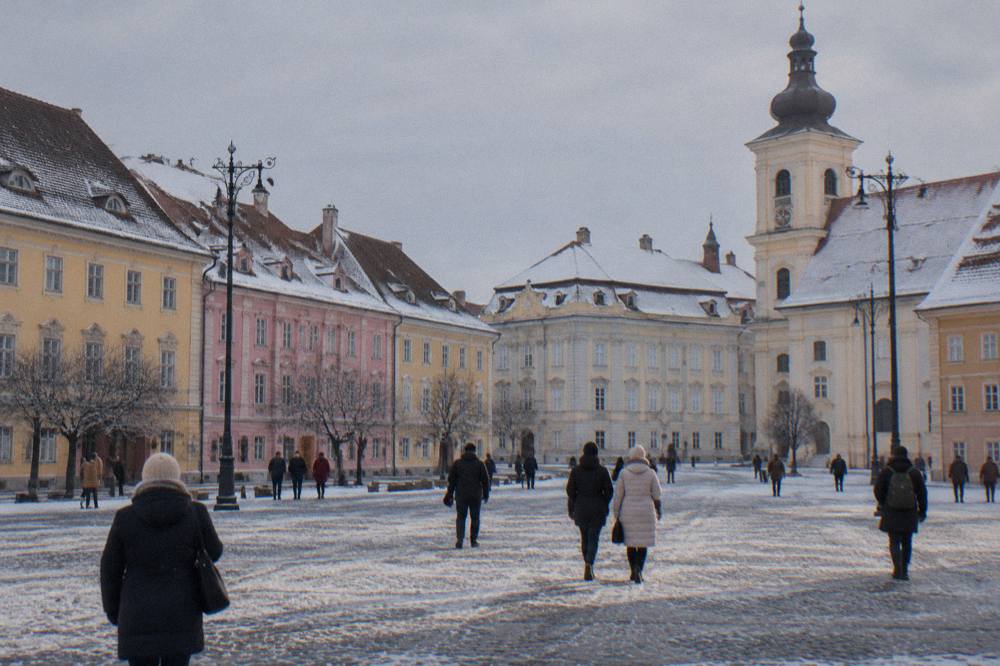
Winter in Sibiu is cold and snowy rather than hazardous: the ERA5 reanalysis, 1991-2020, puts January's mean daily high at 2.2 C and its low at -5.7 C, snow falls from November to March with January the heaviest at 23.3 cm, and the practical risks are ice on the old town's cobbles and steps and the seasonal closure of every high mountain road.
The monthly picture, from the ERA5 reanalysis, 1991-2020, modelled grid cell values rather than a weather-station record:
| Month | Mean high C | Mean low C | Modelled snowfall cm |
|---|---|---|---|
| November | 8.7 | 0.9 | 13.0 |
| December | 3.1 | -3.9 | 20.8 |
| January | 2.2 | -5.7 | 23.3 |
| February | 4.3 | -4.4 | 22.3 |
| March | 8.7 | -0.8 | 18.2 |
The city's own official page gives a mean annual temperature of 8.9 C and mean annual rainfall of 662 mm, with June the wettest month at 113 mm. None of that is extreme, but cobbles, the Stairs Passage and the Lower Town lanes hold ice after a freeze, so footwear with grip is the single most useful winter precaution in the centre.
Two calendar facts frame a winter visit. Clocks go back on Sunday 25 October 2026, Europe/Bucharest moving from UTC+3 to UTC+2, which shortens the daylight for evening walks. And the Christmas market runs 13 November 2026 to 3 January 2027, filling Piața Mare with stalls, a rink and crowds; the Sibiu in winter guide and the weather guide carry the seasonal planning in full.
What Should You Do In An Emergency In Sibiu?
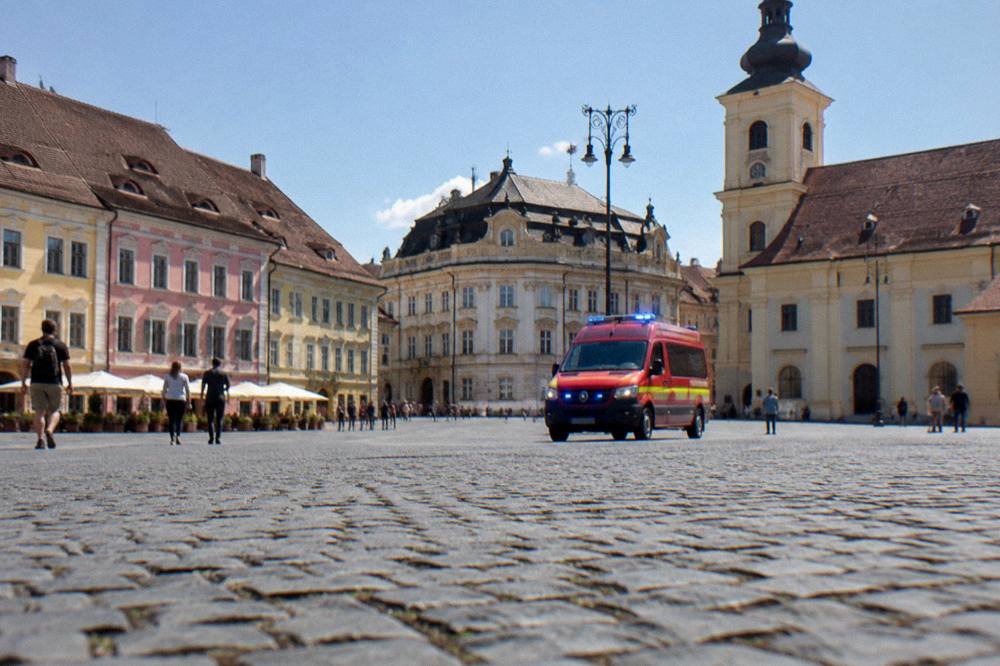
In any emergency in Sibiu, dial 112, the single European emergency number, confirmed on the city's own tourism site; Romania is a full Schengen member, so no internal border formalities complicate a trip here, and for health, money or lost-document problems your first calls are 112, your embassy or consulate and your insurer.
The 112 number reaches police, ambulance and fire services from any phone. Beyond it, the practical emergency kit is administrative: carry your travel document, keep your insurer's line accessible, and know that your own government's travel advice is the right reference for any question about visiting Romania, since this site publishes no advisory level and no current-events verdict.
For day trips that keep the logistics with an operator, the Sighișoara, Biertan and Viscri private tour reaches the UNESCO villages without you parsing rural roads, Check availability.
Is Sibiu Safe For Solo Travellers And Families?
Sibiu works well for solo travellers and families on the structural facts: the centre is a compact, pedestrian-friendly core with free open squares, an airport served by public bus line 11 at 3.5 lei, and no published travel warning of any kind; the family-relevant cautions are the same ones as for everyone, ice in winter, the seasonal mountain roads and the closed Council Tower.
The transport facts make the arrival simple. Sibiu International Airport is about 5 to 6 km from Piața Mare, and Tursib bus line 11 stops at a dedicated airport terminal stop in front of arrivals, with a 60-minute ticket at 3.5 lei bought contactless on board; lines 112, 116, 117 and 118 also call there. The Sibiu airport guide has the detail. The train station and the bus station each sit about 0.8 km from Piața Mare, a walkable haul with luggage on the flat, less so over the Stairs Passage in snow.
For families, the ASTRA open-air museum in Dumbrava forest, adult ticket 50 RON per the museum's own ticket page, is wide, open and stroller-friendly terrain, with an autumn schedule to 26 October 2026 and a winter schedule not yet announced, so confirm hours before you go. The Sibiu with kids guide builds on those options, and the things to do in Sibiu page is the full index.
Common Questions About Sibiu Safety
Is Sibiu safe at night?
The old town is a compact pedestrian core, and no crime figure, unsafe street or travel advisory appears in the sources this site reports from. Normal city precautions apply, and the emergency number is 112.
Is the Transfăgărășan road open?
The 2026 season reopened on 12 June with traffic allowed 07:00 to 21:00 daily, and the high stretch can legally close on any day from 20 October. Never assume it is open: check the road authority's live status the day you drive, and note the 10,000 to 30,000 lei fine for driving the closed section.
Are there bears near Sibiu?
Bears live in the Carpathian forests, and the supported advice is qualitative: follow local signs, keep to marked routes and do not leave food out. No bear count or trail-specific warning exists in the sources, so none is claimed.
What is the emergency number in Sibiu?
112, the single European emergency number, confirmed on the city's tourism site. It reaches police, ambulance and fire services.
Is it safe to drive from Sibiu to Bucharest?
The A1 motorway is unfinished, and the Sibiu to Boița section is closed from 5 October to 19 December 2026 with traffic diverted onto DN7. Allow extra time, confirm the rovinieta vignette requirement, and treat Bucharest, about 250 km away, as an overnight destination rather than a day trip.
Does Sibiu have a tourist tax?
Yes: since 1 January 2026 a 2 percent tax applies to the total accommodation value, approved by the local council on 30 December 2025. It is a percentage of the bill, not a fixed per-night charge.
The pattern across all of it is consistent: Sibiu's centre asks for ordinary city sense, and the preparation that actually pays off is seasonal, knowing which tower is closed, which road can shut from 20 October, and when the ice arrives. Plan around those dates on Sibiu Travel Guide and the rest of the trip tends to take care of itself.
