What Are Some Medieval Towns In Romania?
Romania's medieval towns include Sibiu, Sighișoara, Brașov and the Saxon fortified-church villages of Transylvania. Here is what the sources say, with distances from Sibiu.
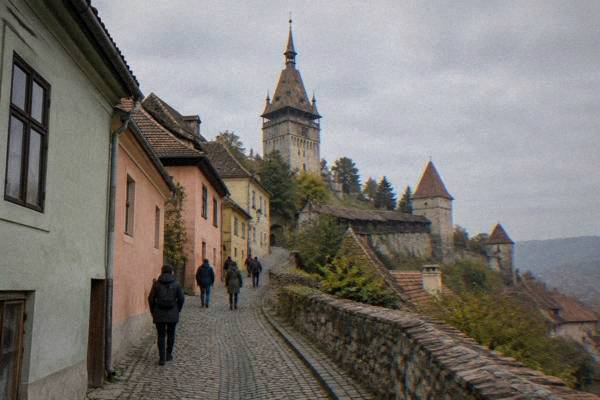
Romania's medieval towns sit in a tight belt across Transylvania, and Sibiu is one of them. This site's home city is a Saxon-founded town on the Cibin river, first documented in 1191 as Cibinium, with an Upper Town and a Lower Town gathered around Piața Mare and ringed by medieval walls and towers. From Sibiu, the other headline medieval towns of the region, Sighișoara and Brașov, are a few hours away by road, and the countryside between them is scattered with Saxon fortified-church villages, seven of which together form a UNESCO World Heritage serial site. This page lays out the towns the sources actually support, what each one offers, and how they fit together on a trip based in Sibiu.
What Are Some Medieval Towns In Romania?
The medieval towns most firmly grounded in the sources are Sibiu, Sighișoara and Brașov, joined by the Saxon fortified-church villages of Transylvania, including Biertan. Sibiu is first documented in 1191, Sighișoara's historic centre is a UNESCO World Heritage Site, inscribed 1999 per the UNESCO listing, and the Villages with Fortified Churches in Transylvania form a separate UNESCO serial site with Biertan, Prejmer, Viscri and Valea Viilor among its seven villages.
That list is deliberately short. Plenty of Romanian towns have old centres, but the research behind this page, from city sites, UNESCO and museum pages, only supports these in depth, and Sibiu is the one with the full picture: documented 1191, population 134,308 in the 2021 census, and an old town of squares, stair passages and towers that is free to wander, per the city's tourism site. Sighișoara and Brașov have a UNESCO listing and a road distance respectively, and that is what this page compares them on. The Sibiu Travel Guide covers the home city in detail elsewhere, starting with what to do across Sibiu's old town.
A useful framing: Transylvania's medieval towns share one origin story. Reported by the heritage body patrimoniu.sibiu.ro, Saxon settlers arrived from the Moselle valley area in the 12th century and built towns and fortified churches that still define the region's skyline. Sibiu's German name, Hermannstadt, records that origin, a point covered in more depth in the article on Sibiu's German name.
Which Medieval Towns Can You Reach From Sibiu On A Day Trip?
Sighișoara sits about 96 km from Sibiu's Piața Mare, roughly 102 minutes by road at free-flow pace, Brașov about 142 km and 154 minutes, and Cluj-Napoca about 169 km and 151 minutes, all computed over OpenStreetMap routing and not a timetable. Nearer medieval sites include the fortified churches of Cisnădie, about 10 km away, and Cisnădioara, about 13 km, with Biertan's UNESCO church about 76 km off, a drive of roughly 1 hour 15 to 1 hour 30.
Those figures make Sibiu a practical base for the whole medieval belt. Sighișoara is close enough for a comfortable day trip by car or tour; Brașov is a longer day but doable; Cluj-Napoca works too if the day is devoted to the road. The Saxon villages are the shortest hops of all: Rășinari about 18 minutes, Cisnădie about 14, and Sibiel about 36, per the computed routing distances. If the question is how long a Sibiu stay needs to cover town and countryside, the days-in-Sibiu answer breaks it down.
| Destination | Road distance from Piața Mare | Approximate drive time |
|---|---|---|
| Cisnădie (fortified church) | 10 km | about 14 min |
| Cisnădioara | 13 km | about 18 min |
| Sibiel | 25 km | about 36 min |
| Biertan (UNESCO church) | about 76 km | about 1 h 15 to 1 h 30 |
| Sighișoara (UNESCO centre) | 96 km | about 102 min |
| Brașov | 142 km | about 154 min |
| Cluj-Napoca | 169 km | about 151 min |
One planning note for the Bucharest direction: the Sibiu to Pitești motorway is unfinished, and the Sibiu to Boița section is closed from 5 October to 19 December 2026 with traffic diverted onto DN7, so allow extra time that way and check the road status before driving. Romania is a full Schengen member and the roads are the same whether the trip starts in Sibiu or across the border, which makes multi-town itineraries simple to plan.
For travellers who would rather not drive, a guided day trip covers the same ground. The Blue Line & City Tour to Sighișoara pairs the drive from Sibiu with a guided city tour of the UNESCO old town, and a carriage-ride countryside option exists for the village side of the region.
Why Is Sibiu Itself A Medieval Town Worth The Trip?
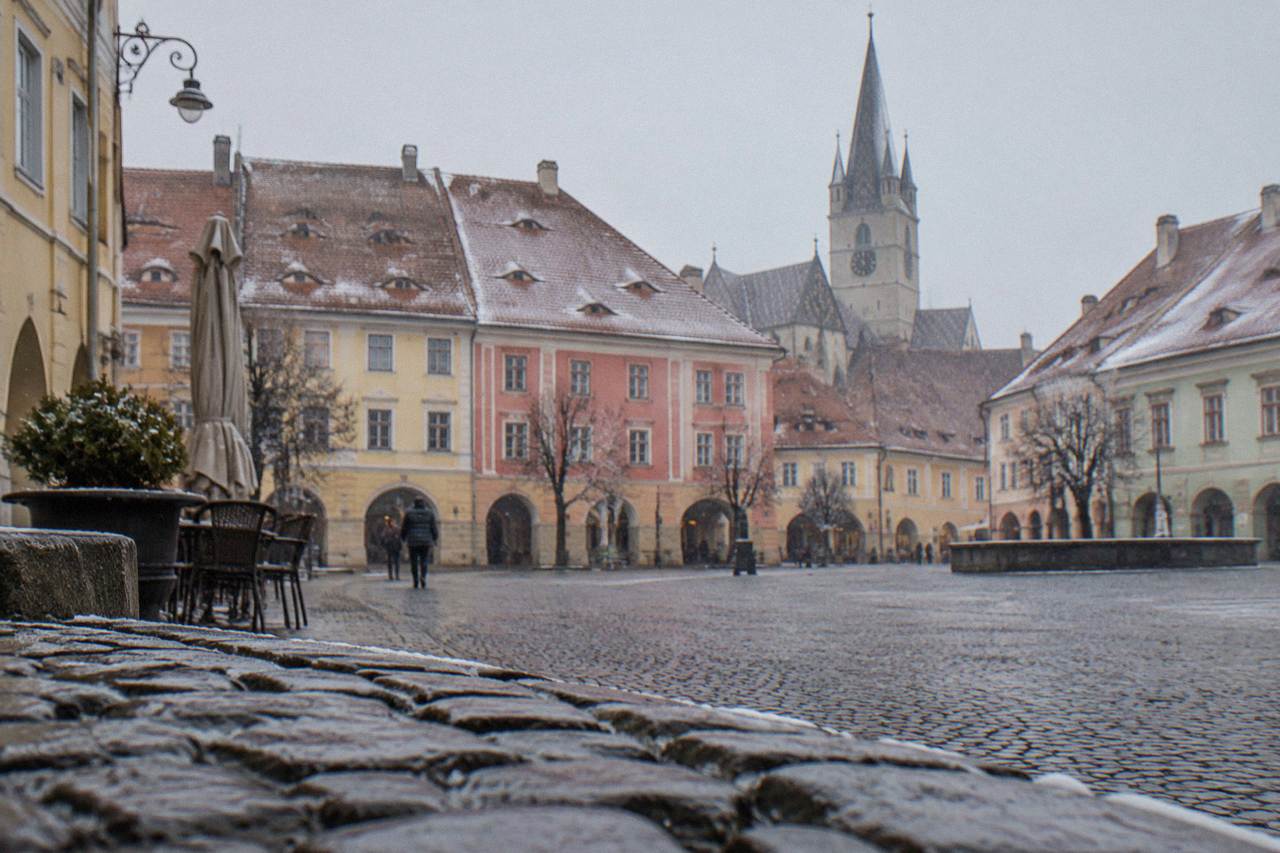
Sibiu's medieval core survives as a walkable pair of towns, the Upper Town and the Lower Town, joined by the Stairs Passage and ringed by walls and towers including those of the Potters and the Arquebusiers, all free to explore with no ticket required. The skyline features the Bridge of Lies, reported as built 1859 to 1860 as Romania's first cast-iron bridge, the Evangelical Cathedral and the towers around Piața Mare, Piața Mică and Piața Huet.
The squares are the heart of it. Piața Mare is the grand one, home to the Brukenthal National Museum's palace, whose own price page lists an adult ticket at 50 RON, with the 48-hour ticket covering every open Brukenthal site at 120 RON. Piața Mică carries the Bridge of Lies and the Pharmacy History Museum at 16 RON, and Piața Huet fronts the Evangelical Cathedral, whose tower is the open viewpoint in the city: 10 RON for an adult, per the city tourism site's listing. The Council Tower between the squares has been closed to visitors since 19 January 2026 for a restoration planned at about 24 months, so plan the panorama around the cathedral tower instead. The stairway link between the two towns is covered in detail on the page for the Stairs Passage.
For a quick verdict on the city itself, the question is Sibiu worth visiting gets the full treatment elsewhere, alongside what Sibiu is known for.
What Can You See In Sighișoara's UNESCO Old Town?
Sighișoara's historic centre is a UNESCO World Heritage Site, inscribed 1999 under criteria (iii) and (v) per the UNESCO listing, and its ticketed sights, reported by cetateasighisoara.com, a private tourism site, are the Clock Tower history museum at 50 RON, the Weapons Museum at 20 RON, the Torture Room at 10 RON and the Church on the Hill at 20 RON.
The Clock Tower runs 15 May to 15 September Tuesday to Friday 9:00 to 17:30 and weekends 10:00 to 17:30, with shorter winter hours the rest of the year, closed Mondays.
Those prices and hours come from the town's own visitor-information site rather than an official body, so confirm before you go. The Clock Tower hours matter for planning: from 16 September to 14 May it opens Tuesday to Friday 9:00 to 15:30 and weekends 10:00 to 15:30, and it does not open on Mondays at all, which shapes any day-trip day of the week. Whether the town justifies the drive is a fair question, addressed at length in the Sighișoara worth-it answer.
| Sight in Sighișoara | Reported adult price | Reported hours |
|---|---|---|
| Clock Tower history museum | 50 RON | Tue-Fri 9:00-17:30, Sat-Sun 10:00-17:30 (15 May-15 Sep); shorter in winter, closed Mon |
| Weapons Museum | 20 RON | per the visitor site, confirm before you go |
| Torture Room | 10 RON | per the visitor site, confirm before you go |
| Church on the Hill | 20 RON | per the visitor site, confirm before you go |
On the Dracula angle: the legend is tied to the region in popular culture, but no birthplace claim, house or date is supported by the sources behind this page, so this site prints none of it. Sighișoara stands on its UNESCO listing and its intact citadel, not on the vampire story.
Are The Saxon Fortified Church Villages Also Medieval Towns To Visit?
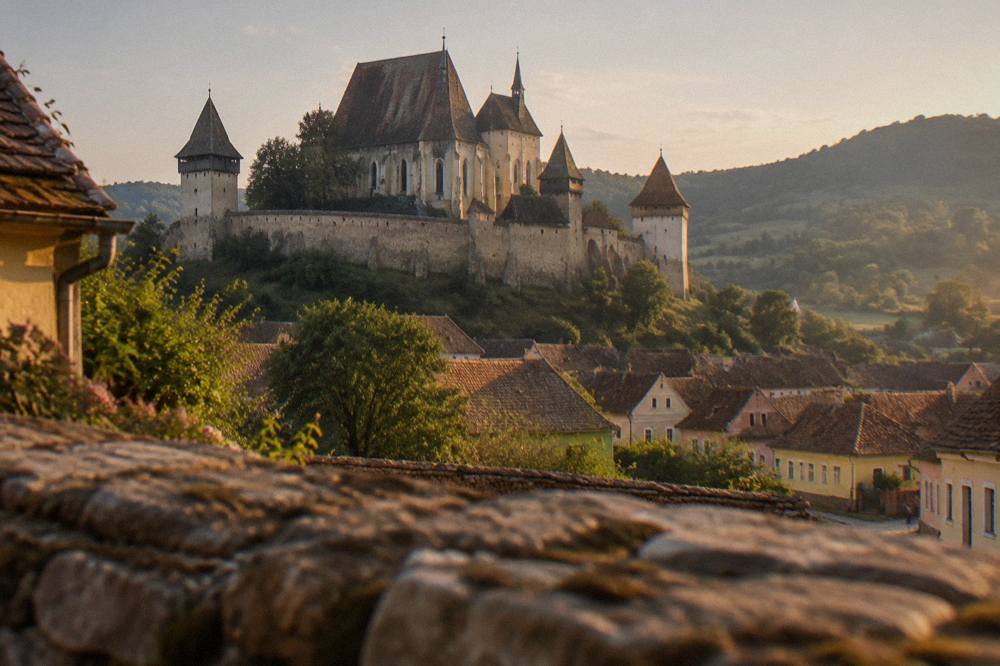
The fortified-church villages are the rural half of Romania's medieval heritage: seven villages, including Biertan, Prejmer, Viscri and Valea Viilor, form the UNESCO serial site Villages with Fortified Churches in Transylvania, with Biertan inscribed in 1993 and the list extended in 1999. Biertan's church charges a reported 20 RON adult ticket, opens 10:00 to 17:00 with a 13:00 to 14:00 lunch break into October, then Tuesday to Sunday 11:00 to 15:00 through winter.
These villages are smaller than the towns but architecturally the same story: Saxon communities fortified their churches against raids, and the walls still stand. Biertan is the practical entry point from Sibiu, about 76 km away, and its hours and prices are reported by sibiu-turism.ro, so confirm locally before a dedicated trip. The rest of the network, Prejmer, Viscri and Valea Viilor included, sits farther east toward Brașov, at roughly 45 minutes to 2 hours of driving beyond the Sibiu area per the computed distances.
A day in the villages pairs well with a first day in Sibiu itself, and the two together are the fullest version of a Transylvania medieval trip. For the broader question of whether the region deserves the flight, the Transylvania worth-it answer gathers the facts.
Timing matters for the whole list. The medieval town circuit is pleasant from late spring to early autumn, and winter has its own draw in Sibiu, where the Christmas market runs 13 November 2026 to 3 January 2027 in Piața Mare with free entry, a fact worth checking against the dedicated market answer. The Transfăgărășan, the mountain road often folded into Transylvania itineraries, can be closed any day from 20 October under the standing rule, so its status is a live question rather than a standing one.
Common Questions About Medieval Towns In Romania
What Are Some Medieval Towns In Romania?
Sibiu, Sighișoara, Brașov and the Saxon fortified-church villages, including Biertan, Prejmer, Viscri and Valea Viilor. Sibiu is documented from 1191, Sighișoara's centre is UNESCO-listed since 1999, and the fortified churches form a separate UNESCO serial site.
Which Medieval Town Is Closest To Sibiu?
The fortified-church villages are the closest medieval sites: Cisnădie is about 10 km and 14 minutes by road from Piața Mare, and Cisnădioara about 13 km. Of the towns proper, Sighișoara is nearest at about 96 km, roughly 102 minutes of driving.
Is Sighișoara A Day Trip From Sibiu?
Yes, comfortably. The computed road distance is about 96 km and 102 minutes at free-flow pace, and the reported driving time is about 1 hour 40. Trains also connect the two, reported at about 2 to 2.5 hours; check cfrcalatori.ro for live times.
Can You Visit Dracula's Castle On The Same Trip?
Bran Castle is about 138 km and 154 minutes by road from Piața Mare, so it is a long day trip. The castle's ticket page lists a Guided Royal Tour Plus Fast Pass from 150 RON; no connection between Vlad the Impaler and the castle is supported by the sources here, so treat the Dracula link as legend only.
What Is The Best Time Of Year For The Medieval Towns?
May, June, September and October are the months the tourism sources name as the shoulder sweet spot. Sibiu's climate is temperate continental: July highs average 24.2 C and January lows minus 5.7 C, ERA5 reanalysis, 1991-2020, with snow on the ground November to March.