Sibiu Cafes And Bakeries: Where To Get Papanasi And Coffee
Sibiu's old town squares and lanes hold a compact cafe and bakery scene built around Saxon heritage, Transylvanian pastry and long terrace seasons. This guide sets out where to look, what to order and how paying works.
Short answer
Sibiu's cafes and bakeries cluster in the Upper Town around Piața Mare, Piața Mică and Piața Huet, spilling down Pasajul Scărilor into the Lower Town. Order papanasi for dessert, ciorbă and mici for savoury, and expect to pay in lei. No individual venue is named here because no trusted price list for named cafes exists; this guide covers the dishes, the areas and the planning facts.
Sibiu, the Saxon-founded city on the Cibin river in Transylvania, runs its cafe life through three linked squares and the lanes that fall away from them toward the Lower Town. The scene is compact: everything worth searching for sits within a ten minute walk of Piața Mare, the Grand Square that has been the city's centre since the medieval Upper Town took shape. One honest note frames this whole guide. No trusted source lists named cafes or bakeries in Sibiu with verifiable prices or opening hours, so this page names no venue and prints no menu price. Instead it covers what the sources do support: the dishes, the neighbourhoods, the seasons, the money mechanics and the sightseeing that fits around a long coffee stop.
What Kind Of Cafe And Bakery Scene Does Sibiu Have?
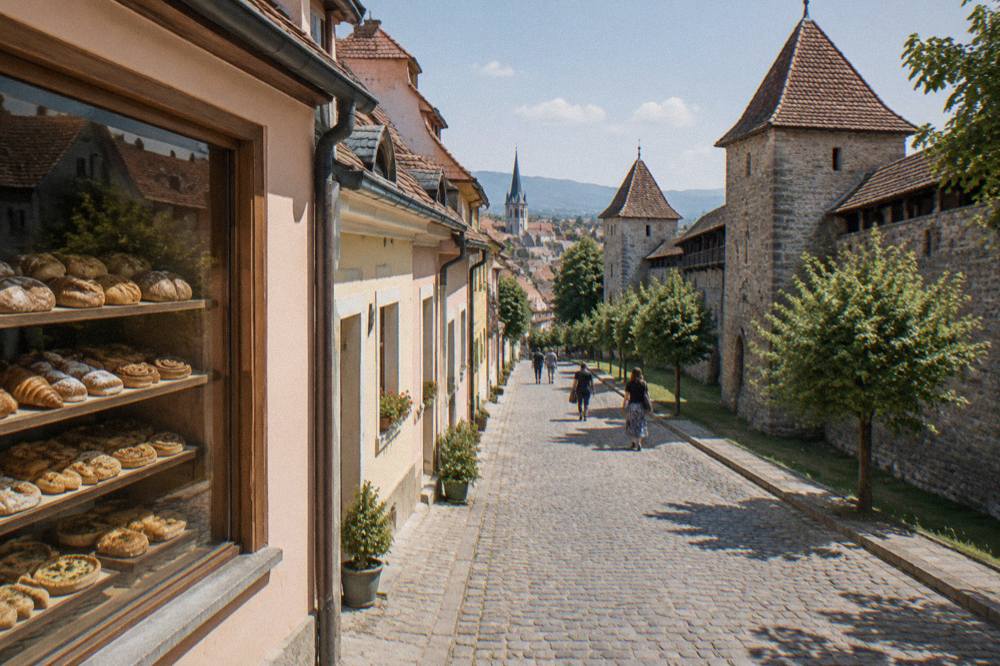
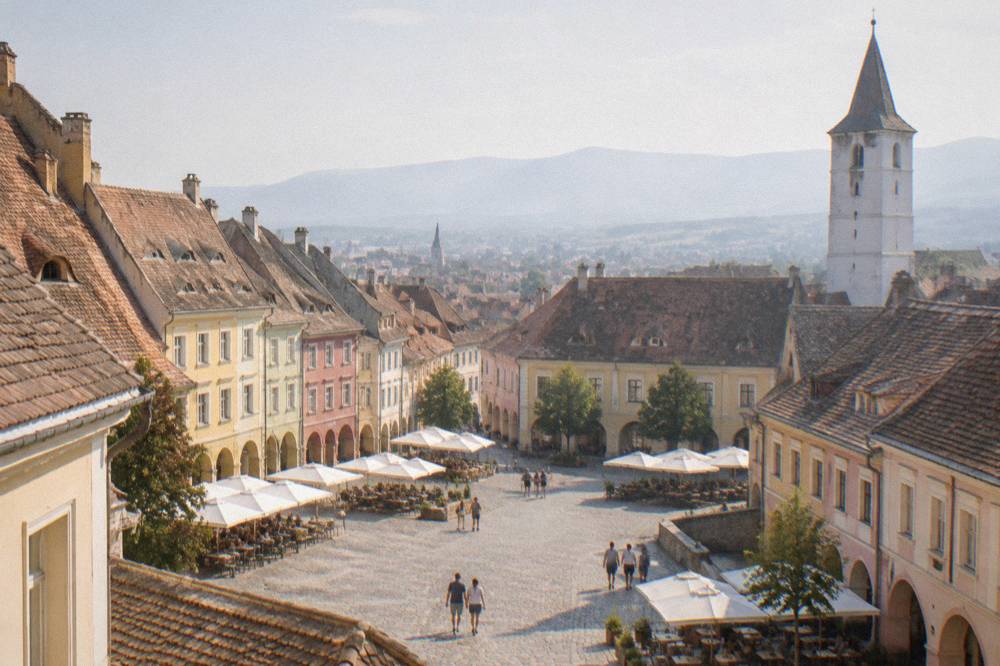
Sibiu has a small, central, terrace-heavy cafe and bakery scene concentrated in the Upper Town, built on a Transylvanian pastry tradition and an Austrian-influenced coffee culture that dates to the Saxon merchants who ran the city from the 12th century. The old town's pedestrian squares, Piața Mare, Piața Mică and Piața Huet, hold the density of seating, and the cobbled lanes between them carry the bakery counters. It is a walkable scene: the whole cafe quarter sits about 0.8 km from both the train and bus stations, and the city's tourism site presents the squares themselves as free, open-access public space with no tickets and no hours.
The shape of the scene follows the shape of the city. The Upper Town, at 415 to 431 m altitude on the plateau above the Cibin, holds the grand merchant houses and the main squares, and that is where the terraces are. Below it, connected by Pasajul Scărilas, the Stairs Passage, the Lower Town is quieter, narrower and cheaper-feeling, with bakeries and small shops rather than square-front terraces. The city's own presentation page describes the two-level structure plainly, and any cafe plan for a first visit should assume the split: mornings and people-watching above, quick pastry stops below.
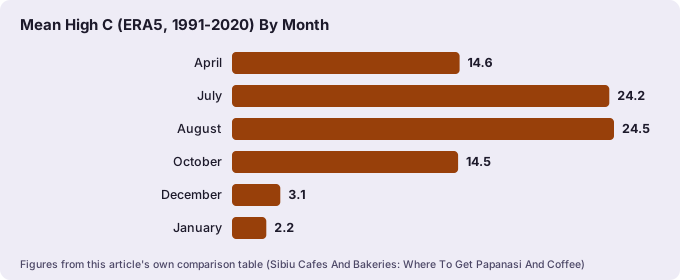
Season matters more here than in a coastal city, because terrace life is the point. The ERA5 reanalysis, 1991-2020, puts July mean daily highs at 24.2 C with 12.8 hours of modelled sunshine a day, against January highs of 2.2 C and 6.2 hours. Practically, that means outdoor seating from May into September and a move indoors, to the Christmas market and to hot drinks, from November. The best time to visit Sibiu page breaks the months down in more detail.
| Old town area | Character | Access |
|---|---|---|
| Piața Mare | Grand square, main terraces, the Brukenthal Palace frontage | Free public space, no ticket |
| Piața Mică | Smaller square, the Bridge of Lies at its far end, cafe-lined lanes | Free public space, no ticket |
| Piața Huet | Cathedral square, quietest of the three, church-tower views | Free public space, no ticket |
| Pasajul Scărilor | The Stairs Passage linking Upper and Lower Town | Free public passage |
| Lower Town | Narrower streets, small bakeries and local shops | Free public streets |
Where Should You Look For Cafes In Sibiu?
Start in Piața Mică and the lanes immediately off it, then work outward: that smaller square and its side streets carry the densest cafe and bakery frontage within a five minute walk of the Bridge of Lies, with Piața Mare holding the larger terraces and Piața Huet the quietest tables. The Bridge of Lies itself, the iron bridge built in 1859 to 1860 and reported as the first of its kind in Romania, anchors the western end of Piața Mică and gives the whole quarter its focal point. All of it is free to wander, and the squares are pedestrian in practice, so the search is a walk, not a commute.
A sensible loop takes in all three squares and the drop into the Lower Town in well under an hour of slow walking. The geography is stacked: Piața Huet sits highest around the Evangelical Cathedral, Piața Mare and Piața Mică sit on the main level, and Pasajul Scărilor descends to the Lower Town's grid of small streets. The Sibiu map page covers the layout street by street, and the free things to do in Sibiu guide lists the squares, bridge and walls that cost nothing, which pairs well with a pastry budget.
Two sightseeing facts shape the loop. The Council Tower, the landmark between Piața Mare and Piața Mică, has been closed to visitors since 19 January 2026 for a restoration planned at about 24 months; the open viewpoint is the Evangelical Cathedral tower beside Piața Huet, at 10 RON for an adult and 5 RON reduced, per the Sibiu tourism site's listing for the tower. And the Brukenthal Palace on Piața Mare, whose courtyard and gallery make a natural coffee-stop pairing, is open Wednesday to Sunday 10:00 to 18:00 and closed Monday and Tuesday, per the museum's own schedule. Plan cafe mornings for Monday and Tuesday, when the museums rest.
| Sightseeing stop near the cafe quarter | 2026 status | Adult price |
|---|---|---|
| Squares, Bridge of Lies, Stairs Passage, city walls | Open public space | Free |
| Evangelical Cathedral tower | Open, hours vary by day | 10 RON |
| Brukenthal Palace | Wed to Sun 10:00 to 18:00, closed Mon and Tue | 50 RON |
| Brukenthal 48-hour combined ticket | Covers the museum's sites | 120 RON |
| Council Tower | Closed for restoration, about 24 months from 19 January 2026 | No access |
What Should You Order In A Sibiu Cafe?
Order papanasi for dessert, ciorbă and mici for savoury, Sibiu salad as the local starter, and sarmale or balmoș when a menu reaches further into Transylvanian home cooking; this list is the documented regional set, and any cafe or restaurant in the old town will work from some version of it. The research behind this site found no trusted source naming individual venues, so this table names dishes only, with what each one is. Zacuscă, the vegetable spread, and Transylvanian Saxon cooking round out the regional picture, a tradition that arrived with the Saxon settlers reported to have come from the Moselle area in the 12th century.
| Dish | What it is | Where it sits on a menu |
|---|---|---|
| Papanasi | Fried cheese doughnuts, served with sour cream and jam | Dessert |
| Ciorbă | Sour soup, often with meat or vegetables, soured with bran | Starter |
| Mici | Grilled minced-meat rolls, skinless, served with mustard | Main or street snack |
| Sibiu salad | The local mixed salad, the city's namesake dish | Starter |
| Sarmale | Cabbage rolls stuffed with meat and rice | Main |
| Balmoș | A rich polenta dish cooked with cheese and butter, a shepherd's dish | Main |
| Zacuscă | Vegetable spread, typically on bread | Breakfast or starter |
The what to eat in Sibiu guide expands on each dish, and the best restaurants in Sibiu page covers the sit-down side of the same tradition. In a cafe setting, the realistic order is coffee plus papanasi in the afternoon, or coffee plus a pastry at a bakery counter in the morning. Bakeries in Romania generally sell cozonac, the sweet enriched loaf, and savoury pies by the piece, so check prices at the counter.
Coffee itself is drunk in the Austrian-influenced way you would expect of a former Habsburg-era merchant city: espresso-based drinks as the default, longer milky coffees in the morning, and terrace tables taken for an hour rather than fifteen minutes. No source prices a Sibiu espresso, and this page will not guess one. What can be said is mechanical: Romania's currency is the leu, and you pay in lei.
Where To Get Papanasi In Sibiu Without Guessing?
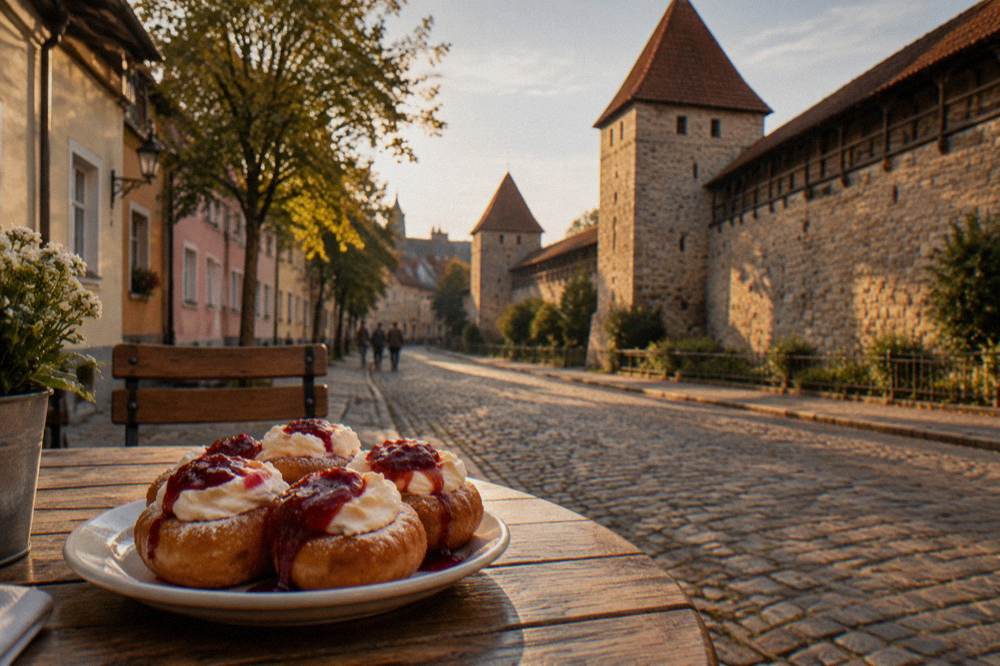
Papanasi appear on dessert menus across the old town rather than in one dedicated spot, so the reliable method is to search Piața Mică and Piața Mare first and treat any menu that fries them to order as the right choice, since the doughnuts are best hot. This page names no single venue, and no trusted source ranks Sibiu's papanasi, so treat any "best papanasi" claim you read online as unranked opinion. What the sources do support is the dish itself: fried cheese doughnuts, sour cream, jam, and a place at the end of nearly every Transylvanian menu.
Timing helps. Papanasi are an afternoon-and-evening dessert, while many bakeries sell only morning pastries, so a visitor who wants them at 10:00 will often be told to come back. Pair the hunt with the sightseeing that sits closest to it: a dessert stop in Piața Mică sits between the Bridge of Lies and Pasajul Scărilou, and one on Piața Mare sits under the Brukenthal Palace frontage. A guided walk stitches these together neatly; the daily sightseeing walk covers the old town core, and you can Check availability on the operator's live listing.
What Money Questions Come Up In Sibiu Cafes?
You pay in Romanian lei, card acceptance varies by venue and no published figure covers cafe prices or tipping, so carry some cash, know the rough exchange rate of about 5.3 lei to the euro, and expect hotels, not cafes, to add the city's 2 percent tourism tax on accommodation since 1 January 2026. The currency facts are solid: Romania uses the leu (RON), and the reference rate has hovered around 5.3 lei to the euro. Card and ATM specifics for Sibiu were not found in official sources, so ask at your accommodation or carry notes for small counters. The 2 percent tax applies to the accommodation value, not to food and drink.
| Money question in Sibiu | What the sources support |
|---|---|
| Currency | Romanian leu (RON, lei) |
| Euro exchange | About 5.3 lei to the euro, per the central bank reference rate |
| Cafe and bakery prices | No published figures in a trusted source; check at the counter |
| Tipping | No official source found; follow local custom or ask |
| Tourist tax | 2 percent of accommodation value, since 1 January 2026, paid at hotels |
| Emergency number | 112 |
One cheap transport figure belongs in any cafe-hopping plan: the city bus charges 3.5 lei for a 60-minute ticket, 5 lei for 75 minutes and 7 lei for 90 minutes, per the operator's tariff page. The cafe quarter itself needs none of this, since the walk from the train station area to Piața Mare is about 0.8 km, but the bus covers the trip out to the Dumbrava forest and the ASTRA Museum, where adult entry is 50 RON and the autumn 2026 schedule ran to 26 October with last entry about 16:00.
Are Sibiu Bakeries A Good Breakfast Option?
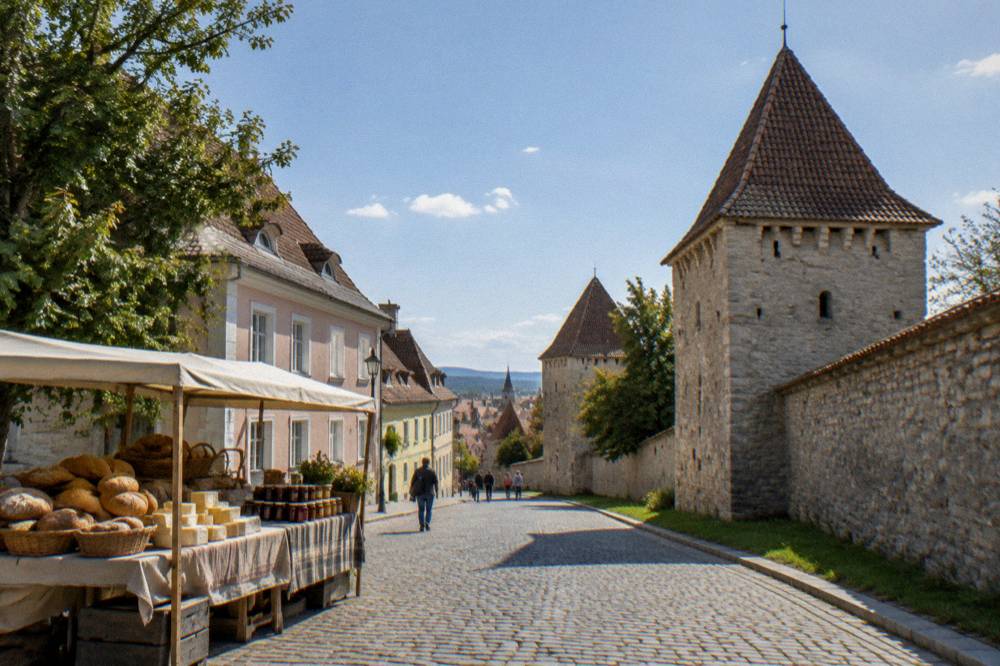
Yes, in the practical sense that bakeries selling morning pastries by the piece are a normal part of Romanian town life and Sibiu's Lower Town and market area carry them, but no trusted source lists Sibiu bakery names, hours or prices, so a breakfast plan here means walking the lanes between Piața Mică and the Lower Town and buying what the counter shows. The honest position is that this page cannot point at a specific bakery, and any guide that does, without a verifiable source, is guessing. What is documented is the food culture around the bread: zacuscă on bread, cozonac as the sweet loaf, and the market tradition at Piața Cibin, which exists by name in the sources though no hours were found.
For a self-catering breakfast, Piața Cibin is the city's market; confirm its days and hours locally, because no official schedule appears in the research. The market-plus-bakery combination is the local pattern for a morning, and it keeps costs low in a city that the Sibiu cost and Sibiu budget pages examine in detail. Families will find the same pattern easy; the Sibiu with kids guide pairs pastry stops with the zoo, where reported adult entry is about 20 RON, a figure to confirm on site.
Do Cafes Change With The Seasons In Sibiu?
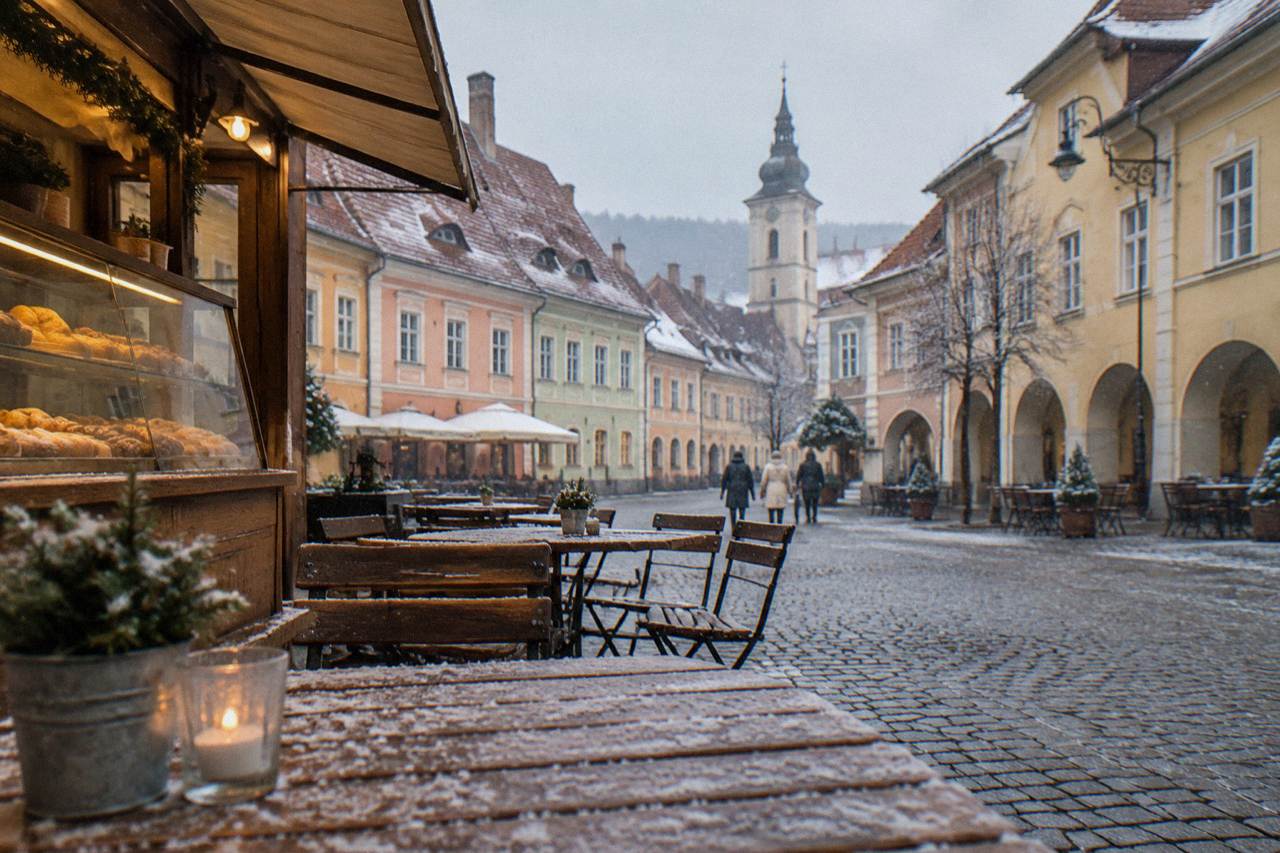
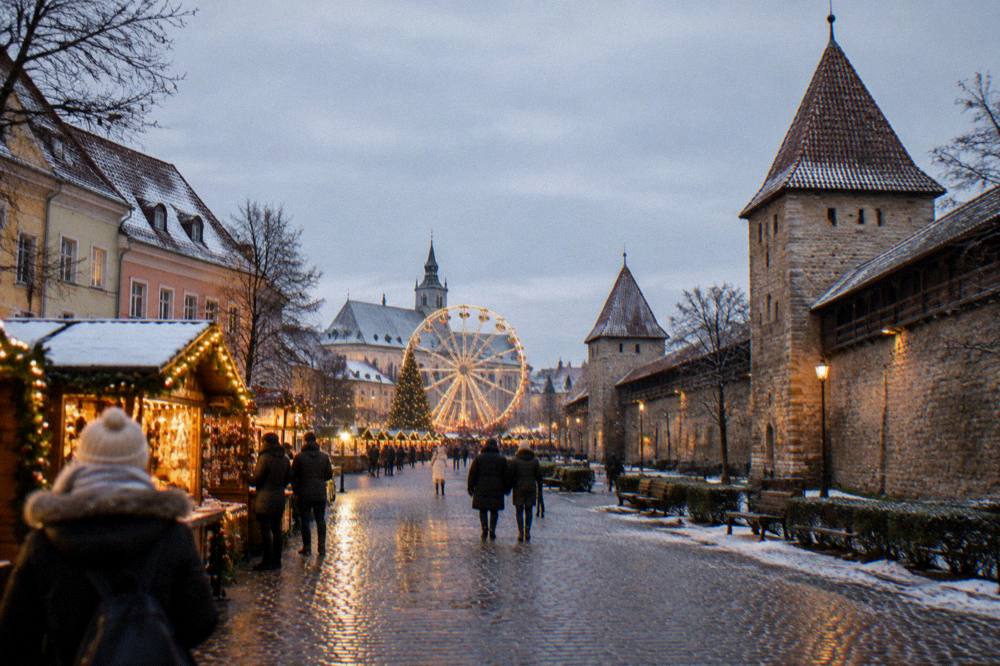
They change sharply: terraces fill from May to September when ERA5 reanalysis, 1991-2020, shows mean daily highs of 19.1 to 24.5 C and 11 to 13 hours of modelled sunshine, while from late November the action moves to the Christmas market in Piața Mare, which runs 13 November 2026 to 3 January 2027 with free entry. Winter is not a dead season for the cafe quarter; it is a different one. The market builds a 600 sqm ice rink, a wheel and stalls across the Grand Square, and the square's cafes sit in the middle of it. The Sibiu Christmas market page covers the stalls; the Sibiu weather page covers the numbers.
| Month | Mean high C (ERA5, 1991-2020) | Mean low C | Sunshine h/day | Cafe season |
|---|---|---|---|---|
| April | 14.6 | 4.0 | 10.4 | Terraces return |
| July | 24.2 | 14.6 | 12.8 | Peak terrace season |
| August | 24.5 | 14.8 | 11.8 | Peak terrace season |
| October | 14.5 | 5.7 | 8.0 | Mild, outdoor still possible |
| December | 3.1 | -3.9 | 5.6 | Christmas market season |
| January | 2.2 | -5.7 | 6.2 | Indoor cafes, snow likely |
Snow falls in Sibiu from November to March, with January the heaviest at a modelled 23.3 cm for the month, and the city's official climate page records a mean annual rainfall of 662 mm with June the wettest month at 113 mm. None of this discourages cafe life; it relocates it. The market's reported Golden Ticket, at 100 lei for unlimited access to the wheel, carousel and mini-train, sits beside hot-drink stalls whose individual prices are not published in a trusted source, so check prices at the stall. Clocks go back on Sunday 25 October 2026, which shifts the terrace hour a week before the market opens.
Can You Build A Whole Day Around Coffee And Sightseeing In Sibiu?
Yes, and the geography makes it almost automatic: a morning bakery stop in the Lower Town or Piața Mică, the cathedral tower and the Brukenthal Palace through the middle of the day, an afternoon papanasi break on a square, and a wine tasting or an evening walk to close, all inside a walkable kilometre with the squares as the hub. The sightseeing spine is short. The Evangelical Cathedral tower at 10 RON gives the view while the Council Tower rests, the Brukenthal Palace at 50 RON holds the art, and both close to walkable cafes. The things to do in Sibiu round-up lists the full set, and the itinerary pages stretch it to two or three days.
| Day plan block | Confirmed anchor | Notes |
|---|---|---|
| Morning pastry | Piața Mică and Lower Town lanes | No named venue; buy at the counter |
| Midday sightseeing | Evangelical Cathedral tower, 10 RON | Council Tower closed until about January 2028 |
| Afternoon | Brukenthal Palace, 50 RON, Wed to Sun | Closed Monday and Tuesday |
| Dessert stop | Papanasi on a square terrace | Best fried to order |
| Evening | Wine tasting tour on this page's picks | Cancellation terms on the listing |
The wine tasting deserves its slot. Romania's wine culture reaches Sibiu through tasting rooms and guided sessions rather than vineyards, and the operator's listing carries the current price, rating and duration, none of which belong in typed prose. The tour pairs naturally with the food tradition described above: the same Transylvanian table that produces sarmale and zacuscă also produces the wines poured at a sommelier-led tasting, and the Romanian Wine Tasting in Sibiu page on this site describes what the session covers. You can Check availability on the operator's live listing before you commit a day.
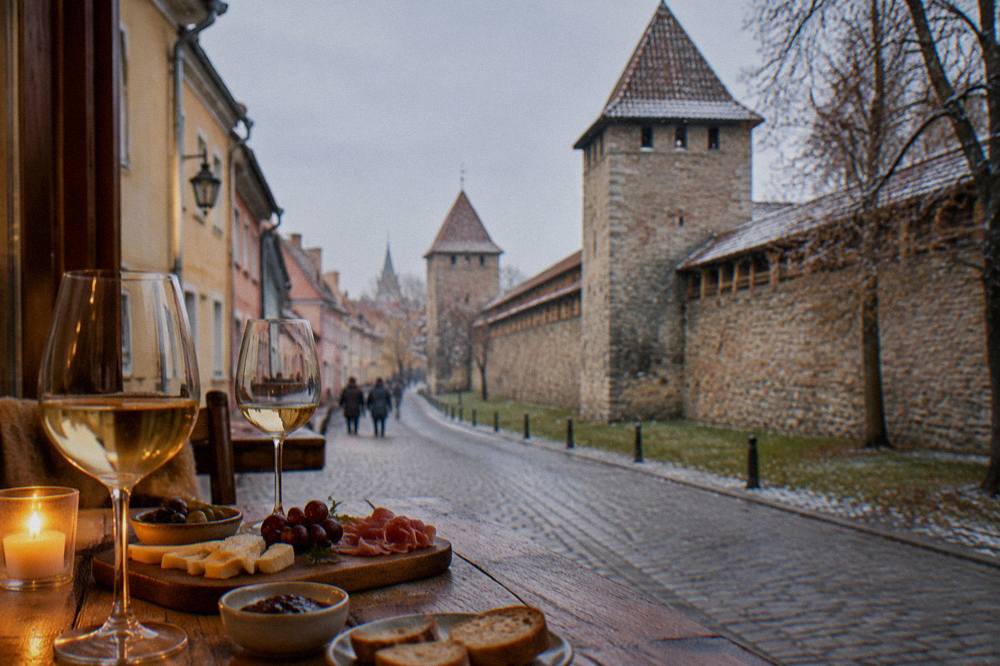
For a deeper cultural layer, the scholar-led baroque walk joins the church and the Brukenthal collections into one explained story, and it ends in the same square where the terraces sit. The scholar-led format suits visitors who want the art-history context behind the palace they walked through at noon, and it keeps the whole day inside the old town's walking radius.
What Day Trips Pair Well With A Sibiu Cafe Base?
The classic pairing is a Sibiu cafe base with a day trip to the Saxon fortified-church villages, the Transfăgărășan or Sighișoara, all reachable in under two hours by road, with the caution that the Transfăgărășan's high section can be closed any day from 20 October and the A1 Sibiu to Boița section is closed 5 October to 19 December 2026 with traffic diverted onto DN7. Distances from Piața Mare, computed over OpenStreetMap routing in free-flow conditions, put Rășinari about 18 minutes away, Cisnădie about 14 minutes, Sighișoara about 102 minutes and Brașov about 154. A pastry breakfast before the drive and a square terrace on return is the pattern the geography invites.
| Day trip from Piața Mare | Road distance | Drive time (free-flow) |
|---|---|---|
| Cisnădie fortified church | 10 km | About 14 minutes |
| Rășinari, Mărginimea Sibiului | 13 km | About 18 minutes |
| Sibiel icon museum village | 25 km | About 36 minutes |
| Păltiniș mountain resort | 32 km | About 40 minutes |
| Transfăgărășan (Bâlea Cascadă) | 63 km | About 69 minutes |
| Sighișoara historic centre | 96 km | About 102 minutes |
Two seasonal notes anchor the winter version of this plan. Păltiniș Arena opens its ski season on 28 November 2026, per the operator's announcement, which makes the resort a same-day snow trip from a Sibiu cafe base. And the Transfăgărășan rule is strict: the 2026 season reopened on 12 June with daily hours of 07:00 to 21:00 on the high stretch, but the road can be closed any day from 20 October, and fines of 10,000 to 30,000 lei apply for driving the closed section, per the road reports. Check the live road status before planning a Bâlea Lake coffee at 2,034 m; outside the window, the cable car runs on its own schedule.
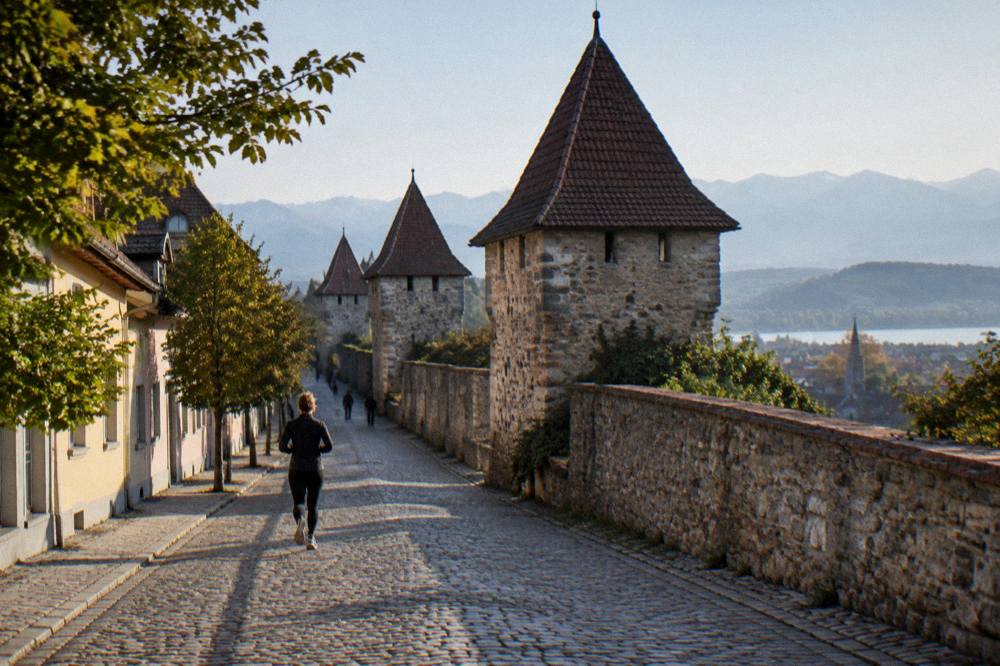
A final planning note on getting there and sleeping: Sibiu International Airport sits about 5 to 6 km from Piața Mare, with Tursib bus line 11 serving a stop in front of arrivals on a 3.5 lei ticket, and the how to get to Sibiu and where to stay in Sibiu pages carry the detail. Wherever you sleep, the cafe quarter is the same fifteen minutes away it has always been, and Sibiu Travel Guide keeps the whole old town covered, square by square.
Common Questions About Sibiu Cafes And Bakeries
Where can I get papanasi in Sibiu?
Papanasi appear on dessert menus across the old town, most densely around Piața Mică and Piața Mare. No trusted source names a specific venue or price, so order where the menu fries them to order and check the price on the menu.
What should I order in a Sibiu cafe?
The documented regional set is Sibiu salad, ciorbă, mici, sarmale, balmoș, zacuscă and papanasi, with coffee drunk espresso-based in the Austrian-influenced style. Bakeries add cozonac and savoury pastries in the morning.
How much does coffee cost in Sibiu?
No trusted source publishes a Sibiu cafe price, so you should check prices at the counter or menu. Romania uses the leu, at about 5.3 lei to the euro, and you should check prices at the counter or menu.
Do Sibiu cafes take cards?
Card and ATM specifics for Sibiu were not found in official sources. Carry some lei in cash for small bakery counters and ask at your accommodation about nearby cash machines.
Is there a tourist tax on cafes in Sibiu?
No. The city's 2 percent tourism tax, in force since 1 January 2026, applies to the accommodation value at hotels and guesthouses, not to food and drink.
When is terrace season in Sibiu?
Roughly May to September, when the ERA5 reanalysis, 1991-2020, shows mean daily highs of 19.1 to 24.5 C. From 13 November 2026 to 3 January 2027 the action moves to the Christmas market in Piața Mare, with free entry.