Sibiu Medieval Festival: What To Expect
Sibiu's old town is a natural stage for medieval events, but the honest starting point is this: no dates for a medieval festival in 2026 or 2027 have been announced. Here is what is confirmed, what a festival weekend in the city involves, and how to plan around it.
Short answer
No dates for a Sibiu medieval festival in 2026 or 2027 appear in the city's cultural calendars, so treat any you see online as unconfirmed. What is confirmed: Sibiu's Saxon old town stages FITS in June 2027, the Jazz Festival each September and a Christmas Market from 13 November 2026, and its medieval landmarks, from the Bridge of Lies to the city walls, are free to explore year-round.
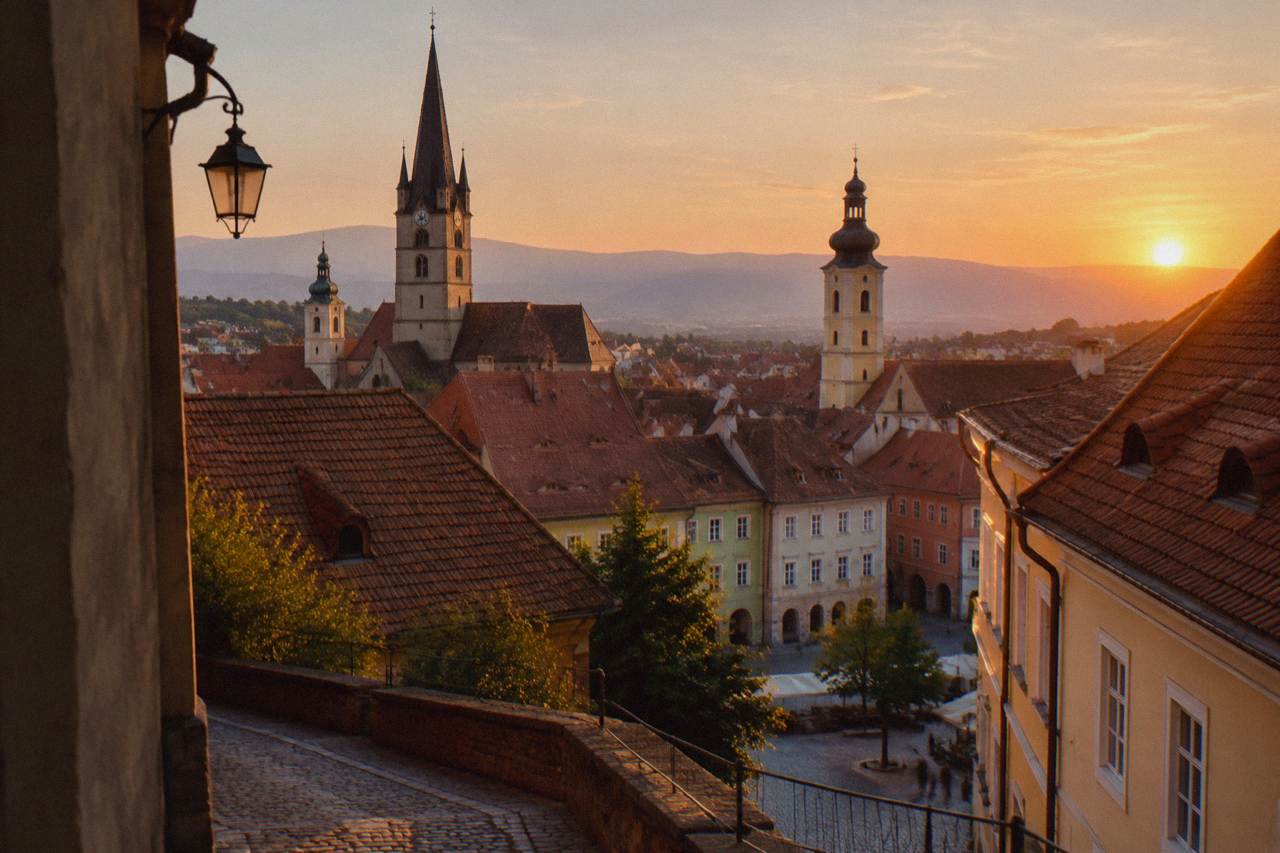
Sibiu, in Transylvania, central Romania, is a Saxon-founded city whose medieval core survives intact enough to host period events without much set dressing: two tiers of town around Piața Mare, a Gothic cathedral tower, restored defensive walls and a famous iron bridge. That setting is why searches for a Sibiu medieval festival keep returning results. What it does instead is separate what is confirmed from what is not, describe what a medieval-themed event in this city actually involves, and give you the landmarks, the dated festivals, the weather and the day trips that make the trip worthwhile regardless.
When Is The Medieval Festival In Sibiu Held?
No medieval festival dates for Sibiu have been announced for 2026 or 2027 in the city's cultural calendars, so any date you encounter on a listings site should be treated as unconfirmed until the city's own cultural programme says otherwise. The events with confirmed or reported dates are different ones: the theatre festival FITS runs 18 to 27 June 2027, the Jazz Festival's 2026 edition ran 2 to 6 September, and the Christmas Market runs 13 November 2026 to 3 January 2027.
That is the whole, plain answer, and it matters because Sibiu's festival scene is genuinely strong, just under other names. The Sibiu festivals calendar carries the events that actually happen each year with published dates, and the pattern is stable: theatre in June, music through the summer, film in October, the Christmas Market from mid-November.
What you can plan around is the city itself. Sibiu was first documented in 1191 as Cibinium, per the city's own history page, and the physical result of that medieval growth, the Upper Town squares, the Lower Town lanes, the wall towers, is open to walk through every day of the year, free of charge. If a medieval festival is announced for a future year, it will land on exactly the ground described in the next sections.
What Does A Medieval-Themed Event In Sibiu Actually Involve?
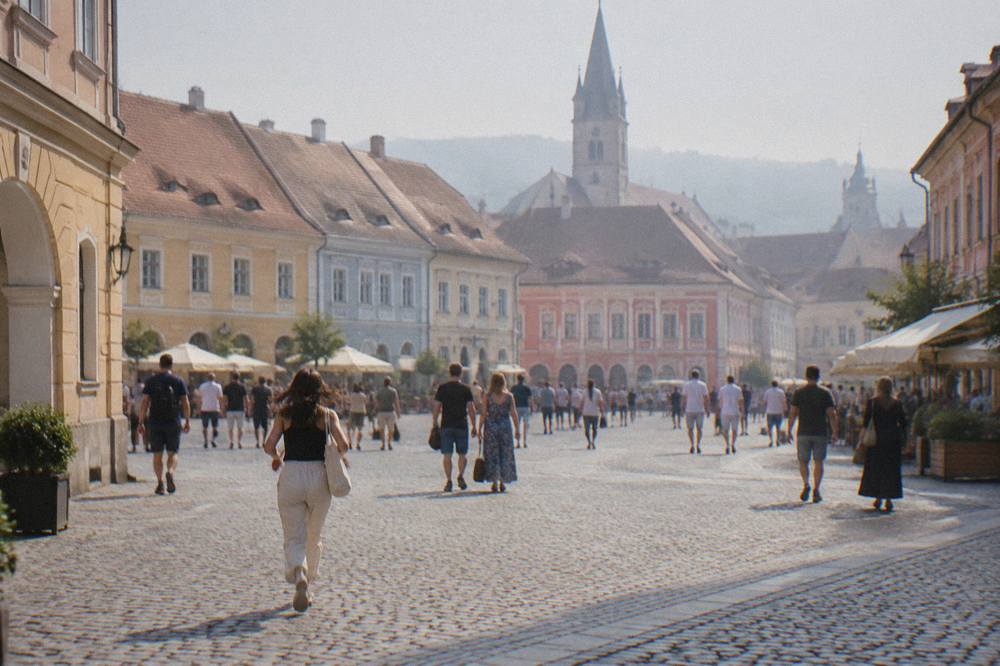
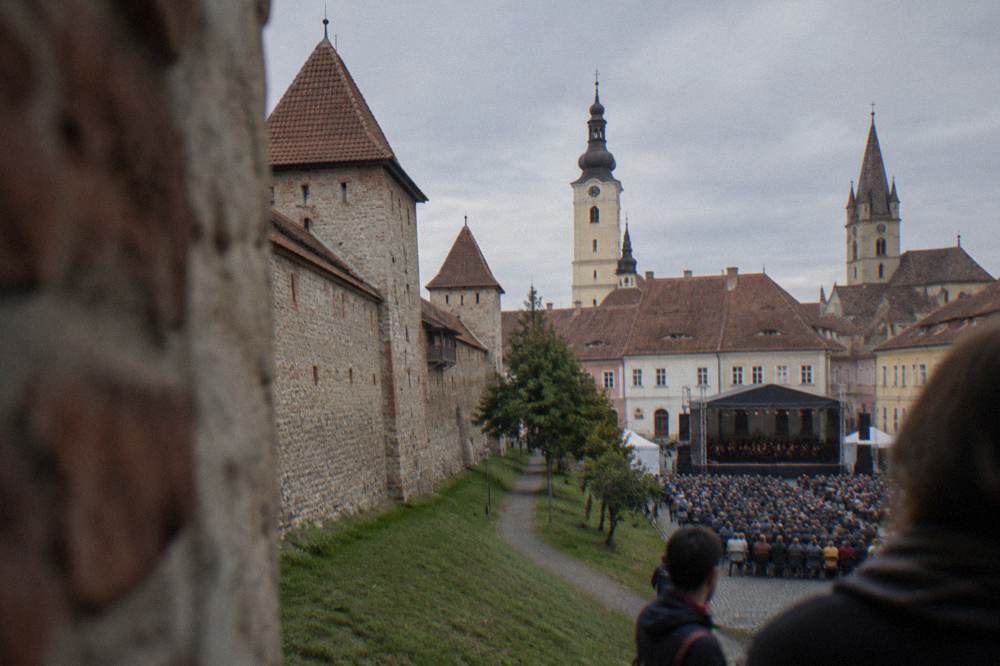
A medieval-themed event in Sibiu would centre on the pedestrian old town: Piața Mare as the main stage, Piața Mică and Piața Huet as secondary spaces, and the Council Tower and Evangelical Cathedral tower as the vertical landmarks, with the city walls and the Stairs Passage linking the Upper and Lower Town. Every one of those spaces is free, public and open today, festival or no festival.
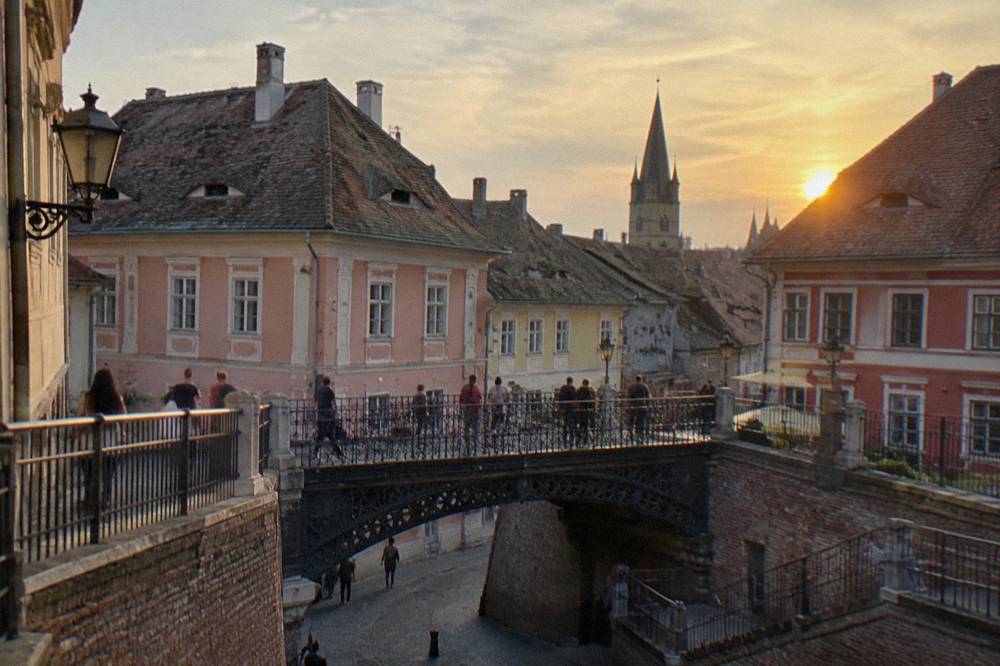
Reported editions of historical and period events in Transylvanian cities follow a familiar shape: craft stalls in the main square, reenactment groups camping near the fortifications, period music in the church squares and evening performances after dark. Sibiu's version of that template writes itself, because the city keeps its three medieval squares in a compact triangle. Piața Mare, the Grand Square, is the large open room where the Christmas Market and the summer festival stages already sit. Piața Mică, connected by the 1859 Bridge of Lies, reported as the first iron bridge in Romania, is the narrower, arcaded space suited to smaller performances. Piața Huet, around the Evangelical Cathedral, is the quiet Gothic corner.
One practical note for any visit in this period: the Council Tower, which normally gives the classic view over the squares, has been closed to visitors since 19 January 2026 for a restoration planned at about 24 months, with completion reported around January 2028. The open viewpoint is the Evangelical Cathedral tower, 10 RON for an adult ticket per the city tourism listing, with hours that vary by day, so check the current schedule before you climb.
For visitors who want the old town explained rather than just wandered, the private walking tour of Sibiu covers the squares, the walls and the history in one guided loop, and it pairs well with a festival weekend when the stories behind the buildings are the point.
Which Medieval Landmarks Anchor A Festival Weekend In Sibiu?
The landmarks that anchor any festival weekend in Sibiu are the Bridge of Lies, the Evangelical Cathedral and its tower, the Council Tower (closed for restoration), the surviving city wall with its towers, and the Stairs Passage down to the Lower Town, and all of them except the closed Council Tower can be visited free or for a small ticket, with the cathedral tower at 10 RON the only climb currently selling tickets.
Each of these has its own character and its own current status, and the table below is the honest snapshot.
| Landmark | What it is | Access now |
|---|---|---|
| Bridge of Lies | Iron footbridge from 1859, reported as the first of its kind in Romania, linking Piața Mică to Piața Huet | Free, open public space |
| Piața Mare | Grand Square, the main festival and market ground since medieval times | Free, pedestrianised |
| Piața Mică | Small Square, arcaded, one of the city's most photographed spaces | Free, pedestrianised |
| Piața Huet | Square around the Evangelical Cathedral, first documented with the city in 1191 | Free, pedestrianised |
| Council Tower | The medieval gate tower between the two main squares | Closed since 19 January 2026 for a restoration of about 24 months |
| Evangelical Cathedral tower | Gothic church tower, the open viewpoint over the city | 10 RON adult, 5 RON reduced, hours vary by day |
| Stairs Passage | Covered stone passage linking Upper and Lower Town | Free, open at all hours |
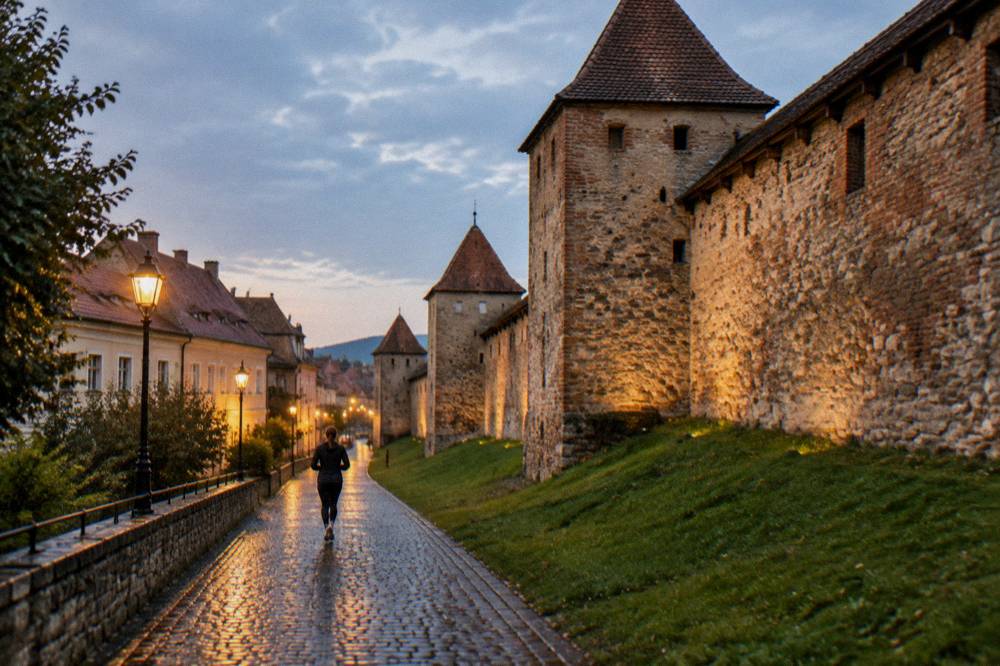
| City walls and towers | Restored defensive ring with the Potters, Arquebusiers and Stairs towers | Free public access |
The 1191 date is worth dwelling on because it is unusually solid. The city's own history page states Sibiu was documented that year as Cibinium, the seat of a free prepositure of the German population in Transylvania confirmed by papal decree. The Saxon settlers who built the city came from the Moselle area in the 12th century, per the heritage documentation the city publishes. For a festival crowd, that means the architecture on stage is not replica medieval: it is the surviving fabric of one of Transylvania's seven Saxon seats.
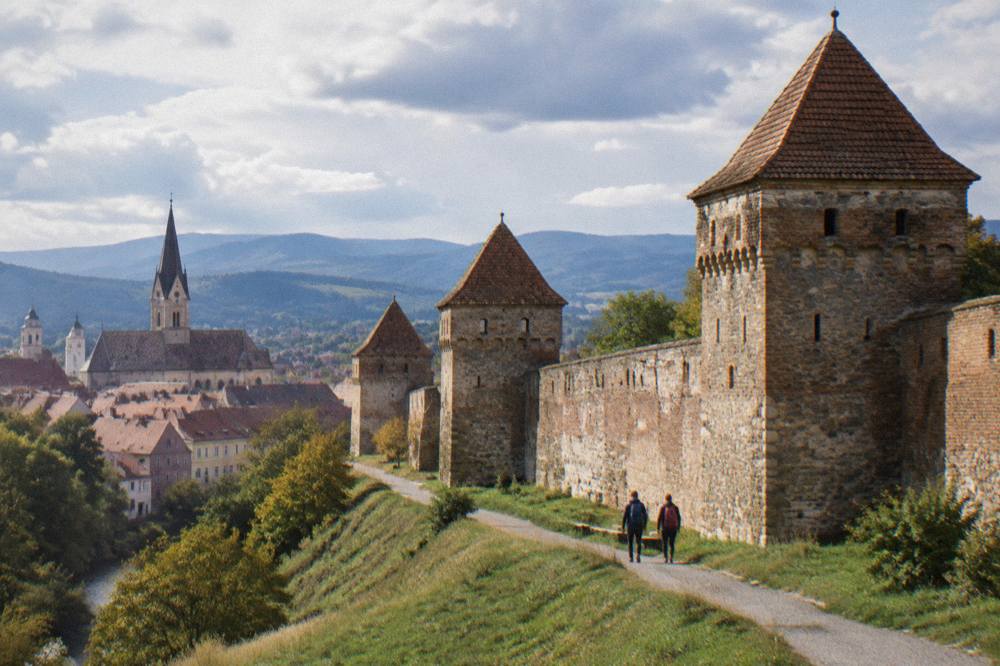
The Stairs Passage deserves its own mention because festival photographs of Sibiu so often come from its steps: a descending covered stair that folds the Upper Town down into the Lower Town's smaller scale, with the wall towers alongside. It is free, it is always open, and it is steep enough that comfortable shoes matter more than costume accuracy.
The Lower Town, Orasul de Jos, is the quieter half that many festival visitors never reach, and it is where the medieval street plan survives most visibly, in crooked lanes and the famous "eyes of Sibiu", the roof windows that look down onto the streets. The eyes are free to view from anywhere in the old town and need no ticket, no schedule and no festival.
Which Sibiu Festivals Have Confirmed Dates You Can Book Around?
The Sibiu festivals with confirmed or reported dates are FITS, the international theatre festival, 18 to 27 June 2027 for its 34th edition; the Sibiu Jazz Festival, whose 2026 edition ran 2 to 6 September; Artmania, 24 to 25 July 2026 in Piața Mare with free access; the ASTRA Film Festival, reported 17 to 21 October 2026; and the Christmas Market, 13 November 2026 to 3 January 2027.
If the goal is a festival-city visit to Sibiu, these are the weekends that exist on paper. The Sibiu theatre festival is the largest of them: FITS 2027 runs 18 to 27 June with the announced theme Lumină, per the festival's own programme. The Sibiu Jazz Festival is reported to have held its 54th edition from 2 to 6 September 2026 across venues including the Great Synagogue and the Philharmonic esplanade, and its 2027 dates have not been announced, so check before booking.
| Festival | Latest confirmed or reported dates | Source |
|---|---|---|
| FITS (theatre) | 18 to 27 June 2027, 34th edition, theme Lumină | Confirmed by the festival |
| FITS 2026 | 19 to 28 June 2026, 33rd edition | Reported |
| Artmania Festival | 24 to 25 July 2026, Piața Mare, free access | Reported |
| ASTRA Film Festival | 17 to 21 October 2026 | Reported, single source |
| Sibiu Jazz Festival | 2 to 6 September 2026, 54th edition | Reported, 2027 not announced |
| Christmas Market | 13 November 2026 to 3 January 2027, 19th edition | Confirmed |
| Medieval festival | No 2026 or 2027 dates announced | Unconfirmed |
The Christmas Market is the one event with the fullest detail, and it is worth a paragraph because it shows what a period-tinged street event in Piața Mare looks like: 52 days, 120 plus exhibitors in the 19th edition, free entry, a reported ice rink of about 600 square metres, and a reported Golden Ticket at 100 lei covering the wheel, carousel and mini-train, with about a third of the exhibitors new this year per local press. The Sibiu Christmas Market guide covers it in full.
What none of this changes is the medieval festival question. Public holidays are the other fixed points worth knowing: 30 November and 1 December, then 25 and 26 December 2026, and 1, 2, 6, 7 and 24 January 2027 are reported Romanian public holidays, and museums and shops may close on them, so check opening hours around any holiday weekend.
What Is The Weather Like During Sibiu Festival Season?
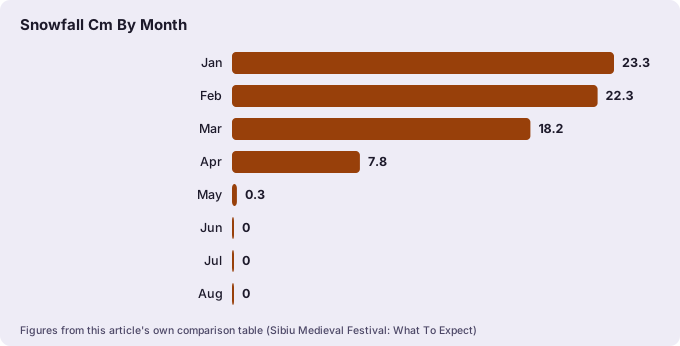
Sibiu's festival season runs from June through the Christmas Market, and the climate is temperate continental: July and August have modelled mean daily highs of 24.2 and 24.5 C in the ERA5 reanalysis, 1991-2020, while the market months of November and December drop to mean highs of 8.7 and 3.1 C, with snowfall of 13 and 20.8 cm respectively across those months.
The monthly picture, from the ERA5 reanalysis, 1991-2020, for the grid cell near Sibiu at about 430 m elevation:
| Month | Mean high C | Mean low C | Sunshine h/day | Snowfall cm |
|---|---|---|---|---|
| Jan | 2.2 | -5.7 | 6.2 | 23.3 |
| Feb | 4.3 | -4.4 | 7.1 | 22.3 |
| Mar | 8.7 | -0.8 | 8.7 | 18.2 |
| Apr | 14.6 | 4.0 | 10.4 | 7.8 |
| May | 19.1 | 9.0 | 11.3 | 0.3 |
| Jun | 22.4 | 12.9 | 12.4 | 0.0 |
| Jul | 24.2 | 14.6 | 12.8 | 0.0 |
| Aug | 24.5 | 14.8 | 11.8 | 0.0 |
| Sep | 19.6 | 10.5 | 9.7 | 0.1 |
| Oct | 14.5 | 5.7 | 8.0 | 2.7 |
| Nov | 8.7 | 0.9 | 6.4 | 13.0 |
| Dec | 3.1 | -3.9 | 5.6 | 20.8 |
For practical packing: a June theatre-festival weekend means warm days with a modelled mean high of 22.4 C and cool evenings near 12.9 C, so layers. A Christmas Market visit means temperatures hovering between 3 and 0 C on average, real winter coats, and footing on cobblestones that can be snowy, with modelled December snowfall of 20.8 cm across the month. The official city figures agree on the shape: mean annual temperature of 8.9 C and mean annual rainfall of 662 mm, with June the year's 113 mm peak and February its 26.7 mm low, per the city's own presentation page.
The Sibiu weather and best time to visit Sibiu guides carry the full month-by-month detail, including the shoulder months of May, June, September and October that tourism sources recommend for milder conditions and thinner crowds.
Where Should You Stay During A Festival Weekend In Sibiu?
The practical answer for a festival stay in Sibiu is the old town itself or the streets just outside it, within about 0.8 km of Piața Mare, because the festival stages, the squares and the walking-distance landmarks all sit in that radius, and the train station, the bus station and the airport bus all land you within the same short hop.
The geography is compact. Gara Sibiu, the train station, is about 0.8 km from Piața Mare, and the intercity bus station sits a similar distance away, so a visitor arriving by train or coach walks into the festival zone in roughly ten minutes. The airport is about 5 to 6 km from the centre, and Tursib bus line 11 serves a stop directly in front of the arrivals terminal, with a 60-minute ticket at 3.5 lei bought contactless on board, per the airport's own transport page. The where to stay in Sibiu guide maps the neighbourhoods in detail.
One cost that applies to every bed in the city: since 1 January 2026 Sibiu hotels collect a 2 percent tax on the accommodation value, a city promotion levy approved at the end of 2025. It is charged on the room value, not as a fixed per-night sum, and it appears on the hotel bill rather than being collected at a desk.
| Getting there | Distance or fare from the centre | Notes |
|---|---|---|
| Train station (Gara Sibiu) | about 0.8 km from Piața Mare | Regional and interregional services, check cfrcalatori.ro for times |
| Intercity bus station | about 0.8 km from Piața Mare | FlixBus to Bucharest reported from about 46 RON |
| Airport (SBZ) | about 5 to 6 km | Tursib line 11 from arrivals, 3.5 lei for 60 minutes |
| city bus tickets | 3.5 lei / 60 min, 5 lei / 75 min, 7 lei / 90 min | Official Tursib fare list |
| Old town parking | Not published in confirmed sources | Arrive by train or bus for festival weekends |
Arriving by train deserves a note of caution rather than a promise: reported journey times from Bucharest run 5 to 7 hours, and fares are not published in readily available sources, so check cfrcalatori.ro before planning. The road to Bucharest has its own complication, the A1 motorway between Sibiu and Pitești is unfinished, and the Sibiu to Boița section is closed from 5 October to 19 December 2026 with traffic diverted onto DN7, so allow extra time if a festival trip involves driving in from the south. Bucharest is about 250 km away and is not a day trip.
Which Medieval Day Trips Complete A Sibiu Festival Trip?
The medieval day trips that complete a Sibiu stay are Sighișoara's UNESCO-listed historic centre, about 96 km and 102 minutes by road, the Biertan fortified church, a UNESCO component about 76 km away, the Alba Iulia citadel at about 71 km, and the Saxon fortified churches of Cisnădie and Cisnădioara at 10 and 13 km, all of which extend the same medieval story the city tells.
These are computed free-flow drive times from Piața Mare, not timetables, and winter conditions on the secondary roads can stretch them.
| Day trip | Distance from Piața Mare | Drive time | Medieval draw |
|---|---|---|---|
| Cisnădie fortified church | about 10 km | about 14 minutes | Saxon fortified church close to the city |
| Cisnădioara | about 13 km | about 18 minutes | Hilltop Romanesque church |
| Rășinari | about 13 km | about 18 minutes | Mărginimea Sibiului shepherd village |
| Biertan fortified church | about 76 km | about 1 hour 15 to 1 hour 30 | UNESCO site, 20 RON adult, hours vary by season |
| Alba Iulia citadel | about 71 km | about 81 minutes | Star-shaped citadel, grounds free |
| Sighișoara | about 96 km | about 102 minutes | UNESCO historic centre, Clock Tower museum 50 RON |
| Brașov | about 142 km | about 154 minutes | Medieval old town below Mount Tâmpa |
Sighișoara is the headline: a walled citadel with coloured burgher houses and a clock tower, inscribed by UNESCO in 1999. The Clock Tower's history museum charges 50 RON for an adult, per the citadel's own visitor page, and its hours shift between summer and winter seasons with a Monday closure, so check them before you go. The reported train connection from Sibiu takes 2 to 2.5 hours, and the medieval towns of Romania page places Sibiu and its neighbours in the wider circuit.
The Biertan fortified church, a 20 RON adult ticket per the county tourism listing, is the defining example of the Transylvanian fortified-church tradition: a peasant church wrapped in defensive walls with multiple towers and gates. Its hours are seasonal, running longer in summer and shorter, with a Monday closure, from November to March. The villages-with-fortified-churches UNESCO serial site spans seven villages including Biertan, Prejmer and Viscri, inscribed from 1993 and extended in 1999, per the UNESCO listing.
For a guided version of the countryside, the private half-day trip to Transylvanian villages takes the Saxon landscape around the city and turns it into a loop, and it is the natural pairing for a trip whose theme is medieval Transylvania.
What Should You Eat And Drink Around A Festival Weekend In Sibiu?
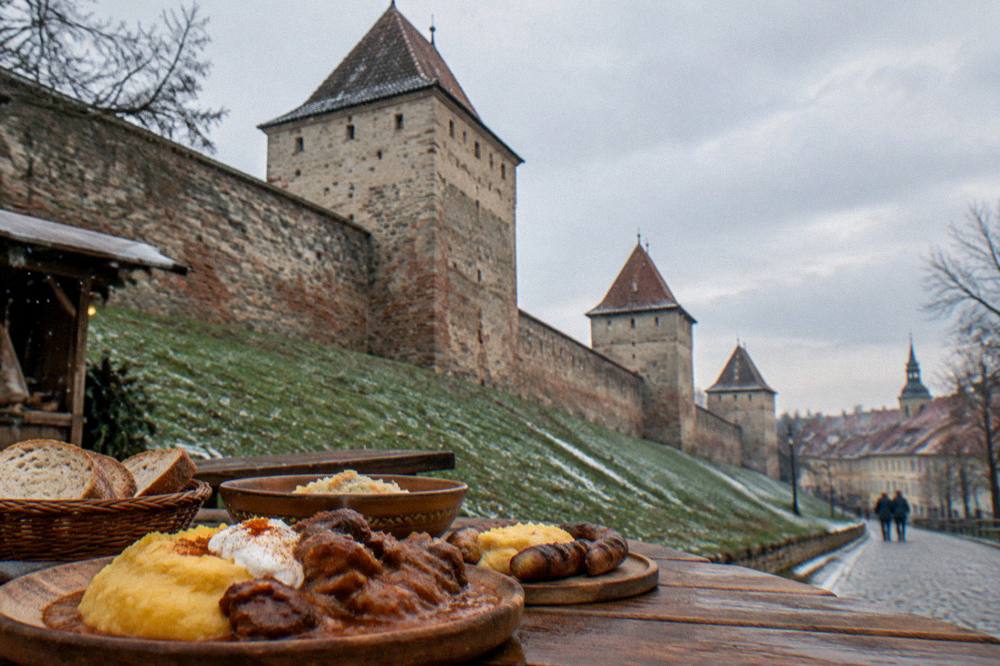
The dishes to look for around any festival weekend in Sibiu are the Transylvanian standards: ciorbă (sour soup), sarmale (cabbage rolls), mici (grilled skinless sausages), papanași (fried doughnuts with cream and jam), zacuscă (vegetable spread), balmoș (a polenta-and-cheese dish) and the city's own Sibiu salad, and street-food stalls at Sibiu's markets typically serve several of them without a restaurant visit.
No individual venue can be named here, because no restaurant or stall appears in the sources for this page, and inventing a recommendation is worse than none. What the sources do support is the dish list itself, which is the standard regional repertoire, and the what to eat in Sibiu guide covers it dish by dish. Christmas Market visitors should note that no food or drink price at the market is published in confirmed sources, so budget for market pricing being above restaurant pricing, as it generally is at street events, and check prices at the stall.
The taste-of-history gastronomy walk is the tour pick that turns this into an experience, pairing local dishes with the stories of the squares they are served in, and it fits a festival weekend's rhythm of walking, watching and eating.
Wine deserves a mention: Romanian wine tasting sessions run in the city, and the local pours around Sibiu lean toward Transylvanian whites. A festival evening that starts on Piața Mare and ends with a glass of local wine is the pattern the city's own gastronomy walks are built around.
How Do You Fill The Days Between Festival Events In Sibiu?
Between events, Sibiu fills its days with the Brukenthal National Museum's galleries, the ASTRA open-air museum in Dumbrava forest, the free walking circuit of walls and squares, and the viewpoints over the city, and the Brukenthal's Palace gallery alone holds a full afternoon at 50 RON for an adult, open Wednesday to Sunday with the main branches closed Monday and Tuesday.
The Brukenthal is not one museum but several, and the ticketing reflects that: the Palace art gallery at 50 RON, the History Museum in Casa Altemberger at 36, Natural History at 20, Pharmacy History at 16, Contemporary Art at 15, and a 48-hour combined ticket at 120 RON, all per the museum's own price page, with reductions of half for pensioners and a quarter for pupils and students. Two 2026 details matter for planning: the main museums are closed Monday and Tuesday, and the Hunting Museum is closed for an indefinite period, opening only to pre-booked groups. The museum opened to the public in 1817, per its own historical record, one of the older public collections in this part of Europe.
| Museum | Adult ticket | Hours pattern |
|---|---|---|
| Brukenthal Palace (art) | 50 RON | Wed to Sun, 10:00 to 18:00, closed Mon and Tue |
| History Museum, Casa Altemberger | 36 RON | Wed to Sun, 09:00 to 17:00, closed Mon and Tue |
| Natural History Museum | 20 RON | Wed to Sun, closed Mon and Tue |
| Pharmacy History Museum | 16 RON | Wed to Sun, closed Mon and Tue, Piața Mică 26 |
| Contemporary Art Museum | 15 RON | Mon to Fri only, closed at weekends |
| Combined 48-hour ticket | 120 RON | All open branches, confirm before you go |
| ASTRA open-air museum | 50 RON | Autumn hours to 26 Oct 2026, last entry about 16:00, winter schedule not announced |
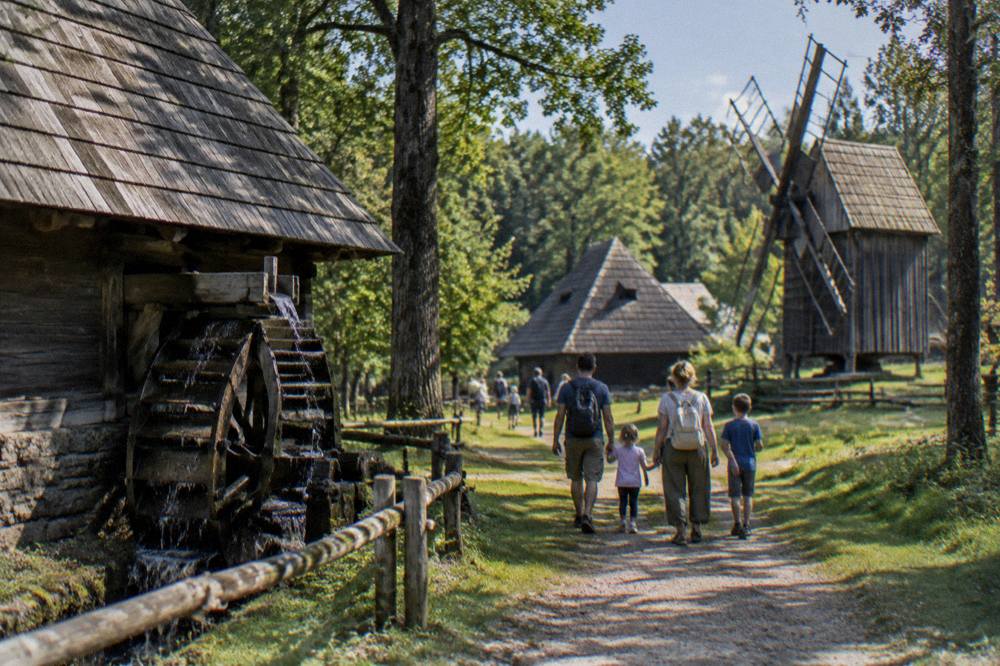
The ASTRA Museum of Traditional Folk Civilization, in the Dumbrava forest about 15 minutes' drive out, is the one sight in the region that most resembles a permanent folk festival: more than a hundred traditional buildings, mills and farmsteads set around lakes in the forest, functioning as an open-air museum since 1963. Its 50 RON adult ticket and pensioner rate of 20 RON are on the museum's own tickets page, and its autumn schedule ran 21 September to 26 October 2026 with last entry about 16:00, while the winter schedule had not been announced, so check before a cold-month visit.
The free layer is just as large: the free things to do in Sibiu list starts with the squares, the walls, the Bridge of Lies and the Lower Town lanes, and all of them cost nothing and need no booking. Families get a double dividend here, and the Sibiu with kids guide maps the zoo in the Dumbrava forest and the car-free old town.
How Many Days Should You Give Sibiu On A Festival Trip?
Three days is the comfortable answer for a festival trip to Sibiu: one full day for the old town, the walls and one Brukenthal branch, a second for the ASTRA museum or a Saxon-village half-day trip, and a third for a farther day trip such as Sighișoara or Alba Iulia, with festival performances filling the evenings, which is exactly the shape the city's June theatre-festival visitors follow.
Two days work if the day trips are cut, and the old town alone can absorb a slow day: the three squares, the wall circuit, the cathedral tower climb and the Stairs Passage down to the Lower Town form a loop that takes an unhurried afternoon. The things to do in Sibiu page carries the full menu, and the practical pages on getting to Sibiu, the airport and the train station cover the arrival logistics from every direction.
The one seasonal trap to plan around: if your trip includes the Transfăgărășan mountain road, remember that its high section reopened on 12 June 2026 and can be closed on any day from 20 October by rule, with fines of 10,000 to 30,000 lei for driving a closed stretch, so check the live road status rather than assuming. Păltiniș, the ski resort about 40 minutes out, opens its season on 28 November 2026, per the operator's announcement, which pairs neatly with a Christmas Market weekend.
Common Questions About The Sibiu Medieval Festival
Is there a medieval festival in Sibiu in 2026 or 2027?
No dates for a Sibiu medieval festival have been announced for either year in the city's cultural calendars. The city's confirmed events are FITS from 18 to 27 June 2027 and the Christmas Market from 13 November 2026 to 3 January 2027. Check the city's cultural programme closer to your travel dates in case an event is announced.
What is Sibiu best known for besides festivals?
Sibiu is a Saxon-founded city first documented in 1191, with a medieval old town of linked squares, the Brukenthal National Museum opened to the public in 1817, the Bridge of Lies from 1859, the ASTRA open-air museum, and the nickname city of the "eyes of Sibiu" for its rooftop windows.
Can you climb a tower in Sibiu right now?
The Evangelical Cathedral tower is open, at 10 RON for an adult ticket, with hours varying by day of the week. The Council Tower has been closed for restoration since 19 January 2026, a project planned at about 24 months, and its viewing platform is not accessible.
Is Sibiu walkable during festival weekends?
Yes. The three main squares, the city walls, the Stairs Passage and the Lower Town form a compact pedestrian zone, and the train and bus stations are each about 0.8 km from Piața Mare. Comfortable shoes matter: the squares are cobbled and the Stairs Passage is steep.
What should you wear to an outdoor event in Sibiu?
Layers for summer evenings, which have a modelled mean overnight low of 14.6 C in July per the ERA5 reanalysis, 1991-2020, and full winter gear for the Christmas Market months, when mean highs sit at 8.7 C in November and 3.1 C in December and snow is routine on the cobblestones.
Are the Brukenthal museums open during festival season?
The main Brukenthal branches are open Wednesday to Sunday and closed Monday and Tuesday, per the museum's own visiting page, so plan museum days for mid-week or a weekend morning and check the current schedule before you go.
The medieval city is here every day of the year, stages or no stages, and Sibiu Travel Guide covers each square, tower and day trip in its own detail page. If a medieval festival is announced for a coming season, the squares described above are where it will happen, and the confirmed festivals of June, September and December are ready to be booked now.
