Sibiu In Winter: Three Days Of Snow, Soup And Spa
Three days in Sibiu in winter, planned around real hours, real prices and the 2026 closures that reshape a cold-weather visit.
Short answer
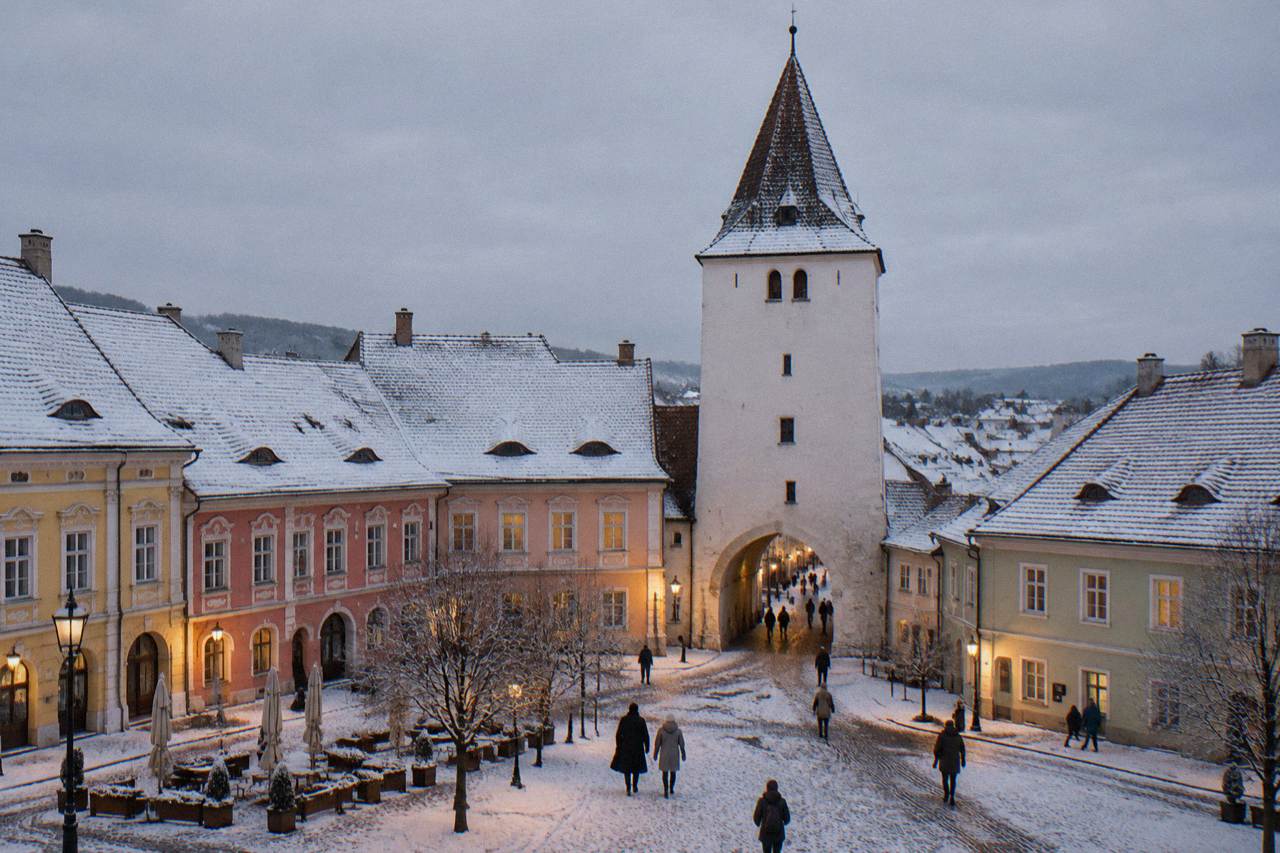
Spend three days in Sibiu in winter: one on the snowy squares and towers of the old town, one on the Brukenthal museums, the ASTRA open-air museum and the Christmas market, and one in the mountains at Păltiniș or Bâlea Lake. Pack for temperatures around minus 5 to plus 3 C, check museum days before you go, and reach everything from a base near Piața Mare.
Snow changes Sibiu more than it changes larger cities. The SAXon squares of this Transylvanian city, first documented in 1191, sit at 415 to 431 metres of altitude, and from November to March the ERA5 reanalysis, 1991-2020, shows between 13 and 23 cm of snowfall a month falling on the rooftops, the Bridge of Lies and the Cibin river valley below. A winter visit trades the terrace crowds of July for empty squares at dusk, a Christmas market that runs 52 days, soup served hot enough to matter, and the Păltiniș ski slopes 40 minutes up the road. This itinerary spreads three days across the old town, the museums, the market and the mountains, and it is built around what is actually open in the winter of 2026 to 2027, including one closure that catches out a lot of arriving visitors: the Council Tower has been shut since 19 January 2026.
What Does Winter In Sibiu Actually Feel Like?
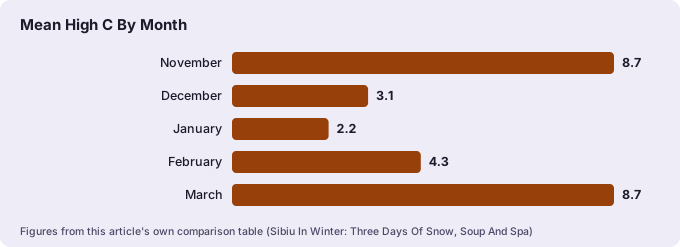
Winter in Sibiu is genuinely cold and reliably white: the ERA5 reanalysis, 1991-2020, puts January's mean daily high at 2.2 C and its mean nightly low at minus 5.7 C, with snow falling every month from November to March and January carrying about 23 cm. Daylight is short too, 9.1 hours a day in December and 9.5 in November, so the useful sightseeing window runs roughly from 09:00 to 17:00, after which the city hands you over to the Christmas market and to dinner.
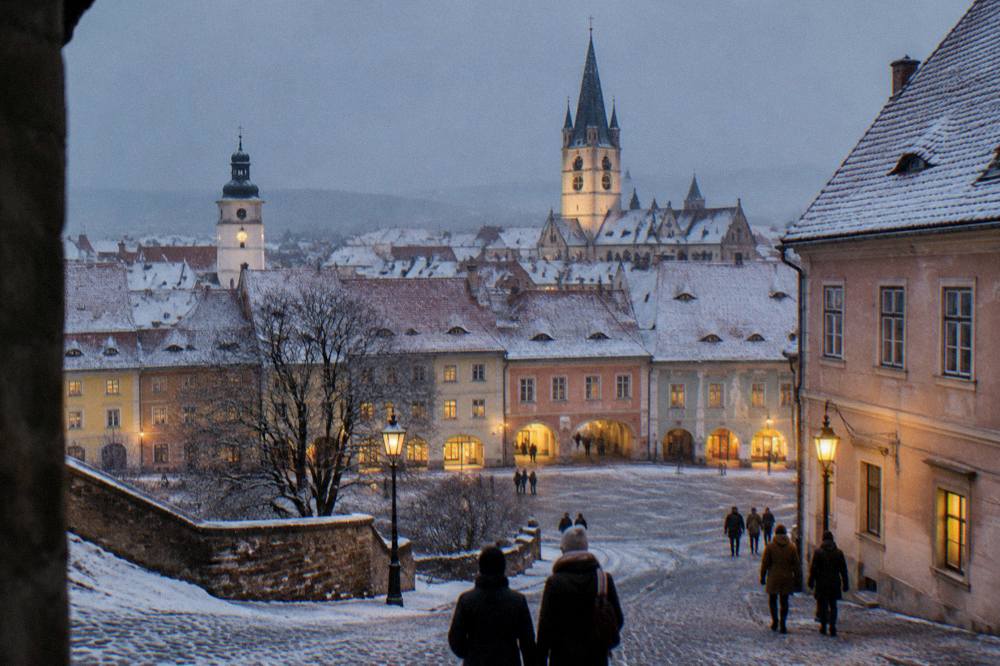
The official city figures from sibiu.ro give a mean annual temperature of 8.9 C across the year, but that average hides the season you are planning for. December's mean daily high is 3.1 C and February's is 4.3 C, with nights below minus 4 C. Sunshine runs at 5.6 to 7.1 hours a day across the three darkest months, which is the ERA5 reanalysis, 1991-2020, a modelled grid cell rather than a weather station record. The payoff for the cold is atmospheric: snow settles on the ochre and rust facades around Piața Mare and stays there, and the "eyes of Sibiu", the small roof windows the city is known for, look down on white streets.
| Month | Mean high C | Mean low C | Sunshine h/day | Snowfall cm | Daylight h |
|---|---|---|---|---|---|
| November | 8.7 | 0.9 | 6.4 | 13.0 | 9.5 |
| December | 3.1 | -3.9 | 5.6 | 20.8 | 8.7 |
| January | 2.2 | -5.7 | 6.2 | 23.3 | 9.1 |
| February | 4.3 | -4.4 | 7.1 | 22.3 | 10.4 |
| March | 8.7 | -0.8 | 8.7 | 18.2 | 11.9 |
The table above is the ERA5 reanalysis, 1991-2020. Two timing facts matter for planning. Clocks go back on Sunday 25 October 2026, so late-October arrivals lose an hour of evening light. And snow is a city constant but a mountain variable: what dusts Piața Mare can be knee-deep at Păltiniș or Bâlea Lake, both of which sit far higher than the town. For a fuller month-by-month picture, the Sibiu weather and climate guide covers the whole season, and the question does it snow in Sibiu, Romania has its own answer page.
How Should You Spend Day One In Sibiu's Old Town?
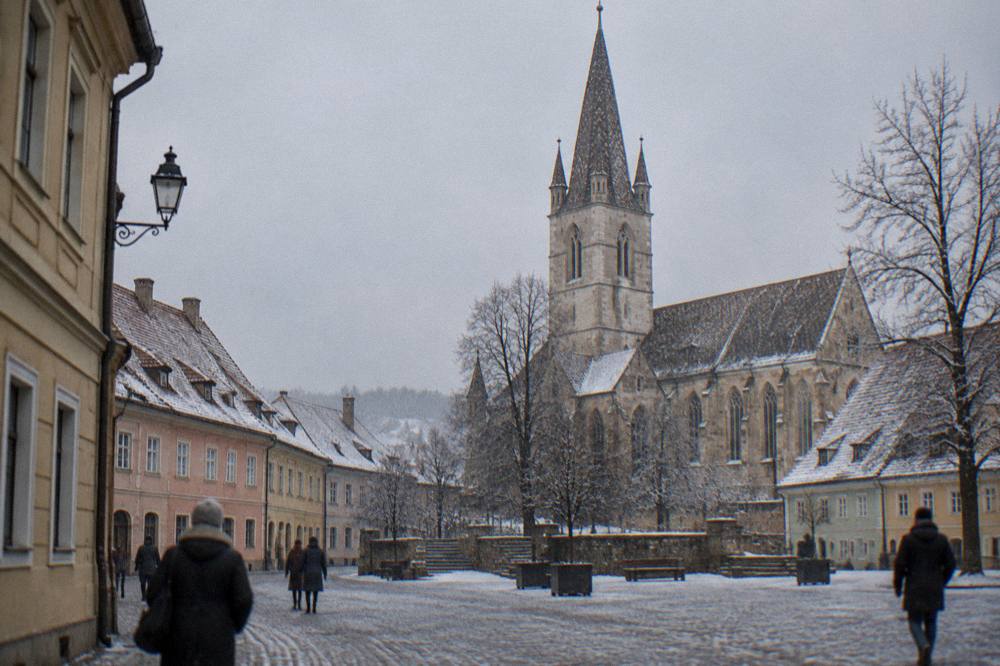
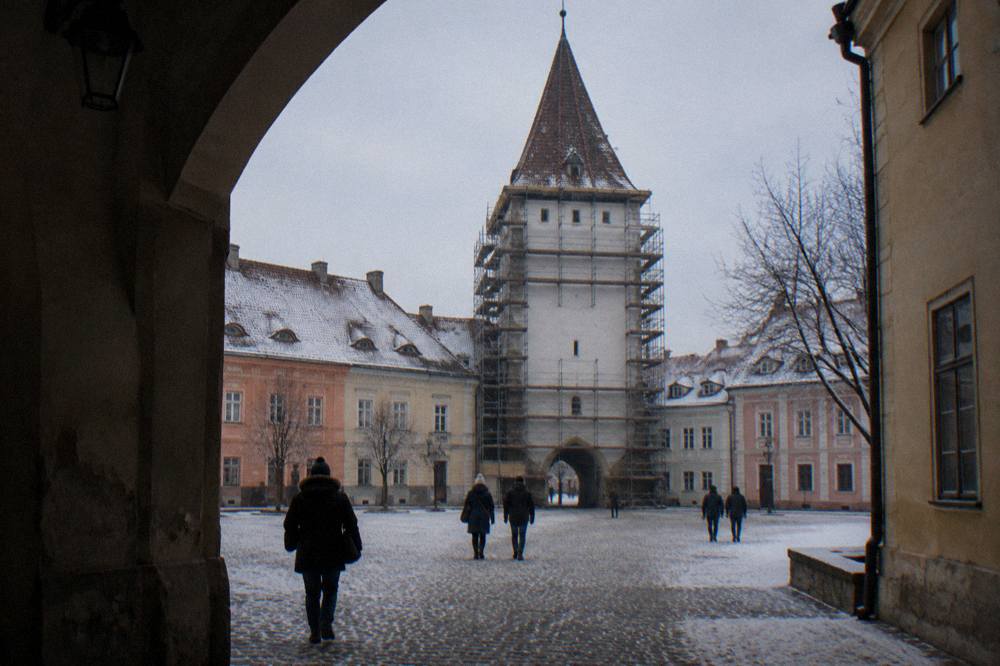
Give day one entirely to the Upper Town and Lower Town on foot: start at Piața Mare, walk through Piața Mică to Piața Huet and the Evangelical Cathedral, climb the cathedral tower for the open viewpoint over the snowy roofs, cross the Bridge of Lies, then descend through Pasajul Scărilor, the Stairs Passage, to the Lower Town walls and towers, all of which are free and open-air. One correction to older guides applies immediately: the Council Tower, the one between Piața Mare and Piața Mică, has been closed to visitors since 19 January 2026 for a restoration of about 24 months, with completion expected around January 2028. The tower is a landmark to photograph from the square, not to climb.
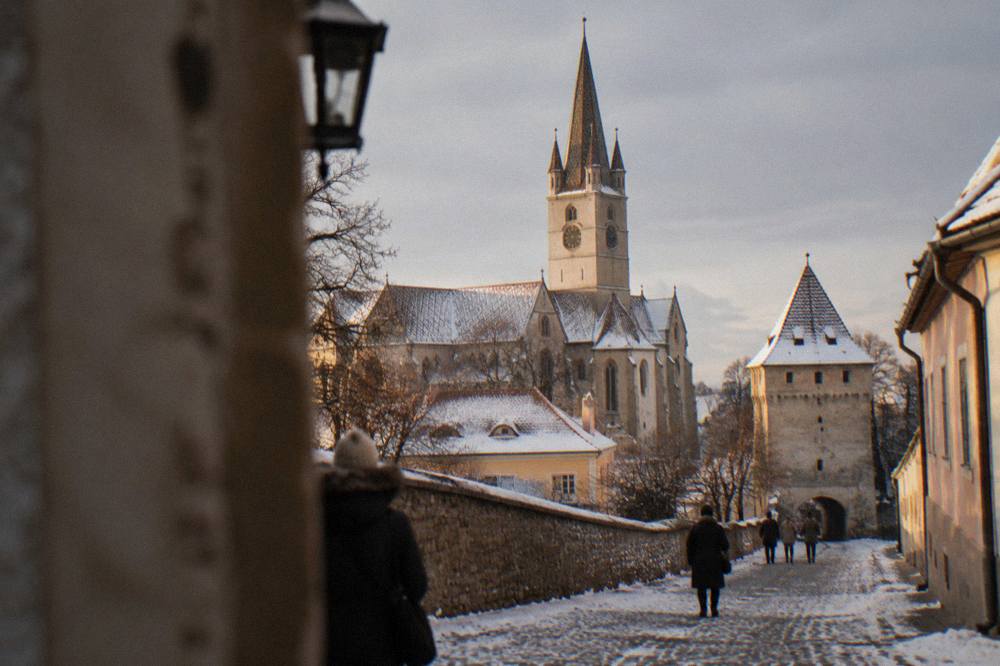
The viewpoint that is actually open is the Evangelical Cathedral tower. The ticket is 10 RON for an adult, 5 RON for pupils, students and pensioners, and the hours are listed on the city's tourism site: Monday 12:00 to 17:00, Tuesday to Thursday 10:00 to 17:00, Friday and Saturday 10:00 to 20:00, Sunday 11:00 to 17:00. Friday or Saturday evening in December, with the Christmas lights already on below and the last tower slot at 20:00, is the single atmospheric hour of the whole itinerary. The Bridge of Lies, built in 1859 to 1860 and reported to be the first iron bridge in Romania, the squares, the Stairs Passage and the surviving city walls all cost nothing and have no hours, which makes them the natural spine of a short December afternoon.
Between the squares, warm-up stops suggest themselves. The Pharmacy History Museum sits right on Piața Mică at number 26, under the Little Black Bear sign, and costs 16 RON, though like the other Brukenthal museums it is closed Monday and Tuesday, which is why this itinerary parks the museums on day two. A guided walk adds structure to the first day, and the roster includes a Upper Town landmarks city tour that covers exactly the ground described above. For walkers who prefer to start slower or arrive late, the general Sibiu walking tour guide and the one-day plan at Sibiu in one day both work as fallbacks.
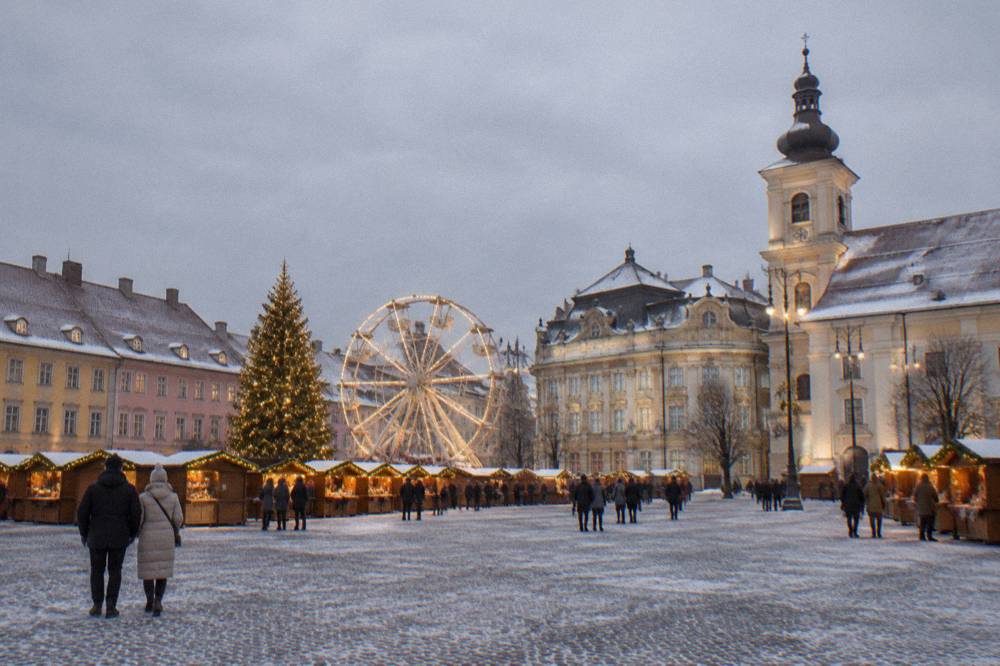
Evening on day one belongs to Piața Mare if your dates fall between 13 November 2026 and 3 January 2027, when the Christmas market runs. Entry is free, the rink covers about 600 square metres, and the market's own site lists 52 days and more than 120 exhibitors. Local press reported on 12 October 2026 that roughly a third of the exhibitors are new this edition and that a Golden Ticket of 100 lei covers the wheel, the carousel and the mini-train. No hot-wine or food price belongs on this page: those you check at the stall. The dedicated Sibiu Christmas weekend itinerary extends this plan if your trip lands on the holidays themselves.
What Should Day Two Cover: Museums, Dumbrava And More Market?
Day two is the indoor day, and it must not be a Monday or Tuesday: the Brukenthal Palace is open Wednesday to Sunday 10:00 to 18:00, the History, Natural History and Pharmacy museums run Wednesday to Sunday 9:00 to 17:00, and after the museums a bus or taxi ride of about 5.5 km reaches the ASTRA open-air museum in the Dumbrava forest, where the winter schedule has not been announced, so check the museum's own site before committing the afternoon. The Brukenthal National Museum is not one building with one ticket. It is several sites, each with its own price.
| Brukenthal site | Adult ticket | Reduced | Days closed |
|---|---|---|---|
| Brukenthal Palace, Piața Mare | 50 RON | 25 RON pensioners, 12.50 pupils and students | Monday, Tuesday |
| History Museum, Casa Altemberger | 36 RON | half and quarter respectively | Monday, Tuesday |
| Natural History Museum | 20 RON | half and quarter respectively | Monday, Tuesday |
| Pharmacy History Museum, Piața Mică | 16 RON | half and quarter respectively | Monday, Tuesday |
| Contemporary Art Museum, Strada Tribunei 6 | 15 RON | half and quarter respectively | Saturday, Sunday |
| Combined 48-hour ticket | 120 RON | 60 RON pensioners, 30 pupils and students | follows each site |
The prices come from the Brukenthal National Museum's own price page; confirm before you go, because press reporting in May 2026 suggested a possible rise, and the official page is the only authority. The Hunting Museum (Muzeul Cinegetic August von Spiess) is closed for an indefinite period and receives only pre-booked groups of ten or more, so it appears nowhere in this itinerary. The Contemporary Art Museum now runs the opposite schedule to its siblings, Monday to Friday 9:00 to 17:00, closed at weekends, which makes it a rare productive stop for a Monday. A reported temporary exhibition of painting after Dürer, "Umbre colorate", runs at the Palace to 31 December 2026. The wider set of guides lives on Sibiu Travel Guide.
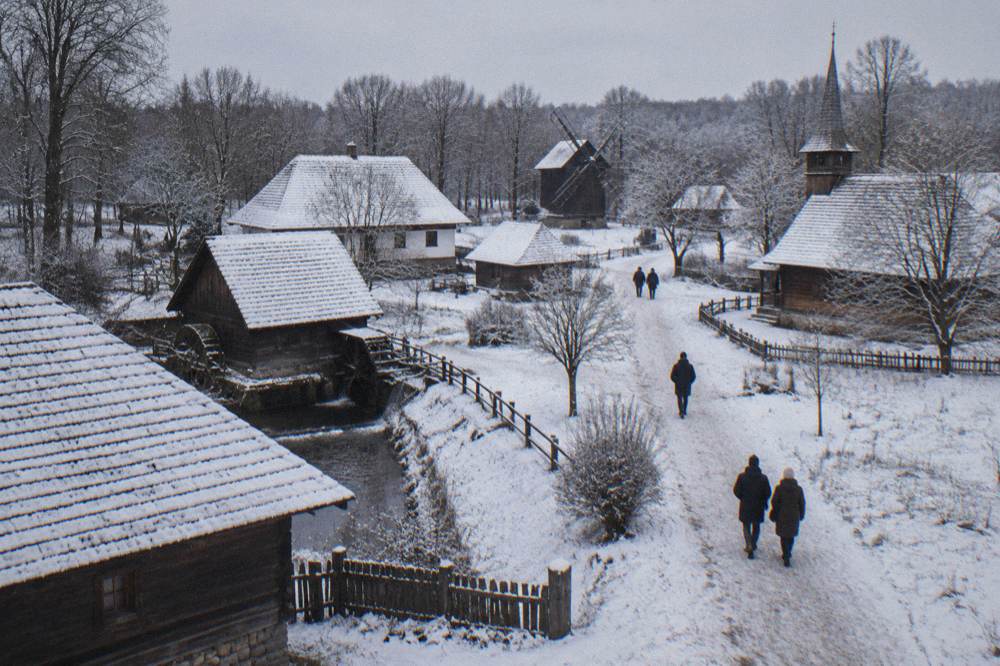
After the Palace, the ASTRA Museum of Traditional Folk Civilization fills the early afternoon if the weather holds. It has operated in the Dumbrava forest since 1963, per the tourism site, and its adult ticket is 50 RON, 40 RON for groups of 20 or more, 20 RON for pensioners. The announced autumn schedule ran only to 26 October 2026 with last entry about 16:00, and a winter schedule has not been announced, so treat the open-air museum as a maybe and confirm on the museum's own site. In snow, the village of farmhouses and wooden churches reads almost better than in July. The Dumbrava forest around it is a free public park, and the ASTRA Museum guide page carries the fuller detail. For a deeper art-focused day, the Brukenthal National Museum attraction page is the companion read.
Close the day with dinner. No restaurant belongs on this page, because no trusted source backs a single name, but the dishes do: ciorbă, the sour soup that anchors a Transylvanian winter menu, sarmale cabbage rolls, mici grilled rolls, papanași fried doughnuts with cream and jam, and the Sibiu salad. The what to eat in Sibiu companion material names the plates; the venues you choose on the ground.
What About Day Three: Păltiniș, Bâlea Or A Saxon Village?
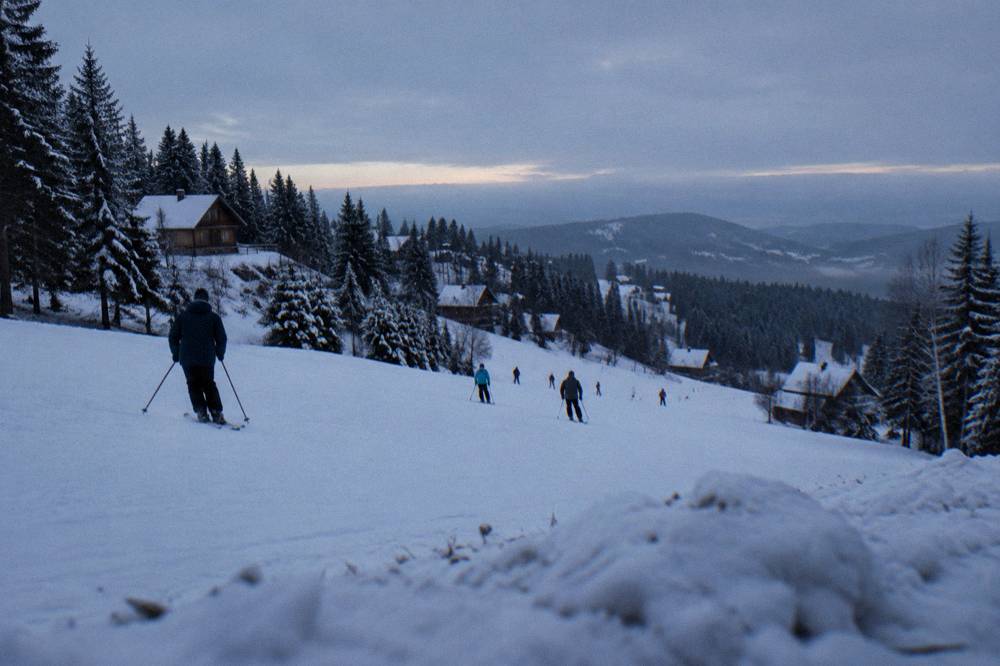
Day three goes to the mountains: Păltiniș, 32 km and about 40 minutes by road from Sibiu, opens its ski season on 28 November 2026 and runs through winter, while Bâlea Lake is reached in winter by cable car from Bâlea Cascadă because the high Transfăgărășan road is closed or closable from 20 October, and a lower-snow alternative is a half-day among the fortified church villages of Cisnădie and Cisnădioara, 10 and 13 km out. All three are day trips; none is in the city, and the drive times are free-flow estimates, so allow extra time on snowy roads.
Păltiniș is the closest thing Sibiu has to a home ski resort, in the Cindrel mountains. The season announcement from Păltiniș Arena gives 28 November 2026 as opening day, with the same number of slopes as last season and lift prices reported to rise by at most about 5 percent. Until that date the lifts are shut, and no ski or rental price belongs on this page because none is confirmed. What is confirmed is the geometry: 32 km, about 40 minutes. The 1 December national holiday weekend, which bridges with 30 November this year, lands right after opening, so expect that weekend to be busy and book ahead. The Păltiniș guide and the renting a car in Sibiu page cover the practical side of getting up there.
Bâlea Lake, at 2,034 m in the Făgăraș range, is the more dramatic option and the one that needs the most care in wording. The Transfăgărășan's 2026 season opened on 12 June with daily hours of 07:00 to 21:00 on the high stretch, but by rule the road can be closed on any day from 20 October, and driving the closed section carries fines of 10,000 to 30,000 lei. In winter you do not drive it at all. The Bâlea cable car runs on its own schedule, reported around 09:00 to 18:00, as the winter access to the lake, but its price has appeared in conflicting figures on the operator's page, so check the current price before you go. A guided option is the Carpathian Heights hike to Bâlea Cascadă and Bâlea Lake, which this site features for exactly this kind of day, and its live details are on the operator's listing.
The softer third option keeps you lower. Cisnădie is about 14 minutes and 10 km from the centre, Cisnădioara about 18 minutes and 13 km, and both hold Saxon fortified churches whose winter hours and prices were not found, so treat them as villages to walk through rather than monuments to book. Rășinari in the Mărginimea Sibiului, about 18 minutes and 13 km out, is on the same bus corridor as the ASTRA museum. The Saxon villages itinerary expands this into a full day if the weather closes the mountains.
| Day-three option | Distance from Piața Mare | Drive time | Winter note |
|---|---|---|---|
| Păltiniș | 32 km | about 40 min | ski season from 28 Nov 2026 |
| Bâlea Cascadă cable car base | 63 km | about 69 min | cable car is the winter access; road closed or closable from 20 Oct |
| Cisnădie | 10 km | about 14 min | fortified church; hours not confirmed, check locally |
| Cisnădioara | 13 km | about 18 min | fortified church; hours not confirmed, check locally |
| Rășinari | 13 km | about 18 min | Mărginimea village, same corridor as ASTRA |
What Should You Budget And Pack For A Sibiu Winter?
Budget the fixed costs in lei and expect them to be modest: the Evangelical Cathedral tower at 10 RON, the Brukenthal Palace at 50 RON or the 48-hour combined ticket at 120 RON, ASTRA at 50 RON, the Christmas market free to enter with a reported 100 lei Golden Ticket for the rides, and a 2 percent accommodation tax that Sibiu hotels have added to bills since 1 January 2026, on top of your room rate. City buses are cheap and confirmed: a Tursib 60-minute ticket is 3.5 lei, and line 11 serves the airport terminal.
| Item | Price | Notes |
|---|---|---|
| Evangelical Cathedral tower | 10 RON adult, 5 RON reduced | open viewpoint while the Council Tower is closed |
| Brukenthal Palace | 50 RON | closed Monday and Tuesday |
| Brukenthal 48-hour ticket | 120 RON | covers the main sites |
| ASTRA Museum | 50 RON adult, 20 RON pensioner | winter hours not announced, check the museum's site |
| Christmas market entry | free | 13 Nov 2026 to 3 Jan 2027; Golden Ticket 100 lei, reported |
| Tursib bus ticket | 3.5 lei | 60 minutes, contactless on board |
| Accommodation tax | 2 percent | added to the accommodation value since 1 Jan 2026 |
No hotel, restaurant or ski-lift price belongs on this page, because none is confirmed, and a bookable tour's price never appears in prose here: it renders with the tour itself. Packing is simpler to state. The ERA5 reanalysis, 1991-2020, puts mean nightly lows at minus 5.7 C in January, so proper winter boots with grip, since the old town cobbles ice over, layers for a 10-degree swing between a museum and a cable car, and something for the 16:30 dusk. The currency is the Romanian leu, at roughly 5.3 lei to the euro, and the emergency number is 112. Romania is a full Schengen member, so there are no internal border checks arriving from within the zone.
Which Winter Traps Catch Out Visitors To Sibiu?
The traps that reshape a Sibiu winter plan are four: the Council Tower is closed until about January 2028, the main Brukenthal museums shut Monday and Tuesday while the Contemporary Art Museum shuts at weekends, the Transfăgărășan can be closed on any day from 20 October, and the A1 Sibiu to Boița motorway section is closed from 5 October to 19 December 2026 with traffic diverted onto DN7, adding time to the Bucharest road. None of these is hidden; all of them are ignored by older guides still circulating online.
The tower closure deserves repeating because it is the single ruined-morning scenario. A visitor who plans a Council Tower climb on a December Monday gets a scaffolded landmark, shut Brukenthal museums and a shut Contemporary Art Museum if they return at the weekend. The fix is scheduling: squares, walls, cathedral tower and market on any day, Brukenthal sites Wednesday to Sunday, Contemporary Art Monday to Friday. The Council Tower page states the closure plainly, and the Bridge of Lies and Piața Mare pages cover the open-air alternatives.
The road situation matters mainly for arrivals and departures. Bucharest is about 250 km away and is not a day trip at the best of times; with the Sibiu to Boița section shut until 19 December 2026 and the motorway to Pitești unfinished, the drive runs on national roads. Trains and long-distance buses are the alternatives, and their live times sit on the operators' own timetables. If your winter trip is really a Transylvania circuit rather than a Sibiu stay, the Transylvania road trip from Sibiu handles the routing, and how many days you need in Sibiu answers the length question directly.
Common Questions About A Winter Trip To Sibiu
Is Sibiu worth visiting in winter?
Yes, if you want the Christmas market, snow on the squares and low crowds. The market runs 13 November 2026 to 3 January 2027 in Piața Mare with free entry, and the museums, cathedral tower and mountain day trips all operate through winter, though the Council Tower is closed and you must plan museum days around the Monday and Tuesday closures.
Does it snow in Sibiu in December and January?
Snow falls in Sibiu every month from November to March. The ERA5 reanalysis, 1991-2020, shows about 20.8 cm of snowfall in December and 23.3 cm in January, with January mean nightly lows of minus 5.7 C.
Can you ski near Sibiu in winter?
Yes, at Păltiniș, 32 km and about 40 minutes by road from the city. The Păltiniș Arena season opens on 28 November 2026, with the same number of slopes as last season and lift prices reported to rise by at most about 5 percent. Check the current lift and rental prices before you go.
Is the Transfăgărășan open in winter?
No. The high section can be closed on any day from 20 October, and in winter it stays closed. Bâlea Lake is reached by the Bâlea cable car, which runs on its own schedule; check the live road status and the operator's page before planning anything on the road itself.
What is closed in Sibiu in winter 2026?
The Council Tower is closed for restoration until about January 2028, the Brukenthal Hunting Museum is closed indefinitely, the main Brukenthal museums are closed Monday and Tuesday, the Contemporary Art Museum is closed Saturday and Sunday, and the ASTRA Museum's winter schedule had not been announced. Check each site's own page before you go.
How cold is Sibiu in winter?
Mean daily highs run from 2.2 C in January to 4.3 C in February, with mean nightly lows of minus 5.7 and minus 4.4 C respectively, per the ERA5 reanalysis, 1991-2020. The official city figures give a mean annual temperature of 8.9 C, but winter days sit well below that.
Three days is the right length for this plan, and the structure holds whether your trip lands in November for the market opening, in December for the holidays, or in February for deep snow at Păltiniș. Keep the museum days off Monday and Tuesday, keep the mountain day flexible around the weather, and the winter version of Sibiu delivers everything the summer one does, with better light on the snow.
