Sibiu Shopping: Craft Stalls, Markets And Malls
Sibiu, the Saxon-founded city on the Cibin river in Transylvania, offers two very different shopping experiences: a compact old town of craft workshops and souvenir stalls around Piața Mare and Piața Mică, and a ring of modern retail on the city's edges. This guide sets out what each one actually sells, when it runs and what a first-time visitor should know before buying.
Short answer
Sibiu shopping splits into the old town craft and souvenir stalls around Piața Mare and Piața Mică, the Cibin market for food and everyday goods, the ASTRA and museum shops for folk craft, and several shopping centres outside the historic core. This guide therefore covers categories, locations and timing rather than specific stores.
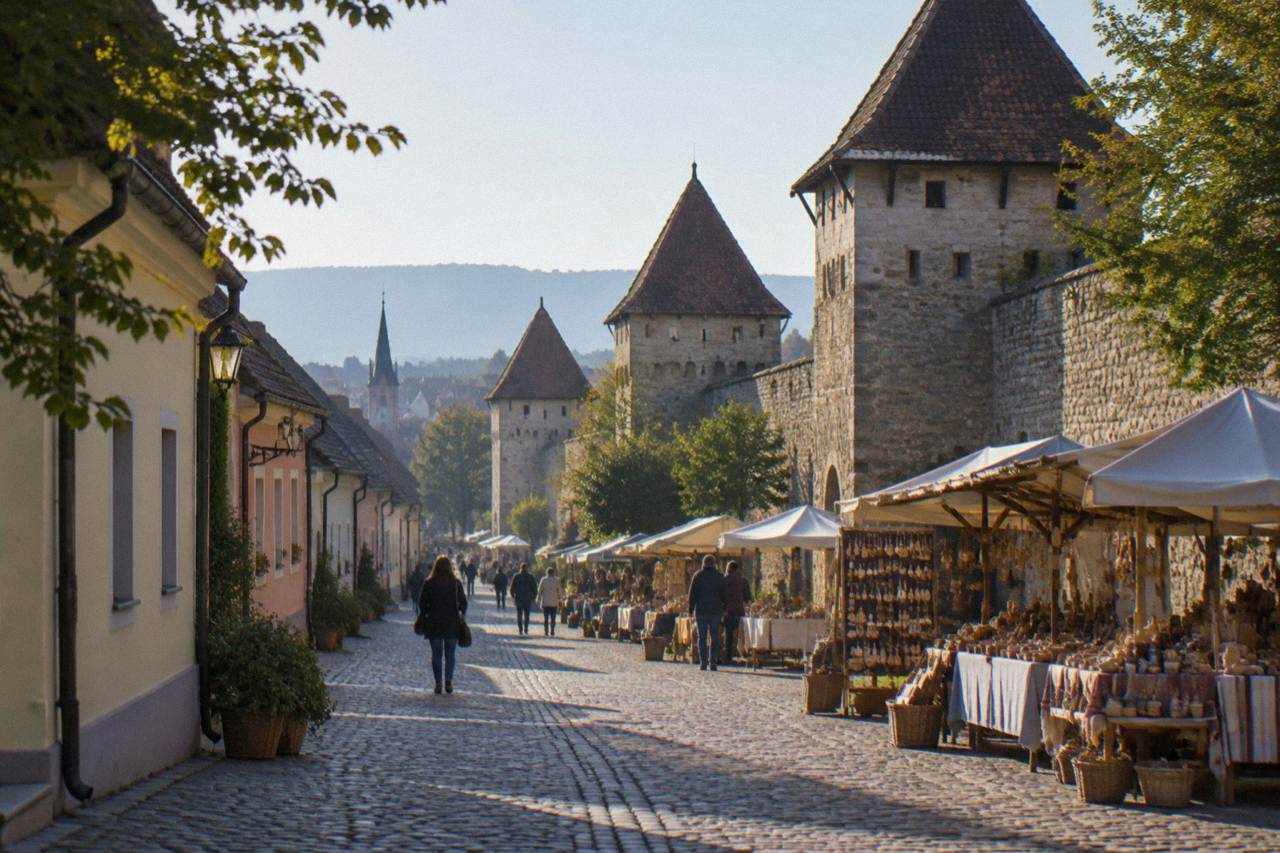
Sibiu, in central Transylvania on the Cibin river, is a small city with an unusually concentrated shopping geography. The medieval core, an Upper Town and a Lower Town wrapped around Piața Mare, packs craft stalls, museum shops and souvenir stands into a few walkable streets, while the modern retail sits in malls and retail parks a bus ride from the squares. The city's Saxon trading past still shapes the pattern: the two grand squares were built as marketplaces, and Piața Mare still fills with traders every year when the Christmas market opens on 13 November 2026 and runs to 3 January 2027. This guide walks through what there is to buy, where it sits and how the calendar changes it, plus a look at the wider Sibiu Travel Guide pages for where to stay and what to eat between purchases.
Where Does Sibiu Shopping Happen?
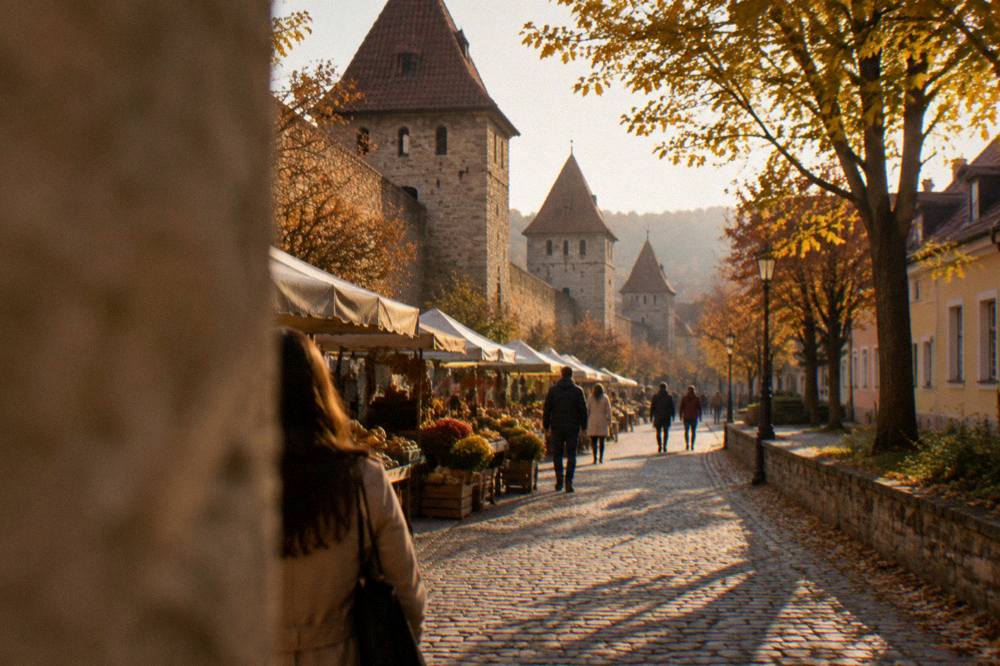
Sibiu shopping happens in four zones: the craft and souvenir stalls of the old town around Piața Mare and Piața Mică, the Cibin market for food and household goods, the museum shops attached to the Brukenthal and ASTRA institutions, and the shopping centres and retail parks outside the historic core. The first three are within walking distance of one another; the malls are not, and reaching them means a city bus or a short drive. The old town itself is largely pedestrian, so shopping there is done on foot between the squares, the Bridge of Lies and the Stairs Passage.
The historic logic matters. Sibiu was documented in 1191 as Cibinium and grew as a Saxon merchant city, with Piața Mare serving as the main market and Piața Mică as the craftsmen's quarter. That division still roughly describes the shopping: the grand square carries the bigger public events and the seasonal stalls, while the smaller square and the lanes around it hold the shops that trade year-round. The Sibiu map guide lays out how the two squares, the Evangelical Cathedral at Piața Huet and the Lower Town connect on foot.
No individual shop in Sibiu has been confirmed in a trusted source for 2026, and this site does not name stores it cannot stand behind. What follows is a guide to categories and places: what is sold, where the trading happens, and what to confirm before you buy. Prices for specific goods are left out, because none were found in an official source. Ask in the shop, and check anything important before you commit.
What Can You Buy At The Sibiu Christmas Market?
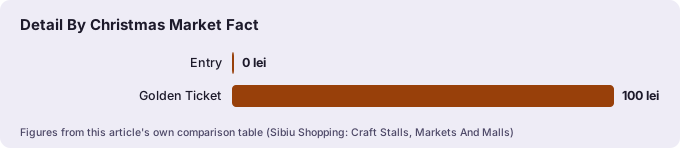
At the Sibiu Christmas Market, Târgul de Crăciun, you can buy handcrafted ornaments, woodwork, textiles, leather, ceramics and foodstuffs from wooden chalets across Piața Mare, the single densest concentration of craft stalls in the city's year. The 19th edition runs from 13 November 2026 to 3 January 2027, spans 52 days, hosts 120-plus exhibitors, and entry is free. It is the 19th edition of the market, and local press reported on 12 October 2026 that roughly a third of the exhibitors are new this year, that the Christmas Chalet has been relocated and that a massage cabin is among the additions. The market also carries an ice rink of about 600 square metres, and a reported Golden Ticket at 100 lei covering the wheel, the carousel and the mini-train.
For shoppers, the market is the single densest concentration of craft stalls in the city's year. The exhibitor mix is the draw: handcrafted ornaments, woodwork, textiles, leather, ceramics and foodstuffs sit in wooden chalets across the square, with the Brukenthal Palace fronting one side and the closed Council Tower on another. The Council Tower has been shut to visitors since 19 January 2026 for a restoration running to about January 2028, so treat it as scaffolding scenery rather than a stop. The full picture of the season is in the Sibiu Christmas Market guide and the wider December in Sibiu page.
| Christmas market fact | Detail |
|---|---|
| Dates | 13 November 2026 to 3 January 2027 |
| Edition | 19th |
| Duration | 52 days |
| Exhibitors | 120 plus, about a third new (reported) |
| Entry | Free |
| Golden Ticket | 100 lei, wheel, carousel, mini-train (reported) |
| Ice rink | About 600 square metres (reported) |
Timing the visit matters more here than anywhere else in Sibiu. The market spans the public holidays of 25 and 26 December and the mini-break around 1 December, Romania's National Day, when the city is busy with domestic visitors. Stalls are at their fullest in the first three weeks of December. By the days just before 3 January the chalets thin out. No hot-wine or food price can be printed, because none was found in a confirmed source; budget by asking at the stall.
A market trip pairs naturally with a tasting walk: several food experiences in the city weave through the old town's culinary history, and the trio above includes a gastronomy walk alongside a classic-car city tour and a full-day carriage-ride excursion into the villages where much of the craft tradition actually originates.
What Craft And Souvenir Categories Does Sibiu Offer?
Sibiu's souvenirs fall into a handful of categories: Transylvanian textiles and embroidery from Romanian and Saxon village traditions, woodwork and painted furniture, glass icons from Sibiel in the Mărginimea Sibiului, ceramics, leather goods, foodstuffs such as zacuscă, honey and spirits, and Brukenthal museum reproductions, sold in craft shops around Piața Mare, Piața Mică and Piața Huet and at the Christmas market. The glass-icon tradition belongs specifically to Sibiel, a village about 25 km and 36 minutes by road from Piața Mare, whose museum of icons on glass is the reference point for the style sold in the city. Buying in the city is easier; buying at the source makes a good half-day trip into the Sibiel area or the wider Rășinari countryside.
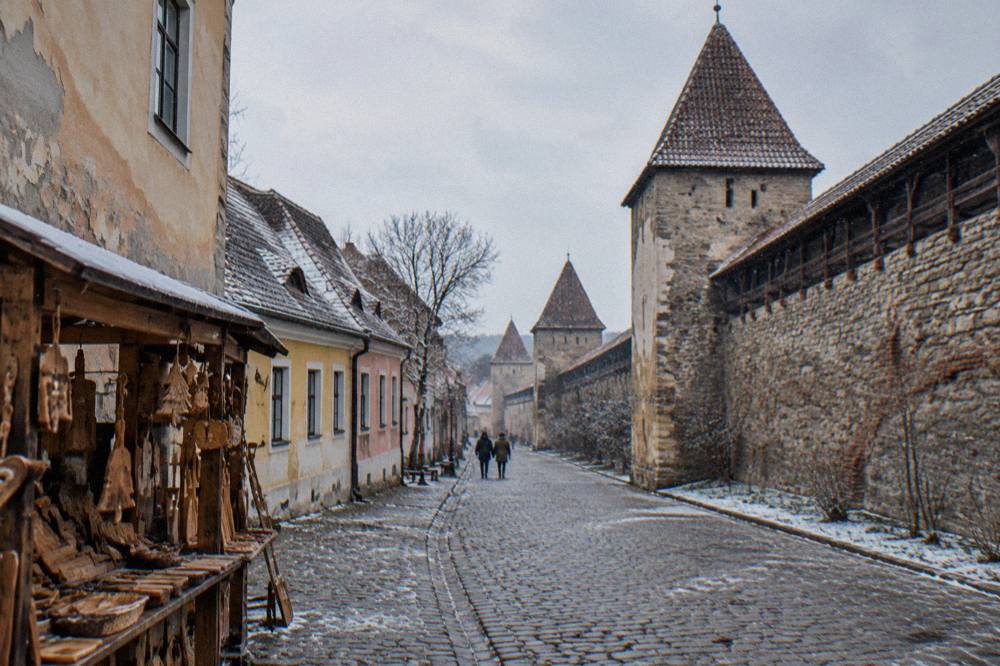
What cannot be done responsibly is to name a specific shop. No store, street or opening time was confirmed in an official source for 2026, and no single lane in the old town can honestly be called "the" shopping street. The craft shops cluster in the lanes linking Piața Mare, Piața Mică and Piața Huet, and around the Bridge of Lies, but which shop sells what is something to discover on the day. Bring cash in lei as a backup; card acceptance at small craft stalls varies and no confirmed pattern exists.
Food souvenirs deserve a note of caution in the other direction. The categories are safe: zacuscă, the vegetable spread, honey, plum brandy and the Saxon and Romanian cooking traditions described in the what to eat in Sibiu guide. But if you are flying home from Sibiu International Airport, check liquid and customs rules for spirits before you buy, and remember the airport is about 5 to 6 km from Piața Mare, so leave time for the last purchases.
| Souvenir category | Origin or tradition | Where it is typically sold |
|---|---|---|
| Glass icons | Sibiel village, Mărginimea Sibiului | Old town craft shops; Sibiel itself |
| Textiles and embroidery | Romanian and Saxon village traditions | Christmas market; craft stalls |
| Woodwork | Transylvanian furniture and carving traditions | Craft shops; Christmas market |
| Ceramics | Regional pottery traditions | Craft shops; seasonal fairs |
| Foodstuffs (zacuscă, honey, spirits) | Local and regional producers | Markets; Christmas market |
| Museum reproductions | Brukenthal and ASTRA collections | Museum shops |
The museum shops deserve a specific mention. The Brukenthal National Museum's Palace gallery, at 50 RON for an adult ticket per the museum's own price page, carries reproductions tied to its European and Romanian art collections, and the ASTRA Museum of Traditional Folk Civilization, the open-air museum in Dumbrava functioning since 1963, sells folk-craft items connected to its village exhibits. Both close on Mondays and Tuesdays in the main Brukenthal buildings' case, so a shopping trip built around them should sit mid-week. Confirm hours on the museums' own sites before you go.
Between stalls, a city tour by classic Romanian car is one way to see the squares and quarters where the shops sit; the listing above carries the current price and availability.
What Is The Cibin Market And When Do You Go?
The Cibin market, Piața Cibin, is Sibiu's everyday food and goods market, the working counterpart to the old town's souvenir stalls, where vendors sell seasonal fruit and vegetables, cheese, honey, preserves and household goods at prices that reflect local life. No opening hours were found, so follow the standard rhythm of Romanian public markets: go in the morning and confirm on arrival. It is the only market in the city named in the confirmed sources for this site, and no opening hours or stall prices were found, so the pattern is simple: go in the morning, the standard rhythm of Romanian public markets, and confirm on arrival. The market sits south of the old core, a short bus or taxi ride from the squares.
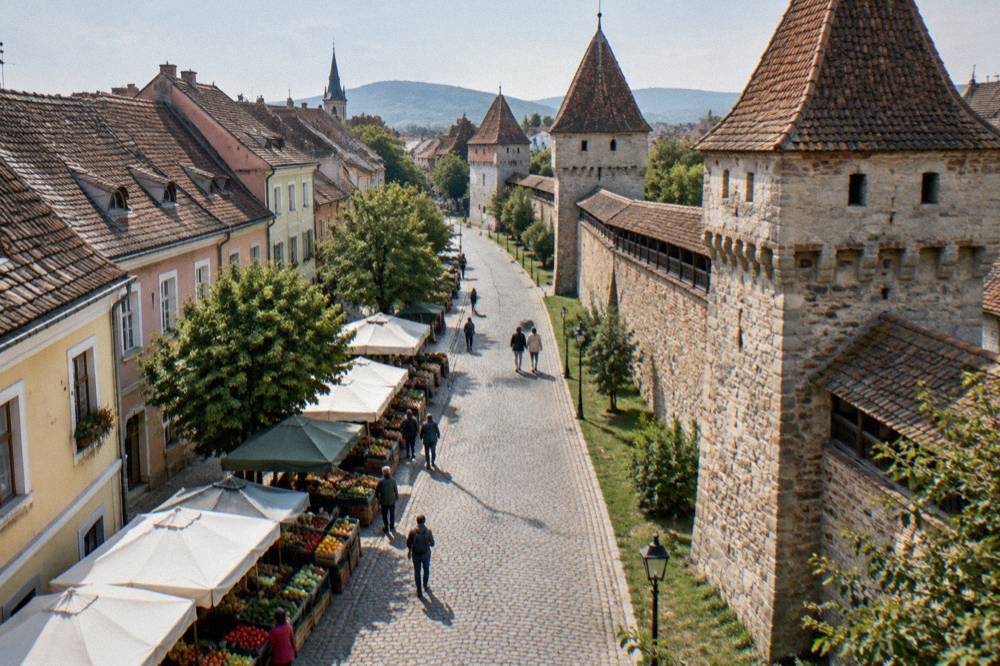
For a visitor, the Cibin market is the honest version of Sibiu shopping. Vendors sell seasonal fruit and vegetables, cheese, honey and preserves, and the prices reflect local life rather than tourist positioning. It is also the place to buy foodstuffs to take home: jars of zacuscă and honey travel better than most souvenirs, provided they are packed properly. Bargaining is not a strong Romanian market tradition; ask the price, and pay it or pass.
Getting there uses the same network described in the getting around Sibiu thinking: the city buses charge 3.5 lei for a 60-minute internal ticket, bought contactless on board, and the network covers the routes between the centre and the market area. A taxi or a ride-hailing app also works, though no fare can be quoted here. The practical anchor is that the market, the old town and the malls form a triangle, and none of the three is fully walkable from the others.
| Sibiu shopping zone | What it sells | Character |
|---|---|---|
| Piața Mare and Piața Mică lanes | Crafts, souvenirs, gifts | Tourist-facing, seasonal peaks |
| Christmas market (seasonal) | 120-plus exhibitors, craft and food | Runs 13 Nov 2026 to 3 Jan 2027 |
| Piața Cibin | Produce, preserves, household goods | Everyday local market |
| Museum shops (Brukenthal, ASTRA) | Reproductions, folk craft, books | Tied to ticketed venues |
| Shopping centres | Fashion, electronics, groceries | Outside the historic core |
Where Are Sibiu's Shopping Centres?
Sibiu's shopping centers and retail parks sit outside the historic core, along the main entry roads, and they hold the fashion chains, electronics stores and supermarkets that the old town does not. They are car-and-bus territory while the old town is pedestrian, so a mall trip costs half a day once travel is included, and the two experiences do not overlap. No individual mall has been confirmed by name in the sources this site uses, so none is named here. What can be said is structural: the malls are car-and-bus territory, the old town is pedestrian, and the two experiences do not overlap. If a trip needs a suitcase, a phone cable or replacement clothing, the malls are the practical answer; if it needs a painted glass icon, they are not.
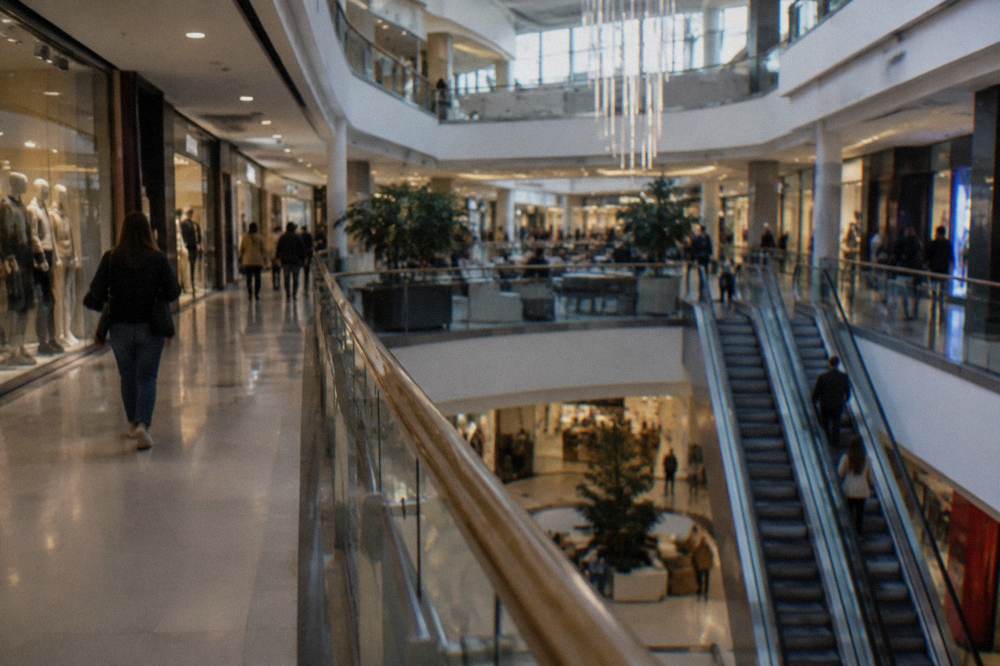
The practical question is time. A shopping trip built around the malls costs half a day once travel is included, while the old town craft shops sit inside any walk between Piața Mare, the Evangelical Cathedral and the city walls. Visitors on the short schedules described in the how many days you need in Sibiu discussion should keep mall trips for genuine needs, not browsing. The one exception is groceries: supermarkets near the centre supply picnic supplies for day trips, and buying them the night before beats hunting on the morning of departure.
Sunday trading rules in Romania are not stated here, because no confirmed pattern was found. The safe assumption is that hours differ on Sundays and on public holidays such as 1 December and 25 December, and that the Christmas market in Piața Mare is the retail that reliably runs through the holiday period. Check with your accommodation for the current local pattern.
For anyone combining shopping with a longer Transylvanian circuit, the mall question recurs in Brașov and Sibiu's other rivals; the drive to Brașov is about 142 km and 154 minutes in free-flow conditions, per computed routing, and the Sibiu to Brașov guide covers that road. But nothing sold in a mall in either city is worth the drive on its own.
How Does A Dacia 1300 Tour Fit Into A Shopping Day?
A classic Dacia 1300 car tour of Sibiu frames the shopping geography rather than replacing it: the tour covers the city's squares, walls and view points, and the stalls and shops sit along and between those same streets, so the ride doubles as orientation for where to return on foot. The related tour on this page is exactly that, a city tour in a legendary Communist-era Romanian car, and its listing carries the price and availability. It is a city experience, not a day trip, so it slots into a morning or afternoon without consuming a full day.
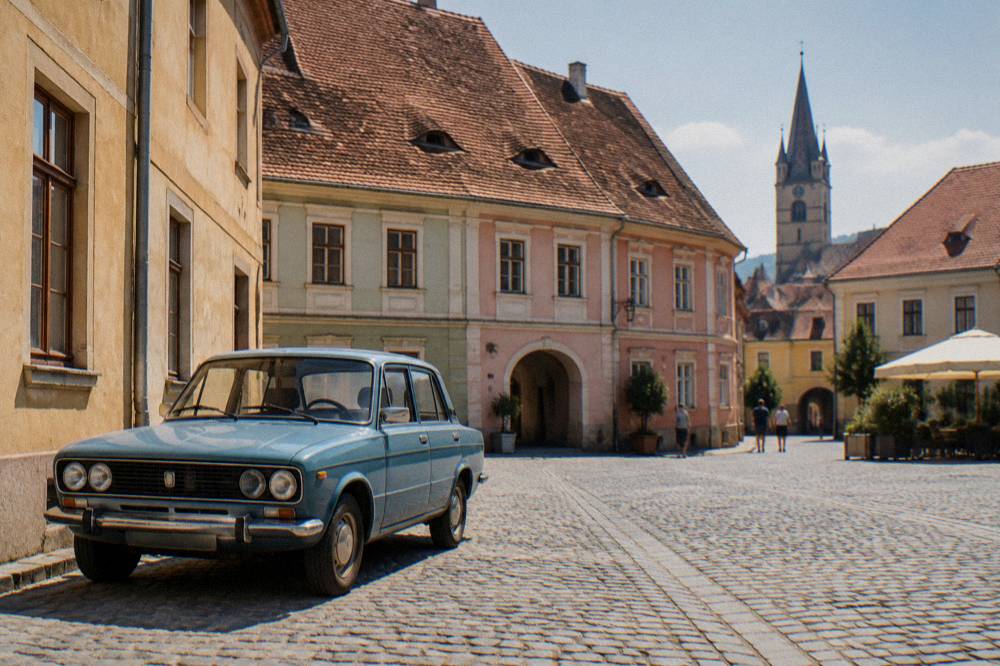
The pairing works both ways. A morning ride through the Upper Town and Lower Town shows the shopper where the lanes connect, where the Stairs Passage drops between the two levels, and how the walk from Piața Mică to the city walls is shorter than it looks on a map. Then the afternoon on foot does the actual buying, in the lanes already scouted. Shoppers with children can fold the plan into the patterns in the Sibiu with kids guide, since a classic car ride tends to carry the day for younger companions.
The alternative framing is gastronomic. A tasting walk through Sibiu's food history covers the dishes and traditions that fill the food-souvenir stalls, so doing it before the market turns random jars into informed purchases.
What Should You Know About Prices, Tax And Payment?
Payment in Sibiu runs on the Romanian leu (RON), with the exchange rate at about 5.3 lei to the euro, and since 1 January 2026 hotels in the city collect a 2 percent tax on the accommodation value, which appears on the hotel bill rather than at any shop. The 2 percent figure comes from a local council decision of 30 December 2025, reported in local press. No souvenir price, no shop price and no meal price can be quoted here, because none was confirmed in a trusted source. The Sibiu cost guide covers the budget picture for the trip as a whole.
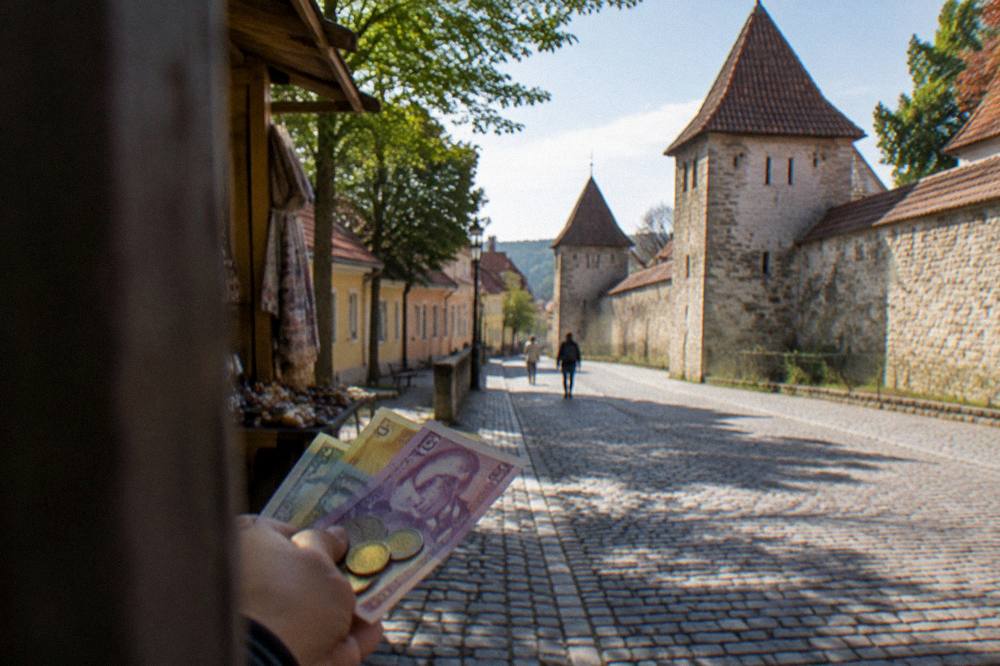
Card acceptance varies by the kind of shop. Malls and chains take cards without issue; small craft stalls and market vendors may not, and no confirmed pattern exists for either, so carry lei in cash for the markets and the Christmas market chalets. Tipping and ATM fee patterns are likewise unconfirmed for this site and are not stated. The emergency number, for completeness, is 112, and Romania is a full Schengen member, so no border formalities apply to visitors arriving from within the zone.
Two seasonal price notes are safe to print. First, the Christmas market's Golden Ticket, reported at 100 lei, covers the amusement rides rather than any shopping; it is not a discount on stalls. Second, the market's reported changes this edition, from the relocated chalet to the new exhibitor third, mean that prices at the 2026 market should not be assumed from any earlier visit. Ask at the stall.
| Payment fact | What applies |
|---|---|
| Currency | Romanian leu (RON, lei) |
| Exchange rate | About 5.3 lei to the euro |
| Accommodation tax | 2 percent of accommodation value, since 1 January 2026 |
| City bus ticket | 3.5 lei, 60 minutes, contactless on board |
| Christmas market entry | Free |
| Emergency number | 112 |
When Is The Best Season For Shopping In Sibiu?
The best season for shopping in Sibiu depends on what is being bought: the Christmas market window of 13 November 2026 to 3 January 2027 is the peak for craft stalls, late spring and early summer suit the everyday markets and craft shops, and the deep winter of January and February is the quietest period with the fewest stalls. The city's climate, temperate continental with a mean annual temperature of 8.9 C per the city's official page, shapes the pattern: outdoor market trading is a fair-weather activity, and the ERA5 reanalysis, 1991-2020, puts December sunshine at 5.6 hours a day against July's 12.8.
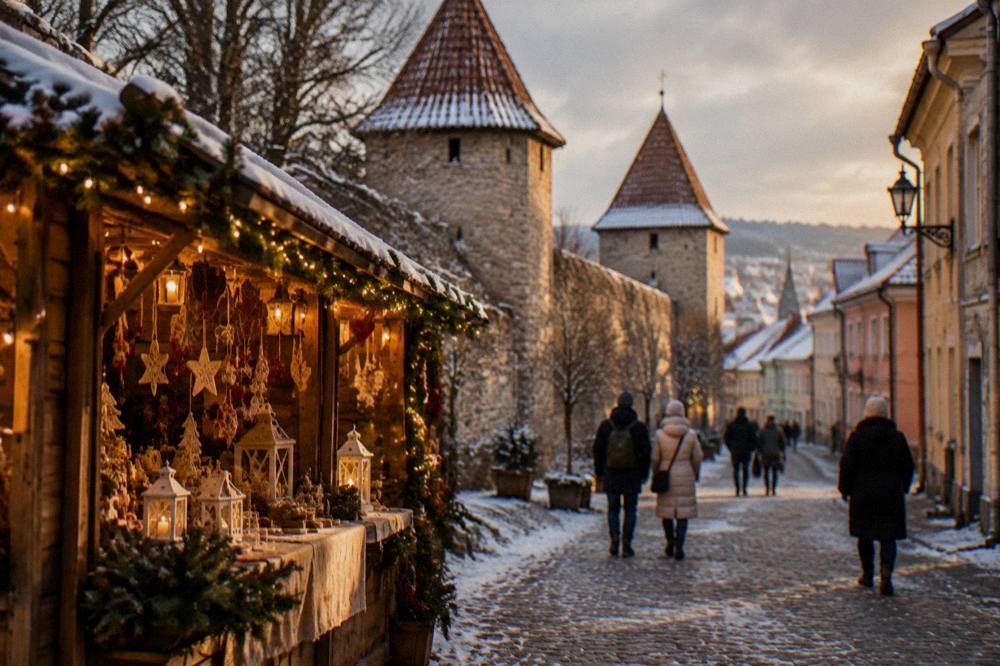
The Christmas market is the headline. A shopping trip planned around it should sit in the first three weeks of December, after the opening on 13 November and before the late-December holidays crowd the square. The best time to visit Sibiu and Sibiu weather pages carry the full seasonal picture, including the snowfall that falls from November to March, up to 23.3 cm in January in the modelled normals. Snow is part of the market's look, but it also means proper footwear for hauling purchases across cobbles.
The shoulder seasons hold their own case. May and June, and September and October, are the months tourism sources name as the comfortable visiting window, and the everyday markets and craft shops run through them without the market-season crowds. The ASTRA Museum's open-air craft setting in Dumbrava is at its best in these months too, though its autumn 2026 schedule ran only to 26 October with last entry about 16:00, and a winter schedule had not been announced. Confirm before you go.
What To Combine With A Sibiu Shopping Trip?
A Sibiu shopping trip combines naturally with a day trip into the villages where the craft traditions originate: the full-day tour of fortified churches, farm life and a carriage ride into the Saxon countryside, alongside a classic-car city tour and a gastronomy walk. The villages sit within an hour of Piața Mare, Cisnădie about 14 minutes away and Sibiel about 36. The trio below includes exactly that: a full-day tour of fortified churches, farm life and a carriage ride, alongside the classic-car city tour and the gastronomy walk. The villages sit within an hour of Piața Mare; Cisnădie is about 14 minutes and 10 km away, Sibiel about 36 minutes and 25 km, per computed free-flow routing.
The logic is simple: much of what sells in Sibiu's craft stalls is made in the surrounding countryside, from the glass icons of Sibiel to the textiles of the Mărginimea Sibiului villages. Seeing the villages first, on a guided excursion, gives the city stalls context, and buying at the source where possible puts the money closer to the maker. The fortified churches near Sibiu guide covers the architectural side of the same landscape.
Back in the city, the closing checklist is short. Confirm museum shop days against the Monday and Tuesday closures that apply to the main Brukenthal buildings. Carry lei in cash for the markets. Keep the Christmas market window in mind if craft shopping is the point of the trip, and check the current price on any venue's own site before booking or buying. That is the whole discipline: the squares do the rest.
Common Questions About Sibiu Shopping
Is shopping in Sibiu good?
Sibiu shopping is good for crafts, folk art and food souvenirs rather than for fashion or luxury. The old town concentrates craft and souvenir shops, the Christmas market adds 120-plus exhibitors from 13 November 2026 to 3 January 2027, and the Cibin market covers everyday local goods. No individual shop has been confirmed by name, so treat this as a guide to categories and places.
What souvenirs is Sibiu known for?
Sibiu is associated with glass icons from the Sibiel tradition, Transylvanian textiles and embroidery, woodwork, ceramics and foodstuffs such as zacuscă, honey and local spirits. Museum shops tied to the Brukenthal and ASTRA collections also sell reproductions and folk craft.
When does the Sibiu Christmas Market open in 2026?
The Sibiu Christmas Market opens on 13 November 2026 and runs to 3 January 2027 in Piața Mare, a 52-day 19th edition with free entry. Local press reported an ice rink of about 600 square metres and a Golden Ticket at 100 lei covering the wheel, carousel and mini-train.
Can you pay by card at Sibiu's markets and craft stalls?
Card acceptance is reliable in the shopping centres and chains but varies at small craft stalls and market vendors, and no confirmed pattern exists for either. Carry lei in cash for the Cibin market and the Christmas market chalets, and use cards where you see them accepted.
Is there a tourist tax on shopping in Sibiu?
No tax applies at shops. Since 1 January 2026 hotels in Sibiu collect a 2 percent tax on the accommodation value, which appears on the hotel bill; nothing extra is added at market stalls or shops beyond standard Romanian VAT, which is included in displayed prices.
Are shops in Sibiu open on Sundays?
No confirmed Sunday-trading pattern was found for Sibiu, so the safe approach is to check with your accommodation for current local hours. The Christmas market in Piața Mare is the retail that reliably runs daily through the holiday period, including around 25 and 26 December and the 1 December National Day holiday.
