Sibiu In The Rain: Museums, Cellars And Covered Passages
Rain in Sibiu is not a lost day. The city runs on museums, cellar rooms and short covered stretches, and this plan keeps moving between them.
Short answer
Spend a rainy day in Sibiu indoors at the Brukenthal Palace galleries, the History Museum in Casa Altemberger and the Pharmacy History Museum, all reached on foot through the old town, with wine tasting or a guided walk as the afternoon anchor.
Sibiu, the Saxon-founded city on the Cibin river in central Transylvania, gets about 662 mm of rain a year according to its own official figures, and a fair share of it falls outside summer. A wet day there is not a write-off. The old town is compact, the museum cluster around Piața Mare and Piața Mică is one of the densest in Romania, and several of the things that make the city distinct, from the Brukenthal galleries to cellar dining rooms and the sheltered stretches between squares, sit indoors within a few minutes of one another. This page lays out a full rainy-day plan: what is open, what it costs, where the rain actually reaches you and where it does not, and which day trips still work when the clouds sit low over the Făgăraș foothills.
What To Do In Sibiu When It Rains?
A rainy day in Sibiu works best as a museum-and-cellar day: the Brukenthal Palace galleries in the morning, the History Museum in Casa Altemberger or the Pharmacy History Museum after lunch, wine tasting or a covered walking route through the squares in the afternoon, and dinner in a cellar room of the Lower Town. Everything on that list sits within walking distance of Piața Mare, so the rain never has long to reach you between stops.
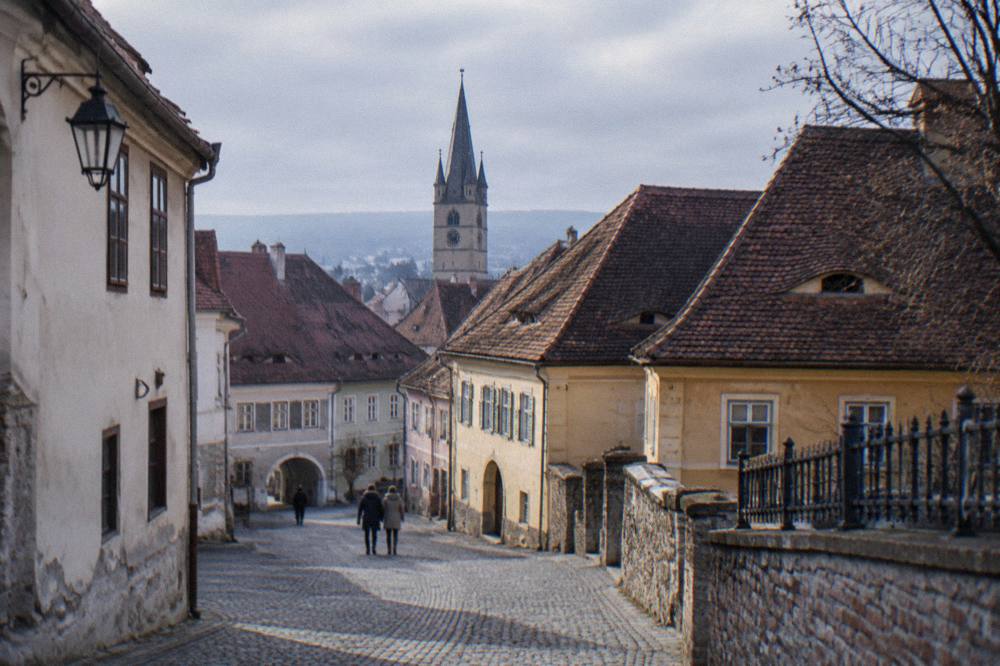
The structure of the city helps. The Upper Town holds the three main squares, Piața Mare, Piața Mică and Piața Huet, and the museum entrances open directly onto them. The Lower Town sits below, reached by the Stairs Passage, and holds quieter streets where a wet afternoon has its own appeal, with the famous roof windows, the "eyes of Sibiu", watching over empty lanes. Distances are short because the historic core is small: the whole walkable old town fits between the city walls.
One 2026 fact shapes every wet-day plan: the Council Tower, the landmark between Piața Mare and Piața Mică, has been closed to visitors since 19 January 2026 for a restoration planned at about 24 months, with completion expected around January 2028. No viewpoint, no price, no climb. The open tower viewpoint in the city is the Evangelical Cathedral tower in Piața Huet, at 10 RON for an adult, and its stair enclosure makes it a reasonable wet-weather option as long as the steps are treated with care. The Council Tower page keeps the full closure detail.
Which Sibiu Museums Are Open On A Rainy Day?
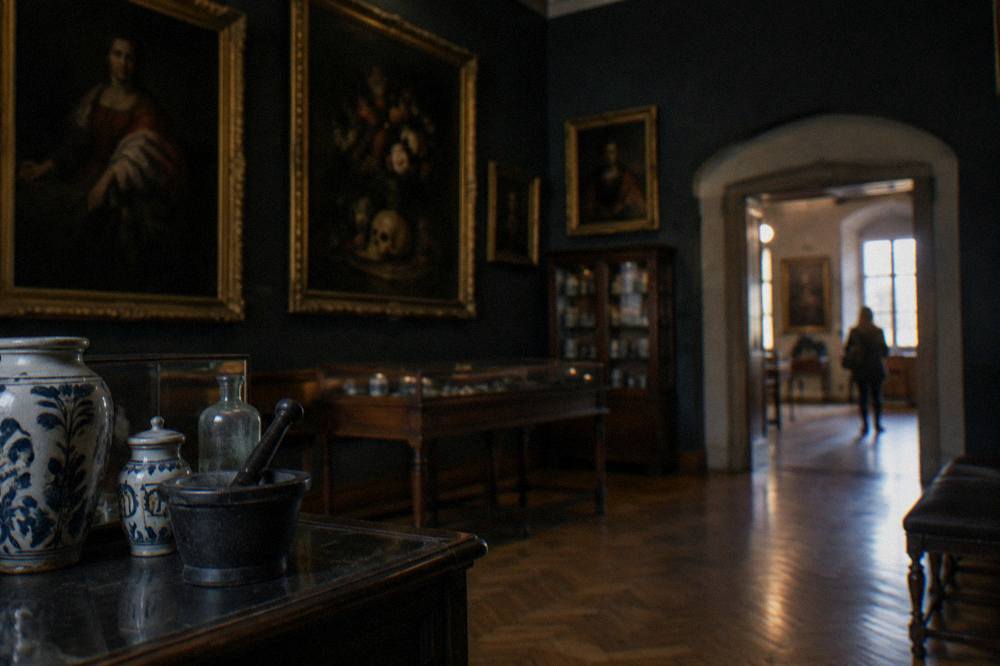
The Brukenthal National Museum is several separate sites with separate tickets, not one museum: the Palace galleries cost 50 RON, the History Museum in Casa Altemberger 36 RON, the Natural History Museum 20 RON, the Pharmacy History Museum 16 RON and the Contemporary Art Museum 15 RON, with a 48-hour combined ticket at 120 RON. Pensioners pay half and pupils and students a quarter, per the museum's own price page, and you should confirm the figures before you go.
The days matter more than the rain. The main Brukenthal sites are closed on Monday and Tuesday. The Palace is open Wednesday to Sunday, 10:00 to 18:00, with the cashier closing at 17:15; the History, Natural History and Pharmacy museums run Wednesday to Sunday, 9:00 to 17:00, with the cashier closing around 16:15 to 16:30. The Contemporary Art Museum on Strada Tribunei now keeps an office-week schedule, Monday to Friday 9:00 to 17:00, and closes at weekends. The Hunting Museum (Muzeul Cinegetic August von Spiess) is closed for an indefinite period and receives only pre-booked groups of ten or more, so it belongs on no rainy-day plan.
The Palace also carries the temporary show "Umbre colorate. Picturalizări după Dürer", reported to run to 31 December 2026, which gives a reason to return even for anyone who knows the permanent galleries. A guided tour in Romanian or English is available as a group fee of 200 RON per 60 minutes, booked through the museum. Press reports in May 2026 suggested ticket prices might rise, but the official price page still lists the figures above; check it before you travel. The full museum picture, including the ASTRA open-air complex and its limits on a wet day, is on the Brukenthal guide.
A guided walk strings the indoor stops together without you standing in the rain reading a map. The daily sightseeing guided tour is the practical anchor for a first wet day:
Where To Shelter In The Old Town Passages Of Sibiu?
Sibiu has no covered arcade network like some larger cities, but its old town compresses the distance between shelters: the Brukenthal Palace opens onto Piața Mare, the Pharmacy History Museum opens onto Piața Mică at number 26, and the gap between those two squares is crossed in a couple of minutes beside the closed Council Tower. Rain in Sibiu is measured in short sprints, not long exposures.
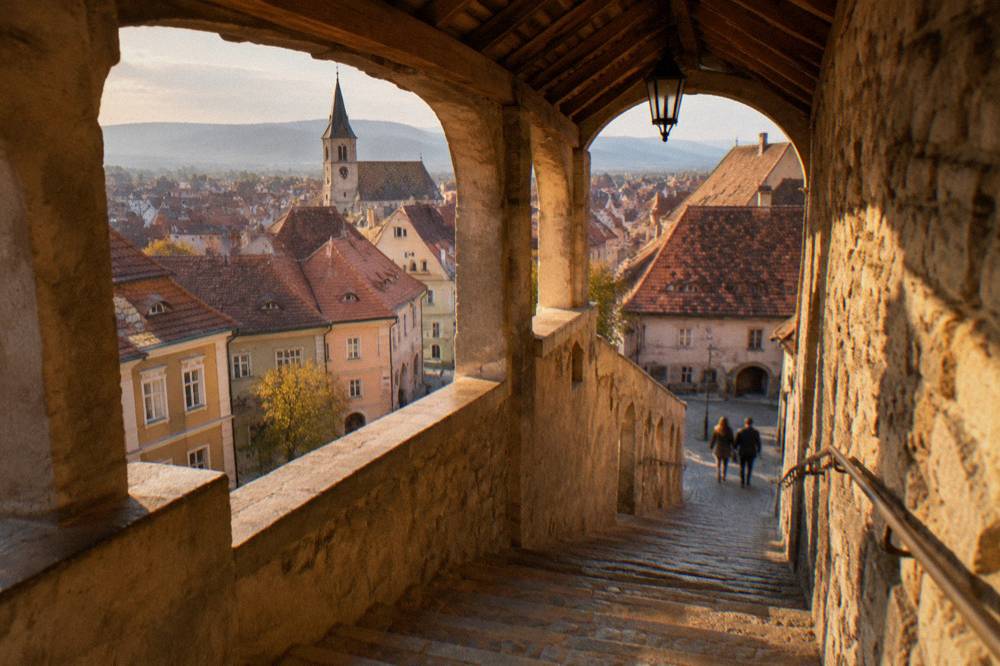
The Stairs Passage (Pasajul Scărilor) links the Upper Town to the Lower Town under the old defence towers, and its stepped, walled stretch gives partial shelter on the way down, though it is open to the sky and the steps run wet. The Bridge of Lies (Podul Minciunilor) is also open to the weather, an iron bridge completed in 1859 to 1860 and reported as the first of its kind in Romania, so treat it as a quick crossing between Piața Mică and Piața Huet rather than a place to linger in a downpour. The Bridge of Lies guide covers the legends, including the one about the bridge collapsing under liars.
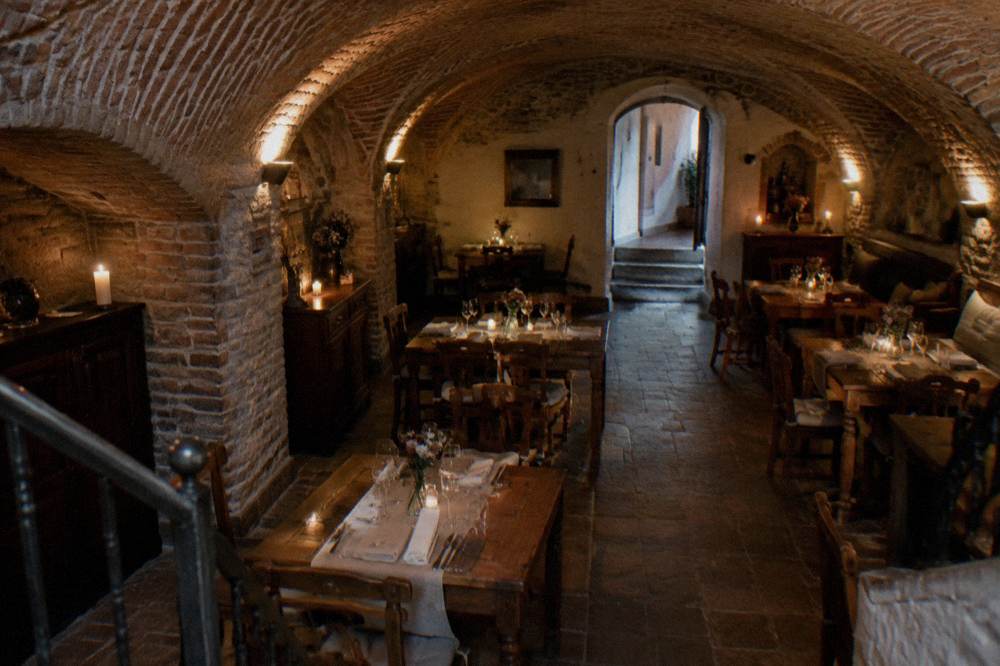
Practically, the dry chain runs museum to café to cellar. Café and restaurant entrances cluster on the squares and on the streets running off them, and many dining rooms in the old town sit in vaulted cellars, which is where a wet evening in Sibiu naturally ends. The squares themselves, Piața Mare and Piața Mică, are pedestrian, so umbrella traffic moves easily even in steady rain. Nobody walking this route needs a car: the whole shelter chain sits inside the former walled city.
Between those three options, the sightseeing walk covers the squares and the sheltered stretches, the Mărginimea trip runs out to the shepherd villages south of the city in a vehicle, and the wine tasting is the purest rainy-day format of the lot: a room, a sommelier and Romanian bottles. Each is described in detail below where it fits the plan.
What Does A Rainy Day In Sibiu Cost?
A full wet day built on the official 2026 prices runs to roughly 102 RON per adult in museum tickets (Palace 50, History 36, Pharmacy 16), or 120 RON for the 48-hour combined Brukenthal ticket if the rain lasts two days, with the Evangelical Cathedral tower at 10 RON as an optional add-on. Meals, coffee and wine are separate, and no single trustworthy price list for old-town restaurants exists to quote here, so check menus on the spot.
| Rainy-day stop | Adult price | Days open | Hours |
|---|---|---|---|
| Brukenthal Palace galleries | 50 RON | Wed to Sun | 10:00 to 18:00, cashier to 17:15 |
| History Museum, Casa Altemberger | 36 RON | Wed to Sun | 9:00 to 17:00 |
| Natural History Museum | 20 RON | Wed to Sun | 9:00 to 17:00 |
| Pharmacy History Museum | 16 RON | Wed to Sun | 9:00 to 17:00 |
| Contemporary Art Museum | 15 RON | Mon to Fri | 9:00 to 17:00 |
| 48-hour combined Brukenthal ticket | 120 RON | per site above | per site above |
| Evangelical Cathedral tower | 10 RON | daily, hours vary | Mon 12:00 to 17:00, Tue to Thu 10:00 to 17:00, Fri and Sat 10:00 to 20:00, Sun 11:00 to 17:00 |
| Council Tower | closed to visitors | closed since 19 Jan 2026 | restoration about 24 months |
Reductions are generous and stack across sites: pensioners pay half at every Brukenthal site and pupils and students a quarter, so a family rainy day costs far less than the adult column suggests. Confirm current prices on the museum's own site before booking, since a rise has been discussed in the press. The Sibiu cost guide takes the broader budget view, and the free things page lists the no-ticket options that survive rain, chiefly the squares, the walls and the churches with free or nominal entry, such as the Orthodox Cathedral.
One more line belongs on any 2026 bill: since 1 January 2026, hotels in Sibiu collect a 2 percent tax on the accommodation value. It is a percentage, not a fixed per-night sum, and it appears on the hotel bill rather than the museum ticket.
Does It Rain Often In Sibiu?
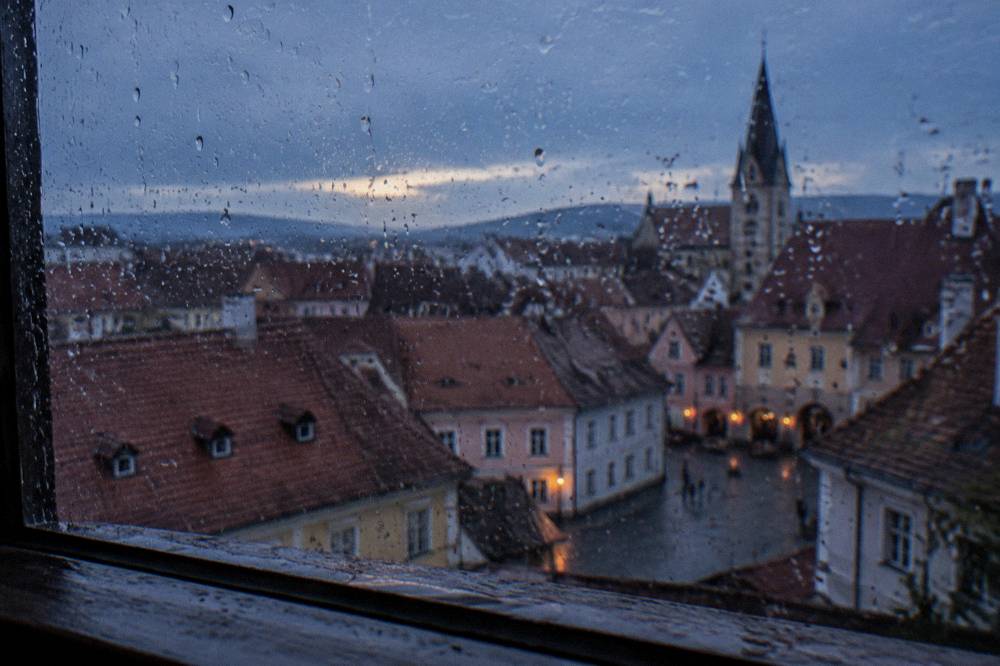
Sibiu receives a mean 662 mm of rain a year per the city's official figures, with June the wettest month at 113 mm and February the driest at 26.7 mm, so rain is a regular feature of the climate rather than a summer exception, and a wet-weather plan is worth having in any month. The city classifies its own climate as temperate continental with a mean annual temperature of 8.9 C.
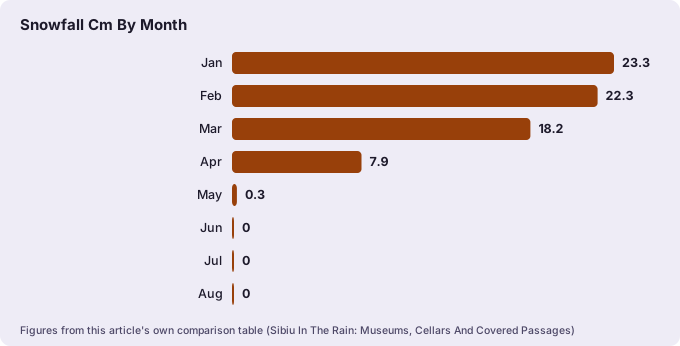
The official numbers say which months carry the rain. June leads, the shoulder months carry moderate totals, and winter precipitation often arrives as snow rather than rain: ERA5 reanalysis, 1991-2020, a modelled grid cell, shows snowfall from November to March, peaking in January at 23.3 cm. Temperature shape from the same reanalysis: January mean highs of 2.2 C and lows of -5.7 C, July highs of 24.2 C, August highs of 24.5 C. Sunshine runs from 5.6 hours a day in December to 12.8 in July.
| Month | Mean high C | Mean low C | Sunshine h/day | Snowfall cm |
|---|---|---|---|---|
| Jan | 2.2 | -5.7 | 6.2 | 23.3 |
| Feb | 4.3 | -4.4 | 7.1 | 22.3 |
| Mar | 8.7 | -0.8 | 8.7 | 18.2 |
| Apr | 14.6 | 4.0 | 10.4 | 7.9 |
| May | 19.1 | 9.0 | 11.3 | 0.3 |
| Jun | 22.4 | 12.9 | 12.4 | 0 |
| Jul | 24.2 | 14.6 | 12.8 | 0 |
| Aug | 24.5 | 14.8 | 11.8 | 0 |
| Sep | 19.6 | 10.5 | 9.7 | 0.1 |
| Oct | 14.5 | 5.7 | 8.0 | 2.7 |
| Nov | 8.7 | 0.9 | 6.4 | 13.0 |
| Dec | 3.1 | -3.9 | 5.6 | 20.8 |
Those columns are ERA5 reanalysis, 1991-2020 values, modelled rather than station-recorded, and the rainfall totals from that grid are not used here at all; the 662 mm figure and the June and February extremes come from the city's official page. Tourism sources name May, June, September and October as the best visiting months, and those shoulder months are exactly when a museum-heavy backup day earns its keep: the rain is real but the queues are not. The weather guide unpacks the seasons, and the best time to visit guide matches the calendar to the plans.
Can You Take Day Trips From Sibiu In The Rain?
Yes, with two rules: pick vehicle-based trips over mountain walks, and check the road status before anything involving the Transfăgărășan, whose high section can be closed on any day from 20 October by rule, with fines of 10,000 to 30,000 lei for driving a closed stretch. Lowland and village trips run in almost any weather; ridge hikes do not.
The Mărginimea Sibiului, the shepherd-village region south of the city, is the natural wet-weather day trip because it is close and it is driven rather than hiked: Rășinari sits about 18 minutes and 13 km from Piața Mare, Sibiel about 36 minutes and 25 km, both computed free-flow estimates over OpenStreetMap routing, so allow extra time. A guided trip through the heart of the region keeps you moving between villages without route-finding on wet country roads:
The Saxon fortified-church villages work the same way. Cisnădie lies about 14 minutes and 10 km out, Cisnădioara about 18 minutes and 13 km, and both can be stitched into a half-day loop. The Transfăgărășan is the one trip where rain changes the calculation entirely: the 2026 season reopened on 12 June with daily hours of 07:00 to 21:00 on the high stretch, and the rule allows closure any day from 20 October. Its status after late September 2026 is unconfirmed, so check the live road status before setting out, and never assume it is open.
| Day trip from Piața Mare | Road distance | Free-flow drive time | Rain suitability |
|---|---|---|---|
| Rășinari (Mărginimea) | 13 km | about 18 min | good, village stops |
| Cisnădie | 10 km | about 14 min | good, church interiors |
| Sibiel | 25 km | about 36 min | good, museum-based |
| Păltiniș | 32 km | about 40 min | fair, lifts closed until the ski season opens 28 Nov 2026 |
| Transfăgărășan (Bâlea Cascadă) | 63 km | about 69 min | check road status, closable from 20 Oct |
| Sighișoara | 96 km | about 102 min | good, museum town |
| Brașov | 142 km | about 154 min | good but a full day |
| Alba Iulia | 71 km | about 81 min | good, citadel walks |
Drive times are computed estimates, not timetables, and the A1 motorway towards Bucharest is not a finished road: the Sibiu to Boița section is closed from 5 October to 19 December 2026, reported, with traffic diverted onto DN7, so any wet-weather drive south of the city takes longer than a map suggests. Sighișoara deserves its own mention as a rain-proof day trip: its Clock Tower history museum charges 50 RON with indoor hours through the winter season, per the citadel's own info page, and the drive is about 102 minutes. The Sighișoara day trip guide has the detail.
What To Eat And Drink In Sibiu On A Wet Afternoon?
Wet afternoons in Sibiu belong to cellar dining rooms and to dishes built for cold weather: ciorbă (sour soup), sarmale (cabbage rolls), mici, zacuscă, balmoș and papanași for dessert, plus the local Sibiu salad, and no venue list appears here because no trusted source names one. What can be said is structural: the old town's dining rooms sit at cellar level in many buildings, which makes them a destination in themselves on a rainy evening.
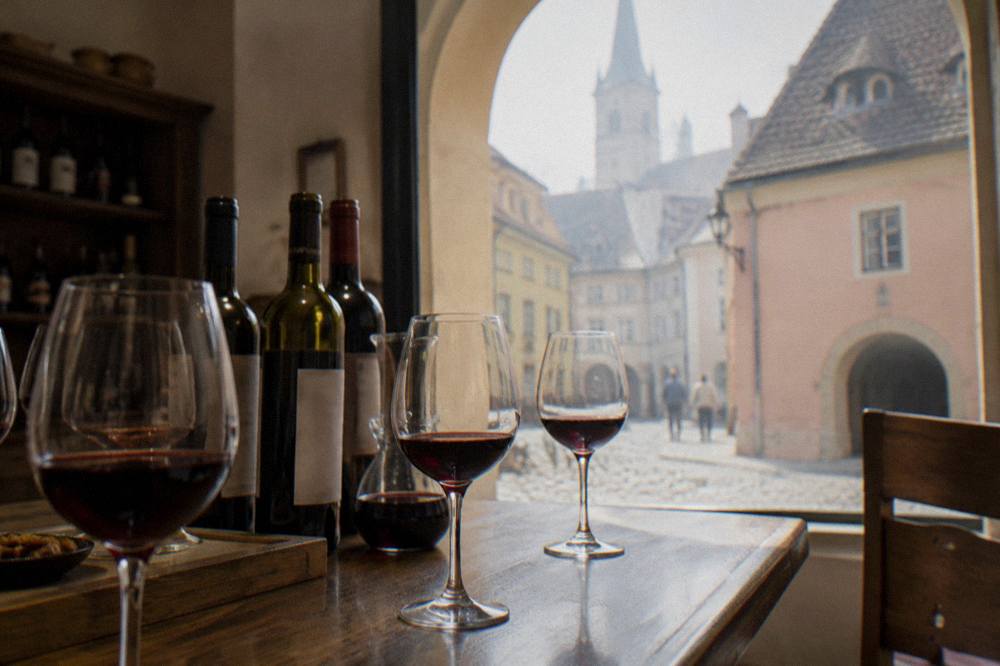
Wine is the other indoor anchor. Romanian wine tasting in Sibiu is a seated, guided format with a sommelier pouring Romanian bottles, which is as rain-proof as the city gets, and it pairs naturally with the late afternoon gap between the museums closing and dinner:
For the planning table, tasting fees and menu prices vary by venue, so treat prices as something to check on the spot rather than something to plan to the leu. The food guide walks through the dishes, and the wine page covers the regional bottles worth knowing before a tasting. A cooking workshop is another indoor format if the rain settles in for the whole day, and a gastronomy walk in the old town combines the cellar stops with the story of Saxon and Romanian cooking in the city.
How Do You Build A Two-Day Rainy Plan For Sibiu?
Split the two days by museum cluster: day one takes the Brukenthal Palace galleries plus the Evangelical Cathedral tower and an afternoon tasting, day two takes Casa Altemberger, the Pharmacy History Museum and the Natural History Museum, with the 48-hour combined ticket at 120 RON covering the set, and a village drive inserted if the rain eases. The ticket is built for exactly this pattern.
The catch, again, is Monday and Tuesday. On those two days the main Brukenthal museums are shut, so the indoor core of the plan thins to the Contemporary Art Museum, the cathedral, the ASTRA indoor pavilions and the tasting rooms. The one-day itinerary and the two-day itinerary give the dry-day versions of the same geography, and the winter itinerary is the closest cousin to this page, since a wet winter day shares the same constraints plus snow. If the trip falls across late November, the Christmas market in Piața Mare opens on 13 November 2026 and runs to 3 January 2027, free to enter, and its stalls and 600 sqm ice rink give a wet evening a centre of gravity.
| Time block | Wet-weather plan (Wed to Sun) | Wet-weather plan (Mon or Tue) |
|---|---|---|
| Morning | Brukenthal Palace galleries | Contemporary Art Museum, 15 RON |
| Midday | Lunch in a cellar room off Piața Mică | Cellar lunch, same streets |
| Early afternoon | History Museum, Casa Altemberger, 36 RON | Evangelical Cathedral and tower, 10 RON |
| Late afternoon | Pharmacy History Museum, 16 RON, then wine tasting | Wine tasting or a self-guided old town route |
| Evening | Dinner, Lower Town or the squares | Christmas market stalls, 13 Nov 2026 to 3 Jan 2027 |
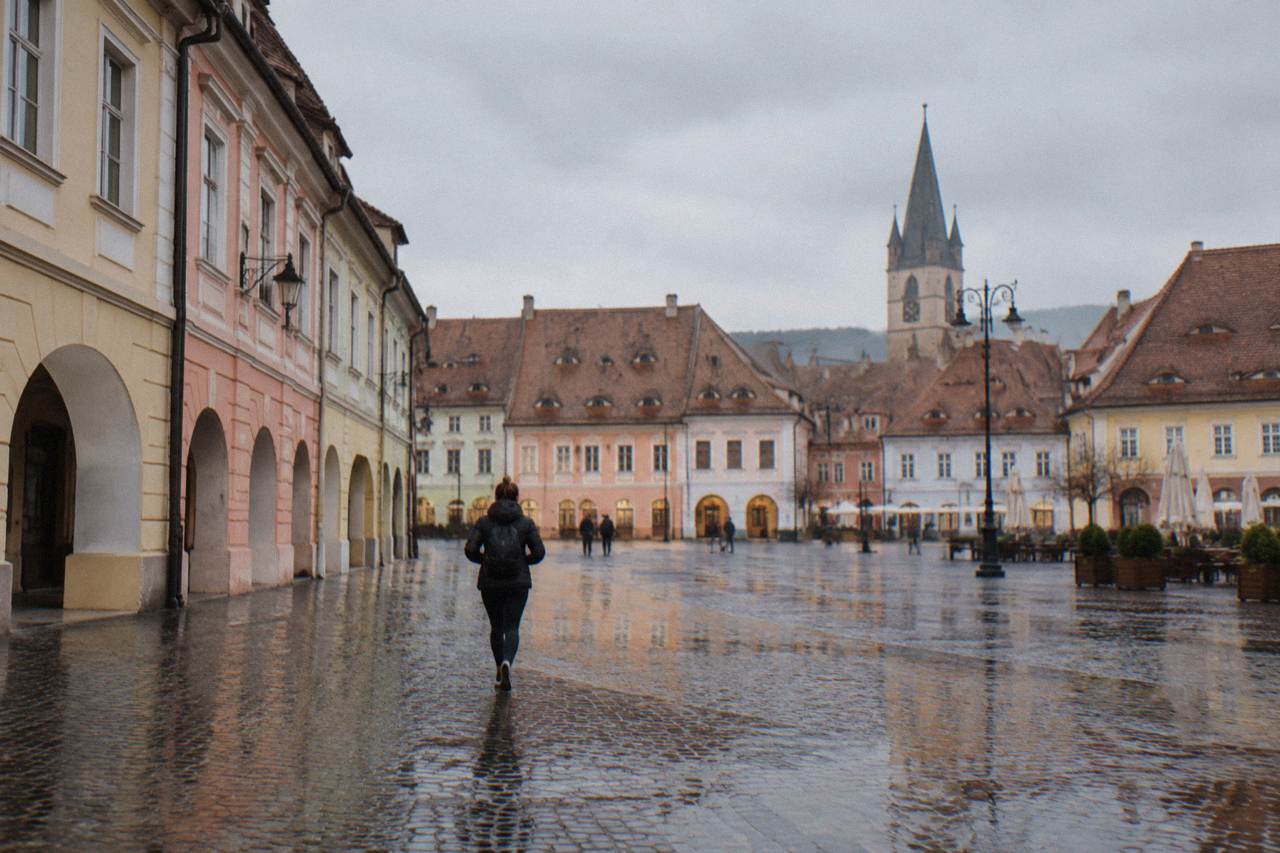
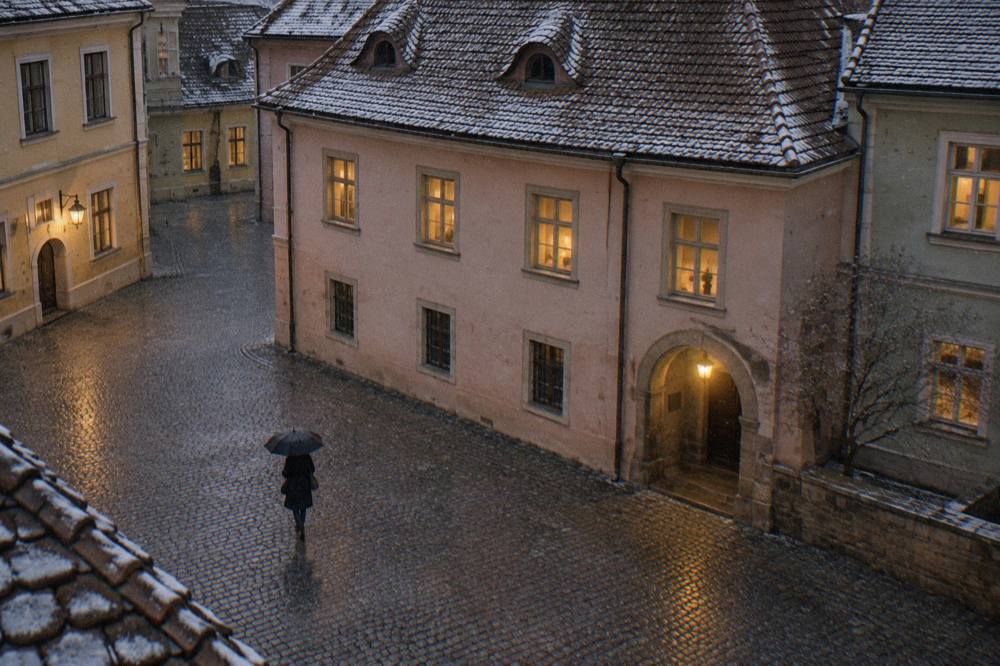
Rain also lowers the cost of photography. Wet cobblestones double the facades of Piața Mare in reflection, and the eyes of Sibiu on the attic rooflines look better under heavy sky than under flat sun. The photography spots guide names the frames that survive bad weather.
Common Questions About Sibiu In The Rain
Is Sibiu worth visiting in the rain?
Yes, because the core of a Sibiu visit, the Brukenthal museums, the cellar dining rooms, the cathedral interiors and the wine tastings, is indoors, and the squares are compact enough that exposure between stops is short. The one loss on a wet day is the Council Tower view, which is closed for restoration until about January 2028 regardless of weather.
What is open in Sibiu on a Monday?
The main Brukenthal museums are closed on Monday and Tuesday. The Contemporary Art Museum is open Monday to Friday 9:00 to 17:00, the Evangelical Cathedral tower runs reduced Monday hours from 12:00 to 17:00, and the squares, walls and bridges are public space with no opening hours.
Is the ASTRA Museum good in the rain?
The ASTRA open-air museum is an outdoor complex in Dumbrava forest, so steady rain works against it, though its pavilion exhibits give partial shelter. Its autumn 2026 schedule ran to 26 October with last entry about 16:00, and the winter schedule had not been announced, so check the museum's own site before going.
Can you do the Transfăgărășan in bad weather?
Only after checking the live road status. The 2026 season runs daily 07:00 to 21:00 on the high stretch, but the rule allows closure on any day from 20 October, and driving a closed section carries fines of 10,000 to 30,000 lei. In doubt, the Bâlea cable car runs on its own schedule and should be confirmed with the operator.
Does it snow or rain more in Sibiu in winter?
In winter, precipitation falls mostly as snow: ERA5 reanalysis, 1991-2020 shows snowfall from November to March, peaking in January at 23.3 cm, against January mean highs of 2.2 C. The city's official annual rainfall figure is 662 mm, led by June at 113 mm.
What should I book ahead for a rainy day in Sibiu?
Book the guided walking tour and any tasting or cooking session in advance, and buy museum tickets at the counter, since no online e-ticket detail for Brukenthal is published. A 48-hour combined Brukenthal ticket at 120 RON rewards a two-day indoor plan, and free cancellation on the bookable walks means a weather change costs nothing.
A wet day in Sibiu is really just the indoor half of the city moving to the front of the queue, and that half is unusually rich: five Brukenthal sites, a climbable cathedral tower, cellar tables and a wine region that travels to you. Pack the umbrella, check the museum days against your calendar, and let the rain sort the plan for you, with Sibiu Travel Guide holding the rest of the itinerary if the sky clears.